You help make Hymnary.org possible. More than 10 million people from 200+ countries found hymns, liturgical resources and encouragement on Hymnary.org in 2025, including you. Every visit affirms the global impact of this ministry.

If Hymnary has been meaningful to you this year, would you take a moment today to help sustain it? A gift of any size—paired with a note of encouragement if you wish—directly supports the server costs, research work and curation that keep this resource freely available to the world.

Give securely online today, or mail a check to:
Hymnary.org
Calvin University
3201 Burton Street SE
Grand Rapids, MI 49546

Thank you for your partnership, and may the hope of Advent fill your heart.

Person Results

Tune Identifier:"^st_frances_lohr$"
In:person

Planning worship? Check out our sister site, ZeteoSearch.org, for 20+ additional resources related to your search.
Showing 11 - 20 of 23Results Per Page: 102050

Ozora Stearns Davis

1866 - 1931 Author of "We bear the strain of earthly care" in Services for Congregational Worship. The New Hymn and Tune Book Born: Ju­ly 30, 1866, Wheel­ock, Ver­mont. Died: March 15, 1931, Chi­ca­go, Il­li­nois. Davis grew up in White Ri­ver Junc­tion, Ver­mont, and by age 15 was an ex­pert tel­e­graph op­er­at­or. He at­tend­ed St. Johns­bu­ry Acad­e­my and grad­u­at­ed from Dart­mouth Coll­ege, Han­o­ver, New Hamp­shire, in 1889. With the aid of a fel­low­ship from Hart­ford The­o­lo­gic­al Sem­in­ary, he earned a PhD in Leip­zig, Ger­ma­ny. He pas­tored in Spring­field, Ver­mont; New­ton­ville, Mas­sa­chu­setts, and New Bri­tain, Con­nec­ti­cut. From 1909-29, he was pres­i­dent of Ch­i­ca­go The­o­lo­gic­al Sem­in­ary. In 1927 he be­came Mod­er­at­or of the Na­tion­al Coun­cil of Congrega­tion­al Church­es. His works in­clude: John Ro­bin­son–The Pil­grim Pas­tor, 1903 Elihu Bur­ritt (New Bri­tain: 1907) The Pil­grim Faith, 1913 Using the Bi­ble in Pub­lic Ad­dress, 1916 Meeting the Mas­ter, 1917 International As­pects of Chris­ti­an­i­ty, 1919 Comrades in the Great Cause The Gos­pel in the Light of the Great War, 1919 Evangelistic Preach­ing, 1921 Preaching and the So­cial Gos­pel, 1922 Davis died near Kansas City, Missouri, while traveling with Grace, his wife, from Los Angeles to Chicago. --www.hymntime.com/tch/b

George Augustus Löhr

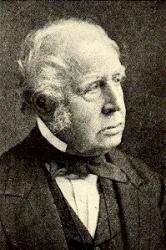
1821 - 1897 Person Name: G. A. Löhr Composer of "ST. FRANCES" in The Book of Common Praise Born: April 1821, Warwick, Warwickshire, England (source: 1881 census). Died: August 1897, Leicester, Leicestershire, England. Buried: Welford Road Cemetery, Leicester, England. Löhr was a chorister at Magdalen College, Oxford, and went on to attend the Universities of Leipzig & Munich. He worked for a while as assistant to Zachariah Buck at Norwich Cathedral, then moved to Leicester in 1845, to play the organ at St. Margaret’s church, a position he held for four decades. He also taught music, organized music festivals, and, in 1856, founded the Leicester Amateur Harmonic Society. As of 1881, he was a professor of music in Leicester. Music: ST. FRANCES http://www.hymntime.com/tch/bio/l/o/h/lohr_ga.htm ================= http://en.wikipedia.org/wiki/George_Augustus_L%C3%B6hr

Harriet Auber

1773 - 1862 Person Name: H. Auber Author of "With joy we hail the sacred day" in The Church Hymnal Auber, Harriet, daughter of Mr. James Auber, b. in London, Oct. 4, 1773. During the greater part of her quiet and secluded life she resided at Broxbourne and Hoddesdon, Herts, and died at the latter place on the 20th Jan., 1862. Miss Auber wrote devotional and other poetry, but only a portion of the former was published in her Spirit of the Psalms, in 1829. This collection is mainly her work, and from it some useful versions of the Psalms have been taken and included in modern hymn-books, about 20 appearing in Spurgeon's Our Own Hymn Book, 1866. Miss Auber's name is widely known, but it is principally through her exquisite lyric, "Our blest Redeemer, ere He breathed," and the Epiphany hymn, "Bright was the guiding star that led." (For criticism of her work, see English Psalters, §. 17.) In addition to these and other hymns by Miss Auber, which are annotated under their respective first lines, the following are also in C. V., but principally in America:— 1.  Arise, ye people, and adore.   Easter. 2.  As Thy chosen people, Lord.   Ps. lxciii. 3.  Can guilty man indeed believe?   Ps. xciv. 4.  Delightful is the task to sing.   Ps. cxlvii. 5.  Father of Spirits, Nature's God.   Ps. cxxxi. 6.  Hail, gracious Source of every good.   Ps. Ixv. 7.  Hasten, Lord, the glorious time.   Ps. lxxii. 8.  Jehovah reigns, O earth, rejoice.   Ps. xccii. 9.  Join, all ye servants of the Lord.   H. Scriptures. 10.  Jesus, Lord, to Thee we sing.   Ps. cx. 11.  O all ye lands, rejoice in God.   Ps. lxvi. 12.  O God our Strength, to Thee the song.   Ps. lIxxxi. 13.  O praise our great and gracious Lord.   Ps. lxxviii. 14.  On thy church, O power divine.   Ps. lxvii. 15.  Sweet is the work, O Lord.   Sunday. 16.  That Thou, O Lord, art ever nigh.   Ps. lxxv. 17.  The Lord, Who hath redeemed our souls.   Ps. xxxi. 18.  When all bespeaks a Father's love.   Ps. set. 19.  When dangers press and fears invade.   Ps. lxii. 20.  Who, O Lord, when life is o'er.   Ps. xv. 21.  Whom have we   Lord,  in  heaven, but Thee.   Ps. lxxiii. 22.  Wide, ye heavenly gates, unfold.   Ascension. 23.  With hearts in love abounding.   Ps. xlv. 24.  With joy we hail the sacred day.   Sunday. 25.  Vainly through the night the ranger.   Ps. cxvii. All these psalm-versions and hymns are from her Spirit of the Psalms,   London, 1829. - John Julian, Dictionary of Hymnology (1907) ========================= Auber, Harriet, p. 90, ii. The following versions of psalms from her Spirit of the Psalms, 1829, are also in common use:- 1. Great God, wert Thou extreme to mark. Ps. cxxx. "Thy servants in the temple watched," begins with stanza ii. of this. 2. How blest are they who daily prove. Ps. xli. 3. How blest the children of the Lord. Altered from Ps. cxii. 4. Jehovah, great and awful name. Part of Ps. Ixxviii. 5. 0 Thou Whom heaven's bright host revere. Ps. Ixxxiv. 6. Praise the Lord, our mighty King. Ps. cxxxv. 7. Spirit of peace, Who as a [celestial] Dove. Ps. cxxxiii. 8. Thou by Whose strength the mountains stand. Ps. Ixv. 9. To heaven our longing eyes we raise. Ps. cxxi. 10. Vainly through night's weary hours. Ps. cxxvii. Sometimes "Vainly through the night the ranger." 11. While all the golden harps above. Easter. --John Julian, Dictionary of Hymnology, Appendix, Part II (1907) See also in:Hymn Writers of the Church

Alice Cary

1820 - 1872 Author of "To Him who is the Life of life" in Worship Song Alice Cary (1820-1871) was born and raised in Mount Healthy in Hamilton County, Ohio. Her family had come from Lyme, New Hampshire when her grandfather was given land in return for his service in the Continental Army. She had been nationally recognized as an interpreter of pioneer traditions. Her short story collections depict Mount Healthy as it was transformed from an isolated rural village to a Cincinnati suburb. She and her sister Phoebe wrote for local religious periodicals before Alice moved to New York City. John Greenleaf Whitier praised Alice's stories as "simple, natural, truthful [with] a keen sense of humor and pathos of the comedy and tragedy of life in the country." Her hymn "Along the mountain track of life" was published in H.W.Beecher's Plymouth Collection, 1856. Her hymn titled "Nearer Home" was published in W.A.Ogden's Crown of Life (Toledo, OH: Whitney, 1875). Mary Louise VanDyke ====================================== Cary, Alice, the elder of two gifted sisters, was born near Cincinnati, Ohio, 1820, removed to New York in 1852, and died there Feb. 12, 1871. The story of the two sisters—of their courageous move from a rural, western home, their life in the metropolis, their mutual affection, and inability to live apart—has attracted much admiring and sympathetic interest. As poets they were of nearly equal merit. Besides some prose works, Alice published a volume of Poems in 1850. Her hymns are:— 1. Earth with its dark and dreadful ills. Death anticipated. This fine lyric is given in Hymns and Songs of Praise, N. Y., 1874, and dated 1870. 2. Along the mountain track of life. Lent. The authorship of this hymn, although sometimes attributed to Alice Cary, is uncertain. It appeared anonymously in H. W. Beecher's Plymouth Collection, 1855, No. 438. It would seem from its tone and the refrain, "Nearer to Thee," to have been suggested by Mrs. Adams's "Nearer, my God, to Thee," which appeared in 1841. In addition to these there are the following hymns by her in the Lyra Sacra Americana, 1868:— 3. Bow, angels, from your glorious state. Peace desired. 4. I cannot plainly see the way. Providence. 5. Leave me, dear ones, to my slumber. Death anticipated. 6. Light waits for us in heaven. Heaven. 7. A crown of glory bright. His Fadeless Crown. In the Methodist Sunday School Hymn Book (London), 1879. [Rev. F. M. Bird, M.A.] --John Julian, Dictionary of Hymnology (1907) ====================== Cary, Alice, p. 214, i. From her Ballads, Lyrics and Hymns, N.Y., 1866, the following are in Horder's Worship Song, 1905:— 1. O day to sweet religious thought. Sunday. 2. Our days are few and full of strife. Trust in God. The original begins, "Fall, storms of winter, as you may." 3. To Him Who is the Life of life. God and Nature. --John Julian, Dictionary of Hymnology, New Supplement (1907)

William Gaskell

1805 - 1884 Person Name: W. Gaskell Author of "Though lowly here our lot may be" in The Congregational Mission Hymnal Gaskell, William, M.A., son of Mr. William Gaskell, was born at Latchford (a suburb of Warrington, on the Cheshire side of the Mersey), 24 July, 1805. He was educated at Manchester New College and at the University of Glasgow, where he graduated M.A. in 1825. In 1828 he became co-pastor with the Rev. J. G. Robberds at Cross Street Unitarian Chapel, Manchester, a position he held until his death. Mr. Gaskell was a man of cultivated mind and considerable literary ability. His publications include Lectures on the Lancashire Dialect, 1853, a small volume of Temperance Rhymes, 1839, and various theological works. In 1832 he married Elizabeth Cleghorn Stevenson, who afterwards attained celebrity as the authoress of Mary Barton, and of other popular tales. He died June 11, 1884, and is buried at Knutsford. To the second edition, 1856, of the 1st Series of Lyra Germanica Mr. Gaskell contributed "A sure Stronghold our God is He," a translation of Luther's “ Ein' feste Burg" (q.v.), replacing a version by Miss Winkworth in the first edition. He also contributed 79 hymns to Beard's Unitarian Collection of Hymns for Public and Private Worship, 1837. [George Arthur Crawford, M.A.] The following hymns by Gaskell still in common use are found chiefly in Unitarian hymnbooks, including Martineau's Hymns, &c, 1840, and Hymns of Praise and Prayer, 1873; Hedge & Huntington's Hymns for the Church of Christ, Boston, U.S.A., 1853; Longfellow & Johnson's Book of Hymns, Boston, 1848, and their Hymns of the Spirit, Boston, 1864; and the American Unitarian Association's Hymn [& Tune] Book, &c, Boston, 1868 :— 1. Dark, dark indeed the grave would be. Death and Burial. 2. Darkness o'er the world was brooding. The Dayspring. 3. Dark were the paths our Master trod. Sympathy with Christ. 4. Father, glory be to Thee. Doxology. 5. Forth went the heralds of the cross. Power of Faith. 6. How long, O Lord, his brother's blood? In time of War. From this "O hush, great God, the sounds of war," is taken. 7. I am free, I am free, I have broken away. The New Birth. 8. In vain we thus recall to mind. Holy Communion. 9. Mighty God, the first, the last. Infinite Knowledge. 10. No more, on earth no more. Death and Heaven. 11. Not in this simple rite alone. Holy Communion. 12. Not on this day, 0 God, alone. Sunday. 13. O God, the darkness roll away. Missions. 14. O God, to Thee our hearts would pay. Old Year. 15. 0 God, who knowest how frail we are. Seeking Strength. 16. 0 not to crush with abject fear. Christ's Work. 17. Our Father, through the coining year. The original begins, "Father, throughout the coming year." 18. Press on, press on, ye sons of light. Continuance in well-doing. 19. Sleep not, soldier of the cross. Faithfulness. 20. Thanks, thanks unto God! Who in mercy hath spoken. Gratitude for the Gospel. 21. Through all this life's eventful road. Walking with God. 22. To Thee, the Lord Almighty. Doxology. 23. Unto Thy temple, God of Love. Divine Worship. 24. We join to [crave] pray with wishes kind. Holy Matrimony. 25. We would leave, 0 God, to Thee. Original: "We would cast, 0 God, on Thee." Rest in God. 26. When arise the thoughts of sin. Looking to Jesus. These hymns all appeared in Beard's Collection, 1837. In addition there are:— 27. Calmly, calmly lay him down. 28. 0 Father, [gladly] humbly we repose. 29. 0 hush, great God, the sounds of war. For Peace. The dates of these hymns we have not been able to determine. No. 27 is in Hopps's Hymns for Public Worship, 1858 ; and Nos. 28 and 29 are in Hedge & Huntington's Hymns for the Church of Christ, 1853. -- John Julian, Dictionary of Hymnology (1907)

Thomas Cotterill

1779 - 1823 Author of "O Thou, from whom all goodness flows" in The Presbyterian Book of Praise Thomas Cotterill (b. Cannock, Staffordshire, England, 1779; d. Sheffield, Yorkshire, England, 1823) studied at St. John's College, Cambridge, England, and became an Anglican clergyman. A central figure in the dispute about the propriety of singing hymns, Cotterill published a popular collection of hymns (including many of his own as well as alterations of other hymns), Selection of Psalms and Hymns in 1810. But when he tried to introduce a later edition of this book in Sheffield in 1819, his congregation protested. Many believed strongly that the Church of England should maintain its tradition of exclusive psalm singing. In a church court the Archbishop of York and Cotterill reached a compromise: the later edition of Selection was withdrawn, and Cotterill was invited to submit a new edition for the archbishop's approval. The new edition was published in 1820 and approved as the first hymnal for the Anglican church of that region. Cotterill's suppressed book, however, set the pattern for Anglican hymnals for the next generation, and many of its hymns are still found in modern hymnals. Bert Polman =============== Thomas Cotterill was born in 1779; studied at S. John's College, Cambridge, graduating M.A.; ordained in 1806, and enterred upon parochial work at Tutbury; afterwards removed to Lane End, where he remained for nine years among the Potteries; in 1817, became perpetual Curate of S. Paul's, Sheffield. He died in 1823. He was the author of several books; among them, "A Selection of Psalms and Hymns for Public and Private Use, adapted to the Services of the Church of England." In the preparation of this collection (the 8th ed., 1819), he had the assistance of Montgomery, who in this work did what he condemned in others, viz., altering and remodeling other authors' hymns. --Annotations of the Hymnal, Charles Hutchins, M.A., 1872. ====================== Cotterill, Thomas, M.A., was the son of a woolstapler at Cannock, Staffordshire, where he was born Dec. 4, 1779. After attending the local boarding-school of the Rev. J. Lomax, he proceeded to the Free School, Birmingham. He graduated at St. John's College, Cambridge (B.A. 1801, M.A. 1805), of which he became a Fellow. Taking Holy Orders, he became Curate of Tutbury in June, 1803 (not 1806, as stated by Miller in Singers & Songs of the Church). His subsequent charges were the Incumbency of Lane End, Staffordshire, 1808-17, and the Perpetual Curacy of St. Paul's Sheffield, 1817-23. He died at Sheffield Dec. 29, 1823 (not Jan. 5, 1824, as in the Gentleman’s Magazine), aged 44. His volume of Family Prayers attained to the sixth edi¬tion in 1824. As a hymn-writer, Cotterill is less known than as the compiler of a Selection of Psalms and Hymns which has had a most marked effect on modern hymnals. The first edition of that Selection was published in 1810, and the 9th in 1820. All subsequent issues were reprints of the last. The most important edition is the 8th, 1819. To that Selection Cotterill contributed at various dates 25 original hymns and versions of individual psalms. These, in common with all the hymns in the Selection, are given without author's name. Through the aid, however, of marked copies [in the collections of Brooke and Julian] and of members of Cotterill's family, we are enabled to identify most, if not all, of his original productions. In addition to those which are annotated under their first lines, we have— i. In his Selection of Psalms & Hymns for Public and Private Use, adapted to the Festivals of the Church of England, &c, 1st ed., 1810:— 1. Awake, O sword, the Father cried. Atonement. 2. Before Thy throne of grace, O Lord. Lent. 3. From Sinai's mount, in might array'd. The Law and the Gospel. 4. From Thine all-seeing Spirit, Lord. Ps. 139. 5. In all the ways and works of God. Ps. 145. 6. Out of the deeps, O Lord, we call. Ps. 130. 7. The Lord, who once on Calvary. The Intercessor. This is based on “Where high the heavenly temple stands," q. v. ii. In the Appendix to the 6th ed. of the same Selection, Staffordshire, 1815:— 8. Blessed are they who mourn for sin. Lent. 9. Father of mercies, let our songs [way, ways]. Thanksgiving. 10. I was alive without the law. Lent. 11. Lord of the Sabbath, 'tis Thy day. Sunday. iii. In the 8th edition of the same, 1819 :— 12. Help us, O Lord, Thy yoke to wear. Charity Sermons. This is sometimes given as "Lord, let us learn Thy yoke to wear," as in Kennedy, 1863, &c. 13. I love the Lord, for He hath heard. Ps. 116. 14. Lo in the East a star appears. Epiphany. This in an altered form begins in Kennedy, 1863, No. 188, with stanza ii., "The ancient sages from afar." 15. Lord, cause Thy face on us to shine. For Unity. 16. When Christ, victorious from the grave. Easter. The 9th ed. of the Selection, 1820, was practically a new work. It was compiled by Cotterill, but revised by Dr. Harcourt, the Archbishop of York, and was dedi¬cated to him. It was the outcome of the compromise in the legal proceedings over the 8th ed., 1819. The 8th ed. contained 367 hymns in addition to 128 versions of the Psalms and 6 Doxologies, the 9th only 152. Its full title was A Selection of Psalms and Hymns for Public Worship, Lond., T. Cadell, 1820. It may be noted that copies of the 8th ed., 1819, are found with two distinct title-pages. One of these, accompanied with the preface, was for the general public, the second, without the preface, for the use of the congregations of St. James's and St. Paul's, Sheffield. Of Cotterill's hymns the most popular are, "O'er the realms of pagan darkness," "Let songs of praises fill the sky," and "Jesus exalted far on high," but these are not distinguished by any striking features of excellence. He was more happy in some of his alterations of older hymns, and in the com¬piling of centos. Many of the readings introduced into the great hymns of the Church first appeared in his Selection. The most notable amongst these are, "Rock of Ages," in 3 stanzas, as in Hymns Ancient & Modern, 1861, the Wesleyan Hymn Book, and other collections; "Lo! He comes with clouds descending;" and “Great God, what do I see and hear." Cotterill's connection with the Uttoxeter Psalms & Hymns, 1805, is given in detail in the article on Staffordshire Hymn-books, and his lawsuit over the 8th ed. of his Selection, 1819, in the article on England Hymnody, Church of. --John Julian, Dictionary of Hymnology (1907)

George B. Bubier

1823 - 1869 Person Name: George Burden Bubier, 1823-69 Author of "I would commune with Thee, my God" in The Methodist Hymn-Book with Tunes Bubier, George Burden, son of the Rev. William Bubier, born at Reading, Feb. 2, 1823. After serving for some time in a bank at Banbury, he prepared for the Congregational Ministry, at Homerton College. He was successively pastor of congregations at Orsett, Essex, 1844; Union Chapel, Brixton; Cambridge; and Hope Chapel, Salford, 1854. In 1864 he was appointed Professor of Theology and Philosophy at Spring Hill Congregational College, Birmingham. He died at Acock's Green, near Birmingham, March 19, 1869. In 1855 he was joint editor with Dr. George Macdonald, and the brother of the latter, of Hymns and Sacred Songs for Sunday Schools and Social Worship, in two parts, &c, Manchester, Fletcher and Tubbs, 1855. A great many of the 318 hymns in this collection have been repeated in later hymnals. To that work he contributed 11 hymns under the signature "B." These, increased from other sources to 21, together with 6 Psalm Versions, were given with dates and in some instances with notes also, in his Hymns and Devotional Verses, Birmingham, 1867. Amongst those of his hymns in common use are:— 1. A fitly spoken word. Kind Words. Dated "January, 1855," and published in the Hymns, &c, as above, No. 285, in 6 stanzas of 4 lines. Also in Hymns and Devotional Verses, 1867, p. 14. Given in Horder's Congregational Hymns, 1884. 2. Blest be the God of love. Sunday Evening. Written in "June, 1855," and published in Hymns, &c, in 6 stanzas of 4 lines as above; Hymns and Devotional Verses, 1867, Horder, 1884, and others. 3. Great is Thy mercy, Lord. Chosen by Christ. Dated "January, 1854," and published in the two works as above, in 5 stanzas of 4 lines. In Horder, 1884. 4. I would commune with Thee, my God. Longing for God. This is the most popular of this author's hymns, and is given in several collections. It was written "February 2nd, 1854," in 4 stanzas of 4 lines. It is in both the Hymns, &c, 1855, and the Hymns and Devotional Verses, 1867. Original text in Baptist Hymnal. 1879, No. 376. 5. My God, I love Thee for Thyself. Love to God. This is not in the Hymns, &c, 1855. It is dated "June 13th, 1857" in his Hymns and Devotional Verses, 1867, p. 22. It is given in the Baptist Hymnal, 1879, Horder, 1884, and others. [Rev. F. J. Falding, D.D.] -- John Julian, Dictionary of Hymnology (1907)

John Hampden Gurney

1802 - 1862 Person Name: Canon J. H. Gurney Author of "Lord, as to thy dear Cross we flee" in The Book of Common Praise Gurney, John Hampden, M.A., eldest son of Sir John Gurney, a Baron of the Exchequer, was born in Serjeants’ Inn, London, Aug. 15, 1802, and educated at Trinity College, Cambridge, where he graduated in 1824. On taking Holy Orders he became Curate of Lutterworth (1827-1844), and subsequently Rector of St. Mary's, Marylebone, and Prebendary of St. Paul's Cathedral. He died in London, March 8, 1862. The Society for Promoting Christian Knowledge and other religious societies had his cordial sympathy, and received his active support. His publications include several small volumes in prose, and the following:— (1) Church Psalmody; Hints for the improvement of a Collection of Hymns published by the Society for Promoting Christian Knowledge, 1853; (2) A Collection of Hymns for Public Worship. Lutterworth, 1838. This contains 300 hymns, and is known as his Lutterworth Collection; (3) Psalms and Hymns for Public Worship, selected for some of the Churches of Marylebone. London, 1851. This collection of 300 hymns and psalm versions is known as his Marylebone Collection. The Preface is signed by "Charles Baring," "Thomas Garnier," and "John Hampden Gurney," but the work was practically done by Gurney. To the Lutterworth Collection 1838, he contributed :— 1. Earth to earth, and dust to dust. Burial. 2. Great King of nations, hear our prayer. Fast Day. 3. Lord, as to Thy dear Cross we flee. Lent. 4. Lord, at Thy word the constant sun. Harvest. 5. Saviour, what wealth was Thine. Passiontide. 6. Soon to the dust we speed. Heaven anticipated. 7. Thou God of mercy and of might. Good Friday. 8. Thou plenteous source of light and love. Advent. 9. Thou Who of old didst raise. Ascension. 10. Through centuries of sin and woe. For Peace. 11. We praise Thee, everlasting God. Te Deum. These hymns were all signed "J. H. G.," and Nos. 1, 2, 3, 7, 8, 9 and 11, were repeated in the Marylebone Collection, 1851; and to these were added:— 12. Fair waved the golden corn. Child's Hymn. 13. How vast the debt we owe. Offertory. 14. Lord of the Harvest, Thee we hail. Harvest. This is No. 4 above rewritten. 15. Lord, we lift our eyes above. Love of Christ. In addition to these we are specially indebted to Gurney for, "We saw Thee not when Thou didst come" (q.v.), and "Yes, God is good," &c. (q.v.). Several of the above-named hymns are in extensive use in Great Britain and America. The most popular are annotated under their respective first lines. -- John Julian, Dictionary of Hymnology (1907)

Edward Denny

1796 - 1889 Person Name: Sir Edward Denny Author of "What grace, O Lord, and beauty shone" in The New Baptist Praise Book Denny, Sir Edward, Bart . Sir Edward Denny, son of Sir E. Denny, 4th baronet, of Tralee Castle, County of Kerry, was born 2 Oct., 1796, and succeeded his father in August, 1831. He is a member of the Plymouth Brethren, and has contributed largely to their hymnody. His first publication, in which many of his hymns appeared, was A Selection of Hymns, Lond. Central Tract Depot, 1839. This was followed by Hymns & Poems , Lond., 1848 (third ed., 1870). He has also published several prose works. Many of his hymns are popular, and are in extensive use as:—" A pilgrim through this lonely world"; "Bride of the Lamb, rejoice, rejoice"; “Bright with all His crowns of glory"; “Light of the lonely pilgrim's heart”; "Sweet feast of love divine," and several others. In addition to these, which are separately annotated, and those which are confined in their use to the congregations of the "Brethren," there are also nearly 20 in limited use in Great Britain and America. Of these the following appeared, first in his Selection of Hymns, 1839; then, in the Appendix to Hymns for the Poor of the Flock, 1841; and then in his Hymns & Poems, 1848-70 :— 1. Break forth, 0 earth, in praises. Praise for Redemption. This is given in several collections in Great Britain and America. 2. Children of God, in all your need. The Great High Priest. In limited use. 3. Children of light, arise and shine. Looking unto Jesus. In numerous hymnals in G. Britain and America. 4. Children of light, awake, awake. Advent . This hymn is an application of the Parable of the Ten Virgins to the Second Coming of Christ. 5. Dear Lord, amid the throng that pressed. The Holy Women at the Cross. The use of this hymn in America is somewhat extensive. 6. Hope of our hearts, 0 Lord, appear. The Second Advent desired. In the Hymns for the Poor of the Flock, 1837; and the author's Hymns & Poems, 1848-60, and various collections in Great Britain and America. 7. Joy to the ransomed earth. Jesus the King. Its use is limited. 8. Lo 'tis the heavenly army. The Second Advent. The original of this hymn is in 4 stanzas of 10 lines and as such it is usually given: but in the Peoples Hymnal, 1867, it is arranged in 4 stanzas of 8 lines, and is also slightly altered. 9. 0 grace divine! the Saviour shed. Good Friday. In limited use. 10. 0 what a bright and blessed world. The New Earth. This hymn is based upon Gen. v. 29, as interpreted from a Millennial point of view. Christ is regarded as the Rest (Noah-Rest) of His people, and the remover of the curse from the earth. 11. Sweet was the hour, 0 Lord, to Thee. Christ at the Well of Sychar. Limited in use. 12. Thou vain deceitful world, farewell. Forsaking the World for Christ. In several collections. 13. Through Israel's land the Lord of all . Mission to the Jews. In addition to its use in its full form, it is also given as: "O Zion, when thy Saviour came," as in Dr. Walker's Psalms & Hymns, 1855-71; Snepp's Songs of Grace & Glory, and others. This opens with stanza ii. 14. 'Tis finish'd all—our souls to win. Jesus the Guide and Friend. In several collections. 15. 'Tis He, the Mighty Saviour comes . Missions . Given in Snepp, and one or two others. 16. 'Tis night, but O the joyful morn. Hope. In a few hymnals; also, beginning with stanzas ii., "Lord of our hearts, beloved of Thee," in Dr. Hatfield's Church Hymn Book, N. Y., 1872. 17. To Calvary, Lord, in Spirit now. Good Friday. This is given in several hymnals, including Spurgeon's Our Own Hymn Book, 1866, &c. The next is in the Selection of 1839, and the Hymns & Poems, 1848-70:— 18. 0 Blessed Lord, Thy feeble Sheep. The Good Shepherd. Its use is limited. The three with which we close are from J. G, Deck's Psalms & Hymns, 1842, Pt. ii., and the Hymns & Poems, 1848-70:— 19. Hark to the trump! behold it breaks . The Resurrection . The design of this hymn is thus described, by the author: "These lines are supposed to be the utterance of the saints at the blessed moment when they are actually ascending to meet the Lord in the air, as described in 1 Cor. xv. 51-57 and 1 Thess. iv. 16-18. It is given in several collections." 20. Isles of the deep, rejoice, rejoice. Missions. 21. Where, in this waste unlovely [and desert] world! Rest for the Weary. Its use is limited. -- John Julian, Dictionary of Hymnology (1907) ===================== Denny, Sir Edward, Bart., p. 287, ii., died in London, June 13, 1889. Additional pieces from his Selection of Hymns, 1839, are in modern collections including:— 1. O wondrous hour! when, Jesus, Thou. Good Friday . 2. 'Tis past, the dark and dreary night. Easter. 3. While in sweet communion feeding. Holy Communion. --John Julian, Dictionary of Hymnology, Appendix, Part II (1907)

Thomas W. Freckelton

1827 - 1903 Person Name: Thomas Wesley Freckelton Author of "O God, who workest hitherto" in Services for Congregational Worship. The New Hymn and Tune Book Freckelton, Thomas Wesley, b. 1827. Minister of Unity Church, Islington. His hymn, "The toil of brain, or heart, or hand" (Christian Service), is in J. P. Hopp’s Collection, 1877 and in Horder's Congregational Hymnal, 1884. --John Julian, Dictionary of Hymnology (1907)

Pages


Export as CSV
It looks like you are using an ad-blocker. Ad revenue helps keep us running. Please consider white-listing Hymnary.org or getting Hymnary Pro to eliminate ads entirely and help support Hymnary.org.