

 My Starred Hymns
 My FlexScores
 My Hymnals
 My Purchased Files
Planning worship?
Check out our sister site, ZeteoSearch.org,
for 20+ additional resources related to your search.
- |
User Links
Person Results
Thomas Hastings
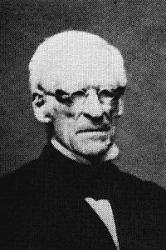
1784 - 1872 Author of "Jesus, merciful and mild, Lead me" in The National Baptist Hymnal Hastings, Thomas, MUS. DOC., son of Dr. Seth Hastings, was born at Washington, Lichfield County, Connecticut, October 15, 1784. In 1786, his father moved to Clinton, Oneida Co., N. Y. There, amid rough frontier life, his opportunities for education were small; but at an early age he developed a taste for music, and began teaching it in 1806. Seeking a wider field, he went, in 1817, to Troy, then to Albany, and in 1823 to Utica, where he conducted a religious journal, in which he advocated his special views on church music. In 1832 he was called to New York to assume the charge of several Church Choirs, and there his last forty years were spent in great and increasing usefulness and repute. He died at New York, May 15, 1872. His aim was the greater glory of God through better musical worship; and to this end he was always training choirs, compiling works, and composing music. His hymn-work was a corollary to the proposition of his music-work; he wrote hymns for certain tunes; the one activity seemed to imply and necessitate the other. Although not a great poet, he yet attained considerable success. If we take the aggregate of American hymnals published duriug the last fifty years or for any portion of that time, more hymns by him are found in common use than by any other native writer. Not one of his hymns is of the highest merit, but many of them have become popular and useful. In addition to editing many books of tunes, Hastings also published the following hymnbooks:—
(1) Spiritual Songs for Social Worship: Adapted to the Use of Families and Private Circles in Seasons of Revival, to Missionary Meetings, &c, Utica, 1831-2, in which he was assisted by Lowell Mason; (2) The Mother's Hymn-book, 1834; (3) The Christian Psalmist; or, Watts's Psalms and Hymns, with copious Selections from other Sources, &c, N. Y., 1836, in connection with "William Patton; (4) Church Melodies, N. Y., 1858, assisted by his son, the Rev. T. S. Hastings; (5) Devotional Hymns and Poems, N. Y., 1850. The last contained many, but not all, of his original hymns. (6) Mother's Hymn-book, enlarged 1850.
The authorship of several of Hastings's hymns has been somewhat difficult to determine. All the hymns given in the Spiritual Songs were without signatures. In the Christian Psalmist some of his contributions were signed "Anon." others "M. S.," whilst others bore the names of the tune books in which they had previously appeared; and in the Church Melodies some were signed with his name, and others were left blank. His MSS [manuscript] and Devotional Hymns, &c, enable us to fix the authorship of over 50 which are still in common use. These, following the chronological order of his leading work, are:—
i. From the Spiritual Songs, 1831:—
1. Before Thy footstool kneeling. In Sickness. No. 358, in 3 stanzas of 8 lines.
2. Bleeding hearts defiled by sin. Fulness of Christ. No. 261, in 5 stanzas of 4 lines.
3. Child of sin and sorrow, Filled with dismay. Lent. No. 315, in 2 stanzas of 8 lines. It is sometimes given as "Child of sin and sorrow, Where wilt thou flee?" It is in extensive use.
4. Delay not, delay not, 0 sinner draw near. Exhortation to Repentance. No. 145, in 5 stanzas of 4 lines. Given in several important collections.
5. Forgive us, Lord, to Thee we cry. Forgiveness desired. No. 165, in 4 stanzas of 4 lines.
6. Gently, Lord, 0 gently lead us. Pilgrimage of Life. No. 29, in 2 stanzas of 8 lines. It is given in several collections. The first two lines are taken from a hymn which appeared in the Christian Lyre, 1830.
7. Go forth on wings of fervent prayer. For a blessing on the distribution of Books and Tracts. No. 250, in 4 stanzas of 5 lines. It is sometimes given as “Go forth on wings of faith and prayer," as in the Baptist Praise Book, N. Y., 1871, No. 1252; but the alterations are so great as almost to constitute it a new hymn.
8. Hail to the brightness of Zion's glad morning. Missionary Success. No. 239, in 4 stanzas of 4 lines. In several hymnbooks in Great Britain and America.
9. How calm and beautiful the morn. Easter. No. 291, in 5 stanzas of 6 lines. Very popular.
10. In this calm, impressive hour. Early Morning. No. 235, pt. i. in 3 stanzas of 6 lines. In several collections.
11. Jesus, save my dying soul. Lent. No. 398, in 4 stanzas of 4 lines. A deeply penitential hymn.
12. Now be the gospel banner. Missions. No. 178, in 2 stanzas of 8 lines. In several collections (see below).
13. Now from labour, and from care. Evening. No. 235. Pt. ii. in 3 stanzas of 6 lines. This hymn, with No. 10 above, "In this calm," &c, constitute one hymn of 6 st. in the Spiritual Songs, but divided into two parts, one for Morning and the other for Evening. Both parts are popular as separate hymns.
14. 0 God of Abraham, hear. Prayer on behalf of Children. No. 288, in 5 stanzas of 4 lines. In use in Great Britain.
15. 0 tell me, Thou Life and delight of my soul. Following the Good Shepherd. No. 151, in 5 stanzas of 4 lines, on Cant. i. 7, 8.
16. Return, O wanderer, to thy home. The Prodigal recalled. No. 183, in 3 stanzas of 4 lines, with the refrain, " Return, return " (see below).
17. Soft and holy is the place. Public Worship. No. 351, in 4 stanzas of 4 lines. In Dr. Hatfield's Church Hymn Book, N. Y., 1872, and some other collections, the opening line is altered to "Sweet and holy is the place."
18. That warning voice, 0 sinner, hear. Exhortation to Repentance. No. 231, in 4 stanzas of 6 lines.
19. To-day the Saviour calls. Lent. No. 176, in 4 stanzas of 4 lines. Dr. Hastings says, in a communication to Dr. Stevenson (Hymns for Church and Home, 1873), this hymn “was offered me in a hasty sketch which I retouched." The sketch was by the Rev. S. F. Smith.
20. Why that look of sadness. Consolation. No. 268, in 3 stanzas of 8 lines.
21. Zion, dreary and in anguish. The Church Comforted. No. 160, in 4 stanzas of 4 lines.
Concerning the two hymns, No. 12, "Now be the gospel banner"; and No. 16, "Beturn, O wanderer, to thy home," Dr. Stevenson has the following note in his Hymns for Church and Home, London, 1873:—
"In a letter to the Editor, Dr. Hastings wrote, not more than a fortnight before his death, 'These two hymns of mine were earlier compositions, the former ["Now be," &c.] for a Utica Sunday School celebration, the latter ["Return, 0 wanderer," &c.] after hearing a stirring revival sermon on the Prodigal Son, by the Rev. Mr. Kint, at a large union meeting in the Presbyterian Church, where two hundred converts were present. The preacher at the close eloquently exclaimed with tender emphasis, "Sinner, come home! come home! come home!" It was easy afterwards to write, "Return, 0 wanderer."'"
Several additional hymns in the Spiritual Songs, 1831, have been ascribed to Dr. Hastings, but without confirmation. The sum of what can be said on his behalf is that the hymns are in his style, and that they have not been claimed by others. They are:—
22. Drooping souls, no longer mourn. Pardon promised. No. 40, in 3 stanzas of 8 1., of which st. i., ii. are altered from J. J. Harrod's Public, Parlour, and Cottage Hymns, Baltimore, 1823, that is, 8 years before the Spiritual Songs were published.
23. Dying souls, fast bound in sin. Pardon offered. No. 41, in 5 stanzas of 8 lines. It is usually given in an abridged form.
ii. From his Mother's Hymn Book, 1834:—-
24. Forbid them not, the Saviour cried. Holy Baptism. No. 44.
25. God of mercy, hear our prayer. On behalf of Cliildrcn, No. 48, in 5 stanzas of 4 lines. It was included in J. Campbell's Comprehensive Hymn Book, Lond., 1837, and subsequently in several collections.
26. God of the nations, bow Thine ear. Missions. No. 115, in 4 stanzas of 6 lines. In several collections.
27. How tender is Thy hand. Affliction. No. 99, in 5 stanzas of 41.
28. Jesus, while our hearts are bleeding. Death. Resignation. No. 95, in 5 stanzas of 4 lines. This is in extensive use and is one of his best and most popular hymns.
29. Lord, I would come to Thee. Self-dedication of a Child. No. 72, in 4 stanzas of 4 lines.
30. 0 Lord, behold us at Thy feet. Lent. No. 59, in 4 stanzas of 4 lines. It is doubtful if this is by Hastings. It is sometimes signed "Mrs. T."
31. The rosy light is dawning. Morning. No. 11, in 3 stanzas of 8 lines.
32. The Saviour bids us [thee] watch and pray. Watch and Pray. No. 119, in 4 stanzas of 4 lines.
33. Thou God of sovereign grace. On behalf of Children. No. 66, in 6 stanzas of 4 lines.
34. Wherever two or three may meet. Divine Service. No. 56.
35. Within these quiet walls, 0 Lord. Mothers' Meetings. No. 58, in 5 stanzas of 4 lines. In Spurgeon's Our Own Hymn Book, 1866, No. 1010, it begins, "Within these peaceful walls." This reading is from J. Campbell's Comprehensive Hymn Book, London, 1837. It is very doubtful if this is by Hastings.
iii. From the Christian Psalmist, 1836:—
36. Children, hear the melting story. On the life of Christ. No. 430, in 3 stanzas of 6 lines. It is given as from the Union Minstrel, and the statement that it is by Hastings is very doubtful, no evidence to that effect being in the possession of his family. Dr. Hatfield, in his Church Hymn Book, dates it 1830, and gives it as "Anon."
37. Go, tune thy voice to sacred song. Praise No. 190, in 5 stanzas of 5 lines, and given as from "ms."
38. He that goeth forth with weeping. Missions No. 212, in 2 stanzas of 8 lines, and given as from "ms." It is in several collections.
39. I love the Lord, Whose gracious ear. Ps. cxvi. Page 186, in 4 stanzas of 6 lines, as from "ms."
40. Lord of the harvest, bend Thine ear. For the Increase of the Ministry. No. 407, in 6 stanzas of 4 lines, as from "ms." This hymn Dr. Hastings altered for his Devotional Hymns & Poems, 1850, but it has failed to replace the original in the hymnbooks.
iv. From the Reformed Dutch Additional Hymns, 1846:—
41. Child of sorrow, child of care [woe]. Trust. No. 168, in 2 stanzas of 8 lines, appeared in W. Hunter's Minstrel of Zion, 1845.
42. Heirs of an immortal crown. Christian Warfare. No. 136, in 2 stanzas of 8 lines.
43. O Saviour, lend a listening ear. Lent. No. 175. Stanzas vi., i., iv., v., altered.
44. The Lord Jehovah lives. Ps. xviii. No. 26, in 4 stanzas of 6 lines.
These three hymns, together with many others, are given in the Dutch Reformed Hymns of the Church, N. Y., 1869. In the 1847 Psalms & Hymns there were, including these, 38 hymns by Hastings, and 2 which are doubtful.
v. From Dr. Hastings's Devotional Hymns and Religious Poems, 1850:—
45. In time of fear, when trouble's near. Encouragement in Trial. Page 95, in 3 stanzas of 4 lines. In use in Great Britain.
vi. From Church Melodies, 1858:—-
46. For those in bonds as bound with them. Missions. No. 416, in 5 stanzas of 4 lines, on Heb. xiii. 3.
47. Forget thyself, Christ bids thee come. Holy Communion. No. 683, in 3 stanzas of 6 lines.
48. Jesus, Merciful and Mild. Leaning on Christ. No. 585, in 4 stanzas of 8 1. In several collections.
49. Pilgrims in this vale of sorrow. Self-denial. No. 397, in 4 stanzas of 4 lines.
50. Saviour, I look to Thee. Lent. In time of Trouble. No. 129, in 4 stanzas of 7 lines.
51. Saviour of our ruined race. Holy Communion. No. 379, in 3 stanzas of 6 lines.
52. Why that soul's commotion? Lent. No. 211, in 3 stanzas of 8 lines. It is doubtful if this is by Hastings.
vii. In Robinson's Songs of the Church, 1862:
53. Be tranquil, 0 my soul. Patience in Affliction. No. 519, in 4 stanzas of 4 lines. Altered in Robinson's Songs for the Sanctuary, 1865.
54. Peace, peace, I leave with you. Peace, the benediction of Christ. No. 386, in 3 stanzas of 7 lines.
55. Saviour, Thy gentle voice. Christ All in All. No. 492, in 3 stanzas of 7 lines.
viii. In Bobinson's Songs for the Sanctuary, 1865:—
56. God of the morning ray. Morning. No. 53, in 2 stanzas of 7 lines.
Of Hastings's hymns about 40 are in the Reformed Dutch Psalms & Hymns, 1847; 39 in Robinson's Songs for the Sanctuary, 1865; 15 in Hatfield's Church Hymn Book, 1872; and 13 in the Lyra Sacra Americana, 1868. They are also largely represented in other collections. Many other of his compositions are found in collections now or recently in common use, but these are not of the highest merit. [Rev. F. M. Bird, M.A.]
--John Julian, Dictionary of Hymnology (1907)
========================
Hastings, T., p. 494, i. Additional hymns are:—
1. Children hear the wondrous story; and "Sinners, hear the melting story," are altered forms of No. 36, on p. 495, i.
2. Father, we for our children plead. On behalf of Children.
3. Forgive my folly, O Lord most holy. Lent.
4. Hosanna to the King, That for, &c. Praise to Jesus.
5. I look to Thee, O Lord, alone. Pardon desired.
6. Jesus, full of every grace. Pardon desired.
7. O why should gloomy thoughts arise? The Mourner Encouraged.
8. Peace to thee, O favoured one. Peace in Jesus.
9. Saviour, hear us through Thy merit. Forgiveness. Of these hymns, No. 3 is in Hasting’s Spiritual Songs, 1831; No. 9 in his Mother's Hymn Book, 1834, and his Devotional Hymns, 1850; and Nos. 4, 5 & 8 in his Devotional Hymns, 1850.
--John Julian, Dictionary of Hymnology, Appendix, Part II (1907)
Thomas Hastings
George Washington Doane
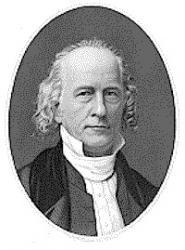
1799 - 1859 Person Name: G. W. Doane Author of "Softly now the light of day" in The Praise Hymnal Doane, George Washington, D.D. Bishop Doane was born at Trenton, New Jersey, May 27, 1799, and graduated at Union College, Schenectady, New York. Ordained in 1821, he was Assistant Minister at Trinity Church, New York, till 1824. In 1824 he became a Professor at Trinity College, Hartford, Conn.; in 1828 Rector of Trinity Church, Boston; and, in 1832, Bishop of New Jersey. He founded St. Mary's Hall, Burlington, 1837, and Burlington College, Burlington, 1846. Died April 27, 1859. Bishop Doane's exceptional talents, learning, and force of character, made him one of the great prelates of his time. His warmth of heart secured devoted friends, who still cherish his memory with revering affection. He passed through many and severe troubles, which left their mark upon his later verse. He was no mean poet, and a few of his lyrics are among our best. His Works, in 4 volumes with Memoir by his son, were published in 1860. He issued in 1824 Songs by the Way, a small volume of great merit and interest. This edition is now rare. A second edition, much enlarged, appeared after his death, in 1859, and a third, in small 4to, in 1875. These include much matter of a private nature, such as he would not himself have given to the world, and by no means equal to his graver and more careful lyrics, on which alone his poetic fame must rest.The edition of 1824 contains several important hymns, some of which have often circulated without his name. Two of these are universally known as his, having been adopted by the American Prayer Book Collection, 1826:--
1. Softly now the light of day. Evening. This, in addition to its use in American hymnals, is also found in the English Collections, including Snepp's Songs of Grace & Glory. Written in 1824.
2. Thou art the way, to Thee alone. Christ the Way. This, in the judgment of many, is the first of American hymns, and one of the most admirable and useful in the English language. In the United States its use is most extensive, and since its introduction into the English Collections by Bickersteth in 1833, Hall in his Mitre, in 1836, and others, it has grown in favour until it ranks with the most popular of the great English hymns. Near in merit to the foregoing stands a companion piece in the same work, which deserves to be better known :—
3. Lord, should we leave Thy hallowed feet.
The next three have been overlooked at home, but have obtained considerable circulation in English Collections.
4. Father of mercies hear, Thy pardon we implore. Ash Wednesday or Lent. A translation of "Audi, benigne Conditor" q.v.), published in his Songs by the Way, 1824, together with several other translations, thus anticipating by twelve years the great English movement in that direction. Original translation in his Songs by the Way, 1875Miller (S. & S., p. 12) attributes this translation to Dr. Neale in error.
5. Return and come to God. Invitation. In his Songs, &c, 1824. It is found in Hall’s Mitre, 1836; the Baptist Hymnal, 1879, and several others.
6. To thee, 0 Lord, with dawning light. Morning. This hymn is attributed to Heber by Miller (S. & S. , p. 381) in error. It is included in the Society for Promoting Christian Knowledge Hymns, 1852; in Windle and others. It is from the Songs, &c, 1824.
His later hymns, the dates of which are generally preserved in the last edition of his Songs by the Way, include the following, which are more or less in use :—
7. Beloved, it is well. All well in Christ. This is entitled "To my wife"; is dated Mar. 12, 1833, and was written in a copy of Dr. Bedell's "It is well." It is given in Kennedy, 1863.
8. Broken-hearted, weep no more. Assurance of Peace. The date of this hymn is not preserved. It is found as early as 1829, when it appeared in the 2nd edition of Cleland's (Baptist) Hymns.
9. Fling out the banner, let it float. Missions, Home & Foreign. This hymn, sometimes dated 1824 in error, was written at Riverside, 2nd Sunday in Advent, 1848, and is one of the author's latest effusions. It is in extensive use both in Great Britain and America.
10. He came not with His heavenly crown. The two Advents. In his Songs by the Way, edition 1875, this poem is dated Dec. 1827. In Dale's English Hymnbook, 1879, it is given with the omission of stanza iii., and in the American Protestant Episcopal Hymnal, 1871, it begins with stanza iv., "Once more, O Lord, Thy sign shall be." Full text in Lyra Sac. Amer., p. 92.
11. Lift not thou the wailing voice. Burial. A funeral hymn, adopted by the Anglican Hymnbook, but dated 1826 in error, for 1830.
12. What is that, mother? The lark, my child. This is not a hymn, but a familiar and long popular song.
13. "When darkness erst [once] at God's command. Israel in Egypt. In Kennedy, 1863, No. 722.
14. Young and happy while thou art. Youth for Christ. A favourite piece in many juvenile collections. It is dated Sept., 1827, and is given in Songs by the Way, 1875.
The Lyra Sacra Americana also contains the following:—
15. Brightness of the Father's glory. Morning. A tr. of "Consors Paterni luminis " (q.v.). It is from the Songs, &c, 1824.
16. Child that kneelest meekly there. Child at Prayer. Suggested by a cast from a piece of sculpture by Greenough representing a child at prayer.
17. Grant me, Lord, Thy graces three. Faith, Hope, and Charity desired.
18. Perfect through suffering may it be. Uses of suffering. Dated in Songs by the Way, "The Breakers, June 1, 1853."
19. Yes, it is a faithful saying. Redemption. In his Songs, &c, 1824. [Rev. F. M. Bird, M.A.]
-- John Julian, Dictionary of Hymnology (1907)
George Washington Doane
Anonymous
Person Name: Anon. Author of "Sing, my soul, His wondrous love" in The Church Hymnal In some hymnals, the editors noted that a hymn's author is unknown to them, and so this artificial "person" entry is used to reflect that fact. Obviously, the hymns attributed to "Author Unknown" "Unknown" or "Anonymous" could have been written by many people over a span of many centuries.
Anonymous
Vicente P. Mendoza
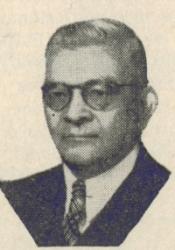
1875 - 1955 Person Name: Vicente Mendoza Author of "Mensajeros del Maestro" in El Himnario Vicente Mendoza Born: December 24, 1875, Guadalajara, Mexico. Died: 1955, Mexico City, Mexico. Mendoza studied initially under Don Aurelio Ortega. At age of 11 he went to work in a Protestant print shop in Mexico City and helped produce El Evangelista Mexicano (The Mexican Evangelist) for the Methodist Church of the South; he rose to become its director for 17 years. Looking to improve himself, Mendoza entered a night school for workers, but later feeling the call to preach the Gospel, he entered the Presbyterian Seminary in Mexico City. When the seminary closed temporarily, Mendoza entered the Methodist Institute of Puebla, where he finished the course in theology. In 1898 he became a member of the Annual Conference of the Mexican Methodist Church. From 1915 to 1917, he belonged to the Southern Methodist Conference of California. Mendoza worked on several periodicals, including El Mundo Cristiano (The Christian World), El Abogado Cristiano (The Christian Advocate), and El Evangelista Cristiano (The Christian Evangelist).
© The Cyber Hymnal™ (hymntime.com/tch)
Vicente P. Mendoza
William H. Walter
1825 - 1893 Person Name: Walter Arranger of "[Sing, my soul, His wondrous grace]" in The Hymnal, Revised and Enlarged, as adopted by the General Convention of the Protestant Episcopal Church in the United States of America in the year of our Lord 1892
William H. Walter
John R. MacDuff
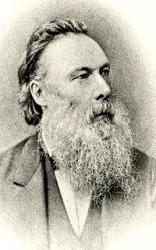
1818 - 1895 Person Name: John R. Macduff Author of ""The everlasting arms"" in Laudes Domini Macduff, John Ross, D.D., second son of Alexander Macduff, of Bonhard, near Perth, was born at Bonhard, May 23, 1818. After studying at the University of Edinburgh, he became in 1842 parish minister of Kettins, Forfarshire, in 1849 of St. Madoes, Perthshire, and in 1855 of Sandyford, Glasgow. He received the degree of D.D. from the University of Glasgow in 1862, and about the same time also from the University of New York. He retired from pastoral work in 1871, lived at Chislehurst, Kent and died in 1887. He has published many practical and devotional works which have attained a wide circulation. In 1857 he was appointed by the General Assembly a member of their Hymnal Committee. His 31 hymns appeared in his Altar Stones, 1853, and were also included with his later poems in his The Gates of Praise, 1876. Of these hymns the following are in common use:—
1. Christ Is coming! Let creation. Second Advent.
2. Eternal Rock! To Thee I flee. (1853.) Christ the Rock.
3. Everlasting arms of love. (1853.) Support in Christ.
4. From Thy habitation holy. Whitsuntide.
5. Hasten, Lord, that morn of glory. Second Advent.
6. Jesus wept! Those tears are over. (1853.) The raising of Lazarus.
7. O do not, blessed Lord, depart. Christ's presence desired.
8. Where shall I look for holy calm. (1853.) Passiontide.
9. Why should I murmur or repine? Resignation.
Of these hymns those dated 1853 are parts only of Dr. Macduff’s originals.
[Rev. James Mearns, M.A.]
-- John Julian, Dictionary of Hymnology (1907)
==============
Macduff, J. R., p. 708, i. Another hymn from his Gates of Praise, 1876, is "Blessed feast! most gracious token" (Holy Communion). He died April 30, 1895.
--John Julian, Dictionary of Hymnology, Appendix, Part II (1907)
==============
http://en.wikipedia.org/wiki/John_Ross_Macduff
John R. MacDuff
Stopford A. Brooke
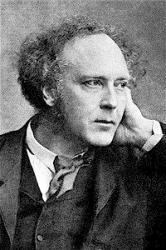
1832 - 1916 Author of "Let the whole creation cry" in Jubilate Deo Brooke, Stopford Augustus, M.A., was born at Letterkenny, Donegal, Nov. 14, 1832, and educated at Trinity College, Dublin, graduating B.A. 1856; M.A. 1858. He carried off the Downes prize and the Vice-Chancellor's prize for English verse. On taking Holy Orders he was successively Curate of St. Matthew's, Marylebone, 1857-59; of Kensington, 1860-63; Chaplain to the British Embassy at Berlin, 1863-65; Minister of St. James's Chapel, York Street, London, 1866-75; and of Bedford Chapel, 1876. He was also appointed Chaplain in Ordinary to the Queen, in 1872. In 1865 he published the Life and Letters of the late F. W. Robertson; in 1874, Theology in the English Poets; in 1876, Primer of English Literature, &c. On seceding from the Church of England in 1881, he published for the use of his congregation, Christian Hymns, a collection of 269 pieces. Of these he is the author of:—
1. Immortal Love, within Whose righteous will. Resignation and Prayer for Guidance. No. 183, in 4 stanzas of 6 lines. It has a strong likeness to Card. Newman's "Lead, kindly light," is in the same metre, and might be called a companion hymn thereto. It was repeated in Horder's Congregational Hymns, 1884.
2. It fell upon a summer day. Christ blessing little children. No. 250, in 10 stanzas of 4 lines.
3. It is finished, all the pain. Good Friday. No. 80, in 6 stanzas of 4 lines.
4. Let the whole creation cry. Invitation to Praise God. An imitation of Ps. 148. It is No. 47, in 10 stanzas of 4 lines, and is of special merit. In st. iv., 11. 3, 4 are from another source.
5. Mysterious Spirit, unto Whom. Rest and Joy in God. Based on a translation by J. G. Whittier from Lamartine. It is No. 159, in 3 stanzas of 8 lines. It was repeated in Horder's Congregational Hymns, 1884.
6. Now that day its wings has furled. Evening. No. 13, in 5 stanzas of 4 lines.
7. 0 God, Whose love is near. Divine protection desired. No. 103, in 7 stanzas of 4 lines. This is Toplady's "Your harps, ye trembling Saints" re-written, only st. i. and iv. being absolutely by Mr. Brooke.
8. 0 that Thou would'st the heavens rend And comfort, &c. Peace desired. No. 149, in 4 stanzas of 4 lines. The first line is from C. Wesley; also stanzas ii., 1. 4, but the rest of the hymn is original.
9. 0 Who is this that on a tree. Good Friday. No. 79, in 8 stanzas of 4 lines.
10. Oft as we run the weary way. Heavenly Witnesses of the struggles of Men. No. 188, in 6 stanzas of 6 lines.
11. Still the night, holy the night. Christmas Carol. No. 55, in 3 stanzas of 8 lines. It is a translation from the German, and is noticed under Mohr, Joseph.
12. Through the starry midnight dim. Christmas. No. 53, in 6 stanzas of 3 lines, and the refrain "Hallelujah."
13. When the Lord of Love was here. Life of Christ. No. 66, in 6 stanzas of 4 lines. It has passed into The Norwood Hymnal; and with the omission of st. vi. and the transposition of st. iv. and v. into Horder's Congregational Hymns, 1884. This is his finest hymn.
In addition, Mr. Brooke has made extensive alterations in the text of the hymns which he has adopted from other writers, and has also inserted in many instances additional stanzas into well-known lyrics, and thereby brought them, to some extent, into harmony with his theological views. His own compositions are marked by great freshness of thought and tenderness of expression. [Rev. W. Garrett Horder]
-- John Julian, Dictionary of Hymnology (1907)
Stopford A. Brooke
Samuel Johnson
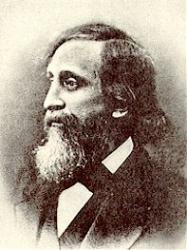
1822 - 1882 Author of "Life of Ages, richly poured" in Jubilate Deo Johnson, Samuel, M.A, was born at Salem, Massachusetts, Oct. 10, 1822, and educated at Harvard, where he graduated in Arts in 1842, and in Theology in 1846. In 1853 he formed a Free Church in Lynn, Massachusetts, and remained its pastor to 1870. Although never directly connected with any religious denomination, he was mainly associated in the public mind with the Unitarians. He was joint editor with S. Longfellow (q. v.) of A Book of Hymns for Public and Private Devotion, Boston, 1846; the Supplement to the same, 1848; and Hymns of the Spirit, 1864. His contributions to these collections were less numerous than those by S. Longfellow, but not less meritorious. He died at North Andover, Massachusetts, Feb. 19, 1882. His hymns were thus contributed:—
i. To A Book of Hymns, 1846.
1. Father [Saviour] in Thy mysterious presence kneeling. Divine Worship.
2. Go, preach the gospel in my name. Ordination.
3. Lord, once our faith in man no fear could move. In Time of War.
4. O God, Thy children gathered here. Ordination.
5. Onward, Christians, [onward] through the region. Conflict. In the Hymns of the Spirit, 1864, it was altered to "Onward, onward through the region."
6. Thy servants' sandals, Lord, are wet. Ordination.
7. When from Jordan's gleaming wave. Holy Baptism.
ii. To the Supplement, 1848.
8. God of the earnest heart. Trust.
iii. To the Hymns of the Spirit, 1864.
9. City of God, how broad, how far. The Church the City of God.
10. I bless Thee, Lord, for sorrows sent. Affliction— Perfect through suffering.
11. Life of Ages, richly poured. Inspiration.
12. Strong-souled Reformer, Whose far-seeing faith. Power of Jesus.
13. The Will Divine that woke a waiting time. St. Paul.
14. Thou Whose glad summer yields. Prayer for the Church.
15. To light that shines in stars and souls. Dedication of a Place of Worship.
Of these hymns No. 8 was "Written for the Graduating Exercises of the Class of 1846; in Cambridge Divinity Schools ; and No. 10 “Written at the request of Dorothea L. Dix for a collection made by her for the use of an asylum." It is undated. A few only of these hymns are in use in Great Britain. [Rev. F. M. Bird, M.A.]
-- John Julian, Dictionary of Hymnology (1907)
Samuel Johnson
J. F. Bahnmaier
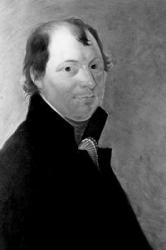
1774 - 1841 Person Name: J. F. Bahnmayer Author of "Walte, walte nah und fern" in Deutsches Lieder- und Melodienbuch Bahnmaier, Jonathan Friedrich, son of J. G. Bahnmaier, Town Preacher at Oberstenfeld, near Bottwar, Württemberg, was born at Oberstenfeld, July 12, 1774. After completing his studies at Tübingen, his first appointment was, in 1798, as assistant to his father. He became Diaconus at Marbach on the Neckar in 1806, and at Ludwigsburg in 1810, where he was for a time the head of a young ladies' school. In 1815 he was appointed Professor of Education and Homiletics at Tübingen, but in the troublous times that followed had to resign his post. He received in 1819 the appointment of Decan and Town Preacher at Kirchheim-unter-Teck, where he continued as a faithful, unwearied, and successful worker for 21 years. He was distinguished as a preacher, and greatly interested in the causes of education, of missions, and of Bible societies. He was also one of the principal members of the committee which compiled the Württemberg Gesang-Buch of 1842. He preached his last sermon at Kirchheim, on the 10th Sunday after Trinity, Aug. 15, 1841. Two days later he held a visitation at Owen. While inspecting the school at the adjacent village of Brucker, he was struck by paralysis, and being conveyed back to Owen, died there, Aug. 18, 1841 (Koch vii. 81-84; Allgemeine Deutsche Biographie, i. 766-767). Of his hymns two have been translated into English:
i. Jesu als du wiederkehrtest. [Schools.] First published in his Christliche Blätter aus Tübingen, pts. 9-12 for 1819, p. 85, in 2 stanzas of 8 lines, entitled "Prayer after School"; as one of 7 metrical prayers for Children, and for the School and House. Included as No. 2947 in Knapp's Evanglischer Lieder-Schatz, 1837 (1865, No. 2614), and No. 513 in the Württemberg Gesang-Buch, 1842. The only translation in common use is:
Jesu, when Thou once returnest. In full by Miss Winkworth in her Chorale Book for England, 1863, No. 178.
ii. Walte, fürder, nah und fern. [Missions.] According to Koch, vii. 84, first printed separately 1827. Included as No. 97 in the Kern des deutschen Ziederschatzes, Nürnberg, 1828, and as No. 260, beginning,"Walte, walte, nah und fern" in Bunsen's Versuch, 1833, in 7 stanzas of 4 line, and since in the Württemberg Gesang-Buch, 1842, and other recent collections. One of the best and most useful of hymns for Foreign Missions. The translations in common use are:
1. Far and near, Almighty Word. A good and full translation by Miss Cox in her Sacred Hymns, Boston, U.S., 1853, and Dean Alford's Year of Praise, 1867, stanza i. was omitted and the hymn thus began, "Word by God the Father sent."
2. Spread thy triumph far and nigh, by H. J. Buckoll. By omitting stanzas ii., iv. as No. 65 in the Rugby School Hymn Book, 1850 (in the Rugby School Hymn Book, 1870, No. 175, the translation is complete). The translations of stanzas iii., v.-vii. altered and beginning "Word of Him whose sovereign will", were included in the Marylebone Collection, 1851, and Burgess and Money's Psalms and Hymns, 1857. The Wellington College Hymn Book, 1863, begins with the translations of stanza v., "Word of life, so pure and free."
3. Spread, oh spread, thou mighty Word. A full and very good translation by Miss Winkworth in her Lyra Germanica, 2nd Series, 1858, p. 60, repeated in her Chorale Book for England, 1863, No. 176. Since included in Kennedy, People's Hymnal, 1867, Horder's Congregational Hymns, 1884, and others; and in America in the Pennsylvania Lutheran Church Book, 1868, Hymns and Songs of Praise, N. Y., 1874, Evangelical Hymnal, and others. In Longfellow and Johnson's Hymns of the Spirit, Boston, 1864, it begins with st. v., "Word of life, most pure, most strong."
Other translations are:
(1) "Go forth, thou mighty word of grace", by Lady E, Fortescue, 1343 (ed. 1847, p. 31). (2) "0 Word of God, reign everywhere," by Dr. G. Walker, 1860, p. 85. (3) "Word of God! with glory crown'd", in L. Rehfuess's Ch. at Sea, 1868, p. 109. [Rev. James Mearns, M. A.]
-- John Julian, Dictionary of Hymnology (1907)
J. F. Bahnmaier
Augustus Toplady
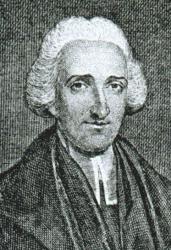
1740 - 1778 Person Name: Augustus Montague Toplady, 1740-78 Author of "Object of my first desire" in The Methodist Hymn-Book with Tunes Toplady, Augustus Montague, the author of "Rock of Ages," was born at Farnham, Surrey, November 4, 1740. His father was an officer in the British army. His mother was a woman of remarkable piety. He prepared for the university at Westminster School, and subsequently was graduated at Trinity College, Dublin. While on a visit in Ireland in his sixteenth year he was awakened and converted at a service held in a barn in Codymain. The text was Ephesians ii. 13: "But now, in Christ Jesus, ye who sometimes were far off are made nigh by the blood of Christ." The preacher was an illiterate but warm-hearted layman named Morris. Concerning this experience Toplady wrote: "Strange that I, who had so long sat under the means of grace in England, should be brought nigh unto God in an obscure part of Ireland, amidst a handful of God's people met together in a barn, and under the ministry of one who could hardly spell his name. Surely this is the Lord's doing, and it is marvelous." In 1758, through the influence of sermons preached by Dr. Manton on the seventeenth chapter of John, he became an extreme Calvinist in his theology, which brought him later into conflict with Mr. Wesley and the Methodists. He was ordained to the ministry in the Church of England in 1762, and in 1768 he became vicar of Broadhembury, a small living in Devonshire, which he held until his death. The last two or three years of his life he passed in London, where he preached in a chapel on Orange Street. His last sickness was of such a character that he was able to make a repeated and emphatic dying testimony. A short time before his death he asked his physician what he thought. The reply was that his pulse showed that his heart was beating weaker every day. Toplady replied with a smile: "Why, that is a good sign that my death is fast approaching; and, blessed be God, I can add that my heart beats stronger and stronger every day for glory." To another friend he said: "O, my dear sir, I cannot tell you the comforts I feel in my soul; they are past expression. . . . My prayers are all converted into praise." He died of consumption August 11, 1778. His volume of Psalms and Hymns for Public and Private Worship was published in 1776. Of the four hundred and nineteen hymns which it contained, several were his own productions.
If on a quiet sea 446
Rock of ages, cleft for me 279
Hymn Writers of the Church, 1915 by Charles S. Nutter
===============================================
Toplady, Augustus Montague, M.A. The life of Toplady has been repeatedly and fully written, the last, a somewhat discursive and slackly put together book, yet matterful, by W. Winters (1872). Summarily, these data may be here given: he was born at Farnham, in Surrey, on November 4, 1740. His father, Richard Toplady, was a Major in the British array, and was killed at the siege of Carthagena (1741) soon after the birth of his son. His widowed mother placed him at the renowned Westminster school, London. By-and-by circumstances led her to Ireland, and young Augustus was entered at Trinity College, Dublin, where he completed his academical training, ultimately graduating M.A. He also received his "new birth" in Ireland under remarkable conditions, as he himself tells us with oddly mixed humility and lofty self-estimate, as "a favourite of heaven," common to his school:—
"Strange that I who had so long sat under the means of grace in England should be brought right unto God in an obscure part of Ireland, midst a handful of people met together in a barn, and by the ministry of one who could hardly spell his own name. Surely it was the Lord's doing and is marvellous. The excellency of such power must be of God and cannot be of man. The regenerating spirit breathes not only on whom but likewise, when and where and as He listeth."
Toplady received orders in the Church of England on June 6, 1762, and after some time was appointed to Broadhembury. His Psalms and Hymns of 1776 bears that he was then “B.A." and Vicar of Broadhembury. Shortly thereafter be is found in London as minister of the Chapel of the French Calvinists in Leicester Fields. He was a strong and partizan Calvinist, and not well-informed theologically outside of Calvinism. We willingly and with sense of relief leave unstirred the small thick dust of oblivion that has gathered on his controversial writings, especially his scurrilous language to John Wesley because of his Arminianism, as we do John Wesley's deplorable misunderstanding and misrepresentation of Calvinism.
Throughout Toplady lacked the breadth of the divine Master's watchword "Forbid him not, for he that is not against us is for us" (St. Luke ix. 50). He was impulsive, rash-spoken, reckless in misjudgment; but a flame of genuine devoutness burned in the fragile lamp of his overtasked and wasted body. He died on August 11, 1778. The last edition of his works is in 6 vols., 8 vo., 1825. An accurate reproduction of most of his genuine hymns was one of the reprints of Daniel Sedgwick, 1860. His name occurs and recurs in contemporary memoirs and ecclesiastical histories, e.g., in Tyerman's Life of John Wesley. The reader will find in their places annotations on the several hymns of Toplady, and specially on his "Rock of Ages,” a song of grace that has given him a deeper and more inward place in millions of human hearts from generation to generation than almost any other hymnologist of our country, not excepting Charles Wesley. Besides the "Rock of Ages" must be named, for power, intensity, and higher afflatus and nicer workmanship, "Object of my first desire,” and "Deathless principle arise." It is to be regretted that the latter has not been more widely accepted. It is strong, firm, stirring, and masterful. Regarded critically, it must be stated that the affectionateness with which Toplady is named, and the glow and passion of his faith and life, and yearning after holiness, have led to an over-exaltation of him as a hymnwriter. Many of his hymns have been widely used, and especially in America, and in the Evangelical hymnbooks of the Church of England. Year by year, however, the number in use is becoming less. The reason is soon found. He is no poet or inspired singer. He climbs no heights. He sounds no depths. He has mere vanishing gleams of imaginative light. His greatness is the greatness of goodness. He is a fervent preacher, not a bard. [Rev. A. B. Grosart, D.D., LL.D.]
Toplady's hymns and poetical pieces were published in his:—
(1) Poems on Sacred Subjects wherein The Fundamental Doctrines of Christianity, with many other interesting Points, are occasionally introduced. . . Dublin: Printed by S. Powell, in Crane-lane, MDCCLIX.; (2) his Psalms & Hymns for Public and Private Worship, 1776; (3) in The Gospel Magazine, 1771-1776; and (4) in Hymns and Sacred Poems on a variety of Divine Subjects, &c. D. Sedgwick's reprint, 1860. His Works, with a Memoir by W. Row, were published in 6 volumes, in 1794. Walter How was also the editor of the 2nd and some later editions of the Psalms & Hymns. He was a most careless editor, and attributed several hymns by C. Wesley and others to Toplady.
The following additional hymns in common use together with centos indicated in the sub-lines, are from:—
i. His Poems on Sacred Subjects, 1759.
1. Can my heaven-born soul submit? All for Christ.
2. Come from on high, my King and God. Holiness desired.
(1.) 0 might this worthless heart of mine.
3. Earnest of future bliss. The Witness of the Spirit.
4. From Thy supreme tribunal, Lord. Christ's Righteousness a Refuge.
(1.) The spotless Saviour lived for me.
5. Great God, Whom heaven, and earth, and sea. For Peace.
6. I saw, and lo! a countless throng. Saints' Days. Revised form in the Gospel Magazine, 1774, p. 449.
7. Immovable our hope remains. Divine Faithfulness.
8. Jesus, God of love, attend. Divine Worship. Pt. ii. is "Prayer can mercy's door unlock."
9. Jesus, Thy power I fain would feel. Lent.
10. Lord, I feel a carnal mind. Mind of Christ desired.
11. My yielding heart dissolves as wax. On behalf of Arians, &c.
(1.) 0 Jesus, manifest Thy grace.
12. Not to myself I owe. Praise for Conversion,
(1.) Not to ourselves we owe.
(2.) The Father's grace and love.
13. 0 that my heart was right with Thee. Dedication to God desired.
14. 0 Thou that hearest the prayer of faith. Christ the Propitiation.
15. 0 Thou Who didst Thy glory leave. Thanksgiving for Redemption.
16. 0 when wilt Thou my Saviour be. Trust in Jesus.
(1.) Jesus, the sinner's Rest Thou art.
17. Redeemer, whither should I flee? Safety in the Cross.
18. Remember, Lord, that Jesus bled. Pardon.
19. Surely Christ thy griefs hath borne. Redemption. Revised text in Gospel Magazine, 1774, p. 548.
(1.) Weary sinner, keep thine eyes.
(2.) Weeping soul, no longer mourn.
ii. From the Gospel Magazine.
20. Compared with Christ, in all besides. Christ All in All. Feb. 1772.
21. Eternal Hallelujahs Be to the Father given. Holy Trinity, Dec. 1774.
22. From whence this fear and unbelief. Reviving Faith, Feb. 1772.
23. How vast the benefits divine. Redemption. Dec. 1774. From this "Not for the works which we have done" is taken.
24. Whom have I in heaven but Thee? Christ All and in All, Feb. 1772. From this "If my Lord Himself reveal" is taken.
25. Jesus, immutably the same. Jesus, the True Vine. June, 1771.
All these hymns, together with "O precious blood, 0 glorious death" (Death of Christ), are in D. Sedgwick's reprint of Toplady's Hymns, &c, 1860. We have met with several other hymns to which Toplady's name is appended, but for this we can find no authority whatever.
-- Excerpts from John Julian, Dictionary of Hymnology (1907)
Augustus Toplady
Pages




