You help make Hymnary.org possible. More than 10 million people from 200+ countries found hymns, liturgical resources and encouragement on Hymnary.org in 2025, including you. Every visit affirms the global impact of this ministry.

If Hymnary has been meaningful to you this year, would you take a moment today to help sustain it? A gift of any size—paired with a note of encouragement if you wish—directly supports the server costs, research work and curation that keep this resource freely available to the world.

Give securely online today, or mail a check to:
Hymnary.org
Calvin University
3201 Burton Street SE
Grand Rapids, MI 49546

Thank you for your partnership, and may the hope of Advent fill your heart.

Person Results

Tune Identifier:"^york_scottish$"
In:people

Planning worship? Check out our sister site, ZeteoSearch.org, for 20+ additional resources related to your search.
Showing 11 - 20 of 44Results Per Page: 102050

Henry Francis Lyte

1793 - 1847 Person Name: Lyte Author of "God's Mercies" in Psalms and Hymns and Spiritual Songs Lyte, Henry Francis, M.A., son of Captain Thomas Lyte, was born at Ednam, near Kelso, June 1, 1793, and educated at Portora (the Royal School of Enniskillen), and at Trinity College, Dublin, of which he was a Scholar, and where he graduated in 1814. During his University course he distinguished himself by gaining the English prize poem on three occasions. At one time he had intended studying Medicine; but this he abandoned for Theology, and took Holy Orders in 1815, his first curacy being in the neighbourhood of Wexford. In 1817, he removed to Marazion, in Cornwall. There, in 1818, he underwent a great spiritual change, which shaped and influenced the whole of his after life, the immediate cause being the illness and death of a brother clergyman. Lyte says of him:— "He died happy under the belief that though he had deeply erred, there was One whose death and sufferings would atone for his delinquencies, and be accepted for all that he had incurred;" and concerning himself he adds:— "I was greatly affected by the whole matter, and brought to look at life and its issue with a different eye than before; and I began to study my Bible, and preach in another manner than I had previously done." From Marazion he removed, in 1819, to Lymington, where he composed his Tales on the Lord's Prayer in verse (pub. in 1826); and in 1823 he was appointed Perpetual Curate of Lower Brixham, Devon. That appointment he held until his death, on Nov. 20, 1847. His Poems of Henry Vaughan, with a Memoir, were published in 1846. His own Poetical works were:— (1) Poems chiefly Religious 1833; 2nd ed. enlarged, 1845. (2) The Spirit of the Psalms, 1834, written in the first instance for use in his own Church at Lower Brixham, and enlarged in 1836; (3) Miscellaneous Poems (posthumously) in 1868. This last is a reprint of the 1845 ed. of his Poems, with "Abide with me" added. (4) Remains, 1850. Lyte's Poems have been somewhat freely drawn upon by hymnal compilers; but by far the larger portion of his hymns found in modern collections are from his Spirit of the Psalms. In America his hymns are very popular. In many instances, however, through mistaking Miss Auber's (q. v.) Spirit of the Psalms, 1829, for his, he is credited with more than is his due. The Andover Sabbath Hymn Book, 1858, is specially at fault in this respect. The best known and most widely used of his compositions are "Abide with me, fast falls the eventide;” “Far from my heavenly home;" "God of mercy, God of grace;" "Pleasant are Thy courts above;" "Praise, my soul, the King of heaven;" and "There is a safe and secret place." These and several others are annotated under their respective first lines: the rest in common use are:— i. From his Poems chiefly Religious, 1833 and 1845. 1. Above me hangs the silent sky. For Use at Sea. 2. Again, 0 Lord, I ope mine eyes. Morning. 3. Hail to another Year. New Year. 4. How good, how faithful, Lord, art Thou. Divine care of Men. 5. In tears and trials we must sow (1845). Sorrow followed by Joy. 6. My [our] rest is in heaven, my [our] rest is not here. Heaven our Home. 7. 0 Lord, how infinite Thy love. The Love of God in Christ. 8. Omniscient God, Thine eye divine. The Holy Ghost Omniscient. 9. The leaves around me falling. Autumn. 10. The Lord hath builded for Himself. The Universe the Temple of God. 11. Vain were all our toil and labour. Success is of God. 12. When at Thy footstool, Lord, I bend. Lent. 13. When earthly joys glide swift away. Ps. cii. 14. Wilt Thou return to me, O Lord. Lent. 15. With joy we hail the sacred day. Sunday. ii. From his Spirit of the Psalms, 1834. 16. Be merciful to us, O God. Ps. lvii. 17. Blest is the man who knows the Lord. Ps. cxii. 18. Blest is the man whose spirit shares. Ps. xli. 19. From depths of woe to God I cry. Ps. cxxxx. 20. Gently, gently lay Thy rod. Ps. vi. 21. Glorious Shepherd of the sheep. Ps. xxiii. 22. Glory and praise to Jehovah on high. Ps. xxix. 23. God in His Church is known. Ps. lxxvi. 24. God is our Refuge, tried and proved. Ps. xlvi. 25. Great Source of my being. Ps. lxxiii. 26. Hear, O Lord, our supplication. Ps. lxiv. 27. How blest the man who fears the Lord. Ps.cxxviii. 28. Humble, Lord, my haughty spirit. Ps. cxxxi. 29. In this wide, weary world of care. Ps. cxxxii. 30. In vain the powers of darkness try. Ps.lii. 31. Jehovah speaks, let man be awed. Ps. xlix. 32. Judge me, O Lord, and try my heart. Ps. xxvi. 33. Judge me, O Lord, to Thee I fly. Ps. xliii. 34. Lord, I have sinned, but O forgive. Ps. xli. 35. Lord, my God, in Thee I trust. Ps. vii. 36. Lord of the realms above, Our Prophet, &c. Ps.xlv. 37. Lone amidst the dead and dying. Ps. lxii. 38. Lord God of my salvation. Ps. lxxxviii. 39. Lord, I look to Thee for all. Ps. xxxi. 40. Lord, I would stand with thoughtful eye. Ps. lxix. 41. Lord, my God, in Thee I trust. Ps. vii. 42. My God, my King, Thy praise I sing. Ps. cviii. 43. My God, what monuments I see. Ps. xxxvi. 44. My spirit on [to] Thy care. Ps. xxxi. 45. My trust is in the Lord. Ps. xi. 46. Not unto us, Almighty Lord [God]. Ps. cxv. 47. O God of glory, God of grace. Ps. xc. 48. O God of love, how blest are they. Ps. xxxvii. 49. O God of love, my God Thou art. Ps. lxiii. 50. O God of truth and grace. Ps. xviii. 51. O had I, my Saviour, the wings of a dove. Ps. lv. 52. O how blest the congregation. Ps. lxxxix. 53. O how safe and [how] happy he. Ps. xci. 54. O plead my cause, my Saviour plead. Ps. xxxv. 55. O praise the Lord, 'tis sweet to raise. Ps. cxlvii. 56. O praise the Lord; ye nations, pour. Ps. cxvii. 57. O praise ye the Lord With heart, &c. Ps. cxlix. 58. O that the Lord's salvation. Ps. xiv. 59. O Thou Whom thoughtless men condemn. Ps. xxxvi. 60. Of every earthly stay bereft. Ps. lxxiv. 61. Our hearts shall praise Thee, God of love. Ps. cxxxviii. 62. Pilgrims here on earth and strangers. Ps. xvi. 63. Praise for Thee, Lord, in Zion waits. Ps. lxv. 64. Praise to God on high be given. Ps. cxxxiv. 65. Praise ye the Lord, His servants, raise. Ps. cxiii. 66. Redeem'd from guilt, redeem'd from fears. Ps. cxvi. 67. Save me by Thy glorious name. Ps. liv. 68. Shout, ye people, clap your hands. Ps. xlvii. 69. Sing to the Lord our might. Ps. lxxxi. 70. Strangers and pilgrims here below. Ps. cix. 71. Sweet is the solemn voice that calls. Ps. cxxii. 72. The Church of God below. Ps. lxxxvii. 73. The Lord is King, let earth be glad. Ps. xcvii. 74. The Lord is on His throne. Ps. xciii. 75. The Lord is our Refuge, the Lord is our Guide. Ps. xlvii. 76. The mercies of my God and King. Ps. lxxxix. 77. The Lord Who died on earth for men. Ps. xxi. 78. Tis a pleasant thing to fee. Ps. cxxxiii. 79. Thy promise, Lord, is perfect peace. Ps. iii. 80. Unto Thee I lift mine [my] eyes. Ps. cxxiii. 81. Whom shall [should] we love like Thee? Ps. xviii. Lyte's versions of the Psalms are criticised where their sadness, tenderness and beauty are set forth. His hymns in the Poems are characterized by the same features, and rarely swell out into joy and gladness. --John Julian, Dictionary of Hymnology (1907) ================== Lyte, Henry Francis, p. 706, i. Additional versions of Psalms are in common use:-- 1. Lord, a thousand foes surround us. Psalms lix. 2. Praise, Lord, for Thee in Zion waits. Psalms lxv. 3. The Christian like his Lord of old. Psalms cxl. 4. The Lord of all my Shepherd is. Psalms xxiii. 5. The Lord of heaven to earth is come. Psalms xcviii. 6. Thy mercy, Lord, the sinner's hope. Psalms xxxvi. 7. To Thee, O Lord, in deep distress. Psalms cxlii. Sometimes given as "To God I turned in wild distress." 8. Uphold me, Lord, too prone to stray. Psalms i. 9. When Jesus to our [my] rescue came. Psalms cxxvi. These versions appeared in the 1st edition of Lyte's Spirit of the Psalms, 1834. It must be noted that the texts of the 1834, the 1836, and the 3rd ed., 1858, vary considerably, but Lyte was not responsible for the alterations and omissions in the last, which was edited by another hand for use at St. Mark's, Torquay. Lyte's version of Psalms xxix., "Glory and praise to Jehovah on high" (p. 706, ii., 22), first appeared in his Poems, 1st ed., 1833, p. 25. Read also No. 39 as "Lord, I look for all to Thee." --John Julian, Dictionary of Hymnology, Appendix, Part II (1907)

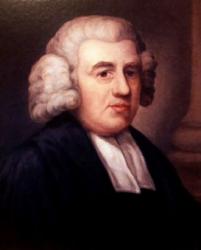
John Newton

1725 - 1807 Person Name: John Newton, 1725-1807 Author of "In Vain Our Fancy" in The Christian Hymnary John Newton (b. London, England, 1725; d. London, 1807) was born into a Christian home, but his godly mother died when he was seven, and he joined his father at sea when he was eleven. His licentious and tumul­tuous sailing life included a flogging for attempted desertion from the Royal Navy and captivity by a slave trader in West Africa. After his escape he himself became the captain of a slave ship. Several factors contributed to Newton's conversion: a near-drowning in 1748, the piety of his friend Mary Catlett, (whom he married in 1750), and his reading of Thomas à Kempis' Imitation of Christ. In 1754 he gave up the slave trade and, in association with William Wilberforce, eventually became an ardent abolitionist. After becoming a tide-surveyor in Liverpool, England, Newton came under the influence of George Whitefield and John and Charles Wesley and began to study for the ministry. He was ordained in the Church of England and served in Olney (1764-1780) and St. Mary Woolnoth, London (1780-1807). His legacy to the Christian church includes his hymns as well as his collaboration with William Cowper (PHH 434) in publishing Olney Hymns (1779), to which Newton contributed 280 hymns, including “Amazing Grace.” Bert Polman ================== Newton, John, who was born in London, July 24, 1725, and died there Dec. 21, 1807, occupied an unique position among the founders of the Evangelical School, due as much to the romance of his young life and the striking history of his conversion, as to his force of character. His mother, a pious Dissenter, stored his childish mind with Scripture, but died when he was seven years old. At the age of eleven, after two years' schooling, during which he learned the rudiments of Latin, he went to sea with his father. His life at sea teems with wonderful escapes, vivid dreams, and sailor recklessness. He grew into an abandoned and godless sailor. The religious fits of his boyhood changed into settled infidelity, through the study of Shaftesbury and the instruction of one of his comrades. Disappointing repeatedly the plans of his father, he was flogged as a deserter from the navy, and for fifteen months lived, half-starved and ill-treated, in abject degradation under a slave-dealer in Africa. The one restraining influence of his life was his faithful love for his future wife, Mary Catlett, formed when he was seventeen, and she only in her fourteenth year. A chance reading of Thomas à Kempis sowed the seed of his conversion; which quickened under the awful contemplations of a night spent in steering a water-logged vessel in the face of apparent death (1748). He was then twenty-three. The six following years, during which he commanded a slave ship, matured his Christian belief. Nine years more, spent chiefly at Liverpool, in intercourse with Whitefield, Wesley, and Nonconformists, in the study of Hebrew and Greek, in exercises of devotion and occasional preaching among the Dissenters, elapsed before his ordination to the curacy of Olney, Bucks (1764). The Olney period was the most fruitful of his life. His zeal in pastoral visiting, preaching and prayer-meetings was unwearied. He formed his lifelong friendship with Cowper, and became the spiritual father of Scott the commentator. At Olney his best works—-Omicron's Letters (1774); Olney Hymns (1779); Cardiphonia, written from Olney, though published 1781—were composed. As rector of St. Mary Woolnoth, London, in the centre of the Evangelical movement (1780-1807) his zeal was as ardent as before. In 1805, when no longer able to read his text, his reply when pressed to discontinue preaching, was, "What, shall the old African blasphemer stop while he can speak!" The story of his sins and his conversion, published by himself, and the subject of lifelong allusion, was the base of his influence; but it would have been little but for the vigour of his mind (shown even in Africa by his reading Euclid drawing its figures on the sand), his warm heart, candour, tolerance, and piety. These qualities gained him the friendship of Hannah More, Cecil, Wilberforce, and others; and his renown as a guide in experimental religion made him the centre of a host of inquirers, with whom he maintained patient, loving, and generally judicious correspondence, of which a monument remains in the often beautiful letters of Cardiphonia. As a hymnwriter, Montgomery says that he was distanced by Cowper. But Lord Selborne's contrast of the "manliness" of Newton and the "tenderness" of Cowper is far juster. A comparison of the hymns of both in The Book of Praise will show no great inequality between them. Amid much that is bald, tame, and matter-of-fact, his rich acquaintance with Scripture, knowledge of the heart, directness and force, and a certain sailor imagination, tell strongly. The one splendid hymn of praise, "Glorious things of thee are spoken," in the Olney collection, is his. "One there is above all others" has a depth of realizing love, sustained excellence of expression, and ease of development. "How sweet the name of Jesus sounds" is in Scriptural richness superior, and in structure, cadence, and almost tenderness, equal to Cowper's "Oh! for a closer walk with God." The most characteristic hymns are those which depict in the language of intense humiliation his mourning for the abiding sins of his regenerate life, and the sense of the withdrawal of God's face, coincident with the never-failing conviction of acceptance in The Beloved. The feeling may be seen in the speeches, writings, and diaries of his whole life. [Rev. H. Leigh Bennett, M.A.] A large number of Newton's hymns have some personal history connected with them, or were associated with circumstances of importance. These are annotated under their respective first lines. Of the rest, the known history of which is confined to the fact that they appeared in the Olney Hymns, 1779, the following are in common use:— 1. Be still, my heart, these anxious cares. Conflict. 2. Begone, unbelief, my Saviour is near. Trust. 3. By the poor widow's oil and meal. Providence. 4. Chief Shepherd of Thy chosen sheep. On behalf of Ministers. 5. Darkness overspreads us here. Hope. 6. Does the Gospel-word proclaim. Rest in Christ. 7. Fix my heart and eyes on Thine. True Happiness. 8. From Egypt lately freed. The Pilgrim's Song. 9. He Who on earth as man was Known. Christ the Rock. 10. How blest are they to whom the Lord. Gospel Privileges. 11. How blest the righteous are. Death of the Righteous. 12. How lost was my [our] condition. Christ the Physician. 13. How tedious and tasteless the hours. Fellowship with Christ. 14. How welcome to the saints [soul] when pressed. Sunday. 15. Hungry, and faint, and poor. Before Sermon. 16. In mercy, not in wrath, rebuke. Pleading for Mercy. 17. In themselves, as weak as worms. Power of Prayer. 18. Incarnate God, the soul that knows. The Believer's Safety. 19. Jesus, Who bought us with His blood. The God of Israel. "Teach us, 0 Lord, aright to plead," is from this hymn. 20. Joy is a [the] fruit that will not grow. Joy. 21. Let hearts and tongues unite. Close of the Year. From this "Now, through another year," is taken. 22. Let us adore the grace that seeks. New Year. 23. Mary to her [the] Saviour's tomb. Easter. 24. Mercy, 0 Thou Son of David. Blind Bartimeus. 25. My harp untun'd and laid aside. Hoping for a Revival. From this "While I to grief my soul gave way" is taken. 26. Nay, I cannot let thee go. Prayer. Sometimes, "Lord, I cannot let Thee go." 27. Now may He Who from the dead. After Sermon. 28. 0 happy they who know the Lord, With whom He deigns to dwell. Gospel Privilege. 29. O Lord, how vile am I. Lent. 30. On man in His own Image made. Adam. 31. 0 speak that gracious word again. Peace through Pardon. 32. Our Lord, Who knows full well. The Importunate Widow. Sometimes altered to "Jesus, Who knows full well," and again, "The Lord, Who truly knows." 33. Physician of my sin-sick soul. Lent. 34. Pleasing spring again is here. Spring. 35. Poor, weak, and worthless, though I am. Jesus the Friend. 36. Prepare a thankful song. Praise to Jesus. 37. Refreshed by the bread and wine. Holy Communion. Sometimes given as "Refreshed by sacred bread and wine." 38. Rejoice, believer, in the Lord. Sometimes “Let us rejoice in Christ the Lord." Perseverance. 39. Salvation, what a glorious plan. Salvation. 40. Saviour, shine and cheer my soul. Trust in Jesus. The cento "Once I thought my mountain strong," is from this hymn. 41. Saviour, visit Thy plantation. Prayer for the Church. 42. See another year [week] is gone. Uncertainty of Life. 43. See the corn again in ear. Harvest. 44. Sinner, art thou still secure? Preparation for the Future. 45. Sinners, hear the [thy] Saviour's call. Invitation. 46. Sovereign grace has power alone. The two Malefactors. 47. Stop, poor sinner, stop and think. Caution and Alarm. 48. Sweeter sounds than music knows. Christmas. 49. Sweet was the time when first I felt. Joy in Believing. 50. Ten thousand talents once I owed. Forgiveness and Peace. 51. The grass and flowers, which clothe the field. Hay-time. 52. The peace which God alone reveals. Close of Service. 53. Thy promise, Lord, and Thy command. Before Sermon. 54. Time, by moments, steals away. The New Year. 55. To Thee our wants are known. Close of Divine Service. 56. We seek a rest beyond the skies. Heaven anticipated. 57. When any turn from Zion's way. Jesus only. 58. When Israel, by divine command. God, the Guide and Sustainer of Life. 59. With Israel's God who can compare? After Sermon. 60. Yes, since God Himself has said it. Confidence. 61. Zion, the city of our God. Journeying Zionward. -- John Julian, Dictionary of Hymnology (1907) ================= Newton, J., p. 803, i. Another hymn in common use from the Olney Hymns, 1779, is "Let me dwell on Golgotha" (Holy Communion). --John Julian, Dictionary of Hymnology, Appendix, Part II (1907) ----- John Newton was born in London, July 24, 1725. His mother died when he was seven years old. In his eleventh year he accompanied his father, a sea captain, on a voyage. For several years his life was one of dissipation and crime. He was disgraced while in the navy. Afterwards he engaged in the slave trade. Returning to England in 1748, the vessel was nearly wrecked in a storm. This peril forced solemn reflection upon him, and from that time he was a changed man. It was six years, however, before he relinquished the slave trade, which was not then regarded as an unlawful occupation. But in 1754, he gave up sea-faring life, and holding some favourable civil position, began also religious work. In 1764, in his thirty-ninth year, he entered upon a regular ministry as the Curate of Olney. In this position he had intimate intercourse with Cowper, and with him produced the "Olney Hymns." In 1779, Newton became Rector of S. Mary Woolnoth, in London, in which position he became more widely known. It was here he died, Dec. 21, 1807, His published works are quite numerous, consisting of sermons, letters, devotional aids, and hymns. He calls his hymns "The fruit and expression of his own experience." --Annotations of the Hymnal, Charles Hutchins, M.A. 1872 See also in: Hymn Writers of the Church =======================

Ilyas Saleh

1839 - 1885 Person Name: الياس بن موسى بن سمعان صالح Author of "لله نفسي انتظرت فمنه لي النجاة" in بهجة الضمير في نظم المزامير (Psalter) إلياس بن موسى بن سمعان صالح المعروف بإلياس صالح اللاذقي Syrian poet, writer, and historian.

Aaron Crossley Hobart Seymour

1789 - 1870 Person Name: A. C. H. Seymour, 1789-1870 Author of "Jesus, immortal King, arise" in Methodist Hymn and Tune Book Seymour, Aaron Crossley Hobart, son of John Crossley Seymour, M.A., Vicar of Cahirelly, Diocese of Cashel (and elder brother of the Rev. Michael Hobart Seymour, author of several works on the Roman controversy), was born in the county of Limerick, Dec. 19, 1789. From an early age he gave much attention to literary pursuits, and at the age of 21 he published his Vital Christianity exhibited in a Series of Letters on the most Important Subjects of Religion, addressed to Young Persons, 1810. This work, written during an illness, contains several of his hymns and other poetical pieces. He also edited a new edition of Dr. Gillies's Life of Whitefield, and wrote a "Memoir," which was prefixed to the Reliques of Ancient Irish Poetry, by Miss Charlotte Brooke, 1816. His most important work was his Life and Times of Selina, Countess of Huntingdon, 2 vols., 1839. He resided for some time in Naples (circa 1839-1847), and then at Bristol. He died Oct., 1870. A few of his hymns are still in common use, including "Jesus, Immortal King, arise," and others. --Excerpts from John Julian, Dictionary of Hymnology (1907)

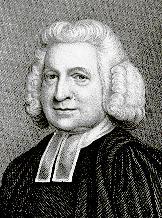
Charles Wesley

1707 - 1788 Person Name: Charles Wesley, 1707-88 Author of "Come, O Thou all-victorius Lord" in The Methodist Hymn-Book with Tunes Charles Wesley, M.A. was the great hymn-writer of the Wesley family, perhaps, taking quantity and quality into consideration, the great hymn-writer of all ages. Charles Wesley was the youngest son and 18th child of Samuel and Susanna Wesley, and was born at Epworth Rectory, Dec. 18, 1707. In 1716 he went to Westminster School, being provided with a home and board by his elder brother Samuel, then usher at the school, until 1721, when he was elected King's Scholar, and as such received his board and education free. In 1726 Charles Wesley was elected to a Westminster studentship at Christ Church, Oxford, where he took his degree in 1729, and became a college tutor. In the early part of the same year his religious impressions were much deepened, and he became one of the first band of "Oxford Methodists." In 1735 he went with his brother John to Georgia, as secretary to General Oglethorpe, having before he set out received Deacon's and Priest's Orders on two successive Sundays. His stay in Georgia was very short; he returned to England in 1736, and in 1737 came under the influence of Count Zinzendorf and the Moravians, especially of that remarkable man who had so large a share in moulding John Wesley's career, Peter Bonier, and also of a Mr. Bray, a brazier in Little Britain. On Whitsunday, 1737, [sic. 1738] he "found rest to his soul," and in 1738 he became curate to his friend, Mr. Stonehouse, Vicar of Islington, but the opposition of the churchwardens was so great that the Vicar consented that he "should preach in his church no more." Henceforth his work was identified with that of his brother John, and he became an indefatigable itinerant and field preacher. On April 8, 1749, he married Miss Sarah Gwynne. His marriage, unlike that of his brother John, was a most happy one; his wife was accustomed to accompany him on his evangelistic journeys, which were as frequent as ever until the year 1756," when he ceased to itinerate, and mainly devoted himself to the care of the Societies in London and Bristol. Bristol was his headquarters until 1771, when he removed with his family to London, and, besides attending to the Societies, devoted himself much, as he had done in his youth, to the spiritual care of prisoners in Newgate. He had long been troubled about the relations of Methodism to the Church of England, and strongly disapproved of his brother John's "ordinations." Wesley-like, he expressed his disapproval in the most outspoken fashion, but, as in the case of Samuel at an earlier period, the differences between the brothers never led to a breach of friendship. He died in London, March 29, 1788, and was buried in Marylebone churchyard. His brother John was deeply grieved because he would not consent to be interred in the burial-ground of the City Road Chapel, where he had prepared a grave for himself, but Charles said, "I have lived, and I die, in the Communion of the Church of England, and I will be buried in the yard of my parish church." Eight clergymen of the Church of England bore his pall. He had a large family, four of whom survived him; three sons, who all became distinguished in the musical world, and one daughter, who inherited some of her father's poetical genius. The widow and orphans were treated with the greatest kindness and generosity by John Wesley. As a hymn-writer Charles Wesley was unique. He is said to have written no less than 6500 hymns, and though, of course, in so vast a number some are of unequal merit, it is perfectly marvellous how many there are which rise to the highest degree of excellence. His feelings on every occasion of importance, whether private or public, found their best expression in a hymn. His own conversion, his own marriage, the earthquake panic, the rumours of an invasion from France, the defeat of Prince Charles Edward at Culloden, the Gordon riots, every Festival of the Christian Church, every doctrine of the Christian Faith, striking scenes in Scripture history, striking scenes which came within his own view, the deaths of friends as they passed away, one by one, before him, all furnished occasions for the exercise of his divine gift. Nor must we forget his hymns for little children, a branch of sacred poetry in which the mantle of Dr. Watts seems to have fallen upon him. It would be simply impossible within our space to enumerate even those of the hymns which have become really classical. The saying that a really good hymn is as rare an appearance as that of a comet is falsified by the work of Charles Wesley; for hymns, which are really good in every respect, flowed from his pen in quick succession, and death alone stopped the course of the perennial stream. It has been the common practice, however for a hundred years or more to ascribe all translations from the German to John Wesley, as he only of the two brothers knew that language; and to assign to Charles Wesley all the original hymns except such as are traceable to John Wesley through his Journals and other works. The list of 482 original hymns by John and Charles Wesley listed in this Dictionary of Hymnology have formed an important part of Methodist hymnody and show the enormous influence of the Wesleys on the English hymnody of the nineteenth century. -- Excerpts from John Julian, Dictionary of Hymnology (1907) ================== Charles Wesley, the son of Samuel Wesley, was born at Epworth, Dec. 18, 1707. He was educated at Westminster School and afterwards at Christ Church, Oxford, where he graduated M.A. In 1735, he took Orders and immediately proceeded with his brother John to Georgia, both being employed as missionaries of the S.P.G. He returned to England in 1736. For many years he engaged with his brother in preaching the Gospel. He died March 29, 1788. To Charles Wesley has been justly assigned the appellation of the "Bard of Methodism." His prominence in hymn writing may be judged from the fact that in the "Wesleyan Hymn Book," 623 of the 770 hymns were written by him; and he published more than thirty poetical works, written either by himself alone, or in conjunction with his brother. The number of his separate hymns is at least five thousand. --Annotations of the Hymnal, Charles Hutchins, M.A., 1872.

Benjamin Beddome

1717 - 1795 Person Name: Benjamin Beddome, 1717-1795 Author of "This World Is All Enchanted Ground" in The Cyber Hymnal Benjamin Beddome was born at Henley-in Arden, Warwickshire, January 23, 1717. His father was a Baptist minister. He studied at various places, and began preaching in 1740. He was pastor of a Baptist society at Bourton-on-the-Water, Gloucestershire, until his death in 1795. In 1770, he received the degree of M.A. from the Baptist College in Providence, Rhode Island. He published several discourses and hymns. "His hymns, to the number of 830, were published in 1818, with a recommendation from Robert Hall." Montgomery speaks of him as a "writer worthy of honour both for the quantity and the quality of his hymns." --Annotations of the Hymnal, Charles Hutchins, M.A. 1872. ========================= Beddome, Benjamin , M.A. This prolific hymnwriter was born at Henley-in-Arden, Warwickshire, Jan. 23, 1717, where his father, the Rev. John Beddome, was atthat time Baptist Minister. He was apprenticed to a surgeon in Bristol, but removing to London, he joined, in 1739, the Baptist church in Prescott St. At the call of this church he devoted himself to the work of the Christian ministry, and in 1740 began to preach at Bourton-on-the-Water, in Gloucestershire. Declining invitations to remove to London or elsewhere, he continued pastor at Bourton until his death, on Sep. 3, 1795, at the age of 78. Mr. Beddome was for many years one of the most respected Baptist ministers in the West of England. He was a man of some literary culture. In 1770 he received the degree of M.A. from Providence College, Rhode Island. He was the author of an Exposition of the Baptist Catechism, 1752, in great repute at the time, and reprinted by Dr. C. Evans in 1772. It was his practice to prepare a hymn every week to be sung after his Sunday morning sermon. Though not originally intended for publication, he allowed thirteen of these to appear in the Bristol Baptist Collection of Ash & Evans (1769), and thirty-six in Dr. Rippon's Baptist Selection (1787), whence a number of them found their way into the General Baptist Hymn Book of 1793 and other collections. In 1817, a posthumous collection of his hymns was published, containing 830 pieces, with an introduction by the Rev. Robert Hall, and entitled "Hymns adapted to Public Worship or Family Devotion, now first published from the Manuscripts of the late Rev. B. Beddome, M.A." Preface dated "Leicester, Nov. 10, 1817." Some of the early copies bear the same date on the title page. Copies bearing both the 1817 and 1818 dates are in the British Museum. The date usually given is 1818. Some hymns are also appended to his Sermons, seven volumes of which were published l805—1819; and over twenty are given in the Baptist Register of various dates. Beddome's hymns were commended by Montgomery as embodying one central idea, "always important, often striking, and sometimes ingeniously brought out." Robert Hall's opinion is just, when in his "Recommendatory Preface" to the Hymns, &c, he says, p. vii.:— "The man of taste will be gratified with the beauty and original turns of thought which many of them ex¬hibit, while the experimental Christian will often perceive the most secret movements of his soul strikingly delineated, and sentiments pourtrayed which will find their echo in every heart." With the exception of a few composed for Baptisms and other special occasions, their present use in Great Britain is limited, but in America somewhat extensive. One of the best is the Ordination Hymn, "Father of Mercies, bow Thine ear." Another favourite is “ My times of sorrow and of joy," composed, by a singular coincidence, to be sung on Sunday, Jan. 14, 1778, the day on which his son died, most unexpectedly, in Edinburgh. "Let party names no more," is very popular both in Great Brit, and America. "Faith, His a precious gift," "Witness, ye men and angels, now," and the hymn for Holy Baptism, "Buried beneath the yielding wave," are also found in many collections. Beddome's popularity is, however, now mainly in America. [Rev. W. R. Stevenson, M.A.] Beddome is thus seen to be in common use to the extent of about 100 hymns. In this respect he exceeds every other Baptist hymnwriter; Miss Steele ranking second. The authorities for Beddome's hymns are: (1) A Collection of Hymns adapted to Public Worship, Bristol, W. Pine, 1769, the Collection of Ash & Evans; (2) Dr. Rippon's Selections 1787, and later editions; (3) Sermons printed from the Manuscripts of the late Rev. Benjamin Beddome, M.A.,... with brief Memoir of the Author, Dunstable & Lond., 1805-1819; (4) Dr. Rippon's Baptist Register, 1795, &c.; (5) The Beddome Manuscripts, in the Baptist College, Bristol; (6) and Hymns adapted to Public Worship, or Family Devotion now first published, from Manuscripts of the late Rev. B. Beddome, A.M. With a Recommendatory Preface by the Rev. R. Hall, A.M. Lond., 1817. In his Preface, Mr. Hall gives this account of the Beddome Manuscript:— "The present Editor was entrusted several years ago with the MSS, both in prose and verse, with permission from the late Messrs. S. & B. Beddome, sons of the Author, to publish such parts of them as he might deem proper. He is also indebted to a descendant of the Rev. W. Christian, formerly pastor of the Baptist Church at Sheepshead, Leicestershire, for some of the Author's valuable hymns, which had been carefully preserved in the family. From both these sources, as well as others of less consequence, the present interesting volume has been derived." -- Excerpts from John Julian, Dictionary of Hymnology (1907) ======================= Beddome, Benjamin, pp. 121-124. Other hymns in common use:— 1. Great God, before Thy mercy-seat. (1817). Lent. 2. Great God, oppressed with grief and fear. (1787.) Reading H. Scripture. 3. How glorious is Thy word, 0 God. Holy Scripture. From "When Israel, &c," p. 124, i. 4. In God I ever will rejoice. Morning. From his Hymns, &c, 1817. 5. Jesus, my Lord, divinely fair. (1817.) Jesus the King of Saints. Begins with stanza ii. of “Listen, ye mortals, while I sing." 6. Rejoice, for Christ the Saviour reigns. Missions. Altered form of "Shout, for the blessed, &c," p. 123, ii. 7. Satan, the world, and sin. (1817.) In Temptation. 8. Thou, Lord of all above. (1817.) Lent. 9. Unto Thine altar, Lord. (1787.) Lent. 10. Ye saints of every rank, with joy. (1800.) Public Worship. The dates given above are, 1787 and 1800, Rippon's Selection; and 1817 Beddome's Hymns. --John Julian, Dictionary of Hymnology, Appendix, Part II

John Morison

1750 - 1798 Person Name: John Morrison, 1749-1798 Author of "Come, let us to the Lord our God" in The Sunday School Hymnary Morison, John, D.D., was born in Aberdeenshire in 1749. He studied at the University of Aberdeen (King's College), where he graduated M.A. in 1771. In 1780 he became parish minister of Canisbay, Caithness. He received the degree of D.D. from the University of Edinburgh in 1792. He died at Canisbay, June 12, 1798. He was one of the members added on May 26, 1781, to the Committee appointed by the General Assembly of 1775 to revise the Translations and Paraphrases of 1745. To him are ascribed Nos. 19, 21, 29, 30 and 35, in the 1781 collection, and he is said to have been joint author with John Logan of Nos. 27 and 28. [Rev. James Mearns, M.A.] --John Julian, Dictionary of Hymnology (1907)

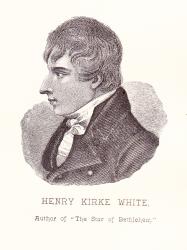
Henry Kirke White

1785 - 1806 Person Name: Henry Kirk White (1785-1806) Author of "Through sorrow's night and danger's path" in Carmina Sanctorum, a selection of hymns and songs of praise with tunes White, Henry Kirke, a gifted English poet who died early in life, was born in Nottingham, England, March 21, 1785. Very early he manifested a remarkable love for books and a decided talent for composition. But his parents were poor, and he was apprenticed in early boyhood to a stocking weaver, from which uncongenial servitude he escaped as soon as he could and began the study of law; but later he was converted and felt called to the ministry. The story of his conversion from deism to Christianity is briefly but beautifully told in the poem titled "The Star of Bethlehem." He entered St. John's College, Cambridge, in 1805 as a servitor; but died October 19, 1806, in the second year of his college course, when only twenty-one years of age. In 1803 he published a small volume of poems. Some of them are very fine, but no doubt he would have produced others far better if he had lived to the ordinary age of man. His rare poetic genius, his victory over skepticism and subsequent faith and piety, his hard struggle with poverty and early death invest the story of his life with more than ordinary pathos. His hymns, ten in number, appeared in Collyer's Collection, 1812. Oft in danger, oft in woe 412 The Lord our God is clothed with 99 When marshaled on the mighty 124 Hymn Writers of the Church, 1911 ============================ White, Henry Kirk, remarkable both for the early development of his genius and for the untimely termination of his brief life of splendid promise, was born at Nottingham, March 21, 1785. His father was a butcher, but his mother must have been a superior woman, since for a number of years she successfully conducted a boarding-school for girls. The writing-master in her establishment was for some time Henry's teacher, and under his instruction he made remarkable progress in Latin and other subjects. At the age of 13 he composed the lines "To an early Primrose," which were subsequently printed with his poems. At 14 he left school, and was put to the stocking-frame in order to learn prac¬tically the business of a hosier; but, disliking the employment, he was removed to an attorney's office in Nottingham, with a view to the legal profession. All his spare time was now devoted to literary pursuits, the acquisition of languages, and the composition of poetical and other contributions for the periodicals of the day. At the age of 15 he obtained from the Monthly Preceptor a silver medal for a translation from Horace, and a pair of globes for the best description of an imaginary tour from London to Edinburgh. When only 17 he was encouraged to publish his Clifton Grove and other Poems, which were certainly excellent as the compositions of a mere boy. About this time he was inclined to scepticism, but. through the perusal of Scott's Force of Truth and the arguments and appeals of a young friend, R. W. Almond (afterwards Rector of St. Peter's, Nottingham), he was led to earnest faith in Christianity. His well-known hymn "When marshall'd on the nightly plain" is understood to be a figurative description of his spiritual experience at this period. He now desired to become a Christian minister, and through the generosity of his employers he was released from his articles in 1804. With the help of the Rev. C. Simeon and other friends, he became a student of St. John's College, Cambridge. There he speedily distinguished himself, and the highest honours seemed within his grasp; but over application to study destroyed his health, and he fell ill and died Oct. 19, 1806, in the 22nd year of his age. Universal regret was expressed at his untimely end. Southey published his Remains, accompanied by a short memoir. Lord Byron composed some beautiful lines on the sad event. Josiah Conder and others wrote commemorative verses. The entire literary young manhood of England and America seemed moved with sympathy. A monumental tablet, with a medallion by Chantrey, was erected in All Saints Church, Cambridge, at the expense of a citizen of Boston, in the United States. Ten hymns are ascribed to H. K. White, which were printed by the Rev. Dr. W. B. Collyer in his Supplement to Dr. Watts's Psalms & Hymns, London, 1812. Of these four of the most popular are annotated as follows: "Awake, sweet harp of Judah, wake"; "Christians, brethren, ere we part"; "Much in sorrow, oft in woe"; “When marshalled on the nightly plain." These are all in extensive use. The rest, all in common use at the present time, are:— 1. 0 Lord, another day has flown. Evening. From this the hymn "0 let Thy grace perform its part" is taken. 2. 0 Lord, my God, in mercy turn. Penitence and Faith. 3. The Lord our God is full [clothed in] of might. Divine Sovereignty. 4. The Lord our God is Lord of all. Divine Sovereignty. 5. Through sorrow's night and danger's path. The Resurrection. Sometimes given as "When sorrow's path and danger's road." 6. What is this passing scene? Human Frailty. This hymn consists of selected stanzas from his “Ode on Disappointment." [Rev. W. R. Stevenson, M.A.] -- John Julian, Dictionary of Hymnology (1907)

Thomas Sternhold

1449 - 1549 Person Name: Thomas Sternhold, -1549 Author of "O God, my strength and fortitude" in The Book of Praise Thomas Sternhold was Groom of the Robes to Henry VIII and Edward VI. With Hopkins, he produced the first English version of the Psalms before alluded to. He completed fifty-one; Hopkins and others composed the remainder. He died in 1549. Thirty-seven of his psalms were edited and published after his death, by his friend Hopkins. The work is entitled "All such Psalms of David as Thomas Sternhold, late Groome of the King's Majestye's Robes, did in his Lyfetime drawe into Englyshe Metre." Of the version annexed to the Prayer Book, Montgomery says: "The merit of faithful adherence to the original has been claimed for this version, and need not to be denied, but it is the resemblance which the dead bear to the living." Wood, in his "Athenae Oxonlenses" (1691, vol. I, p. 62), has the following account of the origin of Sternhold's psalms: "Being a most zealous reformer, and a very strict liver, he became so scandalized at the amorous and obscene songs used in the Court, that he, forsooth, turned into English metre fifty-one of David's psalms, and caused musical notes to be set to them, thinking thereby that the courtiers would sing them instead of their sonnets; but they did not, some few excepted. However, the poetry and music being admirable, and the best that was made and composed in these times, they were thought fit to be sung in all parochial churches." Of Sternhold and Hopkins, old Fuller says: "They were men whose piety was better than their poetry, and they had drunk more of Jordan than of Helicon." Sternhold and Hopkins may be taken as the representatives of the strong tendency to versify Scripture that came with the Reformation into England--a work men eagerly entered on without the talent requisite for its successful accomplishment. The tendency went so far, that even the "Acts of the Apostles" was put into rhyme, and set to music by Dr. Christopher Tye. --Annotations of the Hymnal, Charles Hutchins, M.A. 1872.

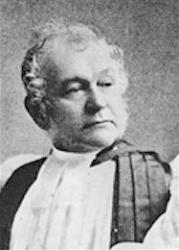
A. Cleveland Coxe

1818 - 1896 Person Name: Arthur Cleveland Coxe, 1818-96 Author of "Oh, where are kings and empires now" in Songs for the Chapel Coxe, Arthur Cleveland, D.D. LL.D. One of the most distinguished of American prelates, and son of an eminent Presbyterian minister, the Rev. Samuel H. Cox, D.D., was born at Mendham, New Jersey, May 10,1818. Graduating at the University of New York in 1838, and taking Holy Orders in 1841, he became Rector of St. John's, Hartford, Connecticut, in the following year. In 1851 he visited England, and on his return was elected Rector of Grace Church, Baltimore, 1854, and Calvary, New York, 1863. His consecration as Bishop of the Western Diocese of New York took place in 1865. His residence is at Buffalo. Bishop Coxe is the author of numerous works. His poetical works were mostly written in early life, and include Advent, 1837; Athanasion, &c, 1842; Christian Ballads, 1840 (Preface to the English edition, April, 1848); Hallowe'en and Other Poems, 1844; Saul, a Mystery, 1845, &c. Some of Bishop Coxe's hymns are found in the collections of every religious body in America, except the official collections of his own. This is accounted for by his too scrupulous modesty. As a member of the Hymnal Committee, in 1869-71, he refused to permit the insertion of his own lyrics. As he has not preserved memoranda, and has no precise recollection of dates, several dates here given are somewhat uncertain. 1. Behold an Israelite indeed. St. Bartholomew. First appeared in "Poems," published with his Christian Ballads, 1840, and found in an altered form in the People's H. and the Hymnary. 2. Body of Jesus, 0 sweet Food. Holy Communion. Written at St. James's College, Maryland (since broken up by the Civil War), Ascension Day, 1858. It was first printed for private use, and then published in the Cantate Domino, Boston, 1859, No. 53, and again in other American collections. It is also in Schaff’s Christ in Song, 1869, and in The Churchman's Altar Manual, 2nd ed., 1883. 3. Breath of the Lord, 0 Spirit blest.Whitsuntide. Bishop Coxe considers this more worthy of being called a hymn than anything else from his pen. It was written long before it appeared in the New York Independent, Whitsuntide, 1878. It is in the Schaff-Gilman Library of Religious Poetry, 1881, and Brooke's Churchman's Manual of Private and Family Devotion, 1883. 4. Christ is arisen. Easter. This is suggested by, and partly translated from, the famous Easter Chorus in Goethe's Faust, "Christ ist erstanden" (see Goethe), and appeared in Hallowe'en, 1844. 5. He who for Christ hath left behind. St. Matthew. From his Christian Ballads, &c, 1840. 6. In the silent midnight watches. Christ knocking. From his Athanasion, &c, 1842; an impressive moral poem rather than a hymn on Christ knocking at the door, extensively used in America, and sometimes in England. Original text, Schaff's Christ in Song, 1869. 7. Lord, when Thou didst come from heaven. A hymn for Epiphany, on behalf of Western Missions, appeared among the "Lays "appended to Hallowe'en, 1844, and again in later editions of the Christian Ballad. It is sometimes abbreviated, as in Lyra Sac. Amer., " Westward, Lord, the world alluring." 8. Now pray we for our country. National Hymn. A stanza from Chronicles, or meditations on events in the history of England, called up by visiting her abbeys and cathedrals, and appeared in Christian Ballads, 1840. Originally it began, "Now pray we for our mother," and, with the succeeding stanza, was a call upon Americans to pray for their mother country. It is adopted by Dr. Martineau in his Hys., 1873. 9. 0 walk with God, and thou shalt find. Holiness. Appeared in his Hallowe’en, &c, 1844, and is found in Lyra Sac. Amer. 10. 0 where are kings and empires now! Church of God. The 6th stanza of his ballad "Chelsea," which appeared in the Churchman, 1839, and again in his Christian Ballads, 1840. 11. Saviour, sprinkle many nations. Missions. “Begun on Good Friday, 1850, and completed 1851, in the grounds of Magdalen College, Oxford." 1st published. in Verses for 1851, in Commemoration of the third Jubilee of the Society for the Propagation of the Gospel, edited by the Rev. Ernest Hawkins, 1851. It was subsequently appended to the English edition of his Christian Ballads. It is regarded as Bishop Coxe's best piece, and to many minds it is the loveliest of missionary hymns. Its use in England is very extensive. It is not found in the American Episcopal hymnal for the reason given above. 12. Still as our day our strength shall be. Temptation. Appeared in his Hallowe'en, &c, 1844, and Lyra Sac. Amer. 13. Soldier, to the contest pressing. Christian Conflict. From his Hallowe'en, &c, 1844, and Lyra Sac. Amer. It was written in 1834. 14. There is a land like Eden fair. From Hallowe'en, &c, into a few collections. 15. We are living, we are dwelling. Christian Soldiers. An impressive moral poem rather than a hymn, but extensively used. It appeared in his Athanasion, &c, 1840, and Lyra &xc. 16. Who is this, with garments gory. Passiontide. From his “Lays" appended to Hallowe'en, 1844, and again in his Christian Ballads. It is found in the Child's Christian Year, 4th ed. N.D., the People's Hymns, and other collections. It is in 4 stanza of 8 1. The last stanza is sometimes given as a separate hymn:—"Hail, all hail, Thou Lord of Glory." 17. When o'er Judea's vales and hills. Written cir. 1840, and published in his Hallowe'en, &c, 1844, and again, with the author's final corrections, made in 1869, in Schaff's Christ in Song (1870 ed. p. 112). Also in the English edition of his Christian Ballads. From this "Hymn to the Redeemer," two shorter hymns have been com¬piled : (1) " How beauteous were the marks divine." This is in almost universal American and occasional English use. (2) "O who like Thee, so calm, so bright," in the Hymnary, 1872. Bishop Coxe has also translated the Pange lingua gloriosi corporis (q. v.), and is the author of the beautiful Christmas Carol, "Carol, carol, Christians," given in his Christian Ballads, &c. [Rev. F. M. Bird] -- John Julian, Dictionary of Hymnology (1907)

Pages


Export as CSV
It looks like you are using an ad-blocker. Ad revenue helps keep us running. Please consider white-listing Hymnary.org or getting Hymnary Pro to eliminate ads entirely and help support Hymnary.org.