You help make Hymnary.org possible. More than 10 million people from 200+ countries found hymns, liturgical resources and encouragement on Hymnary.org in 2025, including you. Every visit affirms the global impact of this ministry.

If Hymnary has been meaningful to you this year, would you take a moment today to help sustain it? A gift of any size—paired with a note of encouragement if you wish—directly supports the server costs, research work and curation that keep this resource freely available to the world.

Give securely online today, or mail a check to:
Hymnary.org
Calvin University
3201 Burton Street SE
Grand Rapids, MI 49546

Thank you for your partnership, and may the hope of Advent fill your heart.

Person Results

Topics:death+and+funeral
In:people

Planning worship? Check out our sister site, ZeteoSearch.org, for 20+ additional resources related to your search.
Showing 101 - 110 of 286Results Per Page: 102050

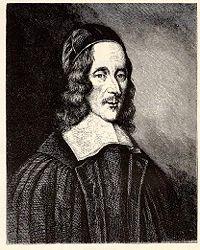
George Herbert

1593 - 1633 Person Name: George Herbert (1593-1633) Topics: Funerals and The Departed; Assurance; Comfort and Consolation; Death and Bereavement; God Presence of; Providence; Trust and Confidence Author of "The God of love my shepherd is" in Ancient and Modern Herbert, George, M.A., the fifth son of Richard Herbert and Magdalen, the daughter of Sir Richard Newport, was born at his father's seat, Montgomery Castle, April 3, 1593. He was educated at Westminster School, and at Trinity College, Cambridge, graduating B.A. in 1611. On March 15, 1615, he became Major Fellow of the College, M.A. the same year, and in 1619 Orator for the University. Favoured by James I., intimate with Lord Bacon, Bishop Andrewes, and other men of influence, and encouraged in other ways, his hopes of Court preferment were somewhat bright until they were dispelled by the deaths of the Duke of Richmond, the Marquis of Hamilton, and then of King James himself. Retiring into Kent, he formed the resolution of taking Holy Orders. He was appointed by the Bishop of Lincoln to the Prebend of Lcighton Ecclesia and to the living of Leighton Bromswold, Hunts, July 15, 1626. He remained until 1629, when an attack of ague obliged him to remove to his brother's, house at Woodford, Essex. Not improving in health at Woodford, he removed to Dantsey, in Wiltshire, and then as Rector to Bemerton, to which he was inducted, April 26, 1630, where he died Feb. 1632. The entry in the register of Bemerton is "Mr. George Herbert, Esq., Parson of Foughleston and Bemerton, was buried 3 day of March 1632." His life, by Izaak Walton, is well known; another Memoir, by Barnabas Oley, is forgotten. Herbert's prose work, Priest to the Temple, appeared several years after his death: but The Temple, by which he is best known, he delivered to Nicholas Ferrar (q.v.), about three weeks before his death, and authorized him to publish it if he thought fit. This was done iu 1633. The work became popular, and the 13th edition was issued in 1709. It is meditative rather than hymnic in character, and was never intended for use in public worship. In 1697 a selection from The Temple appeared under the title Select Hymns Taken out of Mr. Herbert's Temple & turned into the Common Metre To Be Sung In The Tunes Ordinarily us'd in Churches. London, Parkhurst, 1697. In 1739, J. & C. Wesley made a much more successful attempt to introduce his hymns into public worship by inserting over 40 in a much-altered form in their Hymns & Sacred Poems. As some few of these came into their collection of Psalms & Hymns, 1741, revised 1743, they were long sung by the Methodists, but do not now form part of the Wesleyan Hymn Book. No further attempt seems to have been made to use the Temple poems as hymns until 1853, when some altered and revised by G. Rawson were given in the Leeds Hymn Book of that year. From that time onward more attention was paid to Herbert alike by Churchmen and Nonconformists, and some of his hymns are now widely accepted. Many editions of his works have been published, the most popular being that of the Rev. Robert Aris Wilmott, Lond., Geo. Routledge & Son, 1857; but Dr. Grosart's privately printed edition issued in his Fuller Worthies Library in 1874, in three volumes, is not only the most complete and correct, but included also his psalms not before reprinted, and several poems from a ms. in the Williams Library, and not before published. The Temple has also been pub¬lished in facsimile by Elliott Stock, 1876, with preface by Dr. Grosart; and in ordinary type, 1882, by Wells Gardner, with preface by J. A. Shorthouse. The quaintness of Herbert's lyrics and the peculiarity of several of their metres have been against their adoption for congregational purposes. The best known are: "Let all the world in every corner sing"; "My stock lies dead, and no increase"; "Throw away Thy rod"; "Sweet day, so cool, so calm"; and "Teach me, my God, and King." [William T. Brooke] --John Julian, Dictionary of Hymnology (1907)

Christian Fürchtegott Gellert

1715 - 1769 Person Name: Christian Fürchtegott Gellert, 1715-69 Topics: The Lord Jesus Christ His Resurrection and Ascension; The Christian Life Death, Judgement, Future Life; Times and Seasons Funerals and Memorial Services Author of "Jesus lives! thy terrors now" in The Methodist Hymn-Book with Tunes Gellert, Christian Fürchtegott, son of Christian Gellert, pastor at Hainichen in the Saxon Harz, near Freiberg, was born at Hainichen, July 4, 1715. In 1734 he entered the University of Leipzig as a student of theology, and after completing his course acted for some time as assistant to his father. But then, as now, sermons preached from manuscript were not tolerated in the Lutheran Church, and as his memory was treacherous, he found himself compelled to try some other profession. In 1739 he became domestic tutor to the sons of Herr von Lüttichau, near Dresden, and in 1741 returned to Leipzig to superintend the studies of a nephew at the University. He also resumed his own studies. He graduated M.A. 1744; became in 1745 private tutor or lecturer in the philosophical faculty; and was in 1751 appointed extraordinary professor of philosophy, lecturing on poetry and rhetoric, and then on moral philosophy. An ordinary professorship offered to him in 1761 he refused, as he did not feel strong enough to fulfil its duties, having been delicate from a child, and after 1752 suffering very greatly from hypochondria. He died at Leipzig, Dec. 13, 1769 (Koch, vi. 263-277; Allgemeine Deutsche Biographie, viii. 544-549, &c). As a professor, Gellert was most popular, numbering Goethe and Lessing among his pupils, and won from his students extraordinary reverence and affection, due partly to the warm interest he took in their personal conduct and welfare. In his early life he was one of the contributors to the Bremer Beiträge; and was one of the leaders in the revolt against the domination of Gottsched and the writers of the French school. His Fables (1st Ser. 1746; 2nd 1748), by their charm of style, spirit, humour and point, may justly be characterised as epoch-making, won for him universal esteem and influence among his contemporaries of all classes, and still rank among the classics of German literature. As a hymnwriter he also marks an epoch; and while in the revival of churchly feeling the hymns of the Rationalistic period of 1760 to 1820 have been ignored by many recent compilers, yet the greatest admirers of the old standard hymns have been fain to stretch their area of selection from Luther to Gellert. He prepared himself by prayer for their composition, and selected the moments when his mental horizon was most unclouded. He was distinguished by deep and sincere piety, blameless life, and regularity in attendance on the services of the Church. His hymns are the utterances of a sincere Christian morality, not very elevated or enthusiastic, but genuine expressions of his own feelings and experiences; and what in them he preached he also put in practice in his daily life. Many are too didactic in tone, reading like versifications of portions of his lectures on morals, and are only suited for private use. But in regard to his best hymns, it may safely be said that their rational piety and good taste, combined with a certain earnestness and pathos, entitle them to a place among the classics of German hymnody. They exactly met the requirements of the time, won universal admiration, and speedily passed into the hymnbooks in use over all Germany, Roman Catholic as well as Lutheran. Two of Gellert's hymns are noted under their own first lines, viz., "Jesus lebt, mit ihm auch ich," and "Wie gross ist des All-mächtgen Güte." The following have also passed into English, almost all being taken from his Geistliche Oden und Lieder, a collection of 54 hymns first published at Leipzig, 1757, and which has passed through very numerous editions:— I. Hymns in English common use: i. An dir allein, an dir hab ich gesündigt. Lent. 1757, p. 102, in 6 stanzas of 4 lines, entitled "Hymn of Penitence." In Zollikofer's Gesange-Buch, 1766, and the Berlin Geistliche Lieder S., ed. 1863, No. 499. Translated as:— Against Thee only have I sinn'd, I own it. A good and full version, by Miss Wink worth, as No. 42 in her Chorale Book for England, 1863. Another translation is:— "Against Thee, Lord, Thee only my transgression," by N. L. Frothingham, 1870, p. 241. ii. Dies ist der Tag, den Gott gemacht. Christmas. One of his best and most popular hymns. 1757, p. 72, in 11 stanzas of 4 lines, repeated in the Berlin Gesang-Buch, 1765, No. 55, and the Berlin Geistliche Lieder S. ed. 1863, No. 154. Translated as:— This is the day the Lord hath made, O'er all the earth. A translation of stanzas i.-iii., x., by Miss Borthwick, as No. 22 in Dr. Pagenstecher's Collection, 1864, and included in Hymns from the Land of Luther, 1884, p. 256. Other trs. are:—(1) "This is the day which God ordains," by Dr. G. Walker, 1860, p. 27. (2) "This day shall yet by God's command," in the Family Treasury, 1811, p. 278. iii. Für alle Güte sei gepreist. Evening. 1757, p. 85, in 4 stanzas of 6 lines, included in Zollikofer's Gesang-Buch 1766, No. 78, and the Berlin Geistliche Lieder S., ed. 1863, No. 1160. Translated as:— To Father, Son, and Spirit praise. A good and full translation by A. T. Russell, as No. 7 in his Psalms & Hymns, 1851. Another translation is: — "For all Thy kindness laud I Thee," by H. J. Buckoll, 1842, p. 96. iv. Gott ist mein Lied. Praise. On God's Might and Providence. 1757, p. 78, in 15 st. of 5 1. In the Berlin Geistliche Lieder S.., ed. 1863, No. 24. Translated as:— God is my song, His praises I'll repeat, A free translation of stanzas i.-v., as No. 94 in Sir John Bowring's Hymns, 1825. Repeated, omitting stanza ii., as No. 114 in Dale's English Hymn Book, 1875. Other translations are:— (1) “Of God I sing," by Dr. H. Mills, 1856, p. 11. (2) "God is my song, With sovereign," by N. L. Frothingham, 1870, p. 243. v. Wenn ich, o Schöpfer, deine Macht. Praise. This fine hymn of Praise for Creation and Providence was first published 1757, p. 62, in 6 stanzas of 7 lines. In the Berlin Gesang-Buch, 1765, No. 25, and Berlin Geistliche Lieder S.ed. 1863, No. 72. Translated as:—- Thou Great First Cause! when of Thy skill. In full in Dr. H. Mills's Horae Germanicae, 1845 (1856, p. 5). Stanzas ii., iii., v., vi., altered and beginning, "The earth, where'er I turn mine eye," are in the American Lutheran General Synod's Collection, 1852. Other trs. are:— (1) "When, O my dearest Lord, I prove," by Miss Dunn, 1857, p. 80. (2) "Creator! when I see Thy might," in Madame de Pontes's Poets and Poetry of Germany, 1858, v. i. p. 472. (3) "When I, Creator, view Thy might," by Miss Manington, 1863. vi. Wer Gottes Wort nicht halt, und spricht. Faith in Works. This didactic hymn on Faith proved by Works, was first published 1757, p. 49, in 5 stanzas of 6 lines. In Zollikofer's Gesang-Buch, 1766, and the Berlin Geistliche Lieder S. ed. 1863, No. 72. Translated as:— Who keepeth not God's Word, yet saith. A good and full translation by Miss Winkworth, in her Lyra Germanica, 2nd Ser., 1858, p. 161. A greatly altered version of stanzas ii.—v., beginning, "True faith in holy life will shine," was included as No. 418 in Kennedy, 1863, and repeated in the Ibrox Hymnal 1871, J. L. Porter's Collection 1876, and others. II. Hymns not in English common use: vii. Auf Gott, und nicht auf meinen Rath. Trust in God's Providence. 1757, p. 134, in 6 stanzas. Translated as: (1) "Rule Thou my portion, Lord, my skill," by Dr. H. Mills, 1845 (1856, p. 164). (2) "On God and on no earthly trust," by J. D. Burns, in his Remains, 1869. viii. Auf, schicke dich. Christmas. 1757, p. 109, in 1 stanza. Translated as, "Come, tune your heart," by Miss Cox, 1841, p. 17 (1864, p. 39). ix. Dein Heil, o Christ! nicht zu verscherzen. Prayer. 1757, p. 6, in 14 stanzas of 8 lines. In J. A. Schlegel's Geistliche Gesänge, 3rd Ser., 1772, p. 193, recast as "Zu deinem Gotte beten," in 5 stanzas of 12 lines; and this in the Kaiserwerth Lieder-Buch für Kleinkinderschulen, 1842, No. 208, appears "Zu Gott im Himmel beten," in 8 stanzas of 4 lines. The 1842 was translated as, "O how sweet it is to pray," by Mrs. Bevan, 1859, p. 148. x. Der Tag ist wieder hin, und diesen Theil des Lebens. Evening. 1757, p. 13, in 10 stanzas, as "Self-Examination at Eventide." Translated as,"Another day is ended," by Miss Warner, 1869 (1871, p. 9). xi. Du klagst, und fühlest die Beschwerden. Contentment. 1757, p. 91, in 8 stanzas. Translated as "Thy wounded spirit feels its pain," by Dr. B. Maguire, 1883, p. 153. xii. Erinnre dich, mein Geist, erfreut. Easter. 1757, p. 27, in 13 stanzas. Translated as, "Awake, my soul, and hail the day," in Dr. J. D. Lang's Aurora Australis, Sydney, 1826, p. 43. xiii. Er ruft der Sonn, und schafft den Mond. New Year. 1757, p. 154, in 6 stanzas. In the Berlin Gesang-Buch, 1765, No. 233, as "Gott ruft." Translated as, “Lord, Thou that ever wast and art," in the British Magazine, Jan., 1838, p. 36. xiv. Gott, deine Güte reicht so weit. Supplication. 1757, p. 1, in 4 stanzas, founded on 1 Kings iii. 5-14. The translations are: (1) "O God, Thy goodness doth extend, Far as," by Dr. J. D. Lang, 1826, p. 10. (2) "Behold! Thy goodness, oh my God," by Miss Fry, 1845, p. 78. xv. Gott ist mein Hort. Holy Scripture. 1757, p. 70, in 8 stanzas. Translated as, "I trust the Lord, Upon His word," by Dr. H. Mills, 1845 (1856, p. 23). xvi. Herr, der du mir das Leben. Evening. 1757, p. 121, in 5 stanzas. Translated as, "By Thee, Thou Lord of Heaven," by H. J. Buckoll, 1842, p. 97. xvii. Herr, starke mich, dein Leiden su bedenken. Passiontide. 1757, p. 123, in 22 stanzas. Translated as, "Clothe me, oh Lord, with strength! that I may dwell” by Miss Fry, 1859, p. 153. xviii. Ich hab in guten Stunden. For the Sick. 1757, p. 128, in 6 stanzas. [See the Story of a Hymn, in the Sunday at Home for Sept., 1865.] Translated as: (1) “I have had my days of blessing," by Mrs. Findlater, in Hymns from the Land of Luther, 1855, p. 60. (2) "Once, happy hours with blessings crowned," by A. B. H., in the Day of Rest, 1877, p. 405. xix. Ich komme, Herr, und suche dich. Holy Communion. 1757, p. 89, in 5 stanzas. The translations are: (1) "I come, 0 Lord, and seek for Thee," by Miss Manington, 1863, p. 14. (2) “Weary and laden with my load, I come," by Dr. B. Maguire, 1872, p. 178. xx. Ich komme vor dein Angesicht. Supplication. 1757, p. 140. in 13 stanzas. The translations are: (1) "Great God, I bow before Thy face," by Dr. J. D. Lang, 1826, p. 23. (2) “Now in Thy presence I appear," by Dr. H. Mills, 1845 (1856, p. 137). xxi. Mein erst Gefühl sei Preis und Dank. Morning. 1757, p. 55, in 12 stanzas. Translated as, "I bless Thee, Lord, Thou God of might," beginning with st. vi., by H. J. Buckoll, 1842, p. 56. xxii. Nach einer Prüfung kurzer Tage. Eternal Life. 1757, p. 158, in 12 stanzas, as "The Consolation of Eternal Life." Though hardly a hymn for congregational use and too individualised, it has been a very great favourite in Germany. In the Berlin Gesang-Buch, 1765, 132, and the Berlin Geistliche Liedersegen, ed. 1863, No. 1483. The translations are: (1) "A few short days of trial past," in Miss Knight's Prayers and Hymns from the German, 1812 (1832, p. 107). (2) "A few short hours of transient joy," by Dr. J. D. Lang, 1826, p. 123. (3) “When these brief trial-days are past," by J. Sheppard, 1857, p. 98. (4) “A few short days of trial here,” by Miss Burlingham, in the British Herald, July 1865, p. 98. (5) "Our few short years of trial o'er," by Dr. J. Guthrie, 1869, d. 124. (6) “When these brief trial-days are spent," by Miss Winkworth, 1869, p. 318. (7) "A few more days, a few more years," by Dr. R. Maguire, 1883, p. 165. xxiii 0 Herr, mein Gott! durch den ich bin und lebe. Resignation to the will of God. 1757, p. 152. in 7 st. Translated as, "In Thee, my God, I live and move," by Dr. R. Maguire, 1883, p. 113. xxiv. So hoff’ ich denn mit festem Muth . Assurance of the Grace of God. 1757, p. 115, in 4 stanzas. The translations are: (1) "Firm is my hope of future good," by Dr. H. Mills, 1845 (1856, p. 188). (2) “In Thee, O Lord, my hope hath stood," by Dr. R. Maguire, 1872. zzv. Was ists dast ich mich quäle. Patience. 1757, p. 17, in 7 stanzas. The translations are: (1) "O foolish heart, be still," by Miss Warner, 1858 (1861, p. 452), repeated in Bishop Ryle's Collection, 1860, No. 181 (2) “What billows these that o'er thee roll," by Dr. R. Maguire, 1872. xxvi. Wie sicher lebt der Mensch, der Staub. For the Dying. 1757, p. 149, in 14 stanzas. Translated as, "How heedless, how secure is man!" by Dr. H. Mills, 1845 (1856, p. 238). One or two recasts from Gellert's Lehrgedichte und Erzählungen, Leipzig, 1754, came into German common use, and one has passed into English, viz.:— xxvii. Mensch, der du Christus schmähst, was ist in ihrer Lehre. Love to Mankind. 1754, pp. 27-56, being a poem entitled “The Christian." A recast from portions of this made by J. S. Diterich, beginning "Gieb mir, O Gott, ein Herz," in 9 stanzas, appears as No. 219 in the Berlin Gesang-Buch, 1765; and has been translated as "Grant me, O God! a tender heart," by Miss Knight, 1812 (1832, p. 97). [Rev. James Mearns, M.A.] -- John Julian, Dictionary of Hymnology (1907)

Johann Hermann Schein

1586 - 1630 Person Name: J. H. Schein, 1586-1630 Topics: Death and Funeral Songs Author of "Mach's mit mir, Gott, nach deiner Güt" in Evang.-Lutherisches Gesangbuch Schein, Johann Hermann, son of Hieronymus Schein, pastor at Griinhain, near Annaberg, in Saxony, was born at Grünhain, Jan. 20,1586. He matriculated at the University of Leipzig in 1607, and studied there for four years. Thereafter he acted for some time as a private tutor, including two years with a family at Weissenfels. On May 21, 1615, he was appointed Capellmeister, at the court of Duke Johann Ernst, of Sachse-Weimar; and in 1616 he became cantor of I3t. Thomas's Church, and music director at Leipzig, in succession to Seth Calvisius (d. Nov. 24, 1615). This post he held till his death, at Leipzig, Nov. 19, 1630. Schein was one of the most distinguished musicians of his time, both as an original composer, and as a harmoniser of the works of others. As a hymnwriter he was not so prolific, or so noteworthy. Most of his hymns were written on the deaths of his children or friends, e.g. on seven of his children, and on his first wife. They appeared mostly in broadsheet form, and were included, along with his original melodies, in his Cantional oder Gesang-Buch Augspurgischer Confession, Leipzig, 1627; 2nd ed., 1645. [Both in Wernigerode Library.] Those of Schein's hymns which have passed into English are:— i. Machs mit mir, Gott, nach deiner Güt. For the Dying. First published, as a broadsheet, at Leipzig, 1628, as a Trost-Liedlein á 5 (i.e. for 5 voices), &c. [Berlin Library.] The words, the melody, and the five-part setting, are all by Schein. It was written for, and first used at, the funeral, on Dec. 15, 1628, of Margarita, wife of Caspar Werner, a builder and town councillor at Leipzig, and a churchwarden of St. Thomas's. It is in 6 stanzas of 6 lines; the initial letters of 11. 1, 3, in st. i.-iv., forming the name Margarita; and the W of st. v. 1. 1 standing for Werner. In Schein's Cantional, 1645, No. 303 (marked as Trost-Liedlein, Joh. Herm. Scheins, á 5), and later hymn-books, as e.g. the Unverfäschter Liedersegen, 1851, No. 830, st. vi. was omitted. It is Schein's finest production, and one of the best German hymns for the sick and dying. Translated as:— Deal with me, God, in mercy now. This is a good and full translation by Miss Winkworth, in her Chorale Book for England, 1863, No. 191, set to Schein's melody of 1628. ii. Mein Gott und Herr, ach sei nicht fern. For the Dying. First published, with his name, in his Cantional, 1627, No. 262, in 9 stanzas of 6 lines. The initial letters of the stanzas give the name Margarita, probably one of the daughters who predeceased him. It is included, in 5 st., in the 164-8, and later eds., of Crüger's Praxis. The translation in common use is:— My Lord and God, go not away. A good tr. of st. i., ii., iv., v., vii., by A. T. Russell, as No. 254, in his Psalms & Hymns, 1851. [Rev. James Mearns, M.A.] --Excerpts from John Julian, Dictionary of Hymnology (1907)

John Darwall

1732 - 1789 Person Name: John Darwall, 1731-1789 Topics: Ascension of the Lord; Christ the King; Funeral Sacraments; Heaven; Joy; Judgment; Praise; Reign of God, Kingdom; Second Coming; Thanksgiving, Gratitude; Victory over Sin and Death; Worship and Adoration Composer of "DARWALL'S 148TH" in Lead Me, Guide Me (2nd ed.) John Darwall (b. Haughton, Staffordshire, England, 1731; d. Walsall, Staffordshire, England, 1789) The son of a pastor, he attended Manchester Grammar School and Brasenose College, Oxford, England (1752-1756). He became the curate and later the vicar of St. Matthew's Parish Church in Walsall, where he remained until his death. Darwall was a poet and amateur musician. He composed a soprano tune and bass line for each of the 150 psalm versifications in the Tate and Brady New Version of the Psalms of David (l696). In an organ dedication speech in 1773 Darwall advocated singing the "Psalm tunes in quicker time than common [in order that] six verses might be sung in the same space of time that four generally are." Bert Polman

Evelyn Simpson-Curenton

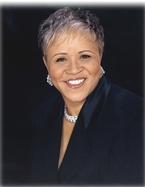
b. 1953 Person Name: Evelyn Simpson-Curenton, b. 1953 Topics: All Souls November 2nd; Funeral Sacraments; Burdens; Comfort; Courage; Cross; Eternal Life; Evening, Night; Faithfulness of God; Grace; Guidance; Heaven; Presence of God; Sickness; Victory over Sin and Death Arranger of "EVENTIDE" in Lead Me, Guide Me (2nd ed.) Evelyn Simpson Curenton (born 1953) is a leading African-American composer, pianist, organist, and vocalist. Simpson Curenton began piano lessons at age 5, began to perform with the Singing Simpsons of Philadelphia, a family group, and earned a B.M., Music Education and Voice from Temple University. She has been commissioned to write works for the American Guild of Organists, George Shirley, the late Duke Ellington, and her sister, the late Joy Simpson, arranged music for Kathleen Battle, Jessye Norman, and the Porgy and Bess Chorus of the New York Metropolitan Opera, and has performed with musical organizations such as Philadelphia's National Opera Ebony (later renamed Opera North). Based in the Washington, D.C., area, Curenton is Music Director of the Washington Performing Arts Society's Men and Women of the Gospel and an associate of the Smithsonian Institution. She has given lectures and participated in workshops on early 18th-century black religious music and the music of African-Americans during the Civil Rights era. --en.wikipedia.org

Charles H. Webb

b. 1933 Person Name: Charles Haizlip Webb, b. 1933 Topics: Christ Incarnate Christmas and Epiphany; The Church Celebrates Death and Grieving; Christian Year Candlemas; Funerals general; Light Harmonizer of "LAND OF REST" in Church Hymnary (4th ed.)

Nicolaus Selneccer

1530 - 1592 Person Name: N. Selnecker, 1532-1592 Topics: Death and Funeral Songs Author of "O Herre Gott in meiner Noth " in Evang.-Lutherisches Gesangbuch Selnecker, Nicolaus, D.D., son of Georg Selnecker (Selneccer, Schellenecker, who was protonotarius to the Nürnberg magistracy, but lived at Hersbruck near Nürnberg) was born at Hersbruck Dec. 5, 1532. In 1536 he was removed to Nürnberg, and became during his school time, when only twelve years old, organist at the chapel in the Kaiserburg there. He went to the university of Wittenberg in 1550 (where he became a favourite pupil of Melanchthon), graduated M.A. on July 31, 1554, and subsequently lectured as a privat-docent, sometimes to 200 students. In the end of 1557 he was appointed second court preacher at Dresden, and tutor to the heir apparent Prince Alexander, having also to supervise the education of the choirboys of the royal chapel. He was ordained at Wittenberg Jan. 6, 1558. The principal theologians at the Saxon court at that time were inclined to follow Melanchthon's lead and to approximate to Calvin's teachings regarding Consubstantiation. When therefore Selnecker thought it his duty openly to declare his adhesion to strict Lutheranism, he found his position almost untenable. When Martin Hoffmann of the Neustadt church in Dresden preached against the Elector August's passion for game preserving, Selnecker took Hoffmann's part. His enemies took advantage of this, and managed so that after Hoffmann had been expelled from Dresden, in August, 1564, Selnecker was requested to seek work elsewhere. He preached his farewell sermon at Dresden on March 15, 1565, and on the 26th he entered on his new office of Professor of Theology at Jena. After the siege of Gotha, Duke Johann Wilhelm of Saxony recalled Wigand and other professors of Theology who had been expelled from Jena, in 1561, as adherents of Flaeius; and Selnecker, not being so extreme a Lutheran as they, had to leave Jena. Thereupon the Elector August again received him into favour, appointed him professor of Theology at Leipzig, and also pastor of St. Thomas's church and Superintendent of Leipzig. He entered on his duties at Leipzig in August 1568, and for some time worked quietly and successfully. In July 1570 the Elector acceded to the request of Duke Julius of Brunswick for Selnecker's services, and gave Selnecker leave of absence to go to Wolfenbüttel as court preacher and general superintendent. Here he succeeded in inducing the clergy to receive the so-called Saxon Confession, and persevered in zealous visitations of churches, schools, &c. After 1572 he resided at Gandersheim, took an interest in the Gymnasium there, &c. In 1573 he also visited, and drew up a book of Church Order and Discipline for the district of Oldenburg-Jever. But in Brunswick, what with Martin Chemnitz the Superintendent of Brunswick, who was a High Lutheran, the Duke who wished for peace, and the other General Superintendent at Wolfenbüttel, Selnecker found it a difficult matter to work comfortably, and was himself accused of Crypto-Calvinism. He therefore gladly accepted the Elector August's recall to Leipzig, and began to lecture there again in Feb. 1574. In 1576 he was once more appointed pastor of St. Thomas's Church, and Superintendent. At Leipzig the sacramental controversy broke out afresh, and Selnecker became deeply involved therein, lie was then engaged in drawing up the Formula of Concord (meant to unite the Lutherans, but to exclude the Romanists on one hand, and the Calvinists on the other), which was finally revised on May 29, and published on July 22, 1577. The Formula of Concord was so far a success that it was very largely subscribed, but at the same time its authors, and specially Selnecker, were subjected to the most violent abuse both from the High Lutherans and from the Galvinists, so much so that he called 1579 his "year of patience and silence." For a few years immediately thereafter his life was a more peaceful one, and he found time to devote to poetry and music. At this time he assisted greatly in the building up of the famous Motett Choir of St. Thomas's Church, which J. S. Bach afterwards conducted. But on the death of the Elector August in 1586 the real direction of affairs passed into the hands of Dr. Nicolaus Crell, Chancellor to the Elector Christian I., and under his rule the Lutheran clergy were gradually displaced by Melanchthonians and Crypto-Calvinists. When the new court preacher Salmuth began to issue a German Bible with notes in which he clearly taught Calvinism and impugned the Formula of Concord, Selnecker published a pamphlet in opposition, and was in consequence deprived of his offices on May 17, 1589. For a time he stayed on in his own house in Leipzig, and used his pen in controversy. But after haying received, on Oct. 22, notice to cease writing, he thought it prudent to leave Leipzig, He found many sympathisers, and after a short time spent in Halle and then in Magdeburg, he accepted the appointment of Superintendent at Hildesheim. Here he had many anxious and weighty matters to settle, and was finally called on, in 1591, to arbitrate in matters of dispute at Augsburg. Returning from Augsburg in stormy December weather, and being worn out and seriously ill, he reached Hildesheim half dead, and was confined to his room till April. Meantime the Elector Christian I. had suddenly died, and his widow, after deposing the Chancellor Crell, proceeded to recall those whom Crell had banished. Selnecker, spite of his weakness, welcomed the idea of returning to Leipzig, left Hildesheim on May 9, and reached Leipzig on May 19; but only to die. He died at Leipzig, May 24, 1592. Seluecker, as we have seen, was a prominent figure in the ecclesiastical history of Germany in the latter half of the sixteenth century, and a good illustration of the extremes to which theological controversies were then carried. He was the author of some 175 theological and controversial works, in German and Latin, perhaps the most important being his Institutio Religionis Christianae, Frankfurt, 1572-73. He also ranks, with Helmbold and Ringwaldt, among the most important hymnwriters of the period. Amid the manifold changes and chances of his life he found inspiration and consolation in the study of and recourse to the Psalter, and in his love of music. In Latin verse he published a Scriptural play on the Fall of our First Parents, entitled Theophiania, &c, Wittenberg, 1560 [Brit. Mus.], and a version of the Psalms as Paraphrasis Psalterii, Heinrichstadt, 1573…His German hymns partake for the most part of the objective churchly character of the hymns of the Reformation period, and indeed contain many reminiscences of them. Of the rest, many only too faithfully mirror the misfortunes and changes and conflicts of his life, and are full of personal matter and careless in style. Still there remain not a few worthy of note, in which a genuine piety, a deep and fervent love to the Saviour, and a zeal for the best interests of His Church on earth, are expressed in clear, flowing and musical style. The hymns by Selnecker which have passed into English are:— i. Ach bleib bei uns, Herr Jesu Christ. Peace and Orthodoxy. It has sometimes been said of this hymn that st. i., ii. are by Selnecker, and that the rest are a later addition. The opposite however is the case. The full form appeared in theGeistliche Psalmen, &c, Nürnberg, 1611, p. 597, in 9 stanzas, viz.:— 1. Ach bleib bey uns, Herr Jesu Christ. 2. In diser schweren betrübten Zeit. 3. Herr Jesu, hilff, dein Kirch erhalt. 4. Erhalt unns nun bey deinem Wort. 5. Ach Gott es geht gar libel zu. 6. Den stoltzen Geistern wehre doch. 7. Die Sach und Ehr, Herr Jesu Christ. 8. Dein Wort ist unsers Hertzens Trutz. 9. Gib dass wir leben in deim Wort. The text of 1611 is in H. Thiele's ed. of Selnecker's Geistliche Lieder, 1855, p. 31, and in the Berlin Geistliche Lieder, ed. 1863, No. 408. The translations in common use from this text:— 1. Lord Jesus with Thy children stay. This is a tr. of st. 1, 2, 8, 6, 9, 3 by J. Swertner in the Moravian Hymn Book 1789, No. 6 (1886, No. 6). 2. Ah Jesu Christ, with us abide. This is a good tr. of st. 1-5, 9, by Dr. Kennedy as No. 41 in his Hymnologia Christiana 1863, repeated in Holy Song, 1869. 3. Lord Jesu Christ, with us abide, For round us fall, &c. By Miss Winkworth, of st. 1, 2, in her Chorale Book for England. 4. Forsake us not, 0 Lord be near. Other trs. are-—(1) Abide with us, O Jesu dear," as No. 336, in pt. i. of the Moravian Hymn Book, 1754. (2) "Lord Jesu Christ, with us abide, 'Tis now." By H. J. Buckoll, 1842, p. 69. (3) "With us, Lord Jesus Christ, abide." By Dr. G. Walker, 1860, p. 61. ii. Christus der wahre Gottes Sohn. Holy Baptism. Translated as:— Now Christ, the very Son of God. iii. Hilf, Herr, mein Gott, in dieser Noth. Cross and Consolatio. In hisChristliche Psalmen, 1587, in 15 lines entitled "Anno 1565. God knows why." It was probably written during his last months at Dresden. It has indeed been said to have been written to comfort Martin Hoffmann, diaconus of the Holy Cross Church at Dresden, on his expulsion after preaching about the Elector August's passion for hunting and game preserving; but the hymn is dated 1565, and Hoffmann left Dresden in August, 1564. The form translated into English is:— Hilf, Helffer, hilf in Angst und Noth. The translations are:— 1. My Helper, aid: Thy mercy show. By A. T. Russell, in full, as No. 223 in his Psalms and Hymns. 1851. 2. Help, Saviour! help, in fear and need By E. Cronenwett, in full, as No. 410 in the OhioLutheran Hymnal 1880. 3. Help, Jesus, help! in woe, in need. By Miss Manington in her Footprints of the Holy Dead, &c, 1863, p. 8. iv. Lass mich dein sein und bleiben. Close of Service. This is a beautiful stanza of 8 lines which is very frequently used in Germany at the close of Divine service. It was written as his daily prayer . The translations are:— 1. Let me be Thine for ever, My gracious. This is a tr. of st. i.-iii. by Dr. M. Loy as No. 230 in the Ohio Lutheran Hymnal, 1880. 2. Make me Thine own and keep me Thine. By Miss Winkworth in her Christian Singers of Germany, 1869, p. 152. v. 0 Herre Gott, in meiner Noth. For the Dying. Founded on Ps. cxvi. 9. Translated as:—- 0 Lord my God, I cry to Thee. This is a good and full tr. by Miss Winkworth in her Lyra Germanica 2nd Ser. 1858, p. 212, and her Chorale Book for England, 1863, No. 192. vi. Wir danken dir, Herr Jesu Christ, Dass du gen Himmel gefahren bist. Ascension. The translation in common use is:— We thank Thee, Jesus! dearest Friend, that Thou didst. Other trs. are—- (1) “Lord Jesus Christ! we thank Thee now." This is No. 334, in pt. i., of the Moravian Hymn Book, 1754. (2) "To Thee, our Lord, all praise be given." vii. Wir danken dir, o treuer Gott. Absolution. Translated as:— O Faithful God, thanks be to Thee. By C. H. L. Schnette, in full, as No. 246 in the Ohio Lutheran Hymnal 1880. [Rev. James Mearns, M.A.] --Excerpts from John Julian, Dictionary of Hymnology (1907)

Robert Williams

1782 - 1818 Person Name: Robert Williams, 1781-1821 Topics: Easter; Easter Vigil ; Easter; Easter Season; Ascension; Christ the King; Funeral; Heaven; Jesus Christ; Paschal Mystery; Redemption; Victory over Sin and Death Composer of "LLANFAIR" in Worship (3rd ed.) Robert Williams United Kingdom 1782-1818. Born at Mynydd Ithel, Anglesey, Wales, blind from birth, he became a basket weaver. He had great innate musical ability. Although blind, he could write out a tune after hearing it just once. He sang hymns at public occasions. No information found regarding family. He died at Mynydd Ithel, Anglesey, Wales. John Perry

Jakob Hintze

1622 - 1702 Person Name: Jakob Hintze, 1632-1702 Topics: Easter Vigil ; Easter; Easter Season; Christ the King; Baptism of Children; Eucharist; Funeral; Celebration; Death; Eternal Life; Jesus Christ; Lamb; Love of God for Us; Paschal Mystery; Praise; Salvation; Song; Sunday; Victory over Sin and Death Composer of "SALZBURG" in Worship (3rd ed.) Partly as a result of the Thirty Years' War and partly to further his musical education, Jakob Hintze (b. Bernau, Germany, 1622; d. Berlin, Germany, 1702) traveled widely as a youth, including trips to Sweden and Lithuania. In 1659 he settled in Berlin, where he served as court musician to the Elector of Brandenburg from 1666 to 1695. Hintze is known mainly for his editing of the later editions of Johann Crüger's Praxis Pietatis Melica, to which he contributed some sixty-five of his original tunes. Bert Polman

H. C. Ball

1896 - 1989 Topics: Rites of the Church Penance; Ritos de la Iglesia Penitencia; Rites of the Church Funeral; Ritos de la Iglesia Exequias; Amor de Dios para Nosotros; Love of God for Us; Arrepentimiento; Repentance; Death; Muerte; Homecoming; Regreso al Hogar; Jesucristo; Jesus Christ; Mercy; Misericordia; Pecado; Sin; Promesa de Dios; Promise of God; Reconciliación; Reconciliation; Refuge; Refugio; Tiempos y Temporadas; Times and Seasons Adapter of "Softly and Tenderly Jesus Is Calling (Tierno y Amante, Jesús Nos Invita)" in Oramos Cantando = We Pray In Song

Pages


Export as CSV
It looks like you are using an ad-blocker. Ad revenue helps keep us running. Please consider white-listing Hymnary.org or getting Hymnary Pro to eliminate ads entirely and help support Hymnary.org.