You help make Hymnary.org possible. More than 10 million people from 200+ countries found hymns, liturgical resources and encouragement on Hymnary.org in 2025, including you. Every visit affirms the global impact of this ministry.

If Hymnary has been meaningful to you this year, would you take a moment today to help sustain it? A gift of any size—paired with a note of encouragement if you wish—directly supports the server costs, research work and curation that keep this resource freely available to the world.

Give securely online today, or mail a check to:
Hymnary.org
Calvin University
3201 Burton Street SE
Grand Rapids, MI 49546

Thank you for your partnership, and may the hope of Advent fill your heart.

Person Results

Topics:proper+11
In:people

Planning worship? Check out our sister site, ZeteoSearch.org, for 20+ additional resources related to your search.
Showing 101 - 110 of 223Results Per Page: 102050

Andrew Moore

Topics: Year A Proper 11 Arranger of "[Alleluia, alleluia, alleluia, alleluia]" in Complete Anglican Hymns Old and New

Cesáreo Gabarain

1936 - 1991 Person Name: Cesáreo Gabaraín Topics: Year A Proper 11 Author of "Sois la Semilla (You Are the Seed)" in The New Century Hymnal

David Jenkins

1848 - 1915 Person Name: David Jenkins, 1848-1915 Topics: Year B Proper 11 Composer of "PENLAN" in Complete Anglican Hymns Old and New Born: December 30, 1848, Trecastle, Breconshire, Wales. Died: December 10, 1915, Aberystwyth, Cardiganshire, Wales. Buried: Trecastle, Breconshire, Wales. Professor David Jenkins (1848 - 1915) was a Welsh composer born at Trecastle, Brecknockshire, Wales. Originally apprenticed to the tailoring trade, he joined the Tonic Solfa choral movement and in 1874 enrolled at Aberystwyth College and studied under the renowned composer Joseph Parry, the first Professor of Music there. Jenkins received his Mus. Bac. from Cambridge in 1878. In 1893, he was appointed lecturer in the newly-formed Music Department of the University of Wales, Aberystwyth, and was appointed Professor in 1910, a post he held until his death. He was a prominent figure in the musical life of Wales, judging at the National Eisteddfod and provincial eisteddfodau, and conducting at cymanfaoedd (hymn-singing festivals). He was a prolific composer; his best-known choral works are Arch y Cyfamod, Job, Yr Ystorm and The Psalm of Life, which was written for the Cardiff Triennial Festival in 1895, and was first premiered by two thousand singers at the Crystal Palace, London, on July 1896. He was also an editor of Y Cerddor. He died in Castell Brychan, Aberystwyth. --www.hymnswithoutwords.com

William Dalrymple Maclagan

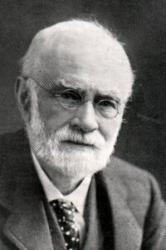
1826 - 1910 Person Name: William Dalrymple Maclagan, 1826-1910 Topics: Year B Proper 11 Composer of "BREAD OF HEAVEN" in Complete Anglican Hymns Old and New Maclagan, William Dalrymple , D.D., son of David Maclagan, M.D., was born in Edinburgh, June 18, 1826. In early life he entered the army, and served for some time in India. Retiring with the rank of lieutenant, he entered St. Peter's College, Cambridge, where he graduated B.A. 1856 and M.A. in 1860. Taking Holy Orders, he was curate of St. Saviour's, Paddington, 1856-58, and St. Stephen's, Marylebone, 1858-60. He then became Secretary to the London Diocesan Church Building Society, from 1860 to 1865; curate of Enfield, 1865-69; Rector of Newington, 1869-75; and Vicar of Kensington, 1875-78. He was also Hon. Chaplain to the Queen, and Prebendary of Reculverland in St. Paul's Cathedral, London. In 1878 he was consecrated Bishop of Lichfield. Bishop Maclagan's work has been mainly of a practical character, and his publications are few. The few hymns which he has written have been received with great favour, and create a desire for more of the same kind and quality. The following are in common use.:— 1. Again the trumpet sounds. Missions. Written about 1870. Appeared in the Hymns Ancient & Modern Hymns Ancient & Modern series of Hymns for Mission Services. 1871. 2. Be still, my soul, for God is near. Holy Communion. Part ii. is “O Body, broken for my sake." Written about 1873 for St. Mary's, Newington. In Thring's Collection, 1882. 3. Holy Spirit, Lord of love. Confirmation. Written about 1873, and published in Mrs. C. Brock's Children's Hymn Book, 1884. 4. It is finished, blessed Jesus [Saviour]. Good Friday. Written for Hymns Ancient & Modern, 1875. In several collections. 5. Lord, when Thy Kingdom comes, remember me. Good Friday. Written for the 1875 ed. of Hymns Ancient & Modern. Sometimes given in two parts: Pt. ii. Beginning, “Lord, when with dying lips my prayer is said." 6. The Saints of God their conflict past. All Saints. First published in Church Bells, 1870; and again in the Society for Promoting Christian Knowledge Church Hymns, 1871. 7. What thanks and praise to Thee we owe. St. Luke. Written for the 1875 edition of Hymns Ancient & Modern These hymns are of more than usual merit, being characterized by great simplicity, tenderness, and fervour. The special season or purpose is clearly indicated, and its lessons earnestly enforced. -- John Julian, Dictionary of Hymnology (1907) ============= Maclagan, Abp. W. D., pp. 709, i.; 1578, ii. At the present time all Abp. Maclagan's hymns are in common use, and most of his tunes likewise. With regard to the latter, it is exceptional to find so many tunes by the author of popular hymns sharing the same popularity in the principal hymnals. In Church Hymnal, 1903, and Hymns Ancient & Modern, 1904, combined, there are eight of his tunes, whilst the hymns are six in all. --John Julian, Dictionary of Hymnology, New Supplement (1907)

G. W. Briggs

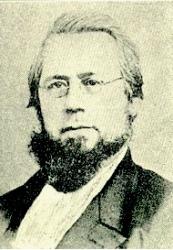
1875 - 1959 Person Name: George Wallace Briggs, 1875-1959 Topics: Year C Proper 11 Author of "Come, risen Lord" in Complete Anglican Hymns Old and New George Wallace Briggs is a Canon of Worcester Cathedral and one of the most distinguished British hymn writers and hymnologists of today. Six of his hymns appear in the Episcopal Hymnal of 1940 (American). Another hymn on the Bible entitled "Word of the living God" was written for the 25th Anniversary of the British Bible Reading Fellowship and was sung in Westminster Abbey on June 5, 1947. It has been widely used since that time. Canon Briggs is a leading member of the Hymn Society of Great Britain and Ireland. He is also the composer of several hymn times, six of which have appeared in British hymnals. In addition to his work as a clergy man of the Church of England and an hymnologist, he has interest himself actively in the field of religious education, being largely responsible for two books with wide circulation in Britain, "Prayers and Hymns for used in Schools" and "The Daily Service." These books have had great influence on the worship practices of British schools, public and private. It is of historic interest that he is the author of one of the prayers used at the time of the famous meeting of Churchill and Roosevelt on H.M.S. Prince of Wales in 1941 when the Atlantic Charter was framed. --Ten New Hymns on the Bible, 1952. Used by permission.

Henry Harbaugh

1817 - 1867 Topics: Year C Proper 11 Author of "Jesus, I Live to You" in The New Century Hymnal Harbaugh, Henry, D.D., born in Franklin Co., Pennsylvania, Oct. 24, 1817, was of Swiss descent. In early life he was a farmer, carpenter, and teacher; but in 1840 he entered Marshall College, Mercersburg. Entering the ministry of the German Reformed body, he became, in 1844, Pastor at Lewisburg, Lancaster and Lebanon, Pennsylvania, and in 1864 Professor in Theology at Mercersburg. He died Dec. 27, 1867. He was Editor of the Guardian and the Mercersburg Review, in which he advocated what was called "Mercersburg Theology." His published works include sundry books about Heaven; Poems, Philadelphia, 1860, and Hymns & Chants for Sunday Schools, Lebanon, 1861. This last includes his hymns. The best known and most widely used of his compositions are:— 1. Jesus, I live to Thee. [Life consecrated to Jesus.] This hymn is dated 1850. It is No. 391 in the Hymns of the Church, N. Y., 1869; No. 255 in Allon's Supplementary Hymns, London, 1868, and is also in other collections. 2. God most mighty, sovereign Lord. [National Hymn.] Appeared in his Poems, 1860, in 8 stanzas of 8 lines, and headed, "A National Litany hymn." In some collections it is abridged, as in Hatfield's Church Hymnbook, N. Y., 1872, No. 1307; and in others part of it is altered to "Christ by heavenly hosts adored," as in the Reformed Dutch Hymns of the Church, 1869, No. 935, and others. 3. Make the cross your meditation. [Passiontide.] This translation of "Recordare sanctae crucis" (q.v.) appeared in the Mercersburg Review, 1858, p. 481, and in his Poems 1860. It is worthy of more attention than it has received. [Rev. F. M. Bird, M.A.] --John Julian, Dictionary of Hymnology (1907) ================== Harbaugh, H., p. 484, ii. From No. 2, “God most mighty, &c," the cento, "Thou, by heavenly hosts adored" in the Songs of Christian Praise, N. Y., 1880, No. 658, is taken. --John Julian, Dictionary of Hymnology, Appendix, Part II (1907)

Johann Schop

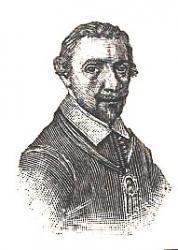
1590 - 1667 Topics: Proper 11 Year A Composer of "JESU, JOY (WERDE MUNTER)" in Voices United Johann Schop Germany 1590-1667. Born at lower Saxony, Germany, he became a Lutheran composer and violinist, much admired for his virtuoso and technical ability. In 1614 Duke Friedrich Ulrich made him a probationary musician in the Hofkapelle at Wolfenbuttel. He performed playing various instruments, but excelled as a violinist. He was engaged permanently in 1615, but the same year he responded to a summons to join the flourishing musical establishment of King Christian IV of Denmark in Copenhagen. There he met English viol player, William Brade, who had earlier been in service to Hamburg, Germany (and may have taught Schop there). Schops compositions for the violin set impressive demands for that area at that time. He also played other instruments, including the violi, lute, cornet, trombon, trumpet, zinke, and violin (virtuoso). In 1619 Schop and Brade left Copenhagen to escape the plague. He then went to Iburg, where he worked at the courtof the Osnabruck bishop, Philipp Sigismund. Schop had such a reputation that he soon acquired a post as Kapellmeister at an establishment in Hamburg and was the first member of the council music. In 1621 he was its director and the leading municipal violinist in that city, which offered him a substantial income for his participation in the church music program. He also was organist at the Jacobikirche. In 1634 he again traveled to Copenhagen with Heinrich Schutz and Heinrich Albert for the wedding of Crown Prince Christian. He won a violin contest there. Few German violinists were of his caliber musically. He returned to Hamburg, and the Danish king tried several times to woo him back to Denmark, but he stayed in Hamburg, becoming a director of music. He published books of violin music in 4 to 6 parts. He wrote two books of well-loved dance pieces and sacred concertos. He co-founded a school of song writing there in Hamburg with Thomas Selle. Many of his tunes were writtten for fellow townsmen and friend Johann Rist. Some of his music was performed at the Peace of Westphalia celebrations. Some of his tunes were used by chants in a cantata. Schop was married (wife’s name not found) and they had two sons, Johann II, and Albert, who also became musicians. He died in Hamburg. John Perry

Stuart Townend

Person Name: Stuart Townend (b. 1963) Topics: Proper 11 Year B Author of "And I will trust in you alone" in Ancient and Modern Stuart Townend (b. 1963) grew up in West Yorkshire, England, the youngest son of an Anglican vicar. He started learning piano at a young age, and began writing music at age 22. He has produced albums for Keith Routledge and Vinesong, among many others, and has also released eight solo albums to date. Some of his better-known songs include “How Deep the Father’s Love,” “The King of Love,” and “The Power of the Cross.” He continues to work closely with friends Keith and Kristyn Getty, and is currently a worship leader in Church of Christ the King in Brighton, where he lives with wife Caroline, and children Joseph, Emma and Eden. Laura de Jong

J. J. Rambach

1693 - 1735 Person Name: Johann J. Rambach Topics: Year A Proper 11 Author of "Baptized into Your Name Most Holy" in The New Century Hymnal Rambach, Johann Jakob, D.D., son of Hans Jakob Rambach, cabinet maker at Halle on the Saale, was born at Halle, Feb. 24, 1693. In 1706 he left school and entered his father's workshop, but, in the autumn of 1707, he dislocated his ankle. During his illness he turned again to his schoolbooks; the desire for learning reawoke; and on his recovery, early in 1708, he entered the Latin school of the Orphanage at Halle (Glaucha). On Oct. 27, 1712, he matriculated at the University of Halle as a student of medicine, but soon turned his attention to theology. He became specially interested in the study of the Old Testament under J. H. Michaelis. In May 1715 he became one of Michaelis's assistants in preparing his edition of the Hebrew Bible, for which he wrote the commentary on Ruth, Esther, Nehemiah, &c. His health began to suffer in the spring of 1719, and he gladly accepted the invitation of Count von Heukel to stay at Polzig, near Ronneburg, where he spent several months. By August he had quite recovered, and went to pay a visit to Jena, where a number of the students asked him to lecture to them. For this purpose he settled at Jena in Oct., 1719, and lived in the house of Professor Buddeus (J. F. Budde). He graduated M.A. in March 1720. In 1723 he was appointed adjunct of the Theological Faculty at Halle, as also inspector of the Orphanage; in 1726 extraordinary professor of theology; and in 1727, after A. H. Francke's death, ordinary professor as well as preacher at the Schulkirche. Here he was very popular, both as preacher and professor, but the jealousy of his colleagues induced him to accept an offer from the Landgrave Ernst Ludwig of Hesse, who, in 1731, invited him to Giessen as superintendent and first professor of theology (before leaving Halle he graduated D.D., June 28, 1731), and in Aug., 1732, appointed him also director of the Paedagogium at Giessen. In 1734 he was, for various reasons, greatly inclined to accept the offer of the first professorship of theology in the newly-founded University of Göttingen, but eventually, at the earnest request of the Landgrave, remained in Giessen, where he died of fever, April 19, 1735 (Die Familie Rambach. By Dr. T. Hansen, Gotha, 1875: Allgemeine Deutsche Biographie, xxvii. 196; Blätter fur Hymnologie, 1883, pp. 113, 129, 145, 163, 186; 1884, p. 20; 1885, p. 13, &c.) Rambach was a voluminous author in various departments of practical theology, e.g. his Institutiones hermeneuticae sacrae, Jena, 1724, which passed through four editions in his lifetime; hisErbauliches Handbüchlein fur Kinder, 1734 (see below), which reached an eighth edition in 1736, and a 14th in 1766; his various volumes of sermons, &c. He justly earned his popularity by the thoroughness of his researches, and the clear and concise way in which he set forth the results of his investigations. It is however as a hymnwriter that his name is likely to be best known. While not entitled to rank with the best hymn-writers of the 16th and 17th centuries, he yet takes a high place among his contemporaries, and deserves to be remembered as much as almost any of the 18th cent, hymnwriters. His style is good and dignified; his thought is profound yet clearly expressed. While his hymns are often sufficiently didactic, they are generally scriptural and churchly in tone, and are characterised by lyric force, lively imagination, and earnest, sober piety. Of hymns, in the strict sense, he wrote over 180, a large number of which passed into the German hymn-books of the 18th cent. (e.g. the Hannover Gesang-Buch, 1740, and Lüneburg Gesang-Buch, 1767, contains 52 by him), and a good many are still found in modern hymn-books. Of these Dr. J. L. Pasig gives 165 in his edition of Rambach's Geistliche Lieder, Leipzig, 1844, and the rest are printed by Hansen as above, while the first lines of the whole are given in the Blätter as above. Four are recasts (practically originals), made for the 11th edition, 1719, of Freylinghausen's Gesang-Buch, to replace similar hymns in the ed. of 1705. The rest principally appeared in the following works by Rambach, viz.: (1) Geistliche Poesien, Halle. 1720 [British Museum] The first part contains 72 cantatas on the Gospels for Sundays and festivals; the second part includes 20 hymns, mostly written at Polzig in 1719. (2) Poetische Fest-Gedancken. Jena and Leipzig, 1723 [Royal Library, Berlin]. Included are 15 pieces which may be called hymns. The second edition of 1727 [Brit. Mus.] has 28 new hymns; and the 3rd ed., 1729 [Gottingen Library], has 22 more. (3) Erbauliches Handbuchlein für Kinder, Giessen, 1734 [Hamburg Library]. The 3rd part contains 8 new hymns. (4) Geistreiches Haus-Gesang-Buch, Frankfurt and Leipzig, 1735 [Hamburg Library], with a preface dated April 10, 1735. This contains 112 hymns by Rambach, of which 58 are practically new, 11 of these, however, being recasts of his own earlier hymns. (5) Wander der bis zum Tode des Kreutzes erniedrigten Liebe, Giessen, 1750 [Berlin Library]. This includes 27 new hymns. Rambach's hymns …which have passed into English are:— i. Auf! Seele, schicke dich. Holy Communion. Written, by request for the eleventh edition, 1719, of Freylinghausen's Gesang-Buch, 1704, as No. 229, in 16 stanzas of 6 lines in order to replace the hymn "Auf, Seele, sey gerüst." This hymn, by George Heine, was included in the Geistreiches Gesang-Buch, Halle, 1697, p. 433. In the second ed., 1771, of the complete book formed by the fusion of pt. i., 1704, and its supplement of 1705 with pt. ii., 1714, of Freylinghausen's Gesang-Buch, both hymns are given, Heine's as No. 524, and Rambach's as No. 522, both marked as being No. 229 in pt. i., 1704. Rambach's hymn is in his Haus Gesang-Buch, 1735, No. 369; the Berlin Geistliche Lieder, ed. 1863, No. 471, &c. In Pasig's edition of his Geistliche Lieder, 1844, p. 112, entitled "Before the reception of Holy Communion." It has been translated as:— My soul prepare to meet. Omitting st. i., 11. 4-6 ; ii., 11. 4-6; vii., xiv., as No. 570 in the Moravian Hymn Book, 1789 (1849, No. 966). In the edition of 1886, No. 979 begins with st. iv., "How should I, slaughtered Lamb"; and No. 1012 with st. xi., "Lord, of Thy wondrous love." ii. Mein Jesu, der du vor dem Scheiden. Holy Communion. Appeared in Freylinghausen's Gesang-Buch, 11th ed., 1719, as No. 238, in 9 st. of 6 1. It was written to replace the hymn "Mein Jesn, hier sind deine Brüder" (Geistreiches Gesang-Buch, Halle, 1697, p. 363), in the first edition of Freylinghausen's Gesang-Buch. It is in his Haus Gesang-Buch, 1735, No. 365; the Berlin Geistliche Lieder, ed. 1863, No. 1601; and in Pasig, 1844, p. 110, entitled, "On the treasures of Grace in Holy Communion." The translations are:— 1. Lord Jesus, Who before Thy passion. Omitting st. ix., this is No. 1181 in the Supplement of 1808 to the Moravian Hymn Book, 1801 (1886, No. 963). 2. 0 Lord, Who on that last sad eve. A good translation omitting st. ix., by Miss Cox, contributed to Lyra Eucharistica, 1863, p. 15, and repeated in her Hymns from the German, 1864, p. 75. Included, omitting st. iii., in G. S. Jellicoe's Collection, 1867. iii. 0 Lehrer, dem kein Andrer gleich. Christ our Prophet. In his Haus Gesang-Buch1735, No. 107, in 8 st. of 6 1., entitled, "On the prophetical office of Jesus Christ." Repeated in the Berlin Geistliche Lieder, ed. 1863, No. 118, and in Pasig, 1844, p. 51. Translated as:— Surely none like Thee can teach. By Miss Fry, in 102 lines, in her Hymns of the Reformation,1845, p. 126. A recast in 3 st. of 8 1., beginning, "Saviour, none like Thee can teach," was included in J. Whittemore's Supplement to all Hymn Books, 1860, No. 263, and repeated in the Methodist New Congregational Hymn Book, 1863, No. 62. iv. Wie herrlich ists ein Schäflein Christi werden. Joy in Believing. In his Poetiche Fest-Gedancken, 2nd ed. 1727, p. 131, in 6 st. of 6 l., entitled, "The Blessedness of the Sheep of Christ. John x. 28, ‘I give my sheep eternal life.'" In his Haus Gesang-Buch 1735, No. 325; the Berlin Geistliche Lieder, ed. 1863, No. 645; and Pasig, 1844, p. 139. Translated as:— How great the bliss to be a sheep of Jesus. A translation of st. i., ii., v., by C. J. Latrobe, as No. 293, in the Moravian Hymn Book, 1789 (1886, No. 385). Hymns not in English common use:— v. Allwissender, vollkommner Geist. The Omniscient One. In his Haus Gesang-Buch, 1735, No. 12, in 6 stanzas; the Berlin Geistliche Lieder, ed. 1863; and in Pasig, p. 8. Translated as, "Thou Spirit, perfect and allwise." By Dr. H. Mills, 1856, p. 11. vi. Frommes Lamm, von was für Hunden. Passiontide. In his Poetische Fest-Gedancken, 2nd ed., 1727, p. 49, in 8 st. In his Haus Gesang-Buch, 1735, No. 151, it begins, "Frommes Lamm, durch dessen Wunden." Also in Pasig, p. 67. Translated as, "Great Thy sorrows, injur'd Jesus." By Dr. H. Mills, 1845 (1856, p. 297). vii. Gesetz und Evangelium, Law and Gospel. In his Haus Gesang-Buch, 1735, No. 356, in 10 st.; the Berlin Geistliche Lieder, ed. 1863; and Pasig, p. 105. Translated as, "The holy law and gospel, both." By Dr. II. Mills, 1845 (1856, p. 27.) viii. Herr, du hast nach dem Fall. Before Work. In his Haus Gesang-Buch, 1735, No. 565, in 4 st.; and Pasig, p. 150. In the Berlin Gesang-Buch, 1765, No. 206, it is altered (probably by J. S. Diterich), and begins "Du hast uns, Heir die Pflicht." This is translated as, “Lord, Thou hast bid us labour, bid us toil." By Miss Warner, 1858, p. 230. ix. Hier bin ich Herr, du rufest mir. Christian Work. In his Haus Gesang-Buch, 1735, No. 269, in 6 st.; the Württemberg Gesang-Buch, 1842, No. 306; and Pasig, p. 119. The translations are (1) "Here am I, Lord, Thou callest me, Thou drawest me." By Miss Warner, 1858, p. 209. (2) "Here am I, Lord, Thou callest me, Thou drawest and." By Mrs. Findlater, in Hymns from the Land of Luther, 4th series, 1862. x. Höchste Vollkommenheit, reineste Sonne. God's Majesty . Written for the 11th ed., 1719, of Freylinghausen's Gesang-Buch, No. 170 (in 20 st.), to replace an anonymous hymn in the first edition, 1704, which began "Höchste Vollkommenheit, alles in Einem." In his Haus Gesang-Buch 1735, No. 8, Rambach reduced it to 12 st., and rewrote it to an easier metre, so as to begin "Höchstes Wesen, reinste Sonne." Both forms are in Pasig, pp. 3-6. Translated as "If Heav'ns and Earths there were innumerable," a tr. of st. iii., viii., xi., xv., xvii., xix., xx., as No. 672, in pt. i. of the Moravian Hymn Book, 1754. xi. O grosser Geist, dess Wesen Alles füllet. The Omnipresent One. In his Geistliche Poesien, 1720, p. 330, in 9 st.; his Haus Gesang-Buch, 1735, No. 13; the Württemberg Gesang-Buch, 1842, No. 44 ; and Pasig, p. 7. Translated as, “Eternal God, Thy dwelling-place." By Dr. G. Walker, 1860, p. 73. xii. 0 grosser Geist! O Ursprung aller Dinge. God's Holiness. In his Geistliche Poesien, 1729, p. 327, in 9 st.; his Haus Gesang-Buch, 1735, No. 19; and Pasig, p. 15. Translated as, "O mighty Spirit! Source whence all things sprung." By Miss Winkworth, 1858, p. 153. xiii. Verklärte Majestät, anbetungs-würdigst Wesen. God's Majesty. Founded on 1 Tim. vi. 15, 16. In his Geistliche Poesien, 1720, p. 303, in 11 st.; his Haus Gesang-Buch, 1735, No. 7; and Pasig, p. 2. The form translation is "Anbetungswürdger Gott," a recast (probablv by J. S. Diterich), which is No. l in the Berlin Gesang-Buch 1765, and No. 5 in the Berlin Geistliche Lieder, ed. 1863. Translated as, "Dread Majesty above." By Dr. H. Mills, 1845 (1856, p. 8). xiv. Wirf, blöder Sinn, den Kummer hin. Christmas. In his Haus Gesang-Buch, 1735, No. 129, in 6 st. (founded on Rom. viii. 31, 32). In Pasig, p. 6, and the Unverfälschter Liedersegen 1851, No. 60. Translated as, "Throw, soul, I say, thy fears away." By Miss Manington, 1864, p. 28. [Rev. James Mearns, M.A.] --John Julian, Dictionary of Hymnology (1907

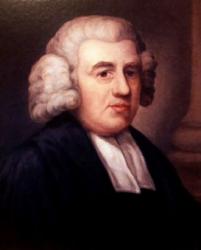
John Newton

1725 - 1807 Person Name: John Newton, 1725-1807 Topics: Proper 11 Year B Author of "Come, my soul, thy suit prepare" in Common Praise John Newton (b. London, England, 1725; d. London, 1807) was born into a Christian home, but his godly mother died when he was seven, and he joined his father at sea when he was eleven. His licentious and tumul­tuous sailing life included a flogging for attempted desertion from the Royal Navy and captivity by a slave trader in West Africa. After his escape he himself became the captain of a slave ship. Several factors contributed to Newton's conversion: a near-drowning in 1748, the piety of his friend Mary Catlett, (whom he married in 1750), and his reading of Thomas à Kempis' Imitation of Christ. In 1754 he gave up the slave trade and, in association with William Wilberforce, eventually became an ardent abolitionist. After becoming a tide-surveyor in Liverpool, England, Newton came under the influence of George Whitefield and John and Charles Wesley and began to study for the ministry. He was ordained in the Church of England and served in Olney (1764-1780) and St. Mary Woolnoth, London (1780-1807). His legacy to the Christian church includes his hymns as well as his collaboration with William Cowper (PHH 434) in publishing Olney Hymns (1779), to which Newton contributed 280 hymns, including “Amazing Grace.” Bert Polman ================== Newton, John, who was born in London, July 24, 1725, and died there Dec. 21, 1807, occupied an unique position among the founders of the Evangelical School, due as much to the romance of his young life and the striking history of his conversion, as to his force of character. His mother, a pious Dissenter, stored his childish mind with Scripture, but died when he was seven years old. At the age of eleven, after two years' schooling, during which he learned the rudiments of Latin, he went to sea with his father. His life at sea teems with wonderful escapes, vivid dreams, and sailor recklessness. He grew into an abandoned and godless sailor. The religious fits of his boyhood changed into settled infidelity, through the study of Shaftesbury and the instruction of one of his comrades. Disappointing repeatedly the plans of his father, he was flogged as a deserter from the navy, and for fifteen months lived, half-starved and ill-treated, in abject degradation under a slave-dealer in Africa. The one restraining influence of his life was his faithful love for his future wife, Mary Catlett, formed when he was seventeen, and she only in her fourteenth year. A chance reading of Thomas à Kempis sowed the seed of his conversion; which quickened under the awful contemplations of a night spent in steering a water-logged vessel in the face of apparent death (1748). He was then twenty-three. The six following years, during which he commanded a slave ship, matured his Christian belief. Nine years more, spent chiefly at Liverpool, in intercourse with Whitefield, Wesley, and Nonconformists, in the study of Hebrew and Greek, in exercises of devotion and occasional preaching among the Dissenters, elapsed before his ordination to the curacy of Olney, Bucks (1764). The Olney period was the most fruitful of his life. His zeal in pastoral visiting, preaching and prayer-meetings was unwearied. He formed his lifelong friendship with Cowper, and became the spiritual father of Scott the commentator. At Olney his best works—-Omicron's Letters (1774); Olney Hymns (1779); Cardiphonia, written from Olney, though published 1781—were composed. As rector of St. Mary Woolnoth, London, in the centre of the Evangelical movement (1780-1807) his zeal was as ardent as before. In 1805, when no longer able to read his text, his reply when pressed to discontinue preaching, was, "What, shall the old African blasphemer stop while he can speak!" The story of his sins and his conversion, published by himself, and the subject of lifelong allusion, was the base of his influence; but it would have been little but for the vigour of his mind (shown even in Africa by his reading Euclid drawing its figures on the sand), his warm heart, candour, tolerance, and piety. These qualities gained him the friendship of Hannah More, Cecil, Wilberforce, and others; and his renown as a guide in experimental religion made him the centre of a host of inquirers, with whom he maintained patient, loving, and generally judicious correspondence, of which a monument remains in the often beautiful letters of Cardiphonia. As a hymnwriter, Montgomery says that he was distanced by Cowper. But Lord Selborne's contrast of the "manliness" of Newton and the "tenderness" of Cowper is far juster. A comparison of the hymns of both in The Book of Praise will show no great inequality between them. Amid much that is bald, tame, and matter-of-fact, his rich acquaintance with Scripture, knowledge of the heart, directness and force, and a certain sailor imagination, tell strongly. The one splendid hymn of praise, "Glorious things of thee are spoken," in the Olney collection, is his. "One there is above all others" has a depth of realizing love, sustained excellence of expression, and ease of development. "How sweet the name of Jesus sounds" is in Scriptural richness superior, and in structure, cadence, and almost tenderness, equal to Cowper's "Oh! for a closer walk with God." The most characteristic hymns are those which depict in the language of intense humiliation his mourning for the abiding sins of his regenerate life, and the sense of the withdrawal of God's face, coincident with the never-failing conviction of acceptance in The Beloved. The feeling may be seen in the speeches, writings, and diaries of his whole life. [Rev. H. Leigh Bennett, M.A.] A large number of Newton's hymns have some personal history connected with them, or were associated with circumstances of importance. These are annotated under their respective first lines. Of the rest, the known history of which is confined to the fact that they appeared in the Olney Hymns, 1779, the following are in common use:— 1. Be still, my heart, these anxious cares. Conflict. 2. Begone, unbelief, my Saviour is near. Trust. 3. By the poor widow's oil and meal. Providence. 4. Chief Shepherd of Thy chosen sheep. On behalf of Ministers. 5. Darkness overspreads us here. Hope. 6. Does the Gospel-word proclaim. Rest in Christ. 7. Fix my heart and eyes on Thine. True Happiness. 8. From Egypt lately freed. The Pilgrim's Song. 9. He Who on earth as man was Known. Christ the Rock. 10. How blest are they to whom the Lord. Gospel Privileges. 11. How blest the righteous are. Death of the Righteous. 12. How lost was my [our] condition. Christ the Physician. 13. How tedious and tasteless the hours. Fellowship with Christ. 14. How welcome to the saints [soul] when pressed. Sunday. 15. Hungry, and faint, and poor. Before Sermon. 16. In mercy, not in wrath, rebuke. Pleading for Mercy. 17. In themselves, as weak as worms. Power of Prayer. 18. Incarnate God, the soul that knows. The Believer's Safety. 19. Jesus, Who bought us with His blood. The God of Israel. "Teach us, 0 Lord, aright to plead," is from this hymn. 20. Joy is a [the] fruit that will not grow. Joy. 21. Let hearts and tongues unite. Close of the Year. From this "Now, through another year," is taken. 22. Let us adore the grace that seeks. New Year. 23. Mary to her [the] Saviour's tomb. Easter. 24. Mercy, 0 Thou Son of David. Blind Bartimeus. 25. My harp untun'd and laid aside. Hoping for a Revival. From this "While I to grief my soul gave way" is taken. 26. Nay, I cannot let thee go. Prayer. Sometimes, "Lord, I cannot let Thee go." 27. Now may He Who from the dead. After Sermon. 28. 0 happy they who know the Lord, With whom He deigns to dwell. Gospel Privilege. 29. O Lord, how vile am I. Lent. 30. On man in His own Image made. Adam. 31. 0 speak that gracious word again. Peace through Pardon. 32. Our Lord, Who knows full well. The Importunate Widow. Sometimes altered to "Jesus, Who knows full well," and again, "The Lord, Who truly knows." 33. Physician of my sin-sick soul. Lent. 34. Pleasing spring again is here. Spring. 35. Poor, weak, and worthless, though I am. Jesus the Friend. 36. Prepare a thankful song. Praise to Jesus. 37. Refreshed by the bread and wine. Holy Communion. Sometimes given as "Refreshed by sacred bread and wine." 38. Rejoice, believer, in the Lord. Sometimes “Let us rejoice in Christ the Lord." Perseverance. 39. Salvation, what a glorious plan. Salvation. 40. Saviour, shine and cheer my soul. Trust in Jesus. The cento "Once I thought my mountain strong," is from this hymn. 41. Saviour, visit Thy plantation. Prayer for the Church. 42. See another year [week] is gone. Uncertainty of Life. 43. See the corn again in ear. Harvest. 44. Sinner, art thou still secure? Preparation for the Future. 45. Sinners, hear the [thy] Saviour's call. Invitation. 46. Sovereign grace has power alone. The two Malefactors. 47. Stop, poor sinner, stop and think. Caution and Alarm. 48. Sweeter sounds than music knows. Christmas. 49. Sweet was the time when first I felt. Joy in Believing. 50. Ten thousand talents once I owed. Forgiveness and Peace. 51. The grass and flowers, which clothe the field. Hay-time. 52. The peace which God alone reveals. Close of Service. 53. Thy promise, Lord, and Thy command. Before Sermon. 54. Time, by moments, steals away. The New Year. 55. To Thee our wants are known. Close of Divine Service. 56. We seek a rest beyond the skies. Heaven anticipated. 57. When any turn from Zion's way. Jesus only. 58. When Israel, by divine command. God, the Guide and Sustainer of Life. 59. With Israel's God who can compare? After Sermon. 60. Yes, since God Himself has said it. Confidence. 61. Zion, the city of our God. Journeying Zionward. -- John Julian, Dictionary of Hymnology (1907) ================= Newton, J., p. 803, i. Another hymn in common use from the Olney Hymns, 1779, is "Let me dwell on Golgotha" (Holy Communion). --John Julian, Dictionary of Hymnology, Appendix, Part II (1907) ----- John Newton was born in London, July 24, 1725. His mother died when he was seven years old. In his eleventh year he accompanied his father, a sea captain, on a voyage. For several years his life was one of dissipation and crime. He was disgraced while in the navy. Afterwards he engaged in the slave trade. Returning to England in 1748, the vessel was nearly wrecked in a storm. This peril forced solemn reflection upon him, and from that time he was a changed man. It was six years, however, before he relinquished the slave trade, which was not then regarded as an unlawful occupation. But in 1754, he gave up sea-faring life, and holding some favourable civil position, began also religious work. In 1764, in his thirty-ninth year, he entered upon a regular ministry as the Curate of Olney. In this position he had intimate intercourse with Cowper, and with him produced the "Olney Hymns." In 1779, Newton became Rector of S. Mary Woolnoth, in London, in which position he became more widely known. It was here he died, Dec. 21, 1807, His published works are quite numerous, consisting of sermons, letters, devotional aids, and hymns. He calls his hymns "The fruit and expression of his own experience." --Annotations of the Hymnal, Charles Hutchins, M.A. 1872 See also in: Hymn Writers of the Church =======================

Pages


Export as CSV
It looks like you are using an ad-blocker. Ad revenue helps keep us running. Please consider white-listing Hymnary.org or getting Hymnary Pro to eliminate ads entirely and help support Hymnary.org.