

 My Starred Hymns
 My FlexScores
 My Hymnals
 My Purchased Files
Planning worship?
Check out our sister site, ZeteoSearch.org,
for 20+ additional resources related to your search.
- |
User Links
Person Results
Gerard Moultrie
1829 - 1885 Topics: Holy Communion; Jesus Christ Advent; Jesus Christ Return of; Year B Epiphany 9; Year B Trinity Sunday; Year B Proper 4; Year C Advent 1; Year C Epiphany 5; Year C Proper 21 Translator of "Let All Mortal Flesh Keep Silence" in The New Century Hymnal Moultrie, Gerard, M.A., son of the Rev. John Moultrie, was born at Rugby Rectory, Sept. 16, 1829, and educated at Rugby and Exeter College, Oxford (B.A. 1851, M.A. 1856). Taking Holy Orders, he became Third Master and Chaplain in Shrewsbury School; Chaplain to the Dowager Marchioness of Londonderry, 1855-59; curate of Brightwaltham, 1859; and of Brinfield, Berks, 1860; Chaplain of the Donative of Barrow Gurney, Bristol, 1864: Vicar of Southleigh, 1869, and Warden of St. James's College, Southleigh,1873. He died April 25, 1885. His publications include:
1) The Primer set forth at large for the use of the Faithful. In Family and Private Prayer. Edited from the Post Reformation editions, 1864. (2) Hymns and Lyrics for the Seasons and Saints' Days of the Church, 1867. The hymns of his sister, Mary Dunlop Moultrie (q.v.), were included in this volume. (3) The Espousals of S. Dorothea and Other Verses, 1870. (5) The Devout Communicant, 1867. (6) Six Years' work in Southleigh, 1875. (7) Cantica Sanctorum, or Hymns for the Black Letter Saints Days in the English and Scottish Calendars, to which are added a few Hymns for Special Occasions, 1880.
Mr. Moultrie's hymns include translations from the Greek, Latin, and German, in addition to original compositions. A large number appeared in the Church Times, and other papers; and many were written for special Saints' Days, and Other Festivals, for the People's Hymnal, 1867, in which some were signed "D. P." (i.e. Desiderius Pastor). The following are in common use:—
i. In The Primer, 1864.
1. Father of all, to Thee we pray. Lord's Prayer.
2. In the Name of God the Father. Laying Foundation Stone. (2nd stanza: "And as on the morning stillness.") First appeared in the Church Times, Oct. 1, 1864, and again (as rewritten for the laying of the foundation stone of St. Margaret's, East Grinstead), July 29, 1865.
ii. In Hymns and Lyrics, 1867.
3. Bishop of the souls of men. St. Matthias.
4. Come, faithful people, come away. Palm Sunday.
5. Easter-day is here, and we. Easter.
6. Heavenly Father, God alone. Harvest.
7. Mother, from whose bosom's veil. St. Anne. July 26.
8. 0 Jesu, 0 Redeemer. St. Luke.
9. Mary, maiden undefiled. Visitation of the Blessed Virgin Mary.
10. Silence reigns at eventide. Whitsuntide. In the Altar Hymnal, 1884, it begins with st. iii., "Hark, a rushing mighty sound."
11. The Marriage feast is ready. All Saints. Usually given in an abbreviated form.
12. Virgin-born the King of heaven. Christmas Midnight Hymn. ("To be sung at the Midnight Cele¬bration.") In the Church Times, Nov. 26, 1864, and revised for Hymns & Lyrics.
13. We march, we march to victory. Processional. In the Church Times, Aug, 19, 1865, and headed "Processional hymn before service (written expressly for use during present troubles)."
14. Who is this that shines so bright! St. Laurence. In the People's Hymnal, 1867.
15. Who keeps his birthday feast tonight? Beheading of St. John Baptist. In the People's Hymnal, 1867.
iii. In The People's Hymnal, 1867.
16. Heart to heart, and side by side. Holy Matrimony.
17. I know that my Redeemer liveth. Burial. A paraphrase of the Responsory in the Roman Office for the Dead.
18. Jesus Christ, we humbly pray. Opening of a School House.
19. Lord of heaven, Whose faithful love. Ember Days.
20. Lord, today we bring to Thee. Reception of a Privately Baptized Child.
21. Lord, we come today to Thee. Choir Festival.
22. 0 God, Who bad'st Thine angel sheathe. National Thanksgiving for restored Public Health. This is given in the Society for Promoting Christian Knowledge Church Hymns, 1871, as "0 God, Whose angel stayed his hand," and in the Hymnary, 1872, as "Lord, Who didst bid Thine angel sheathe."
23. 0 Lord of Hosts, Thou God of might. National Thanksgiving for Peace. In several collections.
24. Sevenfold Spirit, Lord of life. Consecration of a Bishop. First sung at the consecration of an American bishop at New York, in 1867. Included in the author's Espousals of St. Dorothea, 1870.
25. Sounds the bell in solemn cadence. Burial. In The Espousals of S. Dorothea, 1870, p. 82, the note is added, "This hymn was first sung at the funeral of the Rev. Warwick Wroth of Clerkenwell." It is headed "Funeral Hymn for a Priest."
iv. In Cantica Sanctorum, 1880.
26. In the midst of gladness, sorrow. Annunciation in Holy Week.
27. Jesus, tender Shepherd. Holy Communion.
28. Swing the censer, wave the banner. Processional.
v. In The Altar Hymnal, 1884.
29. Our great High Priest is standing. Holy Communion.
30. Lo, the Sacrifice atoning. Holy Communion.
vi. Various.
31. Forward, Christians, forward. Processional. Written for the Church of England Working Men's Society in 1879, and issued as a leaflet, of which 40,000 copies were sold during the first year.
32. Laid in this garden full of bloom. Easter Eve. In the Churchman's Companion, April, 1879.
33. On the wings of the wind fell a hymn from the sky. Christmas. In Husband's Supplemental Hymns, N.D. [1873].
34. Shades of night are falling round us. Evening. Novello & Co., with Music by Shad Frost.
35. There is a sound of rejoicing around the great throne. Processional. Written for St. Michael's Church, Folkestone, and published in E. Husband's Appendix to Hymns Ancient & Modern, N.D. [1873]. It was set to music by Mr. Husband, and is commonly known as "The Folkestone Processional."
36. This is the festal day of jubilation. Sunday School Anniversary. A hymn to be sung alternately by men and boys during the collection, written in 1877 for St. Agnes's, Kennington, London.
37. This is the hour of peace and blest communion. Holy Communion. Written for the English Church Union Commemoration held at St. Agnes's, Kennington Park, London, June 9, 1880.
From the subjects of the hymns noted above it will be seen that Mr. Moultrie wrote principally on matters not usually dealt with by hymnwriters. This is specially the case with his Cantica Sanctorum, in which most of the 103 hymns are for "Black Letter Saints' Days."
--John Julian, Dictionary of Hymnology (1907)
===================
Moultrie, G., p. 771, ii. We find that Mr. Moultrie wrote the preface to the Cantica Sanctorum, 1880, but did not edit the book. He and others contributed some thirteen hymns thereto. It was edited by Miss Isabella Leefe, p. 1663, i., who wrote 90 of the hymns.
--John Julian, Dictionary of Hymnology, New Supplement (1907)
See also in:
Hymn Writers of the Church
Gerard Moultrie
Johann Jakob Schütz
1640 - 1690 Person Name: Johann Jacob Schütz Topics: God Praise and Thanksgiving; Adoration and Praise; Blessings; Church Triumphant; God Creator; God Faithfulness; God Image (Mother); God Kingdom, Majesty, Realm; God Mercy; God Presence; God Protection; Grief; Healing; Jesus Christ Kingship, Conqueror; Jesus Christ name; Joy; Kingdom of God; Mercy; Morning; Music and Singing; Opening Hymns; Processionals (Opening of Worship); Proclamation; Providence; Salvation; Service Music Doxologies; Thankfulness; Lent 2 Year A; Easter 5 Year A; Proper 10 Year A; Proper 12 Year A; Proper 19 Year A; Proper 20 Year A; Proper 20 Year A; Epiphany 5 Year B; Epiphany 5 Year B; Proper 9 Year B; Proper 21 Year B; Lent 1 Year C; Lent 5 Year C; Proper 13 Year C; Proper 18 Year C; Proper 19 Year C; Proper 20 Year C; Proper 26 Year C; All Saints Year C; Proper 27 Year C; Thanksgiving Year C; New Year Year ABC Author of "Sing Praise to God, Who Reigns Above" in Voices United Schütz, Johann Jakob, was born Sept. 7, 1640, at Frankfurt am Main. After studying at Tübingen (where he became a licentiate in civil and canon law), he began to practise as an advocate in Frankfurt, and in later years with the title of Rath. He seems to have been a man of considerable legal learning as well as of deep piety. He was an intimate friend of P. J. Spener; and it was, in great measure, at his suggestion, that Spener began his famous Collegia Pietatis. After Spener left Frankfurt, in 1686, Schütz came under the influence of J. W. Petersen; and carrying out Petersen's prin¬ciples to their logical conclusion, he became a Separatist, and ceased to attend the Lutheran services or to communicate. He died at Frankfurt, May 22, 1690 (Koch, iv. 220; Blätter fur Hymnologie, Feb. 1883).
Schütz is known as an author by two tractates; one being his Christliche Lebensregeln, Frankfurt, 1677; the other, that which contains his hymns, Christliches Gedenckbüchlein, zu Beforderung eines anfangenden neuen Lebens, &c, Frankfurt am Main, 1675 [Library of the Predigerministerium at Frankfurt]. This work includes 5 hymns, in a separate section, which is headed, “Hierauf folgen etliche Gesänge." These hymns are:—
i. Die Wollust dieser Welt.
ii. Was inich auf dieser Welt betrübt.
iii. So komm, geliebte Todes-Stund.
iv. Scheuet ihr, ihr matten Glieder.
v. Sei Lob und Ehr dem höchsten Gut.
Of these No. v. is undoubtedly by Schütz, and the other four exhibit much the same style of thought as, and frequent parallels to, the prose portions of the work. None of these have been traced earlier than 1675; and until this has been done, it is pretty safe to ascribe them all to Schütz.
Three of these hymns have passed into English, viz.:—
i. Sei Lob und Ehr dem höchsten Gut. Praise and Thanksgiving. First published in 1675, as above, No. v. It is founded on Deut. xxxii. 3; entitled, "Hymn of Thanksgiving ;" and is in 9 stanzas of 6 lines, and the refrain, "Gebt unserm Gott die Ehre”.
Koch, iv. 220, speaks of this hymn as "outweighing many hundred others; and a classical hymn, which, from its first appearance, attracted unusual attention." And Lauxmann, in Koch, viii. 334-339, relates how delighted J. J. Moser was, when, on entering church the first Sunday after his captivity at Hohentwiel, he heard this hymn, and how heartily he joined in it; how it comforted the dying G. C. Rieger, of Stuttgart, on Tuesday, in Easter Week, 1743, and many other incidents.
Translations in common use:—
1. All Glory to the Sov'reign Good. This is a full and good translation by J. OJacobi, in his Psalter Germanica, 2nd ed., 1732, p. 151, where it is entitled, "The Malabarian Hymn."
2. All glory be to God most high. A good translation by A. T. Russell, of st. i., iv., viii., for the Dalston Hospital Hymn Book, 1848, No. 59.
3. All praise and thanks to God most high. This is a good tr., omitting st. ix., by Miss Winkworth, in her Lyra Germanica, 2nd Ser., 1858, p. 146.
4. Sing praise to God Who reigns above. A good tr., omitting st. ix., contributed by Miss Cox to Lyra Eucharistica, 1864, p. 33, and included in her Hymns from the German, 1864, p. 235.
5. To God a joyful anthem raise. A good tr. of st. i., ii., iv., v., viii., by J. M. Sloan, as No. 314, in J. H. Wilson's Service of Praise, 1865.
The following are also translated into English:—
ii. So komm, geliebte Todes-Stund. For the Dying. First published in 1675, as above, No. iii., in 11 st. of 8 1., entitled, "The thoughts on Death of a Royal Princess, after the usual interpretation of Job xix. 25." This Princess was Sophie Elisabethe. daughter of Duke Philipp Ludwig, of Holstein-Sonderburg (b. at Homburg vor der Hohe, May 4, 1653; married, in 1676. to Duke Moritz, of Sachse-Zeitz; d. at Schleusingen, Aug. 19, 1684), who had been a regular attender at Spener's conferences at Frankfurt, and thus associated with Schütz. This hymn has often been ascribed to her; and she had already chosen Job xix. 25, as the text of her funeral sermon. But it is more probable that both hymns were written by Schütz for her use, or in her honour. The trs. are :—(1) "Come, happy hour of death, and close." By Dr. G. Walker, 1860, p. 56. (2) "O come, delightful hour of death." By Dr. G. Walker, 1860, p. 106.
iii. Was mich auf dieser Welt betriibt. Earthly Vanities. This hymn, on Renunciation of the World, first appeared in 1675, as above, No. ii., in 4 st. of 10 1., and entitled "From the World to God." It has sometimes been erroneously ascribed to Michael Franck. It is tr. as "The woes that weigh my body down." By Miss Manington, 1863, p. 32. [Rev. James Mearns, M.A.]
--Excerpts from John Julian, Dictionary of Hymnology (1907)
Johann Jakob Schütz
Frances Elizabeth Cox
1812 - 1897 Topics: God Praise and Thanksgiving; Adoration and Praise; Blessings; Church Triumphant; God Creator; God Faithfulness; God Image (Mother); God Kingdom, Majesty, Realm; God Mercy; God Presence; God Protection; Grief; Healing; Jesus Christ Kingship, Conqueror; Jesus Christ name; Joy; Kingdom of God; Mercy; Morning; Music and Singing; Opening Hymns; Processionals (Opening of Worship); Proclamation; Providence; Salvation; Service Music Doxologies; Thankfulness; Lent 2 Year A; Easter 5 Year A; Proper 10 Year A; Proper 12 Year A; Proper 19 Year A; Proper 20 Year A; Proper 20 Year A; Epiphany 5 Year B; Epiphany 5 Year B; Proper 9 Year B; Proper 21 Year B; Lent 1 Year C; Lent 5 Year C; Proper 13 Year C; Proper 18 Year C; Proper 19 Year C; Proper 20 Year C; Proper 26 Year C; All Saints Year C; Proper 27 Year C; Thanksgiving Year C; New Year Year ABC Translator of "Sing Praise to God, Who Reigns Above" in Voices United Cox, Frances Elizabeth, daughter of Mr. George V. Cox, born at Oxford, is well known as a successful translator of hymns from the German. Her translations were published as Sacred Hymns from the German, London, Pickering. The 1st edition, pub. 1841, contained 49 translations printed with the original text, together with biographical notes on the German authors. In the 2nd edition, 1864, Hymns from the German, London, Rivingtons, the translations were increased to 56, those of 1841 being revised, and with additional notes. The 56 translations were composed of 27 from the 1st ed. (22 being omitted) and 29 which were new. The best known of her translations are "Jesus lives! no longer [thy terrors] now" ; and ”Who are these like stars appearing ?" A few other translations and original hymns have been contributed by Miss Cox to the magazines; but they have not been gathered together into a volume.
-- John Julian, Dictionary of Hymnology (1907)
Frances Elizabeth Cox
Mary E. Byrne
1880 - 1931 Person Name: Mary Elizabeth Byrne Topics: The Church in the World Commitment: Pilgrimage; Commitment; Conflict and Struggle; Consecration; Empowerment; Funerals and Memorial Services; God Image (Father); God Kingdom, Majesty, Realm; God Law; God Presence; God Wisdom; Guidance; Heaven(s)/Paradise; Inspiration; Integrity; Jesus Christ Images of; Jesus Christ Lord of Life; Jesus Christ Presence; Pilgrimage and Conflict; Reward; Surrender; Treasure; Union With God/Christ; Victory; Vision/Dream; Vocation; Youth; Epiphany 4 Year A; Epiphany 4 Year A; Proper 8 Year A; Proper 13 Year A; Lent 2 Year B; Easter 2 Year B; Easter 3 Year B; Proper 15 Year B; Proper 18 Year B; Proper 19 Year B; Proper 20 Year B; Proper 21 Year B; Proper 25 Year B; Lent 5 Year C; Lent 5 Year C; Easter 2 Year C; Trinity Sunday Year C; Proper 8 Year C; Proper 11 Year C; Proper 14 Year C; Proper 15 Year C; Proper 16 Year C; Proper 18 Year C; Proper 26 Year C; Ash Wednesday Year ABC Translator of "Be Thou My Vision" in Voices United Mary Elizabeth Byrne, M.A. (July 2, 1880 – January 19, 1931) was born in Ireland.
She translated the Old Irish Hymn, "Bí Thusa 'mo Shúile," into English as "Be Thou My Vision" in Ériu (the journal of the School of Irish Learning), in 1905.
See also in:
Wikipedia
Mary E. Byrne
Eleanor Hull
1860 - 1935 Person Name: Eleanor H. Hull Topics: The Church in the World Commitment: Pilgrimage; Commitment; Conflict and Struggle; Consecration; Empowerment; Funerals and Memorial Services; God Image (Father); God Kingdom, Majesty, Realm; God Law; God Presence; God Wisdom; Guidance; Heaven(s)/Paradise; Inspiration; Integrity; Jesus Christ Images of; Jesus Christ Lord of Life; Jesus Christ Presence; Pilgrimage and Conflict; Reward; Surrender; Treasure; Union With God/Christ; Victory; Vision/Dream; Vocation; Youth; Epiphany 4 Year A; Epiphany 4 Year A; Proper 8 Year A; Proper 13 Year A; Lent 2 Year B; Easter 2 Year B; Easter 3 Year B; Proper 15 Year B; Proper 18 Year B; Proper 19 Year B; Proper 20 Year B; Proper 21 Year B; Proper 25 Year B; Lent 5 Year C; Lent 5 Year C; Easter 2 Year C; Trinity Sunday Year C; Proper 8 Year C; Proper 11 Year C; Proper 14 Year C; Proper 15 Year C; Proper 16 Year C; Proper 18 Year C; Proper 26 Year C; Ash Wednesday Year ABC Versifier of "Be Thou My Vision" in Voices United
Eleanor Hull
Dmitriĭ Stepanovich Bortnianskiĭ
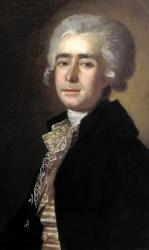
1751 - 1825 Person Name: Dmitri Bortnianski Topics: Proper 5 Year A Composer of "ST PETERSBURG" in Voices United Dimitri Stepanovitch Bortniansky (1751-1825) Ukraine 1751-1825
Born in Glukhov, Ukraine, he joined the imperial choir at age 8 and studied with Galuppi, who later took the lad with him to Italy, where he studied for 10 years, becoming a composer, harpsichordist, and conductor. While in Italy he composed several operas and other instrumental music, composing more operas and music later in Russia. In 1779 he returned to Russia, where he was appointed Director to the Imperial Chapel Choir, the first as a native citizen. In 1796 he was appointed music director. With such a great instrument at his disposal, he produced many compositions, 100+ religious works, sacred concertos, cantatas, and hymns. He influenced Rachmaninoff and Tchaikovshy, the latter editing Bortniansky's sacred work, amassing 10 volumnes. He died in St. Petersburg. He was so popular in Russia that a bronze statue was erected in his honor in the Novgorod Kremlin. He composed in different musical styles, including choral works in French, Italian, Latin, German, and Church Slavonic.
John Perry
Dmitriĭ Stepanovich Bortnianskiĭ
John Fawcett
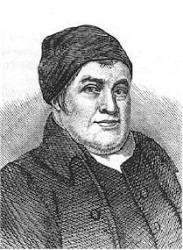
1740 - 1817 Topics: Church in the World Discipleship: Love in Action; Brotherhood/Sisterhood; Church Community in Christ; Communion of Saints; Community; Compassion; Eternal Life; Farewell Service; Friendship; Funerals and Memorial Services; Heaven(s)/Paradise; Home and Family; Love; Love Feast; Love for Others; Prayer; Reconciliation; Service Music Sending Forth/Commissioning; Sin; Sympathy of Christians; Unity; Epiphany 3 Year A; Trinity Sunday Year A; Proper 15 Year A; Easter 5 Year B; Proper 27 Year B; Easter 5 Year C; Proper 9 Year C Author of "Blest Be the Tie That Binds" in Voices United An orphan at the age of twelve, John Fawcett (b. Lidget Green, Yorkshire, England, 1740; d. Hebden Bridge, Yorkshire, 1817) became apprenticed to a tailor and was largely self-educated. He was converted by the preaching of George Whitefield at the age of sixteen and began preaching soon thereafter. In 1765 Fawcett was called to a small, poor, Baptist country church in Wainsgate, Yorkshire. Seven years later he received a call from the large and influential Carter's Lane Church in London, England. Fawcett accepted the call and preached his farewell sermon. The day of departure came, and his family's belongings were loaded on carts, but the distraught congregation begged him to stay. In Singers and Songs of the Church (1869), Josiah Miller tells the story associated with this text:
This favorite hymn is said to have been written in 1772, to commemorate the determination of its author to remain with his attached people at Wainsgate. The farewell sermon was preached, the wagons were loaded, when love and tears prevailed, and Dr. Fawcett sacrificed the attraction of a London pulpit to the affection of his poor but devoted flock.
Fawcett continued to serve in Wainsgate and in the nearby village of Hebden Bridge for the remainder of his active ministry.
Bert Polman
===============
Fawcett, John, D.D., was born Jan. 6, 1739 or 1740, at Lidget Green, near Bradford, Yorks. Converted at the age of sixteen under the ministry of G. Whitefield, he at first joined the Methodists, but three years later united with the Baptist Church at Bradford. Having begun to preach he was, in 1765, ordained Baptist minister at Wainsgate, near Hebden Bridge, Yorks. In 1772 he was invited to London, to succeed the celebrated Dr. J. Gill, as pastor of Carter's Lane; the invitation had been formally accepted, the farewell sermon at Wainsgate had been preached and the wagons loaded with his goods for removal, when the love and tears of his attached people prevailed and he decided to remain. In 1777 a new chapel was built for him at Hebden Bridge, and about the same time he opened a school at Brearley Hall, his place of residence. In 1793 he was invited to become President of the Baptist Academy at Bristol, but declined. In 1811 he received from America the degree of D.D., and died in 1817, at the age of 78. Dr. Fawcett was the author of a number of prose works on Practical Religion, several of which attained a large circulation. His poetical publications are:—
(1) Poetic Essays, 1767; (2) The Christian's Humble Plea, a Poem, in answer to Dr. Priestley against the Divinity of our Lord Jesus Christ, 1772; (3) Three hymns, in the Gospel Magazine, 1777; (4) The Death of Eumenio, a Divine Poem, 1779; (5) Another poem, suggested by the decease of a friend, The Reign of Death, 1780; and (6) Hymns adapted to the circumstances of Public Worship and Private Devotion, Leeds, G. Wright & Son. 1782. They are 166 in number, and were mostly composed to be sung after sermons by the author.
Whilst not attaining a high degree of excellence as poetry, they are "eminently spiritual and practical," and a number of them are found in all the Baptist and Congregational hymn-books that have appeared during the last 100 years. The best known of these are, “Infinite excellence is Thine;" "How precious is the Book divine;" "Thus far my God hath led me on;" "Religion is the chief concern;" "Blest be the tie that binds;" “I my Ebenezer raise;" and "Praise to Thee, Thou great Creator." These hymns, together with others by Fawcett, are annotated under their respective first lines. [Rev. W. R. Stevenson, M.A.]
In addition the following hymns, also by Fawcett, but of less importance, are in common use:
1. Behold the sin-atoning Lamb. Passiontide. No. 60 of his Hymns, 1782, in 7 stanzas of 4 lines. In several hymnals in Great Britain and America.
2. I my Ebenezer raise. Birthday. No. 102 of his Hymns, in 10 stanzas of 4 lines. Usually given in an abbreviated form.
3. Infinite excellence is Thine. Jesus the Desire of Nations. No. 42 of his Hymns, in 12 stanzas of 4 lines. In several hymn-books in Great Britain and America in an abridged form.
4. Jesus, the heavenly Lover, gave. Redemption in Christ. No. 10 of his Hymns, &c., 1782, in 7 stanzas of 4 lines, and headed, "The marriage between Christ and the Soul." In Snepp's Songs of Grace & Glory, 1872, it reads, “Jesus, the heavenly Bridegroom, gave," and stanza v. is omitted.
5. Lord, hast Thou made me know Thy ways? Perseverance. No. 122 of his Hymns, &c., 1782, in 8 stanza of 4 lines. In the Baptist Hymnal, 1879, No. 451, stanzas iv.-vii. are omitted.
6. 0 God, my Helper, ever near. New Year. No. 108 of his Hymns, &c., 1782, in 6 stanzas of 4 lines. The New Congregational Hymn Book, 1859-69 omits st. vi.
7. 0, my soul, what means this sadness? Sorrow turned to Joy. No. 111 of his Hymns, &c., 1782, in 5 stanzas of 6 lines, and based upon the words, "Why art Thou cast down, O my soul?" &c. It is in common use in America, and usually with the omission of stanza ii. as in Dr. Hatfield's Church Hymn Book, 1872.
8. Sinners, the voice of God regard. Invitation to Repentance. No. 63 of his Hymns, &c., 1782, in 7 stanzas of 4 lines on Isaiah lv. 7, "Let the wicked forsake his way," &c. It is in common use in America, but usually in an abbreviated form.
9. Thy presence, gracious God, afford. Before Sermon. No 165 in his Hymns, &c., in 4 stanzas of 4 lines, and a chorus of two lines. In Dr. Hatfield's Church Hymnbook, 1872, No. 126, the chorus is omitted. Fawcett has another hymn on the same subject (No. 79) and beginning, "Thy blessing, gracious God, afford," but this is not in common use.
10. Thy way, 0 God, is in the sea. Imperfect Knowledge of God. No. 66 in his Hymns, &c., 1782, in 7 stanzas of 4 lines on 1 Corinthians xiii. 9, "We know in part," &c. It is in several American collections, usually abbreviated, and sometimes as, "Thy way, O Lord, is in the sea." In this form it is in The Sabbath Hymn Book, 1858, &c.
11. With humble heart and tongue. Prayer for Guidance in Youth. No. 86 in his Hymns, &c., 1782, in 7 stanzas of 4 lines on Psalms cxix. 9. "Wherewith shall a young man cleanse his way." It is No. 954 in the Baptist Psalms and Hymns, 1858-80.
About 20 of Fawcett's hymns are thus still in common use. Two hymns which have been ascribed to him from time to time, but concerning which there are some doubts, are fully annotated under their respective first lines. These are," Humble souls that seek salvation," and "Lord, dismiss us with Thy blessing."
-- John Julian, Dictionary of Hymnology (1907)
John Fawcett
Frances Ridley Havergal
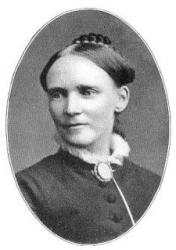
1836 - 1879 Topics: The Church at Worship Profession of Faith, Ordination, Commissioning, Installation; Acceptance of Christ; Commissioning; Commitment; Confirmation; Consecration; Décision; Discipleship and Service; Installation Services; Jesus Christ Love For; Love; Love for God/Christ; Ministry; Obedience; Ordination; Stewardship; Surrender; Witness; Youth; Proper 16 Year A; Proper 24 Year A; Epiphany 2 Year B; Proper 13 Year B; Proper 19 Year B; Proper 20 Year B; Proper 23 Year B; Baptism of Jesus Year C; Epiphany 2 Year C; Epiphany 5 Year C; Epiphany 7 Year C; Lent 5 Year C; Proper 11 Year C; Proper 18 Year C; Proper 21 Year C; Proper 24 Year C; Thanksgiving Year C Author of "Take My Life and Let It Be" in Voices United Havergal, Frances Ridley, daughter of the Rev. W. H. Havergal, was born at Astley, Worcestershire, Dec. 14, 1836. Five years later her father removed to the Rectory of St. Nicholas, Worcester. In August, 1850, she entered Mrs. Teed's school, whose influence over her was most beneficial. In the following year she says, "I committed my soul to the Saviour, and earth and heaven seemed brighter from that moment." A short sojourn in Germany followed, and on her return she was confirmed in Worcester Cathedral, July 17, 1853. In 1860 she left Worcester on her father resigning the Rectory of St. Nicholas, and resided at different periods in Leamington, and at Caswall Bay, Swansea, broken by visits to Switzerland, Scotland, and North Wales. She died at Caswell Bay, Swansea, June 3, 1879.
Miss Havergal's scholastic acquirements were extensive, embracing several modern languages, together with Greek and Hebrew. She does not occupy, and did not claim for herself, a prominent place as a poet, but by her distinct individuality she carved out a niche which she alone could fill. Simply and sweetly she sang the love of God, and His way of salvation. To this end, and for this object, her whole life and all her powers were consecrated. She lives and speaks in every line of her poetry. Her poems are permeated with the fragrance of her passionate love of Jesus.
Her religious views and theological bias are distinctly set forth in her poems, and may be described as mildly Calvinistic, without the severe dogmatic tenet of reprobation. The burden of her writings is a free and full salvation, through the Redeemer's merits, for every sinner who will receive it, and her life was devoted to the proclamation of this truth by personal labours, literary efforts, and earnest interest in Foreign Missions.
[Rev. James Davidson, B.A.]
Miss Havergal's hymns were frequently printed by J. & R. Parlane as leaflets, and by Caswell & Co. as ornamental cards. They were gathered together from time to time and published in her works as follows:—
(1) Ministry of Song, 1869; (2) Twelve Sacred Songs for Little Singers, 1870; (3) Under the Surface, 1874; (4) Loyal Responses, 1878; (5) Life Mosaic, 1879; (6) Life Chords, 1880; (7) Life Echoes, 1883.
About 15 of the more important of Miss Havergal's hymns, including "Golden harps are sounding," "I gave my life for thee," "Jesus, Master, Whose I am," "Lord, speak to me," "O Master, at Thy feet," "Take my life and let it be," "Tell it out among the heathen," &c, are annotated under their respective first lines. The rest, which are in common use, number nearly 50. These we give, together with dates and places of composition, from the Havergal mss. [manuscript], and the works in which they were published. Those, and they are many, which were printed in Parlane's Series of Leaflets are distinguished as (P., 1872, &c), and those in Caswell’s series (C., 1873, &c).
1. A happy New Year! Even such may it be. New Year. From Under the Surface, 1874.
2. Certainly I will be with thee. Birthday. Sept. 1871, at Perry Barr. (P. 1871.) Published in Under the Surface, 1874, and Life Mosaic, 1879.
3. Church of God, beloved and chosen. Sanctified in Christ Jesus, 1873. (P. 1873.) Published in Under the Surface, 1874, and Life Mosaic, 1879.
4. God Almighty, King of nations. Sovereignty of God. 1872. Published in Under the Surface, 1874, and Life Mosaic, 1879.
5. God doth not bid thee wait. God faithful to His promises. Oct. 22, 1868, at Oakhampton. (P. 1869.) Published in Ministry of Song, 1869, and Life Mosaic, 1879.
6. God of heaven, hear our singing. A Child's hymn for Missions. Oct. 22, 1869, at Leamington. Published in her Twelve Sacred Songs for Little Singers, 1870, and her Life Chords, 1880.
7. God will take care of you, All through the day. The Good Shepherd. In Mrs. Brock's Children's Hymn Book, 1881.
8. God's reiterated all. New Year. 1873, at Winterdyne. (C. 1873.) Published in Loyal Responses, 1878, and Life Mosaic, 1879.
9. Have you not a word for Jesus? Boldness for the Truth. Nov. 1871, at Perry Barr. (P. 1872.) Published in Under the Surface, 1874, and Life Mosaic, 1879.
10. He hath spoken in the darkness. Voice of God in sorrow. June 10,1869, at Neuhausen. (P. 1870.) Published in Under the Surface, 1874, and in Life Mosaic, 1879.
11. Hear the Father's ancient promise. Promise of the Holy Spirit. Aug. 1870. Published in Under the Surface, 1874, and Life Mosaic, 1879.
12. Holy and Infinite! Viewless, Eternal. Infinity of God. 1872. Published in Under the Surf ace, 1874, and L. Mosaic, 1879.
13. Holy brethren, called and chosen. Election a motive for Earnestness. 1872. Published in Snepp's Songs of Grace & Glory, 1876.
14. I am trusting Thee, Lord Jesus. Faith. Sept. 1874, at Ormont Dessona. (P. 1874.) Published in Loyal Responses, 1878, and Life Chords, 1880. Miss Havergal’s tune, Urbane (Snepp's Songs of Grace & Glory, 1048), was composed for this hymn. The hymn was the author's "own favourite," and was found in her pocket Bible after her death.
15. I bring my sins to Thee. Besting all on Jesus. June, 1870. (P. 1870.) Printed in the Sunday Magazine, 1870, and Home Words, 1872. Published in Under the Surface, 1874, and Life Chords, 1880.
16. I could not do without Thee. Jesus All in All. May 7, 1873. (P. 1873.) Printed in Home Words, 1873, and published in Under the Surface, 1874, and Life Mosaic, 1879.
17. In full and glad surrender. Confirmation. Miss Havergal's sister says this hymn was “The epitome of her [Miss F. R. H.'s] life and the focus of its sunshine." It is a beautiful hymn of personal consecration to God at all times.
18. In the evening there is weeping. Sorrow followed by Joy. June 19, 1869, at the Hotel Jungfraublick, Interlaken. "It rained all day, except a very bright interval before dinner. Curious long soft white clouds went slowly creeping along the Scheinige Platte; I wrote “Evening Tears and Morning Songs” (Marg. reading of Ps. xxx. 5.)" (P. 1870.) Published in Under the Surface, 1874.
19. Increase our faith, beloved Lord. Increase of Faith desired. In Loyal Responses, 1878, in 11 stanzas of 4 lines, on St. Luke xvii. 5. It is usually given in an abridged form.
20. Is it for me, dear Saviour? Heaven anticipated. Nov. 1871, at Perry Barr. (P. 1872.) Published in Under the Surface, 1874, and Life Mosaic, 1879.
21. Israel of God, awaken. Christ our Righteousness. May, 1871, at Perry Barr. (P. 1872.) Published in Under the Surface, 1874, and Life Mosaic, 1879.
22. Jehovah's covenant shall endure. The Divine Covenant, 1872. Published in Snepp's Songs of Grace & Glory, 1876.
23 Jesus, blessed Saviour. New Year, Nov. 25, 1872, at Leamington. (P. 1873.) Printed in the Dayspring Magazine, Jan. 1873, and published in Life Chords, 1880.
24. Jesus only! In the shadow. Jesus All in All. Dec. 4, 1870, at Pyrmont Villa. (P. & C. 1871.) Published in Under the Surface, 1874, and in Life Mosaic, 1879.
25. Joined to Christ by [in] mystic union. The Church the Body of Christ. May, 1871, at Perry Barr. (P. 1872.) Published in Under the Surface, 1874, Life Mosaic, 1879.
26. Just when Thou wilt, 0 Master, call. Resignation. In Loyal Responses, 1878, in 5 stanzas of 4 lines, and Whiting's Hymns for the Church Catholic, 1882.
27. King Eternal and Immortal. God Eternal. Written at Perry Villa, Perry Barr, Feb. 11, 1871, and Published in Snepp's Songs of Grace & Glory, 1876; Under the Surface, 1874 ; and Life Mosaic, 1879.
28. Light after darkness, Gain after loss. Peace in Jesus, and the Divine Reward. In Sankey's Sacred Songs and Solos, from her Life Mosaic, 1879.
29. Like a river glorious, Is God's perfect Peace. Peace. In her Loyal Responses, 1878, in 3 st. of 8 1., with the chorus, "Stayed upon Jehovah." In several collections.
30. Master, speak! Thy servant heareth. Fellowship with and Assistance from Christ desired. Sunday evening, May 19, 1867, at Weston-super-Mare. Published in Ministry of Song, 1869, and L. Mosaic, 1879. It is very popular.
31. New mercies, new blessings, new light on thy way. New Life in Christ. 1874, at Winterdyne. (C. 1874.) Published in Under His Shadow, 1879, Life Chords, 1880.
32. Not your own, but His ye are. Missions. Jan. 21, 1867. (C. 1867.) Published in Ministry of Song, 1869; Life Mosaic, 1879; and the Hymnal for Church Missions, 1884.
33. Now let us sing the angels' song. Christmas. In her Life Mosaic, 1879; and W. B. Stevenson's School Hymnal, 1880.
34. Now the daylight goes away. Evening. Oct. 17, 1869, at Leamington. Published in Songs for Little Singers, 1870, and Life Chords, 1880. It originally read, " Now the light has gone away."
35. Now the sowing and the weeping. Sorrow followed by Joy. Jan. 4, 1870, at Leamington. Printed in Sunday at Home, 1870 ; and published in Under the Surface, 1874, and L. Mosaic, 1879.
36. 0 Glorious God and King. Praise to the Father, Feb. 1872. Published in Under the Surface, 1874, and Life Mosaic, 1879.
37. 0 Saviour, precious [holy] Saviour. Christ worshipped by the Church. Nov. 1870, at Leamington. (P. 1870.) Published in Under the Surface, 1874, and Life Mosaic, 1879.
38. O thou chosen Church of Jesus. Election. April 6, 1871. Published in Under the Surface, 1874, and L. Mosaic, 1879.
39. O what everlasting blessings God outpoureth on His own. Salvation everlasting. Aug. 12, 1871, at Perry Barr. (P. 1871.) Published in Under the Surface, 1874, and L. Mosaic, 1879.
40. Our Father, our Father, Who dwellest in light. The blessing of the Father desired. May 14, 1872. Published in Under the Surface, 1874, and Life Mosaic, 1879. Miss Havergal's tune, Tertius, was composed for this hymn.
41. Our Saviour and our King. Presentation of the Church to the Father. (Heb. ii. 13.) May, 1871, at Perry Barr. (P. 1871.) Published in Under the Surface, 1874, and L. Mosaic, 1879.
42. Precious, precious blood of Jesus. The precious Blood. Sept. 1874, at Ormont Dessons. (C.) Published in Loyal Responses, 1878, and Life Chords, 1880.
43. Sing, O heavens, the Lord hath done it. Redemption. In her Life Mosaic, 1879, and the Universal Hymn Book, 1885.
44. Sit down beneath His shadow. Holy Communion. Nov. 27, 1870, at Leamington. (P. 1870.) Published in Under the Surface, 1874, and Life Mosaic, 1879.
45. Sovereign Lord and gracious Master. Grace consummated in Glory. Oct. 22, 1871. (P. 1872.) Published in Under the Surface, 1874, and Life Mosaic, 1879.
46. Standing at the portal of the opening year. New Year. Jan. 4, 1873. Published in Under the Surface, 1874, and Life Chords, 1880.
47. To Thee, 0 Comforter divine. Praise to the Holy Spirit. Aug. 11, 1872, at Perry Barr. Published in Under the Surface 1874, and Life Mosaic, 1879. Miss Havergal's tune, Tryphosa, was written for this hymn.
48. True-hearted, whole-hearted, faithful and loyal. Faithfulness to the Saviour. In her Loyal Responses, 1878, and the Universal Hymn Book, 1885.
49. What know we, Holy God, of Thee? God's Spirituality, 1872. Published in Under the Surface, 1874, and Life Mosaic, 1879.
50. Who is on the Lord's side? Home Missions. Oct. 13, 1877. Published in Loyal Responses, 1878, andLife Chords, 1880.
51. With quivering heart and trembling will. Resignation. July, 10, 1866, at Luccombe Rectory. (P. 1866.) Published in Ministry of Song, 1869, and Life Mosaic, 1879.
52. Will ye not come to Him for life? The Gospel Invitation. 1873. Published in Snepp's Songs of Grace and Glory, 1876.
53. Worthy of all adoration. Praise to Jesus as the Lamb upon the throne. Feb. 26 1867, at Oakhampton. Published in Ministry of Song, 1869, and Life Mosaic, 1874. It is pt. iii. of the "Threefold Praise," and was suggested by the "Worthy is the Lamb," the "Hallelujah" and "Amen" choruses in Handel's Messiah.
54. Ye who hear the blessed call. The Invitation of the Spirit and the Bride. March, 1869, at Leamington. (P. 1869.) Published in Ministry of Song, 1869, and Life Mosaic, 1879. Suggested by, and written for, the Young Men's Christian Association.
55. Yes, He knows the way is dreary. Encouragement. 1867. Published in Ministry of Song, 1869.
Most of these hymns are given in Snepp's Songs of Grace and Glory, 1872]and 1876, his Appendix, 1874, and the Musical edition, 1880, and many of them are also in several other hymnbooks, including Hymns Ancient & Modern, Thring, Church Hymns, Hymnal Companion, &c, and some of the leading American collections.
--John Julian, Dictionary of Hymnology (1907)
==============================
Havergal, Frances Ridley, p. 496, i. Miss Havergal's Poetical Works were published in 2 vols. in 1884 (Lond., J. Nisbet); and the hymns therein are accompanied by notes. From these volumes, and the Havergal manuscript, we gather the following facts concerning additional hymns in common use:
1. In God's great field of labour. Work for Christ.
Written Feb. 27, 1867, and published in her Ministry of Song, I860, and later works. In Snepp's Songs of Grace and Glory, 1872, it begins with stanza ii., "Sing to the little children." “The poem expresses her own life-ministry of song, and relates true incidents" in that life. [Hav. mss.]
2. Only a mortal's power. Consecration of Self to Christ. Published in her Loyal Responses, 1878, in 7 stanzas of 4 lines, and headed "Only.” In Common Praise, 1879, stanzas ii.-vi., are given for Confirmation as, "Only one heart to give."
3. Through the yesterday of ages. Jesus always the same. Written at Leamington, Nov. 1876, and published in her Loyal Responses, 1878.
4. What hast Thou done for me, 0 Thou my mighty Friend. Good Friday. Written at Leamington, Jan. 1877, and pub. in Loyal Responses, 1878.
5. Yes, He knows the way is dreary, p. 498, i. 55. This hymn was written at Shareshill Parsonage, Nov. 17, 1865, and first printed as one of Parlane's leaflets; then in Lyra Britannica, 1867; and later, in several of her books. It was "suggested by a letter from her niece, A. M. S., at school, and written to console her when weary, lonely, and the only absentee at the rejoicings for her brother J. H. S.'s coming of age." [Hav. mss.]
--John Julian, Dictionary of Hymnology, Appendix, Part II (1907)
===================
Havergal, Frances R., pp. 426, ii., 1569, ii. During the past fifteen years Miss Havergal's hymns have been in great request by compilers of hymnals for Missions and Conventions. In addition to the large number already annotated in this Dictionary, the following are also in common use:—
1. Begin at once! in the pleasant days. [Temperance.] From her Poetical Works, vol. i., p. 303, into The Sunday School Hymnary, 1905. In her Poetical Works. It is given as a "Band of Hope Song," and dated "May, 1876."
2. God in heaven, hear our singing. An altered form of her "God of heaven, hear our singing," p. 497, i. 6.
3. Holy Father, Thou hast spoken. [Holy Spirit desired.] Written May 5, 1876. P. Works, 1874, ii., p. 261.
4. I love. I love my Master. [Jesus the object of love.] Written at Fins, Hants., July 16, 1876. In her Loyal Responses, 1878, and her Poetical Works, 18S4, ii., p. 274.
5. I love to feel that I am taught. [Love of Divine Teaching.] Written at Morecambe Bay, Aug., 1867, for her Ministry of Song, 1869. Included in her Poetical Works, 1884, i., p. 36.
6. Jesus, Thy life is mine. [Union with Christ.] Written June 2, 1876. Poetical Works, 1884, ii., p. 268.
7. Looking unto Jesus, Never need we yield. [Jesus, All in All.] Dated 1876. P. Works, 1884, ii., p. 253.
8. Master, how shall I bless Thy Name! [Holy Service.] Written at Whitby, Sept. 27, 1875. A long hymn of 17 stanzas of 6 lines. P. Works, 1884, ii., p. 280.
9. Resting on the faithfulness. [Union with Christ.] A metrical epitome of a dozen or more of the attributes of Our Lord and His manifestation of loving kindness towards men, in which the word "Resting" is used eighteen times. Written June 11, 1876. Poetical Works, 1884, ii., p. 260.
10. Singing for Jesus, our Saviour and King. [Praise of Jesus.] Written at Winterdyne, June 12. 1872; published in her Under the Surface, 1874, p. 94, and her P. Works, 1884, ii., p. 70.
11. Unfurl the Christian Standard with firm and fearless hand. [Courage for the Christian Warfare. This begins with st. iv. of her hymn, "Unfurl the Christian Standard, lift it manfully on high," written at Perry Barr, Sep. 23, 1872 ; published in her Under the Surface, 1874; and her Poetical Works, 1884, ii.
12. Unto him that hath Thou givest. [Growth in Grace.] Written at Leasowes, April 12, 1876. P. Works, 1884, ii. 259.
Of these hymns Nos. 3, 4, 6, 7, 8, 9, and 12 were published in the first instance in J. Mountain's Hymns of Consecration and Faith, 1876. At the present time (1907) the number of Miss Havergal's hymns in common use reaches nearly one hundred.
--John Julian, Dictionary of Hymnology, New Supplement (1907)
Frances Ridley Havergal
Carlton R. Young
b. 1926 Topics: Proper 5 Year A Composer of "WESTCHASE" in Voices United
Carlton R. Young
William Vincent Wallace
1812 - 1865 Person Name: William V. Wallace Topics: Year A Proper 5 Composer of "SERENITY" in The New Century Hymnal
William Vincent Wallace
Pages




