You help make Hymnary.org possible. More than 10 million people from 200+ countries found hymns, liturgical resources and encouragement on Hymnary.org in 2025, including you. Every visit affirms the global impact of this ministry.

If Hymnary has been meaningful to you this year, would you take a moment today to help sustain it? A gift of any size—paired with a note of encouragement if you wish—directly supports the server costs, research work and curation that keep this resource freely available to the world.

Give securely online today, or mail a check to:
Hymnary.org
Calvin University
3201 Burton Street SE
Grand Rapids, MI 49546

Thank you for your partnership, and may the hope of Advent fill your heart.

Person Results

Topics:scripture+songs
In:people

Planning worship? Check out our sister site, ZeteoSearch.org, for 20+ additional resources related to your search.
Showing 101 - 110 of 293Results Per Page: 102050

Charles F Monroe

Person Name: Charles F. Monroe Topics: Scripture Songs Composer of "[Unto thee, O Lord]" in Sing Joyfully

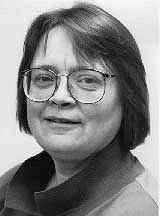
Gracia Grindal

b. 1943 Topics: Scripture Songs Translator of "Behold a Host" in Sing Joyfully Gracia Grindal (b. Powers Lake, ND, 1943). Grindal was educated at Augsburg College, Minneapolis, Minnesota; the University of Arkansas; and Luther-Northwestern Seminary, St. Paul, Minnesota, where she has served since 1984 as a professor of pastoral theology and communications. From 1968 to 1984 she was a professor of English and poet-in-residence at Luther College, Decorah, Iowa. Included in her publications are Sketches Against the Dark (1981), Scandinavian Folksongs (1983), Lessons in Hymnwriting (1986, 1991), We Are One in Christ: Hymns, Paraphrases, and Translations (1996), Good News of Great Joy: Advent Devotions for the Home (1994 with Karen E. Hong), Lina Sandell, the Story of Her Hymns (2001 with John Jansen), and A Revelry of Harvest: New and Selected Poems (2002). She was instrumental in producing the Lutheran Book of Worship (1978) and The United Methodist Hymnal (1989). Bert Polman

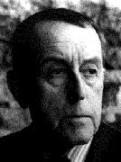
Jacques Berthier

1923 - 1994 Person Name: Jacques Berthier 1923-1994s Topics: Canticles and Scripture Paraphrases; Choruses and Meditative Songs; Gladness / Happiness; Languages other than English Latin; Servant / Service; Worship Paraphraser of "Come, rejoice in God" in The Book of Praise Jacques Berthier (b. Auxerre, Burgundy, June 27, 1923; d. June 27, 1994) A son of musical parents, Berthier studied music at the Ecole Cesar Franck in Paris. From 1961 until his death he served as organist at St. Ignace Church, Paris. Although his published works include numerous compositions for organ, voice, and instruments, Berthier is best known as the composer of service music for the Taizé community near Cluny, Burgundy. Influenced by the French liturgist and church musician Joseph Gelineau, Berthier began writing songs for equal voices in 1955 for the services of the then nascent community of twenty brothers at Taizé. As the Taizé community grew, Berthier continued to compose most of the mini-hymns, canons, and various associated instrumental arrangements, which are now universally known as the Taizé repertoire. In the past two decades this repertoire has become widely used in North American church music in both Roman Catholic and Protestant traditions. Bert Polman

Alfred B. Smith

1916 - 2001 Topics: Scripture Songs Author of "Surely Goodness and Mercy" in Sing Joyfully Used pseudonym B. C. Laurelton ---------- In 1930, he began playing on radio broadcasts in Jersey City, New Jersey, on "The Old Fashioned Gospel Hour." After meeting Wendell P. Loveless, Alfred enrolled at the Moody Bible Institute in Chicago and became a member of the WMBI staff. During service as Minister of Music at The Church of the Open Door in Philadelphia, he taught at The Philadelphia School of the Bible in the fall of 1938. During that year, he wrote "For God So Loved the World" after visiting the ninety-four year-old hymn writer George C. Stebbins. Smith met Billy Graham when they were both students at Wheaton College. During their long collaboration, they founded Singspiration in 1941. After graduating from Wheaton, Smith, Graham, and George Beverly Shea started "Youth for Christ" in Chicago. --Daniel Mahraun (from livinghymns.org)

Albert Hay Malotte

1895 - 1964 Topics: Scripture Songs; Scripture Songs Composer of "[Our Father, which art in heaven]" in Hymns of Faith

William Whittingham

1524 - 1579 Topics: Scripture Songs; Scripture Songs Adapter of "The Lord's My Shepherd" in Hymns of Faith

Herbert O'Driscoll

b. 1928 Topics: The Church at Worship Scripture; liturgical Songs of Illumination; Bible; Church Education; God Grace; God Love; Peace (Inner, Calmness, Serenity; Vision/Dream; Proper 10 Year A; Proper 24 Year C Author of "God, Who Has Caused to Be Written" in Voices United O'Driscoll, Herbert. (Cork, Ireland, October 17, 1928-- ). Anglican. Graduated from Trinity College, Dublin, 1951. Pastorates at Monkstown (Ireland), 1952-1954; Ottawa, Ontario, 1954-1957, 1962-1968; Dartmouth, Nova Scotia, 1957-1960 (naval chaplaincy); Carp, Ont., 1960-1962; Vancouver, British Columbia, (dean), 1968-1982. In 1982 he moved to Washington, D.C. to become the warden of the College of Preachers at Washington Cathedral, but returned to Canada after one year. In both his hymns and his published sermons, he uses traditional techniques to set forth contemporary concerns, so that his work is unusually approachable. --Hugh D. McKellar, DNAH Archives Also: O'Driscoll, T. Herbert (Thomas Herbert) O'Driscoll, Thomas Herbert

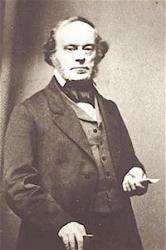
Frederic Henry Hedge

1805 - 1890 Topics: Scripture Songs Translator of "A Mighty Fortress" Hedge, Frederick Henry, D.D., son of Professor Hedge of Harvard College, was born at Cambridge, Massachusetts, 1805, and educated in Germany and at Harvard. In 1829 he became pastor of the Unitarian Church, West Cambridge. In 1835 he removed to Bangor, Maine; in 1850 to Providence, and in 1856 to Brookline, Mass. He was appointed in 1857, Professor of Ecclesiastical History at Cambridge (U.S.), and in 1872, Professor of German Literature at Harvard. Dr. Hedge is one of the editors of the Christian Examiner, and the author of The Prose Writers of Germany, and other works. In 1853 he edited, with Dr. F. D. Huntington, the Unitarian Hymns for the Church of Christ, Boston Crosby, Nichols & Co. To that collection and the supplement (1853) he contributed the following translations from the German:— 1. A mighty fortress is our God. (Ein feste Burg.) 2. Christ hath arisen! joy to, &c. (Goethe's Faust.) 3. The sun is still for ever sounding. (Goethe's Faust.) There is also in the Unitarian Hymn [& Tune] Book for The Church & Home, Boston, 1868, a translation from the Latin. 4. Holy Spirit, Fire divine. (“Veni Sancte Spiritus.") Dr. Hedge's original hymns, given in the Hymns for the Church, 1853, are:— 5. Beneath Thine hammer, Lord, I lie. Resignation. 6. Sovereign and transforming grace. Ordination. Written for the Ordination of H. D. Barlow at Lynn, Mass., Dec. 9, 1829. It is given in several collections. 7. 'Twas in the East, the mystic East. Christmas. 8. 'Twas the day when God's anointed. Good Friday. Written originally for a Confirmation at Bangor, Maine, held on Good Friday, 1843. The hymn "It is finished, Man of Sorrows! From Thy cross, &c," in a few collections, including Martineau's Hymns, &c, 1873, is composed of st. iv.-vi. of this hymn. [Rev. F. M. Bird, M.A.] --John Julian, Dictionary of Hymnology (1907)

Hugh Mitchell

1914 - 2014 Topics: Praise, Scripture an Other Short Spiritual Songs Author of "Thy Loving Kindness" in Songs

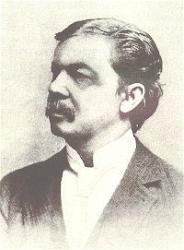
James R. Murray

1841 - 1905 Person Name: James R. Murray, 1841-1905 Topics: Book Four: Occasional Selections, Gospel Songs and Hymns; Holy Scriptures Composer of "CLING TO THE BIBLE" in The Christian Hymnary L.P.M. (1905, April 12). Obituary. New Church Messenger, p.209. Murray.--At Cincinnati, March 10, 1905, James Ramsey Murray. Funeral services in the Church of the New Jersualem, March 13th. James R. Murray was widely known in the musical world as the author of many songs and song books, and in the New Church in Chicago and Cincinnati as an affectionate, intelligent, and loyal New Churchman. He was born in Andover (Ballard Vale), Mass., March 17, 1841. In early life he developed musical talent, and composed many minor pieces for local and special occasions. Later at North Reading, Mass., he attended Dr. George F. Root's School of Music, and was associated with William Bradbury and Dr. Lowell Mason. He enlisted in the Fourteenth Regiment of infantry, commonly known as the Essex County Regiment, and afterwards was changed to the First Regiment, Massachusetts Heavy Artillery, which was engaged in most of the battles fought by the Second Army Corps up to the surrender of General Lee. "Daisy Deane," the first and most popular of his early song successes, was composed in 1863 in Virginia while in camp, words by his cousin, Thomas F. Winthrop. This song is known all over the world, and the Salvation Army is using an arrangement of it for one of their war cry songs. In 1868 Mr. Murray married Isabella Maria Taylor of Andover; and they removed to Chicago. Here three children were born to them, two passing early to their heavenly home, the youngest, Winthrop Root Murray, is still living. It was during these first years in Chicago that Mr. and Mrs. Murray became interested in the New Church, while he was engaged with Root and Cady as editor of the Long Visitor, afterwards merged with the Musical Visitor. After the great fire of 1871 Mr. and Mrs. Murray returned East, where he was engaged in teaching in Lawrence and Andover, and as organist at the Old South Church in Andover. In 1881 they removed to Cincinnati and Mr. Murray became the editor of the Musical Viistor [sic] and head of the publication department of the John Church Company. Among the most popular of his books are "Pure Diamonds," "Royal Gems," "The Prize" and "Murray's Sacred Songs." The following titles will recall some of his best loved sacred songs: "At Last," "Calm on the Listening Ear of Night," "I Shall Be Satisfied," "There Shall No Evil Befall Thee," "Thine, O Lord, Is the Greatness," "The Way Was Mine," "How Beautiful Upon the Mountains," "Angels from the Realms of Glory." His last great labor in the publishing department of the John Church Company was the seeing through the press five volumes of Wagner's music dramas, with full score and original German text, and an English translation. The immense and careful labor involved in the preparation of these volumes, with a really smooth and excellent English translation, had perhaps, as it was done under pressure, something to do with Mr. Murray's breakdown. Although for some reason Mr. Murray's name does not appear on the title page of these volumes, his friends knew of the place the work held in his affections and ambition. Mr. Murray was a member of the Church Council of the Cincinnati Society for the last four years and took a deep interest in the building of the New Church, and in the inauguration of services, with all the changes looking to the improvement of the musical part of the service. The vested choir, organized by Mr. and Mrs. Lawson, which Mr. Murray as councilman had urged from the beginning, in their entrance to the church each Sunday singing the processional hymn participated in the funeral service, with a congregation of brethren and friends, all moved by deep love and profound respect for the consistent life and faith of a worthy Churchman and beloved friend. --DNAH Archives =================================== For a discussion of Murray and the tune MUELLER, see: Stulken, M.K. (1981). Hymnal companion to the Lutheran Book of Worship. Philadelphia : Fortress Press, p.170. =================================== Also available in the DNAH Archives: 1. An excerpt from Christie, George A. (1927). New Free Church. In Music in Andover. Papers read at "Fagot Party" of the Andover Natural History Society. 2. Unsourced essay about Murray written soon after his death, likely from Andover, Mass., perhaps authored by Charlotte Helen Abbott.

Pages


Export as CSV
It looks like you are using an ad-blocker. Ad revenue helps keep us running. Please consider white-listing Hymnary.org or getting Hymnary Pro to eliminate ads entirely and help support Hymnary.org.