

 My Starred Hymns
 My FlexScores
 My Hymnals
 My Purchased Files
Planning worship?
Check out our sister site, ZeteoSearch.org,
for 20+ additional resources related to your search.
- |
User Links
Person Results
John Arlott

1914 - 1991 Person Name: John Arlott (born 1914) Topics: God's World Land, Sea, and Harvest Author of "God whose farm is all creation" in Hymns for Today's Church (2nd ed.) Arlott, (Leslie Thomas) John. (Basingstoke, Hampshire, England, February 25, 1914- ). Son of William John and Nellie (Jenvey) Arlott. Queen Mary's School, Basingstoke. Civil servant, police detective, newspaper columnist and sports writer. Poet and anthologist. His hymns were published in the BBC Hymn Book of 1951.
--Anastasia Van Burkalow, DNAH Archives
John Arlott
Edith Jones
1849 - 1929 Person Name: Edith Jones? Topics: The Sea Author of "Father, who art alone" in The Hymnal
Edith Jones
Erik Routley
1917 - 1982 Person Name: Erik Routley 1917-82 Topics: Sea Author of "New songs of celebration render" in Praise! psalms hymns and songs for Christian worship
Erik Routley
Louis Bourgeois
1510 - 1561 Person Name: Louis Bourgeois 1510-C.1561 Topics: Sea Composer of "RENDEZ À DIEU" in Praise! psalms hymns and songs for Christian worship Louis Bourgeois (b. Paris, France, c. 1510; d. Paris, 1561). In both his early and later years Bourgeois wrote French songs to entertain the rich, but in the history of church music he is known especially for his contribution to the Genevan Psalter. Apparently moving to Geneva in 1541, the same year John Calvin returned to Geneva from Strasbourg, Bourgeois served as cantor and master of the choristers at both St. Pierre and St. Gervais, which is to say he was music director there under the pastoral leadership of Calvin. Bourgeois used the choristers to teach the new psalm tunes to the congregation.
The extent of Bourgeois's involvement in the Genevan Psalter is a matter of scholarly debate. Calvin had published several partial psalters, including one in Strasbourg in 1539 and another in Geneva in 1542, with melodies by unknown composers. In 1551 another French psalter appeared in Geneva, Eighty-three Psalms of David, with texts by Marot and de Beze, and with most of the melodies by Bourgeois, who supplied thirty four original tunes and thirty-six revisions of older tunes. This edition was republished repeatedly, and later Bourgeois's tunes were incorporated into the complete Genevan Psalter (1562). However, his revision of some older tunes was not uniformly appreciated by those who were familiar with the original versions; he was actually imprisoned overnight for some of his musical arrangements but freed after Calvin's intervention. In addition to his contribution to the 1551 Psalter, Bourgeois produced a four-part harmonization of fifty psalms, published in Lyons (1547, enlarged 1554), and wrote a textbook on singing and sight-reading, La Droit Chemin de Musique (1550). He left Geneva in 1552 and lived in Lyons and Paris for the remainder of his life.
Bert Polman
Louis Bourgeois
Vincent Novello
1781 - 1861 Topics: Sea Composer of "ALBANO" in Psalter Hymnal (Blue)
Vincent Novello
Severus Gastorius
1646 - 1682 Topics: Biblical Names and Places Red Sea Composer of "WAS GOTT TUT " in Psalms for All Seasons Severus Gastorius (1647-1682 ) was a cantor in Jena, central Germany.
The son of a Weimar school teacher, Severus was born with the family name Bauchspiess (later Latinised to Gastorius) in Oettern, near Weimar. In 1667, he started studying at the University of Jena. From 1670, he deputized for cantor Andreas Zöll in Jena and married his daughter the following year. Gastorius assumed Zöll's position after his death in 1677. One of his friends, Samuel Rodigast, wrote the hymn "Was Gott tut, das ist wohlgetan" for Gastorius when he was sick (to cheer him up as Rodigast writes in his dedication). Even before he recovered, Gastorius set it to music based on a melody by Werner Fabricius. The tune became widely known in Germany as the cantor students of Jena cantor sang it every week at Gastorius' door as well as when they returned home. Gastorius was buried on 8 May 1682 in Jena's Johanniskirche cemetery. Gastorius had requested that the hymn "Was Gott tut, das ist wohlgetan" be sung at his funeral.
Gastorius is also credited with composing music for the funeral motet Du aber gehe hin bis das Ende komme. It was sung at the funeral of the Jena professor of medicine Johann Arnold Friderici on 2 June 1672.
--en.wikipedia.org/wiki/
Severus Gastorius
Stephen Greenleaf Bulfinch
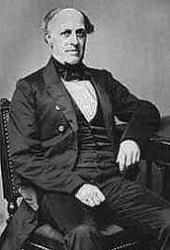
1809 - 1870 Topics: Jesus walks on the sea Author of "Lord, in whose might the Savior trod" in Singers and Songs of the Liberal Faith Bulfinch, Stephen Greenleaf, D.D. This Unitarian minister was born at Boston, June 18, 1809, and removed to Washington in 1818, his father being the architect of the Capitol. He graduated at Columbian College and the Cambridge Theological School. In 1831 lie was ordained at Charleston, S.C., as assistant to Dr. Gilman. Subsequently he was pastor at Pittsburg, Pennsylvania; Washington, 1838; Nashua, New Hampshire, 1845; Dorchester, Mass., 1852; and "East Cambridge, Mass., 1865. He died at the last place, Oct. 12, 1870. His works include:—
(1) Contemplations of the Saviour; A Series of Extracts from the Gospel History, with Reflections and Original and Selected Hymns. Boston, Carter and Hendee, 1832. This has been reprinted in England. (2) Poems, Charleston, S.C., 1834. (3) Lays of the Gospel, 1845. In addition to these works, which contain his original hymns, he also published (4) The Harp and Cross, a selection of hymns, in 1857.
Those of his hymns which have attained ta the greatest popularity are:—
1. Hail to the Sabbath day. Sunday. In the Contemplations, &c, p. 45. It is appended to Sect. xii. on the “Walk through the corn¬fields," and is in 5 stanzas of 4 lines. It is in extensive use both in Great Britain and America, and is the best known of this author'ess hymns. In many collections it begins with st. ii., " Lord, in Thy [this] sacred hour."
2. Hath not thy heart within thee burned? Presence of Christ. In the Contemplations, &c, p. 148, as the accompanying hymn to the Reflections on Jesus appearing to His disciples on their way to Emmaus, It is in 5 stanzas of 4 lines and is given in the Collections of Beard, Martineau, and others in Great Britain.
3. 0 suffering friend of human kind. Passiontide. The hymn in 4 stanzas of 4 lines appended to Sect. xxxv. on "Peter's confession of Christ," in the Contemplations, &c, p. 109. It ranks next in popularity to ”Hail to the Sabbath day."
In addition to these hymns which best represent Dr. Bulfinch's power? as a sacred poet, the following are also in limited use:—
4. Burden of shame and woe. Crucifixion.
5. Holy Son of God most high. Miracles of Christ.
6. How glorious is the hour. The New Life.
7. It is finished! Glorious word. Good Friday.
8. There is a strife we all must wage. Life's Duty. These are from his Poems, 1834. The next—
9. What power unseen by mortal eye. Cure of Nobleman's Son. From the Contemplations, &c, p. 56.
10. In the Saviour's hour of death. Good Friday. Also from the Contemplations, p. 142:
Dr. Bulfinch's hymns were made known to English readers through Beard's Collection, 1837, in which 19 were given. His hymns throughout are noted for solid and tranquil piety, and deserve a wider circulation than has been accorded to them. They embrace some good hymns on the miracles of Christ. [Rev. F. M. Bird, M.A.]
-- John Julian, Dictionary of Hymnology (1907)
====================
Bulfinch, Stephen Greenleaf, p. 191, ii. Several of this authors hymns, not noted in this Dictionary, were given in Longfellow and Johnson's Book of Hymns , 1846-8. Additional hymns by him in English common use are:—
1. Benignant Saviour! 'twas not Thine. The Compassion of Christ . From his Contemplations of the Saviour , &c, 1832. In Horder's Congregational Hymns. 1884, it reads “Most gracious Saviour! 'twas not Thine."
2. We gather to the sacred board. Holy Communion. This in Horder is from Bulfinch's Communion Thoughts, 2nd ed., 1852.
--John Julian, Dictionary of Hymnology, Appendix, Part II (1907)
Stephen Greenleaf Bulfinch
Francis Jackson
1917 - 2022 Person Name: Francis Jackson (born 1917) Topics: God's World Land, Sea, and Harvest Composer of "EAST ACKLAM" in Hymns for Today's Church (2nd ed.)
Francis Jackson
George Lomas
1834 - 1884 Person Name: George Lomas, 1834-1884 Topics: Travelers on Land or Sea Composer of "VERBUM PACIS" in Hymnal and Liturgies of the Moravian Church Born: 1834, Birch Hall, Bolton, Lancashire, England.
Died: 1884, Sheffield, South Yorkshire, England.
A student of William Sterndale Bennett and Charles Steggall, Lomas received his BMus degree from New College, Oxford. He played the organ at Didsbury Parish Church, and at Emmanuel Church, Barlow Moor, Manchester (1858-84).
Music: CHAMOUNI
ST. PAUL'S COLLEGE
SURSUM CORDA
http://www.hymntime.com/tch/bio/l/o/m/lomas_g.htm
=============
George Lomas was born in England and was a volunteer organist for twenty-five years before becoming a professional musician. He received his Bachelor of Arts degree in music at age forty-five, only five years before his death.
The Presbyterian Hymnal Companion, 1993
George Lomas
Margaret Mealy
1922 - 2020 Topics: Ocean (Sea) Composer of "[There's soapsuds on the waves]" in Sing for Joy
Margaret Mealy
Pages




