You help make Hymnary.org possible. More than 10 million people from 200+ countries found hymns, liturgical resources and encouragement on Hymnary.org in 2025, including you. Every visit affirms the global impact of this ministry.

If Hymnary has been meaningful to you this year, would you take a moment today to help sustain it? A gift of any size—paired with a note of encouragement if you wish—directly supports the server costs, research work and curation that keep this resource freely available to the world.

Give securely online today, or mail a check to:
Hymnary.org
Calvin University
3201 Burton Street SE
Grand Rapids, MI 49546

Thank you for your partnership, and may the hope of Advent fill your heart.

Person Results

Topics:the+transfiguration
In:people

Planning worship? Check out our sister site, ZeteoSearch.org, for 20+ additional resources related to your search.
Showing 101 - 110 of 221Results Per Page: 102050

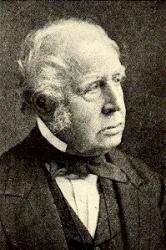
Edward Denny

1796 - 1889 Person Name: Edward Denny, 1796-1889 Topics: The Transfiguration August 6th Author of "Light of the lonely pilgrim's heart" in The New English Hymnal Denny, Sir Edward, Bart . Sir Edward Denny, son of Sir E. Denny, 4th baronet, of Tralee Castle, County of Kerry, was born 2 Oct., 1796, and succeeded his father in August, 1831. He is a member of the Plymouth Brethren, and has contributed largely to their hymnody. His first publication, in which many of his hymns appeared, was A Selection of Hymns, Lond. Central Tract Depot, 1839. This was followed by Hymns & Poems , Lond., 1848 (third ed., 1870). He has also published several prose works. Many of his hymns are popular, and are in extensive use as:—" A pilgrim through this lonely world"; "Bride of the Lamb, rejoice, rejoice"; “Bright with all His crowns of glory"; “Light of the lonely pilgrim's heart”; "Sweet feast of love divine," and several others. In addition to these, which are separately annotated, and those which are confined in their use to the congregations of the "Brethren," there are also nearly 20 in limited use in Great Britain and America. Of these the following appeared, first in his Selection of Hymns, 1839; then, in the Appendix to Hymns for the Poor of the Flock, 1841; and then in his Hymns & Poems, 1848-70 :— 1. Break forth, 0 earth, in praises. Praise for Redemption. This is given in several collections in Great Britain and America. 2. Children of God, in all your need. The Great High Priest. In limited use. 3. Children of light, arise and shine. Looking unto Jesus. In numerous hymnals in G. Britain and America. 4. Children of light, awake, awake. Advent . This hymn is an application of the Parable of the Ten Virgins to the Second Coming of Christ. 5. Dear Lord, amid the throng that pressed. The Holy Women at the Cross. The use of this hymn in America is somewhat extensive. 6. Hope of our hearts, 0 Lord, appear. The Second Advent desired. In the Hymns for the Poor of the Flock, 1837; and the author's Hymns & Poems, 1848-60, and various collections in Great Britain and America. 7. Joy to the ransomed earth. Jesus the King. Its use is limited. 8. Lo 'tis the heavenly army. The Second Advent. The original of this hymn is in 4 stanzas of 10 lines and as such it is usually given: but in the Peoples Hymnal, 1867, it is arranged in 4 stanzas of 8 lines, and is also slightly altered. 9. 0 grace divine! the Saviour shed. Good Friday. In limited use. 10. 0 what a bright and blessed world. The New Earth. This hymn is based upon Gen. v. 29, as interpreted from a Millennial point of view. Christ is regarded as the Rest (Noah-Rest) of His people, and the remover of the curse from the earth. 11. Sweet was the hour, 0 Lord, to Thee. Christ at the Well of Sychar. Limited in use. 12. Thou vain deceitful world, farewell. Forsaking the World for Christ. In several collections. 13. Through Israel's land the Lord of all . Mission to the Jews. In addition to its use in its full form, it is also given as: "O Zion, when thy Saviour came," as in Dr. Walker's Psalms & Hymns, 1855-71; Snepp's Songs of Grace & Glory, and others. This opens with stanza ii. 14. 'Tis finish'd all—our souls to win. Jesus the Guide and Friend. In several collections. 15. 'Tis He, the Mighty Saviour comes . Missions . Given in Snepp, and one or two others. 16. 'Tis night, but O the joyful morn. Hope. In a few hymnals; also, beginning with stanzas ii., "Lord of our hearts, beloved of Thee," in Dr. Hatfield's Church Hymn Book, N. Y., 1872. 17. To Calvary, Lord, in Spirit now. Good Friday. This is given in several hymnals, including Spurgeon's Our Own Hymn Book, 1866, &c. The next is in the Selection of 1839, and the Hymns & Poems, 1848-70:— 18. 0 Blessed Lord, Thy feeble Sheep. The Good Shepherd. Its use is limited. The three with which we close are from J. G, Deck's Psalms & Hymns, 1842, Pt. ii., and the Hymns & Poems, 1848-70:— 19. Hark to the trump! behold it breaks . The Resurrection . The design of this hymn is thus described, by the author: "These lines are supposed to be the utterance of the saints at the blessed moment when they are actually ascending to meet the Lord in the air, as described in 1 Cor. xv. 51-57 and 1 Thess. iv. 16-18. It is given in several collections." 20. Isles of the deep, rejoice, rejoice. Missions. 21. Where, in this waste unlovely [and desert] world! Rest for the Weary. Its use is limited. -- John Julian, Dictionary of Hymnology (1907) ===================== Denny, Sir Edward, Bart., p. 287, ii., died in London, June 13, 1889. Additional pieces from his Selection of Hymns, 1839, are in modern collections including:— 1. O wondrous hour! when, Jesus, Thou. Good Friday . 2. 'Tis past, the dark and dreary night. Easter. 3. While in sweet communion feeding. Holy Communion. --John Julian, Dictionary of Hymnology, Appendix, Part II (1907)

Stephen P. Starke

b. 1955 Topics: Church Year Transfiguration Author of "Almighty Lord, How Lovely Is That Place" in Psalms for All Seasons Rev. Stephen P. Starke has always had a heart for hymns. At a young age, Starke played hymns out of The Lutheran Hymnal and read through the hymnal to pass the time before Sunday services. Pastor Starke graduated from Concordia University Chicago with a BA. While completing his MDiv from Concordia Theological Seminary, Fort Wayne, Indiana, he attempted his first hymn text and was encouraged to write more. Since that time, he has written more than 175 hymns inspired by music and the Scriptures. He has been commissioned to write hymns for special occasions, including the 125th anniversary of Concordia University Wisconsin, as well as his daughter’s wedding. Because of his extensive work as a hymnwriter, Pastor Starke received an honorary doctor of letters degree from Concordia University, Irvine, California, and an honorary doctor of divinity degree from Concordia University Wisconsin in Mequon. It is through the medium of hymns that Pastor Starke desires to preserve and pass on the truths of the Gospel for generations to come.

Joseph Gelineau

1920 - 2008 Person Name: Joseph Gelineau, SJ Topics: August 6: Transfiguration; Transfiguration (August 6) Composer (Gelineau tone) of "[The Lord is king]" in RitualSong Joseph Gelineau (1920-2008) Gelineau's translation and musical settings of the psalms have achieved nearly universal usage in the Christian church of the Western world. These psalms faithfully recapture the Hebrew poetic structure and images. To accommodate this structure his psalm tones were designed to express the asymmetrical three-line/four-line design of the psalm texts. He collaborated with R. Tournay and R. Schwab and reworked the Jerusalem Bible Psalter. Their joint effort produced the Psautier de la Bible de Jerusalem and recording Psaumes, which won the Gran Prix de L' Academie Charles Cros in 1953. The musical settings followed four years later. Shortly after, the Gregorian Institute of America published Twenty-four Psalms and Canticles, which was the premier issue of his psalms in the United States. Certainly, his text and his settings have provided a feasible and beautiful solution to the singing of the psalms that the 1963 reforms envisioned. Parishes, their cantors, and choirs were well-equipped to sing the psalms when they embarked on the Gelineau psalmody. Gelineau was active in liturgical development from the very time of his ordination in 1951. He taught at the Institut Catholique de Paris and was active in several movements leading toward Vatican II. His influence in the United States as well in Europe (he was one of the founding organizers of Universa Laus, the international church music association) is as far reaching as it is broad. Proof of that is the number of times "My shepherd is the Lord" has been reprinted and reprinted in numerous funeral worship leaflets, collections, and hymnals. His prolific career includes hundreds of compositions ranging from litanies to responsories. His setting of Psalm 106/107, "The Love of the Lord," for assembly, organ, and orchestra premiéred at the 1989 National Association of Pastoral Musicians convention in Long Beach, California. --www.giamusic.com

Ruth C. Duck

1947 - 2024 Topics: Church Year Transfiguration Author of "Wildflowers Bloom and Fade" in Psalms for All Seasons

John L. Bell

b. 1949 Person Name: John L. Bell, b. 1949 Topics: Church Year Transfiguration Composer of "INCARNATION" in Psalms for All Seasons John Bell (b. 1949) was born in the Scottish town of Kilmarnock in Ayrshire, intending to be a music teacher when he felt the call to the ministry. But in frustration with his classes, he did volunteer work in a deprived neighborhood in London for a time and also served for two years as an associate pastor at the English Reformed Church in Amsterdam. After graduating he worked for five years as a youth pastor for the Church of Scotland, serving a large region that included about 500 churches. He then took a similar position with the Iona Community, and with his colleague Graham Maule, began to broaden the youth ministry to focus on renewal of the church’s worship. His approach soon turned to composing songs within the identifiable traditions of hymnody that began to address concerns missing from the current Scottish hymnal: "I discovered that seldom did our hymns represent the plight of poor people to God. There was nothing that dealt with unemployment, nothing that dealt with living in a multicultural society and feeling disenfranchised. There was nothing about child abuse…,that reflected concern for the developing world, nothing that helped see ourselves as brothers and sisters to those who are suffering from poverty or persecution." [from an interview in Reformed Worship (March 1993)] That concern not only led to writing many songs, but increasingly to introducing them internationally in many conferences, while also gathering songs from around the world. He was convener for the fourth edition of the Church of Scotland’s Church Hymnary (2005), a very different collection from the previous 1973 edition. His books, The Singing Thing and The Singing Thing Too, as well as the many collections of songs and worship resources produced by John Bell—some together with other members of the Iona Community’s “Wild Goose Resource Group,” —are available in North America from GIA Publications. Emily Brink

Margaret Pleasant Douroux

b. 1941 Person Name: Margaret J. Douroux, b. 1941 Topics: Church Year Transfiguration Author of "Give Me a Clean Heart" in Psalms for All Seasons Margaret Pleasant Douroux (b 21 March 1941, Los Angeles, CA), daughter of Earl Amos Pleasant (1918–1974) and Olga Mae Williams (1920–2006), one of six siblings. Earl was a singer who toured with Mahalia Jackson before he became the founder (1945) and longtime pastor of Mount Moriah Baptist Church, Inglewood, CA. Olga was an accompanist; Margaret likewise took an interest in music, playing piano for Sunday School classes until she was able to play for adult choirs. Through her father’s musical connections, she met influential gospel musicians such as Mahalia Jackson, Joe May, Sallie Martin, Thurston Frazier, and James Cleveland. In 1963, she married Donald Douroux, and they had one daughter, Mardy. She earned a degree in music from Cal State L.A. (1963), plus master’s degrees from the University of Southern California (1968, 1973), and a doctorate from the University of Beverly Hills (1979). After the death of her father, she joined her brother Earl in starting Greater New Bethel Baptist Church in Inglewood, California (1976). At the time, she was a school psychologist for Los Angeles City Schools. She had previously worked as an elementary school teacher and a guidance counselor. Magaret retired as music director of Greater New Bethel in 2015. Her career as a songwriter began when she wrote “Give Me a Clean Heart” (1970). —Chris Fenner, Hymns & Devotions for Daily Worship: African American Edition (2025)

Nolan Williams

Person Name: Nolan Williams Jr., b. 1969 Topics: Church Year Transfiguration Arranger of "[I'm not asking fo the riches of the land]" in Psalms for All Seasons

Martin Janus

1620 - 1682 Person Name: Martin Jahn, ca. 1620-1682 Topics: The Liturgical Year The Transfiguration of the Lord (August 6) Author of "Jesu, Joy of Our Desiring" in Journeysongs (3rd ed.) Janus, Martin, seems to have been a native of Silesia, and to have been born about 1620. After receiving his license in theology, he became Precentor of the two churches at Sorau, in Silesia, then, about 1653, was appointed Rector of the Evangelical School at Sagan, and Precentor at the church near the Eckersdorf gate. He became Pastor at Eckersdorf about 1664, but was expelled by the Imperial Edict of March 13, 1668, by which all Evangelical pastors and teachers were driven out of the principality. He is said to have become Precentor at Ohlau, in Silesia, and died there about 1682. The only hymn by him translation into English is:— Jesu meiner Seelen Wonne. Love to Christ. Included in the Christlich Herzens Andacht, Nürnberg, 1665 [Wolfenbüttel], No. 24, in 18 stanzas, repeated with his name in the Nürnberg Gesang-Buch, 1676, &c, and in Porst's Gesang-Buch, ed. 1855, No. 715. Sometimes erroneously ascribed to J. Scheffler. The translation is, "0! at last I did discover," beginning with stanza v. as No. 464 in pt. i. of the Moravian Hymn Book, 1754. In the 1789 and later eds. (1886, No. 338) it begins "0! at last I've found my Saviour." [Rev. James Mearns, M. A.] --John Julian, Dictionary of Hymnology (1907)

Communauté de Taizé

Person Name: Community of the Taizé Topics: Church Year Transfiguration Author of "Psalm 24 (A Responsorial Setting)" in Psalms for All Seasons

Iona Community

Topics: Church Year Transfiguration Composer of "[Send out your light, Lord, send your truth]" in Psalms for All Seasons Iona Community, an ecumenical Christian group of men and women based on the small island of Iona off the coast of Scotland. The community began in 1938 when the Rev. George MacLeod of the Church of Scotland began a ministry among the unemployed poor who had been neglected by the church. He took a handful of men to the island to rebuild the ruins of a thousand-year-old abbey church. That rebuilding became a metaphor for the rebuilding of the common life, a return to the belief that daily activity is the stuff of godly service – work, and worship. The Community has since grown to include a group of members, associates, and friends all over the United Kingdom and many other countries. In addition to many conferences that attract people to Iona from around the world, the Community is known for its publishing of new songs and prayers for worship, both developed in community and gathered from around the world. For more information on the Iona Community, check their website: www.iona.org.uk. John Bell is probably the community’s most well-known member, having composed and arranged much of the community’s music. Sing! A New Creation

Pages


Export as CSV
It looks like you are using an ad-blocker. Ad revenue helps keep us running. Please consider white-listing Hymnary.org or getting Hymnary Pro to eliminate ads entirely and help support Hymnary.org.