You help make Hymnary.org possible. More than 10 million people from 200+ countries found hymns, liturgical resources and encouragement on Hymnary.org in 2025, including you. Every visit affirms the global impact of this ministry.

If Hymnary has been meaningful to you this year, would you take a moment today to help sustain it? A gift of any size—paired with a note of encouragement if you wish—directly supports the server costs, research work and curation that keep this resource freely available to the world.

Give securely online today, or mail a check to:
Hymnary.org
Calvin University
3201 Burton Street SE
Grand Rapids, MI 49546

Thank you for your partnership, and may the hope of Advent fill your heart.

Person Results

Topics:consecration+and+dedication
In:people

Planning worship? Check out our sister site, ZeteoSearch.org, for 20+ additional resources related to your search.
Showing 101 - 110 of 261Results Per Page: 102050

Charles Westphal

Topics: Church and Christian Unity; Kirche und Wiederverinigung; L’Eglise et l’unité; Evangelism and Missions; Evangelisation und Mission; Evangélisation et Missions; Day Of Prayer; Gebetstag; Jour de prière; Dedication; Heiligung und christlicher Dienst; Consecration Translator (French, v. 4) of "Herz und Herz vereint zusammen" in Cantate Domino

F. Venua

1788 - 1872 Person Name: Frederick M. A. Venua Topics: Consecration and Dedication Composer of "PARK STREET" in The Psalter Frederic Marc Antoine Venua; English composer Evangelical Lutheran Hymnal, 1908 Born to an Ital­i­an fa­mi­ly in France, Ve­nua at­tend­ed the Pa­ris Con­ser­va­to­ry, and stu­died com­po­sition in Lon­don. He di­rect­ed and com­posed for the ball­et or­ches­tra at the King’s The­a­ter, and be­longed the Bri­tish Roy­al So­ci­e­ty of Mu­si­cians. He re­tired to Ex­e­ter in 1858. © The Cyber Hymnal™ (http://www.hymntime.com/tch/bio/v/e/n/u/venua_fma.htm">Frederick Marc Antoine Venua)

John Brownlie

1857 - 1925 Person Name: John Brownlie, 1859-1925 Topics: The Christian Life Dedication and Consecration Translator of "The King Shall Come" in African Methodist Episcopal Church Hymnal Brownlie, John, was born at Glasgow, Aug. 6, 1857, and was educated at Glasgow University, and at the Free Church College in the same city. In 1884 he was licensed by the Presbytery of Glasgow; in 1885 he became Assistant Minister of the Free Church, Portpatrick, and on the death of the Senior Minister in 1890 he entered upon the full charge of the Church there. He has interested himself in educational matters, became a Member of the local School Board in 1888, a governor of Stranraer High School in 1897, and Chairman of the governors in 1901. His hymnological works are:— 1. The Hymns and Hymnwriters of the [Scottish] Church Hymnary, 1899. This is a biographical, historical, and critical companion to that hymnal, and is well done and accurate. 2. Hymns of Our Pilgrimage, 1889; Zionward; Hymns of the Pilgrim Life, 1890; and Pilgrim Songs, 1892. These are original hymns. The Rest of God, 1894, a poem in three parts. 3. Hymns of the Early Church, Being Translations from the Poetry of the Latin Church, arranged in the Order of the Christian Year . . . 1896. 4. Hymns from East and West, Being Translations from the Poetry of the Latin and Greek Churches . . . 1898. 5. Hymns of the Greek Church, Translated with Introduction and Notes, 1900. Second Series: Hymns of the Holy Eastern Church, Translated from the Service Books, with Introductory Chapters on the History, Doctrine and Worship of the Church, 1902. Third Series: Hymns from the Greek Office Books, Together with Centos and Suggestions, 1904. Fourth Series: Hymns from the East, Being Centos and Suggestions from the Office Books of the Holy Eastern Church, 1906. Of Mr. Brownlie's original hymns the following have come into common use:— 1. Ever onward, ever upward. Aspiration. From Pilgrim Songs, 3rd Series, 1892, p. 11. 2. Girt with heavenly armour. The Armour of God. Pilgrim Songs, 3rd Series, 1892, p. 49. 3. Hark! the voice of angels. Praise. Pilgrim Songs, 3rd Series, 1892, p. 57. 4. O bind me with Thy bonds, my Lord. The Divine Yoke. From Hymns of our Pilgrimage, 1889, p. 27. 5. O God, Thy glory gilds the sun. Adoration. From Zionward, &c, 1890, p. 33. 6. Spake my heart by sorrow smitten. Seeking God. From Pilgrim Songs, 3rd series, 1892, p. 25. 7. The flowers have closed their eyes. Evening Pilgrim Songs, 3rd series, 1892, p. 6tf. 8. There is a song which the angels sing. The Angels' Song. A cento from the poem The Best of God, 1894, p. 36. 9. Thou art my Portion, saith my soul. God, the Portion of His People. From Pilgrim Songs, 1892, p. 45. 10. Close beside the heart that loves me. Resting in God. This is one of the author's "Suggestions " based upon the spirit rather than the words of portions of the Greek Offices. It was given in Hymns of the Holy Eastern Church, 1902, p. 128. Mr. Brownlie's translations from the Latin have been adopted in the hymnals to a limited extent only, mainly because the ground had been so extensively and successfully covered by former translators. With the translations from the Greek the case was different, as for popular use few translations were available in addition to the well known and widely used renderings by Dr. Neale. Mr. Brownlie's translations have all the beauty, simplicity, earnestness, and elevation of thought and feeling which characterise the originals. Their suitability for general use is evidenced in the fact that the number found in the most recently published hymn-books, including Church Hymns, 1903, The New Office Hymn Book, 1905, and The English Hymnal, 1906, almost equal in number those by Dr. Neale. --John Julian, Dictionary of Hymnology, New Supplement (1907)

Ignaz Franz

1719 - 1790 Topics: Occasional Services Dedication / Consecration / Anniversary Versifier of "Psalm 149 (A Responsorial Setting)" in Psalms for All Seasons Ignaz Franz Poland 1719-1790. Born at Protzau, Silesia, he studied in Glaz andf Breslau. In 1742 he became a Roman Catholic priest. He served as chaplain at Gross-Glogau and vicar of Glogau in Silesia. In 1753 he was appointed archpriest at Schlawa, and assessor to the apostolic vicar's office in Breslau in 1766. He also functioned as the Assessor for Theological Affairs at the Apostolic Vicariate. He wrote hymn lyrics and compiled religious music. His works include “Katholisches Gesangbuch” (1744). He died at Breslau. John Perry

Josiah Booth

1852 - 1929 Person Name: Josaih Booth Topics: Consecration and Dedication Composer of "NORTHREPPS" in The Psalter

Ralph Vaughan Williams

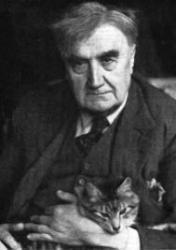
1872 - 1958 Person Name: Ralph Vaughan Williams (1871-1958) Topics: Occasional Services Dedication / Consecration / Anniversary; Occasional Services Dedication / Consecration / Anniversary Arranger of "SUSSEX CAROL " in Psalms for All Seasons Through his composing, conducting, collecting, editing, and teaching, Ralph Vaughan Williams (b. Down Ampney, Gloucestershire, England, October 12, 1872; d. Westminster, London, England, August 26, 1958) became the chief figure in the realm of English music and church music in the first half of the twentieth century. His education included instruction at the Royal College of Music in London and Trinity College, Cambridge, as well as additional studies in Berlin and Paris. During World War I he served in the army medical corps in France. Vaughan Williams taught music at the Royal College of Music (1920-1940), conducted the Bach Choir in London (1920-1927), and directed the Leith Hill Music Festival in Dorking (1905-1953). A major influence in his life was the English folk song. A knowledgeable collector of folk songs, he was also a member of the Folksong Society and a supporter of the English Folk Dance Society. Vaughan Williams wrote various articles and books, including National Music (1935), and composed numerous arrange­ments of folk songs; many of his compositions show the impact of folk rhythms and melodic modes. His original compositions cover nearly all musical genres, from orchestral symphonies and concertos to choral works, from songs to operas, and from chamber music to music for films. Vaughan Williams's church music includes anthems; choral-orchestral works, such as Magnificat (1932), Dona Nobis Pacem (1936), and Hodie (1953); and hymn tune settings for organ. But most important to the history of hymnody, he was music editor of the most influential British hymnal at the beginning of the twentieth century, The English Hymnal (1906), and coeditor (with Martin Shaw) of Songs of Praise (1925, 1931) and the Oxford Book of Carols (1928). Bert Polman

James Walch

1837 - 1901 Person Name: James Walch, 1837-1901 Topics: The Godhead Adoration and Praise; Aspiration After God; Consecration Prayer for; Entire Sanctification; God Longing for; Self-Dedication ; Prayer For Entire Sanctification ; Santification By the Spirit; Longing For God Composer of "EAGLEY" in Methodist Hymn and Tune Book James Walch was a musician and composer, born near Bolton, Lancashire, England in 1837. He spent his early life in the town and was organist in several churches there, including the parish church of St George’s. From 1870-1877, he was conductor for the Bolton Philharmonic Society. He also composed at least four published hymn tunes, the best known of which is called “Tidings”. Written in 1875, it’s usually used as the tune to a hymn called “O Zion Haste”. James Walch was a musical instrument dealer by trade, and moved to Barrow-in-Furness in 1877. He later moved to Llandudno Junction in North Wales, where he died in August 1901 and was buried locally. His wife later donated money to pay for the organs in two local churches, St Paul's Llandudno and All Saints Deganwy, in his memory. Three decades later, an article in the London Gazette reported on a dispute arising from his will, and mentioned that he had a son, Harry West Walch, who was a pianist and lived in Hereford. St Paul's Church, Llandudno newsletter; used by permission of Christ Dearden (Walch's wife paid for the organ at St. Paul's Church)

J. Grigg

1720 - 1768 Person Name: Joseph Grigg, c. 1720-1768 Topics: The Christian Life Dedication and Consecration Author of "Jesus, and Shall It Ever Be" in African Methodist Episcopal Church Hymnal Grigg, Joseph, was born in 1728, according to the D. Sedgwick’s Manuscript," but this date seems to be some six or eight years too late. He was the son of poor parents and was brought up to mechanical pursuits. In 1743 he forsook his trade and became assistant minister to the Rev. Thomas Bures, of the Presbyterian Church, Silver Street, London. On the death of Mr. Bures in 1747, he retired from the ministry, and, marrying a lady of property, look up his residence at St. Albans. He died at Walthamstow, Essex, Oct. 29, 1768. As a hymnwriter Grigg is chiefly known by two of his hymns, "Behold a stranger at the door"; and "Jesus, and can it ever be?" His hymnwriting began, it is said, at ten years of age. His published works of various kinds number over 40. Those in which his hymns are found are:— (1) Miscellanies on Moral and Religious Subjects, &c, London, Elizabeth Harrison, 1756. (2) The Voice of Danger, the Voice of God. A Sermon Preached at St. Albans, and at Box-Lane, Chiefly with a View to the apprehended Invasion. By J. Grigg. London, J. Buckland, 1756. To this is appended his hymn, "Shake, Britain, like an aspen shake." (3) Four Hymns on Divine Subjects wherein the Patience and Love of Our Divine Saviour is displayed, London, 1765. (4) Hymns by the late Rev. Joseph Grigg, Stourbridge, 1806. (5) During 1765 and 1766 he also contributed 12 hymns to The Christians Magazine. In 1861 D. Sedgwick collected his hymns and poems, and published them with a memoir as: Hymns on Divine Subjects, * * * * London, 1861. This volume contains 40 "Hymns," and 17 "Serious Poems." In the “S. MSS." Sedgwick notes that in 1861 he omitted three hymns by Grigg, which were then unknown to him, viz.:—l) On "The National Fast," appended to a sermon preached at Northampton, Feb. 13, 1761, by W. Warburton, and published in London, 1761. (2) "A Harvest Hymn by the late Rev. Joseph Grigg," in 6 stanzas, in the Evangelical Magazine, July, 1822; and (3) On the Parable of Dives and Lazarus, dated "Feb. 15, 1767." -- John Julian, Dictionary of Hymnology (1907)

William Croft

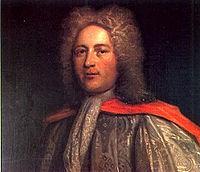
1678 - 1727 Topics: Occasional Services Dedication / Consecration / Anniversary Composer of "ST. ANNE" in Psalms for All Seasons William Croft, Mus. Doc. was born in the year 1677 and received his musical education in the Chapel Royal, under Dr. Blow. In 1700 he was admitted a Gentleman Extraordinary of the Chapel Boyd; and in 1707, upon the decease of Jeremiah Clarke, he was appointed joint organist with his mentor, Dr. Blow. In 1709 he was elected organist of Westminster Abbey. This amiable man and excellent musician died in 1727, in the fiftieth year of his age. A very large number of Dr. Croft's compositions remain still in manuscript. Cathedral chants of the XVI, XVII & XVIII centuries, ed. by Edward F. Rimbault, London: D. Almaine & Co., 1844

Bob Hurd

b. 1950 Person Name: Bob Hurd, b. 1950 Topics: Occasional Services Dedication / Consecration / Anniversary; Occasional Services Dedication / Consecration / Anniversary Author of "Let Us Go Rejoicing" in Psalms for All Seasons

Pages


Export as CSV
It looks like you are using an ad-blocker. Ad revenue helps keep us running. Please consider white-listing Hymnary.org or getting Hymnary Pro to eliminate ads entirely and help support Hymnary.org.