You help make Hymnary.org possible. More than 10 million people from 200+ countries found hymns, liturgical resources and encouragement on Hymnary.org in 2025, including you. Every visit affirms the global impact of this ministry.

If Hymnary has been meaningful to you this year, would you take a moment today to help sustain it? A gift of any size—paired with a note of encouragement if you wish—directly supports the server costs, research work and curation that keep this resource freely available to the world.

Give securely online today, or mail a check to:
Hymnary.org
Calvin University
3201 Burton Street SE
Grand Rapids, MI 49546

Thank you for your partnership, and may the hope of Advent fill your heart.

Person Results

Topics:god+-+the+father
In:person

Planning worship? Check out our sister site, ZeteoSearch.org, for 20+ additional resources related to your search.
Showing 101 - 110 of 340Results Per Page: 102050

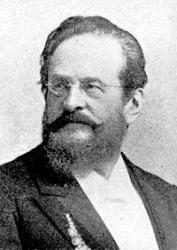
Eduard Kremser

1838 - 1914 Person Name: Edward Kremser Topics: Worship & Praise God Our Father Arranger of "KREMSER" in Rejoice Eduard Kremser was born 10 October 1838 in Vienna and died 26 November 1914 in Vienna. He was a choir director, conductor, composer and musicologist. He was the arranger of the music for male voices in Sechs altniederländische Volkslieder, a collection of six Dutch folk songs from Adriaan Valerius' collection Nederlandtsche gedenck-clanck. From this collection comes the tune which is named after him and is sung with the English text "We Gather Together." He also edited and arranged a 3 volume set of German and Austrian folk music: Wiener Lieder und Tänze: im Auftrage der Gemeindevertretimg der Stadt Wien (published 1912-1925) as well as other volumes of folk music. Dianne Shapiro

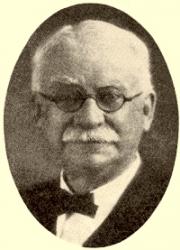
W. Stillman Martin

1862 - 1935 Topics: God Father Composer of "GOD CARES" in The Hymnal for Worship and Celebration Born: March 8, 1862, Rowley, Massachusetts. Died: December 16, 1935, Atlanta, Georgia. Buried: Westview Cemetery, Atlanta, Georgia. Husband of hymnist Civilla Martin, Stillman attended Harvard University and was ordained a Baptist minister, though he later switched to the Disciples of Christ denomination. In 1916, he became a professor of Bible studies at Atlantic Christian College in Wilson, North Carolina. Three years later, he moved to Atlanta, Georgia. It was from there he went all over America to run Bible conferences and evangelistic meetings. Sources: Hustad, p. 282 http://www.hymntime.com/tch/bio/m/a/r/t/martin_ws.htm

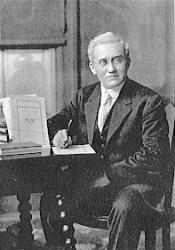
Christian Friedrich Witt

1660 - 1717 Person Name: Christian F. Witt Topics: God Father Composer (attributed to) of "STUTTGART" in Community of Christ Sings Christian F. Witt (b. Altenburg, Germany, d. 1660; d. Altenburg, 1716) was an editor and compiler of Psalmodia Sacra (1715); about 100 (of the 774) tunes in that collection are considered to be composed by him, including STUTTGART, which was set to the text "Sollt' es gleich." Witt was chamber organist and later Kapellmeister at the Gotha court. He composed vocal and instrumental music, including some sixty-five cantatas. Bert Polman

Frederick M. Lehman

1868 - 1953 Topics: God Our Father : His Love and Mercy Author of "The Love of God" in The Hymnal for Worship and Celebration Frederick Martin Lehman, 1868-1953 Born: August 7, 1868, Mecklenburg, Schwerin, Germany. Died: February 20, 1953, Pasadena, California. Buried: Forest Lawn Memorial Park, Glendale, California. Lehman emigrated to America with his family at age four, settling in Iowa, where he lived most of childhood. He came to Christ at age 11, as he relates: One glad morning about eleven o’clock while walking up the country lane, skirted by a wild crab-apple grove on the right and an osage fence, with an old white-elm gate in a gap at the left, suddenly Heaven let a cornucopia of glory descend on the eleven-year old lad. The wild crab-apple grove assumed a heavenly glow and the osage fence an unearthly lustre. That old white-elm gate with its sun-warped boards gleamed and glowed like silver bars to shut out the world and shut him in with the ’form of the fourth,’ just come into his heart. The weight of conviction was gone and the paeans of joy and praise fell from his lips. Lehman studied for the ministry at Northwestern College in Naperville, Illinois, and pastored at Audubon, Iowa; New London, Indiana; and Kansas City, Missouri. The majority of his life was devoted to writing sacred songs; his first was written while a pastor in Kingsley, Iowa, in 1898. He wrote and published hundreds of songs, and compiled five song books. In 1911, he moved to Kansas City, where he helped found the Nazarene Publishing House. --www.hymntime.com/tch

Peter Williams

1723 - 1796 Person Name: Peter Williams, 1722-1796 Topics: God, Our Father Translator of "Guide Me, O Thou Great Jehovah" in Ambassador Hymnal Peter Williams (b. Llansadurnin, Carmarthanshire, Wales, 1722; d. Llandyfeilog, Wales, 1796) was converted to Christianity by the preaching of George Whitefield and was ordained in the Church of England in 1744. His evangelical convictions soon made him suspect, however, and he left the state church to join the Calvinist Methodists in 1746. He served as an itinerant preacher for many years and was a primary figure in the Welsh revival of the eighteenth century. After being expelled by the Methodists in 1791 on a charge of heresy, he ministered in his own chapel during the last years of his life. He published the first Welsh Bible commentary (1767-1770) and a Bible concordance (1773); he was also one of the annotators for John Canne's Welsh Bible (1790). In addition Williams published a Welsh hymnal, Rhai Hymnau ac Odlau Ysbrydol (1759), as well as Hymns on Various Subjects (1771). Bert Polman

George F. Root

1820 - 1895 Person Name: George F. Root, 1820-1895 Topics: Worship & Praise God Our Father Composer of "QUAM DILECTA" in Rejoice Root, George F., MUS. DOC, born in Sheffield, Berkshire County, Mass., Aug. 30, 1820. He is much more widely known as a composer of popular music than as a hymn writer. Four of his hymns are in I. D. Sankey's Sacred Songs & Solos, 1878. Nos. 16, 100, 293, and 297. A sympathetic biographical sketch, with portrait, is in The Tonic Sol-Fa Reporter, Sep. 1886. He died Aug. 6, 1895. --John Julian, Dictionary of Hymnology, Appendix, Part II (1907) ===================== George Frederick Root was born in Sheffield, Mass., August 30, 1820. His father moved to North Reading, near Boston, when the boy was six years old, and there his youth was spent. He was always fond of music— not singing at all as a boy, but played upon every kind of instrument that came in his way. At thirteen it was his pride that he could "play a tune" on as many instruments as he was years old. His dream of life was to be a musician, although such an ambition was looked down upon by all his relatives and friends, excepting a fond mother. In the fall of 1838 he went to Boston and made an engagement to work for Mr. A. N. Johnson and take lessons on the piano. His father and one of the brothers were at the time in South America, and the mother, with six younger children, was at home on the farm. When he secured the engagement with Mr. Johnson to receive three dollars a week and board and lessons, the neighbors became interested and encouraged him to go ahead, they promising to help look after the farm and see that the family got along. The young man's happiness over these events can better be imagined than described. On the second day of October, 1838, he entered upon his duties in his new heaven on earth located at Harmony Hall, Mr. Johnson's music-room, in Boston. His duties were to see to the fires, care for the room, answer callers, give information about Mr. Johnson when he was out, and practice his lessons when not otherwise engaged. He worked industriously and made steady progress. It was but a few weeks till Mr. Johnson had him playing for the prayer-meeting, and but a few more till he began turning over pupils to him. In about seven weeks' time Mr. Johnson encouraged him by a considerable increase of salary. A most important event to him was meeting Dr. Lowell Mason and being accepted as a bass singer in the celebrated Bowdoin Street choir. Also, on Mr. Johnson's recommendation, he began taking private voice lessons of Mr. Geo. Jas. Webb, the then celebrated voice teacher of Boston. He continued at least a year with Mr. Webb. His first real singing class was taught the following fall, 1839, at the North End. It lasted nearly through the winter, and on the closing night his class made him a present of a silver goblet, suitably engraved, which he kept among his treasures. Before the first year was up Mr. Johnson proposed a five year partnership, by which Mr. Root was to receive one-third of their earnings, and the former was to have the privilege of visiting Germany part of the time if he chose. They then changed their quarters to three rooms in the basement of Park Street Church. The annual rental was six hundred dollars. They were kept quite busy. At this time Dr. Mason's music teaching in the public schools was a growing success, and Messrs. Johnson and Root were employed to assist him. Drs. Mason and Webb had introduced what is now called Musical Conventions a year or two previous to this. They called them "The Teachers' Class." Teachers and singers were called to Boston from surrounding territory to study and practice pretty much as they do now at normals. In 1841 Mr. Root became one of the teachers in this class. He taught vocal training and continued this work for years afterward in Dr. Mason's teachers' classes, and later incorporated the same method in his own normals. During this year Mr. Johnson went to Germany, and left the two large church choirs (Winter Street and Park Street) in charge of Mr. Root. One of the organs was played by a pupil — Mr. S. A. Bancroft. Everything went smoothly during Mr. Johnson's absence as it did also after his return. During the last year of the five-year partnership, Mr. Root was called to take the organ at Bowdoin Street, Mr. Mason changing to Winter Street. An amicable settlement was made between Messrs. Johnson and Root, and the partnership dissolved. In 1811, Mr. Jacob Abbott (father of Lyman Abbott)and his three brothers had established a young ladies' school in New York City. They wanted a music teacher, and offered the position to Mr. Root. They also secured him the organ and choir of the Mercer Street Church, with prospects for other good work. It required pretty strong persuasive arguments to tempt Mr. Root to leave Boston, he was doing well there, and as the sequel shows, there was an attraction in Boston that held him in too tight a grasp to be relinquished by the mere offer of greater power and place. He made up his mind, however, only after getting the consent of the powders of Boston to take with him this [to him] the greatest attraction of the city — Miss Mary Olive Woodman — an accomplished lady, a sweet singer, and a member of a prominent family of musicians. He went to New York first to prepare a home, and in August, 1845, returned for his bride, who took her place in his New York choir as leading soprano, and through his long and eventful career she was ever at his side, a true helpmeet. He was soon employed at Rutger's Female Institute, Miss Haines' School for Young Ladies, Union Theological Seminary and the New York State Institution for the Blind. Within six weeks after he arrived in New York his time was fully occupied. He continued with Mr. Abbott's young ladies' school ten years. While teaching in New York he continued his summer work with Messrs. Mason and Webb in Teachers' Classes. Up to the year 1849 he had written but little music; only a few hymn tunes while in Boston. He needed more music for the young ladies of his schools, so he made his first book, The Young Ladies' Choir, of which he had enough copies made for his own use, as he had no thought of offering it to the public. Then in connection with Mr. J. E. Sweetser, they compiled the Root and Sweetser's Collection. Mr. Root did work enough for two men, hence broke down in health. Mr. Abbott suggested that he take a trip to Paris. After weighing the matter carefully, in December, 1853, he sailed, and in due time arrived at Paris, where he began studying French, voice culture and piano under celebrated teachers. After spending nearly a year abroad, he returned home in improved health and ready for active work. He began to feel the need of new music for his classes, and after some thought decided upon a musical play ; the subject and title, The Flower Queen. At the Institution for the Blind was a young lady, a former pupil, but now a teacher who had shown some poetical talent. He asked her to help him with the words. He would suggest in prose what the flowers might say and she would put it into rhyme. She did it so well that it seldom needed any alteration. This lady was the now famous Fanny Crosby. The cantata became very popular. About this time Mr. Root wrote a half dozen simple songs for the people. They all sold pretty well, but Hazel Dell and Rosalie, the Prairie Flower, became the most popular, and had a large sale. It was in the summer of 1853 that the first real normal was held. Mr. Root originated it, and held it in New York. The principal teachers were Messrs. Mason, Root, Hastings, and Bradbury. This school became famous. Sessions were also held at North Reading, Mass., a village near Mr. Root's "Willow Farm Home," with Dr. Mason, Mr. Webb, Mr. Bradbury and himself as principal teachers. About this time Mr. Root decided to give up his work in New York, and devote himself entirely to conventions, normal work and authorship. He was eminently successful. Among the most eminent teachers and composers of our country have been students in Dr. Geo. F. Root's Normal Musical Institute. In 1860 Dr. Root settled in Chicago and entered the music publishing business with his brother E. T. Root, and C. M. Cady, as "Root & Cady," Mr. Root's reputation being the most important capital of the firm. His books and popular songs soon made the new firm prosperous. Then came the war with its horror. Dr. Root wielded his musical sword in the way of writing war songs, which made him famous. The Battle Cry of Freedom, Just Before the Battle, Mother, and others, made thousands of dollars for the music house. In the great Chicago fire of 1871 the interests of the firm of Root & Cady became engulfed in the general ruin. Their loss was upward of a quarter of a million dollars. They then sold their book catalogue, plates and copyrights to John Church & Co., of Cincinnati, and the sheet music plates and copyrights to S. Brainard's Sons, Cleveland. These sales realized about §130,000. The final result was that Dr. Root, his talented son F. W., and others became connected with John Church & Co. Under this new business relationship Mr. Root went right on with his normal and convention work; also issued a great many new books and cantatas. In 1872 the Chicago University very worthily conferred upon him the degree Doctor of Music. In 1886 he made a trip to Scotland and England, and arranged with publishers to issue some of his cantatas. He was royally received. Dr. Root was the author of about seventy-five books, nearly two hundred songs in sheet form, and many popular gospel songs. Dr. Root occupies a prominent place in the musical history of this country. It was Dr. Mason who lifted music from almost nothing and gave it an impetus, but he left no better follower than Dr. Root to carry on his work. He was a man of spotless integrity and high Christian character, and to know him was to love him. At the time of Dr. Root's death he was at Bailey Island, Maine, a summer resort, where he and other relatives had cottages. On August 6, 1895, he was seized with neuralgia of the heart — and died within one hour. He was buried at North Reading, Mass., his old home. --Hall, J. H. (c1914). Biographies of Gospel Song and Hymn Writers. New York: Fleming H. Revell Company.

C. G. Gläser

1784 - 1829 Person Name: Carl Gotthilf Gläser (1784-1829) Topics: God Father Composer of "AZMON" in Many Voices; or, Carmina Sanctorum, Evangelistic Edition with Tunes Carl Gotthelf Gläser Germany 1781-1829. Born at Weissenfels, Burgenlandkreis, Sachsen-Anhalt, Germany, he received musical training from his father, after which he attended St. Thomas school in Leipzig. He became an author and composer. At Barmen he taught voice, piano, and violin. He also wrote and conducted chorale music. He died at Barmen. John Perry

Melody Green

b. 1946 Person Name: Melody Green, b. 1946 Topics: God As Father Author of "There Is a Redeemer" in Lift Up Your Hearts Born: August 25, 1946, Hollywood, California. Melody Green is probably most loved for the songs she’s written. “There Is A Redeemer” is found in church hymn books around the world, and reports of it being sung in villages in Africa and Asia are plentiful. She has also composed many other standards including, "Make My Life A Prayer To You," “You Are The One,” Rushing Wind,” and "The Lord Is My Shepherd." Looking back, although Melody was born in Hollywood, she came into this world quietly and without fanfare. She grew up in Venice in a funky little apartment facing an alley, called Speedway. With no safe place to play, and the beach just a few hundred feet away, the sand became her only playground. As a young girl who always watched the shifting tides, the star patterns, and the sunsets, Melody realized there must be a Creator for such perpetual beauty, universal order and symmetry to exist. Her father was a WWII Navy Seals Veteran, a hunter and fisherman, and a factory worker by trade. Her mom worked at a CPA firm, and was raised in an Orthodox Jewish family, the child of Russian refugees. Melody’s grandfather was a Rabbi, her grandmother, the child of a Grand Rabbi. Escaping Czarist persecution, her grandparents bundled up their five children and took a train to the shipyard in Odessa. Melody says, “It’s a miracle I’m even alive! My family barely escaped death in Odessa, then on the train ride to the port they were ducking bullets shot at them through the windows. My precious grandparents put the kids on the floor and laid on top of them, covered with pillows for protection. They made it to the port and actually escaped on the every last ship that would allow fleeing refugees on board! My mom was their sixth child, but the very first child to be born in America.” Today Melody says, "My family history has played a large part in shaping my heart to absolutely disdain all types of persecution, prejudice, and injustice. Some things are just wrong. My spirit told me this long before I even met the Lord.” After college, Melody designed clothing in the famed Garment District of Los Angeles. Later she took a job at a Production Company. It was there that she met Keith Green, an aspiring musician who was on a very similar spiritual journey. Within a year they were married and continued their spiritual search together. Now Melody designed and made unique clothing for herself and Keith for his nightclub gigs in Hollywood and his record label auditions. In 1975 they were invited to a small bible study in upscale Bel Air and their lives were forever changed. Melody finally found the truth she’d been looking for, but in an unexpected package. However, both Melody and Keith understood that in Jesus they had found their one and only true Messiah. Calling herself a Jewish Christian, Melody decided to just do what the bible said. So she and Keith opened the doors of their small home and took in kids with drug problems and surprise pregnancies, usually leading them to the Lord. They also had Pot Luck dinners and bible studies for their whole neighborhood... going door to door to invite people. Before long more space was needed, so they bought or rented a total of six more homes, built triple high bunks, ate donated mystery food (cans without labels) and just kept on growing. In 1979, feeling a need to leave "the city'" because of the rehab work they were doing, they moved their flourishing ministry to a 120-acre ranch in East Texas. Melody still traveled on Keith's concert tours where she ran the soundboard, sold albums, and as always, she and Keith wrote music wherever they could. Back at the ranch she oversaw the “women’s ministries,” wrote hundreds of counseling letters, and took care of her young and growing family. By 1982 the ministry had a worldwide impact, with nearly 100 people on staff. Melody was busy editing The Last Days Magazine, as well as writing many of its articles. Keith’s music was at the top of the charts and new facilities were built and more were in the planning stages. Then one day in July a tragic accident changed Melody’s life forever. Keith and two of their young children, with some visiting friends, went for a short ride in a small plane. It was the LDM weekly fast day, and the ministry pilot had just returned. Keith met the pilot on the runway and everyone jumped into the plane. But the plane did not get the needed lift, and just 20 seconds later it crashed in a neighboring field and burst into flames. There were no survivors. When Keith died he was just 28 years old. Melody's first born, Josiah, was almost four and Bethany was two years old. At the time, Melody was at home with their one year old daughter Rebekah Joy and six weeks pregnant with their fourth child. Melody says, “The rug was yanked out from under my whole world that day. Without the Lord and the support of my friends and the LDM community I never would have made it.” But she did make it, pressing in to lead LDM through the crisis, while caring for her surviving daughter. In the fall of 1982 Melody traveled across America with the Keith Green Memorial Concert, reaching over 300,000 people face to face. Since the mission field was the last burden she and Keith shared, she was the one left to carry that challenge. Loren Cunningham, the founder of Youth With A Mission said, "This was the largest missions challenge in history that I know of." In March of 1983 Melody took some time off to give birth to her new daughter, Rachel Hope. Now Melody was a single mom with two little girls... and leading a large international ministry. It was at a time when women leaders were few and not readily accepted, but the Lord gave Melody great favor and continued to use both her and LDM in incredible ways. In 1985 Melody became a forerunner in the tiny but budding Pro Life Movement. She says. "The Lord told me to move abortion up to the front burner," and of course she took all of LDM with her. She launched Americans Against Abortion at a time when pastors rarely mentioned abortion or felt believers should even address it. But Melody put a fresh face and a non-stoppable energy into being Pro-Life... and she drove the message home, squarely into millions of evangelical hearts. In this season Melody crossed the nation teaching the biblical perspective on caring for Life, and urging all believers to take a determined stand. Supporting only non-violent means, and wearing a bullet proof vest because of death threats, Melody spoke in churches, held rallies on Capital steps, called secular press conferences, led city wide marches, and picketed abortion clinics. She was even arrested once during a peaceful protest, spending the night in an inner city jail and going home with a head injury. In the following years God opened many unforeseen doors for Melody. She went to India and met Mother Theresa visiting her “Home For The Destitute and Dying.” She was also invited to the White House to meet with Presidents, Senators, and others in political office. None of it really phased her. She likes to say, "I sat in dirt in India and wore silk to the White House. How weird is that?" Today Melody still oversees LDM where her voice can be heard on numerous relevant topics from a biblical perspective. Loving to expose people to what she believes is important, she continues to bring LDM readers the teachings of others who she believes have something vital to say. Believing that caring for others is not an option, Melody established the Good Neighbor Mercy Fund, enabling LDM to raise donations for disaster victims, the sick, and the needy. LDM has already given to victims of the Asian Tsunami and Hurricane Katrina as well as others with pressing needs. Melody lives in Kansas City, Missouri. Her daughters are happily married and following the Lord with their husbands. --www.lastdaysministries.org (excerpts)

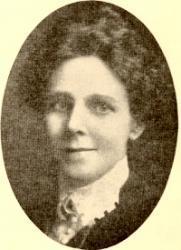
Civilla D. Martin

1866 - 1948 Topics: God Father Author of "God Will Take Care of You" in The Hymnal for Worship and Celebration Martin, Civilla Durfee (Jordan Falls, Nova Scotia, August 21, 1866--March 9, 1948, Atlanta, Georgia). Daughter of James N. and Irene (Harding) Holden. She married Rev. John F. Geddes, Congregational minister of Coventryvilee, N.Y. at Jordan Falls Methodist Church, Shelbourne Co., Nova Scotia, on May 19, 1891. There is thus far no information about their marriage and its end. After several years of teaching school, she married Walter Stillman Martin, a Baptist minister, and traveled with him in evangelistic work. However, because of frail health, she was compelled to remain home much of the time. In 1916, they became members of the Christian Church (Disciples of Christ). They had one son, A.G. Martin. In her writing, she used only her initials, "C.D." rather than her full name of that of her composer-husband. She is reputed to have written several hundred hymns and religious songs. Her first one, "God Will Take Care of You," written in 1904 became world-famous. Her husband wrote the music for this and many of her other hymns. "His Eye is on the Sparrow" written in 1906 and set to music by Charles H. Gabriel, has also received wide acclaim. In addition to the above, "Like As A Father," "A Welcome for Me," and "The Blood Will Never Lose Its Power" are among her better-known hymns. Her husband and collaborator, W.S. Martin (1862-1935) preceded her in death. For the last 29 years of her life, she made her home in Atlanta, Georgia, where she was a member of the First Christian Church. Her funeral was held on March 10, 1948 at Spring Hill and the interment was in the West View Cemetery in Atlanta. --Carlton C. Buck, DNAH Archives and email from Rev. Lester M. Settle (Glenholme, Nova Scotia) to Mary Louise VanDyke 18 September 2008, DNAH Archives.

Cecil Frances Alexander

1818 - 1895 Topics: Father and Creator; God; God--Creator Author of "All Things Bright and Beautiful" in Moravian Book of Worship As a small girl, Cecil Frances Humphries (b. Redcross, County Wicklow, Ireland, 1818; Londonderry, Ireland, 1895) wrote poetry in her school's journal. In 1850 she married Rev. William Alexander, who later became the Anglican primate (chief bishop) of Ireland. She showed her concern for disadvantaged people by traveling many miles each day to visit the sick and the poor, providing food, warm clothes, and medical supplies. She and her sister also founded a school for the deaf. Alexander was strongly influenced by the Oxford Movement and by John Keble's Christian Year. Her first book of poetry, Verses for Seasons, was a "Christian Year" for children. She wrote hymns based on the Apostles' Creed, baptism, the Lord's Supper, the Ten Commandments, and prayer, writing in simple language for children. Her more than four hundred hymn texts were published in Verses from the Holy Scripture (1846), Hymns for Little Children (1848), and Hymns Descriptive and Devotional ( 1858). Bert Polman ================== Alexander, Cecil Frances, née Humphreys, second daughter of the late Major John Humphreys, Miltown House, co. Tyrone, Ireland, b. 1823, and married in 1850 to the Rt. Rev. W. Alexander, D.D., Bishop of Derry and Raphoe. Mrs. Alexander's hymns and poems number nearly 400. They are mostly for children, and were published in her Verses for Holy Seasons, with Preface by Dr. Hook, 1846; Poems on Subjects in the Old Testament, pt. i. 1854, pt. ii. 1857; Narrative Hymns for Village Schools, 1853; Hymns for Little Children, 1848; Hymns Descriptive and Devotional, 1858; The Legend of the Golden Prayers 1859; Moral Songs, N.B.; The Lord of the Forest and his Vassals, an Allegory, &c.; or contributed to the Lyra Anglicana, the S.P.C.K. Psalms and Hymns, Hymns Ancient & Modern, and other collections. Some of the narrative hymns are rather heavy, and not a few of the descriptive are dull, but a large number remain which have won their way to the hearts of the young, and found a home there. Such hymns as "In Nazareth in olden time," "All things bright and beautiful," "Once in Royal David's city," "There is a green hill far away," "Jesus calls us o'er the tumult," "The roseate hues of early dawn," and others that might be named, are deservedly popular and are in most extensive use. Mrs. Alexander has also written hymns of a more elaborate character; but it is as a writer for children that she has excelled. - John Julian, Dictionary of Hymnology (1907) =============== Alexander, Cecil F., née Humphreys, p. 38, ii. Additional hymns to those already noted in this Dictionary are in common use:— 1. Christ has ascended up again. (1853.) Ascension. 2. His are the thousand sparkling rills. (1875.) Seven Words on the Cross (Fifth Word). 3. How good is the Almighty God. (1S48.) God, the Father. 4. In [a] the rich man's garden. (1853.) Easter Eve. 5. It was early in the morning. (1853.) Easter Day. 6. So be it, Lord; the prayers are prayed. (1848.) Trust in God. 7. Saw you never in the twilight? (1853.) Epiphany. 8. Still bright and blue doth Jordan flow. (1853.) Baptism of Our Lord. 9. The angels stand around Thy throne. (1848.) Submission to the Will of God. 10. The saints of God are holy men. (1848.) Communion of Saints. 11. There is one Way and only one. (1875.) SS. Philip and James. 12. Up in heaven, up in heaven. (1848.) Ascension. 13. We are little Christian children. (1848.) Holy Trinity. 14. We were washed in holy water. (1848.) Holy Baptism. 15. When of old the Jewish mothers. (1853.) Christ's Invitation to Children. 16. Within the Churchyard side by side. (1848.) Burial. Of the above hymns those dated 1848 are from Mrs. Alexander's Hymns for Little Children; those dated 1853, from Narrative Hymns, and those dated 1875 from the 1875 edition of Hymns Ancient & Modern. Several new hymns by Mrs. Alexander are included in the 1891 Draft Appendix to the Irish Church Hymnal. --John Julian, Dictionary of Hymnology, Appendix, Part II (1907) ============= Alexander, Cecil F. , p. 38, ii. Mrs. Alexander died at Londonderry, Oct. 12, 1895. A number of her later hymns are in her Poems, 1896, which were edited by Archbishop Alexander. --John Julian, Dictionary of Hymnology, New Supplement (1907) See also in:Hymn Writers of the Church

Pages


Export as CSV
It looks like you are using an ad-blocker. Ad revenue helps keep us running. Please consider white-listing Hymnary.org or getting Hymnary Pro to eliminate ads entirely and help support Hymnary.org.