

 My Starred Hymns
 My FlexScores
 My Hymnals
 My Purchased Files
Planning worship?
Check out our sister site, ZeteoSearch.org,
for 20+ additional resources related to your search.
- |
User Links
Person Results
Federico J. Pagura

1923 - 2016 Person Name: Federico J. Pagura, b. 1923 Topics: Solemnities of the Lord Christ the King; Solemnidades del Señor Jesucristo, Rey del Universo; All Saints; Todos los Santos; Rites of the Church Funeral; Ritos de la Iglesia Exequias; Alabanza; Praise; Canción; Song; Church; Iglesia; Cielo; Heaven; Communion of the Saints; Comunión de los Santos; Confianza; Trust; Courage; Valor; Descanso; Rest; Discipleship; Discipulado; Faith; Fe; Fortaleza; Strength; Lucha; Struggle; Name of Jesus; Nombre de Jesús; Providence; Providencia; Second Coming; Segunda Venida Translator of "For All the Saints (Hoy por los Santos)" in Oramos Cantando = We Pray In Song Federico José Pagura was an Argentine Methodist bishop and author and translator of hymns.
Leland Bryant Ross
Federico J. Pagura
John Milton
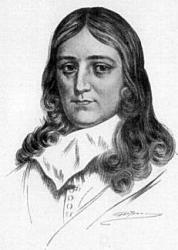
1608 - 1674 Topics: Advent; Christ; Jesus Christ; Judgment; Kingdom; Prophecy; Psalm Paraphrases; Second Coming; Son of God; The Lord Jesus Christ Second Coming; Watchfulness Author of "The Lord Will Come and Not be Slow" in Great Songs of the Church (Revised) Milton, John, was born in London, Dec. 9, 1608, and died there Nov. 8, 1674. His poetical excellences and his literary fame are matters apart from hymnology, and are fully dealt with in numerous memoirs. His influence on English hymn-writing has been very slight, his 19 versions of various Psalms having lain for the most part unused by hymnal compilers. The dates of his paraphrases are:—
Ps. cxiv. and cxxxvi., 1623, when he was 15 years of ago. These were given in his Poems in English and Latin 1645.
Ps. lxxx.-lxxxviii., written in 1648, and published as Nine Psalmes done into Metre, 1645.
Ps. i., 1653; ii., “Done August 8, 1653;" iii., Aug. 9, 1653; iv. Aug. 10, 1653; v., Aug. 12, 1653; vi., Aug. 13, 1653; vii.Aug. 14, 1653; viii., Aug. 14, 1653.
These 19 versions were all included in the 2nd ed. of his Poems in English and Latin, 1673. From these, mainly in the form of centos, the following have come into common use:—
1. Cause us to see Thy goodness, Lord. Ps. lxxxv.
2. Defend the poor and desolate. Ps. lxxxii.
3. God in the great assembly stands. Ps. lxxxii.
4. How lovely are Thy dwellings fair. Ps. lxxxiv. From this, "They pass refreshed the thirsty vale," is taken.
5. Let us with a gladsome [joyful] mind. Ps. cxxxvi.
6. O let us with a joyful mind. Ps. cxxxvi.
7. The Lord will come and not be slow. Ps. lxxxv.
Of these centos Nos. 4 and 5 are in extensive use. The rest are mostly in Unitarian collections. There are also centos from his hymn on the Nativity, "This is the month, and this the happy morn" (q.v.).
--John Julian, Dictionary of Hymnology (1907)
John Milton
Martin Luther
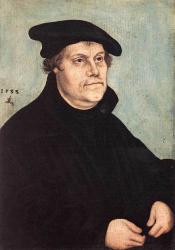
1483 - 1546 Person Name: Martin Luther, 1483-1548 Topics: Christ Second Coming and Judgment of Composer of "LUTHER'S HYMN" in Trinity Hymnal Luther, Martin, born at Eisleben, Nov. 10, 1483; entered the University of Erfurt, 1501 (B.A. 1502, M.A.. 1503); became an Augustinian monk, 1505; ordained priest, 1507; appointed Professor at the University of Wittenberg, 1508, and in 1512 D.D.; published his 95 Theses, 1517; and burnt the Papal Bull which had condemned them, 1520; attended the Diet of Worms, 1521; translated the Bible into German, 1521-34; and died at Eisleben, Feb. 18, 1546. The details of his life and of his work as a reformer are accessible to English readers in a great variety of forms. Luther had a huge influence on German hymnody.
i. Hymn Books.
1. Ellich cristlich lider Lobgesang un Psalm. Wittenberg, 1524. [Hamburg Library.] This contains 8 German hymns, of which 4 are by Luther.
2. Eyn Enchiridion oder Handbuchlein. Erfurt, 1524 [Goslar Library], with 25 German hymns, of which 18 are by Luther.
3. Geystliche Gesangk Buchleyn. Wittenberg, 1524 [Munich Library], with 32 German hymns, of which 24 are by Luther.
4. Geistliche Lieder auffs new gebessert. Wittenberg. J. Klug, 1529. No copy of this book is now known, but there was one in 1788 in the possession of G. E. Waldau, pastor at Nürnberg, and from his description it is evident that the first part of the Rostock Gesang-Buch, 1531, is a reprint of it. The Rostock Gesang-Buch, 1531, was reprinted by C. M. Wiechmann-Kadow at Schwerin in 1858. The 1529 evidently contained 50 German hymns, of which 29 (including the Litany) were by Luther.
5. Geistliche Lieder auffs new gebessert. Erfurt. A. Rauscher, 1531 [Helmstädt, now Wolfenbüttel Library], a reprint of No. 4.
6. Geistliche Lieder. Wittenberg. J. Klug, 1535 [Munich Library. Titlepage lost], with 52 German hymns, of which 29 are by Luther.
7. Geistliche Lieder auffs new gebessert. Leipzig. V. Schumann, 1539 [Wernigerode Library], with 68 German hymns, of which 29 are by Luther.
8. Geistliche Lieder. Wittenberg. J. Klug, 1543 [Hamburg Library], with 61 German hymns, of which 35 are by Luther.
9. Geystliche Lieder. Leipzig. V. Babst, 1545 [Gottingen Library]. This contains Luther's finally revised text, but adds no new hymns by himself. In pt. i. are 61 German hymns, in pt. ii. 40, of which 35 in all are by Luther.
For these books Luther wrote three prefaces, first published respectively in Nos. 3, 4, 9. A fourth is found in his Christliche Geseng, Lateinisch und Deudsch, zum Begrebnis, Wittenberg, J. Klug, 1542. These four prefaces are reprinted in Wackernagel’s Bibliographie, 1855, pp. 543-583, and in the various editions of Luther's Hymns. Among modern editions of Luther's Geistliche Lieder may be mentioned the following:—
Carl von Winterfeld, 1840; Dr. C. E. P. Wackernagel, 1848; Q. C. H. Stip, 1854; Wilhelm Schircks, 1854; Dr. Danneil, 1883; Dr. Karl Gerok, 1883; Dr. A. F. W. Fischer, 1883; A. Frommel, 1883; Karl Goedeke, 1883, &c. In The Hymns of Martin Luther. Set to their original melodies. With an English version. New York, 1883, ed. by Dr. Leonard Woolsey Bacon and Nathan H. Allen, there are the four prefaces, and English versions of all Luther's hymns, principally taken more or less altered, from the versions by A. T. Russell, R. Massie and Miss Winkworth [repub. in London, 1884]. Complete translations of Luther's hymns have been published by Dr. John Anderson, 1846 (2nd ed. 1847), Dr. John Hunt, 1853, Richard Massie, 1854, and Dr. G. Macdonald in the Sunday Magazine, 1867, and his Exotics, 1876. The other versions are given in detail in the notes on the individual hymns.
ii. Classified List of Luther's Hymns. Of Luther's hymns no classification can be quite perfect, e.g. No. 3 (see below) takes hardly anything from the Latin, and No. 18 hardly anything from the Psalm. No. 29 is partly based on earlier hymns (see p. 225, i.). No. 30 is partly based on St. Mark i. 9-11, and xvi., 15, 16 (see p. 226, ii.). No. 35 is partly based on St. Luke ii. 10-16. The following arrangement, however, will answer all practical purposes.
A. Translations from the Latin.
i. From Latin Hymns:
1. Christum wir sollen loben schon. A solis ortus cardine
2. Der du bist drei in Einigkeit. O Lux beata Trinitas.
3. Jesus Christus unser Heiland, Der von. Jesus Christus nostra salus
4. Komm Gott Schopfer, heiliger Geist. Veni Creator Spiritus, Mentes.
5. Nun komm der Beidenheiland. Veni Redemptor gentium
6. Was flirchst du Feind Herodes sehr. A solis ortus cardine
ii. From Latin Antiphons, &c.:
7. Herr Gott dich loben wir. Te Deum laudamus.
8. Verleih uns Frieden gnädiglich. Dapacem, Domine
9. Wir glauben all an einen Gott.
iii. Partly from the Latin, the translated stanzas being adopted from Pre-Reformation Versions:
10. Komm, heiliger Geist, Herre Gott.
11. Mitten wir im Leben sind. Media vita in morte sumus.
B. Hymns revised and enlarged from Pre-Reformation popular hymns.
12. Gelobet seist du Jesus Christ.
13. Gott der Vater wohn uns bei.
14. Gott sei gelobet und gebenedeiet.
15. Nun bitten wir den heiligen Geist.
C. Psalm versions.
16. Ach Gott vom Himmel, sieh darein.
17. Aus tiefer Noth schrei ich zu dir.
18. Ein' feste Burg ist unser Gott.
19. Es spricht der Unweisen Mund wohl.
20. Es wollt uns Gott genädig sein.
21. War Gott nicht mit uns diese Zeit.
22. Wohl dem, der in Gotten Furcht steht.
D. Paraphrases of other portions of Holy Scripture.
23. Diess sind die heilgen zehn Gebot.
24. Jesaia dem Propheten das geschah.
25. Mensch willt du leben seliglich.
26. Mit Fried und Freud ich fahr dahin.
27. Sie ist mir lieb die werthe Magd.
28. Vater unser im Himmelreich.
E. Hymns mainly Original.
29. Christ lag in Todesbanden.
30. Christ unser Herr zum Jordan kam.
31. Ein neues Lied wir heben an.
32. Erhalt uns Herr bei deinem Wort.
33. Jesus Christus unser Heiland, Der den,
34. Nun freut euch lieben Christengemein.
35. Vom Himmel hoch da komm ich her.
36. Vom Himmel kam der Engel Schaar.
In addition to these —
37. Fur alien Freuden auf Erden.
38. Kyrie eleison.
In the Blätter fur Hymnologie, 1883, Dr. Daniel arranges Luther's hymns according to what he thinks their adaptation to modern German common use as follows:—
i. Hymns which ought to be included in every good Evangelical hymn-book: Nos. 7-18, 20, 22, 28, 29, 30, 32, 34, 35, 36, 38.
ii. Hymns the reception of which into a hymn-book might be contested: Nos. 2, 3, 4, 19, 21, 22, 23, 24, 25, 33.
iii. Hymns not suited for a hymn-book: Nos. 1, 5, 6, 27, 31, 37.
[Rev. James Mearns, M.A.]
--John Julian, Dictionary of Hymnology (1907)
Martin Luther
H. W. Baker
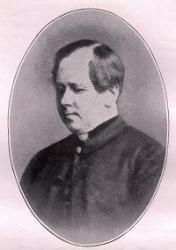
1821 - 1877 Person Name: Henry W. Baker, 1821-1877 Topics: Christmas; Christmas Season; Mary, Mother of God; Angels; Creation; God the Father (Creator); Jesus Christ; Praise; Second Coming Translator of "Of the Father's Love Begotten" in Worship (3rd ed.) Baker, Sir Henry Williams, Bart., eldest son of Admiral Sir Henry Loraine Baker, born in London, May 27, 1821, and educated at Trinity College, Cambridge, where he graduated, B.A. 1844, M.A. 1847. Taking Holy Orders in 1844, he became, in 1851, Vicar of Monkland, Herefordshire. This benefice he held to his death, on Monday, Feb. 12, 1877. He succeeded to the Baronetcy in 1851. Sir Henry's name is intimately associated with hymnody. One of his earliest compositions was the very beautiful hymn, "Oh! what if we are Christ's," which he contributed to Murray's Hymnal for the Use of the English Church, 1852. His hymns, including metrical litanies and translations, number in the revised edition of Hymns Ancient & Modern, 33 in all. These were contributed at various times to Murray's Hymnal, Hymns Ancient & Modern and the London Mission Hymn Book, 1876-7. The last contains his three latest hymns. These are not included in Hymns Ancient & Modern. Of his hymns four only are in the highest strains of jubilation, another four are bright and cheerful, and the remainder are very tender, but exceedingly plaintive, sometimes even to sadness. Even those which at first seem bright and cheerful have an undertone of plaintiveness, and leave a dreamy sadness upon the spirit of the singer. Poetical figures, far-fetched illustrations, and difficult compound words, he entirely eschewed. In his simplicity of language, smoothness of rhythm, and earnestness of utterance, he reminds one forcibly of the saintly Lyte. In common with Lyte also, if a subject presented itself to his mind with striking contrasts of lights and shadows, he almost invariably sought shelter in the shadows. The last audible words which lingered on his dying lips were the third stanza of his exquisite rendering of the 23rd Psalm, "The King of Love, my Shepherd is:"—
Perverse and foolish, oft I strayed,
But yet in love He sought me,
And on His Shoulder gently laid,
And home, rejoicing, brought me."
This tender sadness, brightened by a soft calm peace, was an epitome of his poetical life.
Sir Henry's labours as the Editor of Hymns Ancient & Modern were very arduous. The trial copy was distributed amongst a few friends in 1859; first ed. published 1861, and the Appendix, in 1868; the trial copy of the revised ed. was issued in 1874, and the publication followed in 1875. In addition he edited Hymns for the London Mission, 1874, and Hymns for Mission Services, n.d., c. 1876-7. He also published Daily Prayers for those who work hard; a Daily Text Book, &c. In Hymns Ancient & Modern there are also four tunes (33, 211, 254, 472) the melodies of which are by Sir Henry, and the harmonies by Dr. Monk. He died Feb. 12, 1877.
--John Julian, Dictionary of Hymnology (1907)
H. W. Baker
Richard Proulx
1937 - 2010 Person Name: Richard Proulx, b. 1937 Topics: Christmas; Christmas Season; Mary, Mother of God; Angels; Creation; God the Father (Creator); Jesus Christ; Praise; Second Coming Arranger of "DIVINUM MYSTERIUM" in Worship (3rd ed.) Richard Proulx (b. St. Paul, MN, April 3, 1937; d. Chicago, IL, February 18, 2010). A composer, conductor, and teacher, Proulx was director of music at the Holy Name Cathedral in Chicago, Illinois (1980-1997); before that he was organist and choirmaster at St. Thomas' Episcopal Church in Seattle, Washington. He contributed his expertise to the Roman Catholic Worship III (1986), The Episcopal Hymnal 1982, The United Methodist Hymnal (1989), and the ecumenical A New Hymnal for Colleges and Schools (1992). He was educated at the University of Minnesota, MacPhail College of Music in Minneapolis, Minnesota, St. John's Abbey in Collegeville, Minnesota, and the Royal School of Church Music in England. He composed more than 250 works.
Bert Polman
Richard Proulx
Aurelius Clemens Prudentius
348 - 410 Topics: The Christian Year Christmas; Adoration and Praise; Angels; Christian Year Advent; Christian Year Christmas; Creation; God Creator; Jesus Christ Adoration and Praise; Jesus Christ Birth and Infancy; Jesus Christ Divinity; Jesus Christ Incarnation; Jesus Christ Lord of Life; Jesus Christ name; Jesus Christ Second Coming; Music and Singing; Mystery; Praise; Prophets; Redemption; Second Coming; Service Music Doxologies; Testimony; Trinity; Word of God; Worship; Advent 4 Year A; Christmas Eve Year A; Christmas Day 1 Year A; Christmas Day 2 Year A; Christmas 2 Year A; Epiphany Last/Transfig. Year A; Proper 13 Year A; Reign of Christ Year A; Advent 2 Year B; Advent 4 Year B; Christmas Day 2 Year B; Christmas Day 2 Year B; Christmas 2 Year B; All Saints Year B; Reign of Christ Year B; Advent 3 Year C; Christmas Day 2 Year C; Baptism of Jesus Year C; Easter 4 Year C; Proper 28 Year C; Reign of Christ Year C; Reign of Christ Year C Author of "Of the Father's Love Begotten" in Voices United Marcus Aurelius Clemens Prudentius, "The Christian Pindar" was born in northern Spain, a magistrate whose religious convictions came late in life. His subsequent sacred poems were literary and personal, not, like those of St. Ambrose, designed for singing. Selections from them soon entered the Mozarabic rite, however, and have since remained exquisite treasures of the Western churches. His Cathemerinon liber, Peristephanon, and Psychomachia were among the most widely read books of the Middle Ages. A concordance to his works was published by the Medieval Academy of America in 1932. There is a considerable literature on his works.
--The Hymnal 1940 Companion
=============
Prudentius, Aurelius Clemens , with the occasional prefix of Marcus (cf. Migne, vol. lix. p. 593, and Dressel, p. ii. n), is the name of the most prominent and most prolific author of sacred Latin poetry in its earliest days. Of the writer himself we know nothing, or next to nothing, beyond what he has himself told us in a short introduction in verse to his works. From that source we learn that he was a Spaniard, of good family evidently, and that he was born A.D. 348 somewhere in the north of Spain, either at Saragossa, Tarragona, or Calahorra, but at which is left uncertain, by his applying the same expression to all, which if applied only to one would have fixed his place of birth. After receiving a good education befitting his social status he applied himself for some years to practising as a pleader in the local courts of law, until he received promotion to a judgeship in two cities successively:—
"Bis legum moderanrine
Frenos nobilium reximus urbium
Jus civile bonis reddidimus, terruimus reos;"
and afterwards to a post of still higher authority:
"Tandem militiae gradu
Evectum pietas principis extulit."
Archbishop Trench considers this last to have been "a high military appointment at court," and such the poet's own words would seem to describe; but it may well be doubted whether a civilian and a lawyer would be eligible for such employment; in which case we may adopt the solution of the difficulty offered in the Prolegomena to our author's works (Migne, vol. lix. p. 601):—
"Evectus indeest ad superiorem rnilitia? gradum, nimirum militia? civil is, palatinae, aut praesidialis, non bellicae, castrensis, aut cohortalis; nam ii qui officiis jure consultorum praesidum, rectorum et similium funguntur, vulgo in cod. Theod. militare et ad superiores militias ascendere dicuntur."
It was after this lengthened experience at a comparatively early age of positions of trust and power that Prudentius, conscience-smitten on account of the follies and worldliness that had marked his youth and earlier manhood, determined to throw up all his secular employments, and devote the remainder of his life to advancing the interests of Christ's Church by the power of his pen rather than that of his purse and personal position. Accordingly we find that he retired in his 57th year into poverty and private life, and began that remarkable succession of sacred poems upon which his fame now entirely rests. We have no reason however to regard him as another St. Augustine, rescued from the "wretchedness of most unclean living" by this flight from the temptations and engrossing cares of official life into the calm seclusion of a wholly devotional leisure. He had probably rather learnt from sad experience the emptiness and vanity for an immortal soul of the surroundings of even the high places of this world. As he himself expresses it:—
"Numquid talia proderunt
Carnis post obitum vel bona, vel mala,
Cum jam, quicquid id est, quod fueram, mors aboleverit?"
and sought, at the cost of all that the world holds dear, those good things which God hath prepared for them that love Him. Beyond the fact of his retirement from the world in this way, and the fruits which it produced in the shape of his voluminous contributions to sacred poetry, we have no further information about our author. To judge from the amount he wrote, his life must have been extended many years after he began his new career, but how long his life was or where he died we are not told. Probably he died circa 413. His works are:—
(1) Liber Cathemerinon. "Christian Day, as we may call it" W. S. Lilly, "Chapters in European History," vol. i. p. 208).
(2) Liber Peristephanon. "Martyrs' Garlands" (id.).
(3) Apotheosis. A work on the Divine Nature, or the Deification of Human Nature in Christ.
(4) Hamartigenia. A treatise on the Origin of Sin, directed against the Marcionites.
(5) Psychomachia or "The Spiritual Combat"-—an allegorical work.
(6) Libri contra Symmachum. A controversial work against the restoration in the Senate House at Rome of the altar of Victory which Gratian had removed. Symmachus had petitioned Valentinian II. for its restoration in 384, but the influence of St. Ambrose had prevailed against him at that time. In 392 the altar was restored, but removed again by Theodosius in 394. After the death of the latter the attempt to restore it was renewed by Arcadius and Honorius, and it was at that time that Prudentius wrote his first book. The second (for there are two) was written in 405. Fague considers that the first may date in 395.
(7) The Dittochseon = the double food or double Testament, is a wordy collection of 49 sets of four verses each, on Old and New Testament scenes.
Of these different works the most important are the first two, and it is from them that the Liturgical hymns enumerated below have been chiefly compiled. The general character of Prudentius's writings it is not easy fairly to estimate, and to judge by the wholesale laudation he obtains from some of his critics, and the equally unsparing censure of others, his judges have so found it. In venturing upon any opinion upon such a subject, the reader must bear in mind the peculiar position in which the period at which he was writing found the poet. The poetry of classical Rome in all its exact beauty of form had long passed its meridian, and was being replaced by a style which was yet in its infancy, but which burst forth into new life and beauty in the hands of the Mediaeval hymnologists.
Prudentius wrote before rhyming Latin verse was thought of, but after attention had ceased to be given to quantities. Under such circumstances it were vain to look for very finished work from him, and such certainly we do not find. But amidst a good deal of what one must confess is tasteless verbiage or clumsy rhetorical ornament-—however varied the metres he employs, numbering some 17—-there are also passages to be found, not unfrequently, of dramatic vigour and noble expression, which may well hold their own with the more musical utterances of a later date. He writes as a man intensely in earnest, and we may gather much from his writings concerning the points of conduct which were deemed the most important in Christian living at a time when a great portion of mankind were still the victims or slaves of a morality which, heathen at the best, was lowered and corrupted the more as the universality of its influence was more and more successfully challenged by the spread of the Gospel of Christ. If, there¬fore, we can scarcely go as far in our author's praise as Barth—-much given to lavish commendation—-who describes him as "Poeta eximius eruditissimus et sanctissimus scriptor; nemo divinius de rebus Christianis unquam scripsit"; or as Bentley—-not given to praise--who calls him the "Horace and Virgil of the Christians," we shall be as loath, considering under what circumstances he wrote, to carp at his style as not being formed on the best ancient models but as confessedly impure; feeling with Archbishop Trench that it is his merit that "whether consciously or unconsciously, he acted on the principle that the new life claimed new forms in which to manifest itself; that he did not shrink from helping forward that great transformation of the Latin language, which it needed to undergo, now
that it should be the vehicle of truths which, were all together novel to it." (Sacred Latin Poetry, 1874, p. 121.)
The reader will find so exhaustive an account of the various writings of Prudentius in the account given of him and them in Smith and Wace's Dictionary of Christian Biography, and Smith's Dictionary of Greek and Roman Biography, that it is only necessary in this work to refer very briefly to them as above. The poems have been constantly reprinted and re-edited, till the editor who produced the best edition we have of them, Albert Dressel (Leipsic, 1860), is able to say that his is the sixty-third.
The use made of Prudentius's poems in the ancient Breviaries and Hymnaries was very extensive. In the form of centos stanzas and lines wore compiled and used as hymns; and it is mainly from these centos, and not from the original poems, that the translations into English were made. Daniel, i., Nos. 103-115, gives 13 genuine hymns as having been in use for "Morning," "Christmas," "Epiphany," "Lent," "Easter," "Transfiguration," "Burial," &c, in the older Breviaries. ….Many more which were used in like manner have been translated into English. When to these are added the hymns and those which have not been translated into English, we realise the position and power of Prudentius in the hymnody of the Church. [Rev. Digby S. Wrangham, M.A.]
--John Julian, Dictionary of Hymnology (1907)
==============
Prudentius, A. C, p. 915, ii. Two somewhat full versions of Prudentius are: (1) The Cathemerinon and other Poems of Aurelius Prudentius Clemens in English Verse, Lond., Rivington, 1845; and (2) Translations from Prudentius. By Francis St. John Thackeray, M.A.. F.S.A. Lond., Bell & Sons, 1890.
--John Julian, Dictionary of Hymnology, Appendix, Part II (1907)
Aurelius Clemens Prudentius
Matthew Bridges
1800 - 1894 Topics: The Christian Year Reign of Christ; Adoration and Praise; Christian Year Passion/Palm Sunday; Christian Year Holy Week; Christian Year Ascension; Christian Year Christ the King/Reign of Christ; Eternal Life; Heaven(s)/Paradise; Jesus Christ Adoration and Praise; Jesus Christ Ascension and Reign; Jesus Christ Atonement; Jesus Christ Creator; Jesus Christ Exaltation; Jesus Christ Images of; Jesus Christ Kingship, Conqueror; Jesus Christ Lamb of God; Jesus Christ Lord of Life; Jesus Christ Praise; Jesus Christ Reign; Jesus Christ Saviour; Jesus Christ Second Coming; Life; Music and Singing; New Creation; Peace (World); Processionals (Opening of Worship); Recessionals; Redemption; Saints; Salvation; Second Coming; Testimony; Time; Victory; Worship; Easter 1 Year A; Easter 2 Year A; Ascension Year A; Easter 7 Year A; Proper 19 Year A; All Saints Year A; Reign of Christ Year A; Easter 6 Year B; Ascension Year B; Easter 7 Year B; Proper 22 Year B; Reign of Christ Year B; Easter 4 Year C; Ascension Year C; Reign of Christ Year C Author, v. 1, 3-4 of "Crown Him with Many Crowns" in Voices United Matthew Bridges
Matthew Bridges
Hal H. Hopson
1933 - 2025 Person Name: Hal Hopson Topics: The Christian Year Reign of Christ; Adoration and Praise; Christian Year Passion/Palm Sunday; Christian Year Holy Week; Christian Year Ascension; Christian Year Christ the King/Reign of Christ; Eternal Life; Heaven(s)/Paradise; Jesus Christ Adoration and Praise; Jesus Christ Ascension and Reign; Jesus Christ Atonement; Jesus Christ Creator; Jesus Christ Exaltation; Jesus Christ Images of; Jesus Christ Kingship, Conqueror; Jesus Christ Lamb of God; Jesus Christ Lord of Life; Jesus Christ Praise; Jesus Christ Reign; Jesus Christ Saviour; Jesus Christ Second Coming; Life; Music and Singing; New Creation; Peace (World); Processionals (Opening of Worship); Recessionals; Redemption; Saints; Salvation; Second Coming; Testimony; Time; Victory; Worship; Easter 1 Year A; Easter 2 Year A; Ascension Year A; Easter 7 Year A; Proper 19 Year A; All Saints Year A; Reign of Christ Year A; Easter 6 Year B; Ascension Year B; Easter 7 Year B; Proper 22 Year B; Reign of Christ Year B; Easter 4 Year C; Ascension Year C; Reign of Christ Year C Composer (descant) of "DIADEMATA" in Voices United Hal H. Hopson (b. Texas, 1933) is a prolific composer, arranger, clinician, teacher and promoter of congregational song, with more than 1300 published works, especially of hymn and psalm arrangements, choir anthems, and creative ideas for choral and organ music in worship. Born in Texas, with degrees from Baylor University (BA, 1954), and Southern Baptist Seminary (MSM, 1956), he served churches in Nashville, TN, and most recently at Preston Hollow Presbyterian Church in Dallas, Texas. He has served on national boards of the Presbyterian Association of Musicians and the Choristers Guild, and taught numerous workshops at various national conferences. In 2009, a collection of sixty four of his hymn tunes were published in Hymns for Our Time: The Collected Tunes of Hal H. Hopson.
Emily Brink
Hal H. Hopson
Cyril Taylor
1907 - 1991 Person Name: Cyril V. Taylor Topics: Christ Second Coming and the Last Judgment of Composer of "ABBOT'S LEIGH" in Trinity Psalter Hymnal Cyril V. Taylor (b. Wigan, Lancashire, England, 1907; d. Petersfield, England, 1991) was a chorister at Magdalen College School, Oxford, and studied at Christ Church, Oxford, and Westcott House, Cambridge. Ordained a priest in the Church of England in 1932, he served the church as both pastor and musician. His positions included being a producer in the religious broadcasting department of the BBC (1939-1953), chaplain of the Royal School of Church Music (1953-1958), vicar of Cerne Abbas in Dorsetshire (1958-1969), and precentor of Salisbury Cathedral (1969-1975). He contributed twenty hymn tunes to the BBC Hymn Book (1951), which he edited, and other tunes to the Methodist Hymns and Psalms (1983). He also edited 100 Hymns for Today (1969) and More Hymns for Today (1980). Writer of the booklet Hymns for Today Discussed (1984), Taylor was chairman of the Hymn Society of Great Britain and Ireland from 1975 to 1980.
Bert Polman
Cyril Taylor
Cecil Frances Alexander
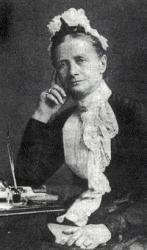
1818 - 1895 Topics: The Christian Year C; Annunciation; Biblical Characters David; Biblical Characters Mary, Mother of Jesus; Children Praising; Christian Year Christmas; Heaven(s)/Paradise; Jesus Christ Birth and Infancy; Jesus Christ Example; Jesus Christ Reign; Jesus Christ Second Coming; Obedience; Second Coming; Advent 4 Year A; Christmas Eve Year A; Christmas 1 Year A; Christmas 2 Year A; Epiphany Year A; Epiphany 5 Year A; Epiphany 6 Year A; Advent 4 Year B; Christmas Eve Year B; Christmas 1 Year B; Advent 3 Year C; Christmas 1 Year C Author of "Once in Royal David's City" in Voices United As a small girl, Cecil Frances Humphries (b. Redcross, County Wicklow, Ireland, 1818; Londonderry, Ireland, 1895) wrote poetry in her school's journal. In 1850 she married Rev. William Alexander, who later became the Anglican primate (chief bishop) of Ireland. She showed her concern for disadvantaged people by traveling many miles each day to visit the sick and the poor, providing food, warm clothes, and medical supplies. She and her sister also founded a school for the deaf. Alexander was strongly influenced by the Oxford Movement and by John Keble's Christian Year. Her first book of poetry, Verses for Seasons, was a "Christian Year" for children. She wrote hymns based on the Apostles' Creed, baptism, the Lord's Supper, the Ten Commandments, and prayer, writing in simple language for children. Her more than four hundred hymn texts were published in Verses from the Holy Scripture (1846), Hymns for Little Children (1848), and Hymns Descriptive and Devotional ( 1858).
Bert Polman
==================
Alexander, Cecil Frances, née Humphreys, second daughter of the late Major John Humphreys, Miltown House, co. Tyrone, Ireland, b. 1823, and married in 1850 to the Rt. Rev. W. Alexander, D.D., Bishop of Derry and Raphoe. Mrs. Alexander's hymns and poems number nearly 400. They are mostly for children, and were published in her Verses for Holy Seasons, with Preface by Dr. Hook, 1846; Poems on Subjects in the Old Testament, pt. i. 1854, pt. ii. 1857; Narrative Hymns for Village Schools, 1853; Hymns for Little Children, 1848; Hymns Descriptive and Devotional, 1858; The Legend of the Golden Prayers 1859; Moral Songs, N.B.; The Lord of the Forest and his Vassals, an Allegory, &c.; or contributed to the Lyra Anglicana, the S.P.C.K. Psalms and Hymns, Hymns Ancient & Modern, and other collections. Some of the narrative hymns are rather heavy, and not a few of the descriptive are dull, but a large number remain which have won their way to the hearts of the young, and found a home there. Such hymns as "In Nazareth in olden time," "All things bright and beautiful," "Once in Royal David's city," "There is a green hill far away," "Jesus calls us o'er the tumult," "The roseate hues of early dawn," and others that might be named, are deservedly popular and are in most extensive use. Mrs. Alexander has also written hymns of a more elaborate character; but it is as a writer for children that she has excelled.
- John Julian, Dictionary of Hymnology (1907)
===============
Alexander, Cecil F., née Humphreys, p. 38, ii. Additional hymns to those already noted in this Dictionary are in common use:—
1. Christ has ascended up again. (1853.) Ascension.
2. His are the thousand sparkling rills. (1875.) Seven Words on the Cross (Fifth Word).
3. How good is the Almighty God. (1S48.) God, the Father.
4. In [a] the rich man's garden. (1853.) Easter Eve.
5. It was early in the morning. (1853.) Easter Day.
6. So be it, Lord; the prayers are prayed. (1848.) Trust in God.
7. Saw you never in the twilight? (1853.) Epiphany.
8. Still bright and blue doth Jordan flow. (1853.) Baptism of Our Lord.
9. The angels stand around Thy throne. (1848.) Submission to the Will of God.
10. The saints of God are holy men. (1848.) Communion of Saints.
11. There is one Way and only one. (1875.) SS. Philip and James.
12. Up in heaven, up in heaven. (1848.) Ascension.
13. We are little Christian children. (1848.) Holy Trinity.
14. We were washed in holy water. (1848.) Holy Baptism.
15. When of old the Jewish mothers. (1853.) Christ's Invitation to Children.
16. Within the Churchyard side by side. (1848.) Burial.
Of the above hymns those dated 1848 are from Mrs. Alexander's Hymns for Little Children; those dated 1853, from Narrative Hymns, and those dated 1875 from the 1875 edition of Hymns Ancient & Modern.
Several new hymns by Mrs. Alexander are included in the 1891 Draft Appendix to the Irish Church Hymnal.
--John Julian, Dictionary of Hymnology, Appendix, Part II (1907)
=============
Alexander, Cecil F. , p. 38, ii. Mrs. Alexander died at Londonderry, Oct. 12, 1895. A number of her later hymns are in her Poems, 1896, which were edited by Archbishop Alexander.
--John Julian, Dictionary of Hymnology, New Supplement (1907)
See also in:Hymn Writers of the Church
Cecil Frances Alexander
Pages




