You help make Hymnary.org possible. More than 10 million people from 200+ countries found hymns, liturgical resources and encouragement on Hymnary.org in 2025, including you. Every visit affirms the global impact of this ministry.

If Hymnary has been meaningful to you this year, would you take a moment today to help sustain it? A gift of any size—paired with a note of encouragement if you wish—directly supports the server costs, research work and curation that keep this resource freely available to the world.

Give securely online today, or mail a check to:
Hymnary.org
Calvin University
3201 Burton Street SE
Grand Rapids, MI 49546

Thank you for your partnership, and may the hope of Advent fill your heart.

Person Results

Topics:trinity+6
In:people

Planning worship? Check out our sister site, ZeteoSearch.org, for 20+ additional resources related to your search.
Showing 101 - 110 of 157Results Per Page: 102050

Carol Owens

b. 1931 Topics: Confirmation; Temptation, Penitence and Forgiveness; Year A Easter 7; Year A Proper 6; Year A Trinity Sunday; Year B Proper 14; Year B Proper 3; Year C Easter 7; Year C Proper 12; Year C Proper 6; Years A, B, and C Ascension Day Author of "God forgave my sin (Freely, freely)" in Complete Anglican Hymns Old and New Owens, Carol Sue. (El Reno, Oklahoma, October 30, 1931-- ). Foursquare. Attended San Jose State College, San Jose, California; Cathedral School of the Bible, Oakland, Calif. With her husband James (Jimmy), she composed Christian musicals. --Terry W. York, DNAH Archives

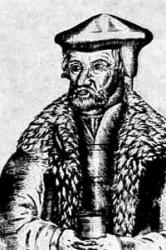
Paulus Speratus

1484 - 1554 Person Name: Paul Speratus Topics: Søndag efter Nyaar Til Aftensang; Sunday after New Years For Evening; Evangelium; The Gospel; Tillid; Trust; Søndag mellem Jul og Hyaarsdag Til Hoimesse; Sunday between Christmas and New Years High Mass; Søndag Septuagesima Til Aftensang; Septuagesima For Evening; 6 Søndag efter Trefoldigheds Fest Til Hoimesse; Sixth Sunday after Trinity Sunday High Mass; 6 Søndag efter Trefoldigheds Fest Til Aftensang; Sixth Sunday after Trinity Sunday For Evening Author of "Guds Søn er kommen til os ned" in M. B. Landstads Kirkesalmebog og "Nokre Salmar" ved Professor Dr. E. Blix, samt følgende tillæg Speratus, Paulus, D.D., was born in Swabia, Dec. 13, 1484. In a poem, written circa 1516, on Dr. J. Eck, he calls himself Elephangius, i.e. of Ellwangen; and in his correspondence, preserved at Königsberg, he often styles himself "a Rutilis" or "von Rötlen." These facts would seem to indicate that he was born at the castle of Röthlen, near Ellwangen. This property belonged to the Probst of the ecclesiastical corporation at Ellwangen, and Speratus's father was probably their bailiff or agent. The family name seems to have been Hoffer or Offer, and to have been in later years, following a practice common in the 16th cent., Latinized by himself into Speratus. He is probably the "Paul Offer de Ellwangen," who matri¬culated at the University of Freiburg (Baden) in l503. He is also said to have studied at Paris, and at some of the Italian universities. In 1518 we find him settled as a preacher at Dinkelsbühl, in Bavaria. In the end of that year he was invited to become preacher in the cathedral at Würzburg. He went to Würzburg in Feb. 1519, but his preaching was much too evangelical for the new bishop, and he had to leave, apparently in the beginning of 1520. Proceeding to Salzburg he preached for sometime in the cathedral, until the archbishop there also would not tolerate his pronounced opinions. He left Salzburg in the autumn of 1520, and went to Vienna, where he appears to have graduated D.D. at the University. He was already married (probably as early as 1519), and was one of the first priests who had dared to take this step. After a violent sermon against marriage, delivered by a monk in St. Peter's church, at Vienna, the governor of Lower Austria (Count Leonhard von Zech) asked Speratus to make a reply. With the consent of the bishop he did so, and preached, on Jan. 12, 1522, a sermon in the cathedral (St. Stephen's), founded on the Epistle for the 1st Sunday after the Epiphany, in which he expressed his opinions very freely regarding the monastic life and enforced celibacy, and also clearly set forth the doctrine of Justification by Faith. This sermon (published at Königsberg in 1524) made a great impression, and was condemned by the Theological Faculty at Vienna, who also prevented Speratus from accepting an invitation to become preacher at Ofen, near Vienna. On his way from Vienna to the north he stayed at Iglau in Moravia, where the abbot of the Dominican monastery appointed him as preacher. Here the people became greatly enamoured of him and of the Reformation doctrines,and stood firmly by him, notwithstanding the remonstrances and threats of the king, and of the bishop of Olmütz. In the summer of 1523 king Ludwig came to Olmütz and summoned Speratus to him. Without even the form of a trial he put him in prison, but after three months he released him, probably through the influence of his queen (Maria of Hungary), and of his cousin, the Margrave Albrecht of Brandenburg, but on the condition of his leaving Iglau and Moravia. In the end of 1523 Speratus came to Wittenberg, where he worked with Luther, and assisted him in the preparation of the first Lutheran hymn book (the Etlich cristlich lider. It contained 4 German hymns by Luther, 3 by Speratus, and 1 anonymous German hymn). Luther then recommended him to the Margrave Albrecht, and about May 1524 the Margrave appointed him as court preacher at Königsberg. Here he had also charge of the Altstadt church till Graumann came into residence, in Oct. 1525. He seems to have had the principal share in drawing up the Liturgy and Canons (Kirchenordnung or "Book of Church Order") for the Prussian church, which was presented to the Diet in December 1525, and printed in 1526. On March 31, 1526, he was chosen as the clerical commissioner to visit the parishes of Prussia and see that the new arrangements were carried out; and in the end of 1529 he was appointed Lutheran bishop of Pomesania, with his residence at Marienwerder. Here he remained until his death on Aug. 12, 1551. Speratus was the author of various works, hut was best known as the Reformer of Prussia. Feeling that for the working of ordinary parishes it was necessary to have pastors who had been brought up in Prussia, and could preach, if need be, in Polish or Lettish, he gladly welcomed the foundation at Königsberg (1544) of the first Prussian university. Among other important events affecting his administration may be mentioned the Visitations of 1528, of 1538, and especially that which lasted from Dec. 15, 1542, to the middle of February 1543; the Synods of 1529 (the Synodical Constitutions were pub. in 1530), of 1530, and of 1531; the new Kirchenordnung of 1544; and the welcome he extended, in 1548, to the exiled Bohemian Brethren who settled iu Prussia. As a hymn writer Speratus is principally known by the three hymns published in the Etlich cristlich lider, 1524. He also published (no place or date but Königsberg, 1527), in 1527, a version of Ps. xxvii., beginning, " Erzurn dich nicht, sei nicht neidisch;" and a Hymn of Thanksgiving, to be used after the sermon, beginning, "Gelobet sei Gott, unser Gott." These five are all that can be confidently ascribed to him. Of the five hymns mentioned above two have passed into English, viz.:— i. Es ist das Heil uns kommen her. Law and Gospel. This, his most famous hymn, is founded on Rom. iii. 28. It was probably written in the autumn of 1523, either during his imprisonment at Olmütz, or else during his stay at Wittenberg. Included as one of the 8 hymns in the Etlich cristlich lider1524, dated 1523, and entitled, “A hymn of Law and Faith, powerfully furnished with God's Word. Doctor Paul Speratus." Lauxmann, in Koch, viii. 236, calls it "the true confessional hymn of the Reformation, or, as Albert Knapp puts it, 'the poetical counterpart of Luther's preface to the Epistle to the Romans.'" He relates many instances of the effects it produced. It is a Scriptural ballad, setting forth, in what was, for the time, excellent verse, the characteristic teachings of the German Reformers; and is indeed of considerable historical importance. But for present day use it is too long, somewhat harsh in style, and too much a compend of doctrinal theology. The only version we have found in English common use is:— To us salvation now is come. In full by Dr. H. Mills, in his Horae Germanicae, 1845, p. 44. Other translations are:— (1) "Now is our health come from above." By Bishop Coverdale, 1539 (Remains. (2) "Our whole Salvation doth depend." By J. C. Jacobi, 1725, p. 23. (3) "Now comes salvation from above." By Dr. G. Walker, 1860, p. 79. (4) "Salva¬tion hath come down to us." By Miss Winkworth, 1869, p. 123. ii. In Gott gelaub ich, dass er hat aus nich.The Apostles' Creed. This is a free version, in 9 stanzas of 19 lines. First published in the Etlich cristlich lider, 1524. It was included in V. Babst's Gesang-Buch, 1545, and many others, but on account of its length and its unusual metre it has not found a place in recent hymnals. It is translated as "In God I trust, for so I must." By Bishop Coverdale, 1539. (Remain, 1846, p. 547.) [Rev. James Mearns, M.A.] --Excerpts from John Julian, Dictionary of Hymnology (1907)

Darryl Nixon

Topics: Holy Spirit Praise and Invocation; Calmness and Serenity; Choruses and Refrains; Christian Year Pentecost; Commitment; Discipleship and Service; Holy Communion; Holy Spirit; Holy Spirit Presence; Holy Spirit Work; Ordination; Peace (Inner, Calmness, Serenity; Prayer; Regeneration; Service Music Invitation to Prayer; Service Music Litany Prayer; Unity; Epiphany 5 Year A; Epiphany 6 Year A; Easter 6 Year A; Epiphany 8 Year B; Pentecost Year B; Lent 3 Year C; Easter 5 Year C; Easter 7 Year C; Trinity Sunday Year C; Proper 8 Year C; Proper 18 Year C Arranger of "LIVING GOD" in Voices United

C. H. Dretzel

1697 - 1775 Person Name: Kornelius Heinrich Dretzel Topics: Trinity 6 Epistle Composer of "O DASS ICH TAUSEND ZUNGEN HÄTTE (Dretzel)" in Magnify the Lord Born: (baptised).September 18, 1697 - Nuremberg, Bavaria, Germany Died: May 7, 1755 - Nuremberg, Bavaria, Germany The German composer, organist and musicographer, Cornelius Heinrich Dretzel, was a grandson of Georg Dretzel (c1610-after 1676; organist of St Michael, Schwäbisch Hall) and nephew of Valentin, the most important member of the family. A possible student of Johann Pachelbel's eldest son, C.H. Dretzel also studied with J.S. Bach in Weimar in 1716-1717. He appears to have spent his whole life in Nuremberg, his hometown, in various organists' posts: Frauenkirche, St Lorenz (from 1743) and St Sebald. Cornelius Heinrich Dretzel's keyboard counterpoints and fugues were his forte having thoroughly emersed himself in the works of J. S. Bach. His reputation as a virtuoso player and contrapuntist is supported by his solo harpsichord concerto, Harmonische Ergötzung, influenced by J.S. Bach's Italian Concerto (BWV 971). Indeed Harmonische Ergötzung was long thought to be composed by J.S. Bach. An early version of the slow movement was entered into Schmeider as BWV 897:1. C.H. Dretzel's own "divertimenti" were thought to be lost until they were found in a collection that had belonged to Haydn. Of hymnological importance is his collection and commentary Des evangelishen Zions musicalische Harmonie (1731), which contains over 900 melodies, suspended over a continuous bass, most appealing in print for the first time in their local versions; the preface discusses the origin and development of the chorale. --www.bach-cantatas.com/L

August Crull

1845 - 1923 Person Name: August Crull Topics: Epiphany 6 Collect; Holy Saturday Collect; Whitsunday/Pentecost (second propers) Epistle; Trinity 10 Epistle; St. Mark Gospel; Jesus Incorporation into; Self-Dedication ; Confirmation Translator of "From eternity, O God, In thy Son thou didst elect me" in Magnify the Lord August Crull was born January 27, 1845 in Rostock, Germany, where his father, Hofrat Crull, was a lawyer. He was educated at the Gymnasium in Rostock, and at Concordia College in St. Louis and Fort Wayne where he graduated in 1862. His father died soon after he began studying at the Gymnasium. His mother then married Albert Friedrich Hoppe, who later became the editor of the St. Louis edition of Luther's Works. In 1865, Crull graduated from Concordia Seminary in St. Louis. He became assistant pastor at Trinity Church in Milwaukee and also served as Director of the Lutheran High School. Later he was pastor of the Lutheran Church in Grand Rapids, Michigan. From 1873 to 1915, he was professor of the German language and literature at Concordia College in Fort Wayne, Indiana. After his retirement he returned to Milwaukee, where he died on February 17, 1923. His first wife and three of his four children preceded him in death. His second wife, Katharina John, survived him by many years. Crull was a distinguished hymnologist and translated many hymns that appeared in several Lutheran hymnals. He published a German grammar and edited a book of devotions, Das walte Gott, based on the writings of Dr. C.F.W. Walther. His project of translating Lutheran hymns so they would be accessible to American Lutherans bore its first fruits when he published a book of English hymns at the Norwegian Synod publishers in Decorah, in 1877. --www.hymnsandcarolsofchristmas.com/

W. H. Wong

b. 1917 Person Name: Wing-Hee Heyward Wong Topics: God Nature of God; Aging; Assurance; Comfort/Consolation; Conversion; Courage; Eternal Life; Faith Journey; God Faithfulness; God Mercy; God Nature; God Presence; God Promises and Covenant; Grace; Guidance; Healing; Heaven(s)/Paradise; Holy Spirit Gifts; Hope; Life; Light; Mercy; Pilgrimage and Conflict; Praise; Redemption; Salvation; Suffering; Trials; Trust; Victory; Vision/Dream; Christmas 2 Year A; Epiphany 9 Year A; Lent 1 Year A; Lent 3 Year A; Lent 4 Year A; Proper 4 Year A; Proper 6 Year A; Proper 9 Year A; Proper 15 Year A; Proper 26 Year A; Thanksgiving Year A; Advent 4 Year B; Christmas 2 Year B; Epiphany 6 Year B; Epiphany 8 Year B; Lent 1 Year B; Lent 4 Year B; Lent 4 Year B; Proper 9 Year B; Proper 10 Year B; Proper 18 Year B; Proper 25 Year B; Advent 3 Year C; Epiphany 5 Year C; Lent 3 Year C; Trinity Sunday Year C; Trinity Sunday Year C; Proper 14 Year C; Proper 19 Year C; Ash Wednesday Year ABC Translator (into Chinese) of "Amazing Grace, How Sweet the Sound" in Voices United

M. B. Landstad

1802 - 1880 Person Name: Landstad Topics: Søndag efter Nyaar Til Aftensang; Sunday after New Years For Evening; Evangelium; The Gospel; Tillid; Trust; Søndag mellem Jul og Hyaarsdag Til Hoimesse; Sunday between Christmas and New Years High Mass; Søndag Septuagesima Til Aftensang; Septuagesima For Evening; 6 Søndag efter Trefoldigheds Fest Til Hoimesse; Sixth Sunday after Trinity Sunday High Mass; 6 Søndag efter Trefoldigheds Fest Til Aftensang; Sixth Sunday after Trinity Sunday For Evening Translator of "Guds Søn er kommen til os ned" in M. B. Landstads Kirkesalmebog og "Nokre Salmar" ved Professor Dr. E. Blix, samt følgende tillæg Magnus Brostrup Landstad (born 7 October 1802 in Måsøy, Norway and died 8 October 1880 in Kristiania) was a Norwegian minister, psalmist and poet who published the first collection of authentic Norwegian traditional ballads in 1853. This work was criticized for unscientific methods, but today it is commonly accepted that he contributed significantly to the preservation of the traditional ballads. Landstad lived with his father Hans Landstad (1771–1838) who was also a minister, first in 1806 to Øksnes, to Vinje in 1811 and to Seljord in 1819. He took a theological degree (cand. theol) in 1827, and worked after that as the resident chaplain in Gausdal for six years. After that he worked in different parishes in Telemark, Østfold before he became minister of Sandar in Vestfold in 1859. He married Wilhelmine Margrete Marie Lassen, in 1828. He is well known for introducing popular, contemporary Norwegian language into the hymns he wrote, contributing significantly to the spirit of Norwegian romantic nationalism which grew in Norway in this period. His greatest single achievement was the Landstad Hymnbook (Kirkepsalmebog), which with later revisions was used in Norwegian (bokmål) parishes from 1869 until 1985. The current official church hymnbook contains a lot of his hymns and his translations of foreign hymns. He was the cousin of Hans Peter Schnitler Krag. The Landstad-institute, which lies in Seljord, is named after him. He was a great grandfather of Magny Landstad, also a famous writer. Publications-- 1852: Norske Folkeviser. 3 vols. Christiania: C. Tönsberg, [1852-]1853. 1869: Kirkesalmebok: efter offentlig Foranstaltning. Kristiania: J. W. Cappelens Forlag, 1871 --http://en.wikipedia.org/wiki/ See also in: Wikipedia

J. E. Seddon

1915 - 1983 Person Name: J. E. Seddon (1915-1983) Topics: God, Father Gracious and Merciful; A General Thanksgiving; Doxologies; Advent 1 The Advent Hope; Trinity Sunday The Trinity; Pentecost 6 Made New in Christ; Pentecost 21 The Christian Hope Adapter of "Thank you, O Lord of earth and heaven" in Hymns for Today's Church (2nd ed.) James E. Seddon (b. Ormskirk, Lancashire, England, 1915; d. London, England, 1983) received his musical training at the London College of Music and Trinity College in London and his theological training at the Bible Churchmen's Theological College (now Trinity College) in Bristol. He served various Anglican parishes in England from 1939 to 1945 as well as from 1967 to 1980. Seddon was a missionary in Morocco from 1945 to 1955 and the home secretary for the Bible Churchmen's Missionary Society from 1955 to 1967. Many of his thirty hymns are based on mission­ary themes; he wrote some in Arabic while he lived in Morocco. Seddon joined other Jubilate Group participants to produce Psalm Praise (1973) and Hymns for Today's Church (1982). Bert Polman

Peter Sohren

1630 - 1693 Topics: Trinity 6 Old Testament Composer of "DU LEBENSBROT HERR JESU CHRIST" in Magnify the Lord

W. H. Belyea

1917 - 2001 Person Name: W. Herbert Belyea Topics: Holy Spirit Praise and Invocation; Beauty; Christian Year Pentecost; Comfort/Consolation; Commitment; Consecration; Creation; Faith; God Love; Holy Spirit; Holy Spirit Indwelling; Holy Spirit Movement; Holy Spirit Power; Holy Spirit Presence; Humility; Inspiration; Light; Love; Mercy; New Creation; Opening Hymns; Petition; Seeking God; Thirst For God; Vision/Dream; Lent 3 Year A; Easter 2 Year A; Easter 6 Year A; Ascension Year A; Pentecost Year A; Proper 25 Year A; Proper 25 Year A; Epiphany 2 Year B; Pentecost Year B; Proper 19 Year B; Baptism of Jesus Year C; Epiphany 2 Year C; Easter 2 Year C; Easter 6 Year C; Pentecost Year C; Pentecost Year C; Trinity Sunday Year C Composer (descant) of "DOWN AMPNEY" in Voices United

Pages


Export as CSV
It looks like you are using an ad-blocker. Ad revenue helps keep us running. Please consider white-listing Hymnary.org or getting Hymnary Pro to eliminate ads entirely and help support Hymnary.org.