

 My Starred Hymns
 My FlexScores
 My Hymnals
 My Purchased Files
Planning worship?
Check out our sister site, ZeteoSearch.org,
for 20+ additional resources related to your search.
- |
User Links
Person Results
George Frideric Handel
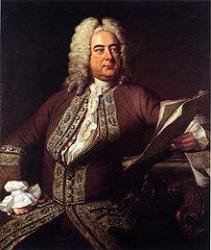
1685 - 1759 Person Name: Handel Topics: Afflictions Promises for; Afflictions Refuge in; Assurance Declared; Backsliding; Character Value of Good; Christ Abiding with Believers; Christ Preciousness of; Christians Believers; Christians Graces of; Church Security of; Covenant Promises; Faith Act of; God Our Guardian; Grace Sovereign ; Grace Sustaining; Heart Claimed of God; Heart God the Strength of; Heart Good, Perfect, Pure and Upright; Nature An Emblem of Grace; Prayer For Divine Favor; Prayer Intercession in; Prayer Promise to; Preservation; Protection Unceasing; The Christian's Reward; The Righteous Contrasted with the Wicked; The Righteous Honor and Safety of; Safety Assured; Steadfastness; Temptation; Trust in God Blessedness of Composer of "BRADFORD" in The Psalter George Frideric Handel (b. Halle, Germany, 1685; d. London, England, 1759) became a musician and composer despite objections from his father, who wanted him to become a lawyer. Handel studied music with Zachau, organist at the Halle Cathedral, and became an accomplished violinist and keyboard performer. He traveled and studied in Italy for some time and then settled permanently in England in 1713. Although he wrote a large number of instrumental works, he is known mainly for his Italian operas, oratorios (including Messiah, 1741), various anthems for church and royal festivities, and organ concertos, which he interpolated into his oratorio performances. He composed only three hymn tunes, one of which (GOPSAL) still appears in some modern hymnals. A number of hymnal editors, including Lowell Mason, took themes from some of Handel's oratorios and turned them into hymn tunes; ANTIOCH is one example, long associated with “Joy to the World.”
Bert Polman
George Frideric Handel
Richard Redhead
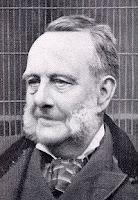
1820 - 1901 Topics: Acrostic Psalms; Affliction; Biblical Names and Places Israel; Church Year Advent; Elements of Worship Baptism; Elements of Worship Confession (Individual); Elements of Worship Lord's Supper; Elements of Worship Praise and Adoration; Elements of Worship Prayer for Illumination; Forgiveness; God Daily Experience of; God Trust in; God as Guide; God as Judge; God's Compassion; God's Faithfulness; God's Forgiveness; God's Friendship; God's Promises; God's Protection; God's Way; Grace; Guilt; Hope; Humility; Jesus Christ Friend of Sinners; Jesus Christ Parables of; Joy; Lament Individual; Life Stages Youth; Loneliness; Mercy; Occasional Services Ordination and/or Installation; Prayer; Renewal; Rest; Salvation; Shame; The Fall; Trust; Truth; Worship; Year A, Ordinary Time after Pentecost, September 24-October 1; Year B, Lent, 1st Sunday; Year C, Advent, 1st Sunday; Year C, Ordinary Time after Pentecost, July 10-16 Composer of "REDHEAD 76" in Psalms for All Seasons Richard Redhead (b. Harrow, Middlesex, England, 1820; d. Hellingley, Sussex, England, 1901) was a chorister at Magdalen College, Oxford. At age nineteen he was invited to become organist at Margaret Chapel (later All Saints Church), London. Greatly influencing the musical tradition of the church, he remained in that position for twenty-five years as organist and an excellent trainer of the boys' choirs. Redhead and the church's rector, Frederick Oakeley, were strongly committed to the Oxford Movement, which favored the introduction of Roman elements into Anglican worship. Together they produced the first Anglican plainsong psalter, Laudes Diurnae (1843). Redhead spent the latter part of his career as organist at St. Mary Magdalene Church in Paddington (1864-1894).
Bert Polman
Richard Redhead
Joseph P. Holbrook
1822 - 1888 Topics: Afflictions Promises for; Afflictions Refuge in; Assurance Declared; Backsliding; Christ Abiding with Believers; Christ Preciousness of; Christians Believers; Christians Graces of; Church Security of; Covenant Promises; Faith Act of; God Our Guardian; Heart Claimed of God; Heart God the Strength of; Heart Good, Perfect, Pure and Upright; Nature An Emblem of Grace; Prayer For Divine Favor; Prayer Intercession in; Prayer Promise to; Preservation; Protection Unceasing; The Christian's Reward; The Righteous Contrasted with the Wicked; The Righteous Honor and Safety of; Safety Assured; Steadfastness; Temptation; Trust in God Blessedness of Composer of "MIRIAM" in The Psalter Joseph P. Holbrook was a tune writer in the parlor music style, and used the popular melodies of Mason and Hastings, Bradbury and Root, Greatorex and Kingsley in his collections. He furnished settings for the choir hymns in Songs for the Sanctuary in his Quartet and chorus Choir (New York, 1871, and sought more recogniation than had been given him in a hymnal of his own, Worship in Song (New York, 1880); a book that found no welcome.
from The English hymn: its development and use in worship
By Louis FitzGerald Benson
Joseph P. Holbrook
J. B. Herbert
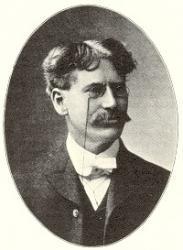
1852 - 1927 Topics: Character Good and Bad Contrasted; Christian Charity; Christians Happiness of; Death Of the Wicked; Discontent; Faith Act of; Faith Confidence of; Glory of God In Creation; Gospel Invitations of ; Man Mortal and Frail; The Meek; Nations Ultimate Subjection of; Nature An Emblem of Grace; Nature A Type of Sinners; Patience; Prayer Promises to; Prosperity No Proof of God's Blessing; Providence of God Over Saints; Resignation; Retribution Threatened; The Righteous Contrasted with Wicked; The Righteous Reward of; Safety Assured; Trust in God Exhortation to; Waiting on God; The Wicked Fate of Composer of "[For evil doers, fret thou not thyself unquietly]" in Bible Songs
J. B. Herbert
Thomas Hastings
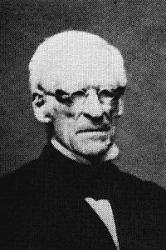
1784 - 1872 Topics: Afflictions From the Wicked; Aspirations For Heaven; Aspirations For Holiness; Aspirations For Peace and Rest; Character Good and Bad Contrasted; Character Vicious; Christ Light and Guide; Christians Heirs of Heaven; Death Comfort In; Décision; Enemies Many and Mighty; Etermal Life; Fidelity; God Our Guardian; God Our Guide; God Hearer of Prayer; God Righteousness of; Heart Searching of; Heaven; Nature Sinners Typified in; Patience; Perseverance; Prayer Complaint in; Prayer For Deliverance from Enemies; Prayer Pleas in; Prayer Promise to; Prayer Sincerity in; Preservation; Prosperity Without God's Blessing; Providence of God Over Saints; Resurrection; The Christian's Reward; Riches; The Righteous Contrasted with the Wicked; Sin Salvation from; Sincerity; Temptation; Trust in God Blessedness of; The Wicked Condemnation of; Worship Sincerity in Composer of "CALM" in The Psalter Hastings, Thomas, MUS. DOC., son of Dr. Seth Hastings, was born at Washington, Lichfield County, Connecticut, October 15, 1784. In 1786, his father moved to Clinton, Oneida Co., N. Y. There, amid rough frontier life, his opportunities for education were small; but at an early age he developed a taste for music, and began teaching it in 1806. Seeking a wider field, he went, in 1817, to Troy, then to Albany, and in 1823 to Utica, where he conducted a religious journal, in which he advocated his special views on church music. In 1832 he was called to New York to assume the charge of several Church Choirs, and there his last forty years were spent in great and increasing usefulness and repute. He died at New York, May 15, 1872. His aim was the greater glory of God through better musical worship; and to this end he was always training choirs, compiling works, and composing music. His hymn-work was a corollary to the proposition of his music-work; he wrote hymns for certain tunes; the one activity seemed to imply and necessitate the other. Although not a great poet, he yet attained considerable success. If we take the aggregate of American hymnals published duriug the last fifty years or for any portion of that time, more hymns by him are found in common use than by any other native writer. Not one of his hymns is of the highest merit, but many of them have become popular and useful. In addition to editing many books of tunes, Hastings also published the following hymnbooks:—
(1) Spiritual Songs for Social Worship: Adapted to the Use of Families and Private Circles in Seasons of Revival, to Missionary Meetings, &c, Utica, 1831-2, in which he was assisted by Lowell Mason; (2) The Mother's Hymn-book, 1834; (3) The Christian Psalmist; or, Watts's Psalms and Hymns, with copious Selections from other Sources, &c, N. Y., 1836, in connection with "William Patton; (4) Church Melodies, N. Y., 1858, assisted by his son, the Rev. T. S. Hastings; (5) Devotional Hymns and Poems, N. Y., 1850. The last contained many, but not all, of his original hymns. (6) Mother's Hymn-book, enlarged 1850.
The authorship of several of Hastings's hymns has been somewhat difficult to determine. All the hymns given in the Spiritual Songs were without signatures. In the Christian Psalmist some of his contributions were signed "Anon." others "M. S.," whilst others bore the names of the tune books in which they had previously appeared; and in the Church Melodies some were signed with his name, and others were left blank. His MSS [manuscript] and Devotional Hymns, &c, enable us to fix the authorship of over 50 which are still in common use. These, following the chronological order of his leading work, are:—
i. From the Spiritual Songs, 1831:—
1. Before Thy footstool kneeling. In Sickness. No. 358, in 3 stanzas of 8 lines.
2. Bleeding hearts defiled by sin. Fulness of Christ. No. 261, in 5 stanzas of 4 lines.
3. Child of sin and sorrow, Filled with dismay. Lent. No. 315, in 2 stanzas of 8 lines. It is sometimes given as "Child of sin and sorrow, Where wilt thou flee?" It is in extensive use.
4. Delay not, delay not, 0 sinner draw near. Exhortation to Repentance. No. 145, in 5 stanzas of 4 lines. Given in several important collections.
5. Forgive us, Lord, to Thee we cry. Forgiveness desired. No. 165, in 4 stanzas of 4 lines.
6. Gently, Lord, 0 gently lead us. Pilgrimage of Life. No. 29, in 2 stanzas of 8 lines. It is given in several collections. The first two lines are taken from a hymn which appeared in the Christian Lyre, 1830.
7. Go forth on wings of fervent prayer. For a blessing on the distribution of Books and Tracts. No. 250, in 4 stanzas of 5 lines. It is sometimes given as “Go forth on wings of faith and prayer," as in the Baptist Praise Book, N. Y., 1871, No. 1252; but the alterations are so great as almost to constitute it a new hymn.
8. Hail to the brightness of Zion's glad morning. Missionary Success. No. 239, in 4 stanzas of 4 lines. In several hymnbooks in Great Britain and America.
9. How calm and beautiful the morn. Easter. No. 291, in 5 stanzas of 6 lines. Very popular.
10. In this calm, impressive hour. Early Morning. No. 235, pt. i. in 3 stanzas of 6 lines. In several collections.
11. Jesus, save my dying soul. Lent. No. 398, in 4 stanzas of 4 lines. A deeply penitential hymn.
12. Now be the gospel banner. Missions. No. 178, in 2 stanzas of 8 lines. In several collections (see below).
13. Now from labour, and from care. Evening. No. 235. Pt. ii. in 3 stanzas of 6 lines. This hymn, with No. 10 above, "In this calm," &c, constitute one hymn of 6 st. in the Spiritual Songs, but divided into two parts, one for Morning and the other for Evening. Both parts are popular as separate hymns.
14. 0 God of Abraham, hear. Prayer on behalf of Children. No. 288, in 5 stanzas of 4 lines. In use in Great Britain.
15. 0 tell me, Thou Life and delight of my soul. Following the Good Shepherd. No. 151, in 5 stanzas of 4 lines, on Cant. i. 7, 8.
16. Return, O wanderer, to thy home. The Prodigal recalled. No. 183, in 3 stanzas of 4 lines, with the refrain, " Return, return " (see below).
17. Soft and holy is the place. Public Worship. No. 351, in 4 stanzas of 4 lines. In Dr. Hatfield's Church Hymn Book, N. Y., 1872, and some other collections, the opening line is altered to "Sweet and holy is the place."
18. That warning voice, 0 sinner, hear. Exhortation to Repentance. No. 231, in 4 stanzas of 6 lines.
19. To-day the Saviour calls. Lent. No. 176, in 4 stanzas of 4 lines. Dr. Hastings says, in a communication to Dr. Stevenson (Hymns for Church and Home, 1873), this hymn “was offered me in a hasty sketch which I retouched." The sketch was by the Rev. S. F. Smith.
20. Why that look of sadness. Consolation. No. 268, in 3 stanzas of 8 lines.
21. Zion, dreary and in anguish. The Church Comforted. No. 160, in 4 stanzas of 4 lines.
Concerning the two hymns, No. 12, "Now be the gospel banner"; and No. 16, "Beturn, O wanderer, to thy home," Dr. Stevenson has the following note in his Hymns for Church and Home, London, 1873:—
"In a letter to the Editor, Dr. Hastings wrote, not more than a fortnight before his death, 'These two hymns of mine were earlier compositions, the former ["Now be," &c.] for a Utica Sunday School celebration, the latter ["Return, 0 wanderer," &c.] after hearing a stirring revival sermon on the Prodigal Son, by the Rev. Mr. Kint, at a large union meeting in the Presbyterian Church, where two hundred converts were present. The preacher at the close eloquently exclaimed with tender emphasis, "Sinner, come home! come home! come home!" It was easy afterwards to write, "Return, 0 wanderer."'"
Several additional hymns in the Spiritual Songs, 1831, have been ascribed to Dr. Hastings, but without confirmation. The sum of what can be said on his behalf is that the hymns are in his style, and that they have not been claimed by others. They are:—
22. Drooping souls, no longer mourn. Pardon promised. No. 40, in 3 stanzas of 8 1., of which st. i., ii. are altered from J. J. Harrod's Public, Parlour, and Cottage Hymns, Baltimore, 1823, that is, 8 years before the Spiritual Songs were published.
23. Dying souls, fast bound in sin. Pardon offered. No. 41, in 5 stanzas of 8 lines. It is usually given in an abridged form.
ii. From his Mother's Hymn Book, 1834:—-
24. Forbid them not, the Saviour cried. Holy Baptism. No. 44.
25. God of mercy, hear our prayer. On behalf of Cliildrcn, No. 48, in 5 stanzas of 4 lines. It was included in J. Campbell's Comprehensive Hymn Book, Lond., 1837, and subsequently in several collections.
26. God of the nations, bow Thine ear. Missions. No. 115, in 4 stanzas of 6 lines. In several collections.
27. How tender is Thy hand. Affliction. No. 99, in 5 stanzas of 41.
28. Jesus, while our hearts are bleeding. Death. Resignation. No. 95, in 5 stanzas of 4 lines. This is in extensive use and is one of his best and most popular hymns.
29. Lord, I would come to Thee. Self-dedication of a Child. No. 72, in 4 stanzas of 4 lines.
30. 0 Lord, behold us at Thy feet. Lent. No. 59, in 4 stanzas of 4 lines. It is doubtful if this is by Hastings. It is sometimes signed "Mrs. T."
31. The rosy light is dawning. Morning. No. 11, in 3 stanzas of 8 lines.
32. The Saviour bids us [thee] watch and pray. Watch and Pray. No. 119, in 4 stanzas of 4 lines.
33. Thou God of sovereign grace. On behalf of Children. No. 66, in 6 stanzas of 4 lines.
34. Wherever two or three may meet. Divine Service. No. 56.
35. Within these quiet walls, 0 Lord. Mothers' Meetings. No. 58, in 5 stanzas of 4 lines. In Spurgeon's Our Own Hymn Book, 1866, No. 1010, it begins, "Within these peaceful walls." This reading is from J. Campbell's Comprehensive Hymn Book, London, 1837. It is very doubtful if this is by Hastings.
iii. From the Christian Psalmist, 1836:—
36. Children, hear the melting story. On the life of Christ. No. 430, in 3 stanzas of 6 lines. It is given as from the Union Minstrel, and the statement that it is by Hastings is very doubtful, no evidence to that effect being in the possession of his family. Dr. Hatfield, in his Church Hymn Book, dates it 1830, and gives it as "Anon."
37. Go, tune thy voice to sacred song. Praise No. 190, in 5 stanzas of 5 lines, and given as from "ms."
38. He that goeth forth with weeping. Missions No. 212, in 2 stanzas of 8 lines, and given as from "ms." It is in several collections.
39. I love the Lord, Whose gracious ear. Ps. cxvi. Page 186, in 4 stanzas of 6 lines, as from "ms."
40. Lord of the harvest, bend Thine ear. For the Increase of the Ministry. No. 407, in 6 stanzas of 4 lines, as from "ms." This hymn Dr. Hastings altered for his Devotional Hymns & Poems, 1850, but it has failed to replace the original in the hymnbooks.
iv. From the Reformed Dutch Additional Hymns, 1846:—
41. Child of sorrow, child of care [woe]. Trust. No. 168, in 2 stanzas of 8 lines, appeared in W. Hunter's Minstrel of Zion, 1845.
42. Heirs of an immortal crown. Christian Warfare. No. 136, in 2 stanzas of 8 lines.
43. O Saviour, lend a listening ear. Lent. No. 175. Stanzas vi., i., iv., v., altered.
44. The Lord Jehovah lives. Ps. xviii. No. 26, in 4 stanzas of 6 lines.
These three hymns, together with many others, are given in the Dutch Reformed Hymns of the Church, N. Y., 1869. In the 1847 Psalms & Hymns there were, including these, 38 hymns by Hastings, and 2 which are doubtful.
v. From Dr. Hastings's Devotional Hymns and Religious Poems, 1850:—
45. In time of fear, when trouble's near. Encouragement in Trial. Page 95, in 3 stanzas of 4 lines. In use in Great Britain.
vi. From Church Melodies, 1858:—-
46. For those in bonds as bound with them. Missions. No. 416, in 5 stanzas of 4 lines, on Heb. xiii. 3.
47. Forget thyself, Christ bids thee come. Holy Communion. No. 683, in 3 stanzas of 6 lines.
48. Jesus, Merciful and Mild. Leaning on Christ. No. 585, in 4 stanzas of 8 1. In several collections.
49. Pilgrims in this vale of sorrow. Self-denial. No. 397, in 4 stanzas of 4 lines.
50. Saviour, I look to Thee. Lent. In time of Trouble. No. 129, in 4 stanzas of 7 lines.
51. Saviour of our ruined race. Holy Communion. No. 379, in 3 stanzas of 6 lines.
52. Why that soul's commotion? Lent. No. 211, in 3 stanzas of 8 lines. It is doubtful if this is by Hastings.
vii. In Robinson's Songs of the Church, 1862:
53. Be tranquil, 0 my soul. Patience in Affliction. No. 519, in 4 stanzas of 4 lines. Altered in Robinson's Songs for the Sanctuary, 1865.
54. Peace, peace, I leave with you. Peace, the benediction of Christ. No. 386, in 3 stanzas of 7 lines.
55. Saviour, Thy gentle voice. Christ All in All. No. 492, in 3 stanzas of 7 lines.
viii. In Bobinson's Songs for the Sanctuary, 1865:—
56. God of the morning ray. Morning. No. 53, in 2 stanzas of 7 lines.
Of Hastings's hymns about 40 are in the Reformed Dutch Psalms & Hymns, 1847; 39 in Robinson's Songs for the Sanctuary, 1865; 15 in Hatfield's Church Hymn Book, 1872; and 13 in the Lyra Sacra Americana, 1868. They are also largely represented in other collections. Many other of his compositions are found in collections now or recently in common use, but these are not of the highest merit. [Rev. F. M. Bird, M.A.]
--John Julian, Dictionary of Hymnology (1907)
========================
Hastings, T., p. 494, i. Additional hymns are:—
1. Children hear the wondrous story; and "Sinners, hear the melting story," are altered forms of No. 36, on p. 495, i.
2. Father, we for our children plead. On behalf of Children.
3. Forgive my folly, O Lord most holy. Lent.
4. Hosanna to the King, That for, &c. Praise to Jesus.
5. I look to Thee, O Lord, alone. Pardon desired.
6. Jesus, full of every grace. Pardon desired.
7. O why should gloomy thoughts arise? The Mourner Encouraged.
8. Peace to thee, O favoured one. Peace in Jesus.
9. Saviour, hear us through Thy merit. Forgiveness. Of these hymns, No. 3 is in Hasting’s Spiritual Songs, 1831; No. 9 in his Mother's Hymn Book, 1834, and his Devotional Hymns, 1850; and Nos. 4, 5 & 8 in his Devotional Hymns, 1850.
--John Julian, Dictionary of Hymnology, Appendix, Part II (1907)
Thomas Hastings
Louis Bourgeois
1510 - 1561 Person Name: Louis Bourgeois, ca. 1510-1561 Topics: Acrostic Psalms; Affliction; Biblical Names and Places Israel; Church Year Advent; Elements of Worship Baptism; Elements of Worship Confession (Individual); Elements of Worship Lord's Supper; Elements of Worship Praise and Adoration; Elements of Worship Prayer for Illumination; Forgiveness; God Daily Experience of; God Trust in; God as Guide; God as Judge; God's Compassion; God's Faithfulness; God's Forgiveness; God's Friendship; God's Promises; God's Protection; God's Way; Grace; Guilt; Hope; Humility; Jesus Christ Friend of Sinners; Jesus Christ Parables of; Joy; Lament Individual; Life Stages Youth; Loneliness; Mercy; Occasional Services Ordination and/or Installation; Prayer; Renewal; Rest; Salvation; Shame; The Fall; Trust; Truth; Worship; Year A, Ordinary Time after Pentecost, September 24-October 1; Year B, Lent, 1st Sunday; Year C, Advent, 1st Sunday; Year C, Ordinary Time after Pentecost, July 10-16 Composer of "GENEVAN 25" in Psalms for All Seasons Louis Bourgeois (b. Paris, France, c. 1510; d. Paris, 1561). In both his early and later years Bourgeois wrote French songs to entertain the rich, but in the history of church music he is known especially for his contribution to the Genevan Psalter. Apparently moving to Geneva in 1541, the same year John Calvin returned to Geneva from Strasbourg, Bourgeois served as cantor and master of the choristers at both St. Pierre and St. Gervais, which is to say he was music director there under the pastoral leadership of Calvin. Bourgeois used the choristers to teach the new psalm tunes to the congregation.
The extent of Bourgeois's involvement in the Genevan Psalter is a matter of scholarly debate. Calvin had published several partial psalters, including one in Strasbourg in 1539 and another in Geneva in 1542, with melodies by unknown composers. In 1551 another French psalter appeared in Geneva, Eighty-three Psalms of David, with texts by Marot and de Beze, and with most of the melodies by Bourgeois, who supplied thirty four original tunes and thirty-six revisions of older tunes. This edition was republished repeatedly, and later Bourgeois's tunes were incorporated into the complete Genevan Psalter (1562). However, his revision of some older tunes was not uniformly appreciated by those who were familiar with the original versions; he was actually imprisoned overnight for some of his musical arrangements but freed after Calvin's intervention. In addition to his contribution to the 1551 Psalter, Bourgeois produced a four-part harmonization of fifty psalms, published in Lyons (1547, enlarged 1554), and wrote a textbook on singing and sight-reading, La Droit Chemin de Musique (1550). He left Geneva in 1552 and lived in Lyons and Paris for the remainder of his life.
Bert Polman
Louis Bourgeois
Chas. H. Gabriel
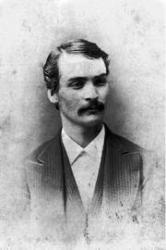
1856 - 1932 Person Name: Charles H. Gabriel Topics: Afflictions Promises for; Afflictions Refuge in; Assurance Declared; Backsliding; Character Value of Good; Christ Abiding with Believers; Christ Preciousness of; Christians Believers; Christians Graces of; Church Security of; Covenant Promises; Faith Act of; God Our Guardian; Heart Claimed of God; Heart God the Strength of; Heart Good, Perfect, Pure and Upright; Nature An Emblem of Grace; Nature An Emblem of Grace; Prayer For Divine Favor; Prayer Intercession in; Prayer Promise to; Preservation; Protection Unceasing; The Christian's Reward; The Righteous Contrasted with the Wicked; The Righteous Honor and Safety of; Royalty of Christ Providential; Safety Assured; Steadfastness; Temptation; Trust in God Blessedness of Composer of "KNOWHEAD" in The Psalter Pseudonyms: C. D. Emerson, Charlotte G. Homer, S. B. Jackson, A. W. Lawrence, Jennie Ree
=============
For the first seventeen years of his life Charles Hutchinson Gabriel (b. Wilton, IA, 1856; d. Los Angeles, CA, 1932) lived on an Iowa farm, where friends and neighbors often gathered to sing. Gabriel accompanied them on the family reed organ he had taught himself to play. At the age of sixteen he began teaching singing in schools (following in his father's footsteps) and soon was acclaimed as a fine teacher and composer. He moved to California in 1887 and served as Sunday school music director at the Grace Methodist Church in San Francisco. After moving to Chicago in 1892, Gabriel edited numerous collections of anthems, cantatas, and a large number of songbooks for the Homer Rodeheaver, Hope, and E. O. Excell publishing companies. He composed hundreds of tunes and texts, at times using pseudonyms such as Charlotte G. Homer. The total number of his compositions is estimated at about seven thousand. Gabriel's gospel songs became widely circulated through the Billy Sunday-Homer Rodeheaver urban crusades.
Bert Polman
Chas. H. Gabriel
Bob Hurd
b. 1950 Person Name: Bob Hurd, b. 1950 Topics: Acrostic Psalms; Affliction; Biblical Names and Places Israel; Church Year Advent; Elements of Worship Baptism; Elements of Worship Confession (Individual); Elements of Worship Lord's Supper; Elements of Worship Praise and Adoration; Elements of Worship Prayer for Illumination; Forgiveness; God Daily Experience of; God Trust in; God as Guide; God as Judge; God's Compassion; God's Faithfulness; God's Forgiveness; God's Friendship; God's Promises; God's Protection; God's Way; Grace; Guilt; Hope; Humility; Jesus Christ Friend of Sinners; Jesus Christ Parables of; Joy; Lament Individual; Life Stages Youth; Loneliness; Mercy; Occasional Services Ordination and/or Installation; Prayer; Renewal; Rest; Salvation; Shame; The Fall; Trust; Truth; Worship; Year A, Ordinary Time after Pentecost, September 24-October 1; Year B, Lent, 1st Sunday; Year C, Advent, 1st Sunday; Year C, Ordinary Time after Pentecost, July 10-16 Author of "To You, O God, I Lift Up My Soul" in Psalms for All Seasons
Bob Hurd
L. O. Emerson

1820 - 1915 Person Name: Luther O Emerson Topics: Afflictions Comfort under; Afflictions Promises for; Afflictions Refuge in; Aspirations For Peace and Rest; Assurance Declared; Burdens; Character Vicious; Christ Betrayal of; Covenant False; Death Of the Wicked; Faith Confidence of; God Hearer of Prayer; Morning Psalms; Prayer Importunity in ; The Righteous Contrasted with the Wicked; Trust in God Expression of; The Wicked Condemnation of; The Wicked Fate of; The Wicked Persecuting Spirit of; Zion Kept by God Composer of "ASCRIPTION" in The Psalter Luther Orlando Emerson was born at Parsonsfield, Maine, August 3, 1820. He descended from distinguished English ancestry. His parents were quite musical, and while the family circle were together, they had a choir and orchestra of their own. The father played the violoncello, the mother was an excellent singer, the flute and violin added their sweet tones, till the quiet homestead rang with melody.
Mr. Emerson's education was obtained at the district school, Parsonsfield Seminary and Effingham Academy. He was full of energy, quick and versatile, an apt scholar, and with a view to entering the profession of medicine he entered Dracut Academy, Mass. But his great love for music swerved him from that course, and now, having far better opportunities for cultivating and enjoying this taste and ability, he soon determined upon music as the profession of his choice. He accordingly commenced a course of musical instruction under the late I. B. Woodbury, then a popular teacher of music. After several years of study on the voice, piano, organ and in harmony, Mr. Emerson went to Salem, Mass., began teaching, and took charge of his first choir at a salary of one hundred dollars per year. Here he commenced the composition of music for his own choir, whiich was so popular with its members and the congregation, that Mr. Emerson was encouraged to seek a larger hearing by publishing a collection of church music. Among the tunes was that of Sessions, named after his pastor, which was destined to have a perennial popularity, and is often used in worship in the place of Old Hundred, for the Doxology. At the great Peace Jubilee it was received with applause when sung by a chorus of ten thousand voices, accompanied by an orchestra of two hundred instruments and a great pipe organ. The effect was sublime beyond expression.
In 1847 occurred the marriage of Mr. Emerson to Miss Mary Gore, daughter of a prominent Boston merchant. She was a lady of much musical taste and ability.
In 1853 he decided to make an effort to put his music before the public, and accordingly went to Boston in search of a publisher. Like most young and unknown authors, he met with but little encouragement, but finally found a publisher in the person of Mr. B. B. Muzzy. Thus was the Romberg Collection published. The book was not pushed — hence it found no market.
After a residence of eight years in Salem, Mr. Emerson removed to Boston, accepting the position of organist and musical director at the Bulfinch Street Church, then under the pastoral care of Rev. Wm. R. Alger, which he filled for four years. He eagerly improved the rare means of culture which were once more enjoyed, meanwhile teaching and composing music.
In 1857 he formed the connection with Oliver Ditson Company, of Boston, of author and publisher, which has continued to the present time with but one interruption (a single volume brought out by another firm), the Golden Wreath, which at once became popular, and sold forty thousand during the first year, this being the initial volume in the long series since brought out by these publishers. In 1858 came the Golden Harp, which was also a success. These successes gave him not only encouragement, but reputation.
Mr. Emerson now entered upon a career of usefulness and popularity for which he had been preparing during the years of self-denying struggle and discipline. He was called to take charge of the music in the Second Congregational Church, Greenfield, Mass., and also of the musical department of Power's Institute, at Bernardston. Amid nature's most beautiful surroundings, he had a quiet retreat for the pursuit of his true vocation, the composition of church music.
The first fruit of his genius here was the Sabbath Harmony, in 1860. This book was also a success. In 1863 followed the Harp of Judah, which had the remarkable sale of nearly fifty thousand copies in the first three months. This book probably gave Mr. Emerson his preeminence as a composer of church music, containing as it did his anthem, Guide Me, O Thou Great Jehovah, and many of his finest compositions.
Having declined the solicitations of Dr. Lowell Mason to become his associate in music, Mr. Emerson started forth on his own plans, and attained the highest rank among those who loved the pure and beautiful in song. Mr. W. S. B. Mathews, a musical critic, pronounces him the best melodist of all the psalmodic writers.
In 1866 the equally successful Jubilate appeared, followed by the Choral Tribute, the Standard and the Leader. In the last two Dr. I. R. Pahner was associated with him. Later on came the Salutation, Voice of Worship, Herald of Praise, etc. The diligence with which Mr. Emerson plied his pen can be estimated when one recalls the fact that he has made seventy-two collections of music, embracing music for churches, singing schools, public schools, choral societies and conventions, instruction books for voice, organ, etc. He has also composed and published scores of songs, quartets and instrumental pieces.
The great amount of work this represents can only be appreciated by those who have undertaken similar labors. Some years ago the degree of Doctor of Music was conferred upon Professor Emerson by the Faculty of Findlay College, Findlay, Ohio.
For many years past. Dr. Emerson has devoted his energies to the grand purpose of elevating the general character of music in our churches, and thus largely advancing the interests of true worship. He places great stress upon the mission of church music. He regards sacred music as the best expression of devotional feeling that exists. He looks upon sacred song as prayer, and believes that it inspires and intensifies prayer. With this view he has taken an active and prominent part in musical festivals and conventions, of which he has conducted over three hundred throughout the United States and Canada. As a conductor, he stands in the front rank. As a teacher. Dr. Emerson has an exceedingly happy faculty of imparting in a concise manner to his classes. His very pleasing address enables him to command the undivided attention of his pupils.
As a singer, he has always held high rank, and has sung much in public. His voice is a baritone of great compass, and quite powerful. As a lecturer upon music, Dr. Emerson has attracted much attention. His most popular lecture is entitled The World of Music, in which he traces its origin and progress, and gives some excellent traits of the lives of the great composers. In this lecture he also shows the design of music, and how it has been prized in every age of the world, among all nations — its power in the Church and State, and the need of its influence in the family — in joy and sorrow — for this life and the life to come.
-Biography of Gospel Song and Hymn Writers
L. O. Emerson
Matt Redman
b. 1974 Topics: Biblical Names and Places Jacob; Biblical Names and Places Jacob; Blessing; Church Year Lent; Church Year Transfiguration; Desiring God; Discipleship; Doubt; Elements of Worship Baptism; Elements of Worship Gathering; Elements of Worship Lord's Supper; Elements of Worship Praise and Adoration; Fear; God Desire for; God Trust in; God as Refuge; God as Shield; God's Armor; God's Deeds; God's Face; God's House; God's Love; God's Name; God's People (flock, sheep); God's Promise of Redemption; God's Strength; God's Way; Grace; Hymns of Praise; Jesus Christ Incarnation; Joy; Longing for God; Occasional Services Christian Marriage; Occasional Services Dedication / Consecration / Anniversary; Occasional Services Funerals; Occasional Services Ordination and/or Installation; Pain; Peace; People of God / Church Citizens of Heaven; Prayer; Rest; Songs of Zion; Sorrow; Suffering; Temple; Temptation And Trial; The Fall; The Incarnation; Trust; Unity and Fellowship; Year A, B, C, Presentation of the Lord, February 2; Year B, Ordinary Time after Pentecost, August 21-27; Year C, Ordinary Time after Pentecost, October 23-29 Author of "Better Is One Day" in Psalms for All Seasons Matt Redman (b. February 14, 1974) began leading worship full-time at age 20, serving churches in Chorleywood, Brighton, West Sussex, and Atlanta, Georgia, where he worked with Chris Tomlin and Louie Giglio for the Passion Conferences. He is known for songs such as “The Heart of Worship,” “Better is One Day,” and “Blessed Be Your Name.” His 2012 song “10,000 Reasons (Bless the Lord),” co-written with Jonas Myrin, won two Grammy awards in 2013. Redman has written a number of books, including Mirror Ball and The Unquenchable Worshipper. He and his wife Beth have five children, and are currently based at St. Peters Church in Brighton, England.
Laura de Jong
Matt Redman
Pages




