You help make Hymnary.org possible. More than 10 million people from 200+ countries found hymns, liturgical resources and encouragement on Hymnary.org in 2025, including you. Every visit affirms the global impact of this ministry.

If Hymnary has been meaningful to you this year, would you take a moment today to help sustain it? A gift of any size—paired with a note of encouragement if you wish—directly supports the server costs, research work and curation that keep this resource freely available to the world.

Give securely online today, or mail a check to:
Hymnary.org
Calvin University
3201 Burton Street SE
Grand Rapids, MI 49546

Thank you for your partnership, and may the hope of Advent fill your heart.

Person Results

Topics:works+of+god+
In:people

Planning worship? Check out our sister site, ZeteoSearch.org, for 20+ additional resources related to your search.
Showing 101 - 110 of 692Results Per Page: 102050

Johann Hermann Schein

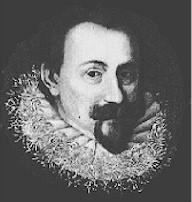
1586 - 1630 Person Name: Johann H. Schein, 1586-1630 Topics: Benediction; Commitment; Grace; Hope; Incarnation; Kingdom of God; Mission; Prophetic Ministry; Sending Forth; Servanthood; Unity; Work Composer of "EISENACH" in Hymns of the Saints Schein, Johann Hermann, son of Hieronymus Schein, pastor at Griinhain, near Annaberg, in Saxony, was born at Grünhain, Jan. 20,1586. He matriculated at the University of Leipzig in 1607, and studied there for four years. Thereafter he acted for some time as a private tutor, including two years with a family at Weissenfels. On May 21, 1615, he was appointed Capellmeister, at the court of Duke Johann Ernst, of Sachse-Weimar; and in 1616 he became cantor of I3t. Thomas's Church, and music director at Leipzig, in succession to Seth Calvisius (d. Nov. 24, 1615). This post he held till his death, at Leipzig, Nov. 19, 1630. Schein was one of the most distinguished musicians of his time, both as an original composer, and as a harmoniser of the works of others. As a hymnwriter he was not so prolific, or so noteworthy. Most of his hymns were written on the deaths of his children or friends, e.g. on seven of his children, and on his first wife. They appeared mostly in broadsheet form, and were included, along with his original melodies, in his Cantional oder Gesang-Buch Augspurgischer Confession, Leipzig, 1627; 2nd ed., 1645. [Both in Wernigerode Library.] Those of Schein's hymns which have passed into English are:— i. Machs mit mir, Gott, nach deiner Güt. For the Dying. First published, as a broadsheet, at Leipzig, 1628, as a Trost-Liedlein á 5 (i.e. for 5 voices), &c. [Berlin Library.] The words, the melody, and the five-part setting, are all by Schein. It was written for, and first used at, the funeral, on Dec. 15, 1628, of Margarita, wife of Caspar Werner, a builder and town councillor at Leipzig, and a churchwarden of St. Thomas's. It is in 6 stanzas of 6 lines; the initial letters of 11. 1, 3, in st. i.-iv., forming the name Margarita; and the W of st. v. 1. 1 standing for Werner. In Schein's Cantional, 1645, No. 303 (marked as Trost-Liedlein, Joh. Herm. Scheins, á 5), and later hymn-books, as e.g. the Unverfäschter Liedersegen, 1851, No. 830, st. vi. was omitted. It is Schein's finest production, and one of the best German hymns for the sick and dying. Translated as:— Deal with me, God, in mercy now. This is a good and full translation by Miss Winkworth, in her Chorale Book for England, 1863, No. 191, set to Schein's melody of 1628. ii. Mein Gott und Herr, ach sei nicht fern. For the Dying. First published, with his name, in his Cantional, 1627, No. 262, in 9 stanzas of 6 lines. The initial letters of the stanzas give the name Margarita, probably one of the daughters who predeceased him. It is included, in 5 st., in the 164-8, and later eds., of Crüger's Praxis. The translation in common use is:— My Lord and God, go not away. A good tr. of st. i., ii., iv., v., vii., by A. T. Russell, as No. 254, in his Psalms & Hymns, 1851. [Rev. James Mearns, M.A.] --Excerpts from John Julian, Dictionary of Hymnology (1907)

Robert Campbell

1814 - 1868 Topics: Works of God Angels Author of "They come, God's messengers of love" in The Book of Worship Robert Campbell was an advocate residing in Edinburgh. He is not much known as an author, but some of his hymns have been adopted in several hymnals. He was Roman Catholic. His death occurred in 1868. --Annotations of the Hymnal, Charles Hutchins, M.A. 1872. ==================== Campbell, Robert. Advocate, of Sherrington, Scotland, was born at Trochmig, Ayrshire, Dec. 19, 1814. When quite a boy he attended the University of Glasgow. Though showing from his earliest years a strong predilection for Theological studies, eventually he fixed upon the Scottish law as a profession. To this end he entered the Law Classes of the University of Edinburgh, and in due course entered upon the duties of an advocate. Originally a Presbyterian, at an early age he joined the Episcopal Church of Scotland. He became a zealous and devoted Churchman, directing his special attention to the education of the children of the poor. His classical attainments were good, and his general reading extensive. In 1848 he began a series of translations of Latin hymns. These he submitted to Dr. Neale, Dr. Mills of Ely, and other competent judges. In 1850, a selection therefrom, together with a few of his original hymns, and a limited number from other writers, was published as Hymns and Anthems for Use in the Holy Services of the Church within the United Diocese of St. Andrews, Dunkeld, and Dunblane. Edinburgh, R. Lendrum & Co. This collection, known as the St. Andrews Hymnal, received the special sanction of Bishop Torry, and was used throughout the Diocese for some years. Two years after its publication he joined the Roman Catholic Church. During the next sixteen years he devoted much time to the young and poor. He died at Edinburgh, Dec. 29, 1868. From his collection of 1850, four translations were given in Hymns Ancient & Modern, 1861, "At the Lamb's high feast we sing;" “Come, pure hearts, in sweetest measures;" "Ye Choirs of New Jerusalem;" " Ye servants of a martyr'd God" (altered). Attention was thereby directed to his translations. They are smooth, musical, and well sustained. A large number, not included in his 1850 collection, were left by him in manuscript. From these Mr. O.Shipley has printed several in his Annus Sanctus, 1884. (C. MSS.) --John Julian, Dictionary of Hymnology (1907)

John H. Stockton

1813 - 1877 Person Name: J. H. Stockton Topics: Christ Conqueror; Christians Believers; Christians Conquerors; Christians Saved by Grace; Church Triumph of; Comfort in Trials; Faith Blessedness of; Faith Confession of; Faith Confidence of; God Hearer of Prayer; Praise For Work of Redemption; Prayer confidence in; Prayer For Deliverance from Trouble; Prayer For Rulers; Prayer God Hears; Prayer Intercession in; Safety Assured; Vanity Of Men and Riches; Worship Grace Needed for Composer of "[Jehovah hear thee in the day]" in Bible Songs Stockton, John Hart, a Methodist minister, was born in 1813, and died in 1877. He was a member of the New Jersey Annual Conference of the Methodist Episcopal Church, and the successive pastoral charges that he filled as a member of that Conference are found in the Conference Journal. He was not only a preacher, but a musician and composer of tunes, as well as hymn writer. He published two gospel song books: Salvation Melodies, 1874, and Precious Songs, 1875. Hymn Writers of the Church by Charles Nutter, 1911 =============== Stockton, John Hart, b. April 19, 1813, and d. March 25, 1877, was the author of "Come, every soul by sin oppressed" (Invitation), in I.D. Sankey's Sacred Songs and Solos, 1878, and of "The Cross, the Cross, the blood¬stained Cross" (Good Friday) in the same collection. --John Julian, Dictionary of Hymnology, Appendix, Part II (1907) =============== Stockton, John Hart. (New Hope, Pennsylvania, April 19, 1813--March 25, 1877). Born of Presbyterian parents, he was converted at a Methodist camp meeting in 1838, being received into full membership in the New Jersey Conference in 1857. Because of ill health he twice took the "supernumerary relations." He withdrew from actual pastoral work in 1874 and engaged in compiling and publishing gospel hymn books, issuing Salvation Melodies that year and Precious Songs in 1875, writing both words and music for a number of the songs. He died suddenly after attending a Sunday morning service at Arch Street Church, Philadelphia. Our Hymnody, McCutchan, has, perhaps, the fullest account of him readily available. --Robert G. McCutchan, DNAH Archives

Michael Forster

b. 1946 Person Name: Michael Forster (b. 1946) Topics: Church Ministry; Church Year Pentecost; Holy Spirit gifts of; Holy Spirit inspiration of; Holy Spirit Invocation of; Holy Spirit names and images for; Justice; Kingdom of God; Pentecost and the Work of the Holy Spirit; Truth; Wisdom; Justice and Peace Author of "Come, Holy Spirit, come!" in Ancient and Modern

Priscilla Jane Owens

1829 - 1907 Person Name: Pricilla J. Owens Topics: Bible; Word of God; Work; Bible; Word of God; Work Author of "Give Me the Bible" in The Majestic Hymnal, number two Owens, Priscilla Jane, was born July 21, 1829, of Scotch and Welsh descent, and is now (1906) resident at Baltimore, where she is engaged in public-school work. For 50 years Miss Owen has interested herself in Sunday-school work, and most of her hymns were written for children's services. Her hymn in the Scotch Church Hymnary, 1898, "We have heard a joyful sound" (Missions), was written for a Sunday-school Mission Anniversary, and the words were adapted to the chorus "Vive le Roi" in the opera The Huguenots. [Rev. James Bonar, M.A.] --John Julian, Dictionary of Hymnology, Appendix II (1907) ========================= Owens, Priscilla Jane. (July 21, 1829--December 5, 1907). Of Scottish and Welsh ancestry, she spent her entire life in Baltimore. She was a public school teacher there for 49 years. She was a member of the Union Square Methodist Church and took particular interest in its Sunday School. Her literary efforts, both in prose and poetry, appeared in such religious periodicals as the Methodist Protestant and the Christian Standard. --William J. Reynolds, DNAH Archives

George C. Stebbins

1846 - 1945 Person Name: George C. Stebbins, 1846-1945 Topics: Works of God Composer of "JANET" in Psalter Hymnal (Blue) Stebbins studied music in Buffalo and Rochester, New York, then became a singing teacher. Around 1869, he moved to Chicago, Illinois, to join the Lyon and Healy Music Company. He also became the music director at the First Baptist Church in Chicago. It was in Chicago that he met the leaders in the Gospel music field, such as George Root, Philip Bliss, & Ira Sankey. At age 28, Stebbins moved to Boston, Massachusetts, where he became music director at the Claredon Street Baptist Church; the pastor there was Adoniram Gordon. Two years later, Stebbins became music director at Tremont Temple in Boston. Shortly thereafter, he became involved in evangelism campaigns with Moody and others. Around 1900, Stebbins spent a year as an evangelist in India, Egypt, Italy, Palestine, France and England. (www.hymntime.com/tch)

J. W. Elliott

1833 - 1915 Person Name: James William Elliott, 1833 - 1915 Topics: Christ, the Lord Jesus Advent of; God Glory of; God: His Being, Word and Works The Holy Scriptures; Gospel; Law of God; Stars; Works of Providence; Worldwide Missions Composer of "CHURCH TRIUMPHANT" in The Book of Praise J.W. Elliott was a popular composer of the Victorian period, and is best known for his nursery rhyme music and for his work on hymnals in the 1870s. He was born James William Elliott, in Warwick, England, on February 13, 1833. As a child, he sang as a chorister in the Leamington Parish Church. In those days, choristers were given lessons in all facets of church music, including organ lessons, counterpoint studies, and more in exchange for providing an extraordinary level of service to their parish church (services throughout the week, all holidays, extra services, etc.). The result is that most choristers who completed their studies received an excellent music education, and James was no exception. After starting his career as an organist and choirmaster for a countryside church, his talent became obvious. He moved to London, where he assisted Sir Arthur Sullivan (of Gilbert and Sullivan fame) in editing Church Hymns. In addition, James worked for a music publisher. His compositions include two operettas, numerous anthems, service music, works for instruments including the very popular harmonium, and most particularly for Nursery Rhymes and Nursery Songs, his children’s music score that sets many of the Nursery Rhymes to delightful music. Several of his hymn tunes are still in use today in many hymnals, most notably his hymn tune “Day of Rest.” He was heavily involved in the preparation of the musical edition of Church Hymns in 1874, the Choral Service Book of 1892, and transcriptions of hymn tunes using harmonies different than the traditional ones found in hymnals. He died in St. Marylebone, London, on February 5, 1915. --www.nursery-songs.com/

Is. Smith

1734 - 1805 Person Name: Isaac Smith Topics: Works of God Composer of "SILVER STREET" in Book of Worship with Hymns and Tunes Isaac Smith; published "A Collection of Psalm Tunes" about 1770 Evangelical Lutheran Hymnal, 1908

W. C. Martin

1864 - 1914 Person Name: W. Martin Topics: Works of God Composer of "MELMORE" in Psalter Hymnal (Blue) Rv William Clark Martin USA 1864-1914. Born at Hightstown, NJ, he graduated from the Peddie Institute in Hightstown in 1884, and in 1891 from the Crozer Theological Seminary, Upland, PA. He became minister of the Grace Baptist Church, Camden, NJ,(1891-1894); Noank Baptist Church, Noank, CT (1894-1900); Tabernacle Baptist Church, New Albany, IN (1902-1904); First Baptist Church, Seymour, IN (1902-1904); First Baptist Church, Bluffton, IN (1904-1909); Grace Baptist Church, Somerville, MA (1909-1912); and First Baptist Church, Fort Myers, FL (1912-1914). In 1891 he married Euretta (Etta) May Wilcox, and they had at least three children (no names found). He penned many hymn lyrics. He died of heart failure at his farm in Rialto, FL. John Perry

Chas. H. Gabriel

1856 - 1932 Person Name: Charles H. Gabriel, 1856-1932 Topics: Works of God Composer of "CHIOS" in Psalter Hymnal (Red) Pseudonyms: C. D. Emerson, Charlotte G. Homer, S. B. Jackson, A. W. Lawrence, Jennie Ree ============= For the first seventeen years of his life Charles Hutchinson Gabriel (b. Wilton, IA, 1856; d. Los Angeles, CA, 1932) lived on an Iowa farm, where friends and neighbors often gathered to sing. Gabriel accompanied them on the family reed organ he had taught himself to play. At the age of sixteen he began teaching singing in schools (following in his father's footsteps) and soon was acclaimed as a fine teacher and composer. He moved to California in 1887 and served as Sunday school music director at the Grace Methodist Church in San Francisco. After moving to Chicago in 1892, Gabriel edited numerous collections of anthems, cantatas, and a large number of songbooks for the Homer Rodeheaver, Hope, and E. O. Excell publishing companies. He composed hundreds of tunes and texts, at times using pseudonyms such as Charlotte G. Homer. The total number of his compositions is estimated at about seven thousand. Gabriel's gospel songs became widely circulated through the Billy Sunday­-Homer Rodeheaver urban crusades. Bert Polman

Pages


Export as CSV
It looks like you are using an ad-blocker. Ad revenue helps keep us running. Please consider white-listing Hymnary.org or getting Hymnary Pro to eliminate ads entirely and help support Hymnary.org.