You help make Hymnary.org possible. More than 10 million people from 200+ countries found hymns, liturgical resources and encouragement on Hymnary.org in 2025, including you. Every visit affirms the global impact of this ministry.

If Hymnary has been meaningful to you this year, would you take a moment today to help sustain it? A gift of any size—paired with a note of encouragement if you wish—directly supports the server costs, research work and curation that keep this resource freely available to the world.

Give securely online today, or mail a check to:
Hymnary.org
Calvin University
3201 Burton Street SE
Grand Rapids, MI 49546

Thank you for your partnership, and may the hope of Advent fill your heart.

Person Results

Tune Identifier:"^hymn_to_joy_beethoven$"
In:people

Planning worship? Check out our sister site, ZeteoSearch.org, for 20+ additional resources related to your search.
Showing 101 - 110 of 134Results Per Page: 102050

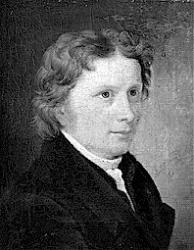
Bernhard Severin Ingemann

1789 - 1862 Person Name: Bernhardt S. Ingemann Author of "Through the Night of Doubt and Sorrow" in Christian Hymnal Ingemann, Bernhardt Severin, was born at Thor Kildstrup, Island of Falster, May 28, 1789. From 1822 to his death in 1862, he was Professor of the Danish Language and Literature at the Academy of Sorö, Zealand, Denmark. He was a poet of some eminence. His collected works were pub, in 1851, in 34 volumes. Seven of his hymns translated into English are given in Gilbert Tait's Hymns of Denmark, 1868. The only hymn by him in English common use is:— Igjennem Nat og Traengael. Unity and Progress. It is dated 1825, and is given in the Nyt Tillaeg til Evangelisk-christelig. Psalmebog, Copenhagen, 1859, No. 502. In its translated form as "Through the night of doubt and sorrow," by the Rev. S. Baring-Gould, it has become widely known in most English-speaking countries. The translation was published in the People's Hymnal, 1861. It was greatly improved in Hymns Ancient & Modern, 1875, and has been specially set to music by several composers. --John Julian, Dictionary of Hymnology (1907)

Lawrence Bartlett

1933 - 2002 Person Name: Lawrence Francis Bartlett, 1933- Arranger of "ODE TO JOY" in Together in Song Lawrence Bartlett was born in Sydney on the February 13, 1933. He studied at the Sydney Conservatorium of Music between 1950 and 1957, and at the Melbourne Conservatorium of Music in 1960. He also studied organ, piano, singing and composition. He was the Assistant Director of Music at the King's School, Parramatta, a tutor in church music at Ridley College in Melbourne and in 1965 he was acting cathedral organist and master of the choristers at St Andrew's Cathedral in Sydney. Bartlett was an Anglican clergyman and wrote many compositions suitable for church performance. Bartlett was also a member of the Australian Hymn Book committee, and has been involved in the initiation of schemes for promoting the composition and performance of new liturgical music. He died in Sydney on March 17, 2002. Nancy Naber, from http://www.australianmusiccentre.com.au/artist/bartlett-lawrence

David Makathimo

Translator of "Kwa Furaha Twakusifu" in Nyimbo za Imani Yetu

Katherine McCaffrey

1911 - 1992 Person Name: Katherine McCaffrey, RSCJ, 1911-1992 Author (v. 1) of "God Created Earth and Heaven" in Catholic Book of Worship III

Friederich Schiller

1759 - 1805 Person Name: Friedrich Schiller, 1759-1805 Author of "Joy, Thou Goddess" in Singing the Living Tradition

Josephine Daskam Bacon

1876 - 1961 Author of "Hymn for the Nations" in A Hymnal for Friends

I. L. Perec

1852 - 1915 Author of "Ĉiuj homoj estas fratoj" in TTT-Himnaro Cigneta Name forms: English: Isaac Leib Peretz Polish: Icchok Lejbusz Perec Hebrew/Yiddish: יצחק־לייבוש פרץ (YIVO transliteration Yitskhok Leybush Perets) From Wikipedia: Isaac Leib Peretz (Polish: Icchok Lejbusz Perec, Hebrew: יצחק־לייבוש פרץ) (May 18, 1852 – 3 April 1915), best known as I. L. Peretz, was a Yiddish language author and playwright from Poland. Payson R. Stevens, Charles M. Levine, and Sol Steinmetz count him with Mendele Mokher Seforim and Sholem Aleichem as one of the three great classical Yiddish writers. Sol Liptzin wrote: "Yitzkhok Leibush Peretz was the great awakener of Yiddish-speaking Jewry, and Sholom Aleichem its comforter... Peretz aroused in his readers the will for self-emancipation, the will for resistance..." Peretz rejected cultural universalism, seeing the world as composed of different nations, each with its own character. Liptzin comments that "Every people is seen by him as a chosen people..."; he saw his role as a Jewish writer to express "Jewish ideals...grounded in Jewish tradition and Jewish history." Unlike many other Maskilim, he greatly respected the Hasidic Jews for their mode of being in the world; at the same time, he understood that there was a need to make allowances for human frailty. His short stories such as "If Not Higher", "The Treasure", and "Beside the Dying" emphasize the importance of sincere piety rather than empty religiosity.

Henry Bateman

1802 - 1872 Author of "Let us, brothers, let us gladly" in Hymns of the United Church Bateman, Henry, a popular writer of hymns for children, was descended from the De Voeux, a Huguenot family. Born on March 6, 1802, in Bunhill Row, Finsbury, he was educated for commercial pursuits, and followed the trade of a timber merchant. He died in 1872. During the greater part of his life he was addicted to the writing of poetry, but his hymns were mostly written between 1856 and 1864. His published works are:— (1) Belgium and Up and Down the Rhine, 1858; (2) Sunday Sunshine: New Hymns and Poems for the Young, 1858; (3) Home Musings: Metrical Lay Sermons, 1862; (4) Heart Melodies: Being 365 New Hymns and Psalms, 1862; (5) Fret Not, and Other Poems, including Hymns with music, 1869. From his Sunday Sunshine (Lond., Nisbet & Co., 1858) the following hymns have come into common use:— 1. A holy and a happy youth. Youthful Piety. 2. A noble river, wide and deep. Finding of Moses. 3. A sparrow with its plain brown coat. Providence. 4. A thought is but a little thing. Little Things. 5. A tranquil heart and pleasant thought. Peace. 6. A pebble in the water. Little Things. 7. Always by day, always by night. Omniscience. 8. And is it true that Jesus came? Good Shepherd. 9. At Jordan John baptizing taught. Whitsuntide. 10. Cross purposes, how sad they are. Duty. 11. Daniel was right as right could be. Duty. 12. From grassy nest on fluttering wing. Providence. 13. God does not judge as we must do. Charity. 14. God made the sea, the wide, deep sea. Providence. 15. Good night, good night, the day is done. Evening. 16. Great God, the world is full of Thee. Omnipresence. 17. How joyously amongst the flowers. Cain & Abel. 18. I always love those friends the best. Jesus the Truth. 19. If anything seems too hard to do. Perseverance. 20. In Eden's garden, fair and bright. Holiness. 21. In my soft, bed when quite alone. Omniscience. 22. In the wild desert, far from home. Providence. 23. It is but little that I know. Faith. 24. May I touch His garment's hem. Faith. 25. No tears in heaven! ah, then 1 know. Heaven. 26. O lead me not, O lead me not. The Lord's Prayer. 27. On the green grass five thousand men. Providence. 28. Over the fields in hedgerows green. Duty. 29. Sometimes I do not like to feel. Solitude. 30. There is one thing quite sure to make. Good Temper. 31. Thou blessed Jesus, pity me. Jesus the Guide. 32. Through all the way, the little way. Providence. 33. 'Tis very wonderful, I'm sure. Trust. 34. Tramp, tramp upon their unknown way. The Red Sea. 35. When God bade Abraham sacrifice. Resignation. 36. When Jairus's daughter was so ill. Power of Christ. 37. When morning, fresh and bright and new. Morning. 38. The good old book! with histories. Holy Scriptures. 39. Year after year, with patient love. A Parent's Love. In addition to the foregoing the following from his Heart Melodies, &c. (Lond., Snow, 1862), are also in common use, and have attained to some popularity:— 40. Gracious Saviour, gentle Shepherd [thus before Thee]. Evening. 41. Let us pray, the Lord is willing. Prayer. 42. Was it for me, dear Lord, for me? Good Friday. As will be gathered from the above list of hymns in common use, the Sunday Sunshine has been the most successful of Mr. Bateman's works. This success is due mainly to the fact that the hymns deal with subjects easily treated of in hymns for children. His hymns are hearty and natural in tone. Some of the best of those published in the Sunday Sunshine were given in the Book of Praise for Children, 1875, edited by W. Garrett Holder, and from thence have passed into many collections for children. His best hymn is "Light of the world! Whose kind and gentle care" (q. v.). It is a prayer of more than usual merit for Divine guidance. [Rev. W. Garrett Holder] -- John Julian, Dictionary of Hymnology (1907)

Geoffrey Dearmer

1893 - 1996 Person Name: Geoffrey Dearmer, b. 1893 Author of "Those Who Love and Those Who Labor" in RitualSong (2nd ed.)

Alan J. Hommerding

Author of "Celebrating Years" in One in Faith

Pages


Export as CSV
It looks like you are using an ad-blocker. Ad revenue helps keep us running. Please consider white-listing Hymnary.org or getting Hymnary Pro to eliminate ads entirely and help support Hymnary.org.