You help make Hymnary.org possible. More than 10 million people from 200+ countries found hymns, liturgical resources and encouragement on Hymnary.org in 2025, including you. Every visit affirms the global impact of this ministry.

If Hymnary has been meaningful to you this year, would you take a moment today to help sustain it? A gift of any size—paired with a note of encouragement if you wish—directly supports the server costs, research work and curation that keep this resource freely available to the world.

Give securely online today, or mail a check to:
Hymnary.org
Calvin University
3201 Burton Street SE
Grand Rapids, MI 49546

Thank you for your partnership, and may the hope of Advent fill your heart.

Person Results

Topics:judgment+of+god
In:people

Planning worship? Check out our sister site, ZeteoSearch.org, for 20+ additional resources related to your search.
Showing 111 - 120 of 375Results Per Page: 102050

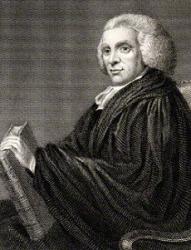
William Jones

1726 - 1800 Topics: Advent; Christ; Jesus Christ; Judgment; Kingdom; Prophecy; Psalm Paraphrases; Second Coming; Son of God; The Lord Jesus Christ Second Coming; Watchfulness Composer of "ST. STEPHEN" in Great Songs of the Church (Revised) Born: Ju­ly 30, 1726, Lo­wick, North­amp­ton­shire, Eng­land. Died: Jan­u­ary 6, 1800, Hol­ling­bourne, Kent, Eng­land. Pseudonym: Jones of Nay­land. Jones was ed­u­cat­ed at Char­ter­house and Un­i­ver­si­ty Coll­ege, Ox­ford. He be­came Vi­car of Beth­ers­den, Kent (1764); Pluck­ley, Kent; and Pas­ton, North­amp­ton­shire; per­pe­tu­al Cur­ate of Nay­land, Suf­folk (1777); and Rec­tor of Hol­ling­bourne, Kent (1798). He be­came a Fel­low of the Roy­al So­ci­e­ty in 1775. His works in­clude: The Ca­tho­lic Doc­trine of the Trin­i­ty, 1756 Fairchild Dis­cours­es, 1775 Physiological Dis­qui­si­tions, 1781 A Treatise on the Art of Mu­sic, 1784 Church Piec­es for the Or­gan with Four An­thems in Score, 1789 Jones was a de­scend­ant of the Col. J. Jones, who was one of the sig­na­tor­ies to the death war­rant of King Charles I of Eng­land. He used to reg­u­lar­ly ob­serve Jan­u­a­ry 30 as a day of fast­ing and hu­mil­i­a­tion for his an­ces­tor’s sin. Music: ST. STEPHEN --www.hymntime.com/tch/

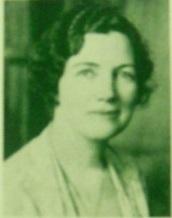
Annabel Morris Buchanan

1888 - 1983 Person Name: Annabel Moris Buchanan, 1889-1983 Topics: Judgment of God Arranger of "LAND OF REST" in Together in Song Born: October 22, 1888, Groesbeck, Texas. Died: January 6, 1983, Paducah, Kentucky. Buried: Round Hill Cemetery, Marion, Virginia. Daughter of William Caruthers Morris and Anna Virginia Foster, and wife of John Preston Buchanan, Anna received her musical training at the Landon Conservatory of Music, Dallas, Texas (to which she received a scholarship at age 15); the Guilmant Organ School, New York; and studying with Emil Liebling, William Carl, and Cornelius Rybner, among others. She taught music in Texas; at Halsell College, Oklahoma (1907-08); and at Stonewall Jackson College, Abingdon, Virginia (1909-12). In 1912, she married John Preston Buchanan, a lawyer, writer, and senator, from Marion, Virginia; they moved to their home, Roseacre, in Marion, where they had four children. Buchanan served as president of the Virginia Federation of Music Clubs in 1927, and helped organize the first Virginia State Choral Festival in 1928, and White Top Folk Festivals (1931-41). After her husband’s death in 1937, she sold Roseacre and moved to Richmond, Virginia, with her two youngest children. She taught music theory and composition and folk music at the University of Richmond (1939-40); during the summers, at the New England Music Camp, Lake Messalonskee, Oakland, Maine (1938-40); and at the Huckleberry Mountain Artists Colony near Hendersonville, North Carolina, in 1941. She later moved to Harrisonburg, Virginia, and taught at Madison College (1944-48). In 1951, she moved to Paducah, Kentucky. She later became the archivist of the folk music collecting project of the National Federation of Music Clubs, serving until 1963. Buchanan’s works include: Folk-Hymns of America (New York: J. Fischer, 1938) American Folk Music, 1939 Sources: Findagrave, accessed 15 Nov 2016 Hughes, pp. 329-30 Hustad, p. 213 © The Cyber Hymnal™. Used by permission. (www.hymntime.com

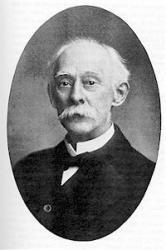
Arthur Campbell Ainger

1841 - 1919 Person Name: Arthur C. Ainger, 1841-1919 Topics: Discipleship; Going Forth; Harvest; Judgment; Majesty and Power; Mission; Mystery of God; New Year; Providence; Second Coming; Time; Trust; Word of God; World; Canons Alterer of "God Is Working His Purpose Out" in Worship (3rd ed.) Ainger, Arthur Campbell, M.A., son of the Rev. F. A. Ainger, incumbent of Hampstead, Middlesex; born in 1841, educated Trinity College, Cambridge, 1st Class Class. Trip. 1864, Assistant Master at Eton 1864-1901. Author of Eton Songs, 1901-2; Carmen Etonense, Vale, &c, and joint author with H. G. Winkle, M.A., of an English-Latin Verse Dictionary. Mr. Ainger's hymns in common use are the following :— 1. God is working His purpose out. [Missions.] Written and first published in 1894, with Dedication to Archbishop Benson. It was given in Church Hymns, 1903, Hymns Ancient & Modern, 1904, and other collections. 2. God of our Fathers, unto Thee. [National Thanksgiving.] Included in English Hymnal, 1906. 3. Let all our brethren join in one. [Harvest.] Included in C. W. A. Brooke's Additional Hymns, 1903. 4. Let God arise to lead forth those. [In Time of War.] Written in 1900, and first printed in the Times the same year. Subsequently pub. by Novello & Co., with music by Sir J. Stainer, and included in Church Hymns, 1903, and Hymns Ancient & Modern, 1904. 5. Like a mighty man rejoicing in his strength. [Missions.] Written by request for the S.P.G. Centenary, and published in the Centenary collection of Hymns, 1901. 6. Not ours to mourn and weep. [Lent. For the Young.] First published in the Public School Hymn Book, 1903. 7. On them who here, 0 Lord. [Holy Matrimony.] A Wedding Hymn, published with music by Novello & Co., 1903. A most acceptable addition to hymns for Holy Matrimony. 8. Praise the Lord: to-day we raise Hymns of thankfulness and praise. [For Victory] Written in 1902, and first printed in the Times, and t' en, with music, by Novello & Co. Included in Church Hymns, 1903. 9. Praise the Lord! to-day we sing. Birthday of our Founder King. [For Founder's Day.] Written for use at Eton, and included in Eton Songs, 1891-2, as "Hymn for Founder's Day." Admirably suited, with slight change in the opening line, for any Public School. 10. Uprose the stately temple. [Dedication of a School Chapel]. Written in 1891, and published in his Eton Songs, 1891-2. Mr. Ainger has written several other hymns, including one for the Coronation of King Edward VII., a Thanksgiving Hymn for his recovery from sickness (Skeffingtons), and others not in common use. --John Julian, Dictionary of Hymnology, New Supplement (1907)

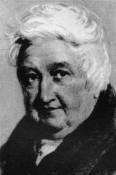
Hubert P. Main

1839 - 1925 Topics: Adoration; Christ Ascension of; Christ Worshiped; Faith Act of; God Adored and Exalted; God King; Liberality; Missions Triumphs of; Nations Conversion of; Nations Owe Allegiance to Christ; Nations Ultimate Subjection of; Praise Of the Lord; Royalty of Christ Civil Rulers His Ministers; Royalty of Christ In His Church; Royalty of Christ Judgment His Prerogative; Salvation God's Gift; Thanksgiving Declared; The Wicked Fate of; The Wicked Warned Composer of "[Thou hast, O Lord, with glory]" in Bible Songs Hubert Platt Main DD USA 1839-1925. Born at Ridgefield, CT, he attended singing school as a teenager. In 1854 he went to New York City and worked as an errand boy in a wallpaper house. The next year he became an errand boy in the Bristow & Morse Piano Company. He was an organist, choir leader, and compiled books of music. He also helped his father edit the “Lute Songbook” by Isaac Woodbury. In 1866 he married Olphelia Louise Degraff, and they had two sons: Lucius, and Hubert. In 1867 he filled a position at William B Bradbury’s publishing house. After Bradbury’s death in 1868 the Bigelow & Main Publishers were formed as its successor. He also worked with his father until his father’s death in 1873. Contributors to their efforts were Fanny Crosby, Ira Sankey, Wilbur Crafts, and others. In addition to publishing, Main wrote 1000+ pieces of music, including part song, singing school songs, Sunday school music, hymns, anthems, etc. He also arranged music and collected music books. He 1891 he sold his collection of over 3500 volumes to the Newberry Library in Chicago, IL, where they were known as the Main Library. Some of his major publications include: “Book of Praise for the Sunday school” (1875), “Little pilgrim songs” (1884), “Hymns of Praise” (`1884), “Gems of song for the Sunday school” (1901), “Quartettes for men’s voices: Sacred & social selections” (1913). In 1922 Hope Publishing Company acquired Bigelow & Main. He was an editor, author, compiler, and composer, as well as publisher. He died in Newark, NJ. John Perry

William Crotch

1775 - 1847 Topics: Sanctifiying and Perfecting Grace Social Holiness; New Heaven and a New Earth The Completion of Creation (The City of God); Christian Perfection; Heaven; Judgment; Justice; Kingdom of God; Peace, World; Social Concerns; Triumph Arranger of "ST. MICHAEL" in The United Methodist Hymnal William Crotch (5 July 1775 – 29 December 1847) was an English composer, organist and artist. Born in Norwich, Norfolk to a master carpenter he showed early musical talent as a child prodigy. The three and a half year old Master William Crotch was taken to London by his ambitious mother, where he not only played on the organ of the Chapel Royal in St James's Palace, but for King George III. The London Magazine of April 1779 records: He appears to be fondest of solemn tunes and church musick, particularly the 104th Psalm. As soon as he has finished a regular tune, or part of a tune, or played some little fancy notes of his own, he stops, and has some of the pranks of a wanton boy; some of the company then generally give him a cake, an apple, or an orange, to induce him to play again... Crotch was later to observe that this experience led him to become a rather spoiled child, excessively indulged so that he would perform. He was for a time organist at Christ Church, Oxford, from which he was later to graduate with a Bachelor of Music degree. His composition The Captivity of Judah was played at Trinity Hall, Cambridge, on 4 June 1789; his most successful composition in adulthood was the oratorio Palestine (1812). He may have composed the Westminster Chimes in 1793. In 1797 Crotch was given a professorship at Oxford University, and in 1799 he acquired a doctorate in music. While at Oxford, he became acquainted with the musician and artist John Malchair, and took up sketching. He followed Malchair's style in recording the exact time and date of each of his pictures, and when he met John Constable in London in 1805, he passed the habit along to the more famous artist. In 1834, to commemorate the installation of the Duke of Wellington as chancellor of the University of Oxford, Crotch penned a second oratorio titled The Captivity of Judah. The 1834 work bears little resemblance to the oratorio he wrote as a child in 1789. In 1822, Crotch was appointed to the Royal Academy of Music as its first Principal, but resigned ten years later.[2] He spent his last years at his son's house in Taunton, Somerset, where he died suddenly in 1847. Among his notable pupils were William Sterndale Bennett, Lucy Anderson, Stephen Codman, George Job Elvey, Cipriani Potter, and Charles Kensington Salaman --en.wikipedia.org/

Walter Bond Gilbert

1829 - 1910 Person Name: Walter Bond Gilbert, 1829-1910 Topics: Christ Kingdom of; Christ Second Coming and Judgment of; The Church The Kingdom of God; Gospel Triumph of Composer of "THANKSGIVING" in Trinity Hymnal Walter Bond Gilbert DMus United Kingdom 1829-1910. Born at Exeter, Devon, England, he studied music under Alfred Angel, Samuel Wesley and Henry Bishop. He attended New College, Oxford and the University of Toronto, Canada. He was organist in Devon at Topsham in 1847, Bideford in 1849, Kent at Tonbridge in 1854, Old Colliegiate Church, Maidstone in 1859, Lee in 1866, Boston, Lincolnshirein 1868, and Trinity Chapel in New York City in 1869-1897. He taught music at Tonbridge School, helped found the College of Organists, edited the America Episcopal Hymnal, and wrote a number of monographs, including “Antiquities of Maidstone”. He continued to write church music, producing services, oratorios (including “The Restoration of Israel and St. John, 1857), organ works, and anthems. He died at Headington, Oxford, England. John Perry

Peter Cutts

1937 - 2024 Person Name: Peter Warwick Cutts, 1937- Topics: Judgment of God Composer of "BIRABUS" in Together in Song

William Farley Smith

1941 - 1997 Topics: New Heaven and a New Earth The Completion of Creation (The City of God); Heaven; Judgment; Triumph Adapter and Arranger of "I WANT TO BE READY" in The United Methodist Hymnal

George Kirbye

1565 - 1634 Person Name: Goerge Kirbye Topics: Atheism; Blessing; Blessing; Church Year All Saints' Day; Commitment; Conflict; Discipleship; Elements of Worship Praise and Adoration; Emmaus Road; Endurance; Evil; God Obedience to; God's Will; God's Will; God's Word; God's law; God's Love; Jesus Christ Good Shepherd; Jesus Christ Mind of; Jesus Christ Teacher; Jesus Christ Way, Truth, and Life; Judgment; Mercy; Obedience; Remnant of Isarel; Servants of God; Truth; Wisdom Psalms; Year A, Ordinary Time after Pentecost, October 23-29; Year B, Easter, 7th Sunday; Year B, Ordinary Time after Pentecost, September 18-24; Year C, Ordinary Time after Epiphany, 6th Sunday; Year C, Ordinary Time after Pentecost; September 4-10 Composer (attributed to) of "WINCESTER OLD" in Psalms for All Seasons George Kirbye (c. 1565 – buried October 6, 1634) was an English composer of the late Tudor period and early Jacobean era. He was one of the members of the English Madrigal School, but also composed sacred music. Little is known of the details of his life, though some of his contacts can be inferred. He worked at Rushbrooke Hall near Bury St Edmunds, evidently as a tutor to the daughters of Sir Robert Jermyn. In 1598 he married Anne Saxye, afterwards moving to Bury St Edmunds. Around this time he probably made the acquaintance of John Wilbye, a much more famous madrigalist, who lived and worked only a few miles away, and whose style he sometimes approaches. In 1626 his wife died, and he is known to have been a churchwarden during the next several years until his death. Kirbye's most significant musical contributions were the psalm settings he wrote for East's psalter in 1592, the madrigals he wrote for the Triumphs of Oriana (1601), the famous collection dedicated to Elizabeth I, and an independent set of madrigals published in 1597. Stylistically his madrigals have more in common with the Italian models provided by Marenzio than do many of the others by his countrymen: they tend to be serious, in a minor mode, and show a careful attention to text setting; unlike Marenzio, however, he is restrained in his specific imagery. Kirbye avoided the light style of Morley, which was hugely popular, and brought into the madrigal serious style of pre-madrigal English music. He is not as often sung as Morley, Weelkes or Wilbye, but neither was he as prolific; still, some of his madrigals appear in modern collections. --en.wikipedia.org/wiki/

Howard Hughes

b. 1930 Person Name: Howard Hughes, SM Topics: 29th Sunday in Ordinary Time Year A; Christ the King; Christmas Midnight; Christmas Season; Commissioning; Creation; Gathering; God the Father (Creator); Judgment; Justice; Kingdom / Reign of God; Majesty and Power; Messianic; Music Ministry; Offering; Praise; Renewal; Salvation; Song Composer (antiphon) of "[Today is born our Savior]" in RitualSong In his letter of invitation to Brother Howard Hughes, the President of NPM, J. Michael McMahon, declared, “Board Members agreed unanimously that you have created compositions for the liturgy that are beautiful, delightful, and spirited, and that have fostered strong participation by the worshiping assembly as they pray the texts you have set to music.” The Marianist composer’s first published work was “Mass for Peace” which appeared in Peoples Mass Book, 1964 edition, released by World Library Publications. As liturgical celebration developed in the English vernacular following the Second Vatican Council, Brother Howard produced a wide range of liturgical compositions published by WLP, GIA, ICEL, OCP, LTP, CFCW, FDLC, USCC, RP, NPM, Presbyterian Church USA, and The United Methodist Hymnal Companion. And at the age of 81 he is still composing and accepting commissions for special events. A Marianist religious for 64 years, this distinguished liturgical musician and composer began as a high teacher of French and director of high school choral groups. In addition Brother Howard also sang in symphonic choruses in New York and in Baltimore. He commented that “conducting high school choral concerts and singing with adult symphonic choruses have been a great help in learning to write music.” The National Association of Pastoral Musicians will honor Brother Howard Hughes, S.M., as Pastoral Musician of the Year when it gathers for its national convention in Washington, DC, July 29 – August 2, 2012. Currently the awardee serves as organist and music director for the Marianist Center in Cupertino, CA. --http://www.dsj.org/being-catholic/worship

Pages


Export as CSV
It looks like you are using an ad-blocker. Ad revenue helps keep us running. Please consider white-listing Hymnary.org or getting Hymnary Pro to eliminate ads entirely and help support Hymnary.org.