

 My Starred Hymns
 My FlexScores
 My Hymnals
 My Purchased Files
Planning worship?
Check out our sister site, ZeteoSearch.org,
for 20+ additional resources related to your search.
- |
User Links
Person Results
Robert Schumann
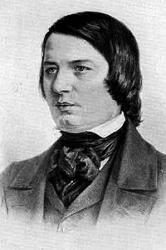
1810 - 1856 Topics: The Church at Worship Closing and Evening Hymns; liturgical Closing Songs; Christian Perfecction; Closing Hymns; Commitment; Consecration; Discipleship and Service; Eternal Life; Evening; God Grace; God Law; God Presence; Installation Services; Jesus Christ Yoke; Joy; Morning; Obedience; Recessionals; Service; Service Music Sending Forth/Commissioning; Stewardship; Venture; Wisdom; Work and Recreation; Epiphany 5 Year A; Epiphany 6 Year A; Proper 16 Year A; Proper 18 Year B; Proper 22 Year C; Proper 28 Year C Composer of "CANONBURY" in Voices United Robert Alexander Schumann DM Germany 1810-1856. Born at Swickau, Saxony, Germany, the last child of a novelist, bookseller, and publisher, he began composing music at age seven. He received general music instruction at the local high school and worked to create his own compositions. Some of his works were considered admirable for his age. He even composed music congruent to the personalities of friends, who took note of the anomaly. He studied famous poets and philosophers and was impressed with the works of other famous composers of the time. After his father’s death in 1826, he went to Leipzig to study law (to meet the terms of his inheritance). In 1829 he continued law studies in Heidelberg, where he became a lifelong member of Corps Saxo-Borussia Heidelberg. In 1830 he left the study of law to return to music, intending to pursue a career as a virtuoso pianist. His teacher, Friedrich Wieck, assured him he could become the finest pianist in Europe, but an injury to his right hand (from a practicing method) ended that dream. He then focused his energies on composition, and studied under Heinrich Dorn, a German composer and conductor of the Leipzig opera. Schumann visited relatives in Zwickau and Schneeberg and performed at a concert given by Clara Wieck, age 13 at the time. In 1834 he published ‘A new journal for music’, praising some past composers and deriding others. He met Felix Mendelssohn at Wieck’s house in Leigzig and lauded the greatness of his compositions, along with those of Johannes Brahms. He also wrote a work, hoping to use proceeds from its sale towards a monument for Beethoven, whom he highly admired. He composed symphonies, operas, orchestral and chamber works, and also wrote biographies. Until 1840 he wrote strictly for piano, but then began composing for orchestra and voice. That year he composed 168 songs. He also receive a Doctorate degree from the University of Jena that year. An aesthete and influential music critic, he was one of the most regarded composers of the Romantic era. He published his works in the ‘New journal for music’, which he co-founded. In 1840, against the wishes of his father, he married Clara Wieck, daughter of his former teacher, and they had four children: Marie, Julie, Eugenie, and Felix. Clara also composed music and had a considerable concert career, the earnings from which formed a substantial part of her father’s fortune. In 1841 he wrote 2 of his 4 symphonies. In 1843 he was awarded a professorship in the Conservatory of Music, which Mendelssohn had founded in Leipzig that same year, When he and Clara went to Russia for her performances, he was questioned as to whether he also was a musician. He harbored resentment for her success as a pianist, which exceeded his ability as a pianist and reputation as a composer. From 1844-1853 he was engaged in setting Goethe’s Faust to music, but he began having persistent nervous prostration and developed neurasthenia (nervous fears of things, like metal objects and drugs). In 1846 he felt he had recovered and began traveling to Vienna, Prague, and Berlin, where he was received with enthusiasm. His only opera was written in 1848, and an orchestral work in 1849. In 1850 he succeeded Ferdinand Hiller as musical director at Dusseldorf, but was a poor conductor and soon aroused the opposition of the musicians, claiming he was impossible on the platform. From 1850-1854 he composed a wide variety of genres, but critics have considered his works during this period inferior to earlier works. In 1851 he visited Switzerland, Belgium, and returned to Leipzig. That year he finished his fourth symphony. He then went to Dusseldorf and began editing his complete works and making an anthology on the subject of music. He again was plagued with imaginary voices (angels, ghosts or demons) and in 1854 jumped off a bridge into the Rhine River, but was rescued by boatmen and taken home. For the last two years of his life, after the attempted suicide, Schumann was confined to a sanitarium in Endenich near Bonn, at his own request, and his wife was not allowed to see him. She finally saw him two days before he died, but he was unable to speak. He was diagnosed with psychotic melancholia, but died of pneumonia without recovering from the mental illness. Speculations as to the cause of his late term maladies was that he may have suffered from syphilis, contracted early in life, and treated with mercury, unknown as a neurological poison at the time. A report on his autopsy said he had a tumor at the base of the brain. It is also surmised he may have had bipolar disorder, accounting for mood swings and changes in his productivity. From the time of his death Clara devoted herself to the performance and interpretation of her husband’s works.
John Perry
Robert Schumann
Richard Runciman Terry
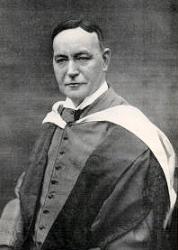
1865 - 1938 Person Name: Richard Runciman Terry (1865-1938) Topics: Proper 5 Year C Composer of "BILLING" in Ancient and Modern Terry, Richard R., was born at Morpeth, Jan. 3, 1868, and was Tate Choral Scholar at King's College, Cambridge. In 1896 he became organist and music-master at Downside R. C. College and Abbey, Bath; and in 1901 organist and director of the choir at Westminster Cathedral (R. C.) London. He contributed to A. E. Tozer's Catholic Hymns, 1898, thirteen tunes and the words of two hymns:—
1. Christ, the Lord, is my true Shepherd. Ps. xxiii.
2. Peaceful eve, so still and holy. Christmas Carol. It is marked as D. C. B., i.e. for Downside Coll., Bath.
The tune by Mr. Tozor was published in 1881 to a carol beginning with the same first line, but otherwise entirely different.
--John Julian, Dictionary of Hymnology, New Supplement (1907)
Richard Runciman Terry
Michael Baughen
b. 1930 Topics: Holy Spirit Praise and Invocation; Calmness and Serenity; Choruses and Refrains; Christian Year Pentecost; Commitment; Discipleship and Service; Holy Communion; Holy Spirit; Holy Spirit Presence; Holy Spirit Work; Ordination; Peace (Inner, Calmness, Serenity; Prayer; Regeneration; Service Music Invitation to Prayer; Service Music Litany Prayer; Unity; Epiphany 5 Year A; Epiphany 6 Year A; Easter 6 Year A; Epiphany 8 Year B; Pentecost Year B; Lent 3 Year C; Easter 5 Year C; Easter 7 Year C; Trinity Sunday Year C; Proper 8 Year C; Proper 18 Year C Author (v. 2) of "Spirit of the Living God" in Voices United
Michael Baughen
George Nelson Allen

1812 - 1877 Person Name: George N. Allen Topics: The Church in the World Commitment: Trust; Adversity, Affliction & Tribulation; Choruses and Refrains; Commitment; Confidence; Eternal Life; Funerals and Memorial Services; Grief; Guidance; Jesus Christ Person; Jesus Christ Presence; Prayer; Suffering; Trials; Trust; Water; Lent 4 Year A; Easter 4 Year A; Proper 23 Year A; Epiphany 5 Year B; Proper 23 Year B; Easter 4 Year C Composer of "PRECIOUS LORD" in Voices United George Nelson Allen (1812-1871), studied at Western Reserve Academy in Hudson, Oh OH and with Lowell Mason in Boston. Allen gave a strong musical foundation to Oberlin College in its earliest years; in addition to being Professor of Music he also served as Professor of Geology and Natural History, Secretary and Treasurer. In 1835 he compiled The Oberlin Social and Sabbath Hymn Book, in which appeared his most well known tune MAITLAND (also known as CROSS AND CROWN or WESTERN MELODY) with the text "Must Jesus bear the cross alone?". This was adapted by Thomas A. Dorsey in 1938 for his hymn "Precious Lord, take my hand". hand." He composed anthems and wrote some additional music for Isaac Woodbury's Oratorio "Absalom." He compiled a small 3" x 4" hymnal that every student should keep in his pocket that went through several printings.
Mary Louise VanDyke
George Nelson Allen
George Croly

1780 - 1860 Topics: Holy Spirit Praise and Invocation; Assurance; Christian Year Pentecost; Commitment; Consecration; Doubt; Faith; God Love for; Holy Spirit; Holy Spirit Indwelling; Holy Spirit Presence; Holy Spirit Work; Inner Life; Jesus Christ Teacher/Teachings; Love for God/Christ; Prayer; Renewal; Seeking God; Baptism of Jesus Year A; Epiphany 2 Year A; Epiphany 6 Year A; Lent 5 Year A; Proper 9 Year A; Proper 10 Year A; Proper 25 Year A; Proper 7 Year B; Proper 21 Year B; Baptism of Jesus Year C; Easter 7 Year C; Proper 22 Year C; Proper 26 Year C Author of "Spirit of God, Descend upon My Heart" in Voices United Croly, George, LL.D., born in Dublin, Aug. 17, 1780, and educated at the Dublin University (M.A. 1804, LL.D. 1831). After taking Holy Orders, he laboured in Ireland till about 1810, when he took up his residence in London, and devoted himself to literature. In 1835 he succeeded to the united benefices of St. Stephen's, Walbrook, and St. Benet Sherehog, retaining the same till his death, which occurred suddenly in the public street, Holborn, Nov. 24, 1860. His prose publications, in addition to contributions to Blackwood's Magazine, were numerous, and dealt with biographical, historical, and scriptural subjects. His hymns were given in his—
Psalms and Hymns for Public Worship. Written and compiled by the Rev. George Croly, LL.D. London Kendrick, 1854.
This collection contained 25 psalms, 50 hymns, and 6 poems. Of these 10 psalms, 12 hymns, and the 6 poems bear Dr. Croly's initial. The following have come into common use mainly through Windle's Collection:—
1. Be still, be still, impatient soul. Patience.
2. Behold me, Lord, and if thou find. Lent.
3. Lift up your heads, ye gates of light. Ascension.
4. Lord, who hast sought us out, unsought. Public Worship.
5. Teach us, O Lord, this day. Sunday.
6. Thou, Lord of mercy and of might. Lent.
All these date from 1854, with the exception of No. 6, which appeared in his Scenes from Scripture and other Poems, 1851.
-- John Julian, Dictionary of Hymnology (1907)
George Croly
Claude Goudimel
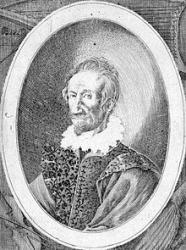
1514 - 1572 Topics: The Christian Year Reign of Christ; Church Ecumenism; Compassion; Courage; Discipleship and Service; Empowerment; Gift(s); Guidance; Healing; Hope; Hunger; Jesus Christ Cross; Jesus Christ Example; Jesus Christ Guide and Leader; Jesus Christ Images of; Jesus Christ Kingship, Conqueror; Jesus Christ Life In; Jesus Christ Reign; Light; Manna, Bread of Life; Mercy; Ministry; Mission and Outreach; Opening Hymns; Peace (World); Providence; Service Music Offering; Sin; Social Concerns; Struggle and Conflict; Temptation; Trust; Unity; Walking with God/Jesus Christ; World; Advent 2 Year A; Epiphany 5 Year A; Epiphany 6 Year A; Ascension Year A; Proper 6 Year A; Proper 12 Year A; Proper 17 Year A; Proper 23 Year A; Proper 28 Year A; Epiphany 4 Year B; Easter 7 Year B; Proper 10 Year B; Proper 11 Year B; Proper 13 Year B; Proper 22 Year B; Proper 23 Year B; Advent 4 Year C; Epiphany 6 Year C; Lent 5 Year C; All Saints Year C; Proper 28 Year C; Ash Wednesday Year ABC Harmonizer of "DONNE SECOURS" in Voices United The music of Claude Goudimel (b. Besançon, France, c. 1505; d. Lyons, France, 1572) was first published in Paris, and by 1551 he was composing harmonizations for some Genevan psalm tunes-initially for use by both Roman Catholics and Protestants. He became a Calvinist in 1557 while living in the Huguenot community in Metz. When the complete Genevan Psalter with its unison melodies was published in 1562, Goudimel began to compose various polyphonic settings of all the Genevan tunes. He actually composed three complete harmonizations of the Genevan Psalter, usually with the tune in the tenor part: simple hymn-style settings (1564), slightly more complicated harmonizations (1565), and quite elaborate, motet-like settings (1565-1566). The various Goudimel settings became popular throughout Calvinist Europe, both for domestic singing and later for use as organ harmonizations in church. Goudimel was one of the victims of the St. Bartholomew's Day massacre of Huguenots, which occurred throughout France.
Bert Polman
Claude Goudimel
John Morison
1750 - 1798 Topics: Proper 5 Year A Author of "Come, Let Us to the God of Love" in Voices United Morison, John, D.D., was born in Aberdeenshire in 1749. He studied at the University of Aberdeen (King's College), where he graduated M.A. in 1771. In 1780 he became parish minister of Canisbay, Caithness. He received the degree of D.D. from the University of Edinburgh in 1792. He died at Canisbay, June 12, 1798. He was one of the members added on May 26, 1781, to the Committee appointed by the General Assembly of 1775 to revise the Translations and Paraphrases of 1745. To him are ascribed Nos. 19, 21, 29, 30 and 35, in the 1781 collection, and he is said to have been joint author with John Logan of Nos. 27 and 28. [Rev. James Mearns, M.A.]
--John Julian, Dictionary of Hymnology (1907)
John Morison
J. W. Elliott
1833 - 1915 Person Name: James William Elliott Topics: The Christian Year Lent; Calling and Response; Christian Year Lent; Commitment; Confirmation; Conflict and Struggle; Décision; Discipleship and Service; Guidance; Installation Services; Jesus Christ Friend; Jesus Christ Guide and Leader; Jesus Christ Master; Jesus Christ Presence; Jesus Christ Strength and Refuge; Love for God/Christ; Obedience; Promise(s); Surrender; Temptation; Trust; Epiphany 3 Year A; Epiphany 5 Year A; Epiphany 6 Year A; Lent 1 Year A; Easter 4 Year A; Proper 8 Year A; Proper 10 Year A; Lent 2 Year B; Lent 5 Year B; Easter 7 Year B; Proper 7 Year B; Epiphany Last/Transfig. Year C; Lent 3 Year C; Easter 3 Year C; Proper 7 Year C; Proper 9 Year C; Proper 17 Year C; Proper 20 Year C; Monday in Holy Week Year ABC; Tuesday in Holy Week Year ABC Composer of "DAY OF REST" in Voices United J.W. Elliott was a popular composer of the Victorian period, and is best known for his nursery rhyme music and for his work on hymnals in the 1870s. He was born James William Elliott, in Warwick, England, on February 13, 1833. As a child, he sang as a chorister in the Leamington Parish Church. In those days, choristers were given lessons in all facets of church music, including organ lessons, counterpoint studies, and more in exchange for providing an extraordinary level of service to their parish church (services throughout the week, all holidays, extra services, etc.). The result is that most choristers who completed their studies received an excellent music education, and James was no exception. After starting his career as an organist and choirmaster for a countryside church, his talent became obvious. He moved to London, where he assisted Sir Arthur Sullivan (of Gilbert and Sullivan fame) in editing Church Hymns. In addition, James worked for a music publisher.
His compositions include two operettas, numerous anthems, service music, works for instruments including the very popular harmonium, and most particularly for Nursery Rhymes and Nursery Songs, his children’s music score that sets many of the Nursery Rhymes to delightful music. Several of his hymn tunes are still in use today in many hymnals, most notably his hymn tune “Day of Rest.” He was heavily involved in the preparation of the musical edition of Church Hymns in 1874, the Choral Service Book of 1892, and transcriptions of hymn tunes using harmonies different than the traditional ones found in hymnals. He died in St. Marylebone, London, on February 5, 1915.
--www.nursery-songs.com/
J. W. Elliott
Samuel Crossman
1623 - 1684 Topics: Good Friday; Holy Week; Jesus Christ Friend; Jesus Christ Passion and Cross; Year A Good Friday; Year A Holy Saturday; Year A Proper 22; Year B Lent 4; Year B Lent 5; Year B Good Friday; Year B Holy Saturday; Year C Good Friday; Year C Holy Saturday Author of "My Song Is Love Unknown" in The New Century Hymnal Crossman, Samuel , B.D. From A. Wood's Athenae Oxonienses (1720, vol. ii. p. 730) we gather all that is known of this hymnwriter. Wood says concerning him:—
"Samuel Crossman, Bachelor of Divinity of Cambridge, and Prebendary of Bristol, son of Samuel Crossman, of Bradfield Monachorum, in Suffolk. He hath written and published several things, as The Young Man's Monitor, &c, London, 1664, 8vo., and several sermons, among which are two sermons preached in the Cathedral of Bristol, 30th Jan., 1679, and 30th Jan., 1680, being the days of public humiliation for the execrable murder of King Charles I, printed at London, 1681, &c.; also a sermon preached 23rd April, 1680, in the Cathedral Church of Bristol, before the Gentlemen of the Artillery Company newly raised in that City, printed at London, 1680, &c; and, "An Humble Plea for the quiet rest of God's Ark," preached before Sir Joh. Moore, Lord Mayor of London, at St. Mildred's Church in the Poultrey, 5th February, 1681, London, 1682, 4to, &c. He died 4th February, 1683, aged 69 years, and was buried in the South Aisle of the Cathedral Church in Bristol" [of which he had been appointed Dean a few weeks before].
Crossman's contributions to hymnody were given in a small pamphlet entitled:—
The Young Man's Meditation, or some few Sacred Poems upon Select Subjects, and Scriptures. By Samuel Crossman, B.D. London, Printed by J. H., &c, 1664.
This pamphlet, which was reprinted by D. Sedgwick, London, 1863, contains 9 sacred poems. Of these the following are in common use:—
1. My life's a shade, my days. Resurrection. This is in 6 stanzas of 4 lines, together with a chorus to each stanza of 4 Lines. It is sometimes given as "Life is a shade, my days," as in Kennedy, 1863.
2. Sweet place, sweet place alone, Pt. i. Jerusalem on high, Pt. ii. These two parts form one poem on Heaven. The most popular portion is Pt. ii. This is given in numerous collections in Great Britain and America. Part i. is not so extensively used. From the two parts the cento "Earth's but a sorry tent," in the Dutch Reformed Hymns of the Church, N. Y. 1869, is also taken.
3. Farewell, poor world, I must be gone. Death anticipated. This is given in the Comprehensive Rippon, 1844, and in a few of the older American hymnbooks.
4. My song is love unknown. In the Anglican Hymnbook, 1863
-- John Julian, Dictionary of Hymnology (1907)
Samuel Crossman
Michael Praetorius

1571 - 1621 Topics: Jesus Christ Life and Teaching; Adoration and Praise; Jesus Christ Baptism; Jesus Christ Cross; Jesus Christ Incarnation; Jesus Christ Life and Ministry; Jesus Christ Life of; Jesus Christ Love of; Jesus Christ Saviour; Jesus Christ Son of God/Man (David); Jesus Christ Teacher/Teachings; Love; Obedience; Sacrifice; Service Music Doxologies; Trinity; Christmas 1 Year A; Baptism of Jesus Year A; Epiphany 2 Year A; Epiphany 7 Year A; Lent 1 Year A; Proper 17 Year A; Proper 21 Year A; Proper 21 Year A; Reign of Christ Year A; Advent 2 Year B; Baptism of Jesus Year B; Lent 1 Year B; Lent 5 Year B; Palm/Passion Sunday Year B; Easter 5 Year B; Proper 12 Year B; Proper 26 Year B; Proper 27 Year B; Proper 28 Year B; Reign of Christ Year B; Epiphany 6 Year C; Epiphany Last/Transfig. Year C; Lent 1 Year C; Lent 2 Year C; Lent 4 Year C; Holy Thursday Year C; Easter 4 Year C; Easter 7 Year C; Tuesday in Holy Week Year ABC; Holy thursday Year ABC Adapter of "PUER NOBIS NASCITUR" in Voices United Born into a staunchly Lutheran family, Michael Praetorius (b. Creuzburg, Germany, February 15, 1571; d. Wolfenbüttel, Germany, February 15, 1621) was educated at the University of Frankfort-an-der-Oder. In 1595 he began a long association with Duke Heinrich Julius of Brunswick, when he was appointed court organist and later music director and secretary. The duke resided in Wolfenbüttel, and Praetorius spent much of his time at the court there, eventually establishing his own residence in Wolfenbüttel as well. When the duke died, Praetorius officially retained his position, but he spent long periods of time engaged in various musical appointments in Dresden, Magdeburg, and Halle. Praetorius produced a prodigious amount of music and music theory. His church music consists of over one thousand titles, including the sixteen-volume Musae Sionae (1605-1612), which contains Lutheran hymns in settings ranging from two voices to multiple choirs. His Syntagma Musicum (1614-1619) is a veritable encyclopedia of music and includes valuable information about the musical instruments of his time.
Bert Polman
Michael Praetorius
Pages




