You help make Hymnary.org possible. More than 10 million people from 200+ countries found hymns, liturgical resources and encouragement on Hymnary.org in 2025, including you. Every visit affirms the global impact of this ministry.

If Hymnary has been meaningful to you this year, would you take a moment today to help sustain it? A gift of any size—paired with a note of encouragement if you wish—directly supports the server costs, research work and curation that keep this resource freely available to the world.

Give securely online today, or mail a check to:
Hymnary.org
Calvin University
3201 Burton Street SE
Grand Rapids, MI 49546

Thank you for your partnership, and may the hope of Advent fill your heart.

Person Results

Topics:the+holy+trinity
In:people

Planning worship? Check out our sister site, ZeteoSearch.org, for 20+ additional resources related to your search.
Showing 111 - 120 of 744Results Per Page: 102050

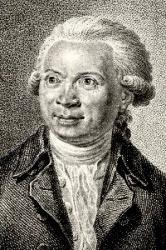
J. A. P. Schulz

1747 - 1800 Person Name: Johann A. P. Schulz (1747-1800) Topics: God, the Holy Trinity Being and Attributes Composer of "SOLNEY" in The Evangelical Hymnal Johann Abraham Peter Schulz Germany 1747-1800. Born at Luneburg, Germany, son of a baker, he attended St Michaelis school in Luneburg and studied organ, then the Johanneum from 1759-1764. In 1765 he was a student of composer, Johann Kimberger, and then taught in Berlin himself. In 1768 Kimberger recommended Schulz for the position of music teacher and accompanist to the Polish Princess Sapieha Woiwodin von Smolensk. Schulz moved to Berlin and traveled with her for three years performing throughout Europe, where he came in contact with many new musical ideas. He married Catharina Maria Gercken, and they had a daughter, Celle. He served as the conductor of the French Theatre in Berlin from 1776-1780. From 1786-1787 he was the Kapellmeister of Prince Henry in Rheinsberg. He began writing operas in 1785 and became musical director of the Berlin French theatre. Schulz went on to serve as Court Kapellmeister in Copenhagen from 1787-1795 before returning to Berlin. In Copenhagen the music library burned down, and he had a breakdown in health from trying to save it. His health suffered further from the effects of a shipwreck he experienced in 1796. Schulz wrote seven operas, stage music, oratorios, and cantatas, as well as piano pieces, folk songs, and church music. He also wrote articles on music theory for Johann Georg Sulzer’s ‘Allgemeine Theorie der schonen Kunste’ in four volumes. He died at Schwedt an der Oder, Germany. John Perry

Healey Willan

1880 - 1968 Person Name: Healey Willan, 1880 Topics: God The Holy Trinity Arranger of "O LUX BEATA TRINITAS" in The Hymnary of the United Church of Canada Healey Willan (b. Balham, London, England, October 12, 1880; d. Toronto, Ontario, February 16, 1968), theory teacher, composer and organist, was born into an Anglo-Catholic family in England and served several churches in the London area, becoming known especially for his adaptations of Gregorian chant to be able to be sung in English translation. In 1913 he moved to Canada where he led the theory department and was organist at the Toronto Conservatory of Music. He also was organist at St. Paul’s, Canada’s largest Anglican church, and after 1921 at the smaller Church of St. Mary Magdalene. By invitation, he composed an anthem for the coronation of Queen Elizabeth II, a singular honor for one not residing in England. Emily Brink

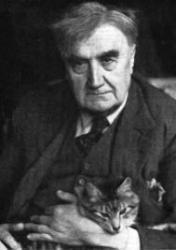
Ralph Vaughan Williams

1872 - 1958 Topics: The Holy Trinity Arranger of "HYFRYDOL" in The New Century Hymnal Through his composing, conducting, collecting, editing, and teaching, Ralph Vaughan Williams (b. Down Ampney, Gloucestershire, England, October 12, 1872; d. Westminster, London, England, August 26, 1958) became the chief figure in the realm of English music and church music in the first half of the twentieth century. His education included instruction at the Royal College of Music in London and Trinity College, Cambridge, as well as additional studies in Berlin and Paris. During World War I he served in the army medical corps in France. Vaughan Williams taught music at the Royal College of Music (1920-1940), conducted the Bach Choir in London (1920-1927), and directed the Leith Hill Music Festival in Dorking (1905-1953). A major influence in his life was the English folk song. A knowledgeable collector of folk songs, he was also a member of the Folksong Society and a supporter of the English Folk Dance Society. Vaughan Williams wrote various articles and books, including National Music (1935), and composed numerous arrange­ments of folk songs; many of his compositions show the impact of folk rhythms and melodic modes. His original compositions cover nearly all musical genres, from orchestral symphonies and concertos to choral works, from songs to operas, and from chamber music to music for films. Vaughan Williams's church music includes anthems; choral-orchestral works, such as Magnificat (1932), Dona Nobis Pacem (1936), and Hodie (1953); and hymn tune settings for organ. But most important to the history of hymnody, he was music editor of the most influential British hymnal at the beginning of the twentieth century, The English Hymnal (1906), and coeditor (with Martin Shaw) of Songs of Praise (1925, 1931) and the Oxford Book of Carols (1928). Bert Polman

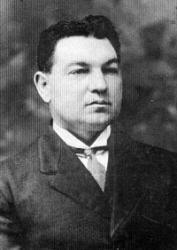
James Rowe

1865 - 1933 Topics: The Holy Trinity Author of "I walk with the King, hallelujah" in Alleluia Pseudonym: James S. Apple. James Rowe was born in England in 1865. He served four years in the Government Survey Office, Dublin Ireland as a young man. He came to America in 1890 where he worked for ten years for the New York Central & Hudson R.R. Co., then served for twelve years as superintendent of the Mohawk and Hudson River Humane Society. He began writing songs and hymns about 1896 and was a prolific writer of gospel verse with more than 9,000 published hymns, poems, recitations, and other works. Dianne Shapiro, from "The Singers and Their Songs: sketches of living gospel hymn writers" by Charles Hutchinson Gabriel (Chicago: The Rodeheaver Company, 1916)

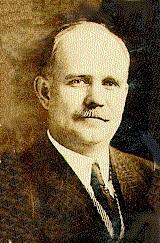
B. D. Ackley

1872 - 1958 Topics: The Holy Trinity Composer of "[In sorrow I wandered]" in Alleluia Bentley DeForrest Ackley was born 27 September 1872 in Spring Hill, Pennsylvania. He was the oldest son of Stanley Frank Ackley and the brother of A. H. Ackley. In his early years, he traveled with his father and his father's band. He learned to play several musical instruments. By the age of 16, after the family had moved to New York, he began to play the organ for churches. He married Bessie Hill Morley on 20 December 1893. In 1907 he joined the Billy Sunday and Homer Rodeheaver evangelist team as secretary/pianist. He worked for and traveled with the Billy Sunday organization for 8 years. He also worked as an editor for the Homer Rodeheaver publishing company. He composed more than 3000 tunes. He died 3 September 1958 in Winona Hills, Indiana at the age of 85 and is buried in Oakwood Cemetery, Warsaw, Indiana, near his friend Homer Rodeheaver. Dianne Shapiro (from ackleyfamilygenealogy.com by Ed Ackley and Allen C. Ackley)

Ignaz Pleyel

1757 - 1831 Topics: Praise to the Holy Trinity; Holy Trinity Composer of "GRACE CHURCH" in Book of Worship with Hymns and Tunes Ignaz Joseph Pleyel; b. Ruppertstahl, near Vienna, 1757; d. Parice France, 1831 Evangelical Lutheran Hymnal, 1908

Thomas Augustine Arne

1710 - 1778 Person Name: Thomas A. Arne Topics: Saints' Days and Holy Days The Circumcision; Christ Life and Ministry; Christ Praise to; Jesus Christ our Lord His holy Name; St. John Baptist Morning Prayer General; Trinity XX Morning Prayer General Composer of "ARLINGTON" in The Hymnal of the Protestant Episcopal Church in the United States of America 1940 Dr. Thomas Augustine Arne was born March 12, 1710, in London; became early celebrated as a composer, and established his reputation by settling Milton's "Comus" to music - light, airy, and original; he composed many songs, and nearly all his attempts were successful; died March 5, 1778, aged 68. A Dictionary of Musical Information by John W. Moore, Boston: Oliver, Ditson & Company, 1876

Oliver Wendell Holmes

1809 - 1894 Person Name: Oliver Wendell Holmes, 1809 - 94 Topics: The Church Year Trinity Sunday - The Holy Trinity Author of "Lord of all being, throned afar" in Service Book and Hymnal of the Lutheran Church in America Holmes, Oliver Wendell, M.D, LL.D., son of the Rev. Abiel Holmes, D.D. of Cambridge, U.S.A., was born at Cambridge, Aug. 29, 1809, and educated at Harvard, where he graduated in 1829. After practising for some time in Boston, he was elected in 1847 to the chair of Anatomy, in Harvard. His writings in prose and verse are well known and widely circulated. They excel in humour and pathos. Although not strictly speaking a hymnwriter, a few of his hymns are in extensive use, and include:— 1. Father of mercies, heavenly Friend. Prayer during war. 2. Lord of all being, throned afar. God's Omnipresence. This is a hymn of great merit. It is dated 1848. 3. 0 Lord of hosts, Almighty King. Soldiers’ Hymn. Dated 1861. 4. 0 Love divine that stoop'st to share. Trust. 1859. Of these Nos. 2 and 4 are in his Professor at the Breakfast Table, and are in common use in Great Britain, in Martineau's Hymns, 1873, and others. In 1886 the D.C.L. degree was conferred upon Professor Holmes by the University of Oxford. He was a member of the Unitarian body. He died Oct 7, 1894. [Rev. F. M. Bird, M.A.] --John Julian, Dictionary of Hymnology (1907) ================== Holmes, O. W. , p. 530, i. His Songs in Many Keys was published in 1861, his Poems, 1869, and the Cambridge edition of his Complete Poetical Works, 1895. Additional hymns of his have come into common use of late, including:— 1. Land where the banners wave last in the sun. [American National Hymn.] Appeared in his Songs in Many Keys, 1861 (7th ed. 1864, p. 289) as "Freedom, our Queen." 2. Lord, Thou hast led us as of old. [Promised Unity.] In his Before the Curfew and other Poems, chiefly occasional, Boston, 1888, as "An hymn set forth to bo sung by the Great Assembly at Newtown [Mass.]." In the Complete Poetical Works it is dated 1886. The hymn "Soon shall the slumbering morn awake," in Hymns for Church and Home, Boston, 1895, is composed of stanzas v.-vii. 3. Our Father, while our hearts unlearn The creeds that wrong Thy name. [Fruits of the Spirit.] Written for the 25th Anniversary Reorganization of the Poston Young Men's Christian Union, May 31, 1893. In his Complete Poetical Works, 1895, p. 298, Horder's Worship Song, 1905, and other collections. 4. Thou gracious [God] Power Whose mercy lends. [Reunion.] "Written for the annual meeting of the famous class '29, Harvard University, in 1869. ln the Methodist Hymn Book, 1904, it begins "Thou gracious God, Whose mercy lends." [Rev. L. F. Benson, D.D.] --John Julian, Dictionary of Hymnology, New Supplement (1907)

Is. Smith

1734 - 1805 Person Name: Isaac Smith Topics: Trinity IX The Holy Communion General Composer of "SILVER STREET" in The Hymnal of the Protestant Episcopal Church in the United States of America 1940 Isaac Smith; published "A Collection of Psalm Tunes" about 1770 Evangelical Lutheran Hymnal, 1908

William Knapp

1698 - 1768 Topics: The Holy Trinity - God the Holy Spirit Composer of "WAREHAM" in Christian Youth Hymnal Born: 1698, Ware­ham, Dor­set­shire, Eng­land. Died: Sep­tem­ber 26, 1768, Poole, Dor­set­shire, Eng­land. Buried: Poole, Dor­set­shire, Eng­land.

Pages


Export as CSV
It looks like you are using an ad-blocker. Ad revenue helps keep us running. Please consider white-listing Hymnary.org or getting Hymnary Pro to eliminate ads entirely and help support Hymnary.org.