You help make Hymnary.org possible. More than 10 million people from 200+ countries found hymns, liturgical resources and encouragement on Hymnary.org in 2025, including you. Every visit affirms the global impact of this ministry.

If Hymnary has been meaningful to you this year, would you take a moment today to help sustain it? A gift of any size—paired with a note of encouragement if you wish—directly supports the server costs, research work and curation that keep this resource freely available to the world.

Give securely online today, or mail a check to:
Hymnary.org
Calvin University
3201 Burton Street SE
Grand Rapids, MI 49546

Thank you for your partnership, and may the hope of Advent fill your heart.

Person Results

Topics:the+judgment
In:people

Planning worship? Check out our sister site, ZeteoSearch.org, for 20+ additional resources related to your search.
Showing 111 - 120 of 413Results Per Page: 102050

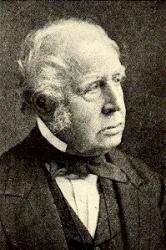
Edward Denny

1796 - 1889 Person Name: Sir Edward Denny Topics: Christ Second Coming and Judgment of Author of "Light of the lonely pilgrim's heart" in Trinity Hymnal Denny, Sir Edward, Bart . Sir Edward Denny, son of Sir E. Denny, 4th baronet, of Tralee Castle, County of Kerry, was born 2 Oct., 1796, and succeeded his father in August, 1831. He is a member of the Plymouth Brethren, and has contributed largely to their hymnody. His first publication, in which many of his hymns appeared, was A Selection of Hymns, Lond. Central Tract Depot, 1839. This was followed by Hymns & Poems , Lond., 1848 (third ed., 1870). He has also published several prose works. Many of his hymns are popular, and are in extensive use as:—" A pilgrim through this lonely world"; "Bride of the Lamb, rejoice, rejoice"; “Bright with all His crowns of glory"; “Light of the lonely pilgrim's heart”; "Sweet feast of love divine," and several others. In addition to these, which are separately annotated, and those which are confined in their use to the congregations of the "Brethren," there are also nearly 20 in limited use in Great Britain and America. Of these the following appeared, first in his Selection of Hymns, 1839; then, in the Appendix to Hymns for the Poor of the Flock, 1841; and then in his Hymns & Poems, 1848-70 :— 1. Break forth, 0 earth, in praises. Praise for Redemption. This is given in several collections in Great Britain and America. 2. Children of God, in all your need. The Great High Priest. In limited use. 3. Children of light, arise and shine. Looking unto Jesus. In numerous hymnals in G. Britain and America. 4. Children of light, awake, awake. Advent . This hymn is an application of the Parable of the Ten Virgins to the Second Coming of Christ. 5. Dear Lord, amid the throng that pressed. The Holy Women at the Cross. The use of this hymn in America is somewhat extensive. 6. Hope of our hearts, 0 Lord, appear. The Second Advent desired. In the Hymns for the Poor of the Flock, 1837; and the author's Hymns & Poems, 1848-60, and various collections in Great Britain and America. 7. Joy to the ransomed earth. Jesus the King. Its use is limited. 8. Lo 'tis the heavenly army. The Second Advent. The original of this hymn is in 4 stanzas of 10 lines and as such it is usually given: but in the Peoples Hymnal, 1867, it is arranged in 4 stanzas of 8 lines, and is also slightly altered. 9. 0 grace divine! the Saviour shed. Good Friday. In limited use. 10. 0 what a bright and blessed world. The New Earth. This hymn is based upon Gen. v. 29, as interpreted from a Millennial point of view. Christ is regarded as the Rest (Noah-Rest) of His people, and the remover of the curse from the earth. 11. Sweet was the hour, 0 Lord, to Thee. Christ at the Well of Sychar. Limited in use. 12. Thou vain deceitful world, farewell. Forsaking the World for Christ. In several collections. 13. Through Israel's land the Lord of all . Mission to the Jews. In addition to its use in its full form, it is also given as: "O Zion, when thy Saviour came," as in Dr. Walker's Psalms & Hymns, 1855-71; Snepp's Songs of Grace & Glory, and others. This opens with stanza ii. 14. 'Tis finish'd all—our souls to win. Jesus the Guide and Friend. In several collections. 15. 'Tis He, the Mighty Saviour comes . Missions . Given in Snepp, and one or two others. 16. 'Tis night, but O the joyful morn. Hope. In a few hymnals; also, beginning with stanzas ii., "Lord of our hearts, beloved of Thee," in Dr. Hatfield's Church Hymn Book, N. Y., 1872. 17. To Calvary, Lord, in Spirit now. Good Friday. This is given in several hymnals, including Spurgeon's Our Own Hymn Book, 1866, &c. The next is in the Selection of 1839, and the Hymns & Poems, 1848-70:— 18. 0 Blessed Lord, Thy feeble Sheep. The Good Shepherd. Its use is limited. The three with which we close are from J. G, Deck's Psalms & Hymns, 1842, Pt. ii., and the Hymns & Poems, 1848-70:— 19. Hark to the trump! behold it breaks . The Resurrection . The design of this hymn is thus described, by the author: "These lines are supposed to be the utterance of the saints at the blessed moment when they are actually ascending to meet the Lord in the air, as described in 1 Cor. xv. 51-57 and 1 Thess. iv. 16-18. It is given in several collections." 20. Isles of the deep, rejoice, rejoice. Missions. 21. Where, in this waste unlovely [and desert] world! Rest for the Weary. Its use is limited. -- John Julian, Dictionary of Hymnology (1907) ===================== Denny, Sir Edward, Bart., p. 287, ii., died in London, June 13, 1889. Additional pieces from his Selection of Hymns, 1839, are in modern collections including:— 1. O wondrous hour! when, Jesus, Thou. Good Friday . 2. 'Tis past, the dark and dreary night. Easter. 3. While in sweet communion feeding. Holy Communion. --John Julian, Dictionary of Hymnology, Appendix, Part II (1907)

L. O. Emerson

1820 - 1915 Topics: Judgments On Wicked Composer of "[O God, whom I in praise adore]" in Bible Songs Luther Orlando Emerson was born at Parsonsfield, Maine, August 3, 1820. He descended from distinguished English ancestry. His parents were quite musical, and while the family circle were together, they had a choir and orchestra of their own. The father played the violoncello, the mother was an excellent singer, the flute and violin added their sweet tones, till the quiet homestead rang with melody. Mr. Emerson's education was obtained at the district school, Parsonsfield Seminary and Effingham Academy. He was full of energy, quick and versatile, an apt scholar, and with a view to entering the profession of medicine he entered Dracut Academy, Mass. But his great love for music swerved him from that course, and now, having far better opportunities for cultivating and enjoying this taste and ability, he soon determined upon music as the profession of his choice. He accordingly commenced a course of musical instruction under the late I. B. Woodbury, then a popular teacher of music. After several years of study on the voice, piano, organ and in harmony, Mr. Emerson went to Salem, Mass., began teaching, and took charge of his first choir at a salary of one hundred dollars per year. Here he commenced the composition of music for his own choir, whiich was so popular with its members and the congregation, that Mr. Emerson was encouraged to seek a larger hearing by publishing a collection of church music. Among the tunes was that of Sessions, named after his pastor, which was destined to have a perennial popularity, and is often used in worship in the place of Old Hundred, for the Doxology. At the great Peace Jubilee it was received with applause when sung by a chorus of ten thousand voices, accompanied by an orchestra of two hundred instruments and a great pipe organ. The effect was sublime beyond expression. In 1847 occurred the marriage of Mr. Emerson to Miss Mary Gore, daughter of a prominent Boston merchant. She was a lady of much musical taste and ability. In 1853 he decided to make an effort to put his music before the public, and accordingly went to Boston in search of a publisher. Like most young and unknown authors, he met with but little encouragement, but finally found a publisher in the person of Mr. B. B. Muzzy. Thus was the Romberg Collection published. The book was not pushed — hence it found no market. After a residence of eight years in Salem, Mr. Emerson removed to Boston, accepting the position of organist and musical director at the Bulfinch Street Church, then under the pastoral care of Rev. Wm. R. Alger, which he filled for four years. He eagerly improved the rare means of culture which were once more enjoyed, meanwhile teaching and composing music. In 1857 he formed the connection with Oliver Ditson Company, of Boston, of author and publisher, which has continued to the present time with but one interruption (a single volume brought out by another firm), the Golden Wreath, which at once became popular, and sold forty thousand during the first year, this being the initial volume in the long series since brought out by these publishers. In 1858 came the Golden Harp, which was also a success. These successes gave him not only encouragement, but reputation. Mr. Emerson now entered upon a career of usefulness and popularity for which he had been preparing during the years of self-denying struggle and discipline. He was called to take charge of the music in the Second Congregational Church, Greenfield, Mass., and also of the musical department of Power's Institute, at Bernardston. Amid nature's most beautiful surroundings, he had a quiet retreat for the pursuit of his true vocation, the composition of church music. The first fruit of his genius here was the Sabbath Harmony, in 1860. This book was also a success. In 1863 followed the Harp of Judah, which had the remarkable sale of nearly fifty thousand copies in the first three months. This book probably gave Mr. Emerson his preeminence as a composer of church music, containing as it did his anthem, Guide Me, O Thou Great Jehovah, and many of his finest compositions. Having declined the solicitations of Dr. Lowell Mason to become his associate in music, Mr. Emerson started forth on his own plans, and attained the highest rank among those who loved the pure and beautiful in song. Mr. W. S. B. Mathews, a musical critic, pronounces him the best melodist of all the psalmodic writers. In 1866 the equally successful Jubilate appeared, followed by the Choral Tribute, the Standard and the Leader. In the last two Dr. I. R. Pahner was associated with him. Later on came the Salutation, Voice of Worship, Herald of Praise, etc. The diligence with which Mr. Emerson plied his pen can be estimated when one recalls the fact that he has made seventy-two collections of music, embracing music for churches, singing schools, public schools, choral societies and conventions, instruction books for voice, organ, etc. He has also composed and published scores of songs, quartets and instrumental pieces. The great amount of work this represents can only be appreciated by those who have undertaken similar labors. Some years ago the degree of Doctor of Music was conferred upon Professor Emerson by the Faculty of Findlay College, Findlay, Ohio. For many years past. Dr. Emerson has devoted his energies to the grand purpose of elevating the general character of music in our churches, and thus largely advancing the interests of true worship. He places great stress upon the mission of church music. He regards sacred music as the best expression of devotional feeling that exists. He looks upon sacred song as prayer, and believes that it inspires and intensifies prayer. With this view he has taken an active and prominent part in musical festivals and conventions, of which he has conducted over three hundred throughout the United States and Canada. As a conductor, he stands in the front rank. As a teacher. Dr. Emerson has an exceedingly happy faculty of imparting in a concise manner to his classes. His very pleasing address enables him to command the undivided attention of his pupils. As a singer, he has always held high rank, and has sung much in public. His voice is a baritone of great compass, and quite powerful. As a lecturer upon music, Dr. Emerson has attracted much attention. His most popular lecture is entitled The World of Music, in which he traces its origin and progress, and gives some excellent traits of the lives of the great composers. In this lecture he also shows the design of music, and how it has been prized in every age of the world, among all nations — its power in the Church and State, and the need of its influence in the family — in joy and sorrow — for this life and the life to come. -Biography of Gospel Song and Hymn Writers

Thomas Benson Pollock

1836 - 1896 Person Name: Thomas B. Pollock, 1836-1896 Topics: Judgment Author of "We beseech thee, hear us" in The Hymnal Pollock, Thomas Benson, M.A., was born in 1836, and graduated at Trinity College, Dublin, B.A. 1859, M.A. 1863, where he also gained the Vice-Chancellor's Prize for English Verse in 1855. Taking Holy Orders in 1861, he was Curate of St. Luke's, Leek, Staffordshire; St. Thomas's, Stamford Hill, London; and St. Alban's, Birmingham. Mr. Pollock is a most successful writer of metrical Litanies. His Metrical Litanies for Special Services and General Use, Mowbray, Oxford, 1870, and other compositions of the same kind contributed subsequently to various collections, have greatly enriched modern hymnbooks. To the 1889 Supplemental Hymns to Hymns Ancient & Modern, Mr. Pollock contributed two hymns, “We are soldiers of Christ, Who is mighty to save" (Soldiers of Christ), and "We have not known Thee as we ought" (Seeking God), but they are by no means equal to his Litanies in beauty and finish. -- John Julian, Dictionary of Hymnology (1907) =================== Pollock, T. B. , 900, i. We note:— 1. God of mercy, loving all. Litany for Quinquagesima. In the Gospeller, 1872. 2. Great Creator, Lord of all. Holy Trinity. In the Gospeller, 1876. 3. Holy Saviour, hear me; on Thy Name I call. Litany of the Contrite. In the Gospeller, 1870. From it "Faithful Shepherd, feed me in the pastures green," is taken. 4. Jesu, in Thy dying woes, p. 678, ii. 36. Given in Thring's Collection, 1882, in 7 parts, was written for the Gos¬peller. 5. My Lord, my Master, at Thy feet adoring. Passiontide. Translation of "Est-ce vous quo je vois, 6 mon Maître adorable!" (text in Moorsom's Historical Comp. to Hymns Ancient & Modern, 1889, p. 266), by Jacques Bridaine, b. 1701, d. 1767. Moorsom says he was born. at Chuselay, near Uzes, in Languedoc, and was a Priest in the French Church. The translation made in 1887 was included in the 1889 Supplemental Hymns to Hymns Ancient & Modern. 6. We are soldiers of Christ, p. 900, i. In the Gospeller, 1875. 7. Weep not for Him Who onward bears. Passiontide. No. 495 in the 1889 Suppl. Hymns to Hymns Ancient & Modern is part of a hymn in the Gospeller, 1870. --John Julian, Dictionary of Hymnology, Appendix, Part II (1907)

A. Ewing

1830 - 1895 Person Name: Alexander Ewing Topics: The Last Things Judgment Composer of "EWING" in The Lutheran Hymnal Alexander C (Rex) Ewing United Kingdom 1830-1895. Born at Aberdeen,Scotland, he studied music and German at Heidelberg University and law in Aberdeen. However, he did not qualify as a lawyer. A member of the Aberdeen Harmonic Choir and the Hadyn Society of Aberdeen, he was regarded as the most talented young musician in the city. He became an author, musician, editor, composer, and translator. He married Juliana Horatia Gatty in 1867. She died in 1885, and he remarried Elizabeth Margaret Cumby in 1886. He was a career officer in the British Army's Commissariat Department and subsequently the Army Pay Corps. He served at Constantinople during the Crimean War, thereafter in China for six years, then in Ireland during the Fenian Uprising. He was then in New Brunswick just after England created the British North American Act, creating the Dominion of Canada. He then went to Fredericton, where he played the organ and sang at Christ Church Cathedral. He was transferred to Aldershot. In 1879 he went to Malta, then served in Ceylon before returning to England. He reached the rank of Lt. Col. He translated several works by other authors. He retired and spent the last six years of his life in Taunton, England, where he died. John Perry

Frank Mason North

1850 - 1935 Person Name: Frank Mason North, 1850-1935 Topics: Judgment Author of "Where Cross the Crowded Ways of Life" in Hymns of the Saints North, Frank Mason, D.D., b. at New York, Dec. 3, 1850, graduated at Wesleyan University 1872, and entered the ministry of the Methodist Episcopal Church 1872. In 1892 he became Correspondence Secretary of the New York City Church Extension and Missionary Society, and is now (1905) editor of The Christian City. His hymns in common use include:— 1. Jesus, the calm that fills my breast. [Peace.] In The Plymouth Hymnal,1894; Sursum Corda, 1898; The Methodist Hymnal, 1905, &c. 2. When cross the crowded ways of life. [City Missions.] In The Methodist Hymnal, 1905. [Rev. L. F. Benson, D.D.] --John Julian, Dictionary of Hymnology, New Supplement (1907) ================= North, Frank Mason, D.D. (December 3, 1850--December 17, 1935). The Appendix Index reference, p.1607 in Julian, to Dr. North is to John Post Attwater who used "Frank North" as his nom de plume. In addition to the information included in the short biographical sketch at p.1677 it should be added that Dr. North continued his studies at Wesleyan University, advancing to the M.A. degree in 1875, later being honored by that institution's D.D., 1894, and L.L.D., 1918. He was a member of the New York East Conference of the Methodist Episcopal Church and served several pastorates in New York State and City as well as one at Middletown, Connecticut, 1887-1892. During the years 1892-1912, while Corresponding Secretary of the New York City Extension and Missionary Society and the editor of The Christian City, he was also Corresponding Secretary of the National City Evangelical Union of the Methodist Episcopal Church. From 1912 to 1924 he was the Secretary of the Board of Foreign Missions of his church and through these years he served as Chairman of its Executive Committee. He was also Secretary, Chairman of the Executive Committee, and President of the Federal Council of the Churches of Christ in America. It was largely through his efforts and influence that the Federal Council was organized. Trustee and member of governing boards of numerous institutions in the United States, China, and Japan, among the additional honors which came to him were Chevalier Legion of Honor and "Officer de l'Instruction Publique," France; Officer of the Royal Order of George I, Greece. He was one of the great Protestant leaders of his generation. The leading article in The Hymn, 30 April 1950, was an excellent appreciation of Dr. North and his work. Sources: Handbooks of various hymnals; Who Was Who I; Foote, Henry Wilder, Three Centuries of American Hymnody; Ninde, Edward S., Story of the American Hymn; Bailey, ALbert E., The Gospel in Hymns; Pratt, John Barnes, Present Day Hymns; correspondence. --Robert G. McCutchan, DNAH Archives

Carlton R. Young

b. 1926 Topics: Judgment Arranger of "GUDS KÄRLEK" in The Covenant Hymnal

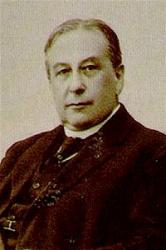
Edward Henry Bickersteth

1825 - 1906 Person Name: Edward H. Bickersteth Topics: Christ Second Coming and Judgment of Author of "For my sake and the gospel's go" in Trinity Hymnal Bickersteth, Edward Henry, D.D., son of Edward Bickersteth, Sr. born at Islington, Jan. 1825, and educated at Trinity College, Cambridge (B.A. with honours, 1847; M.A., 1850). On taking Holy Orders in 1848, he became curate of Banningham, Norfolk, and then of Christ Church, Tunbridge Wells. His preferment to the Rectory of Hinton-Martell, in 1852, was followed by that of the Vicarage of Christ Church, Hampstead, 1855. In 1885 he became Dean of Gloucester, and the same year Bishop of Exeter. Bishop Bickersteth's works, chiefly poetical, are:— (l) Poems, 1849; (2) Water from the Well-spring, 1852; (3) The Rock of Ages, 1858 ; (4) Commentary on the New Testament, 1864; (5) Yesterday, To-day, and For Ever, 1867; (6) The Spirit of Life, 1868; (7) The Two Brothers and other Poems, 1871; (8) The Master's Home Call, 1872 ; (9) The Shadowed Home and the Light Beyond, 1874; (10) The Beef and other Parables, 1873; (11) Songs in the House of Pilgrimage, N.D.; (12) From Year to Year, 1883. As an editor of hymnals, Bp. Bickersteth has also been most successful. His collections are:— (1) Psalms & Hymns, 1858, based on his father's Christian Psalmody, which passed through several editions; (2) The Hymnal Companion, 1870; (3) The Hymnal Companion revised and enlarged, 1876. Nos. 2 and 3, which are two editions of the same collection, have attained to an extensive circulation.   [Ch. of England Hymnody.] About 30 of Bp. Bickersteths hymns are in common use. Of these the best and most widely known are:—" Almighty Father, hear our cry"; "Come ye yourselves apart and rest awhile"; "Father of heaven above"; "My God, my Father, dost Thou call"; "O Jesu, Saviour of the lost"; "Peace, perfect peace"; "Rest in the Lord"; "Stand, Soldier of the Cross"; " Thine, Thine, for ever"; and "Till He come.” As a poet Bp. Bickersteth is well known. His reputation as a hymn-writer has also extended far and wide. Joined with a strong grasp of his subject, true poetic feeling, a pure rhythm, there is a soothing plaintiveness and individuality in his hymns which give them a distinct character of their own. His thoughts are usually with the individual, and not with the mass: with the single soul and his God, and not with a vast multitude bowed in adoration before the Almighty. Hence, although many of his hymns are eminently suited to congregational purposes, and have attained to a wide popularity, yet his finest productions are those which are best suited for private use. -John Julian, Dictionary of Hymnology (1907) ================= Bickersteth, Edward Henry, p. 141, ii. Bishop Bickersteth's 1890 edition of his Hymnal Companion is noted on p. 1312, i., and several of his own hymns and translations, which appear therein for the first time, are annotated in this Appendix. One of these, "All-merciful, Almighty Lord," for the Conv. of St. Paul, was written for the 1890 edition of Hymnal Companion. --John Julian, Dictionary of Hymnology, Appendix, Part II (1907) ================== Bickersteth, B. H., p. 141, ii. Bp. Bickersteth died in London, May 16, 1906. --John Julian, Dictionary of Hymnology, New Supplement (1907)

Samuel A. Ward

1848 - 1903 Topics: Royalty of Christ Judgment the Prerogative of Composer of "MATERNA" in The Psalter

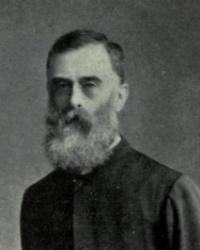
Benjamin Webb

1819 - 1885 Topics: Christ Second Coming and Judgment of Translator of "A hymn of glory let us sing" in Trinity Hymnal Benjamin Webb (b. London, England, 1819; d. Marylebone, London, 1885) originally translated the text in eight stanzas, although six only appear in Lift Up Your Hearts. It was published in The Hymnal Noted (1852), produced by his friend John Mason Neale. Webb received his education at Trinity College, Cambridge, England, and became a priest in the Church of England in 1843. Among the parishes he served was St. Andrews, Wells Street, London, where he worked from 1862 to 1881. Webb's years there coincided with the service of the talented choir director and organist Joseph Barnby, and the church became known for its excellent music program. Webb edited The Ecclesiologist, a periodi­cal of the Cambridge Ecclesiological Society (1842-1868). A composer of anthems, Webb also wrote hymns and hymn translations and served as one of the editors of The Hymnary (1872). Bert Polman ================== Webb, Benjamin, M.A., was born in London in 1820, and was educated in St. Paul's School; whence he passed to Trinity College, Cambridge, in 1838, B.A. 1842, M.A. 1845. Ordained by the Bishop [Monk] of Gloucester and Bristol he was Assistant Curate of Kemeston in Gloucestershire, 1843-44; of Christ Church, St. Pancras, 1847-49; and of Brasted, Kent, 1849-51; at which date he was presented to the P. C. of Sheen in Staffordshire, which he held until 1862, when he became Vicar of St. Andrews, Wells Street, London. In 1881 the Bishop [Jackson] of London collated him to the Prebend of Portpool in St. Paul's Cathedral. Mr. Webb was one of the Founders of the Cambridge Camden, afterwards the Ecclesiological Society; and the Editor of the Ecclesiologist from 1842 to 1868, as well as the General Editor of the Society's publications. His first appearance in print was as joint editor of Bishop Montague's Articles of Inquiry in 184; in 1843 he was joined with Mr. J. M. Neale in An Essay on Symbolism, and A Translation of Durandus; in 1847 he put forth his valuable work on Continental Ecclesiology; in 1848 he was joint editor with Dr. Mill of Frank’s Sermons, for the Anglo-Catholic Library, and with the Rev. J. Fuller-Russell of Hierurgia Anglicana. After the decease of his father-in-law (Dr. Mill), he edited Dr. Mill's Catechetical Lectures, 1856; a second edition of Dr. Mill's Christian Advocates Publications on the Mythical Interpretation of the Gospels, 1861; and of Dr. Mill's Sermons on our Lord's Temptation, 1873. He was also one of the editors of the Burntisland reprint of the Sarum Missal. One of his most valuable works is Instructions and Prayers for Candidates for Confirmation, of which the third edition was published in 1882. Mr. Webb was one of the original editors of the Hymnal Noted, and of the sub-Committee of the Ecclesiological Society, appointed to arrange the words and the music of that book; and was also the translator of some of the hymns. In conjunction with the Rev. Canon W. Cooke he was editor of the Hymnary, 1872, for which office his habitual reconstruction and composition of the words of the anthems used at St. Andrew's, Wells Street, as well as his connection with the Hymnal Noted, eminently qualified him. His original hymns contributed to the Hymnary, 1871 and 1872, were:-- 1. Assessor to thy King. St. Bartholomew. In the Hymnary, 1872. 2. Behold He comes, thy King most holy. Advent. Originally written to be sung in St. Andrew's Church, Wells Street, as an anthem to the music of Schumann's Advent-lied, and afterwards published in the Hymnary, 1872. 3. Praise God, the Holy Trinity. Hymn of Faith. Originally written for use in St. Andrew's, Wells Street, and subsequently in the Hymnary, 1872. 4. Praise the Rock of our salvation. Dedication of a Church. Published in the Hymnary, 1872. Mr. Webb's authorised text is in the Westminster Abbey Hymn Book, 1883. 5. Ye angel hosts above. Universal Praise to God. In the Hymnary, 1872. He died in London, Nov. 27, 1885. [Rev. William Cooke, M.A.] -- John Julian, Dictionary of Hymnology (1907)

Bartholomaüs Ringwaldt

1532 - 1599 Person Name: Bartholomaeus Ringwalt Topics: The Christian Life Judgment Author of "The Day Is Surely Drawing Near" in American Lutheran Hymnal Bartholomew Ringwaldt was born at Frankfort-on-the-Oder, in 1530, and was a Lutheran pastor at Langfield, in Prussia, where he died, 1598. His hymns resemble Luther's in their simplicity and power. Several of them were written to comfort himself and others in the sufferings they endured from famine, pestilence, fire and floods. In 1581, he published "Hymns for the Sundays and Festivals of the whole Year." --Annotations of the Hymnal, Charles Hutchins, M.A. 1872. ============================ Ringwaldt, Bartholomäus (Ringwalt, Ringwald), was born Nov. 28, 1532, at Frankfurt a. Oder. He was ordained in 1557, and was pastor of two parishes before he settled in 1566 as pastor of Langfeld (or Langenfeld), near Sonnenburg, Brandenburg. He was still there in 1597, but seems to have died there in 1599, or at least not later than 1600. (Koch, ii. 182; Goedeke's Grundriss, vol. ii. 1886, p. 512; Blätter fur Hymnologie, 1885. Ringwaldt exercised a considerable influence on his contemporaries as a poet of the people, as well as by his hymns properly so called. He was a true German patriot, a staunch Lutheran, and a man who was quite ready to face the consequences of his plain speaking. His style is as a rule clear and good, though his rhymes are often enough halting; and he possessed considerable powers of observation and description. After 1577 he published various didactic poems, the most important being, (1) Newezeittung: So Hanns Fromman mit sich auss der Hellen unnd dem Himel bracht, Amberg, 1582, and the later editions enlarged and rewritten as Christliche Warnung des Trewen Eckarts, &c, Frankfurt a. Oder, 1588. In various forms and abridgments it passed through at least 34 editions up to 1700. This work is a mirror of the times and of the morals of the people. (2) Die Lauter Warheit, darinnen angezeiget, wie sich ein Weltlicher und Geistlicher Kriegsman in seinen Beruff vorhalten soil, &c, Erfurt, 1586. Of this again at least 18 eds. appeared up to 1700. In it he gives lively pictures of the life of the various ranks and orders of his time, and shows the temptations and failings of each, not by any means sparing his own class, i.e. the Lutheran clergy. As a hymnwriter Ringwaldt was also of considerable importance. He was one of the most prolific hymn-writers of the 16th century. Wackernagel, iv. pp. 906-1065, gives 208 pieces under his name, about 165 of which may be called hymns. A selection of 59 as his Geistliche Lieder, with a memoir by H. Wendebourg, was published at Halle in 1858. A number appeared in the various eds. of his Trewer Echart and Lauter Warheit as above. The rest appeared principally in his (1) Der 91. Psalm neben Siben andern schönen Liedern, &c, Frankfurt,a. Oder, 1577. (2) Evangelia, Auffalle Sontag unnd Fest, Durchs gantze Jahr, &c, Frankfurt a. Oder, N.D. The earliest edition now known is undated, but Wackernagel, i., p. 523, gives it as of 1582. It is marked as a 2nd edition, and has a preface dated Nov. 28, 1581. It contains hymns founded on the Gospels for Sundays and Festivals, &c. (3) Handbüchlin: geistliche Lieder und Gebetlein, Auff der Reiss, &c, Frankfurt a. Oder, 1586 (preface, Feb. 21, 1582). A good many of his hymns passed into German collections of the 16th and 17th centuries, and a number are still in German common use. Those of Ringwaldt's hymns which have passed into English are:— i. Es ist gewisslich an derZeit. Second Advent. The anonymous original of this hymn is one of Zwey schöne Lieder, printed separately circa 1565, and thence in Wackernagel, iv. p. 344. W. von Maltzahn, in his Bücherschatz, 1875, No. 616, p. 93, cites it as in an undated Nürnberg broadsheet, circa 1556. Wackernagel also gives along with the original the revised form in Ringwaldt's Handbüchlin, 1586. Both forms are also in the Unverfälschter Liedersegen, 1851, No. 746, in 7 stanzas of 7 lines. It is based on the "Dies Irae," but can hardly be called a version of it. The original has a picturesqueness and force which are greatly lost in Ringwaldt's revision. It was much used in Germany during the Thirty Years' War, when in these distressful times men often thought the Last Day was at hand. The translations are all, except No. 2, from Ringwaldt's text. They are:— 1. 'Tis sure that awful time will come. In full, by J. C. Jacobi, in his Psalter Germanica, 1722, p. 95 (1732, p. 202). Repeated, altered and abridged, in the Moravian Hymn Book, 1754 to 1886. It is also found in two centos. (1) The waking trumpets all shall hear (st. ii.), in Montgomery's Christian Psalmist, 1825. (2) When all with awe shall stand around (st. v.), from the Moravian Hymn Book, 1801, in the Pennsylvania Lutheran Church Book, 1868. 2. Most surely at th' appointed time. By A. T. Russell, as No. 38 in his Psalms & Hymns, 1851, repeated in the College Hymnal, N. Y., 1876. It is marked a translation from the "Dies Irae," but is really a good translation of st. i., ii., v. of the German of 1565, 3. Behold that awful day draws nigh. A translation of st. i., ii.. v., by W. Sugden, as No. 129 in the Methodist Scholars' Hymn Book, 1870. 4. The day is surely drawing near. In full by P. A. Peter as No. 457 in the Ohio Lutheran Hymnal, 1880. 5. Surely at the appointed time. By H. L. Hastings, made in 1878, and included as No. 722 in his Songs of Pilgrimage, 1886. It condenses iii., iv. as iii. 6. Tho time draws near with quickening pace. By Miss Fry, in her Hymns of the Reformation, 1845, p. 56. A hymn which has been frequently but erroneously called a translation from Ringwaldt's text, is noted as “Great God, what do I see and hear" (p. 454, i.). Hymns not in English common use:-- ii. Allein auf Gott setzt dein Vertraun. The Christian Life. In many of the older Gorman hymnbooks this is ascribed to Ringwaldt, but it is not found in any of his works now extant. Wackernagel, v. p. 327, gives it as anonymous from the Greifswald Gesang-Buch, 1597, where it is entitled "The golden A. B. C. wherein is very in¬geniously comprised what a man needs to know in order to lead an honourable and godly life." It is in 24 stanzas of 4 lines, each stanza beginning with successive letters of the alphabet. Also in Porst's Gesang-Buch, ed. 1855, No. 784. Bäumker, ii. p. 276, cites it as in the manuscript collection of a nun called Catherine Tirs, written in 1588, in the nunnery of Niesing, Münster. There it is in Low German, and begins "Allene up godt hope und truwe." Bäumker thinks Ringwaldt may possibly be the person who made the High German version. Translated as (1) "Alone in God put thou thy trust." By J. C. Jacobi, 1725, p. 29 (1732, p. 110). iii. Der Herr ist mein getreuer Hirt, Hält mich in seiner Hute. Ps. xxiii. Wackernagel, iv. p. 944, prints it from Ringwaldt's Evangelia, N.D., 1582 as above, in 7 st. of 7 1. The first four-lines of st. i. are taken from the older version, "Der Herre ist mein treuer Hirt." In the Minden Kavensberg Gesang-Buch, 1854, No. 512. Translated as (i.) "The Lord He is my Shepherd kind." By Miss Manington, 1863, p. 20. iv. Herr Jesu Christ, du höchstes Gut, Du Brunnquell der Genaden. Lent. One of the finest of German penitential hymns. Wackernagel, iv. p. 1028, gives it, in 8 st. of 7 1., from Ringwaldt's Christliche Warnung, 1588, where it is entitled "A fine hymn [of supplication] for the forgiveness of sins." In Burg's Gesang-Buch, Breslau, 1746, No. 1574. The translations are (1) “Lord Saviour Christ, my sovereign good." In the Supplement to German Psalmody, ed. 1765, p. 39. Rewritten as (2) "Lord Jesus Christ, my sov'reign good," as No. 226 in the Moravian Hymn Book , 1789. In the edition of 1886, No. 278, it begins "Jesus, thou source of every good." (3) "O Christ, thou chiefest good, thou spring." By Dr. G. Walker, 1860, p. 76. (4) "Lord Jesus Christ, thou highest good." By F. W. Young, in the Family Treasury, 1877, p. 653. [Rev. James Mearns, M.A.] --John Julian, Dictionary of Hymnology (1907)

Pages


Export as CSV
It looks like you are using an ad-blocker. Ad revenue helps keep us running. Please consider white-listing Hymnary.org or getting Hymnary Pro to eliminate ads entirely and help support Hymnary.org.