You help make Hymnary.org possible. More than 10 million people from 200+ countries found hymns, liturgical resources and encouragement on Hymnary.org in 2025, including you. Every visit affirms the global impact of this ministry.

If Hymnary has been meaningful to you this year, would you take a moment today to help sustain it? A gift of any size—paired with a note of encouragement if you wish—directly supports the server costs, research work and curation that keep this resource freely available to the world.

Give securely online today, or mail a check to:
Hymnary.org
Calvin University
3201 Burton Street SE
Grand Rapids, MI 49546

Thank you for your partnership, and may the hope of Advent fill your heart.

Person Results

Topics:advent+and+nativity
In:person

Planning worship? Check out our sister site, ZeteoSearch.org, for 20+ additional resources related to your search.
Showing 111 - 120 of 170Results Per Page: 102050

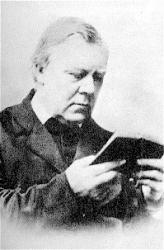
John Chandler

1806 - 1876 Topics: Advent; Epiphany; Saints' Days and Holy Days Nativity of St. John Baptist; Advent II Morning Prayer Closing; Advent III The Holy Communion Opening; Epiphany II The Holy Communion Sequence; Epiphany VI The Holy Communion Sequence; St. John Baptist Morning Prayer Opening; St. John Baptist The Communion General Translator of "On Jordan's bank the Baptist's cry" in The Hymnal of the Protestant Episcopal Church in the United States of America 1940 John Chandler, one of the most successful translators of hymns, was born at Witley in Surrey, June 16, 1806. He was educated at Corpus Christi College, Oxford, B.A. 1827, M.A. 1830. Ordained deacon in 1831 and priest in 1832, he succeeded his father as the patron and vicar of Whitley, in 1837. His first volume, entitled The Hymns of the Primitive Church, now first Collected, Translated and Arranged, 1837, contained 100 hymns, for the most part ancient, with a few additions from the Paris Breviary of 1736. Four years later, he republished this volume under the title of hymns of the Church, mostly primitive, collected, translated and arranged for public use, 1841. Other publications include a Life of William of Wykeham, 1842, and Horae sacrae: prayers and meditations from the writings of the divines of the Anglican Church, 1854, as well as numerous sermons and tracts. Chandler died at Putney on July 1, 1876. --The Hymnal 1940 Companion =============== Chandler, John, M.A.,one of the earliest and most successful of modern translators of Latin hymns, son of the Rev. John F. Chandler, was born at Witley, Godalming, Surrey, June 16, 1806, and educated at Corpus Christi College, Oxford, where he graduated in 1827. He took Holy Orders in 1831, and became Vicar of Witley in 1837. He died at Putney, July 1, 1876. Besides numerous Sermons and Tracts, his prose works include Life of William of Wykeham, 1842; and Horae Sacrae; Prayers and Meditations from the writings of the Divines of the Anglican Church, with an Introduction, 1844. His translations, he says, arose out of his desire to see the ancient prayers of the Anglican Liturgy accompanied by hymns of a corresponding date of composition, and his inability to find these hymns until he says, "My attention was a short time ago directed to some translations [by Isaac Williams] which appeared from time to time in the British Magazine, very beautifully executed, of some hymns extracted from the Parisian Breviary,with originals annexed. Some, indeed, of the Sapphic and Alcaic and other Horatian metres, seem to be of little value; but the rest, of the peculiar hymn-metre, Dimeter Iambics, appear ancient, simple, striking, and devotional—in a word in every way likely to answer our purpose. So I got a copy of the Parisian Breviary [1736], and one or two other old books of Latin Hymns, especially one compiled by Georgius Cassander, printed at Cologne, in the year 1556, and regularly applied myself to the work of selection and translation. The result is the collection I now lay before the public." Preface, Hymns of the Primitive Church, viii., ix. This collection is:— (1) The Hymns of the Primitive Church, now first Collected, Translated, and Arranged, by the Rev. J. Chandler. London, John W. Parker, 1837. These translations were accompanied by the Latin texts. The trsanslations rearranged, with additional translations, original hymns by Chandler and a few taken from other sources, were republished as (2) The Hymns of the Church, mostly Primitive, Collected, Translated, and Arranged/or Public Use, by the Rev. J. Chandler, M.A. London, John W. Parker, 1841. From these works from 30 to 40 translations have come gradually into common use, some of which hold a foremost place in modern hymnals, "Alleluia, best and sweetest;" "Christ is our Corner Stone;" "On Jordan's bank the Baptist's cry;" "Jesus, our Hope, our hearts' Desire;" "Now, my soul, thy voice upraising;" "Once more the solemn season calls;" and, "O Jesu, Lord of heavenly grace;" being those which are most widely used. Although Chandler's translations are somewhat free, and, in a few instances, doctrinal difficulties are either evaded or softened down, yet their popularity is unquestionably greater than the translations of several others whose renderings are more massive in style and more literal in execution. --John Julian, Dictionary of Hymnology (1907)

Henry Lahee

1826 - 1912 Person Name: Henry Lahee, 1826-1912 Topics: God: His Attributes, Works and Word The Lord Jesus Christ - His Advent and Nativity Composer of "NATIVITY" in The Book of Praise Born: April 11, 1826, Chelsea, London, England. Died: April 29, 1912, London, England. Lahee studied under John Goss and William Sterndale Bennett. He played the organ at several churches, including Holy Trinity Church, Brompton (1847-74). He won prizes for his compositions in Bristol, Manchester, Glasgow, and London, and set to music poems by Edgar Allen Poe ("The Bells"), Henry Wadsworth Longfellow ("Building of the Ship") and Alfred Tennyson ("Sleeping Beauty"). His works include: Metrical Psalter, with William Irons, 1855 Famous Singers of Today and Yesterday, 1898 One Hundred Hymn Tunes Sources: Frost, p. 680 CS Concordance, pp. 246-47 Nutter, p. 460 --www.hymntime.com/tch

Andrew Mitchell Thomson

1779 - 1831 Person Name: Andrew Mitchell Thomson, 1778 - 1831 Topics: God The Lord Jesus Christ - His Advent and Nativity Composer of "ST. GEORGE'S, EDINBURGH" in The Hymnary of the United Church of Canada

John Wainwright

1723 - 1768 Person Name: John Wainwright, 1723-1768 Topics: Jesus Christ Advent and Nativity; Jesus Advent and Nativity Composer of "YORKSHIRE" in African Methodist Episcopal Church Hymnal John Wainwright United Kingdom. He published a collection of Psalm tunes, anthems, chants, and hymns. A talented musician, the following year he was appointed organist and singer at Manchester Collegiate Church (later the Manchester Cathedral). His son, Robert, succeeded him as organist after he died. John Perry

Henry Ramsden Bramley

1833 - 1917 Person Name: H. R. Bramley Topics: Jesus Christ Advent and Nativity; Jesus Advent and Nativity Harmonizer of "THE FIRST NOEL" in African Methodist Episcopal Church Hymnal English clergyman, a high-church Anglican. Text editor of Christmas Carols New and Old, 1871 (John Stainer was the music editor), a seminal work in the second period of carol revival. The usual four-part setting of "The First Nowell" appeared in this book. Published a number of translations of hymns and carols from the Latin. ============================= Bramley, Henry Ramsden, M.A., was born June 4, 1833, at Addingham, near Otley, Yorks, matriculated at Oriel College, Oxford, 1852, Scholar of University College 1853, Fellow of Magdalen 1857 (B.A. 1856, M.A. 1859). He was ordained D. 1856, P. 1858, was from 1861 to 1889 Vicar of Horspath, Oxon, and from 1895 to 1901 Canon and Precentor of Lincoln. His hymns and translations appeared principally in his own Christmas Carols (p. 212, ii.) and in the different Lyras edition by Mr. Shipley, generally marked as by " H. R. B." Of these, "The great God of Heaven is come down to earth" (Christmas), p. 212, ii., is in the English Hymnal, 1906. [Rev. James Mearns, M.A.] --John Julian, Dictionary of Hymnology, New Supplement (1907)

Edward Caswall

1814 - 1878 Topics: Advent; Epiphany; Saints' Days and Holy Days Nativity of St. John Baptist; Advent I The Holy Communion Closing; Penitence; St. John Baptist The Communion Opening Author of "Hark! a thrilling voice is sounding" in The Hymnal of the Protestant Episcopal Church in the United States of America 1940 Edward Caswall was born in 1814, at Yately, in Hampshire, where his father was a clergyman. In 1832, he went to Brasenose College, Oxford, and in 1836, took a second-class in classics. His humorous work, "The Art of Pluck," was published in 1835; it is still selling at Oxford, having passed through many editions. In 1838, he was ordained Deacon, and in 1839, Priest. He became perpetural Curate of Stratford-sub-Castle in 1840. In 1841, he resigned his incumbency and visited Ireland. In 1847, he joined the Church of Rome. In 1850, he was admitted into the Congregation of the Oratory at Birmingham, where he has since remained. He has published several works in prose and poetry. --Annotations of the Hymnal, Charles Hutchins, M.A. 1872 ===================== Caswall, Edward, M.A., son of the Rev. R. C. Caswall, sometime Vicar of Yately, Hampshire, born at Yately, July 15, 1814, and educated at Brasenose College, Oxford, graduating in honours in 1836. Taking Holy Orders in 1838, he became in 1840 Incumbent of Stratford-sub-Castle, near Salisbury, and resigned the same in 1847. In 1850 (Mrs. Caswall having died in 1849) he was received into the Roman Catholic communion, and joined Dr. Newman at the Oratory, Edgbaston. His life thenceforth, although void of stirring incidents, was marked by earnest devotion to his clerical duties and a loving interest in the poor, the sick, and in little children. His original poems and hymns were mostly written at the Oratory. He died at Edgbaston, Jan. 2, 1878, and was buried on Jan. 7 at Redwall, near Bromsgrove, by his leader and friend Cardinal Newman. Caswall's translations of Latin hymns from the Roman Breviary and other sources have a wider circulation in modern hymnals than those of any other translator, Dr. Neale alone excepted. This is owing to his general faithfulness to the originals, and the purity of his rhythm, the latter feature specially adapting his hymns to music, and for congregational purposes. His original compositions, although marked by considerable poetical ability, are not extensive in their use, their doctrinal teaching being against their general adoption outside the Roman communion. His hymns appeared in:— (1) Lyra Catholica, which contained 197 translations from the Roman Breviary, Missal, and other sources. First ed. London, James Burns, 1849. This was reprinted in New York in 1851, with several hymns from other sources added thereto. This edition is quoted in the indices to some American hymn-books as Lyra Cath., as in Beecher's Plymouth Collection, 1855, and others. (2) Masque of Mary, and Other Poems, having in addition to the opening poem and a few miscellaneous pieces, 53 translations, and 51 hymns. 1st ed. Lon., Burns and Lambert, 1858. (3) A May Pageant and Other Poems, including 10 original hymns. Lon., Burns and Lambert, 1865. (4) Hymns and Poems, being the three preceding volumes embodied in one, with many of the hymns rewritten or revised, together with elaborate indices. 1st ed. Lon., Burns, Oates & Co., 1873. Of his original hymns about 20 are given in the Roman Catholic Crown of Jesus Hymn Book, N.D; there are also several in the Hymns for the Year, N.D., and other Roman Catholic collections. --John Julian, Dictionary of Hymnology (1907) ====================== Caswall, E. , p. 214, ii. Additional original hymns by Caswall are in the Arundel Hymns, 1902, and other collections. The following are from the Masque of Mary, &c, 1858:— 1. Christian soul, dost thou desire. After Holy Communion. 2. Come, let me for a moment cast. Holy Communion. 3. O Jesu Christ [Lord], remember. Holy Communion. 4. Oft, my soul, thyself remind. Man's Chief End. 5. Sleep, Holy Babe. Christmas. Appeared in the Rambler, June 1850, p. 528. Sometimes given as "Sleep, Jesus, sleep." 6. The glory of summer. Autumn. 7. This is the image of the queen. B. V. M. His "See! amid the winter's snow,” p. 1037, i., was published in Easy Hymn Tunes, 1851, p. 36. In addition the following, mainly altered texts or centos of his translations are also in common use:— 1. A regal throne, for Christ's dear sake. From "Riches and regal throne," p. 870, ii. 2. Come, Holy Ghost, Thy grace inspire. From "Spirit of grace and union," p. 945, i. 3. Hail! ocean star, p. 99, ii,, as 1873. In the Birmingham Oratory Hymn Book, 1850, p. 158. 4. Lovely flow'rs of martyrs, hail. This is the 1849 text. His 1873 text is "Flowers of martyrdom," p. 947, i. 5. None of all the noble cities. From "Bethlehem! of noblest cities," p. 946, ii. 6. O Jesu, Saviour of the World. From “Jesu, Redeemer of the world," p. 228, ii. 7. 0 Lady, high in glory raised. From "O Lady, high in glory, Whose," p. 945, i. The Parochial Hymn Book, 1880, has also the following original hymns by Caswall. As their use is confined to this collection, we give the numbers only:— IS os. 1, 2, 3, 159 (Poems, 1873, p. 453), 209 (1873, p. 288), 299, 324 (1873, p. 323), 357, 402, 554, 555, 558, 569 (1873, p. 334). These are from his Masque of Mary 1858. Nos. 156, 207 (1873, p. 296), 208 (1873, p. 297), 518. These are from his May Pageant, 1865. As several of these hymns do not begin with the original first lines, the original texts are indicated as found in his Poems, 1873. [Rev. James Mearns, M.A.] --John Julian, Dictionary of Hymnology, New Supplement (1907)

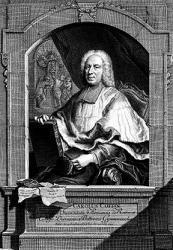
Charles Coffin

1676 - 1749 Topics: Advent; Epiphany; Saints' Days and Holy Days Nativity of St. John Baptist; Advent II Morning Prayer Closing; Advent III The Holy Communion Opening; Epiphany II The Holy Communion Sequence; Epiphany VI The Holy Communion Sequence; St. John Baptist Morning Prayer Opening; St. John Baptist The Communion General Author of "On Jordan's bank the Baptist's cry" in The Hymnal of the Protestant Episcopal Church in the United States of America 1940 Coffin, Charles, born at Buzaney (Ardennes) in 1676, died 1749, was principal of the college at Beauvais, 1712 (succeeding the historian Rollin), and rector of the University of Paris, 1718. He published in 1727 some, of his Latin poems, for which he was already noted, and in 1736 the bulk of his hymns appeared in the Paris Breviary of that year. In the same year he published them as Hymni Sacri Auctore Carolo Coffin, and in 1755 a complete ed. of his Works was issued in 2 vols. To his Hymni Sacri is prefixed an interesting preface. The whole plan of his hymns, and of the Paris Breviary which he so largely influenced, comes out in his words. "In his porro scribendis Hymnis non tam poetico indulgendunv spiritui, quam nitoro et pietate consulendum esse existimavi. Pleraque igitur, argumentis convenientia e purissiinis Scripturae Sacrae fontibus deprompsi quac idoneis Ecclesiae cantui numeris alligarem." His hymns are described by a French critic as having less brilliancy than those of Santüil (q.v.), but more simplicity and unction. They number 100 in the edition of 1736. Translated into English by J. Chandler, I. Williams and others, are noted under their respective Latin first lines. [William T. Brooke] -- John Julian, Dictionary of Hymnology (1907)

Samuel Webbe

1770 - 1843 Person Name: Samuel Webbe, the younger, 1770-1843 Topics: God The Lord Jesus Christ - His Advent and Nativity Adapter of "RICHMOND" in The Hymnary of the United Church of Canada Samuel Webbe, Jr. (1770-1843), adapted the tune RICHMOND. He was organist at Paradise Street Unitarian Church, Liverpool (1798). Later he succeeded his father as organist at the Spanish Ambassador’s Chapel, London (1817), and then St. Nicholas’ Church and St. Patrick’s Roman Catholic Chapel, Liverpool. --The Presbyterian Hymnal Companion, 1993

Henry Sloane Coffin

1877 - 1954 Person Name: Henry S. Coffin, 1877- Topics: Advent and Nativity Translator (stanzas 2, 3) of "O Come, O Come, Emmanuel" in Christian Worship

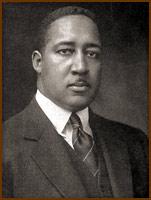
John W. Work

1901 - 1967 Person Name: John W. Work, III, 1901-1967 Topics: Jesus Christ Advent and Nativity; Jesus Advent and Nativity Arranger of "GO TELL IT" in African Methodist Episcopal Church Hymnal John Wesley Work III (1901-1967) Composer, educator, choral director, and ethnomusicologist John Wesley Work III was born on June 15, 1901, in Tullahoma, Tennessee, to a family of professional musicians. His grandfather, John Wesley Work, was a church choir director in Nashville, where he wrote and arranged music for his choirs. Some of his choristers were members of the original Fisk Jubilee Singers. His father, John Wesley Work Jr., was a singer, folksong collector and professor of music, Latin, and history at Fisk, and his mother, Agnes Haynes Work, was a singer who helped train the Fisk group. His uncle, Frederick Jerome Work, also collected and arranged folksongs, and his brother, Julian, became a professional musician and composer. Work began his musical training at the Fisk University Laboratory School, moving on to the Fisk High School and then the university, where he received a B.A. degree in 1923. After graduation, he attended the Institute of Musical Art in New York City (now the Julliard School of Music), where he studied with Gardner Lamson. He returned to Fisk and began teaching in 1927, spending summers in New York studying with Howard Talley and Samuel Gardner. In 1930 he received an M.A. degree from Columbia University with his thesis American Negro Songs and Spirituals. He was awarded two Julius Rosenwald Foundation Fellowships for the years 1931 to 1933 and, using these to take two years leave from Fisk, he obtained a B.Mus. degree from Yale University in 1933. Work spent the remainder of his career at Fisk, until his retirement in 1966. He served in a variety of positions, notably as a teacher, chairman of the Fisk University Department of Music, and director of the Fisk Jubilee Singers from 1947 until 1956. He published articles in professional journals and dictionaries over a span of more than thirty years. His best known articles were "Plantation Meistersingers" in The Musical Quarterly (Jan. 1940), and "Changing Patterns in Negro Folksongs" in the Journal of American Folklore (Oct. 1940). Work began composing while still in high school and continued throughout his career, completing over one hundred compositions in a variety of musical forms -- for full orchestra, piano, chamber ensemble, violin and organ -- but his largest output was in choral and solo-voice music. He was awarded first prize in the 1946 competition of the Federation of American Composers for his cantata The Singers, and in 1947 he received an award from the National Association of Negro Musicians. In 1963 he was awarded an honorary doctorate from Fisk University. Following Work's collection Negro Folk Songs, the bulk of which was recorded at Fort Valley, he and two colleagues from Fisk University, Charles S. Johnson, head of the department of sociology (later, in October 1946, chosen as the university's first black president), and Lewis Jones, professor of sociology, collaborated with the Archive of American Folk Song on the Library of Congress/Fisk University Mississippi Delta Collection (AFC 1941/002). This project was a two-year joint field study conducted by the Library of Congress and Fisk University during the summers of 1941 and 1942. The goal of the partnership was to carry out an intensive field study documenting the folk culture of a specific community of African Americans in the Mississippi Delta region. The rapidly urbanizing commercial area of Coahoma County, Mississippi, with its county seat in Clarksdale, became the geographical focus of the study. Some of the correspondence included in this collection between Work and Alan Lomax, then head of the Archive of American Folk Song, touches on both the Fort Valley and the emerging Fisk University recording projects. John Wesley Work died on May 17, 1967. --memory.loc.gov/ammem/ftvhtml/

Pages


Export as CSV
It looks like you are using an ad-blocker. Ad revenue helps keep us running. Please consider white-listing Hymnary.org or getting Hymnary Pro to eliminate ads entirely and help support Hymnary.org.