You help make Hymnary.org possible. More than 10 million people from 200+ countries found hymns, liturgical resources and encouragement on Hymnary.org in 2025, including you. Every visit affirms the global impact of this ministry.

If Hymnary has been meaningful to you this year, would you take a moment today to help sustain it? A gift of any size—paired with a note of encouragement if you wish—directly supports the server costs, research work and curation that keep this resource freely available to the world.

Give securely online today, or mail a check to:
Hymnary.org
Calvin University
3201 Burton Street SE
Grand Rapids, MI 49546

Thank you for your partnership, and may the hope of Advent fill your heart.

Person Results

Topics:god+-+the+father
In:person

Planning worship? Check out our sister site, ZeteoSearch.org, for 20+ additional resources related to your search.
Showing 111 - 120 of 340Results Per Page: 102050

Chas. H. Gabriel

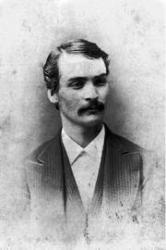
1856 - 1932 Person Name: C. H. G. Topics: God Father Author of "Calling the prodigal" in The Popular Hymnal Pseudonyms: C. D. Emerson, Charlotte G. Homer, S. B. Jackson, A. W. Lawrence, Jennie Ree ============= For the first seventeen years of his life Charles Hutchinson Gabriel (b. Wilton, IA, 1856; d. Los Angeles, CA, 1932) lived on an Iowa farm, where friends and neighbors often gathered to sing. Gabriel accompanied them on the family reed organ he had taught himself to play. At the age of sixteen he began teaching singing in schools (following in his father's footsteps) and soon was acclaimed as a fine teacher and composer. He moved to California in 1887 and served as Sunday school music director at the Grace Methodist Church in San Francisco. After moving to Chicago in 1892, Gabriel edited numerous collections of anthems, cantatas, and a large number of songbooks for the Homer Rodeheaver, Hope, and E. O. Excell publishing companies. He composed hundreds of tunes and texts, at times using pseudonyms such as Charlotte G. Homer. The total number of his compositions is estimated at about seven thousand. Gabriel's gospel songs became widely circulated through the Billy Sunday­-Homer Rodeheaver urban crusades. Bert Polman

E. O. Excell

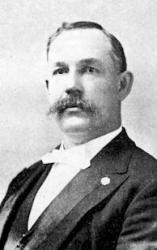
1851 - 1921 Topics: God Father Composer of "[When upon life's billows you are tempest tossed]" in The Popular Hymnal Edwin Othello Excel USA 1851-1921. Born at Uniontown, OH, he started working as a bricklayer and plasterer. He loved music and went to Chicago to study it under George Root. He married Eliza Jane “Jennie” Bell in 1871. They had a son, William, in 1874. A member of the Methodist Episcopal Church, he became a prominent publisher, composer, song leader, and singer of music for church, Sunday school, and evangelistic meetings. He founded singing schools at various locations in the country and worked with evangelist, Sam Jones, as his song leader for two decades. He established a music publishing house in Chicago and authored or composed over 2,000 gospel songs. While assisting Gypsy Smith in an evangelistic campaign in Louisville, KY, he became ill, and died in Chicago, IL. He published 15 gospel music books between 1882-1925. He left an estate valued at $300,000. John Perry

Franklin L. Sheppard

1852 - 1930 Person Name: Franklin L. Sheppard, 1852-1930 Topics: God As Father Adapter of "TERRA BEATA" in Lift Up Your Hearts Franklin L. Sheppard (b. Philadelphia, PA, 1852; d. Germantown, PA, 1930) arranged the tune for Babcock's text and published it in the Presbyterian church school hymnal Alleluia (1915), edited by Sheppard (Babcock and Sheppard were friends). After graduating from the University of Pennsylvania, Philadelphia, Sheppard entered the family foundry business in Baltimore, Maryland, in 1875. He was organist at Zion Episcopal Church and later was an elder and music director of the Second Presbyterian Church in Baltimore. President of the Presbyterian Board of Publications, Sheppard also served on the committee that prepared the Presbyterian Hymnal of 1911. In the history of hymnody he is remembered primarily for arranging the tune TERRA BEATA for “This Is My Father's World.” Bert Polman

John Marriott

1780 - 1825 Topics: God Father Author of "Thou, Whose Almighty Word" in The Popular Hymnal Marriott, John, M.A, son of E. Marriott, D.D., Rector of Cottesbach, near Lutterworth, was born at Cottesbach, in 1780, and educated at Rugby, and Christ Church, Oxford. He was the second of two who obtained honours in the schools in 1802, the first year in which there was a public examination for honours at Oxford. He was also Student of Christ Church, and for about two years a private tutor in the family of the Duke of Buccleuch. The Duke presented him to the Rectory of Church Lawford, Warwickshire. This he retained to his death, although his wife's health compelled him to reside in Devonshire, where he was successively curate of St. Lawrence and other parishes in Exeter, and of Broadclyst, near Exeter, where he died March 31, 1825. His published works include a volume of Sermons which he issued in 1818, and a posthumous volume of Sermons, published by his sons in 1838. His hymns were never published by himself, nor in book form by any one. A few appeared in print during his lifetime, but without his permission. These include:— 1. A saint? 0 would that I could claim. Holiness desired. "Written off almost at the moment, on hearing the name applied in a scornful way at a party, about 1813." It was printed in The Friendly Visitor, 1834. 2. Thou, Whose Almighty word. Missions. Written, his son says, "about 1813." It was printed in The Friendly Visitor, July, 1825, in 4 st. of 11., with the Title "Missionary Hymn," and without signature. This text differs only in two or three words from the original as supplied by the author's son to Dr. Rogers and published by him in his Lyra Brittanica, 1867, p. 395. Two texts are known which are received as original, the first the undoubted text in Lyra Brittanica, and the second that given by Lord Selborne from the Collection of Dr. Baffles, Congregational Minister of Liverpool. 3. When Christ our human form did bear. Christ's love of Children. “Written in 1816 for the Parochial Schools, Upottery, Devon." -- John Julian, Dictionary of Hymnology (1907) ================= Marriott, J. , p. 715, i., No. 1, is in the Fuller-Maitland Hymns for Private Devotion, 1827. --John Julian, Dictionary of Hymnology, Appendix, Part II (1907)

F. Clark Perry

Person Name: F. C. P. Topics: God Father Author of "He Cares for Me" in The Popular Hymnal

Alfred B. Smith

1916 - 2001 Person Name: Alfred B. Smith, 1916- Topics: God our Father Composer of "[For God so loved the world]" in Great Hymns of the Faith Used pseudonym B. C. Laurelton ---------- In 1930, he began playing on radio broadcasts in Jersey City, New Jersey, on "The Old Fashioned Gospel Hour." After meeting Wendell P. Loveless, Alfred enrolled at the Moody Bible Institute in Chicago and became a member of the WMBI staff. During service as Minister of Music at The Church of the Open Door in Philadelphia, he taught at The Philadelphia School of the Bible in the fall of 1938. During that year, he wrote "For God So Loved the World" after visiting the ninety-four year-old hymn writer George C. Stebbins. Smith met Billy Graham when they were both students at Wheaton College. During their long collaboration, they founded Singspiration in 1941. After graduating from Wheaton, Smith, Graham, and George Beverly Shea started "Youth for Christ" in Chicago. --Daniel Mahraun (from livinghymns.org)

Gracia Grindal

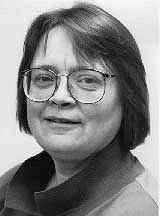
b. 1943 Person Name: Gracia Grindal, 1943- Topics: God Images (Father) Author of "And Jesus said, our God is like a shepherd" in The Book of Praise Gracia Grindal (b. Powers Lake, ND, 1943). Grindal was educated at Augsburg College, Minneapolis, Minnesota; the University of Arkansas; and Luther-Northwestern Seminary, St. Paul, Minnesota, where she has served since 1984 as a professor of pastoral theology and communications. From 1968 to 1984 she was a professor of English and poet-in-residence at Luther College, Decorah, Iowa. Included in her publications are Sketches Against the Dark (1981), Scandinavian Folksongs (1983), Lessons in Hymnwriting (1986, 1991), We Are One in Christ: Hymns, Paraphrases, and Translations (1996), Good News of Great Joy: Advent Devotions for the Home (1994 with Karen E. Hong), Lina Sandell, the Story of Her Hymns (2001 with John Jansen), and A Revelry of Harvest: New and Selected Poems (2002). She was instrumental in producing the Lutheran Book of Worship (1978) and The United Methodist Hymnal (1989). Bert Polman

Philipp Nicolai

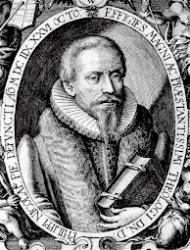
1556 - 1608 Person Name: Phillip Nicolai Topics: God as Father Composer of "[Why do the nations rage]" in Christian Worship Philipp Nicolai (b. Mengeringhausen, Waldeck, Germany, 1556; d. Hamburg, Germany, 1608) lived an eventful life–he fled from the Spanish army, sparred with Roman Catholic and Calvinist opponents, and ministered to plague-stricken congregations. Educated at Wittenberg University, he was ordained a Lutheran pastor in 1583 in the city of Herdecke. However, he was soon at odds with the Roman Catholic town council, and when Spanish troops arrived to reestablish Roman dominance, Nicolai fled. In 1588 he became chief pastor at Altwildungen and court preacher to Countess Argaretha of Waldeck. During that time Nicolai battled with Calvinists, who disagreed with him about the theology of the real presence of Christ in the Lord's Supper. These doctrinal controversies were renewed when he served the church in Unna, Westphalia. During his time as a pastor there, the plague struck twice, and Nicolai wrote both "How Bright Appears the Morning Star" and "Wake, Awake." Nicolai's last years were spent as Pastor of St. Katherine's Church in Hamburg. Bert Polman ===================== Nicolai, Philipp, D.D., son of Dieterich Nicolai, sometime Lutheran pastor at Herdecke, in Westphalia, and after 1552, at Mengeringhausen in Waldeck, was born at Mengeringhausen, August 10, 1556. (The father was son of Nicolaus Rafflenbol, of Rafflenbol, near Hagen, in Westphalia, and in later life had adopted the Latinised form Nicolai of his father's Christian name as his own surname.) In 1575 Nicolai entered the University of Erfurt, and in 1576 he went to Wittenberg. After completing his University course in 1579 (D.D. at Wittenberg July 4, 1594), he lived for some time at Volkliardinghausen, near Mengeringhausen, and frequently preached for his father. In August, 1583, he was appointed Lutheran preacher at Herdecke, but found many difficulties there, the members of the Town Council being Roman Catholics. After the invasion by the Spanish troops in April, 1586, his colleague re-introduced the Mass, and Nicolai resigned his post. In the end of 15S6 he was appointed diaconus at Niederwildungen, near Waldeck, and in 1587 he became pastor there. He then became, in Nov. 1588, chief pastor at Altwildungen, and also court preacher to the widowed Countess Margafetha of Waldeck, and tutor to her son, Count Wilhelm Ernst. Here he took an active part on the Lutheran side in the Sacramentarian controversy, and was, in Sept. 1592, inhibited from preaching by Count Franz of Waldeck, but the prohibition was soon removed, and in the Synod of 1593 held at Mengeringhausen, he found all the clergy of the principality of Waldeck willing to agree to the Formula of Concord. In October, 1596, he became pastor at Unna, in Westphalia, where he again became engaged in heated controversy with the Calvinists; passed through a frightful pestilence (see below); and then on Dec. 27, 1598, had to flee before the invasion of the Spaniards, and did not return till the end of April, 1599. Finally, in April 1601, he was elected chief pastor of St. Katherine's Church, at Hamburg, where he entered on his duties Aug. 6, 1601. On Oct. 22, 1608, he took part in the ordination of a colleague in the St. Katherine's Church, the diaconus Penshora, and returned home feeling unwell. A violent fever developed itself, under which he sank, and died Oct. 26, 1608 (D. Philipp Nicolai’s Leben und Lieder, by L. Curtze, 1859; Koch, ii. 324; Allgemeine Deutsche Biographie xxiii. 607, &c). In Hamburg Nicolai was universally esteemed, was a most popular and influential preacher, and was regarded as a "pillar" of the Lutheran church. In his private life he seems to have been most lovable and estimable. Besides his fame as a preacher, his reputation rests mainly on his hymns. His printed works are mostly polemical, often very violent and acrid in tone, and such as the undoubted sincerity of his zeal to preserve pure and unadulterated Lutheranism may explain, but cannot be said to justify. Of his hymns only four seem to have been printed. Three of Nicolai's hymns were first published in his devotional work entitled Frewden-Spiegel dess ewigen Lebens, published at Frankfurt-am-Main, 1599 (see further below). The two noted here ("Wachet auf” and “Wie schon") rank as classical and epoch-making. The former is the last of the long series of Watchmen's Songs. The latter marks the transition from the objective churchly period to the more subjective and experimental period of German hymn writing; and begins the long series of Hymns of Love to Christ as the Bridegroom of the Soul, to which Franck and Scheffler contributed such beautiful examples. Both are also worthy of note for their unusual and perfect rhythms, and for their splendid melodies. They are:— i. Wachet auf, ruft uns die Stimme. Eternal Life. This beautiful hymn, one of the first rank, is founded on St. Matt. xxv. 1-13; Rev. xix. 6-9, and xxi. 21; 1 Cor. ii. 9; Ezek. iii. 17; and Is. lii. 8. It first appeared in the Appendix to his Frewden-Spiegel, 1599, in 3 st. of 10 1., entitled "Of the Voice at Midnight, and the Wise Virgins who meet their Heavenly Bridegroom. Matt. 25." Thence in Wackernagel v. p. 259, the Unverfälschter Liedersegen, 1851, No. 690, and most German collections. It is a reversed acrostic, W. Z. G. for the Graf zu Waldeck, viz. his former pupil Count Wilhelm Ernst, who died at Tübingen Sept. 16, 1598, in his fifteenth year. It seems to have been written in 1597 at Unna, in Wesphalia, where Nicolai was then pastor; and during the terrible pestilence which raged there from July, 1597, to January, 1598, to which in July 300, in one week in August 170, and in all over 1300 fell victims. Nicolai's parsonage overlooked the churchyard, and there daily interments took place, often to the number of thirty. In these days of distress, when every household was in mourning, Nicolai's thoughts turned to Death, and thence to God in Heaven, and to the Eternal Fatherland. Jn the preface (dated Aug. 10, 1598) to his Frewden-Spiegel he says: "There seemed to me nothing more sweet, delightful and agreeable, than the contemplation of the noble, sublime doctrine of Eternal Life obtained through the Blood of Christ. This I allowed to dwell in my heart day and night, and searched the Scriptures as to what they revealed on this matter, read also the sweet treatise of the ancient doctor Saint Augustine [De Civitate Dei]. ..... Then day by day I wrote out my meditations, found myself, thank God! wonderfully well, comforted in heart, joyful in spirit, and truly content; gave to my manuscript the name and title of a Mirror of Joy, and took this so composed Frewden-Spiegel to leave behind me (if God should call me from this world) as the token of my peaceful, joyful, Christian departure, or (if God should spare me in health) to comfort other sufferers whom He should also visit with the pestilence .... Now has the gracious, holy God most mercifully preserved me amid the dying from the dreadful pestilence, and wonderfully spared me beyond all my thoughts and hopes, so that with the Prophet David I can say to Him "0 how great is Thy goodness, which Thou hast laid up for them that fear Thee," &c. The hymn composed under these circumstances (it may be stated that Curtze thinks both hymns were written in 1596, while Nicolai was still at Alt-Wildungen) soon became popular, and still retains its place, though often altered in the 3rd stanza. Probably the opening lines; "Wachet auf! ruft uns die Stimme Der Wachter sehr hoch auf der Zinne" are borrowed from one of the Wächter-Lieder, a form of lyric popular in the Middle Ages, introduced by Wolfram von Eschenbach. (See K. Goedeke's Deutsche Dichtung im Mittelalter, 1871, p. 918.) But while in the Songs the voice of the Watchman from his turret summons the workers of darkness to flee from discovery, with "Nicolai it is a summons to the children of light to awaken to their promised reward and full felicity. The melody appeared first along with the hymn, and is also apparently by Nicolai, though portions of it (e.g. 1. 1 by the Gregorian Fifth Tone) may have been suggested by earlier tunes. It has been called the King of Chorales, and by its majestic simplicity and dignity it well deserves the title. Since its use by Mendelssohn in his St. Paul it has become well known in England, and, in its original form, is given in Miss Winkworth's Chorale Book for England, 1863 (see below). Translations in common use:— 1. Sleepers wake, a voice is calling. This is an unrhymed translation of st. i. by W. Ball in his book of words to Mendelssohn's oratorio of St. Paul, 1836. This form is in Horder's Congregational Hymns, 1884, and others. In the South Place [London] Collection, 1873, it is a recast by A. J. Ellis, but opens with the same first line. In the Parish Hymn Book, 1875, a translation of st. ii., also unrhymed, is added. 2. "Wake ye holy maidens, wake ye. A good translation contributed by Philip Pusey to A. R. Reinagle's Collection of Psalm and Hymn Tunes, Oxford, 1840, p. 134. It was considerably altered, beginning "Wake, ye holy maidens, fearing" in the Salisbury Hymn Book, 1857, and this is repeated, with further alterations, in Kennedy, 1863, and the Sarum Hymnal, 1868. 3. Wake, arise! the call obeying. A good translation by A. T. Russell, as No. 110 in the Dalston Hospital Hymn Book 1848. 4. Wake, oh wake; around are flying. This is a recast, by A. T. Russell, not for the better, from his 1848 translation, as No. 268 in his Psalms & Hymns. 1851, st. iii. being omitted. Thence, unaltered, in the New Zealand Hymnal, 1872. 5. Wake, awake, for night is flying. A very good translation by Miss Winkworth, in her Lyra Germanica, 2nd Ser., 1858, p. 225, repeated in her Chorale Book for England, 1863, No. 200, with st. ii., 11. 7, 8, rewritten. Included in the English Presbyterian Psalms & Hymns, 1867; Scottish Presbyterian Hymnal, 1876, &c.; and in America, in Laudes Domini, 1884, and others. In the Cantate Domino, Boston, U. S., 1859, it begins "Awake, awake, for night is flying." 6. Wake! the startling watch-cry pealeth. By Miss Cox, in Lyra Messianica, 1864, p. 4, and her Hymns from the German, 1864, p. 27; repeated in W. F. Stevenson's Hymns for Church and Home, 1873. The version in J. L. Porter's Collection, 1876, takes st. i., 11. 1-4 from Miss Cox. The rest is mainly from R. C. Singleton's translation in the Anglican Hymn Book, but borrows lines also from Miss Winkworth, and from the Hymnary text. 7. Wake! the watchman's voice is sounding. By R. C.Singleton. This is No. 259 in the Anglican Hymn Book, 1868, where it is marked as a "versification by R. C. Singleton, 1867." 8. Wake, awake, for night is flying. This is by Canon W. Cooke, in the Hymnary, 1871, and signed A. C. C. In the edition of 1872, 11. 7, 8 of st. ii. are recast, and the whole is marked as " based on E. A. Dayman." It is really a cento, four lines of the 1872 text (i., 1. 5; ii., 11. 7, 8; iii., 1. 9) being by Canon Cooke; and the rest being adapted from the versions of P. Pusey as altered in the Sarum Hymnal, of Miss Winkworth, of Miss Cox, and of R. C. Singleton. It may be regarded as a success, and as passed into the Society for Promoting Christian Knowledge Church Hymns, 1871; the 1874 Appendix to the New Congregational Hymn Book; Horder's Congregational Hymns, 1884, and others. 9. Wake, arise! the voice is calling. This is an anonymous translation in the Ohio Lutheran Hymnal, 1880. 10. Slumberers, wake, the Bridegroom cometh. A spirited version, based on Miss Winkworth (and with an original st. as iv.), by J. H. Hopkins in his Carols, Hymns & Songs, 3rd ed., 1882. p. 88, and dated 1866. Repeated in the Hymnal Companion (Reformed Episcopal) Philadelphia, U.S., 1885. Other translations are:— (1) “Awake, the voice is crying." In Lyra Davidica, 1108, p. 73. (2) "Awake! awake! the watchman calls." By Miss Fry, 1845, p. 33. (3) "Hark! the trump of God is sounding." By Dr. H. Mills, 1845 (1856, p. 269. This is from the altered form by F. G. Klopstock, in his Geistliche Lieder, 1758, p. 246, as further altered in Zollikofer's Gesang-Buch, 1766, No. 303, where it begins "Wachet auf! so ruft." (4) "Awake, arise, the voice gives warning." In the United Presbyterian Juvenile Missionary Magazine, 1857, p. 193; repeated in 1859, p. 171, beginning, “Awake, arise, it is the warning." (5) “Waken! From the tower it soundeth." By Mrs. Bevan, 1858, p. 1. (6) Up! awake! his summons hurried." By J. D.Burns, in the Family Treasury, 1860, p. 84, and his Memoir & Remains, 1869, p. 234. 11. Wie schön leuchtet der Morgenstern, Voll Gnad und Wahrheit von dem Herrn. Love to Christ. First published in theAppendix to his Frewden-Spiegel, 1599, in 7 stanzas of 10 lines entitled "A spiritual bridal song of the believing soul concerning Jesus Christ, her heavenly Bridegroom, founded on the 45th Psalm of the prophet David." Lauxmann, in Koch, viii. 271, thus gives an account of it as written during the Pestilence of 1597. He says Nicola was "One morning in great distress and tribulation in his quiet study. He rose in spirit from the distress and death which surrounded him to his Redeemer and Saviour, and while he clasped Him in ardent love there welled forth from the inmost depths of his heart this precious hymn of the Saviour's love and of the joys of Heaven. He was so entirely absorbed in this holy exaltation that he forgot all around him, even his midday meal, and allowed nothing to disturb him in his poetical labours till the hymn was completed "—-three hours after midday. As Nicolai was closely connected with Waldeck he formed with the initial letters of his stanzas the acrostic W. E. G. U. H. Z. W., viz. Wilhelm Ernst Graf Und Herr Zn Waldeck— his former pupil. The hymn has reminiscences of Eph. v., of Canticles, and of the Mediaeval Hymns to the Blessed Virgin Mary. It became at once a favourite in Germany, was reckoned indispensable at weddings, was often sung around death beds, &c. The original form is in Wackernagel v. p. 258, and the Unverfälschter Liedersegen, 1851, No. 437; but this (as will be seen by comparing Miss Winkworth's version of 1869) is hardly suited for present day congregational use. In Bunsen's Versuch, 1833, No. 554, it is slightly altered. The form in Knapp's Evangelischer Lieder-Schatz, 1837, No. 2074 (1865, No. 1810) is a recast by Knapp made on Jan. 14, 1832, and published in his Christoterpe, 1833, p. 285, preceded by a recast of "Wachet auf!"; both being marked as “rewritten according to the requirements of our times." The popularity of the hymn was greatly aided by its beautiful chorale (named by Mr. Mercer, Frankfort), which has been called "The Queen of Chorales," and to which many city chimes in Germany were soon set. It was published with the hymn, and is probably an original tune by Nicolai, though portions may have been suggested by earlier melodies, especially by the "Resonet in laudibus," which is probably of the 14th cent. (Bäumker i., No. 48, cites it from the Obsequiale, Ingolstadt, 1570. In Alton's Congregational Psalmist named Arimathea). Translations in common use:— 1. How bright appears the Morning Star! This is a full and fairly close version by J. C. Jacobi, in his Psalter Germanica, 1722, p. 90 (1732, p. 162); repeated, with alterations, in the Moravian Hymn Book, 1754, pt. i., No. 317 (1886, No. 360). The versions of st. v., vii. beginning, "The Father from eternity," are included in Aids to the Service of Song, Edinburgh N.D., but since 1860. In 1855 Mercer gave in his The Church Psalter & Hymn Book., as No. 15, a hymn in 4 stanzas of 10 lines, of which five lines are exactly from Jacobi. St. i., l1. 1-3; ii., .11. 8, 9 ; iii., 11. 2, 3, 6 ; iv., 1. 10, are exactly; and i., 1. 9; ii., 11. 2, 3, 6, 10; iii., II. 1, 4, 5; iv., 11. 7, 9 are nearly from the Moravian Hymn Book, 1801. The interjected lines are by Mercer, but bear very slight resemblance either to Nicolai's original text, or to any version of the German that we have seen. In his 1859 edition he further recast it, leaving only the first line unaltered from Jacobi; and this form is in his Oxford edition, 1864, No. 121, in the Irish Church Hymnal, 1869 and 1873, and in the Hymnal Companion 1870 and 1876. In Kennedy, 1863, the text of 1859 is given with alterations, and begins "How brightly dawns the Morning Star;" and this form is in the People's Hymnal, 1867; Dale's English Hymn Book 1874, &c. 2. How graciously doth shine afar. By A. T. Russell, as No. 8 in the Dalston Hospital Hymn Book, 1848, and repeated in the Cheltenham College Hymn Book, No. 37. It is a free translation of st. i., vi., v. 3. How lovely shines the Morning Star! A good and full translation by Dr. H. Harbaugh (from the text in Dr. Schaff’s Deutsches Gesang-Buch, 1860), in the German Reformed Guardian, May, 1860, p. 157. Repeated in full in Schaff's Christ in Song, 1869, and abridged in Adams's Church Pastorals, Boston, U.S.A., 1864. 4. 0 Morning Star! how fair and bright. A somewhat free translation of st. i., iii., iv., vii., by Miss Winkworth, as No.149 in her Chorale Book for England, 1863. Repeated in the Pennsylvania Lutheran Church Book, 1868; Ohio Lutheran Hymnal,1880, &c. 5. How brightly shines the Morning Star, In truth and mercy from afar. A translation of st. i., iii., iv., vii., by Miss Borthwick, as No. 239 in Dr. Pagenstecher's Collection, 1864. 6. How brightly glows the Morning Star. In full, from Knapp's German recast, by M. W. Stryker, in his Hymns & Verses, 1883, p. 52; repeated, omitting st. ii., iv., in his Christian Chorals, 1885, No. 145. Other translations are:— (1) "How fairly shines the Morning Star." In Lyra Davidica, 1708, p. 40. (2) "As bright the star of morning gleams" (st. i.) By W. Bartholomew, in his book of words to Mendelssohn's oratorio of Christus, 1852, p. 11. (3) "How lovely now the Morning Star." By Miss Cox, 1864, p. 229. (4) "How beauteous shines the Morning Star." By Miss Burlingham, in the British Herald, Oct. 1865, p. 152, and Reid's Praise Book, 1872. (5) "0 Morning Star, how fair and bright." By MissWinkworth, 1869, p. 160. (6) "How bright appears our Morning Star." By J. H. Hopkins, in his Carols, Hymns and Songs, 3rd ed., 1882, p. 168, and dated 1866. There are also three hymns in common use, which have generally been regarded as translations from Nicolai. They are noted as follows:—i. "Behold how glorious is yon sky" (see p. 127, ii.). ii. "How beautiful the Morning Star". iii. "How brightly shines the Morning Star! What eye descries it from afar". [Rev. James Mearns, M.A.] --John Julian, Dictionary of Hymnology (1907)

Stanley

1767 - 1822 Person Name: Samuel Stanley Topics: God our father Composer of "SHIRLAND" in Book of Worship with Hymns and Tunes Samuel J. Stanley

Philip Doddridge

1702 - 1751 Person Name: Dr. Doddridge Topics: God a Father Author of "Abba, Father" in A Selection of Hymns Philip Doddridge (b. London, England, 1702; d. Lisbon, Portugal, 1751) belonged to the Non-conformist Church (not associated with the Church of England). Its members were frequently the focus of discrimination. Offered an education by a rich patron to prepare him for ordination in the Church of England, Doddridge chose instead to remain in the Non-conformist Church. For twenty years he pastored a poor parish in Northampton, where he opened an academy for training Non-conformist ministers and taught most of the subjects himself. Doddridge suffered from tuberculosis, and when Lady Huntington, one of his patrons, offered to finance a trip to Lisbon for his health, he is reputed to have said, "I can as well go to heaven from Lisbon as from Northampton." He died in Lisbon soon after his arrival. Doddridge wrote some four hundred hymn texts, generally to accompany his sermons. These hymns were published posthumously in Hymns, Founded on Various Texts in the Holy Scriptures (1755); relatively few are still sung today. Bert Polman ======================== Doddridge, Philip, D.D., was born in London, June 26, 1702. His grandfather was one of the ministers under the Commonwealth, who were ejected in 1662. His father was a London oilman. He was offered by the Duchess of Bedford an University training for ordination in the Church of England, but declined it. He entered Mr. Jennings's non-conformist seminary at Kibworth instead; preached his first sermon at Hinckley, to which Mr. Jennings had removed his academy. In 1723 he was chosen pastor at Kibworth. In 1725 he changed his residence to Market Harborough, still ministering at Kibworth. The settled work of his life as a preceptor and divine began in 1729, with his appointment to the Castle Hill Meeting at Northampton, and continued till in the last stage of consumption. He sailed to Lisbon, in 1751, where he died October 26, the same year. Two hundred pupils in all, gathered from England, Scotland and Holland, were prepared in his seminary, chiefly for the dissenting ministry, but partly for professions. The wide range of subjects, including daily readings in Hebrew and Greek, Algebra, Trigonometry, Watts' Logic, outline of Philosophy, and copious Divinity, is itself a proof of Doddridge's learning. He was presented with his D.D. degree by the University of Aberdeen. His fame as a divine, combined with his wide sympathies and gentle, unaffected goodness, won for him the friendship of Watts, Col. Gardiner and Hervey, and the esteem of Seeker and Warburton. He welcomed the work of Wesley and Whitefield, and entertained the latter on his visit to Northampton. His Rise and Progress of Religion in the Soul and The Family Expositor both did good work in their day. For criticism of his hymns see English Hymnody, Early, § XIV. [Rev. H. Leigh Bennett, M.A.] After Dr. Doddridge's death his hymns were published by his friend Job Orton, in 1755, as:— "Hymns founded on Various Texts in the Holy Scriptures. By the late Reverend Philip Doddridge, D.D. Published from the Author's Manuscript by Job Orton . . . Salop. Printed by J. Eddowes and J. Cotton, &c. MDCCLV." Concerning the text of the hymns, Orton says in his Preface:— "There may perhaps be some improprieties, owing to my not being able to read the author's manuscript in particular places, and being obliged, without a poetical genius, to supply those deficiencies, whereby the beauty of the stanza may be greatly defaced, though the sense is preserved." The 1st edition contained 370 hymns; the 2nd, 1759, 374; and the 3rd, 1766, and later editions, 375. In 1839 Doddridge's great-grandson re-edited the hymns from the original manuscript and published the same as:— Scriptural Hymns by the Rev. Philip Doddridge, D.D. New and corrected edition containing many hymns never before printed. Edited from the Original Documents by the Author's great-grandson, John Doddridge Humphreys, Esq. Lond. Darton & Clark, 1839. This work contains 22 additional hymns. The text differs in many instances from Orton's, but these changes have not come into common use. In addition to the manuscript used by Orton and J. D. Humphreys, another containing 100 hymns (five of which are not in any edition of the Hymns), all in the author's handwriting, and most of them dated, is referred to in this Dictionary as the "D. Manuscripts." It is the property of Mr. W. S. Booker and family. A manuscript, not in Doddridge's handwriting, of 77 "Hymns by P. Doddridge, Mar. 16, 1739/1740," is in the possession of Mr. W. T. Brooke. The existence of these manuscripts is accounted for from the fact that Doddridge's hymns were freely circulated in manuscript during his lifetime. It is from his correspondence with R. Blair (q.v.) that the few compositions traceable to him in the Scottish Trans. & Paraphrases were derived. The hymns by Doddridge which have attained to the greatest popularity are:— “Awake, my soul, stretch every nerve"; " Do not I love Thee, O my Lord? " "Grace 'tis a charming sound”; " Hark, the glad sound, the Saviour comes"; "My God, and is Thy table spread?" "O happy day, that fixed my choice"; "O God of Jacob [Bethel], by Whose hand”; " See Israel's gentle Shepherd stand"; "Ye servants of the Lord." These hymns, with many besides, are annotated under their respective first lines. Of the rest, taken from the Hymns, &c, 1755, the following are also in common use:— 1. Behold the gloomy vale. Death anticipated. 2. Behold the Great Physician stands. Christ the Physician. 3. Captives of Israel, hear. Spiritual Deliverance. 4. Eternal God, our wondering souls. Enoch's Piety and Translation. 5. Eternal Source of life and thought. Subjection to the Father. G. Exalted Prince of Life, we own. Christ the Prince and Saviour. 7. Father Divine, the Saviour cried. Christ's Submission to the Father. 8. Father Divine, Thy piercing eye. Secret Prayer. 9. Father of mercies, send Thy grace. Sympathy. The Good Samaritan. 10. Go, saith the Lord, proclaim my grace. Forgiveness. 11. God of Eternity, from Thee. Redeeming the Time. 12. God of my life, through all its [my] days. Praising God continually. 13. God. of salvation, we adore. Praise to God for Redemption. 14. Great Father of mankind. Gentiles brought into the Church. 15. Great God, we sing that mighty hand. The New Tear. 16. Great Leader of Thine Israel's host. During Persecution. 17. Great Lord of angels, we adore. Ordination. 18. Great Spirit of immortal love. Purity of Heart desired. 19. Great Teacher of Thy Church, we own. The Divine Precepts. 20. Hail, everlasting Prince of Peace. Sympathy. 21. Hail to the Prince of life and peace. Praise to Christ. 22. Hear, gracious [Saviour] Sovereign, from Thy throne. The Blessings of the Holy Spirit desired. 23. How gentle God's commands. God's Care of His Own. 24. How rich Thy favours, God of grace. God and His Living Temple. 25. How swift the torrent flows [rolls]. Our Fathers, where are they? 26. Jesus the Lord, our souls adore. Christ the Forerunner. 27. Jesus, we own Thy Sovereign hand. Christ to be fully known hereafter. 28. Loud let the tuneful trumpet sound. Gospel Jubilee. 29. My gracious Lord, I own Thy right. Life in Jesus. 30. My [Dear] Saviour, I am [we are] Thine. Joined to Christ through the Spirit. 31. My soul, with all thy waking powers. The Choice of Moses. 32. Now let our voices join. Singing in the ways of God. 33. 0 injured Majesty of heaven. Lent. 34. 0 Zion, tune thy voice. Glory of the Church of Christ. 35. Peace, 'tis the Lord Jehovah's hand. Resignation. 36. Praise the Lord of boundless might. The Father of Lights. 37. Praise to Thy Name, Eternal God. Growth in Grace desired. 38. Remark, my soul, the narrow bounds. The New Year. 39. Repent, the Voice celestial cries. Lent. 40. Return, my roving heart, return. Heart communing. 41. Salvation, O melodious sound. God our Salvation. 42. Saviour of men, and Lord of love. Ministry and Death of Christ. 43. Searcher of hearts, before Thy face. Peter to Simon Magus. 44. Shepherd of Israel, Thou dost keep. Induction or Settlement of a Minister. 45. Shine forth, eternal Source of light. Knowledge of God desired. 46. Shine on our souls, eternal God. Sunday. 47. Sing, ye redeemed of the Lord. Joy on the Homeward Way. 48. Sovereign of life, before Thine eye. Life and Death in God's hands. 49. The darkened sky, how thick it lours. Sorrow followed by Joy. 50. The day approacheth, O my soul. Judgment anticipated. 51. The King of heaven His table spreads. The Gospel Feast. 52. The promises I sing. The unchanging promises of God. 53. The swift-declining day. Walk in the Light. 54. These mortal joys, how soon they fade. Treasures, Perishable and Eternal. 55. Thy judgments cry aloud. Retributive Providence. 56. Thy presence, Everlasting God. Omnipresence of the Father. 57. 'Tis mine, the covenant of His grace. Death anticipated. 58. To Thee, my God; my days are known. Life under the eye of God. 59. Tomorrow, Lord, is Thine. Uncertainty of Life. 60. Triumphant Lord, Thy goodness reigns. The Divine Goodness. 61. Triumphant Zion, lift thy head. The Church Purified and Guarded. 62. Unite my roving thoughts, unite. Peace. 63. What mysteries, Lord, in Thee combine. Christ, the First and Last. 64. While on the verge of life I stand. Death anticipated with Joy. 65. With ecstacy of Joy. Christ the Living Stone. 66. Ye golden lamps of heaven, farewell. Heaven opening. 67. Ye hearts with youthful vigour warm. The Young encouraged. 68. Ye humble souls, that seek the Lord. Easter. 69. Ye sons of men, with joy record. Praise of the Works of God. 70. Yes, the Redeemer rose. Easter In Dr. Hatfield's Church HymnBook, N. Y., 1872, Nos. 9, 12, 14, 15, 21, 23, 25, 29, 30, 32, 34, 35, 39, 40, 44, 47, 51, 61, 64, 65, 67, 69, 70, as above, are dated 1740. What authority there may be for this date we cannot say, these hymns not being in any “D. MSS." with which we are acquainted, and no dates are given in the Hymns, &c, 1755. Some later American editors have copied this date from Dr. Hatfield. Doddridge's hymns are largely used by Unitarians both in Great Britain and America. As might be expected, the Congregationalists also draw freely from his stores. The Baptists come next. In the hymnals of the Church of England the choicest, only are in use. Taken together, over one-third of his hymns are in common usage at the present time. -- John Julian, Dictionary of Hymnology (1907) ================ Doddridge, Philip, D.D. At p. 305 an account is given of a manuscript volume of Doddridge's Hymns, which is the property of the Rooker family. Since that article was written another manuscript vol. has been found. It was the property of Lady Frances Gardiner, née Erskine, an intimate friend of Doddridge, and wife of Col. Gardiner. It is a copy of the Rooker manuscipt, with the revised text, as in the margin of that ms., and is in Doddridge's hand¬writing. It was from this manuscript that the Doddridge hymns were taken for the Scottish Translationsand Paraphrases, 1745. Additional hymns by Dr. Doddridge still in common use include:— 1. My God, how cheerful is the sound. All in Christ. 2. My Saviour, let me hear Thy voice. Pardon desired. 3. My soul, triumphant in the Lord. Divine Guidance assured. 4. No «iore, ye wise, your wisdom boast. Glorying in God alone. From Hymns, No. 128. 5. Now be that Sacrifice survey'd. Christ our Sacrifice. 6. 0 Israel, blest beyond compare. Happiness of God's Israel. 7. Our fathers, where are they? Considering the Past. From Hymns, No. 164. 8. Praise to the Lord on high. Missions. 9. Praise to the radiant Source of bliss. Praise for Divine Guidance. 10. Return, my soul, and seek thy rest. Rest in Jesus. 11. Salvation doth to God belong. National Thanksgiving. 12. Sovereign of Life, I own Thy hand. On Recovery from Sickness. 13. The sepulchres, how thick they stand. Burial. 14. There is a Shepherd kind and strong. The Good Shepherd. From Hymns, No. 216. 15. Wait on the Lord, ye heirs of hope. Waiting on God. 16. We bless the eternal Source of light. Christ's care of the Church. 17. With transport, Lord, our souls proclaim. Immutability of Christ. 18. Ye mourning saints, whose streaming tears. Death and Burial. These all appeared in Dr. Doddridge's Hymns, 1755. --John Julian, Dictionary of Hymnology, Appendix, Part II (1907)

Pages


Export as CSV
It looks like you are using an ad-blocker. Ad revenue helps keep us running. Please consider white-listing Hymnary.org or getting Hymnary Pro to eliminate ads entirely and help support Hymnary.org.