You help make Hymnary.org possible. More than 10 million people from 200+ countries found hymns, liturgical resources and encouragement on Hymnary.org in 2025, including you. Every visit affirms the global impact of this ministry.

If Hymnary has been meaningful to you this year, would you take a moment today to help sustain it? A gift of any size—paired with a note of encouragement if you wish—directly supports the server costs, research work and curation that keep this resource freely available to the world.

Give securely online today, or mail a check to:
Hymnary.org
Calvin University
3201 Burton Street SE
Grand Rapids, MI 49546

Thank you for your partnership, and may the hope of Advent fill your heart.

Person Results

Topics:proper+17
In:person

Planning worship? Check out our sister site, ZeteoSearch.org, for 20+ additional resources related to your search.
Showing 111 - 120 of 205Results Per Page: 102050

Tobias Clausnitzer

1619 - 1684 Person Name: T. Clausnitzer, 1619-1684 Topics: Year C Proper 17 Author of "Dearest Jesu, we are here" in Complete Anglican Hymns Old and New Clausnitzer, Tobias, born at Thum, near Annaberg, in Saxony, probably on Feb. 5,1619. After studying at various Universities, and finally at Leipzig (where he graduated M.A. in 1643), he was appointed, in 1644, chaplain to a Swedish regiment. In that capacity he preached the thanksgiving sermon in St. Thomas's Church, Leipzig, on "Reminiscere" Sunday, 1645 (ii. Sunday in Lent) on the accession of Christina as Queen of Sweden; as also the thanksgiving sermon at the field service held by command of General Wrangel, at Weiden, in the Upper Palatine, on January 1, 1649, after the conclusion of the Peace of Westphalia. In 1649 he was appointed first pastor at Weiden, and remained there (being also appointed later a member of the Consistory, and inspector of the district,) till his death, on May 7, 1684 (Koch, iii. 354, 355; Allg. Deutsche Biographie, iv. 297; Bode, p. 53; manuscript from Pastor Klinkhardt, Thum). Three hymns by him are known as follows:— i. Jesu dein betrübtes Leiden. [Passiontide.] First published in his Passions-Blume, Nürnberg, 1662, a volume containing 12 sermons on the Passion of our Lord. The hymn appears at p. 17, in 7 stanzas of 6 lines entitled, "Clausnitzer's Passion-Hymn which may be sung with each Meditation." This form is No. 496 in Burg's Gesang-Buch, Breslau, 1746. This hymn has passed into English through a recast, probably by Gensch von Breitenau, beginning, “Herr Jesu, deine Angst und Pein," in 6 stanzas of 7 lines. First published in the Vollständiges Gesang-Buch, Plöen, 1675, No. 41, repeated as No. 101 in the Unverfälschter Liedersegen 1851. The only translation in common use is:— Lord Jesu! may Thy grief and pain, a good translation of stanzas i., iii., vi., by A. T. Russell, as No. 84 in his Psalms and Hymns, 1851. ii. Liebster Jesu wir sind bier, Dion und Dein Wort anzuhören. [Public Worship .] First published in the Altdorffisches Gesang-Buchlein, 1663, No. 20, in 3 stanzas of 6 lines, as a Sunday Hymn for use before Sermon. It appeared with Clausnitzer's name in the Nürnberg Gesang-Buch, 1676, No. 891, and has since come into universal use. In the Berlin Geistliche Lieder, ed. 1863, No. 1062. Translated as:— 1. Gracious Jesu! in Thy name, a good and full translated by A. T. Russell, as No. 82 in the Dalston Hospital Hymn Book, 1848. Included as No. 454 in the ed.,1857, of Mercer's Church Psalm & Hymn Book. (Ox. ed. 1864, No. 56, considerably altered with stanza i. line 4, iii. lines 1-4, from Miss Winkworth, and a doxology added). 2. Gracious Jesu! we are here, a recast of his 1848 translation, made by A. T. Russell for his Psalms & Hymns, 1851, No. 19. 8. Saviour, in Thy house of prayer, a good and full translation as No. 13 in J. F. Thrupp's Psalms & Hymns, 1853, repeated in Maurice's Collection, 1861, No. 634. In Kennedy , 1863, No. 1251, altered and beginning, "Saviour, to Thy house of prayer." 4. Blessed Jesus, at Thy word, a full and good translation by Miss Wink worth in her Lyra Germanica, 2nd Series, 1858, p. 68, repeated in her Chorale Book for England, 1863, No. 12. Included in the English Presbyterian Psalms & Hymns,1867, and others; and in America in the Pennsylvania Lutheran Church Book, 1868; Evangelical Hymnal, N. Y., 1880, and others. 5. Dear Lord, to hear Thee and Thy word, a good translation by Mrs.L. C. Smith; included as No. 50 in Dr. Stevenson's Hymns for Church & Home, 1873. Translations not in common use:— (1) “Dearest Jesu! we are here, Thee to hear," by J. C. Jacobi (1720, p. 32; 1722, p. 43; 1732, p. 72, alt.). In the Moravian Hymn Book, 1789, No. 12 (1849, No. 3), recast by C. J. Latrobe. (2) "Dearest Jesu, we are here, for to hear," as No. 432 in pt. i. of the Moravian Hymn Book, 1754. (3) "Here in Thy presence we appear," by J. Swertner, as No. 10 in the Moravian Hymn Book, 1789 (1886, No. 9). (4) "Blessed Jesus, we are here," by Miss Manington, 1863, p, 145. (5) "Precious Jesus! here are we," in the British Herald, Nov. 1866, p. 360, repeated in Reid's Praise Book, 1872, No. 419. (6) "Dear Redeemer, we are here," by N. L. Frothingham, 1870, p. 204. iii. Wir glauben all an einen Gott, Yater, Sohn und heilgen Geist. [Trinity Sunday.] First appeared in the Culmbach-Bayreuth Gesang-Buch, 1668, p. 132, with the initials "C.A.D." With (Clausnitzer's name it was included as No. 572 in the Nürnberg Gesang-Buch, 1676, in 3 st. of 6 1. In the Bavarian Gesang-Buch, 1854. Translated as:— 1. We all believe in One true God, Father, Son and Holy Ghost, in full by Miss Winkworth in her Chorale Book for England, 1863, No. 75, and thence as No. 118 in the American Methodist Episcopal Hymnal, 1878, and the Evangelical Association Hymn Book, 1882, No. 64. 2. One true God we all confess, by E. Cronenwett, as No. 209 in the Ohio Lutheran Hymnal, 1880. [Rev. James Mearns, M.A.] --John Julian, Dictionary of Hymnology (1907)

Charles Coffin

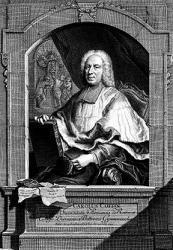
1676 - 1749 Person Name: Charles Coffin (1676-1749) Topics: Proper 17 Year A Author of "Happy are they, they that love God" in Ancient and Modern Coffin, Charles, born at Buzaney (Ardennes) in 1676, died 1749, was principal of the college at Beauvais, 1712 (succeeding the historian Rollin), and rector of the University of Paris, 1718. He published in 1727 some, of his Latin poems, for which he was already noted, and in 1736 the bulk of his hymns appeared in the Paris Breviary of that year. In the same year he published them as Hymni Sacri Auctore Carolo Coffin, and in 1755 a complete ed. of his Works was issued in 2 vols. To his Hymni Sacri is prefixed an interesting preface. The whole plan of his hymns, and of the Paris Breviary which he so largely influenced, comes out in his words. "In his porro scribendis Hymnis non tam poetico indulgendunv spiritui, quam nitoro et pietate consulendum esse existimavi. Pleraque igitur, argumentis convenientia e purissiinis Scripturae Sacrae fontibus deprompsi quac idoneis Ecclesiae cantui numeris alligarem." His hymns are described by a French critic as having less brilliancy than those of Santüil (q.v.), but more simplicity and unction. They number 100 in the edition of 1736. Translated into English by J. Chandler, I. Williams and others, are noted under their respective Latin first lines. [William T. Brooke] -- John Julian, Dictionary of Hymnology (1907)

Sebastian Temple

1928 - 1997 Adapter of "Make me a channel of your peace" Sebastian Temple (1928-1997) grew up in South Africa and later moved to London, where he worked for the BBC on news broadcasts relating to South Africa. Sebastian converted to Catholicism and spent much of his time composing music for worship. He is best remembered for "The Prayer of St. Francis," which was played at the funeral of Princess Diana. --http://www.ocp.org/artists/587

Percy Dearmer

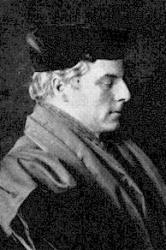
1867 - 1936 Author of "Draw Us in the Spirit's Tether" Dearmer, Percy, M.A., son of Thomas Dearmer, was born in London, Feb. 27, 1867, and educated at Westminster School and at Christ Church, Oxford (B.A. 1890, M.A. 1896). He was ordained D. 1891, P. 1892, and has been since 1901 Vicar of S. Mary the Virgin, Primrose Hill, London. He has been Secretary of the London Branch of the Christian Social Union since 1891, and is the author of The Parson's Handbook, 1st edition, 1899, and other works. He was one of the compilers of the English Hymnal, 1906, acting as Secretary and Editor, and contributed to it ten translations (38, 95, 150, 160, 165, 180, 215, 237, 352, 628) and portions of two others (242, 329), with the following originals:— 1. A brighter dawn is breaking. Easter. Suggested by the Aurora lucis, p. 95, but practically original. 2. Father, Who on man dost shower. Temperance. 3. God, we thank Thee, not in vain. Burial. 4. Holy God, we offer here. Holy Communion. 5. Jesu, good above all other. For Children. 6. Lord, the wind and sea obey Thee. For those at Sea. 7. The winter's sleep was long and deep. St. Philip and St. James. [Rev. James Mearns, M.A.] --John Julian, Dictionary of Hymnology, New Supplement (1907)

Augustus Toplady

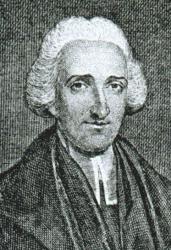
1740 - 1778 Topics: Adoration; Christ Advocate; Christ Passion; Christ Sacrifice; Passion; Sacrifice; Worship Alterer of "Hail, Thou once-despisèd Jesus!" Toplady, Augustus Montague, the author of "Rock of Ages," was born at Farnham, Surrey, November 4, 1740. His father was an officer in the British army. His mother was a woman of remarkable piety. He prepared for the university at Westminster School, and subsequently was graduated at Trinity College, Dublin. While on a visit in Ireland in his sixteenth year he was awakened and converted at a service held in a barn in Codymain. The text was Ephesians ii. 13: "But now, in Christ Jesus, ye who sometimes were far off are made nigh by the blood of Christ." The preacher was an illiterate but warm-hearted layman named Morris. Concerning this experience Toplady wrote: "Strange that I, who had so long sat under the means of grace in England, should be brought nigh unto God in an obscure part of Ireland, amidst a handful of God's people met together in a barn, and under the ministry of one who could hardly spell his name. Surely this is the Lord's doing, and it is marvelous." In 1758, through the influence of sermons preached by Dr. Manton on the seventeenth chapter of John, he became an extreme Calvinist in his theology, which brought him later into conflict with Mr. Wesley and the Methodists. He was ordained to the ministry in the Church of England in 1762, and in 1768 he became vicar of Broadhembury, a small living in Devonshire, which he held until his death. The last two or three years of his life he passed in London, where he preached in a chapel on Orange Street. His last sickness was of such a character that he was able to make a repeated and emphatic dying testimony. A short time before his death he asked his physician what he thought. The reply was that his pulse showed that his heart was beating weaker every day. Toplady replied with a smile: "Why, that is a good sign that my death is fast approaching; and, blessed be God, I can add that my heart beats stronger and stronger every day for glory." To another friend he said: "O, my dear sir, I cannot tell you the comforts I feel in my soul; they are past expression. . . . My prayers are all converted into praise." He died of consumption August 11, 1778. His volume of Psalms and Hymns for Public and Private Worship was published in 1776. Of the four hundred and nineteen hymns which it contained, several were his own productions. If on a quiet sea 446 Rock of ages, cleft for me 279 Hymn Writers of the Church, 1915 by Charles S. Nutter =============================================== Toplady, Augustus Montague, M.A. The life of Toplady has been repeatedly and fully written, the last, a somewhat discursive and slackly put together book, yet matterful, by W. Winters (1872). Summarily, these data may be here given: he was born at Farnham, in Surrey, on November 4, 1740. His father, Richard Toplady, was a Major in the British array, and was killed at the siege of Carthagena (1741) soon after the birth of his son. His widowed mother placed him at the renowned Westminster school, London. By-and-by circumstances led her to Ireland, and young Augustus was entered at Trinity College, Dublin, where he completed his academical training, ultimately graduating M.A. He also received his "new birth" in Ireland under remarkable conditions, as he himself tells us with oddly mixed humility and lofty self-estimate, as "a favourite of heaven," common to his school:— "Strange that I who had so long sat under the means of grace in England should be brought right unto God in an obscure part of Ireland, midst a handful of people met together in a barn, and by the ministry of one who could hardly spell his own name. Surely it was the Lord's doing and is marvellous. The excellency of such power must be of God and cannot be of man. The regenerating spirit breathes not only on whom but likewise, when and where and as He listeth." Toplady received orders in the Church of England on June 6, 1762, and after some time was appointed to Broadhembury. His Psalms and Hymns of 1776 bears that he was then “B.A." and Vicar of Broadhembury. Shortly thereafter be is found in London as minister of the Chapel of the French Calvinists in Leicester Fields. He was a strong and partizan Calvinist, and not well-informed theologically outside of Calvinism. We willingly and with sense of relief leave unstirred the small thick dust of oblivion that has gathered on his controversial writings, especially his scurrilous language to John Wesley because of his Arminianism, as we do John Wesley's deplorable misunderstanding and misrepresentation of Calvinism. Throughout Toplady lacked the breadth of the divine Master's watchword "Forbid him not, for he that is not against us is for us" (St. Luke ix. 50). He was impulsive, rash-spoken, reckless in misjudgment; but a flame of genuine devoutness burned in the fragile lamp of his overtasked and wasted body. He died on August 11, 1778. The last edition of his works is in 6 vols., 8 vo., 1825. An accurate reproduction of most of his genuine hymns was one of the reprints of Daniel Sedgwick, 1860. His name occurs and recurs in contemporary memoirs and ecclesiastical histories, e.g., in Tyerman's Life of John Wesley. The reader will find in their places annotations on the several hymns of Toplady, and specially on his "Rock of Ages,” a song of grace that has given him a deeper and more inward place in millions of human hearts from generation to generation than almost any other hymnologist of our country, not excepting Charles Wesley. Besides the "Rock of Ages" must be named, for power, intensity, and higher afflatus and nicer workmanship, "Object of my first desire,” and "Deathless principle arise." It is to be regretted that the latter has not been more widely accepted. It is strong, firm, stirring, and masterful. Regarded critically, it must be stated that the affectionateness with which Toplady is named, and the glow and passion of his faith and life, and yearning after holiness, have led to an over-exaltation of him as a hymnwriter. Many of his hymns have been widely used, and especially in America, and in the Evangelical hymnbooks of the Church of England. Year by year, however, the number in use is becoming less. The reason is soon found. He is no poet or inspired singer. He climbs no heights. He sounds no depths. He has mere vanishing gleams of imaginative light. His greatness is the greatness of goodness. He is a fervent preacher, not a bard. [Rev. A. B. Grosart, D.D., LL.D.] Toplady's hymns and poetical pieces were published in his:— (1) Poems on Sacred Subjects wherein The Fundamental Doctrines of Christianity, with many other interesting Points, are occasionally introduced. . . Dublin: Printed by S. Powell, in Crane-lane, MDCCLIX.; (2) his Psalms & Hymns for Public and Private Worship, 1776; (3) in The Gospel Magazine, 1771-1776; and (4) in Hymns and Sacred Poems on a variety of Divine Subjects, &c. D. Sedgwick's reprint, 1860. His Works, with a Memoir by W. Row, were published in 6 volumes, in 1794. Walter How was also the editor of the 2nd and some later editions of the Psalms & Hymns. He was a most careless editor, and attributed several hymns by C. Wesley and others to Toplady. The following additional hymns in common use together with centos indicated in the sub-lines, are from:— i. His Poems on Sacred Subjects, 1759. 1. Can my heaven-born soul submit? All for Christ. 2. Come from on high, my King and God. Holiness desired. (1.) 0 might this worthless heart of mine. 3. Earnest of future bliss. The Witness of the Spirit. 4. From Thy supreme tribunal, Lord. Christ's Righteousness a Refuge. (1.) The spotless Saviour lived for me. 5. Great God, Whom heaven, and earth, and sea. For Peace. 6. I saw, and lo! a countless throng. Saints' Days. Revised form in the Gospel Magazine, 1774, p. 449. 7. Immovable our hope remains. Divine Faithfulness. 8. Jesus, God of love, attend. Divine Worship. Pt. ii. is "Prayer can mercy's door unlock." 9. Jesus, Thy power I fain would feel. Lent. 10. Lord, I feel a carnal mind. Mind of Christ desired. 11. My yielding heart dissolves as wax. On behalf of Arians, &c. (1.) 0 Jesus, manifest Thy grace. 12. Not to myself I owe. Praise for Conversion, (1.) Not to ourselves we owe. (2.) The Father's grace and love. 13. 0 that my heart was right with Thee. Dedication to God desired. 14. 0 Thou that hearest the prayer of faith. Christ the Propitiation. 15. 0 Thou Who didst Thy glory leave. Thanksgiving for Redemption. 16. 0 when wilt Thou my Saviour be. Trust in Jesus. (1.) Jesus, the sinner's Rest Thou art. 17. Redeemer, whither should I flee? Safety in the Cross. 18. Remember, Lord, that Jesus bled. Pardon. 19. Surely Christ thy griefs hath borne. Redemption. Revised text in Gospel Magazine, 1774, p. 548. (1.) Weary sinner, keep thine eyes. (2.) Weeping soul, no longer mourn. ii. From the Gospel Magazine. 20. Compared with Christ, in all besides. Christ All in All. Feb. 1772. 21. Eternal Hallelujahs Be to the Father given. Holy Trinity, Dec. 1774. 22. From whence this fear and unbelief. Reviving Faith, Feb. 1772. 23. How vast the benefits divine. Redemption. Dec. 1774. From this "Not for the works which we have done" is taken. 24. Whom have I in heaven but Thee? Christ All and in All, Feb. 1772. From this "If my Lord Himself reveal" is taken. 25. Jesus, immutably the same. Jesus, the True Vine. June, 1771. All these hymns, together with "O precious blood, 0 glorious death" (Death of Christ), are in D. Sedgwick's reprint of Toplady's Hymns, &c, 1860. We have met with several other hymns to which Toplady's name is appended, but for this we can find no authority whatever. -- Excerpts from John Julian, Dictionary of Hymnology (1907)

Washington Gladden

1836 - 1918 Topics: Brotherhood; Fellowship with Men Author of "O Master, Let Me Walk with Thee" Washington Gladden (1836-1918) was called to the First Congregational Church in Columbus, OH in 1882 and remained there for 32 years. In 1883-84 he was known for his success in fighting the corrupt Tweed Ring, for arbitrating the Telegraphers' Strike and the Hocking Valley Coal Strike. He attacked John D. Rockefeller, Sr. for giving $100,000 of "tainted money" to the Congregational Church's Foreign Missions program. Throughout his ministry he emphasized applying the gospel to life in America. He wrote "O Master, let me walk with thee" in 1879. Mary Louise VanDyke =================== Gladden, Washington, was born at Pottsgrove, Pennsylvania, Feb. 11, 1836; was educated at Williams College: and entered the Congregational Ministry. He was for some time editor of the New York Independent, and of the Sunday Afternoon. In the Sunday Afternoon, his hymn, "O Master, let me walk with Thee" (Walking with God), appeared in 3 stanzas of 8 lines, in March 1879. Of these stanzas i. and iii. are in Laudes Domini, 1884, and others. --John Julian, Dictionary of Hymnology, Appendix, Part II (1907) ================== Gladden, W., p. 1565, ii. Dr. Gladden has been Pastor of the First Congregational Church, Columbus, Ohio, since 1882. His hymn-writing has not been extensive. The most popular of his hymns is "0 Master, let me walk with Thee," noted on p. 1565, ii. It has come into somewhat extensive use during the last ten years. Additional hymns in common use include:— 1. Behold a Sower from afar. [The Kingdom of God.] In the Boston Pilgrim Hymnal, 1904, this is dated 1897. 2. Forgive, 0 Lord, the doubts that break Thy promises to me. [Doubting repented of.] Dated 1879, in The Pilgrim Hymnal, 1904. --John Julian, Dictionary of Hymnology, New Supplement (1907)

Sydney Carter

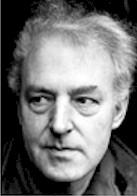
1915 - 2004 Topics: Proper 17 Year C Author of "When I Needed a Neighbour" in Voices United

Ruth C. Duck

1947 - 2024 Author of "Arise, Your Light Is Come!"

John B. Foley

b. 1939 Author of "One Bread, One Body"

Henry Harbaugh

1817 - 1867 Topics: Year A Proper 17 Author of "Jesus, I Live to You" in The New Century Hymnal Harbaugh, Henry, D.D., born in Franklin Co., Pennsylvania, Oct. 24, 1817, was of Swiss descent. In early life he was a farmer, carpenter, and teacher; but in 1840 he entered Marshall College, Mercersburg. Entering the ministry of the German Reformed body, he became, in 1844, Pastor at Lewisburg, Lancaster and Lebanon, Pennsylvania, and in 1864 Professor in Theology at Mercersburg. He died Dec. 27, 1867. He was Editor of the Guardian and the Mercersburg Review, in which he advocated what was called "Mercersburg Theology." His published works include sundry books about Heaven; Poems, Philadelphia, 1860, and Hymns & Chants for Sunday Schools, Lebanon, 1861. This last includes his hymns. The best known and most widely used of his compositions are:— 1. Jesus, I live to Thee. [Life consecrated to Jesus.] This hymn is dated 1850. It is No. 391 in the Hymns of the Church, N. Y., 1869; No. 255 in Allon's Supplementary Hymns, London, 1868, and is also in other collections. 2. God most mighty, sovereign Lord. [National Hymn.] Appeared in his Poems, 1860, in 8 stanzas of 8 lines, and headed, "A National Litany hymn." In some collections it is abridged, as in Hatfield's Church Hymnbook, N. Y., 1872, No. 1307; and in others part of it is altered to "Christ by heavenly hosts adored," as in the Reformed Dutch Hymns of the Church, 1869, No. 935, and others. 3. Make the cross your meditation. [Passiontide.] This translation of "Recordare sanctae crucis" (q.v.) appeared in the Mercersburg Review, 1858, p. 481, and in his Poems 1860. It is worthy of more attention than it has received. [Rev. F. M. Bird, M.A.] --John Julian, Dictionary of Hymnology (1907) ================== Harbaugh, H., p. 484, ii. From No. 2, “God most mighty, &c," the cento, "Thou, by heavenly hosts adored" in the Songs of Christian Praise, N. Y., 1880, No. 658, is taken. --John Julian, Dictionary of Hymnology, Appendix, Part II (1907)

Pages


Export as CSV
It looks like you are using an ad-blocker. Ad revenue helps keep us running. Please consider white-listing Hymnary.org or getting Hymnary Pro to eliminate ads entirely and help support Hymnary.org.