You help make Hymnary.org possible. More than 10 million people from 200+ countries found hymns, liturgical resources and encouragement on Hymnary.org in 2025, including you. Every visit affirms the global impact of this ministry.

If Hymnary has been meaningful to you this year, would you take a moment today to help sustain it? A gift of any size—paired with a note of encouragement if you wish—directly supports the server costs, research work and curation that keep this resource freely available to the world.

Give securely online today, or mail a check to:
Hymnary.org
Calvin University
3201 Burton Street SE
Grand Rapids, MI 49546

Thank you for your partnership, and may the hope of Advent fill your heart.

Person Results

Topics:safety+-+security
In:people

Planning worship? Check out our sister site, ZeteoSearch.org, for 20+ additional resources related to your search.
Showing 111 - 120 of 322Results Per Page: 102050

W. F. Lloyd

1791 - 1853 Person Name: William Freeman Lloyd, 1791-1853 Topics: Christians Safety of; Contentment; Dependence on God; Divine Guidance; Mourners; Trust and Resignation Author of "My times are in Thy hand, my God" in Hymnal and Liturgies of the Moravian Church Lloyd, William Freeman, was born at Uley, Gloucestershire, Dec. 22, 1791. As he grew up he took great interest in Sunday school work, and was engaged in teaching both at Oxford and at London. In 1810 he was appointed one of the Secretaries of the Sunday School Union. He also became connected with the Religious Tract Society in 1816. Miller (to whom we are indebted for these details) says in his Singers and Songs of the Church, 1869, p. 418:— "He commenced the Sunday School Teacher's Magazine, conducted for years the Child's Companion and the Weekly Visitor, and suggested the preparation of a large number of books for children and adults. His own literary productions were various, including several useful books for Sunday School teachers and scholars, and numerous tracts. He was also much engaged in compilation and revision." Mr. Lloyd died at the residence of his brother, the Rev. Samuel Lloyd, at Stanley Hall, Gloucestershire, April 22, 1853. Several of his hymns and poetical pieces were given in the Religious Tract Society Child's Book of Poetry (N.D.), and the Royal Tract SocietyMy Poetry Book (N.D.). In 1853 he collected his pieces and published them as, Thoughts in Rhyme, By W. F. Lloyd, London, Hamilton & Co., and Nisbet & Co. Of his hymns the following are common use:— 1. Come, poor sinners, come to Jesus. Invitation. (1835.) 2. Give thy young heart to Christ. A Child’s Dedication to Christ. 3. My [our] times are in Thine hand. My God, I Wish them there. Resignation. (1835.) 4. Sweet is the time of spring. Spring. 5. Wait, my soul, upon the Lord. In Affliction. (1835.) The date given above, 1835, is from Spurgeon's 0ur Own Hymn Book, 1866, and was supplied to the editor by D. Sedgwick. We have no other authority for that date. The earliest we can find is No. 3, which is in Hymns for the Poor of the Flock, 1838. That hymn is very popular. --John Julian, Dictionary of Hymnology (1907), p. 680

Edward Mote

1797 - 1874 Person Name: Edward Mote (1797-1874) Topics: La Vida Christian Confianza y seguridad; The Christian Life Trust and safety Author of "Por la justicia de Jesús" in Himnario Adventista del Séptimo Día Mote, Edward, was born in Upper Thames Street, London, Jan. 21, 1797. Through the preaching of the Rev. J. Hyatt, of Tottenham Court Road Chapel, he underwent a great spiritual change; and ultimately he became a Baptist minister. For the last 26 years of his life he was pastor at Horsham, Sussex, where he died Nov. 13, 1874. Mr. Mote published several small pamphlets; and also:- Hymns of Praise. A New Selection of Gospel Hymns, combining all the Excellencies of our spiritual Poets, with many Originals. By E. Mote. London. J. Nichols, 1836. The Originals number nearly 100. Concerning the authorship of one of these original hymns much uncertainty has existed. The hymn is:— 1. Nor earth, nor hell my soul can move. [Jesus All in All.] In 6 stanzas of 4 lines, with a refrain. Mr. Mote's explanation, communicated to the Gospel Herald, is:— "One morning it came into my mind as I went to labour, to write an hymn on the ‘Gracious Experience of a Christian.' As I went up Holborn I had the chorus, ‘On Christ the solid Rock I stand, All other ground is sinking sand.’ In the day I had four first verses complete, and wrote them off. On the Sabbath following I met brother King as I came out of Lisle Street Meeting . . . who informed me that his wife was very ill, and asked me to call and see her. I had an early tea, and called afterwards. He said that it was his usual custom to sing a hymn, read a portion, and engage in prayer, before he went to meeting. He looked for his hymnbook but could find it nowhere. I said, ‘I have some verses in my pocket; if he liked, we would sing them.' We did; and his wife enjoyed them so much, that after service he asked me, as a favour, to leave a copy of them for his wife. 1 went home, and by the fireside composed the last two verses, wrote the whole off, and took them to sister King. . . As these verses so met the dying woman's case, my attention to them was the more arrested, and I had a thousand printed for distribution. I sent one to the Spiritual Magazine, without my initials, which appeared some time after this. Brother Rees, of Crown Street, Soho, brought out an edition of hymns [1836], and this hymn was in it. David Denham introduced it [1837] with Rees's name, and others after... . Your inserting this brief outline may in future shield me from the charge of stealth, and be a vindication of truthfulness in my connection with the Church of God." The form in which the hymn is usually found is:— 2. My hope is built on nothing less (st. ii.), sometimes in 4 stanzas, and at others in 5 st., and usually without the refrain. The original in the author's Hymns of Praise, 1836, is No. 465, and entitled, "The immutable Basis of a Sinner's hope." Bishop Bickersteth calls it a "grand hymn of faith." It dates circa 1834, and is in extensive use. [Rev. W. R. Stevenson, M.A.] --John Julian, Dictionary of Hymnology (1907)

Chas. H. Gabriel

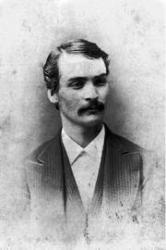
1856 - 1932 Person Name: Charles H. Gabriel (1856-1932) Topics: La Vida Christian Confianza y seguridad; The Christian Life Trust and safety Composer of "[Cómo podré estar triste]" in Himnario Adventista del Séptimo Día Pseudonyms: C. D. Emerson, Charlotte G. Homer, S. B. Jackson, A. W. Lawrence, Jennie Ree ============= For the first seventeen years of his life Charles Hutchinson Gabriel (b. Wilton, IA, 1856; d. Los Angeles, CA, 1932) lived on an Iowa farm, where friends and neighbors often gathered to sing. Gabriel accompanied them on the family reed organ he had taught himself to play. At the age of sixteen he began teaching singing in schools (following in his father's footsteps) and soon was acclaimed as a fine teacher and composer. He moved to California in 1887 and served as Sunday school music director at the Grace Methodist Church in San Francisco. After moving to Chicago in 1892, Gabriel edited numerous collections of anthems, cantatas, and a large number of songbooks for the Homer Rodeheaver, Hope, and E. O. Excell publishing companies. He composed hundreds of tunes and texts, at times using pseudonyms such as Charlotte G. Homer. The total number of his compositions is estimated at about seven thousand. Gabriel's gospel songs became widely circulated through the Billy Sunday­-Homer Rodeheaver urban crusades. Bert Polman

Hal H. Hopson

1933 - 2025 Topics: Biblical Names and Places David; Biblical Names and Places Israel; Biblical Names and Places Jerusalem; Church Year Advent; Church Year Lent; Church Year Pentecost; Daily Prayer Midday Prayer; Elements of Worship Gathering; Faith; Freedom; God Trust in; God as Refuge; God's Safety; God's Will; God's Forgiveness; God's Friendship; God's Glory; God's House; God's Judgments; God's Justice; God's law; God's Love; God's Presence; Grace; Gratitude; Healing; Hymns of Praise; Jesus Christ Friend of Sinners; Jesus Christ Incarnation; Love; Occasional Services Dedication / Consecration / Anniversary; Occasional Services Dedication / Consecration / Anniversary; Peace; People of God / Church Family of God; Prayer; Processions; Rejoicing; Rest; Songs of Zion; Temple; Temptation And Trial; The Incarnation; Unity and Fellowship; Unity of the Church; Worship; Year A, Advent, 1st Sunday Author (Refrain) of "With Joy I Heard My Friends Exclaim" in Psalms for All Seasons Hal H. Hopson (b. Texas, 1933) is a prolific composer, arranger, clinician, teacher and promoter of congregational song, with more than 1300 published works, especially of hymn and psalm arrangements, choir anthems, and creative ideas for choral and organ music in worship. Born in Texas, with degrees from Baylor University (BA, 1954), and Southern Baptist Seminary (MSM, 1956), he served churches in Nashville, TN, and most recently at Preston Hollow Presbyterian Church in Dallas, Texas. He has served on national boards of the Presbyterian Association of Musicians and the Choristers Guild, and taught numerous workshops at various national conferences. In 2009, a collection of sixty four of his hymn tunes were published in Hymns for Our Time: The Collected Tunes of Hal H. Hopson. Emily Brink

John Zundel

1815 - 1882 Topics: Afflictions From the Wicked; Afflictions Prayer in; Afflictions Refuge in; Aspirations For Christ; Aspirations For Peace and Rest; Christ Abiding with Believers; Christ Light and Guide; Christ Preciousness of; Christians Believers; Comfort in Trials; Faith Act of; Faith Confidence of; God Our Guardian; God Our Guide; God Love and Mercy; Joy Reasons for; Prayer confidence in; Prayer For Christ's Sake; Protection Only from God; Safety Assured; Salvation God's Gift; Salvation Thanksgiving for; Sincerity; Temptation; Trust in God Blessedness of; Trust in God Expression of; Vanity Avioidance of Composer of "LEBANON" in The Psalter John Zundel; b. 1815, near Stuttgart, Germany; organist in Brooklyn, N. Y., from 1847 to 1878; d. Cannstadt, Germany, 1882 Evangelical Lutheran Hymnal, 1908

Thomas Tallis

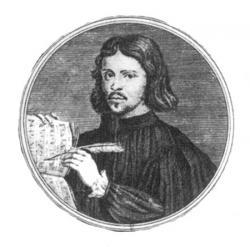
1505 - 1585 Topics: Assurance; Church Year Passion/Palm Sunday; Comfort and Encouragement; God Light from; God Obedience to; God Trust in; God as Refuge; God as Rock; God as Shield; God's Safety; God's Word; God's Armor; God's law; God's Protection; God's Strength; Hope; Humility; Judgment; Lord's Prayer 4th petition (give us today our daily bread); Mercy; Prayer; Remnant of Isarel; Renewal; Rest; Ten Commandments 8th Commandment (do not steal); Ten Commandments 9th Commandment (do not bear false witness); Trust; Year B, Ordinary Time after Epiphany, 3rd Sunday Composer of "THIRD MODE MELODY" in Psalms for All Seasons Thomas Tallis (b. Leicestershire [?], England, c. 1505; d. Greenwich, Kent, England 1585) was one of the few Tudor musicians who served during the reigns of Henry VIII: Edward VI, Mary, and Elizabeth I and managed to remain in the good favor of both Catholic and Protestant monarchs. He was court organist and composer from 1543 until his death, composing music for Roman Catholic masses and Anglican liturgies (depending on the monarch). With William Byrd, Tallis also enjoyed a long-term monopoly on music printing. Prior to his court connections Tallis had served at Waltham Abbey and Canterbury Cathedral. He composed mostly church music, including Latin motets, English anthems, settings of the liturgy, magnificats, and two sets of lamentations. His most extensive contrapuntal work was the choral composition, "Spem in alium," a work in forty parts for eight five-voice choirs. He also provided nine modal psalm tunes for Matthew Parker's Psalter (c. 1561). Bert Polman

Ludwig van Beethoven

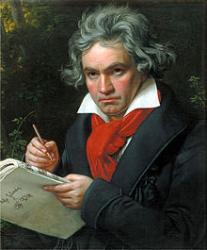
1770 - 1827 Person Name: Beethoven Topics: Afflictions For sin; Character Good and Bad Contrasted; Character Vicious; Christians Graces of; Christians Happiness of; Covetousness; Enemies Will be Destroyed; Faith Confession of; Faith Confidence of; Gospel Privileges of; Grace Growth in; Man Sinful; Nature An Emblem of Grace; Riches; The Righteous Contrasted with Wicked; Safety Enjoyed; Vanity Of Men and Riches; Waiting on God; The Wicked Condemned; The Wicked Fate of; The Wicked Warned Composer of "[O mighty man, why boast in sin]" in Bible Songs A giant in the history of music, Ludwig van Beethoven (b. Bonn, Germany, 1770; d. Vienna, Austria, 1827) progressed from early musical promise to worldwide, lasting fame. By the age of fourteen he was an accomplished viola and organ player, but he became famous primarily because of his compositions, including nine symphonies, eleven overtures, thirty piano sonatas, sixteen string quartets, the Mass in C, and the Missa Solemnis. He wrote no music for congregational use, but various arrangers adapted some of his musical themes as hymn tunes; the most famous of these is ODE TO JOY from the Ninth Symphony. Although it would appear that the great calamity of Beethoven's life was his loss of hearing, which turned to total deafness during the last decade of his life, he composed his greatest works during this period. Bert Polman

D. T. Niles

1908 - 1970 Topics: Church Year Lent; Church Year Passion/Palm Sunday; Church Year Transfiguration; Cry to God; Enemies; Exile; God as Refuge; God as Shelter; God as King; God's Safety; God's Will; God's Wings; God's Face; God's Love; God's Presence; God's Protection; God's Strength; Grace; Lament General; Longing for God; Mercy; Mocking; New Creation; People of God / Church Citizens of Heaven; People of God / Church Suffering; Prayer Answer to; Prayer; Remnant of Isarel; Rest; Sorrow; Temptation And Trial; Truth; Vows; Texts in Languages Other than English Tamil Adapter of "Saranam, Saranam" in Psalms for All Seasons

John L. Bell

b. 1949 Person Name: John L. Bell, b. 1949 Topics: Daily Prayer Evening Prayer; Despair; Earth; Elements of Worship Call to Confession; Elements of Worship Call to Worship; Elements of Worship Lord's Supper; Elements of Worship Offering; Elements of Worship Praise and Adoration; Enemies; Freedom; God's Safety; God's Sovereignty; God's Sustaining Power; God's Wonders; God's Deeds; God's Love; God's Name; God's Promise of Redemption; God's Strength; Gratitude; Hymns of Praise; Joy; Love for God; Mercy; Occasional Services New Year; Offering of Sacrifice; Peace; Prayer Answer to; Prayer; Remembering; Remnant of Isarel; Rest; Salvation; Victory; Vows; Witness; Worship; Year A, Easter, 6th Sunday; Year C, Ordinary Time after Pentecost, July 3-9; Year C, Ordinary Time after Pentecost, October 9-15; Texts in Languages Other than English Shona Arranger of "UYAIMOSE" in Psalms for All Seasons John Bell (b. 1949) was born in the Scottish town of Kilmarnock in Ayrshire, intending to be a music teacher when he felt the call to the ministry. But in frustration with his classes, he did volunteer work in a deprived neighborhood in London for a time and also served for two years as an associate pastor at the English Reformed Church in Amsterdam. After graduating he worked for five years as a youth pastor for the Church of Scotland, serving a large region that included about 500 churches. He then took a similar position with the Iona Community, and with his colleague Graham Maule, began to broaden the youth ministry to focus on renewal of the church’s worship. His approach soon turned to composing songs within the identifiable traditions of hymnody that began to address concerns missing from the current Scottish hymnal: "I discovered that seldom did our hymns represent the plight of poor people to God. There was nothing that dealt with unemployment, nothing that dealt with living in a multicultural society and feeling disenfranchised. There was nothing about child abuse…,that reflected concern for the developing world, nothing that helped see ourselves as brothers and sisters to those who are suffering from poverty or persecution." [from an interview in Reformed Worship (March 1993)] That concern not only led to writing many songs, but increasingly to introducing them internationally in many conferences, while also gathering songs from around the world. He was convener for the fourth edition of the Church of Scotland’s Church Hymnary (2005), a very different collection from the previous 1973 edition. His books, The Singing Thing and The Singing Thing Too, as well as the many collections of songs and worship resources produced by John Bell—some together with other members of the Iona Community’s “Wild Goose Resource Group,” —are available in North America from GIA Publications. Emily Brink

Ralph Vaughan Williams

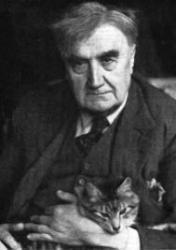
1872 - 1958 Person Name: Ralph Vaughan Williams (1871-1958) Topics: Biblical Names and Places David; Biblical Names and Places Israel; Biblical Names and Places Jerusalem; Church Year Advent; Church Year Lent; Church Year Pentecost; Daily Prayer Midday Prayer; Elements of Worship Gathering; Faith; Freedom; God Trust in; God as Refuge; God's Safety; God's Will; God's Forgiveness; God's Friendship; God's Glory; God's House; God's Judgments; God's Justice; God's law; God's Love; God's Presence; Grace; Gratitude; Healing; Hymns of Praise; Jesus Christ Friend of Sinners; Jesus Christ Incarnation; Love; Occasional Services Dedication / Consecration / Anniversary; Occasional Services Dedication / Consecration / Anniversary; Peace; People of God / Church Family of God; Prayer; Processions; Rejoicing; Rest; Songs of Zion; Temple; Temptation And Trial; The Incarnation; Unity and Fellowship; Unity of the Church; Worship; Year A, Advent, 1st Sunday Arranger of "SUSSEX CAROL " in Psalms for All Seasons Through his composing, conducting, collecting, editing, and teaching, Ralph Vaughan Williams (b. Down Ampney, Gloucestershire, England, October 12, 1872; d. Westminster, London, England, August 26, 1958) became the chief figure in the realm of English music and church music in the first half of the twentieth century. His education included instruction at the Royal College of Music in London and Trinity College, Cambridge, as well as additional studies in Berlin and Paris. During World War I he served in the army medical corps in France. Vaughan Williams taught music at the Royal College of Music (1920-1940), conducted the Bach Choir in London (1920-1927), and directed the Leith Hill Music Festival in Dorking (1905-1953). A major influence in his life was the English folk song. A knowledgeable collector of folk songs, he was also a member of the Folksong Society and a supporter of the English Folk Dance Society. Vaughan Williams wrote various articles and books, including National Music (1935), and composed numerous arrange­ments of folk songs; many of his compositions show the impact of folk rhythms and melodic modes. His original compositions cover nearly all musical genres, from orchestral symphonies and concertos to choral works, from songs to operas, and from chamber music to music for films. Vaughan Williams's church music includes anthems; choral-orchestral works, such as Magnificat (1932), Dona Nobis Pacem (1936), and Hodie (1953); and hymn tune settings for organ. But most important to the history of hymnody, he was music editor of the most influential British hymnal at the beginning of the twentieth century, The English Hymnal (1906), and coeditor (with Martin Shaw) of Songs of Praise (1925, 1931) and the Oxford Book of Carols (1928). Bert Polman

Pages


Export as CSV
It looks like you are using an ad-blocker. Ad revenue helps keep us running. Please consider white-listing Hymnary.org or getting Hymnary Pro to eliminate ads entirely and help support Hymnary.org.