You help make Hymnary.org possible. More than 10 million people from 200+ countries found hymns, liturgical resources and encouragement on Hymnary.org in 2025, including you. Every visit affirms the global impact of this ministry.

If Hymnary has been meaningful to you this year, would you take a moment today to help sustain it? A gift of any size—paired with a note of encouragement if you wish—directly supports the server costs, research work and curation that keep this resource freely available to the world.

Give securely online today, or mail a check to:
Hymnary.org
Calvin University
3201 Burton Street SE
Grand Rapids, MI 49546

Thank you for your partnership, and may the hope of Advent fill your heart.

Person Results

Topics:the+holy+scriptures
In:person

Planning worship? Check out our sister site, ZeteoSearch.org, for 20+ additional resources related to your search.
Showing 111 - 120 of 313Results Per Page: 102050

Thomas Kelly

1769 - 1855 Topics: The Holy Scriptures The Gospel-The Call Author of "I Love the Sacred Book" in The Church Hymnal Kelly, Thomas, B.A., son of Thomas Kelly, a Judge of the Irish Court of Common Pleas, was born in Dublin, July 13, 1769, and educated at Trinity College, Dublin. He was designed for the Bar, and entered the Temple, London, with that intention; but having undergone a very marked spiritual change he took Holy Orders in 1792. His earnest evangelical preaching in Dublin led Archbishop Fowler to inhibit him and his companion preacher, Rowland Hill, from preaching in the city. For some time he preached in two unconsecrated buildings in Dublin, Plunket Street, and the Bethesda, and then, having seceded from the Established Church, he erected places of worship at Athy, Portarlington, Wexford, &c, in which he conducted divine worship and preached. He died May 14, 1854. Miller, in his Singers & Songs of the Church, 1869, p. 338 (from which some of the foregoing details are taken), says:— "Mr. Kelly was a man of great and varied learning, skilled in the Oriental tongues, and an excellent Bible critic. He was possessed also of musical talent, and composed and published a work that was received witli favour, consisting of music adapted to every form of metre in his hymn-book. Naturally of an amiable disposition and thorough in his Christian piety, Mr. Kelly became the friend of good men, and the advocate of every worthy, benevolent, and religious cause. He was admired alike for his zeal and his humility; and his liberality found ample scope in Ireland, especially during the year of famine." Kelly's hymns, 765 in all, were composed and published over a period of 51 years, as follows:— (1) A Collection of Psalms and Hymns extracted from Various Authors, by Thomas Kelly, A.B., Dublin, 1802. This work contains 247 hymns by various authors, and an Appendix of 33 original hymns by Kelly. (2) Hymns on Various Passages of Scripture, Dublin, 1804. Of this work several editions were published: 1st, 1804; 2nd, 1806; 3rd, 1809; 4th, 1812. This last edition was published in two divisions, one as Hymns on Various Passages of Scripture, and the second as Hymns adapted for Social Worship. In 1815 Kelly issued Hymns by Thomas Kelly, not before Published. The 5th edition, 1820, included the two divisions of 1812, and the new hymns of 1815, as one work. To the later editions of 1820, 1826, 1836, 1840, 1846, and 1853, new hymns were added, until the last published by M. Moses, of Dublin, 1853, contained the total of 765. As a hymn-writer Kelly was most successful. As a rule his strength appears in hymns of Praise and in metres not generally adopted by the older hymn writers. His "Come, see the place where Jesus lay" (from "He's gone, see where His body lay"),"From Egypt lately come"; “Look, ye saints, the sight is glorious"; "On the mountain's top appearing"; "The Head that once was crowned with thorns"; "Through the day Thy love has spared us"; and “We sing the praise of Him Who died," rank with the first hymns in the English language. Several of his hymns of great merit still remain unknown through so many modern editors being apparently adverse to original investigation. In addition to the hymns named and others, which are annotated under their respective first lines, the following are also in common use:— i. From the Psalms and Hymns, 1802:— 1. Grant us, Lord, Thy gracious presence. Commencement of Divine Worship. 2. Jesus, Immortal King, go on [display]. Missions. 3. Saviour, through the desert lead us. Divine Guidance Desired. 4. The day of rest once more [again] comes round. Sunday. 5. We've no abiding city here. Seeking Heaven. ii. From the Hymns on Varous Passages of Scripture, first edition, 1804 :— 6. Boundless glory, Lord, be thine. Praise for the Gospel. 7. By whom shall Jacob now arise? Epiphany. 8. Glory, glory to our King. Praise to Christ as King. 9. How pleasant is the sound of praise. Praise for Redemption. 10. How sweet to leave the world awhile. In Retirement, or For a Retreat. 11. Inform I long had bowed the knee. Jesus, the Saviour, or Praise for Salvation. 12. It is finished! sinners, hear it. Good Friday. 13. Jesus, the Shepherd of the sheep. The Good Shepherd. 14. Let reason vainly boast her power. Death. 15. Poor and afflicted, Lord, are Thine. Affliction. 16. Praise we Him to Whose kind favour. Close of Service. 11. Spared a little longer. Safety in God. 18. Stricken, smitten, and afflicted. Passiontide. ii. From the Hymns, &c, second edition, 1806:— 19. Far from us be grief and sadness. Joy of Believers. 20. Give us room that we may dwell. Missions. 21. Glory, glory everlasting. Praise of Jesus. 22. God has.turned my grief to gladness. Joy after Sorrow. 23. Happy they who trust in Jesus. Peace in Jesus. 24. Hark, the notes of angels singing. Angels praising Jesus. 25. Hark! 'tis a martial sound. Christian Life a Warfare. 26. I hear a sound [voice] that comes from far. The Gospel Message. 27. Jesus is gone up on high. Divine Worship. 28. Now [O] may the Gospel's conquering power. Home Missions. In the 1853 edition of the Hymns it begins “O may the Gospel's conqu'ring force." 29. O Zion, when I think on thee. Desiring Heaven. 30. Praise the Saviour, ye who know Him. Praise of Jesus. 31. See from Zion's sacred mountain. The Fountain of Life. 32. The atoning work is done. Jesus the High Priest. 33. Zion is Jehovah's dwelling. The Church of God. 34. Zion stands by hills surrounded. The Safety of the Church. 35. Zion's King shall reign victorious. Missions. iv. From the Hymns, &c, 3rd edition, 1809:— 36. Behold the Temple of the Lord. The Church a Spiritual Temple. 37. Blessed Fountain, full of grace. Fountain for Sin. 38. Brethren, come, our Saviour bids us. Holy Communion. 39. Fly, ye seasons, fly still faster. Second Advent Desired. 40. God of Israel, we adore Thee. Evening. 41. Gracious Lord, my heart is fixed. Trust and Peace. 42. Hark, a voice! it comes from heaven. Death. 43. Hark, that shout of rapt'rous joy. Second Advent. 44. If our warfare be laborious. Labour and Rest . 45. Lo, He comes, let all adore Him. Missions. 46. Nothing know we of the season. Time of Second Advent uncertain. 47. O had I the wings of a dove. Holiness and Heaven desired. 48. O where is now that glowing love. Despondency. 49. Our Father sits on yonder throne. God the Father. 50. Ours is a rich and royal Feast. Holy Communion. 51. Shepherd of the chosen number. Safety in the Good Shepherd. 52. We're bound for yonder land. Life, a Voyage. 53. Welcome sight! the Lord descending. The Advent. 54. What is life? 'tis but a vapour. Death anticipated. 55. Who is this that comes from Edom? Ascension. 56. Why those fears ? Behold 'tis Jesus. Stilling the Sea. 57. Without blood is no remission. Passiontide. 58. Yes, we trust the day is breaking. Missions. v. FromHymns: Not before Published, 1815:— 59. Behold the Lamb with glory crowned. Exaltation of Christ. 60. God is love, His word has said it. God is Love. 61. God of our salvation, hear us. Opening or Close of Divine Worship. 62. In Thy Name, O Lord, assembling. Commencement of Divine Worship. 63. Keep us, Lord, O [and] keep us ever. Divine Worship. 64. Let sinners saved give thanks, and sing. Praise for Salvation. 65. Praise the Lord Who died to save us. Passiontide. 66. Salvation is of God alone. God the Author of Salvation. 67. Saviour, come, Thy [saints] friends await Thee [are waiting] . Second Advent desired. 68. Sweet were the sounds that reached our ears. Divine Mercy. 69. We'll sing of the Shepherd that died. The Lost Sheep. 70. When we cannot see our way. Trust and Peace. 71. Who is this that calms the ocean? Stilling the Sea. vi. From the Hymns on F. Passages of Scripture, &c, eds. 1820 and 1826 :-— 72. Grace is the sweetest sound. Divine Grace. 73. Now let a great effectual door. Missions. 74. Now may the mighty arm awake. Missions. 75. Now may the Spirit from above. Home Missions. 76. Sing, sing His lofty praise. Praise of Jesus. 77. Sound, 6ound the truth abroad. Missions. 78. Speed Thy servants, Saviour, speed them. Departure of Missionaries. vii. From the Hymns on Various Passages, &c, 1836:— 79. Come, O Lord, the heavens rending. Prayer for Blessings. 80. The night is far spent, the day is at hand. The Second Advent. viii. From the Hymns on Various Passages, &c, circa 1845:— 81. Joyful be the hours today. Sunday. 82. Lord, behold us few and weak. Opening of Divine Service. 83. Meet Thy people, Saviour, meet us. Meetings for Prayer. 84. Saviour, send a blessing to us. Prayer for Blessings. 85. Sing of Jesus, sing for ever. Praise of Jesus. ix. From the Hymns on Various Passages, &c, 1853:— 86. Precious volume, what thou doest. Holy Scripture. 87. Unfold to us, O Lord, unfold. Divine aid to reading Holy Scripture. All these hymns, together with those annotated under their respective first lines are in the 1853 edition of Kelly's Hymns published in Dublin by M. Moses, and in London by Simpkin, Marshall & Co. Kelly's musical editions are issued by the same publishers. -- John Julian, Dictionary of Hymnology (1907) ================== Kelly, Thomas, p. 615, i. Other hymns in common use are: 1. Behold the Man! How glorious He. (1809.) Good Friday. 2. Jesus the [Thou] Shepherd of the Sheep. (1804.) Good Shepherd. 3. Saved ourselves by Jesu's blood. (1802.) For a Revival. 4. Saviour, 'tis to [unto] Thee. (1853*.) Lent. 5. See the vineyard lately planted. (1806.) Missions. Sometimes given as "See, O Lord, the vineyard planted." 6. Sing aloud to God our strength. (1809.) Praise to the Father. 7. Sing, sing His lofty praise. (1820.) Praise to Jesus. Sometimes as "Hail our eternal King" (p. 615, No. 76). 8. Sing of Him Who bore our guilt. (1853*.) Praise to Jesus. 9. Sing we praise to God above, God our Saviour, &c. (1815.) Praise for Divine Mercy. 10. Sing we praise to God above, Sing we praise, &c. (1853*.) Praise. 11. Sons of Zion, raise your songs. (1820-26) The Exalted Saviour. 12. The Lord Himself will keep. (1809.) From “We're bound for yonder land" (sec p. 615, No. 52.) 13. The God [Lord] of glory dwells on high. (1809.) Humility and Love of Christ. 14. The people of the Lord Are on their way, &c. (1820.) Life a Pilgrimage. 15. Thus saith God of His Anointed. (1809.) Missions. 16. 'Tis to us no cause of sorrow. (1815.) Resignation. 17. To the Ark away, or perish. (1815.) Safety in Jesus only. 18. To our Lord a throne is given. (1838.) Christ the King. 19. Trust ye in the Lord for ever. (1853*.) Trust in God. 20. We'll sing in spite of scorn. (1806.) Christmas. From this "The long-expected morn" is taken. 21. What tongue can tell, what fancy paint. (1806.) Saints in Glory 22. What were Sinai's awful wonders. (1809.) Advent. 23. Whence those sounds symphonious? (1815.) Christmas. 24. While in the [this] world we still [yet] remain. (1806.) Communion of Saints. 25. Yes, 'tis a rough and thorny road. (1809.) Resignation. Sometimes given as "Though rough and thorny be the way." The dates given above are those of the various editions of Kelly's Hymns. The date 1853* indicates that the hymn is in the 1853 ed. of the Hymns, but had also appeared in a previous edition which we have not seen. --John Julian, Dictionary of Hymnology, Appendix, Part II (1907)

Thomas Helmore

1811 - 1890 Person Name: Thomas Helmore, 1811-1890 Topics: The Holy Scriptures Adapter of "O QUANTA QUALIA (REGNATOR ORBIS)" in Singing the Faith A graduate of Magdalen College, Oxford, England, Thomas Helmore (b. Kidderminster, Worcestershire, England, 1811; d. Westminster, London, England, 1890) was ordained a priest in the Church of England, but his main contribution to the church was in music. He was precentor at St. Mark's College, Chelsea (1842-1877), and master of the choristers in the Chapel Royal for many years. He promoted unaccompanied choral services and played an important part in the revival of plainchant in the Anglican Church. Helmore was involved in various publications of hymns, chants, and carols, including A Manual of Plainsong (1850) and The Hymnal Noted (with John Mason Neale). Bert Polman

Thomas Grigg

Topics: Holy Scriptures Composer of "TIVERTON" in Book of Worship with Hymns and Tunes

Christian Gregor

1723 - 1801 Person Name: Christian Gregor, 1723-1801 Topics: The Holy Scriptures Author of "Holy Lord, Holy Lord" in Hymnal and Liturgies of the Moravian Church Gregor, Christian, son of Georg Gregor, a peasant living in the Silesian village of Dirsdorf, near Peilau, was born at Dirsdorf, Jan. 1, 1723. In 1742 he went to Herrnhut, where he was at first employed in tuition. He became leader of the music in the [Moravian] Brethren's congregation at Herrnhaag, in 1748, and in 1749 at Zeist; but in 1753 he returned to Herrnhut as cashier of the Brethren's Board of Direction. He was, in 1756, ordained diaconus, in 1767 presbyter, and in 1789 bishop of the Brethren's Church. On Nov. 6,1801, he attended a meeting, held at Herrnhut, of the Board of Direction of which he had been a member from 1764. Just as he entered his house at Berthelsdorf, near Herrnhut, he was struck with paralysis, and died that same day. (Koch, vi. 436; Allgemeine Deutsche Biographie, ix. 630.) He was a man greatly beloved and respected, simple of heart, loving, earnest and hardworking; and was entrusted with many important missions and visitations. His hymns are characterised by childlike fervour of devotion to his crucified Lord. A number appeared in Des kleinen Brüder-Gesangbuchs dritter Theil, Barby, 1767; but they were mostly contributed to the Gesang-buch zum Gebrauch der evangelischen Brüder Gemeinen, Barby, 1778, of which he was the principal editor. He was also an excellent organist, and edited, in 1784, a collection of accompanying tunes for the hymnbook of 1778, contributing thereto various melodies by himself. A little volume entitled Historische Nachrteht vom Brüder-Gesangbuche des Jahres 1778, und von dessen Lieder-Verfassern, Gnadau, 1835 (2nd ed., 1851), occasionally referred to in these pages, is based on materials collected by Gregor. His hymns in English common use are:— i. Bis dereinst mein Stündlein schlägt. [Love to Christ.] 1778, No. 640, in 5 st. of 4 1. Translated as:— Till permitted hence to go, of st. i., ii., iv., as No. 563 in the Moravian Hymn Book, 1801 (1886, No. 1228). In 1826 an original st.anza by T. Bird was added, beginning, " Till the day when I shall tread." Repeated thus in 1886, No. 1228, and in J. A. Latrobe's Collection, 1841, No. 484. ii. Die Gottes Cherubim. [The Angels.] Appeared as No. 1877 in Appendix xii. c, 1746, to the Herrnhut Gesang-Buch of 1735, thus :— "Die Gottes Cherubim Erheben ihre Stimm, (Funkelnd von Blitz und Strahl,) Ihr Lied ist, wenn ichs sagen darf, Dazu spielt mehr als eine Harf: Ehre dem Seitenmaal!" In 1778 it is included as No. 1600, beginning, "Die Gottes Seraphim," and expanded to three stanzas; i. of the Angels; ii. of the Redeemed; iii. of the Church on Earth. Here the song, "Ehre dem Seitenmaal," is given to the Church on Earth, and a paraphrase of Is. vi. 3, to the Angels. The only translation in common use is :— The Seraphim of God, in full from the 1778, by J. Miller and F. W. Foster, as No. 792 in the Moravian Hymn Book, 1789 (1886, No. 1220), repeated in J. A. Latrobe's Collection, 1841, No. 424. Another translation is The Cherubims of God," from the original form, as No. 93 in pt. iii. of the Moravian Hymn Book, 1748. iii. Heiliger, heiliger, heiliger, Herr Zebaoth. [Public Worship.] The introductory hymn in 1778, in 4 st. of 81, as on "The Word of God." The only translation is:— Holy Lord, Holy lord, Holy and Almighty Lord, by F. W. Foster, C. G. Clemens, and J. Swertner, as No. 1 in the Moravian Hymn Book, 1789 (1886, No. 1). Included from the text of 1801, as No. 217 in Dr. Pagenstecher's Collection, 1864. iv. Nach tausendfachen Plagen. [Passiontide.] 1778, No. 128, in 8 1. It is translated as :— Behold, my soul, Thy Saviour, by P. H. Molther, as No. 352 in the Moravian Hymn Book, 1789. See No. vi. v. 0 angenehme Augenblicke. [Eternal Life.] Written in 1766. In 1778, No. 1749, in 2 st. of 8 1. The translations are :— 1. What heavenly joy and consolation, by P. H, Molther, of st. i., as No. 886 in the Moravian Hymn Book, 1789 (1886, No. 1314, st. iii.). Included as st. iii. of No. 403 in the Irish Church Hymnal, 1873. 2. 0 what joy, 0 what joy awaiteth me. No. 988 in the Moravian Hymn Book, 1801. In the 1886 edition it is marked as a translation of No. v. as above. It bears more resemblance, however, to "O wie wallt mein Herz," which is No. 268 in the 1806 Appendix to the Brüder Gesang-Buchof 1778. vi. 0 süsse Seelenweide. [Passiontide.] 1778, No. 167, in 11 st. of 8 1. St. i., ii. are ascribed to Gregor; iii., iv., xi. to Johann Prätorius ; and v.-x. to C. B. von Zinzendorf (taken from Nos. 40 and 41 of the collected edition of his hymns, 1754). The translation is:— How is my soul delighted, a translation of st. i., ii., iv., v., vii., x. by F. W. Foster, and J. Miller, as No. 360 in the Moravian Hymn Book, 1789. In the 1801 and later editions (1886, No. 407), Molther's translation of No. iv. was prefixed as st. i., new trranslations of st. viii., x. given, and the rest altered. In the Book of Common Praise, ed. 1872, No. 86, is st. i., ii., 11. 5-8, and iii., by Gregor; and iv., 11. 5-8, by Prätorius, beginning, "Behold, my soul, thy Saviour." vii. 0 Tage wahrer Seligkeit. [Joy of Forgiveness.] 1778, No. 398, in 6 st. of 8 1., included in the Berlin Geistliche Lieder S. , ed. 1863. Translated as:— O days of solid happiness in full as No. 340 in the Moravian Hymn Book, 1801 (1886, No. 386). Two centos from the text of 1849 are in common use :— 1. "What days of solid happiness," st. i.-iv., as No. 433 in the edition of 1857 of Mercer's The Church Psalter & Hymnbook. 2. "Whene'er we contemplate the grace," st. iv.-vi. as No. 396 in the Irish Church Hymnal, 1873. viii. Wenn schlägt die angenehme Stunde. [Ascension.] Written for Aug. 17, 1765, and included as No. 113 in 1767, as above, in 8 1. Translated as :— When, O when shall I have the favour, by P. H. Molther, c. 1774, included as No. 839 in the Moravian Hymnbook, 1789, repeated as st. ii. of No, 403, in the Irish Church Hymnal, 1873. In the 1886 ed. of the Moravian Hymnbook, No. 1314, it begins, "O when shall I have that great favour." ix. Wie wifd mir einst dooh sein. [Eternal Life.] 1778, No. 1743, in 10 st. of 6 1. In the Historische Nachricht thereto, st. i.-iii. are marked as by Gregor, and st. iv.-x. as by N. L. von Zinzendorf. St. iv.-x. are recast from a hymn beginning, "Die Bäume blühen ab," writ¬ten in the autumn of 1721, and included as No. 1245 in the 3rd edition, 1731, of his Sammlung geistund lieblicher Lieder, in 46 st. of 4 1., the stanza of the original used being in order 39, 42, 34, 18, 22, 29, 45. The only translation in common use is:— What shall I feel, when I, in full from the 1778, by J. A. Latrobe, as No. 885 in the Moravian Hymnbook, 1789 (1886, No. 1301). Two centos are in use:- 1. "How shall the joy be told"; st. i.-iv., vi., viii. altered in J. A. Latrobe's Collection, 1841, No. 498. 2. "I hear the enraptured song"; st. 2, 6, 9, 10, as No. 582 in the App. of 1873 to Mercer's The ChurchPsalter & Hymnbook. Hymns not in English common use:— x. Ach mein Heir Jesu! dein Nahesein. Communion with Christ. 1767, as above, No. 432, in 10 st. In the Berlin Geistliche Lieder S.,, ed. 1863, No. 925. Justly characterised by Dr. Schaff in his Christ in Song, 1869, p. 496, as "One of the sweetest hymns from the holy of holies of the believer's personal communion with his Saviour, and very characteristic of Moravian piety in its best form." The trsanslations are (1) "What peace divine, what perfect happiness," by P. H. Molther, as No. 278 in the Moravian Hymn Book, 1789 (1849, No. 362). In the 1886 ed. of the Moravian Hymn Book, No. 359, it begins with the translation of st. v., "Gracious Redeemer, grant to us while here." (2) "Jesus, our Lord, when Thou art near," by Dr. H. Mills, 1845 (1856, p. 122). (3) "Ah dearest Lord! to feel that Thou art near," by Miss Winkworth, 1858, p. 168. (4) "Ah, Jesus, Lord, Thou art near to me," in the British Herald, Dec, 1866, p. 372, and as No. 304 in Reid's Praise Book, 1872. (5) "Jesus, my Lord, Thy nearness does impart," by E. Reynolds for Schaff’s Christ in Song, 1869, p. 496. xi. Hallelujah! der Heiland lebt. Easter. 1778, No. 203, in 17 st. (st. xiv. being by Matthaus Stach, and first published as st. ii. of No. 109, in 1767). Translated as "Sing Hallelujah, Christ doth live," as No. 131 in the Moravian Hymn Book, 1801 (1886, No. 142), repeated in Bishop Ryle's Collection, 1860, No. 131. Beginning with the translation of st. ix., “The God of Peace, to guilty man," 6 st. were included as No. 90 in Reid's Praise Book, 1872. [Rev. James Mearns, M.A.] -- John Julian, Dictionary of Hymnology (1907)

C. W. Poole

1828 - 1924 Person Name: Clement William Poole (1828-1924) Topics: The Holy Scriptures; Holy Scriptures Composer of "PETERSHAM" in The Hymnal

Charlotte Elliott

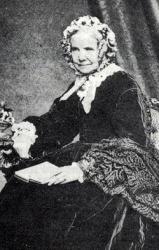
1789 - 1871 Topics: The Holy Scriptures The Gospel-The Call Author of "Just as I Am" in The Church Hymnal Elliott, Charlotte, daughter of Charles Elliott, of Clapham and Brighton, and granddaughter of the Rev. H. Venn, of Huddersfield, was born March 18, 1789. The first 32 years of her life were spent mostly at Clapham. In 1823 she removed to Brighton, and died there Sept. 22, 1871. To her acquaintance with Dr. C. Malan, of Geneva, is attributed much of the deep spiritual-mindedness which is so prominent in her hymns. Though weak and feeble in body, she possessed a strong imagination, and a well-cultured and intellectual mind. Her love of poetry and music was great, and is reflected in her verse. Her hymns number about 150, a large percentage of which are in common use. The finest and most widely known of these are, "Just as I am” and "My God, my Father, while I stray." Her verse is characterized by tenderness of feeling, plaintive simplicity, deep devotion, and perfect rhythm. For those in sickness and sorrow she has sung as few others have done. Her hymns appeared in her brother's Psalms & Hymns and elsewhere as follows:— (1) Psalms and Hymns for Public, Private, and Social Worship; selected by the Rev. H. V. Elliott, &c., 1835-48. In this Selection her signature is "C. E." (2) The Christian Remembrancer Pocket Book. This was originally edited by Miss Kiernan, of Dublin. Miss Elliott undertook the editorship in 1834. (3) The Invalid's Hymn Book. This was originally compiled by Miss Kiernan, but before publication was re-arranged by Miss Elliott, who also added 23 hymns in the first edition., 1834. These were increased in the following edition to the sixth in 1854, when her contributions amounted to 112. From that date no change was made in the work. (4) Hours of Sorrow Cheered and Comforted; or, Thoughts in Verse, 1836. (5) Morning and Evening Hymns for a Week, printed privately in 1839 for sale for a benevolent institution in Brighton, and published in 1842. (6) Thoughts in Verse on Sacred Subjects, 1869. Miss Elliott's Poems were published, with a Memoir by her sister, Mrs. Babington, in 1873, and an additional volume of Leaves from her unpublished Journals and Poems, also appeared in 1870. In addition to her more important hymns, which are annotated under their respective first lines, there are in common use:— i. From The Invalid's Hymn-book, 1834-1841:— 1. Clouds and darkness round about thee. (1841.) Resignation. 2. Not willingly dost Thou afflict [reject]. (1841.) Divine Chastisement. 3. O God, may I look up to Thee. (1841.) Teach us to Pray. 4. This is enough; although 'twere sweet. (1834.) On being debarred from Divine Worship. 5. With tearful eyes I look around. (1841.) The Invitation "Come Unto Me." ii. From H. V. Elliott's Psalms & Hymns, 1835-1839:— 6. Glorious was that primal light. Christmas. 7. Hail, holy day, most blest, most dear. Easter. 8. My only Saviour, when I feel. Jesus His people's Rest. 9. Now let our heavenly plants and flowers. Monday Morning. 10. The Sabbath-day has reached its close. Sunday Evening. iii. From Miss Elliott's Hours of Sorrow, 1836:— 11. Father, when Thy child is dying. Prayer for a Departing Spirit. 12. Leaning on Thee, my Guide, my Friend. Death Anticipated. 13. My God, is any hour so sweet? The Hour of Prayer. 14. O faint and feeble-hearted. Resignation enforced. 15. There is a holy sacrifice. The Contrite Heart. iv. From her Hymns for a Week, 1839:— 16. Guard well thy lips; none, none can know. Thursday Morning. 17. There is a spot of consecrated ground. Pt. i. 18. This is the mount where Christ's disciples see. Pt. ii. Monday Evening. 19. This is the day to tune with care. Saturday Morning. v. From Thoughts in Verse on Sacred Subjects, 1869:— 20. As the new moons of old were given. On a Birthday. 21. I need no other plea. Pt. i. 22. I need no prayers to saints. Pt. ii. Christ, All in All. 23. Jesus, my Saviour, look on me. Christ, All in All. Several of the earlier of these hymns were repeated in the later works, and are thus sometimes attributed to the wrong work. [Rev. James Davidson, B.A.] -- John Julian, Dictionary of Hymnology (1907) ================ Elliott, Charlotte, p. 328, i. Other hymns are:— 1. O how I long to reach my home. Heaven desired. From the Invalid's Hymn Book, 1834. 2. The dawn approaches, golden streaks. Second Advent. From Thoughts in Verse, &c, 1869. Of her hymns noted on p. 328, Nos. 6, 7, 8, 9, 10,11, and 13, all appeared in the 1st edition of Elliott's Psalms & Hymns, 1835. --John Julian, Dictionary of Hymnology, Appendix, Part II (1907) ======================== Elliott, Charlotte, pp. 328, i.; 1561, ii. Further research enables us to give amended dates to some of her hymns as follows:— 1. With tearful eyes I look around (No. 5). This is in the 1835 Appendix to The Invalid's Hymn Book. 2. My only Saviour, when I feel (No. 8). Also in the 1835 Appendix. 3. Father, when Thy child is dying (No. 11). In the 1833 Appendix. 4. I want that adorning divine, p. 559, i. In the Christian Remembrancer 1848, p. 22. --John Julian, Dictionary of Hymnology, New Supplement (1907)

Henry Thomas Smart

1813 - 1879 Person Name: Henry Smart, 1813-1879 Topics: The Church of God The Holy Scriptures Composer of "LANCASHIRE" in The Hymnary of the United Church of Canada Henry Smart (b. Marylebone, London, England, 1813; d. Hampstead, London, 1879), a capable composer of church music who wrote some very fine hymn tunes (REGENT SQUARE, 354, is the best-known). Smart gave up a career in the legal profession for one in music. Although largely self taught, he became proficient in organ playing and composition, and he was a music teacher and critic. Organist in a number of London churches, including St. Luke's, Old Street (1844-1864), and St. Pancras (1864-1869), Smart was famous for his extemporiza­tions and for his accompaniment of congregational singing. He became completely blind at the age of fifty-two, but his remarkable memory enabled him to continue playing the organ. Fascinated by organs as a youth, Smart designed organs for impor­tant places such as St. Andrew Hall in Glasgow and the Town Hall in Leeds. He composed an opera, oratorios, part-songs, some instrumental music, and many hymn tunes, as well as a large number of works for organ and choir. He edited the Choralebook (1858), the English Presbyterian Psalms and Hymns for Divine Worship (1867), and the Scottish Presbyterian Hymnal (1875). Some of his hymn tunes were first published in Hymns Ancient and Modern (1861). Bert Polman

Russell Kelso Carter

1849 - 1928 Person Name: R. Kelso Carter, 1849-1928 Topics: The Holy Scriptures Author of "Standing on the Promises" in Worship and Service Hymnal Russel Kelso Carter was a professor in the Pennsylvania Military College of Chester. While there he was licensed to preach by the Methodist Episcopal Church. He became very active in leading camp meetings and revivals. After failing health forced him to abandon this work, he studied and became a medical doctor as well as a writer. He wrote novels as well as hymns. Dianne Shapiro, from "The Singers and Their Songs: sketches of living gospel hymn writers" by Charles Hutchinson Gabriel (Chicago: The Rodeheaver Company, 1916)

John Douglas Sutherland Campbell, Duke of Argyll

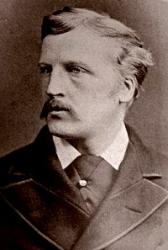
1845 - 1914 Person Name: John D. S. Campbell, 1845-1914 Topics: Holy Scripture Author of "Unto the Hills Around" in African Methodist Episcopal Church Hymnal John George Henry Douglas Sutherland Campbell LLD [Duke of Argyll] United Kingdom 1845-1914. Born in London to George Campbell, Marques of Lorne, and styled Earl of Campbell from birth, he assumed his father's title at the age of 21 months, when his father became 8th Duke of Argyll. He bore that title until age 54. Educated at Edinburgh, Eton College, St. Andrews and at Trinity College, Cambridge, he also went to the National Art Training School. He traveled widely for 10 years throughout North and Central America, writing literature and poetry. In the UK, from 1868, he represented the constituency of Argyllshire as a Liberal member of Parliament in the House of Commons. He made little impression there. He was appointed Lt. Col. Commandant of the 1st Argyll & Bute Artillary Volunteers. He married Queen Victoria's 4th daughter, Princess Louise. They shared interest for art, but the marriage was childless and unhappy, and they spent much time apart. At 33, he was appointed Governor General of Canada. He and Louise made many contributions to Canadian society, especially in the arts and sciences. They encouraged establishment of the Royal Society of Canada, the Royal Canadian Academy of Arts, and the National Gallery of Canada, even selecting some of its paintings. Campbell was also involved in completion of the Canadain Pacific Railway and a hospital in British Columbia. He and his wife held lavish parties while in Canada. In 1881, Louise returned to England, and the Lord also in 1883, when he published his memoirs of Canada and Scotland. He was Governor and Constable of Windsor Castle from 1892 to 1914. He died of pneumonia in 1914. He received 4 Knightings and 4 special honors for his accomplishments. Towns, buildings, streets and parks were named for him. John Perry

John F. Burrowes

1787 - 1852 Person Name: John F Burrowes, 1787-1852 Topics: The Holy Scripture Composer of "BURLINGTON" in The A.M.E. Zion Hymnal Born: April 23, 1787, London, England. Died: March 31, 1852, Marylebone, London, England. A student of organist William Horsley, Burrowes lived in London nearly 40 years, and played the organ at the Church of St. James, Westminster. He helped found the Philharmonic Society, and wrote an overture used as the concluding item at the Society’s concerts. He also composed piano pieces, and his Single Chant in E was included in Cathedral Psalter Chants (1875). His other works include: Pianoforte Primer, 1818 Thorough-Bass Primer, 1819 Sources: Nutter, p. 454 Reynolds, p. 261 Wikipedia, accessed 18 Nov 2016 © The Cyber Hymnal™. Used by permission. (www.hymntime.com)

Pages


Export as CSV
It looks like you are using an ad-blocker. Ad revenue helps keep us running. Please consider white-listing Hymnary.org or getting Hymnary Pro to eliminate ads entirely and help support Hymnary.org.