You help make Hymnary.org possible. More than 10 million people from 200+ countries found hymns, liturgical resources and encouragement on Hymnary.org in 2025, including you. Every visit affirms the global impact of this ministry.

If Hymnary has been meaningful to you this year, would you take a moment today to help sustain it? A gift of any size—paired with a note of encouragement if you wish—directly supports the server costs, research work and curation that keep this resource freely available to the world.

Give securely online today, or mail a check to:
Hymnary.org
Calvin University
3201 Burton Street SE
Grand Rapids, MI 49546

Thank you for your partnership, and may the hope of Advent fill your heart.

Person Results

Topics:the+scriptures
In:people

Planning worship? Check out our sister site, ZeteoSearch.org, for 20+ additional resources related to your search.
Showing 111 - 120 of 468Results Per Page: 102050

Arthur Henry Brown

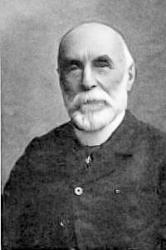
1830 - 1926 Person Name: A. H. Brown, 1830-1926 Topics: The Holy Scriptures Composer of "TILTEY ABBEY" in The Methodist Hymn-Book with Tunes Born: Ju­ly 24, 1830, Brent­wood, Es­sex, Eng­land. Died: Feb­ru­a­ry 15, 1926, Brent­wood, Es­sex, Eng­land. Almost com­plete­ly self taught, Brown be­gan play­ing the or­gan at the age 10. He was or­gan­ist of the Brent­wood Par­ish Church, Es­sex (1842-53); St. Ed­ward’s, Rom­ford (1853-58); Brent­wood Par­ish Church (1858-88); St. Pe­ter’s Church, South Weald (from 1889); and Sir An­tho­ny Browne’s School (to 1926). A mem­ber of the Lon­don Gre­gor­i­an As­so­ci­a­tion, he helped as­sem­ble the Ser­vice Book for the an­nu­al fes­tiv­al in St. Paul’s Ca­thed­ral. He sup­port­ed the Ox­ford Move­ment, and pi­o­neered the res­tor­a­tion of plain­chant and Gre­gor­i­an mu­sic in Ang­li­can wor­ship. Brown ed­it­ed var­i­ous pub­li­ca­tions, in­clud­ing the Al­tar Hym­nal. His other works in­clude set­tings of the Can­ti­cles and the Ho­ly Com­mun­ion Ser­vice, a Child­ren’s Fes­tiv­al Serv­ice, an­thems, songs, part songs, and over 800 hymn tunes and car­ols. Music: Alleluia! Sing the Tri­umph Arthur Dale Ab­bey Fields of Gold Are Glow­ing Gerran Holy Church Holy Rood If An­gels Sang Our Sav­ior’s Birth Lammas O, Sing We a Car­ol Purleigh Redemptor Mun­di Ring On, Ye Joy­ous Christ­mas Bells Saffron Wal­den St. An­a­tol­i­us St. Aus­tell St. John Dam­as­cene St. Ma­byn St. So­phro­ni­us Story of the Cross Sweet Child Di­vine --www.hymntime.com/tch

Graham Kendrick

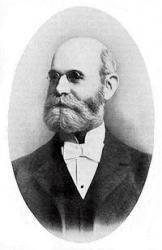
b. 1950 Topics: The Church of Jesus Christ The Scriptures Author of "Now in reverence and awe (Jesus, let me meet You in Your word)" in Complete Mission Praise Graham Kendrick (b. England, August 2, 1950), the son of a Baptist minister in Northamptonshire, is one of the most prolific Christian singer-songwriters in the United Kingdom. He’s written music for over thirty years, and to date has released thirty-eight albums. He is best known for his songs “Shine, Jesus, Shine,” “Knowing You,” and “The Servant King.” Kendrick has received honorary doctorates in divinity from Brunel University and Wycliffe College. In 1987 he helped co-found the March for Jesus, which today is a global phenomenon in which Christians take their faith to the streets in a celebration of Christ. In 1995 Kendrick received a Dove Award for his international work, and he remains an active advocate for Compassion International, which is a Christian child sponsorship organization dedicated to the long-term development of children living in poverty around the world, and also is a contributor to CompassionArt, an organization with the aim of generating income from works of art to assist in the relief of suffering around the planet. Laura de Jong

Reginald Heber

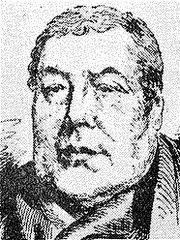
1783 - 1826 Person Name: Bp. Heber Topics: The Scriptures Seed of the word Author of "O God, by whom the seed is given" in A Collection of Psalms and Hymns for Christian Worship. 16th ed. Reginald Heber was born in 1783 into a wealthy, educated family. He was a bright youth, translating a Latin classic into English verse by the time he was seven, entering Oxford at 17, and winning two awards for his poetry during his time there. After his graduation he became rector of his father's church in the village of Hodnet near Shrewsbury in the west of England where he remained for 16 years. He was appointed Bishop of Calcutta in 1823 and worked tirelessly for three years until the weather and travel took its toll on his health and he died of a stroke. Most of his 57 hymns, which include "Holy, Holy, Holy," are still in use today. -- Greg Scheer, 1995 ==================== Heber, Reginald, D.D. Born at Malpas, April 21, 1783, educated at Brasenose College, Oxford; Vicar of Hodnet, 1807; Bishop of Calcutta, 1823; died at Trichinopoly, India, April 3, 1826. The gift of versification shewed itself in Heber's childhood; and his Newdigate prize poem Palestine, which was read to Scott at breakfast in his rooms at Brazenose, Oxford, and owed one of its most striking passages to Scott's suggestion, is almost the only prize poem that has won a permanent place in poetical literature. His sixteen years at Hodnet, where he held a halfway position between a parson and a squire, were marked not only by his devoted care of his people, as a parish priest, but by literary work. He was the friend of Milman, Gifford, Southey, and others, in the world of letters, endeared to them by his candour, gentleness, "salient playfulness," as well as learning and culture. He was on the original staff of The Quarterly Review; Bampton Lecturer (1815); and Preacher at Lincoln's Inn (1822). His edition of Jeremy Taylor is still the classic edition. During this portion of his life he had often had a lurking fondness for India, had traced on the map Indian journeys, and had been tempted to wish himself Bishop of Calcutta. When he was forty years old the literary life was closed by his call to the Episcopate. No memory of Indian annals is holier than that of the three years of ceaseless travel, splendid administration, and saintly enthusiasm, of his tenure of the see of Calcutta. He ordained the first Christian native—Christian David. His first visitation ranged through Bengal, Bombay, and Ceylon; and at Delhi and Lucknow he was prostrated with fever. His second visitation took him through the scenes of Schwartz's labours in Madras Presidency to Trichinopoly, where on April 3,1826, he confirmed forty-two persons, and he was deeply moved by the impression of the struggling mission, so much so that “he showed no appearance of bodily exhaus¬tion." On his return from the service ”He retired into his own room, and according to his invariable custom, wrote on the back of the address on Confirmation 'Trichinopoly, April 3, 1826.' This was his last act, for immediately on taking off his clothes, he went into a large cold bath, where he had bathed the two preceding mornings, but which was now the destined agent of his removal to Paradise. Half an hour after, his servant, alarmed at his long absence, entered the room and found him a lifeless corpse." Life, &c, 1830, vol. ii. p. 437. Heber's hymns were all written during the Hodnet period. Even the great missionary hymn, "From Greenland's icy mountains," notwithstanding the Indian allusions ("India's coral strand," "Ceylon's isle"), was written before he received the offer of Calcutta. The touching funeral hymn, "Thou art gone to the grave," was written on the loss of his first babe, which was a deep grief to him. Some of the hymns were published (1811-16) in the Christian Observer, the rest were not published till after his death. They formed part of a ms. collection made for Hodnet (but not published), which contained, besides a few hymns from older and special sources, contributions by Milman. The first idea of the collection appears in a letter in 1809 asking for a copy of the Olney Hymns, which he "admired very much." The plan was to compose hymns connected with the Epistles and Gospels, to be sung after the Nicene Creed. He was the first to publish sermons on the Sunday services (1822), and a writer in The Guardian has pointed out that these efforts of Heber were the germs of the now familiar practice, developed through the Christian Year (perhaps following Ken's Hymns on the Festivals), and by Augustus Hare, of welding together sermon, hymnal, and liturgy. Heber tried to obtain from Archbishop Manners Sutton and the Bishop of London (1820) authorization of his ms. collection of hymns by the Church, enlarging on the "powerful engine" which hymns were among Dissenters, and the irregular use of them in the church, which it was impossible to suppress, and better to regulate. The authorization was not granted. The lyric spirit of Scott and Byron passed into our hymns in Heber's verse; imparting a fuller rhythm to the older measures, as illustrated by "Oh, Saviour, is Thy promise fled," or the martial hymn, "The Son of God goes forth to war;" pressing into sacred service the freer rhythms of contemporary poetry (e.g. "Brightest and best of the sons of the morning"; "God that madest earth and heaven"); and aiming at consistent grace of literary expression.. Their beauties and faults spring from this modern spirit. They have not the scriptural strength of our best early hymns, nor the dogmatic force of the best Latin ones. They are too flowing and florid, and the conditions of hymn composition are not sufficiently understood. But as pure and graceful devotional poetry, always true and reverent, they are an unfailing pleasure. The finest of them is that majestic anthem, founded on the rhythm of the English Bible, "Holy, Holy, Holy, Lord God Almighty." The greatest evidence of Heber's popularity as a hymnwriter, and his refined taste as a compiler, is found in the fact that the total contents of his ms. collection which were given in his posthumous Hymns written and adapted to the Weekly Church Service of the Year. London, J. Murray, 1827; which included 57 hymns by Heber, 12 by Milman, and 29 by other writers, are in common in Great Britain and America at the present time. [Rev. H. Leigh Bennett, M.A.] Of Bishop Heber's hymns, about one half are annotated under their respective first lines. Those given below were published in Heber's posthumous Hymns, &c, 1827. Some of them are in extensive use in Great Britain and America; but as they possess no special histories they are grouped together as from the Hymns, &c, 1827:— 1. Beneath our feet, and o'er our head. Burial. 2. Creator of the rolling flood. St. Peter's Day, or, Gospel for 6th Sunday after Trinity. 3. Lo, the lilies of the field. Teachings of Nature: or, Gospel for 15th Sunday after Trinity. 4. 0 God, by Whom the seed is given. Sexagesima. 6. 0 God, my sins are manifold. Forgiveness, or, Gospel for 22nd S. after Trinity. 6. 0 hand of bounty, largely spread. Water into Wine, or, Gospel for 2nd S. after Epiphany. 7. 0 King of earth, and air, and sea. Feeding the Multitude; or, Gospel for 4th S. in Lent. 8. 0 more than merciful, Whose bounty gave. Good Friday. 9. 0 most merciful! 0 most bountiful. Introit Holy Communion. 10. 0 Thou, Whom neither time nor space. God unsearchable, or, Gospel for 5th Sunday in Lent. 11. 0 weep not o'er thy children's tomb. Innocents Day. 12. Room for the proud! Ye sons of clay. Dives and Lazarus, or, Gospel for 1st Sunday after Trinity. 13. Sit thou on my right hand, my Son, saith the Lord. Ascension. 14. Spirit of truth, on this thy day. Whit-Sunday. 15. The feeble pulse, the gasping breath. Burial, or, Gospel for 1st S. after Trinity. 16. The God of glory walks His round. Septuagesima, or, the Labourers in the Marketplace. 17. The sound of war in earth and air. Wrestling against Principalities and Powers, or, Epistle for 2lst Sunday after Trinity. 18. The world is grown old, her pleasures are past. Advent; or, Epistle for 4th Sunday in Advent. 19. There was joy in heaven. The Lost Sheep; or, Gospel for 3rd S. after Trinity. 20. Though sorrows rise and dangers roll. St. James's Day. 21. To conquer and to save, the Son of God. Christ the Conqueror. 22. Virgin-born, we bow before Thee. The Virgin Mary. Blessed amongst women, or, Gospel for 3rd S. in Lent. 23. Wake not, 0 mother, sounds of lamentation. Raising the Widow's Son, or, Gospel for 16th S. after Trinity. 24. When on her Maker's bosom. Holy Matrimony, or, Gospel for 2nd S. after Epiphany. 25. When through the torn sail the wild tempest is streaming. Stilling the Sea, or, Gospel for 4th Sunday after Epiphany. 26. Who yonder on the desert heath. The Good Samaritan, or, Gospel for 13th Sunday after Trinity. This list is a good index of the subjects treated of in those of Heber's hymns which are given under their first lines, and shows that he used the Gospels far more than the Epistles in his work. --John Julian, Dictionary of Hymnology (1907)

Stanley

1767 - 1822 Person Name: Samuel Stanley Topics: Means of Grace The Scriptures Composer of "WARWICK" in The New Christian Hymnal Samuel J. Stanley

Henry Percy Smith

1825 - 1898 Person Name: H. Percy Smith, 1825-1898 Topics: Scriptures Spread of; Scriptures Spread of Composer of "MARYTON" in Methodist Hymn and Tune Book Henry Percy Smith (b. Malta, 1825; d. Bournemouth, Hampshire, England, 1898) was educated at Balliol College, Oxford, England, and ordained a priest in the Church of England in 1850. He served five churches, including St. Michael's York Town in Farnborough (1851-1868), Great Barton in Suffolk (1868-1882), Christ Church in Cannes, France (1882-1892), and the Cathedral in Gibraltar (1892-1898). MARYTON is his only tune found in contemporary hymnals and is thought to be the only tune he published. Bert Polman

William J. Kirkpatrick

1838 - 1921 Person Name: Wm. J. Kirkpatrick Topics: The Scriptures Composer of "[It is new, it is new ev'ry moment]" in Light in the Valley William J. Kirkpatrick (b. Duncannon, PA, 1838; d. Philadelphia, PA, 1921) received his musical training from his father and several other private teachers. A carpenter by trade, he engaged in the furniture business from 1862 to 1878. He left that profession to dedicate his life to music, serving as music director at Grace Methodist Church in Philadelphia. Kirkpatrick compiled some one hundred gospel song collections; his first, Devotional Melodies (1859), was published when he was only twenty-one years old. Many of these collections were first published by the John Hood Company and later by Kirkpatrick's own Praise Publishing Company, both in Philadelphia. Bert Polman

Samuel Stennett

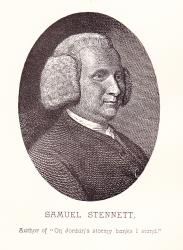
1727 - 1795 Person Name: Stennett Topics: The Properties of the Scriptures Author of "The Excellency of the Scriptures" in A Selection of Hymns for Public Worship. In four parts (10th ed.) (Gadsby's Hymns) Samuel Stennett was born at Exeter, in 1727. His father was pastor of a Baptist congregation in that city; afterwards of the Baptist Chapel, Little Wild Street, London. In this latter pastorate the son succeeded the father in 1758. He died in 1795. Dr. Stennett was the author of several doctrinal works, and a few hymns. --Annotations of the Hymnal, Charles Hutchins, M.A. 1872. ====================== Stennett, Samuel, D.D., grandson of Joseph Stennett, named above, and son of the Rev. Joseph Stennett, D.D., was born most pro;bably in 1727, at Exeter, where his father was at that time a Baptist minister. When quite young he removed to London, his father having become pastor of the Baptist Church in Little Wild Street, Lincoln's Inn Fields. In 1748, Samuel Stennett became assistant to his father in the ministry, and in 1758 succeeded him in the pastoral office at Little Wild Street. From that time until his death, on Aug. 24, 1795, he held a very prominent position among the Dissenting ministers of London. He was much respected by some of the statesmen of the time, and used his influence with them in support of the principles of religious freedom. The celebrated John Howard was a member of his congregation and an attached friend. In 1763, the University of Aberdeen conferred on him the degree of D.D. Dr. S. Stennett's prose publications consist of volumes of sermons, and pamphlets on Baptism and on Nonconformist Disabilities. He wrote one or two short poems, and contributed 38 hymns to the collection of his friend, Dr. Rippon (1787). His poetical genius was not of the highest order, and his best hymns have neither the originality nor the vigour of some of his grandfather's. The following, however, are pleasing in sentiment and expression, and are in common use more especially in Baptist congregations:— 1. And have I, Christ, no love for Thee? Love for Christ desired. 2. And will the offended God again? The Body the Temple of the Holy Ghost. 3. As on the Cross the Saviour hung. The Thief on the Cross. 4. Behold the leprous Jew. The healing of the Leper. 5. Come, every pious heart. Praise to Christ. 6. Father, at Thy call, I come. Lent. 7. Great God, amid the darksome night. God, a Sun. 8. Great God, what hosts of angels stand. Ministry of Angels. 9. Here at Thy Table, Lord, we meet. Holy Communion. 10. How charming is the place. Public Worship. 11. How shall the sons of men appear? Acceptance through Christ alone. 12. How soft the words my [the] Saviour speaks. Early Piety. 13. How various and how new. Divine Providence. 14. Not all the nobles of the earth. Christians as Sons of God. 15. On Jordan's stormy banks I stand. Heaven anticipated. 16. Prostrate, dear Jesus, at thy feet. Lent. Sometimes, "Dear Saviour, prostrate at Thy feet." 17. Should bounteous nature kindly pour. The greatest of these is Love. From this, "Had I the gift of tongues," st. iii., is taken. 18. Thy counsels of redeeming grace. Holy Scripture. From "Let avarice, from shore to shore." 19. Thy life 1 read, my dearest Lord. Death in Infancy. From this "'Tis Jesus speaks, I fold, says He." 20. 'Tis finished! so the Saviour cried. Good Friday. 21. To Christ, the Lord, let every tongue. Praise of Christ. From this,"Majestic sweetness sits enthroned," st. iii., is taken. 22. To God, my Saviour, and my King. Renewing Grace. 23. To God, the universal King. Praise to God. 24. What wisdom, majesty, and grace. The Gospel. Sometimes, “What majesty and grace." 25. Where two or three with sweet accord. Before the Sermon. 26. Why should a living man complain? Affliction. From this, "Lord, see what floods of sorrow rise," st. iii., is taken. 27. With tears of anguish I lament. Lent. 28. Yonder amazing sight I see. Good Friday. All these hymns, with others by Stennett, were given in Rippon's Baptist Selection, 1787, a few having previously appeared in A Collection of Hymns for the use of Christians of all Denominations, London. Printed for the Booksellers, 1782; and No. 16, in the 1778 Supplement to the 3rd edition of the Bristol Baptist Selection of Ash and Evans. The whole of Stennett's poetical pieces and hymns were included in vol. ii. of his Works, together with a Memoir, by W. J. Jones. 4 vols., 1824. [Rev. W. R. Stevenson, M.A.] --John Julian, Dictionary of Hymnology (1907)

Ithamar Conkey

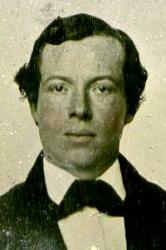
1815 - 1867 Person Name: Ithamar Conkey, 1815-1867 Topics: Scriptures Composer of "RATHBUN" in Hymns of the Saints Ithamar D. Conkey USA 1815-1867. Born of Scottish ancestry in Shutesbury, MA, he became a wool merchant. He married Elizabeth Billings, and they had a daughter and two sons. He was organist at Central Baptist Church,Norwich, CN. After that, he went to NewYork City and served as bass soloist at Calvary Episcopal church and Grace Church. Later, he served as bass soloist and choir director of Madison Avenue Baptist Church. His famous hymn was written in 1849. Two years later, William Howard Doane was baptized in the same church. John Perry

Georg Neumark

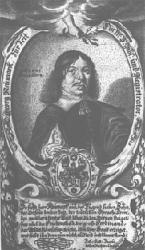
1621 - 1681 Topics: liturgical Scripture Songs Author of "If Thou but Suffer God to Guide Thee" Georg Neumark (b. Langensalza, Thuringia, Germany, 1621; d. Weimar, Germany, 1681) lived during the time of the Thirty Years' War, when social and economic conditions were deplorable. He had personal trials as well. On his way to Königsberg to study at the university, traveling in the comparative safety of a group of merchants, he was robbed of nearly all his possessions. During the next two years he spent much of his time looking for employment. He finally secured a tutoring position in Kiel. When he had saved enough money, he returned to the University of Königsberg and studied there for five years. In Königsberg he again lost all his belongings, this time in a fire. Despite his personal suffering Neumark wrote many hymns in which he expressed his absolute trust in God. In 1651 he settled in Weimar, Thuringia, where he became court poet and archivist to Duke Johann Ernst and librarian and registrar of the city. Neumark wrote thirty-four hymns, of which "If You But Trust in God to Guide You" has become a classic. Bert Polman ============== Neumark, Georg, son of Michael Neumark, clothier at Langensalza, in Thuringia (after 1623 at Miihlhausen in Thuringia), was born at Langensalza, March 16, 1621; and educated at the Gymnasium at Schleueingen, and at the Gymnasium at Gotha. He received his certificate of dimission from the latter in Sept. 1641 (not 1640). He left Gotha in the autumn of 1641 along with a number of merchants who were going to the Michaelmas Fair at Leipzig. He then joined a similar party who were going from Leipzig to Lübeck; his intention being to proceed to Königsberg and matriculate at the University there. After passing through Magdeburg they were plundered by a band of highwaymen on the Gardelegen Heath, who robbed Neumark of all he had with him, save his prayer-book and a little money sewed up in the clothes he was wearing. He returned to Magdeburg, but could obtain no employment there, nor in Lüneburg, nor in Winsen, nor in Hamburg, to which in succession the friends he made passed him on. In the beginning of December he went to Kiel, where he found a friend in the person of Nicolaus Becker, a native of Thuringia, and then chief pastor at Kiel. Day after day passed by without an opening, till about the end of the month the tutor in the family of the Judge Stephan Henning fell into disgrace and took sudden flight from Kiel. By Becker's recommendation Neumark received the vacant position, and this sudden end of his anxieties was the occasion of the writing of his hymn as noted below. In Henning's house the time passed happily till he had saved enough to proceed to Königsberg, where he matriculated June 21, 1643, as a student of law. He remained five years, studying also poetry under Dach, and maintaining himself as a family tutor. During this time (in 1046) he again lost all his property, and this time by fire. In 1648 he left Königsberg, was for a short time at Warsaw, and spent 1649-50 at Thorn. He was then in Danzig, and in Sept. 1651 we find him in Hamburg. In the end of 1651 he returned to Thuringia, and bronght himself under the notice of Duke Wilhelm II. of Sachse-Weimar, the chief or president of the Fruit-bearing Society, the principal German literary union of the 17th century. The Duke, apparently in 1652, appointed him court poet, librarian and registrar of the administration at Weimar; and finally secretary of the Ducal Archives. In Sept. 1653 he was admitted as a member of the Fruit-bearing Society, of which he became secretary in 1656, and of which he wrote a history (Der Neu-Sprossende Teutsche Palmbaum, Nürnberg and Weimar, 1668); and, in 1679, became also a member of the Pegnitz Order. In 1681 he became blind, but was permitted to retain his emoluments till his death, at Weimar, July 18, 1681. [K. Goedeke's Grundriss, vol. iii., 1887, p. 74; Allgemeine Deutsche Biographie. xxiii. 539; Weimarisches Jahrbuch, vol. iii., 1855, p. 176, &c. The dates given by the different authorities vary exceedingly, and are quite irreconcilable. In the registers at Schleusingen Neumark is last mentioned in 1636, and then as in the Third Form. Dr. von Bamberg, director of the Gymnasium at Gotha, informs me that Neumark's name appears in the matriculation book there under January 31, 1641; and as one of the "newly entered" scholars.] A long list of Neumark's poetical works is given by Goedeke. A large proportion of his secular poems are pastorals, or else occasional poems written to order at Weimar; and in all there is little freshness, or happiness in expression, or glow of feeling. As a musician, and as a hymn-writer, he is of more importance. His hymns appeared in his (1) Poetisch-und Musikalisches Lustwäldchen, Hamburg, 1652; the enlarged edition, entitled (2) Fortgepfiantzter Musikalizch-Poetischer Lustwald, Jena, 1657; and (3) Unterschiedliche, so wol gottseliger Andacht; als auch zu christlichen Tugenden aufmuntemde Lieder, Weimar, 1675. Of the 34 hymns in these three works a few are found in the German hymn-books of the 17th century, and three or four still survive. The best of Neumark's hymns are those of Trust in God, and patient waiting for His help under trial and suffering; and one of these may be fairly called classical and imperishable. It is:— Wer nur den lieben Gott lässt walten. Trust in God. First published in his Fortgepflantzter musikalisch-poetischer Lustwald, Jena, 1657, p. 26, in 7 stanzas of 6 lines, entitled “A hymn of consolation. That God will care for and preserve His own in His own time. After the saying 'Cast thy burden upon the Lord, and He shall sustain thee'“(Ps. lv. 22). This, his finest hymn, was written in 1641, at Kiel, when after unsuccessful attempts to procure employment he became a tutor in the family of the judge Stephan Henning. Of this appointment Neumark, in his Thrünendes Haus-Kreuiz, Weimar, 1681, speaks thus:-— "Which good fortune coming suddenly, and as if fallen from heaven, greatly rejoiced me, and on that very day I composed to the honour of my beloved Lord the here and there well-known hymn 'Wer nur den lieben Gott lässt walten'; and had certainly cause enough to thank the Divine compassion for such unlooked for grace shown to me," &c. As the date of its composition is thus December, 1641, or at latest Jan. 1642, it is certainly strange that it was not published in his Lustwäldchen, Hamburg, 1652. In that volume he does give, at p. 32, a piece entitled, "a hymn of consolation, when, in 1646, through a dreadful fire I came to my last farthing." The apocryphal story, according to which the hymn was written at Hamburg, about 1653 (see Miller's Singers and Songs, 1869, p. 91), has not been traced earlier than 1744. The hymn speedily became popular, and passed into hymn-books all over Germany (Leipzig Vorrath, 1673, No. 1169), and still holds its place as in the Berlin Geistliche Lieder, ed. 1863, No. 73. Lauxmann, in Koch, viii. 386-390, relates that it was the favourite hymn of Magdalena Sibylla (d. 1687), wife of the Elector Johann Georg II. of Saxony; was sung, by his command, at the funeral, in 1740, of King Friedrich Wilhelm I. of Prussia; was sung, or rather played, by the first band of missionaries from Herrmannsburg as they set sail from Brunshausen on the Elbe (near Stade) on Oct. 28, 1853, &c. The beautiful melody by Neumark was probably composed in 1641 along with the hymn, and was published with it in 1657. On it J. S. Bach composed a cantata. It is well known in England through its use by Mendelssohn in his St. Paul ("To Thee, 0 Lord, I yield my spirit"), and from its introduction into Hymns Ancient & Modern (as Bremen), and many other collections. Translations in common use:-- 1. Who leaves th' Almighty God to reign. A full but free translation by Sir John Bowring in his Hymns, 1825, No. 58. His translations of stanzas ii., iv.-vi. beginning "How vain are sighs! how vain regret," are included in Curtis's Union Collection, 1827. 2. Who all his will to God resigneth. A good and full translation by A. T. Kussell, as No. 236 in his Psalms & Hymns, 1851. His translations of st. v.-vii. beginning "Say not, I am of God forsaken," are in Dr. Pagenstecher's Collection, 1864. 3. Leave God to order all thy ways. A full and good translation by Miss Winkworth, in her Lyra Germanica, 1st Ser. 1855, p. 152. This is given in full in M. W. Stryker's Christian Chorals, 1885, and, omitting st. vi., in W. F. Stevenson's Hymns for Church and Home, 1873, and the Baptist Hymnal, 1879. Further abridged forms are in the Baptist Psalms & Hymns, 1858; Harrow School Hymn Book, l866; Holy Song, 1869, and others. In the Pennsylvania Lutheran Church Book, 1868; and the American Presbyterian Hymnal, 1874, st. v., vi. are omitted, and the rest altered to 6 stanzas, beginning "My God, I leave to Thee my ways." 4. Him who the blessed God trusts ever. A good and full translation by Dr.John Ker in the Juvenile Missionary Magazine, of the United Presbyterian Church, 1857. It was revised, and st. iii., v., vi. omitted, for the Ibrox Hymnal, 1871, where it begins: "He who,” &c. 5. If thou but suffer God to guide thee. A full and good translation by Miss Winkworth (based on her Lyra Germanica version and set to the original melody), as No. 134 in her Chorale Book for England, 1863. Repeated in full in the Baptist Psalmist, 1878, and in America in the Ohio Lutheran Hymnal, 1880. It is found, in various abridged forms, in J. Robinson's Collection, 1869; Horder's Congregational Hymns , 1884; the Evangelical Hymnal, N. Y., 1880, and others. 6. He, who the living God hath chosen. A translation of st. i., ii., vii. by Miss Borthwick, as No. 237 in Dr. Pagenstecher's Collection, 1864. 7. He who doth glad submission render. A good translation omitting st. vi., by J. M. Sloan, as No. 284 in J. H. Wilson's Service of Praise, 1865, repeated, omitting the translations of st. ii., vii., in Flett's Collection, Paisley, 1871. Other translations are:— (1) "He that confides in his Creator." By J. C. Jacobi, 1720, p. 13 (1722, p. 36; 1732, p. 61). Repeated in the Moravian Hymn Book, 1754, and later eds. (1886, No. 183). (2) "0 Christian! let the Lord direct." By Miss Knight in her Trs. from the German in Prose and Verse, 1812, p. 85. (3) "To let God rule who's but contented." By H. W. Dulcken in his Book of German Song, 1856, p. 274. (4) "He who the rule to God hath yielded." By J. D. Burns in the Family Treasury, 1859, p. 309, and his Memoir & Remains, 1869, p. 240. (5) "Who trusts in God's all-wise direction." By R. Massie, in the British Herald, Aug. 1865, p. 120, and Reid's Praise Book, 1872. (6) "Who yields his will to God's good pleasure. In the British Herald, April, 1866, p. 244, and in Reid's Praise Book, 1872. (7) "He who commits his way to God." In the Family Treasury, 1878, p. 49. [Rev. James Mearns, M.A.] --John Julian, Dictionary of Hymnology (1907) See also in: Hymn Writers of the Church

Samuel Webbe

1740 - 1816 Person Name: Samuel Webbe (1740-1816) Topics: The Holy Scripture Composer of "BENEVENTO" in Himnario Adventista del Séptimo Día Samuel Webbe (the elder; b. London, England, 1740; d. London, 1816) Webbe's father died soon after Samuel was born without providing financial security for the family. Thus Webbe received little education and was apprenticed to a cabinet­maker at the age of eleven. However, he was determined to study and taught himself Latin, Greek, Hebrew, French, German, and Italian while working on his apprentice­ship. He also worked as a music copyist and received musical training from Carl Barbant, organist at the Bavarian Embassy. Restricted at this time in England, Roman Catholic worship was freely permitted in the foreign embassies. Because Webbe was Roman Catholic, he became organist at the Portuguese Chapel and later at the Sardinian and Spanish chapels in their respective embassies. He wrote much music for Roman Catholic services and composed hymn tunes, motets, and madrigals. Webbe is considered an outstanding composer of glees and catches, as is evident in his nine published collections of these smaller choral works. He also published A Collection of Sacred Music (c. 1790), A Collection of Masses for Small Choirs (1792), and, with his son Samuel (the younger), Antiphons in Six Books of Anthems (1818). Bert Polman

Pages


Export as CSV
It looks like you are using an ad-blocker. Ad revenue helps keep us running. Please consider white-listing Hymnary.org or getting Hymnary Pro to eliminate ads entirely and help support Hymnary.org.