You help make Hymnary.org possible. More than 10 million people from 200+ countries found hymns, liturgical resources and encouragement on Hymnary.org in 2025, including you. Every visit affirms the global impact of this ministry.

If Hymnary has been meaningful to you this year, would you take a moment today to help sustain it? A gift of any size—paired with a note of encouragement if you wish—directly supports the server costs, research work and curation that keep this resource freely available to the world.

Give securely online today, or mail a check to:
Hymnary.org
Calvin University
3201 Burton Street SE
Grand Rapids, MI 49546

Thank you for your partnership, and may the hope of Advent fill your heart.

Person Results

Topics:works+of+god+
In:people

Planning worship? Check out our sister site, ZeteoSearch.org, for 20+ additional resources related to your search.
Showing 111 - 120 of 692Results Per Page: 102050

William Kethe

? - 1594 Topics: God His perfections; Church Covenant People; Church Lord's House; God Goodness of; God Immutability of; God Praise of; God Truth of; Work of Creation Author of "All People That on Earth Do Dwell" in Trinity Hymnal (Rev. ed.) William Kethe (b. Scotland [?], d. Dorset England, c. 1594). Although both the time and place of Kethe's birth and death are unknown, scholars think he was a Scotsman. A Protestant, he fled to the continent during Queen Mary's persecution in the late 1550s. He lived in Geneva for some time but traveled to Basel and Strasbourg to maintain contact with other English refugees. Kethe is thought to be one of the scholars who translated and published the English-language Geneva Bible (1560), a version favored over the King James Bible by the Pilgrim fathers. The twenty-five psalm versifications Kethe prepared for the Anglo-Genevan Psalter of 1561 were also adopted into the Scottish Psalter of 1565. His versification of Psalm 100 (All People that on Earth do Dwell) is the only one that found its way into modern psalmody. Bert Polman ======================== Kethe, William, is said by Thomas Warton in his History of English Poetry, and by John Strype in his Annals of the Reformation, to have been a Scotsman. Where he was born, or whether he held any preferment in England in the time of Edward VI., we have been unable to discover. In the Brieff discours off the troubles begonne at Franckford, 1575, he is mentioned as in exile at Frankfurt in 1555, at Geneva in 1557; as being sent on a mission to the exiles in Basel, Strassburg, &c, in 1558; and as returning with their answers to Geneva in 1559. Whether he was one of those left behind in 1559 to "finishe the bible, and the psalmes bothe in meeter and prose," does not appear. The Discours further mentions him as being with the Earl of Warwick and the Queen's forces at Newhaven [Havre] in 1563, and in the north in 1569. John Hutchins in his County history of Dorset, 1774, vol. ii. p. 316, says that he was instituted in 1561 as Rector of Childe Okeford, near Blandford. But as there were two Rectors and only one church, leave of absence might easily be extended. His connection with Okeford seems to have ceased by death or otherwise about 1593. The Rev. Sir Talbot H. B. Baker, Bart., of Ranston, Blandford, who very kindly made researches on the spot, has informed me that the Registers at Childe Okeford begin with 1652-53, that the copies kept in Blandford date only from 1732 (the earlier having probably perished in the great fire there in 1731), that no will can be found in the district Probate Court, and that no monument or tablet is now to be found at Childe Okeford. By a communication to me from the Diocesan Registrar of Bristol, it appears that in a book professing to contain a list of Presentations deposited in the Consistory Court, Kethe is said to have been presented in 1565 by Henry Capel, the Patron of Childe Okeford Inferior. In the 1813 edition of Hutchins, vol. iii. pp. 355-6, William Watkinson is said to have been presented to this moiety by Arthur Capel in 1593. Twenty-five Psalm versions by Kethe are included in the Anglo-Genevan Psalter of 1561, viz. Ps. 27, 36, 47, 54, 58, 62, 70, 85, 88, 90, 91, 94, 100, 101, 104, 107, 111, 112, 113, 122, 125, 126, 134, 138, 142,—the whole of which were adopted in the Scottish Psalter of 1564-65. Only nine, viz. Ps. 104, 107, 111, 112, 113, 122, 125, 126, 134, were included in the English Psalter of 1562; Ps. 100 being however added in 1565. Being mostly in peculiar metres, only one, Ps. 100, was transferred to the Scottish Psalter of 1650. The version of Ps. 104, "My soul, praise the Lord," is found, in a greatly altered form, in some modern hymnals. Warton calls him ”a Scotch divine, no unready rhymer," says he had seen a moralisation of some of Ovid by him, and also mentions verses by him prefixed to a pamphlet by Christopher Goodman, printed at Geneva in 1558; a version of Ps. 93 added to Knox's Appellation to the Scottish Bishops, also printed at Geneva in 1558; and an anti-papal ballad, "Tye the mare Tom-boy." A sermon he preached before the Sessions at Blandford on Jan. 17, 1571, was printed by John Daye in 1571 (preface dated Childe Okeford, Jan. 29,157?), and dedicated to Ambrose Earl of Warwick. [Rev James Mearns, M.A]. -- John Julian, Dictionary of Hymnology (1907) ==================== Kethe, William, p. 624, i., line 30. The version which Warton describes as of Psalm 93 is really of Psalm 94, and is that noted under Scottish Hymnody, p. 1022, ii., as the version of Psalms 94 by W. Kethe. --John Julian, Dictionary of Hymnology, Appendix, Part II (1907)

Thomas O. Chisholm

1866 - 1960 Person Name: Thomas O. Chisholm, 1866-1960 Topics: Anniversaries; God Compassion of ; God Faithfulness of; God Immutability of; God Mercies of; God Unchangeableness of; God in Nature; God: His Being, Word and Works God the Father Almighty: The Divine Attributes Author of "Great is Thy faithfulness" in The Book of Praise Thomas O. Chisholm was born in Franklin, Kentucky in 1866. His boyhood was spent on a farm and in teaching district schools. He spent five years as editor of the local paper at Franklin. He was converted to Christianity at the age of 26 and soon after was business manager and office editor of the "Pentecostal Herald" of Louisville, Ky. In 1903 he entered the ministry of the M. E. Church South. His aim in writing was to incorporate as much Scripture as possible and to avoid flippant or sentimental themes. Dianne Shapiro, from "The Singers and Their Songs: sketches of living gospel hymn writers" by Charles Hutchinson Gabriel (Chicago: The Rodeheaver Company, 1916) ============================== Signed letter from Chisholm dated 9 August 1953 located in the DNAH Archives.

Gerhardt Tersteegen

1697 - 1769 Person Name: Gerhard Tersteegen, 1697-1769 Topics: Christ, the Lord Jesus Redeemer; Fear of God; God Abiding Presence of; God: His Being, Word and Works God the Father Almighty: The Divine Attributes Author of "Lo, God is here! let us adore" in The Book of Praise Tersteegen, Gerhard, a pious and useful mystic of the eighteenth century, was born at Mörs, Germany, November 25, 1697. He was carefully educated in his childhood, and then apprenticed (1715) to his older brother, a shopkeeper. He was religiously inclined from his youth, and upon coming of age he secured a humble cottage near Mühlheim, where he led a life of seclusion and self-denial for many years. At about thirty years of age he began to exhort and preach in private and public gatherings. His influence became very great, such was his reputation for piety and his success in talking, preaching, and writing concerning spiritual religion. He wrote one hundred and eleven hymns, most of which appeared in his Spiritual Flower Garden (1731). He died April 3, 1769. Hymn Writers of the Church by Charles S. Nutter and Wilbur F. Tillett, 1911 ==================================================== Gerhardt Tersteegen or ter Stegen, was born at Moers, Netherlands [sic. Germany] , November 25, 1697. He was destined for the Reformed ministry, but after his father's death when the boy was only six, his mother was unable to send him to the university. He studied at the Gymnasium in Moers, and then earned a meager living as a silk weaver, sharing his frugal daily fare with the poor. Malnutrition and privation undermined his health to such an extent that he suffered a serious depression for some five years, following which he wrote a new covenant with God, signing it in his own blood. A strong mystic, he did not attend the services of the Reformed Church after 1719. Although forming no sect of his own, he became well known as a religious teacher and leader. His house was known as "The Pilgrim's Cottage" -- a retreat for men seeking a way of life, while he himself was known as "the physician of the poor and forsaken." Barred from preaching in his own country until 1750, he visited Holland annually from 1732 to 1755, holding meetings. In addition to his other labors he carried on a tremendous correspondence. Overwork resulted in physical breakdown, so that during the latter years of his life he could speak only to small gatherings. He died at Muhlheim on April 3, 1769. One of the three most important of Reformed hymn writers, he is also regarded as the chief representative of the mystics. He wrote 111 hymns. His important Geisliches Blumengartlein was published in 1729. H.E. Govan published The Life of Gerhard Tersteegen, with selctions from his writings, in 1902. --The Hymnal 1940 Companion =========================== Tersteegen, Gerhard, son of Heinrich Tersteegen (otherwise ter Stegen or zur Stiege), merchant at Mörs (Meurs), in Rhenish Prussia, was born at Mors, Nov. 25, 1697. His parents intended that he should become a minister of the Reformed Church in Germany. His father however died in 1703, and his mother found that after giving him a thorough classical training in the Latin school at Mörs she was unable to afford the cost of his University course. He was accordingly apprenticed, in 1713, to his brother-in-law, a merchant at Mühlheim on the Ruhr, and in 1717 started in business on his own account, at Mühlheim. As he found his time much broken up, and his opportunities of meditation few, he gave up his business in 1719; and, after a short trial of linen weaving, took up the easier and much more lucrative occupation of weaving silk ribbons. During the years 1719-24 he passed through a period of spiritual depression, at the end of which his faith in the reconciling grace of Christ became assured (see No. xxxiv. below), and on Maundy Thursday, 1724, he wrote out a solemn covenant with God which he signed with his own blood. Previous to this, even before 1719, he had ceased to attend the ordinary services of the Reformed Church; and also absented himself from Holy Communion on the ground that he could not in conscience communicate along with open sinners. About the beginning of 1725 he began to speak at the prayer meetings which had been held at Mühlheim, since 1710, by Wilhelm Hoffmann, who was a candidate of theology (licensed preacher) of the Reformed Church. Tersteegen soon became known as a religious teacher among the "Stillen im Lande," as the attenders on these meetings were called, and in 1728 gave up his handicraft in order to devote himself entirely to the translation of works by medieval and recent Mystics and Quietists, including Madame Guyon and others, and the composition of devotional books, to correspondence on religious subjects, and to the work of a spiritual director of the "awakened souls." From this date to his death he was supported by a small regular income which was subscribed by his admirers and friends. About 1727 a house at Otterbeck, between Mühlheim and Elberfeld, was set apart as a "Pilgerhütte," where the "awakened souls" could go into a spiritual retreat, under the direction of Tersteegen. This house, with accommodation for eight persons, was retained until about 1800. Tersteegen, however, did not confine himself to Mühlheim, but travelled over the district, addressing gatherings of like-minded Christians, giving special attention to Elberfeld, Barmen, Solingen, and Crefeld. From 1732 to 1755 he also went regularly every year to Holland, to visit his spiritual kinsfolk at Amsterdam and elsewhere. From 1730 to 1750 a law against conventicles was strictly enforced, and Tersteegen could not hold meetings except on his visits to Holland. During this period he removed to a house which had been Wilhelm Hoffmann's, where he preached, and provided food and simple medicines for the poor. After 1750 he resumed his public speaking until 1756, when he overstrained himself, and had to confine himself to the smallest gatherings absolutely. In 1769, dropsy set in, and after patient endurance for a season he died on April 3, 1769, at Mühlheim (Koch, vi. 46). Up to the end of his life Tersteegen remained outside the Reformed Church, but never set up a sect of his own. After his death his followers as a rule reunited themselves with it, especially when a less formal type of religion began to prevail therein. Tersteegen's most important hymnological work was his Geistliches Blümen-Gärtlein, of which many editions were published. Tersteegen ranks as one of the three most important hymnwriters associated with the Reformed Church in Germany, the other two being F. A. Lampe and Joachim Neander. He is however more closely allied, both as a Mystic and as a Poet, with Johann Scheffler than with either of his co-religionists. He almost equals Scheffler in power of expression and beauty of form, and if Scheffler has more pictorial grace, and a more vivid imagination, Tersteegen has more definiteness of teaching, a firmer grasp of the Christian verities, and a greater clearness in exposition. Inner union of the soul with God and Christ, the childlike simplicity and trust which this brings, renunciation of the world and of self, and daily endeavour to live as in the presence of God and in preparation for the vision of God, are the keynotes of his hymns. To his intense power of realising the unseen, his clear and simple diction, and the evident sincerity with which he sets forth his own Christian experience, his hymns owe much of their attractiveness and influence. During his lifetime they did not come much into use except through the Harfenspiel, as above, and they did not meet the taste of compilers during the Rationalistic period. But since Bunsen in his Yersuch, 1833, and Knapp in his Evangelischer Lieder-Schatz, 1837, brought his hymns once more into notice they have been received in greater or less measure into almost all the German hymnbooks, among the Lutherans as well as among the Reformed, the most popular of all being his “Gott ist gegenwärtig". A number of Tersteegen's hymns are noted under their own first lines. They appeared, almost all for the first time, in the successive editions of his Geistliches Blümen-Gärtlein, viz., in the 1st ed., 1729; 2nd ed., 1735; 3rd ed., 1738; 4th ed., 1745; 5th ed., 1751; 6th ed., 1757; 7th ed., 1768; and in each case (after 1729) in the Third Book of that work. Those which have passed into English are as follows:— i. Freue dich, du Kinder-Orden. Christmas. Translated as:— Little children, God above, 1858, p. 78. Another tr. is: "Children rejoice, for God is come to earth." By Miss Dunn, 1857, p. 30. ii. Jedes Herz will etwas lieben. Love to Christ. In the 4th ed., 1745, as above, Bk. iii., No. 70, in 8 stanzas of 4 lines, entitled "The Soul wishes to take Jesus as her best Beloved." Translated as:— 1. The heart of man must something love. A cento beginning with st. ii. “Though all the world my choice deride," is in Spurgeon's Our Own Hymn Book, 1866, and also in the Plymouth Collection, 1855, and other American hymnals. 2. Something every heart is loving. A full and good translation by Mrs. Bevan, in her Songs of Eternal Life, 1858, p. 58. iii. Jesu, der du bist alleine. Communion of Saints. In the 2nd ed., 1735, in 11 stanzas of 6 lines, entitled "Prayer on behalf of the brethren." Translated as:— Jesus, whom Thy Church doth own. By Miss Winkworth, omitting st. iii., in her Lyra Germanica, 2nd Ser., 1858, p. 99. iv. Jesu, mein Erbarmer! höre. Lent or Penitence. In the 2nd ed., 1735, in 12 stanzas of 6 lines, entitled "In outward and inward sufferings and Temptations." Translated as:— Jesus, pitying Saviour, hear me. In full, by Miss Winkworth, in her Lyra Germanica, 2nd Ser., 1858, p. 133. In her Christian Singer, 1869, p. 298, she gave st. ii., v., vi., beginning "Lost in darkness, girt with dangers." v. Nun so will ich denn mein Leben. Self-Surrender. Translated (omitting st. ii., iii., vi., x.) as:— 1. Lo! my choice is now decided. By Miss Cox, in her Sacred Hymns from the German, 1841, p. 125. Her translations of st. viii., ix., vii., altered and beginning, "One thing first and only knowing," are repeated in Hedge & Huntington's Hymns for the Church of Christ, Boston, U.S., 1853. 2. Now at last I end the strife. By Miss Winkworth, in herLyra Germanica, 2nd Ser., 1858. vi. 0 liebe Seele! könntst du werden. The Childlike Spirit. Translated as:— Soul! couldst thou, while on earth remaining. In Miss Cox'sHymns from German, 1864, p. 197, it begins "Soul, while on earth thou still remainest." Other trs. are: (1) "Wouldst thou, my soul, the secret find." By Lady E. Fortescue, 1843, p. 47. (2) “Dear soul, couldst thou become a child." By Miss Winkworth, 1855, p. 22. vii. Siegesfürste, Ehrenkönig. Ascension. Translated as:— Conquering Prince and Lord of Glory, By Miss Winkworth, omitting st. ii., in her Lyra Germanica, 2nd Ser., 1858, p. 48. viii. Wie gut ists, wenn man abgespehnt. Lent or Self-Renunciation. In the first edition, entitled "Of the sweetness of the hidden life of Christians." Translated as:— How sweet it is, when, wean'd from all. This is a good and full translation by S. Jackson, in his Life of Tersteegen, 1832 (1837, p. 417). Other hymns by Tersteegen which have been rendered into English are:— ix. Ach Gott, es taugt doch draussen nicht. On the Vanity of Earthly Things. Tr. as, "Ah God! the world has nought to please." By Miss Winkworth, 1869, p. 304. x. Ach, könnt ich stille sein. Peace in God. Translated as (1) "Oh! could I but be still." By Mrs. Bevan, 1859, p. 134. (2) "Ah, could I but be still." By Lady Durand, 1873, p. 77. xi. Allgenugsam Wesen. God's All-sufficiency . The trs. are (1) "Thou All-sufficient One! Who art." By Miss Warner, 1858, p. 601, repeated in Hymns of the Ages, Boston, U.S., 1865, p. 163. (2) "Thou, whose love unshaken." xii. Bald endet sich mein Pilgerweg. Eternal Life. Translated as “Weary heart, be not desponding." By Lady Durand, 1873, p. 84. xiii. Berufne Seelen! schlafet nicht. Lent. The translations are (1) "Ye sleeping souls, awake From dreams of carnal ease." By S. Jackson, in his Life of Tersteegen, 1832 (1837, p, 413). (2) "Sleep not, 0 Soul by God awakened." By Lady Durand, 1873, p. 98. xiv. Das äussre Sonnenlicht ist da. Morning. Tr. as (1) "The World's bright Sun is risen on high." By H. J. Buckoll, 1842, p. 51. (2) "The outer sunlight now is there." By Lady Durand, 1873, p. 75. xv. Das Kreuz ist dennoch gut. Cross and Consolation. Translated as "The Cross is ever good." By Mrs. Findlater in Hymns from the Land of Luther, 1862, p. 72 (1884, p. 234). xvi. Die Blümlein klein und gross in meines Herren Garten. On the Graces of the New Testament. The trs. are (l) "Flowers that in Jesu's garden have a place." By Miss Dunn in her translation of Tholuck's Stunden, 1853, p. 114. (2) "Full many flowers, in my Lord's garden blooming." By Dr. R. Menzies in his translation of Tholuck's Stunden, 1870, p. 182. xvii. Die Liebe will was gauzes haben.Entire Consecration. Tr. as "Love doth the whole—not part—desire." By Miss Warner, 1869, p. 12. xviii. Für dich sei ganz mein Herz und Leben. Consecration to Christ. The trs. are (1) "Constrain'd by love so warm and tender." By R. Massie in the British Herald, April, 1865, p. 55. (2) "My soul adores the might of loving." By Mrs. Edmund Ashley in the British Herald, Sept., 1867, p. 136, repeated in Reid's Praise Book, 1872, No. 582. xix. Grosser Gott, in dem ich schwebe. God's Presence. Translated as "God, in Whom I have my being." By Lady Durand, 1873, p. 81. xx. Jauchzet ihr Himmel! frohlocket ihr englische Chören. Christmas. Tr. as "Triumph, ye heavens! rejoice ye with high adoration." xxi. Jesu, den ich meine. Life in Christ. Tr. as ”Jesus, whom I long for." By Lady Durand, 1873, p. 92. xxii. Jesus-Nam, du höchster Name. The Name of Jesus. Translated as "Jesu's name, thou highest name." By S. Jackson in his Life of Tersteegen, 1832 (1837, p. 415). xxiii. Liebwerther, süsser Gottes-Wille. Resignation to the Will of God. The translations are (1) "Thou sweet beloved Will of God." By Mrs. Bevan, 1858, p. 14. (2) “Will of God, all sweet and perfect." By Lady Durand, 1873, p. 96. xxiv. Mein ganzer Sin. Lent. Turning to God. Tr. as "My whole desire Doth deeply turn away." By Miss Warner, 1869, p. 30. xxv. Mein Gott, mein Gott, mein wahres Leben. Self-Dedication. Tr. as "My God, my God, my life divine!" By S. Jackson in his Life of Tersteegen, 1832 (1837, p. 414). xxvi. Mein Herz, ein Eisen grob und alt. Cross and Consolation. Tr. as "A rough and shapeless block of iron is my heart." By Lady Durand, 1873, p. 79. xxvii. Mein'n ersten Augenblick. Morning. Tr. as "Each moment I turn me." xxviii. Nun lobet alle Gottes Sohn. Praise to Christ. Tr. as "Give glory to the Son of God." By Mrs. Bevan, 1858, p. 75. xxix. 0 Jesu, König, hoch zu ehren. Self-surrender. Tr. as “0 Jesus, Lord of majesty." By Miss Winkworth, 1858, p. 136. xxx. So gehts von Schritt zu Schritt. For the Dying. Tr. as "Thus, step by step, my journey to the Infinite." By Lady Durand, 1873, p. 105. xxxi. So ist denn doch nun abermal ein Jahr. New Year. Tr. as "Thus, then another year of pilgrim-life." By Lady Durand, 1873, p. 73. xxxii. Sollt ich nicht gelassen sein. Cross and Consolation. Tr. as “Should I not be meek and still." By Mrs. Bevan, 1858, p. 45. xxxiii. Von allen Singen ab. Turning to God. Tr. as "From all created things." By Lady Durand, 1873, p. 100. xxxiv. Wie bist du mir so innig gut. The Grace of Christ. Written in 1724 at the close of his time of spiritual despondency. “This state of spiritual darkness continued five years; until at length whilst on a journey to a neighbouring town, the day-spring from on high again visited him; and the atoning mercy of Jesus Christ was made so deeply and convincingly apparent to him, that his heart was set entirely at rest. On this occasion he composed that beautiful hymn, &c." Translated as “How gracious, kind, and good, My great High Priest art Thou" (st. i.-v.), No. 74 in Dr. Leifchild's Original Hymns, 1842. xxxv. Wiederun ein Augenblick. The Flight of Time. Tr. as: (1) “Of my Time one Minute more." (2) "One more flying moment." By Lady Durand, 1873, p. 26. xxxvi. Willkomm'n, verklarter Gottes Sohn. Easter. This is translated as "O Glorious Head, Thou livest now." By Miss Winkworth, 1855, p. 89. Repeated in Schaff’s Christ in Song, 1870. The first Book of the Blumen-Gärtlein contains short poems, more of the nature of aphorisms than of hymns. In the ed. of I76S there are in all 568 pieces in Book i., and of these Miss Winkworth has translated Nos. 429, 474, 565, 573, 575, 577 in her Christian Singers, 1869. Others are tr. by Lady Durand, in her Imitations from the German of Spitta and Terstsegen, 1873, as above, and by S. Jackson, in his Life of Tersteegen, 1832. [Rev. James Mearns, M.A.] -- Excerpts from John Julian, Dictionary of Hymnology (1907) ================== See also in: Hymn Writers of the Church

Harry Emerson Fosdick

1878 - 1969 Person Name: Harry E. Fosdick, 1878-1969 Topics: Courage; Fear; Freedom; God's Glory, Majesty and Power; God's Grace; Guidance; Mission; Obedience; Wisdom; Witness; Work; Zion-Reign of God Author of "God of Grace and God of Glory" in Community of Christ Sings Born: May 24, 1878, Buf­fa­lo, New York. Died: Oc­to­ber 5, 1969, Bronx­ville, New York. Fosdick at­tend­ed Col­gate Un­i­ver­si­ty, Un­ion The­o­lo­gic­al Sem­in­a­ry, and Co­lum­bia Un­i­ver­si­ty. Or­dained in 1903, he pas­tored at the First Bap­tist Church in Mont­clair, New Jer­sey, from 1904 to 1915. At Un­ion The­o­lo­gic­al Sem­in­a­ry, he lec­tured on Bap­tist prin­ci­ples and hom­i­le­tics (1908-1915) and was pro­fess­or of prac­ti­cal the­ol­o­gy (1915-1946). He al­so found time to serve as as­so­ci­ate min­is­ter at the First Pres­by­ter­i­an Church in Man­hat­tan, New York (1919-1925), and pas­tor of Park Av­e­nue Bap­tist Church (1929-1946). His pic­ture was on the co­ver of Time magazine, Sep­tem­ber 21, 1925. His works in­clude: A Guide to Understanding the Bi­ble, 1938 The Living of These Days (an autobiography), 1956 A Book of Pub­lic Pray­ers, 1960 © The Cyber Hymnal™ (www.hymntime.com/tch)

Fred Pratt Green

1903 - 2000 Person Name: Frederick Pratt Green, 1903- Topics: Compassion; Creation; Daily Work; Harvest; Ministry of God's People; Providence; Service; Thanksgiving Author of "For the fruits of all creation" in Together in Song The name of the Rev. F. Pratt Green is one of the best-known of the contemporary school of hymnwriters in the British Isles. His name and writings appear in practically every new hymnal and "hymn supplement" wherever English is spoken and sung. And now they are appearing in American hymnals, poetry magazines, and anthologies. Mr. Green was born in Liverpool, England, in 1903. Ordained in the British Methodist ministry, he has been pastor and district superintendent in Brighton and York, and now served in Norwich. There he continued to write new hymns "that fill the gap between the hymns of the first part of this century and the 'far-out' compositions that have crowded into some churches in the last decade or more." --Seven New Hymns of Hope , 1971. Used by permission.

Cecil Frances Alexander

1818 - 1895 Person Name: Cecil F. Alexander, 1818-1895 Topics: The Celebration of the Gospel Story Creation and Providence; Children's Selections; Creation and Nature; God Hand/work in nature, world, universe; Love Of God; Hope; Joy; Trust Author of "All Things Bright and Beautiful" in One Lord, One Faith, One Baptism As a small girl, Cecil Frances Humphries (b. Redcross, County Wicklow, Ireland, 1818; Londonderry, Ireland, 1895) wrote poetry in her school's journal. In 1850 she married Rev. William Alexander, who later became the Anglican primate (chief bishop) of Ireland. She showed her concern for disadvantaged people by traveling many miles each day to visit the sick and the poor, providing food, warm clothes, and medical supplies. She and her sister also founded a school for the deaf. Alexander was strongly influenced by the Oxford Movement and by John Keble's Christian Year. Her first book of poetry, Verses for Seasons, was a "Christian Year" for children. She wrote hymns based on the Apostles' Creed, baptism, the Lord's Supper, the Ten Commandments, and prayer, writing in simple language for children. Her more than four hundred hymn texts were published in Verses from the Holy Scripture (1846), Hymns for Little Children (1848), and Hymns Descriptive and Devotional ( 1858). Bert Polman ================== Alexander, Cecil Frances, née Humphreys, second daughter of the late Major John Humphreys, Miltown House, co. Tyrone, Ireland, b. 1823, and married in 1850 to the Rt. Rev. W. Alexander, D.D., Bishop of Derry and Raphoe. Mrs. Alexander's hymns and poems number nearly 400. They are mostly for children, and were published in her Verses for Holy Seasons, with Preface by Dr. Hook, 1846; Poems on Subjects in the Old Testament, pt. i. 1854, pt. ii. 1857; Narrative Hymns for Village Schools, 1853; Hymns for Little Children, 1848; Hymns Descriptive and Devotional, 1858; The Legend of the Golden Prayers 1859; Moral Songs, N.B.; The Lord of the Forest and his Vassals, an Allegory, &c.; or contributed to the Lyra Anglicana, the S.P.C.K. Psalms and Hymns, Hymns Ancient & Modern, and other collections. Some of the narrative hymns are rather heavy, and not a few of the descriptive are dull, but a large number remain which have won their way to the hearts of the young, and found a home there. Such hymns as "In Nazareth in olden time," "All things bright and beautiful," "Once in Royal David's city," "There is a green hill far away," "Jesus calls us o'er the tumult," "The roseate hues of early dawn," and others that might be named, are deservedly popular and are in most extensive use. Mrs. Alexander has also written hymns of a more elaborate character; but it is as a writer for children that she has excelled. - John Julian, Dictionary of Hymnology (1907) =============== Alexander, Cecil F., née Humphreys, p. 38, ii. Additional hymns to those already noted in this Dictionary are in common use:— 1. Christ has ascended up again. (1853.) Ascension. 2. His are the thousand sparkling rills. (1875.) Seven Words on the Cross (Fifth Word). 3. How good is the Almighty God. (1S48.) God, the Father. 4. In [a] the rich man's garden. (1853.) Easter Eve. 5. It was early in the morning. (1853.) Easter Day. 6. So be it, Lord; the prayers are prayed. (1848.) Trust in God. 7. Saw you never in the twilight? (1853.) Epiphany. 8. Still bright and blue doth Jordan flow. (1853.) Baptism of Our Lord. 9. The angels stand around Thy throne. (1848.) Submission to the Will of God. 10. The saints of God are holy men. (1848.) Communion of Saints. 11. There is one Way and only one. (1875.) SS. Philip and James. 12. Up in heaven, up in heaven. (1848.) Ascension. 13. We are little Christian children. (1848.) Holy Trinity. 14. We were washed in holy water. (1848.) Holy Baptism. 15. When of old the Jewish mothers. (1853.) Christ's Invitation to Children. 16. Within the Churchyard side by side. (1848.) Burial. Of the above hymns those dated 1848 are from Mrs. Alexander's Hymns for Little Children; those dated 1853, from Narrative Hymns, and those dated 1875 from the 1875 edition of Hymns Ancient & Modern. Several new hymns by Mrs. Alexander are included in the 1891 Draft Appendix to the Irish Church Hymnal. --John Julian, Dictionary of Hymnology, Appendix, Part II (1907) ============= Alexander, Cecil F. , p. 38, ii. Mrs. Alexander died at Londonderry, Oct. 12, 1895. A number of her later hymns are in her Poems, 1896, which were edited by Archbishop Alexander. --John Julian, Dictionary of Hymnology, New Supplement (1907) See also in:Hymn Writers of the Church

Reginald Heber

1783 - 1826 Person Name: Bishop Reginald Heber Topics: Angels; The Church in Heaven; Glory And Majesty Of God; Holiness Of God; Morning; Opening of Services; Praise for Blessings; Praise for God's Perfections; Praise for God's Works; Praise in Worship; The Holy Trinity Author of "Holy, Holy, Holy!" in Psalter Hymnal (Red) Reginald Heber was born in 1783 into a wealthy, educated family. He was a bright youth, translating a Latin classic into English verse by the time he was seven, entering Oxford at 17, and winning two awards for his poetry during his time there. After his graduation he became rector of his father's church in the village of Hodnet near Shrewsbury in the west of England where he remained for 16 years. He was appointed Bishop of Calcutta in 1823 and worked tirelessly for three years until the weather and travel took its toll on his health and he died of a stroke. Most of his 57 hymns, which include "Holy, Holy, Holy," are still in use today. -- Greg Scheer, 1995 ==================== Heber, Reginald, D.D. Born at Malpas, April 21, 1783, educated at Brasenose College, Oxford; Vicar of Hodnet, 1807; Bishop of Calcutta, 1823; died at Trichinopoly, India, April 3, 1826. The gift of versification shewed itself in Heber's childhood; and his Newdigate prize poem Palestine, which was read to Scott at breakfast in his rooms at Brazenose, Oxford, and owed one of its most striking passages to Scott's suggestion, is almost the only prize poem that has won a permanent place in poetical literature. His sixteen years at Hodnet, where he held a halfway position between a parson and a squire, were marked not only by his devoted care of his people, as a parish priest, but by literary work. He was the friend of Milman, Gifford, Southey, and others, in the world of letters, endeared to them by his candour, gentleness, "salient playfulness," as well as learning and culture. He was on the original staff of The Quarterly Review; Bampton Lecturer (1815); and Preacher at Lincoln's Inn (1822). His edition of Jeremy Taylor is still the classic edition. During this portion of his life he had often had a lurking fondness for India, had traced on the map Indian journeys, and had been tempted to wish himself Bishop of Calcutta. When he was forty years old the literary life was closed by his call to the Episcopate. No memory of Indian annals is holier than that of the three years of ceaseless travel, splendid administration, and saintly enthusiasm, of his tenure of the see of Calcutta. He ordained the first Christian native—Christian David. His first visitation ranged through Bengal, Bombay, and Ceylon; and at Delhi and Lucknow he was prostrated with fever. His second visitation took him through the scenes of Schwartz's labours in Madras Presidency to Trichinopoly, where on April 3,1826, he confirmed forty-two persons, and he was deeply moved by the impression of the struggling mission, so much so that “he showed no appearance of bodily exhaus¬tion." On his return from the service ”He retired into his own room, and according to his invariable custom, wrote on the back of the address on Confirmation 'Trichinopoly, April 3, 1826.' This was his last act, for immediately on taking off his clothes, he went into a large cold bath, where he had bathed the two preceding mornings, but which was now the destined agent of his removal to Paradise. Half an hour after, his servant, alarmed at his long absence, entered the room and found him a lifeless corpse." Life, &c, 1830, vol. ii. p. 437. Heber's hymns were all written during the Hodnet period. Even the great missionary hymn, "From Greenland's icy mountains," notwithstanding the Indian allusions ("India's coral strand," "Ceylon's isle"), was written before he received the offer of Calcutta. The touching funeral hymn, "Thou art gone to the grave," was written on the loss of his first babe, which was a deep grief to him. Some of the hymns were published (1811-16) in the Christian Observer, the rest were not published till after his death. They formed part of a ms. collection made for Hodnet (but not published), which contained, besides a few hymns from older and special sources, contributions by Milman. The first idea of the collection appears in a letter in 1809 asking for a copy of the Olney Hymns, which he "admired very much." The plan was to compose hymns connected with the Epistles and Gospels, to be sung after the Nicene Creed. He was the first to publish sermons on the Sunday services (1822), and a writer in The Guardian has pointed out that these efforts of Heber were the germs of the now familiar practice, developed through the Christian Year (perhaps following Ken's Hymns on the Festivals), and by Augustus Hare, of welding together sermon, hymnal, and liturgy. Heber tried to obtain from Archbishop Manners Sutton and the Bishop of London (1820) authorization of his ms. collection of hymns by the Church, enlarging on the "powerful engine" which hymns were among Dissenters, and the irregular use of them in the church, which it was impossible to suppress, and better to regulate. The authorization was not granted. The lyric spirit of Scott and Byron passed into our hymns in Heber's verse; imparting a fuller rhythm to the older measures, as illustrated by "Oh, Saviour, is Thy promise fled," or the martial hymn, "The Son of God goes forth to war;" pressing into sacred service the freer rhythms of contemporary poetry (e.g. "Brightest and best of the sons of the morning"; "God that madest earth and heaven"); and aiming at consistent grace of literary expression.. Their beauties and faults spring from this modern spirit. They have not the scriptural strength of our best early hymns, nor the dogmatic force of the best Latin ones. They are too flowing and florid, and the conditions of hymn composition are not sufficiently understood. But as pure and graceful devotional poetry, always true and reverent, they are an unfailing pleasure. The finest of them is that majestic anthem, founded on the rhythm of the English Bible, "Holy, Holy, Holy, Lord God Almighty." The greatest evidence of Heber's popularity as a hymnwriter, and his refined taste as a compiler, is found in the fact that the total contents of his ms. collection which were given in his posthumous Hymns written and adapted to the Weekly Church Service of the Year. London, J. Murray, 1827; which included 57 hymns by Heber, 12 by Milman, and 29 by other writers, are in common in Great Britain and America at the present time. [Rev. H. Leigh Bennett, M.A.] Of Bishop Heber's hymns, about one half are annotated under their respective first lines. Those given below were published in Heber's posthumous Hymns, &c, 1827. Some of them are in extensive use in Great Britain and America; but as they possess no special histories they are grouped together as from the Hymns, &c, 1827:— 1. Beneath our feet, and o'er our head. Burial. 2. Creator of the rolling flood. St. Peter's Day, or, Gospel for 6th Sunday after Trinity. 3. Lo, the lilies of the field. Teachings of Nature: or, Gospel for 15th Sunday after Trinity. 4. 0 God, by Whom the seed is given. Sexagesima. 6. 0 God, my sins are manifold. Forgiveness, or, Gospel for 22nd S. after Trinity. 6. 0 hand of bounty, largely spread. Water into Wine, or, Gospel for 2nd S. after Epiphany. 7. 0 King of earth, and air, and sea. Feeding the Multitude; or, Gospel for 4th S. in Lent. 8. 0 more than merciful, Whose bounty gave. Good Friday. 9. 0 most merciful! 0 most bountiful. Introit Holy Communion. 10. 0 Thou, Whom neither time nor space. God unsearchable, or, Gospel for 5th Sunday in Lent. 11. 0 weep not o'er thy children's tomb. Innocents Day. 12. Room for the proud! Ye sons of clay. Dives and Lazarus, or, Gospel for 1st Sunday after Trinity. 13. Sit thou on my right hand, my Son, saith the Lord. Ascension. 14. Spirit of truth, on this thy day. Whit-Sunday. 15. The feeble pulse, the gasping breath. Burial, or, Gospel for 1st S. after Trinity. 16. The God of glory walks His round. Septuagesima, or, the Labourers in the Marketplace. 17. The sound of war in earth and air. Wrestling against Principalities and Powers, or, Epistle for 2lst Sunday after Trinity. 18. The world is grown old, her pleasures are past. Advent; or, Epistle for 4th Sunday in Advent. 19. There was joy in heaven. The Lost Sheep; or, Gospel for 3rd S. after Trinity. 20. Though sorrows rise and dangers roll. St. James's Day. 21. To conquer and to save, the Son of God. Christ the Conqueror. 22. Virgin-born, we bow before Thee. The Virgin Mary. Blessed amongst women, or, Gospel for 3rd S. in Lent. 23. Wake not, 0 mother, sounds of lamentation. Raising the Widow's Son, or, Gospel for 16th S. after Trinity. 24. When on her Maker's bosom. Holy Matrimony, or, Gospel for 2nd S. after Epiphany. 25. When through the torn sail the wild tempest is streaming. Stilling the Sea, or, Gospel for 4th Sunday after Epiphany. 26. Who yonder on the desert heath. The Good Samaritan, or, Gospel for 13th Sunday after Trinity. This list is a good index of the subjects treated of in those of Heber's hymns which are given under their first lines, and shows that he used the Gospels far more than the Epistles in his work. --John Julian, Dictionary of Hymnology (1907)

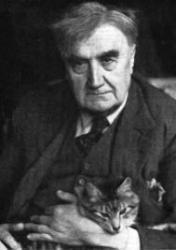
Ralph Vaughan Williams

1872 - 1958 Topics: God's Work Creation; God Goodness of; God Omnipresence of; God Power of Arranger of "FOREST GREEN" in Trinity Hymnal (Rev. ed.) Through his composing, conducting, collecting, editing, and teaching, Ralph Vaughan Williams (b. Down Ampney, Gloucestershire, England, October 12, 1872; d. Westminster, London, England, August 26, 1958) became the chief figure in the realm of English music and church music in the first half of the twentieth century. His education included instruction at the Royal College of Music in London and Trinity College, Cambridge, as well as additional studies in Berlin and Paris. During World War I he served in the army medical corps in France. Vaughan Williams taught music at the Royal College of Music (1920-1940), conducted the Bach Choir in London (1920-1927), and directed the Leith Hill Music Festival in Dorking (1905-1953). A major influence in his life was the English folk song. A knowledgeable collector of folk songs, he was also a member of the Folksong Society and a supporter of the English Folk Dance Society. Vaughan Williams wrote various articles and books, including National Music (1935), and composed numerous arrange­ments of folk songs; many of his compositions show the impact of folk rhythms and melodic modes. His original compositions cover nearly all musical genres, from orchestral symphonies and concertos to choral works, from songs to operas, and from chamber music to music for films. Vaughan Williams's church music includes anthems; choral-orchestral works, such as Magnificat (1932), Dona Nobis Pacem (1936), and Hodie (1953); and hymn tune settings for organ. But most important to the history of hymnody, he was music editor of the most influential British hymnal at the beginning of the twentieth century, The English Hymnal (1906), and coeditor (with Martin Shaw) of Songs of Praise (1925, 1931) and the Oxford Book of Carols (1928). Bert Polman

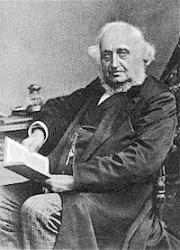
George J. Elvey

1816 - 1893 Topics: Waiting upon God ; The Christian Life Trust in God; Cast Out Fear; God Sovereignty of ; Works of Providence Composer of "DIADEMATA" in Trinity Hymnal (Rev. ed.) George Job Elvey (b. Canterbury, England, 1816; d. Windlesham, Surrey, England, 1893) As a young boy, Elvey was a chorister in Canterbury Cathedral. Living and studying with his brother Stephen, he was educated at Oxford and at the Royal Academy of Music. At age nineteen Elvey became organist and master of the boys' choir at St. George Chapel, Windsor, where he remained until his retirement in 1882. He was frequently called upon to provide music for royal ceremonies such as Princess Louise's wedding in 1871 (after which he was knighted). Elvey also composed hymn tunes, anthems, oratorios, and service music. Bert Polman

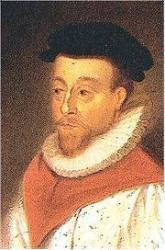
Orlando Gibbons

1583 - 1625 Person Name: Orlando Gibbons, 1583 - 1625 Topics: God Justice of; God: His Being, Word and Works God the Father Almighty: The Divine Attributes; Works of Providence Composer of "SONG 34" in The Book of Praise Orlando Gibbons (baptised 25 December 1583 – 5 June 1625) was an English composer, virginalist and organist of the late Tudor and early Jacobean periods. He was a leading composer in the England of his day. Gibbons was born in Cambridge and christened at Oxford the same year – thus appearing in Oxford church records. Between 1596 and 1598 he sang in the Choir of King's College, Cambridge, where his brother Edward Gibbons (1568–1650), eldest of the four sons of William Gibbons, was master of the choristers. The second brother Ellis Gibbons (1573–1603) was also a promising composer, but died young. Orlando entered the university in 1598 and achieved the degree of Bachelor of Music in 1606. James I appointed him a Gentleman of the Chapel Royal, where he served as an organist from at least 1615 until his death. In 1623 he became senior organist at the Chapel Royal, with Thomas Tomkins as junior organist. He also held positions as keyboard player in the privy chamber of the court of Prince Charles (later King Charles I), and organist at Westminster Abbey. He died at age 41 in Canterbury of apoplexy, and a monument to him was built in Canterbury Cathedral. A suspicion immediately arose that Gibbons had died of the plague, which was rife in England that year. Two physicians who had been present at his death were ordered to make a report, and performed an autopsy, the account of which survives in The National Archives: We whose names are here underwritten: having been called to give our counsels to Mr. Orlando Gibbons; in the time of his late and sudden sickness, which we found in the beginning lethargical, or a profound sleep; out of which, we could never recover him, neither by inward nor outward medicines, & then instantly he fell in most strong, & sharp convulsions; which did wring his mouth up to his ears, & his eyes were distorted, as though they would have been thrust out of his head & then suddenly he lost both speech, sight and hearing, & so grew apoplectical & lost the whole motion of every part of his body, & so died. Then here upon (his death being so sudden) rumours were cast out that he did die of the plague, whereupon we . . . caused his body to be searched by certain women that were sworn to deliver the truth, who did affirm that they never saw a fairer corpse. Yet notwithstanding we to give full satisfaction to all did cause the skull to be opened in our presence & we carefully viewed the body, which we found also to be very clean without any show or spot of any contagious matter. In the brain we found the whole & sole cause of his sickness namely a great admirable blackness & syderation in the outside of the brain. Within the brain (being opened) there did issue out abundance of water intermixed with blood & this we affirm to be the only cause of his sudden death. His death was a shock to peers and the suddenness of his passing drew comment more for the haste of his burial – and of its location at Canterbury rather than the body being returned to London. His wife, Elizabeth, died a little over a year later, aged in her mid-30s, leaving Orlando's eldest brother, Edward, to care for the children left orphans by this event. Of these children only the eldest son, Christopher Gibbons, went on to become a musician. One of the most versatile English composers of his time, Gibbons wrote a quantity of keyboard works, around thirty fantasias for viols, a number of madrigals (the best-known being "The Silver Swan"), and many popular verse anthems. His choral music is distinguished by his complete mastery of counterpoint, combined with his wonderful gift for melody. Perhaps his most well known verse anthem is This is the record of John, which sets an Advent text for solo countertenor or tenor, alternating with full chorus. The soloist is required to demonstrate considerable technical facility at points, and the work at once expresses the rhetorical force of the text, whilst never being demonstrative or bombastic. He also produced two major settings of Evensong, the Short Service and the Second Service. The former includes a beautifully expressive Nunc dimittis, while the latter is an extended composition, combining verse and full sections. Gibbons's full anthems include the expressive O Lord, in thy wrath, and the Ascension Day anthem O clap your hands together for eight voices. He contributed six pieces to the first printed collection of keyboard music in England, Parthenia (to which he was by far the youngest of the three contributors), published in about 1611. Gibbons's surviving keyboard output comprises some 45 pieces. The polyphonic fantasia and dance forms are the best represented genres. Gibbons's writing exhibits full mastery of three- and four-part counterpoint. Most of the fantasias are complex, multisectional pieces, treating multiple subjects imitatively. Gibbons's approach to melody in both fantasias and dances features a capability for almost limitless development of simple musical ideas, on display in works such as Pavane in D minor and Lord Salisbury's Pavan and Galliard. In the 20th century, the Canadian pianist Glenn Gould championed Gibbons's music, and named him as his favorite composer. Gould wrote of Gibbons's hymns and anthems: "ever since my teen-age years this music ... has moved me more deeply than any other sound experience I can think of." In one interview, Gould compared Gibbons to Beethoven and Webern: ...despite the requisite quota of scales and shakes in such half-hearted virtuoso vehicles as the Salisbury Galliard, one is never quite able to counter the impression of music of supreme beauty that lacks its ideal means of reproduction. Like Beethoven in his last quartets, or Webern at almost any time, Gibbons is an artist of such intractable commitment that, in the keyboard field, at least, his works work better in one's memory, or on paper, than they ever can through the intercession of a sounding-board. To this day, Gibbons's obit service is commemorated every year in King's College Chapel, Cambridge. --wikipedia.org

Pages


Export as CSV
It looks like you are using an ad-blocker. Ad revenue helps keep us running. Please consider white-listing Hymnary.org or getting Hymnary Pro to eliminate ads entirely and help support Hymnary.org.