You help make Hymnary.org possible. More than 10 million people from 200+ countries found hymns, liturgical resources and encouragement on Hymnary.org in 2025, including you. Every visit affirms the global impact of this ministry.

If Hymnary has been meaningful to you this year, would you take a moment today to help sustain it? A gift of any size—paired with a note of encouragement if you wish—directly supports the server costs, research work and curation that keep this resource freely available to the world.

Give securely online today, or mail a check to:
Hymnary.org
Calvin University
3201 Burton Street SE
Grand Rapids, MI 49546

Thank you for your partnership, and may the hope of Advent fill your heart.

Person Results

Topics:advent+of+christ+
In:people

Planning worship? Check out our sister site, ZeteoSearch.org, for 20+ additional resources related to your search.
Showing 121 - 130 of 666Results Per Page: 102050

E. J. Hopkins

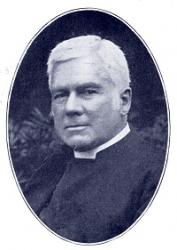
1818 - 1901 Person Name: Edward John Hopkins, (1818-1901). Topics: Christ Second Advent of Composer of "ST. RAPHAEL" in The Hymnal and Order of Service Dr Edward John Hopkins MusDoc United Kingdom 1818-1901. Born at Westminster, England, the son of a clarinetist with the Royal Opera House orchestra, he became an organist (as did two of his brothers) and a composer. In 1826 he became a chorister of the Chapel Royal and sang at the coronation of King William IV in Westminster Abbey. He also sang in the choir of St. Paul’s Cathedral, a double schedule requiring skill and dexterity. On Sunday evenings he would play the outgoing voluntary at St. Martin’s in-the-field. He left Chapel Royal in 1834 and started studying organ construction at two organ factories. He took an appointment at Mitcham Church as organist at age 16, winning an audition against other organists. Four years later he became organist at the Church of St. Peter, Islington. In 1841 he became organist at St. Luke’s, Berwick St., Soho. Two Years later he was organist at Temple Church, which had a historic organ (built in 1683). He held this position for 55 years. In 1845 he married Sarah Lovett, and they had four sons and five daughters. He was closely associated with the Bach Society and was organist for the first English performances of Bach’s St. Matthew Passion. In 1855 he collaborated with Edward Rimbault publishing “The organ, its history and construction” (3 editions 1855-70-77). In 1864 he was one of the founders of the “College of organists”. In 1882 he received an honorary Doctorate of Music from the Archbishop of Canterbury. He composed 30+ hymn tunes and some psalm chants, used by the Church of England. He died in London, England. John Perry

Priscilla Jane Owens

1829 - 1907 Person Name: Priscilla J. Owens Topics: Christ advent of Author of "Welcome, Christmas Day" in Tried and True Owens, Priscilla Jane, was born July 21, 1829, of Scotch and Welsh descent, and is now (1906) resident at Baltimore, where she is engaged in public-school work. For 50 years Miss Owen has interested herself in Sunday-school work, and most of her hymns were written for children's services. Her hymn in the Scotch Church Hymnary, 1898, "We have heard a joyful sound" (Missions), was written for a Sunday-school Mission Anniversary, and the words were adapted to the chorus "Vive le Roi" in the opera The Huguenots. [Rev. James Bonar, M.A.] --John Julian, Dictionary of Hymnology, Appendix II (1907) ========================= Owens, Priscilla Jane. (July 21, 1829--December 5, 1907). Of Scottish and Welsh ancestry, she spent her entire life in Baltimore. She was a public school teacher there for 49 years. She was a member of the Union Square Methodist Church and took particular interest in its Sunday School. Her literary efforts, both in prose and poetry, appeared in such religious periodicals as the Methodist Protestant and the Christian Standard. --William J. Reynolds, DNAH Archives

H. T. Burleigh

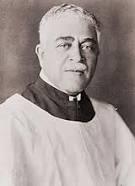
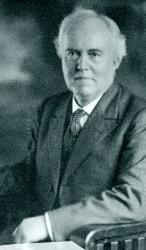
1866 - 1949 Person Name: Harry T. Burleigh Topics: Church in the World Discipleship: Love in Action; Body of Christ; Brotherhood/Sisterhood; Church Community in Christ; Church Ecumenism; Church Universal; Community; Family; Freedom; Jesus Christ Example; Jesus Christ Friend; Justice; Love; Love for Others; Service; Social Concerns; Unity; World; Pentecost Year A; Proper 4 Year A; Proper 11 Year A; Proper 15 Year A; Easter 5 Year B; Trinity Sunday Year B; Proper 5 Year B; Proper 11 Year B; Proper 18 Year B; Advent 2 Year C; Epiphany 2 Year C; Epiphany 3 Year C; Lent 1 Year C; Easter 5 Year C; Pentecost Year C; Proper 7 Year C; Proper 13 Year C Adapter and Harmonizer of "MCKEE" in Voices United Harry T. Burleigh (b. Erie, PA, 1866; d. Stamford, CT, 1949) began his musical career as a choirboy in St. Paul's Cathedral, Erie, Pennsylvania. He also studied at the National Conservatory of Music, New York City, where he was befriended by Antonín Dvořák and, according to tradition, provided Dvořák with some African American musical themes that became part of Dvořák's New World Symphony. Burleigh composed at least two hundred works but is most remem­bered for his vocal solo arrangements of African American spirituals. In 1944 Burleigh was honored as a Fellow of the Hymn Society in the United States and Canada. Bert Polman

Herman G. Stuempfle

1923 - 2007 Person Name: Herman G. Stuempfle Jr., b. 1923 Topics: Community in Christ; Advent; Easter; Lesser Festivals; Mary, Mother of Our Lord; Saints Days Author of "For All the Faithful Women" in This Far By Faith Rev. Dr. Herman G. Stuempfle, Jr., 83, died Tuesday, March 13, 2007, after a long illness. Born April 2, 1923, in Clarion, he was the son of the late Herman G. and Helen (Wolfe) Stuempfle, Sr. Stuempfle lived most of his life in Gettysburg, PA. He served as President of the Lutheran Theological Seminary in Gettysburg. He attended Hughesville public schools, and was a graduate of Susquehanna University and the Lutheran Theological Seminary at Gettysburg. He received additional advanced degrees from Union Theological Seminary in New York and a doctoral degree at Southern California School of Theology at Claremont. He retired in 1989. Rev. Dr. Stuempfle was the author of several books and numerous articles and lectures on preaching, history, and theology. He was also among the most honored and respected hymn writers of the 20th and 21st centuries. Rev. Dr. Stuempfle was known for his leadership in community and civic projects. Always taking an active stance on social issues, he participated in the creation of day care centers, served on the Gettysburg interchurch social action committee, helped create and support prison ministries and a homeless shelter, and tutored young people in the after school program of Christ Lutheran Church, where he was a long time member. --Excerpts from his obituary published in Evening Sun from Mar. 15 to Mar. 16, 2007

William Walsham How

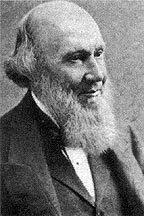
1823 - 1897 Person Name: William W. How Topics: Advent; Christ First Advent; Christ Childhood of; Christ Humanity of; Christ Man of Sorrows; Christ Savior; Christ Son of God; Christ Son of Man; Humanity of Christ Author of "Who is this, so weak and helpless" in Book of Worship with Hymns and Tunes William W. How (b. Shrewsbury, Shropshire, England, 1823; d. Leenane, County Mayo, Ireland, 1897) studied at Wadham College, Oxford, and Durham University and was ordained in the Church of England in 1847. He served various congregations and became Suffragan Bishop in east London in 1879 and Bishop of Wakefield in 1888. Called both the "poor man's bishop" and "the children's bishop," How was known for his work among the destitute in the London slums and among the factory workers in west Yorkshire. He wrote a number of theological works about controversies surrounding the Oxford Movement and attempted to reconcile biblical creation with the theory of evolution. He was joint editor of Psalms and Hymns (1854) and Church Hymns (1871). While rector in Whittington, How wrote some sixty hymns, including many for chil­dren. His collected Poems and Hymns were published in 1886. Bert Polman =============== How, William Walsham, D.D., son of William Wybergh How, Solicitor, Shrewsbury, was born Dec. 13, 1823, at Shrewsbury, and educated at Shrewsbury School and Wadham College, Oxford (B.A. 1845). Taking Holy Orders in 1846, he became successively Curate of St. George's, Kidderminster, 1846; and of Holy Cross, Shrewsbury, 1848. In 1851 he was preferred to the Rectory of Whittington, Diocese of St. Asaph, becoming Rural Dean in 1853, and Hon. Canon of the Cathedral in 1860. In 1879 he was appointed Rector of St. Andrew's Undershaft, London, and was consecrated Suffragan Bishop for East London, under the title of the Bishop of Bedford, and in 1888 Bishop of Wakefield. Bishop How is the author of the Society for Promoting Christian Knowledge Commentary on the Four Gospels; Plain Words , Four Series; Plain Words for Children; Pastor in Parochia; Lectures on Pastoral Work; Three All Saints Summers, and Other Poems , and numerous Sermons , &c. In 1854 was published Psalms and Hymns, Compiled by the Rev. Thomas Baker Morrell, M.A., . . . and the Rev. William Walsham How, M.A. This was republished in an enlarged form in 1864, and to it was added a Supplement in 1867. To this collection Bishop How contributed several hymns, and also to the S. P. C. K. Church Hymns , of which he was joint editor, in 1871. The Bishop's hymns in common use amount in all to nearly sixty. Combining pure rhythm with great directness and simplicity, Bishop How's compositions arrest attention more through a comprehensive grasp of the subject and the unexpected light thrown upon and warmth infused into facia and details usually shunned by the poet, than through glowing imagery and impassioned rhetoric. He has painted lovely images woven with tender thoughts, but these are few, and found in his least appreciated work. Those compositions which have laid the firmest hold upon the Church, are simple, unadorned, but enthusiastically practical hymns, the most popular of which, "O Jesu, Thou art standing"; "For all the Saints who from their labours rest," and "We give Thee but Thine own," have attained to a foremost rank. His adaptations from other writers as in the case from Bishop Ken, "Behold, the Master passeth by," are good, and his Children's hymns are useful and popular. Without any claims to rank as a poet, in the sense in which Cowper and Montgomery were poets, he has sung us songs which will probably outlive all his other literary works. The more important of Bishop How's hymns, including those already named, and "Lord, Thy children guide and keep"; "O Word of God Incarnate"; "This day at Thy creating word"; "Who is this so weak and helpless"; and others which have some special history or feature of interest, are annotated under their respective first lines. The following are also in common use:— i. From Psalms & Hymns, 1854. 1. Before Thine awful presence, Lord. Confirmation. 2. Jesus, Name of wondrous love [priceless worth]. Circumcision. The Name Jesus . 3. Lord Jesus, when we stand afar. Passiontide. 4. O blessing rich, for sons of men. Members of Christ. 5. 0 Lord of Hosts, the earth is Thine. In time of War. 6. O Lord, Who in Thy wondrous love. Advent. ii. From Psalms & Hymns, enlarged, 1864. 7. Lord, this day Thy children meet. Sunday School Anniversary. iii. From Supplement to the Psalms & Hymns, 1867. 8. Hope of hopes and joy of joys. Resurrection. 9. 0 daughters blest of Galilee. For Associations of Women. 10. O happy feet that tread. Public Worship. 11. With trembling awe the chosen three. Transfiguration. iv. From Parish Magazine, 1871, and Church Hymns, 1871. 12. O Jesu, crucified for man. Friday. 13. Yesterday, with worship blest. Monday. v. From the S. P. C. K. Church Hymns. 1871. 14. Bowed low in supplication. For the Parish. 15. Great Gabriel sped on wings of light. Annunciation, of the Blessed Virgin Mary. 16. O blest was he, whose earlier skill. St. Luke. 17. O God, enshrined in dazzling light. Omnipresence. Divine Worship . 18. O heavenly Fount of Light and Love. Witsuntide. 19. O Lord, it is a blessed thing. Weekdays. 20. 0 One with God the Father. Epiphany. 21. O Thou through suffering perfect made. Hospitals. 22. Rejoice, ye sons of men. Purification of the B. V. M. 23. Summer suns are glowing. Summer. 24. The year is swiftly waning. Autumn. 25. Thou art the Christ, O Lord. St. Peter. 26. To Thee our God we fly. National Hymn. 27. Upon the holy Mount they stood. Transfiguration and Church Guilds. 28. We praise Thy grace, 0 Saviour. St. Mark. vi. From the S. P. C. K. Children's Hymns, 1872. 29. Behold a little child. Jesus the Child's Example. 30. Come, praise your Lord and Saviour. Children's Praises. 31. It is a thing most wonderful. Sunday School Anniversary. 32. On wings of living light. Easter. Bishop How's hymns and sacred and secular pieces were collected and published as Poems and Hymns, 1886. The Hymns, 54 in all, are also published separately. He d. Aug. 10, 1897. --John Julian, Dictionary of Hymnology (1907) =================== How, W. W., p. 540, i. He died Aug. 10, 1897. His Memoir, by F. D. How, was published in 1898. --John Julian, Dictionary of Hymnology, New Supplement (1907)

Robert Harkness

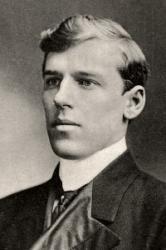
1880 - 1961 Topics: The life of Christ Advent Arranger of "HYFRYDOL" in The Celebration Hymnal After attending a revival meeting by Reuben Torrey and Charles M. Alexander, Harkness became Alexander’s pianist. He came to Christ shortly thereafter (on a bicycle, he said), and made several round the world tours with Torrey and Alexander. Harkness was especially well known for his program The Music of the Cross, and as the author of correspondence courses in hymn playing. He wrote over 2,000 hymns and Gospel songs in his lifetime. (hymntime.com/tch)

Charles Coffin

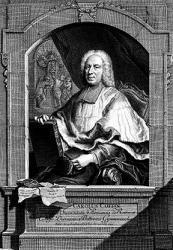
1676 - 1749 Person Name: C. Coffin, 1676-1749 Topics: Forerunners of Christ; Advent 3 Author of "On Jordan's Bank the Herald's Cry" in Evangelical Lutheran Hymnary Coffin, Charles, born at Buzaney (Ardennes) in 1676, died 1749, was principal of the college at Beauvais, 1712 (succeeding the historian Rollin), and rector of the University of Paris, 1718. He published in 1727 some, of his Latin poems, for which he was already noted, and in 1736 the bulk of his hymns appeared in the Paris Breviary of that year. In the same year he published them as Hymni Sacri Auctore Carolo Coffin, and in 1755 a complete ed. of his Works was issued in 2 vols. To his Hymni Sacri is prefixed an interesting preface. The whole plan of his hymns, and of the Paris Breviary which he so largely influenced, comes out in his words. "In his porro scribendis Hymnis non tam poetico indulgendunv spiritui, quam nitoro et pietate consulendum esse existimavi. Pleraque igitur, argumentis convenientia e purissiinis Scripturae Sacrae fontibus deprompsi quac idoneis Ecclesiae cantui numeris alligarem." His hymns are described by a French critic as having less brilliancy than those of Santüil (q.v.), but more simplicity and unction. They number 100 in the edition of 1736. Translated into English by J. Chandler, I. Williams and others, are noted under their respective Latin first lines. [William T. Brooke] -- John Julian, Dictionary of Hymnology (1907)

Martin Rinkart

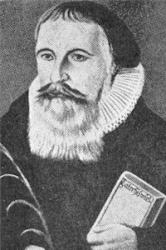
1586 - 1649 Person Name: Martin Rinckart Topics: God Praise and Thanksgiving; Adoration and Praise; Aging; Christian Experience; Christian Year Reformation Day; Faith; Faithfulness; God Adoration and Praise; God Goodness; God Love; God Providence; Grace; Gratitude; Guidance; Harvest; Heaven(s)/Paradise; Joy; Love; Peace (Inner, Calmness, Serenity; Processionals (Opening of Worship); Providence; Recessionals; Service Music Doxologies; Service Music Following Lord's Supper; Steadfastness; Table Graces; Thanksgiving Day; World; Worship; Epiphany 5 Year A; Epiphany 6 Year A; Proper 15 Year A; Proper 19 Year A; Thanksgiving Year A; Christmas 1 Year B; Lent 4 Year B; Proper 15 Year B; Proper 20 Year B; Proper 27 Year B; Thanksgiving Year B; Advent 3 Year C; Proper 5 Year C; Proper 8 Year C; Proper 12 Year C; Proper 13 Year C; Proper 20 Year C; Proper 24 Year C; Reign of Christ Year C; Thanksgiving Year C Author of "Now Thank We All Our God" in Voices United Rinkart, Martin, son of Georg Rinkart or Rinckart, cooper at Eilenburg on the Mulde, Saxony, was born at Eilenburg, April 23, 1586.* After passing through the Latin school at Eilenburg, he became, in Nov., 1601, a foundation scholar and chorister of the St. Thomas's School at Leipzig. This scholarship also allowed him to proceed to the University of Leipzig, where he matriculated for the summer session of 1602, as a student of Theology; and after the completion of his course he remained for some time in Leipzig (he did not take his M.A. till 1616). In March 1610 he offered himself as a candidate for the post of diaconus at Eilenburg, and was presented by the Town Council, but the Superintendent refused to sanction this arrangement, nominally on the ground that Rinkart was a better musician than theologian, but really because he was unwilling to have a colleague who was a native of Eilenburg, and who appeared to have a will of his own. Rinkart, not wishing to contest the matter, applied for a vacant mastership in the gymnasium at Eisleben, and entered on his duties there in the beginning of June, 1610, as sixth master, and also cantor of the St. Nicholas Church. After holding this appointment for a few months, he became diaconus of St. Anne's Church, in the Neustadt of Eisleben, and began his work there May 28, 1611; and then became pastor at Erdeborn and Lyttichendorf (Lütjendorf), near Eisleben, entering on his duties there on Dec. 5, 1613. Finally he was invited by the Town Council of Eilenburg to become archidiaconus there, and in Nov. 1617 came into residence at Eilenburg. He died at Eilenburg, Dec. 8, 1649. A memorial tablet to his memory, affixed to the house where he lived, was unveiled at Eilenburg on Easter Monday, April 26, 1886. (Martin Rinkart’s Geistliche Lieder, ed., with a biographical introduction, and an extensive bibliography, by Heinrich Rembe and Johannes Linke, D.D., Gotha, F. A. Perthes, 1886; K. Goedeke's Grundris, vol. iii., 1887, pp. 169, 211, &c.) The greater part of Rinkart's professional life was passed amid the horrors of the Thirty Years War. Eilenburg being a walled town became a refuge for fugitives from all around, and being so overcrowded, not unnaturally suffered from pestilence and famine. During the great pestilence of 1637 the Superintendent went away for change of air, and could not be persuaded to return; and on Aug. 7 Rinkart had to officiate at the funerals of two of the town clergy and two who had had to leave their livings in the country. Rinkart thus for some time was the only clergyman in the place, and often read the service over some 40 to 50 persons a day, and in all over about 4,480. At last the refugees had to be buried in trenches without service, and during the whole epidemic some 8,000 persons died, including Rinkart's first wife, who died May 8, 1637. The next year he had an epidemic of marriages to encounter, and himself fell a victim on June 24. Immediately thereafter came a most severe famine, during which Rinkart's resources were strained to the uttermost to help his people. Twice also he saved Eilenburg from the Swedes, once in the beginning of 1637, and again in 1639 (see p. 319, i.). Unfortunately the services he rendered to the place seemed to have made those in authority the more ungrateful, and in his latter years he was much harassed by them in financial and other matters, and by the time that the long-looked-for peace came (Oct. 24, 1648) he was a worn-out and prematurely aged man. Rinkart was a voluminous writer and a good musician, but a considerable number of his books seem to have perished, and others survive only in single copies. He early began to write poetry, and was crowned as a poet apparently in 1614. Among other things he wrote a cycle of seven so-called "Comedies," or rather dramas, on the Reformation Period, suggested by the centenary of the Reformation in 1617. Three of these were printed respectively in 1613, 1618, and 1625, and two of them were acted in public. Rinkart's hymns appeared principally in the following works:— (1) Jesu Hertz-Büchlein. This was completed in 1630, and first published at Leipzig in 1636. No copy is now known. The second edition, published at Leipzig, 1663, is in the Royal Library at Hannover. (2) Der Meissnische Thränen Saat, Leipzig, 1637. In the Royal Library at Berlin. (3) xlv. Epithalami Salomoneo—Sulamitici cantica canticorum . . . Leibliche Geistliche und Uimmlische Braut Messe, Leipzig, 1642. In Wolfenbüttel Library. (4) Catechismus-wolthaten, und Catechismus-Lieder, Leipzig, 1645. In the Berlin Library. Dr. Linke, 1886, as above, gives a list of the first lines of all the hymns in the works of Rinkart which have come under his notice, and prints a selection from them, including 66 in all. The best of them are characterised by a true patriotism, a childlike devotion to God, and a firm confidence in God's mercy, and His promised help and grace. A few passed into the German hymn-books. Those which have been translated into English are:— 1. Alleluja, Lob, Preis und Ehr. This hymn… seems to be based on two hymns, beginning with the same first line, and both found in Rinkart's Braut Messe, 1642. Dr. Linke does not print the full text. (See Blätter für Hymnologie, 1886, p. 91.) ii. Nun danket alle Gott. Thanksgiving. The oldest text now accessible is in J. Crüger's Praxis, 1648, No. 183, in 3 stanzas of 8 lines; also in the Crüger-Runge Gesang-Buch, 1653, No. 187. It is also in Rinkart's Jesu Hertz-Büchlein, 1663, where the text slightly varies, and is entitled "Grace" ("Tisch-Gebetlein," i.e. a short prayer at table). There does not seem any good reason for supposing that it did not appear in the first ed., 1636, of the Hertz-Büchlein, and in any case it has no connection with the Peace of Westphalia. (A good specimen of the way in which stories of hymns are manufactured is in the Sunday at Home, Aug., 1888, p. 539, where a full and particular account is given of its legendary origin in Nov. 1648.) It is founded on Ecclesiasticus 1. 22-24; and st. i., ii. are indeed little more than a paraphrase of these verses, st. iii. being a version of the Gloria Patri. The fact that the regimental chaplains, when holding the special service of thanksgiving for the conclusion of the peace, were commanded to preach from this passage, may have suggested the theory that Rinkart's hymn was written for the same occasion. It gradually came into general use, successfully survived the period of Rationalism, and is now to be found in every German hymnbook, e.g. in the Berlin Geistliche Lieder, ed. 1863, No. 1022. It may be called the German Te Deum, and as such is used at all national festivals or special occasions of thanksgiving. It was recently used at the festal celebration of the completion of Cologne Cathedral, on Aug. 14, 1880, at the laying of the foundation stone of the new Reichstags building in Berlin, by the Emperor William, June 9, 1884, &c. The fine melody (set to the hymn in Hymns Ancient & Modern and most recent English collections) appears in the Praxis, 1648 (Crüger's Kirchenmelodien, 1649, No. 94), and in the Crüger-Runge Gesang-Buch, 1653, is marked with Crüger's initials. It has been described as adapted from a melody by Lucas Marenzo (choirmaster at Rome, who died 1598), or as adapted from a motet by Rinkart; but to prove either statement, very little evidence is forthcoming. The translations of the hymn into English are:— 1. Let all men praise the Lord. This is a tr. of st. i., iii., by Alfred Novello, as part of his version of the word-book to Mendelssohn's Lobgesang, or Hymn of Praise, 1843, p. 89. This form has passed into a number of hymnals, including the New Congregational Hymn Book, 1859; Dale's English Hymn Book 1874, and others. In the Baptist Hymnal, 1879, a tr. of st. ii. is added, of which 11. 1—4 are from Miss Winkworth's translation. 2. Now praise the Lord on high. In full as No. 53 in the Dalston Hospital Hymn Book, 1848. This appears to be the version which Kübler, in his Historical Notes to the Lyra Germanica, 1865, p. 247, says was made by Baron C. K. J. von Bunsen, for the opening of the German Hospital at Dalston, on Oct. 15, 1845. 3. Now let us all to God. In full, by A. T. Russell, as No. 201, in his Psalms & Hymns, 1851. 4. 0 let us praise the Lord, From hearts by true love guided. This is No. 240 in the Winchester Church Hymn Book, 1857, and seems to be intended as a paraphrase of the German. 5. Now thank we all our God. A full and very good translation by Miss Winkworth, in her Lyra Germanica, 2nd Serv. 1858, p. 145, repeated in her Chorale Book for England, 1863, No. 11, and her Christian Singers, 1869, p. 181. It has been included in many recent English and American hymnals, e. g. Hymns Ancient & Modern, 1861; People's Hymnal, 1867; Congregational Hymnal, 1887, &c, and in America in the Episcopal Hymnal, 1871; Presbyterian Hymnal, 1874, and many others, generally in full and unaltered. 6. Now all give thanks to God. In full as No. 264 in the Anglican Hymn Book, 1868 (1871, No. 307), marked as a versification by R. C. Singleton. Repeated in J. L. Porter's Collection, 1876. 7. Now all men thank ye God. In full by T. E. Brown, as No. 37 in the Clifton College Hymn Book, 1872. Other translations are:— (l) "Now let us praise the Lord." In full by J. C. Jacobi, 1722, p. 85 (1732, p. 144), repeated, altered, in the Moravian Hymn Book, 1754 to 1886. (2) "Now all, to God give thanks." By Dr. H. Mills, in the Evangelical Review, Gettysburg, 1851, p. 293, and his Horae Germanica, 1856, p. 14. (3) "Lift heart, and hands, and voice." By Miss Cox, 1864, p. 239. (4) “Now all give thanks to God." By J. D. Burns, 1869, p. 252. (5) “All hearts and tongues and hands." By N. L. Frothingham, 1870, p. 212. iii. So fahr ich hin mit Freuden. For the Dying. In his Meissnische Thränen-Saat, 1637, No. 24, p. 19, in 5 st.anzas of 8 lines, entitled "Even the same, and her soul-rejoicing Farewell Hymn. On May 8." St. i. is, "So fahr ich hin mit Frewden Aus diesem Jammerthal, Aus Angst, Gefahr und Leiden In Himmels-Frewden Saal, Da wir und alle Frommen Durch Gottes Wundermacht Zusaminen wiederkominen: In des zu guter Nacht." The title refers to the preceding hymn, which is in 19 stanzas, the initials of the stanzas forming the acrostic Christina Rinckardi. Dr. Linke abridges it and misprints the title, which is:— "Die Teutsche Jobs-Schwester (Christina M. Rinckart's Hertzgetrewe Ehe- und Creutz-genossin) und ihr Tagliches und behägliches Trost Lied. Aus ihrem längst erwählten und am 10. [not 30] Tage des Trosthühlen Meyen dieses 1637. Jahres zum letzten Ehrengedächtniss abgehandelten Leich-Text: des 77. Psalms." From this it is clear that both hymns are in memory of his wife, that she died on May 8, 1637, and that her funeral sermon was preached by her husband on May 10, 1637. The form translation into English is the greatly altered, or rather practically new text. [Rev. James Mearns, M.A.] * His own statement was that he “was born Anno 1586, Jubilate Sunday, on St. George's day, which was the 23rd of April, between 6 and 7 a.m." In 1586 however Jubilate S. (3rd Sunday after Easter) fell on April 24, while St. George's day is April 23. The entry in the Registers at Eilenburg says that he was baptised "Monday after Jubilate, the 25th of April," which is quite correct. --John Julian, Dictionary of Hymnology (1907)

John L. Bell

b. 1949 Topics: Assurance; Biblical Names and Places Jacob; Church Year Advent; Church Year Baptism of the Lord; Daily Prayer Evening Prayer; Earth; Fear; Freedom from Fear; God as Refuge; God as Shield; God as Creator; God's Wonders; God's Armor; God's Deeds; God's Nearness; God's Presence; God's Protection; God's Strength; Hymns of Praise; Mission; Occasional Services New Year; Peace; People of God / Church Renewal; People of God / Church Witnessing; Prayer; Songs of Zion; Suffering; Victory; War and Revolution; Witness; Year A, B, C, Easter, Easter vigil; Year A, Ordinary Time after Pentecost, May 29-June 4 (if after Trinity Sunday); Year C, Reign of Christ, November 20-26 Author of "Psalm 46 (A Responsorial Setting)" in Psalms for All Seasons John Bell (b. 1949) was born in the Scottish town of Kilmarnock in Ayrshire, intending to be a music teacher when he felt the call to the ministry. But in frustration with his classes, he did volunteer work in a deprived neighborhood in London for a time and also served for two years as an associate pastor at the English Reformed Church in Amsterdam. After graduating he worked for five years as a youth pastor for the Church of Scotland, serving a large region that included about 500 churches. He then took a similar position with the Iona Community, and with his colleague Graham Maule, began to broaden the youth ministry to focus on renewal of the church’s worship. His approach soon turned to composing songs within the identifiable traditions of hymnody that began to address concerns missing from the current Scottish hymnal: "I discovered that seldom did our hymns represent the plight of poor people to God. There was nothing that dealt with unemployment, nothing that dealt with living in a multicultural society and feeling disenfranchised. There was nothing about child abuse…,that reflected concern for the developing world, nothing that helped see ourselves as brothers and sisters to those who are suffering from poverty or persecution." [from an interview in Reformed Worship (March 1993)] That concern not only led to writing many songs, but increasingly to introducing them internationally in many conferences, while also gathering songs from around the world. He was convener for the fourth edition of the Church of Scotland’s Church Hymnary (2005), a very different collection from the previous 1973 edition. His books, The Singing Thing and The Singing Thing Too, as well as the many collections of songs and worship resources produced by John Bell—some together with other members of the Iona Community’s “Wild Goose Resource Group,” —are available in North America from GIA Publications. Emily Brink

Edmund S. Lorenz

1854 - 1942 Person Name: E. S. Lorenz Topics: Christ advent of Composer of "[Christ, our King, is born today]" in Tried and True Pseudonymns: John D. Cresswell, L. S. Edwards, E. D. Mund, ==================== Lorenz, Edmund Simon. (North Lawrence, Stark County, Ohio, July 13, 1854--July 10, 1942, Dayton, Ohio). Son of Edward Lorenz, a German-born shoemaker who turned preacher, served German immigrants in northwestern Ohio, and was editor of the church paper, Froehliche Botschafter, 1894-1900. Edmund graduated from Toledo High School in 1870, taught German, and was made a school principal at a salary of $20 per week. At age 19, he moved to Dayton to become the music editor for the United Brethren Publishing House. He graduated from Otterbein College (B.A.) in 1880, studied at Union Biblical Seminary, 1878-1881, then went to Yale Divinity School where he graduated (B.D.) in 1883. He then spent a year studying theology in Leipzig, Germany. He was ordained by the Miami [Ohio] Conference of the United Brethren in Christ in 1877. The following year, he married Florence Kumler, with whom he had five children. Upon his return to the United States, he served as pastor of the High Street United Brethren Church in Dayton, 1884-1886, and then as president of Lebanon Valley College, 1887-1889. Ill health led him to resign his presidency. In 1890 he founded the Lorenz Publishing Company of Dayton, to which he devoted the remainder of his life. For their catalog, he wrote hymns, and composed many gospel songs, anthems, and cantatas, occasionally using pseudonyms such as E.D. Mund, Anna Chichester, and G.M. Dodge. He edited three of the Lorenz choir magazines, The Choir Leader, The Choir Herald, and Kirchenchor. Prominent among the many song-books and hymnals which he compiled and edited were those for his church: Hymns for the Sanctuary and Social Worship (1874), Pilgerlieder (1878), Songs of Grace (1879), The Otterbein Hymnal (1890), and The Church Hymnal (1934). For pastors and church musicians, he wrote several books stressing hymnody: Practical Church Music (1909), Church Music (1923), Music in Work and Worship (1925), and The Singing Church (1938). In 1936, Otterbein College awarded him the honorary D.Mus. degree and Lebanon Valley College the honorary LL.D. degree. --Information from granddaughter Ellen Jane Lorenz Porter, DNAH Archives

Pages


Export as CSV
It looks like you are using an ad-blocker. Ad revenue helps keep us running. Please consider white-listing Hymnary.org or getting Hymnary Pro to eliminate ads entirely and help support Hymnary.org.