You help make Hymnary.org possible. More than 10 million people from 200+ countries found hymns, liturgical resources and encouragement on Hymnary.org in 2025, including you. Every visit affirms the global impact of this ministry.

If Hymnary has been meaningful to you this year, would you take a moment today to help sustain it? A gift of any size—paired with a note of encouragement if you wish—directly supports the server costs, research work and curation that keep this resource freely available to the world.

Give securely online today, or mail a check to:
Hymnary.org
Calvin University
3201 Burton Street SE
Grand Rapids, MI 49546

Thank you for your partnership, and may the hope of Advent fill your heart.

Person Results

Topics:death+and+funeral
In:people

Planning worship? Check out our sister site, ZeteoSearch.org, for 20+ additional resources related to your search.
Showing 121 - 130 of 286Results Per Page: 102050

Anonymous

Person Name: Anon. Topics: The Church of Jesus Christ Bereavement and Funerals; Living the Christian Life Comfort, Strength and Security; Living the Christian Life Heaven and Victory over Death Composer of "[How lovely is Thy dwelling-place]" in Complete Mission Praise In some hymnals, the editors noted that a hymn's author is unknown to them, and so this artificial "person" entry is used to reflect that fact. Obviously, the hymns attributed to "Author Unknown" "Unknown" or "Anonymous" could have been written by many people over a span of many centuries.

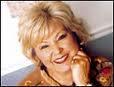
Gloria Gaither

b. 1942 Topics: Easter Vigil ; Easter Season Resurrection; Funeral Sacraments; Courage; Eternal Life; Healing; Mercy, Forgiveness; Redemption; Sickness; Trust, Confidence; Victory over Sin and Death Author of "Because He Lives" in Lead Me, Guide Me (2nd ed.) Gloria Gaither (born March 4, 1942) is a Christian songwriter, author, speaker, editor, and academic. She is the wife of Bill Gaither and also sang in the Bill Gaither Trio, one of the most influential groups in recent Christian music. She was born Gloria Lee Sickal in 1942 in Michigan, a daughter of pastor Lee Sickal and Dorothy Sickal. She spent most of her childhood and high school career in the Battle Creek area of Michigan, working a brief time for the Kellogg Company. When Sickal graduated from high school, she attended Anderson University in Anderson, Indiana. There, she triple majored in English, French, and Sociology. Upon her graduation, she took a job at Alexandria Monroe High School as a French teacher. There, she met Bill Gaither, who was teaching English at the time. She married Gaither in 1962, and they began writing songs recreationally. By the end of the 1960s, Gloria, Bill, and his brother Danny Gaither were touring steadily, as the Bill Gaither Trio. After touring with the Bill Gaither Trio, Gaither drew her focus to the Gaither Homecoming series. She has been an active presence in every video production. Gaither is currently the scriptwriter and narrator for the Homecoming series. In 1991, she attended Ball State University and received a Master of Arts in Literature. She taught as an adjunct professor at Anderson University for periods in the late 80s and late 90s. In 1996, she spearheaded the creation of Gaither Family Reources in Alexandria, Indiana, and currently serves as co-owner and managing director. In 2002, Gaither launched Homecoming:

Bill Gaither

b. 1936 Person Name: William J. Gaither Topics: Easter Vigil ; Easter Season Resurrection; Funeral Sacraments; Courage; Eternal Life; Healing; Mercy, Forgiveness; Redemption; Sickness; Trust, Confidence; Victory over Sin and Death Author of "Because He Lives" in Lead Me, Guide Me (2nd ed.)

Nolan Williams

Person Name: Nolan Williams, Jr., b.1969 Topics: Easter Vigil ; Easter Season Resurrection; Funeral Sacraments; Courage; Eternal Life; Healing; Mercy, Forgiveness; Redemption; Sickness; Trust, Confidence; Victory over Sin and Death Arranger of "RESURRECTION" in Lead Me, Guide Me (2nd ed.)

Johann Andreas Rothe

1688 - 1758 Person Name: J. A. Rothe, 1688-1758 Topics: Death and Funeral Songs Author of "Wenn kleine Himmelserben" in Evang.-Lutherisches Gesangbuch Rothe, Johann Andreas, son of Aegidius Rother, pastor at Lissa, near Görlitz, in Silesia, was born at Lissa, May 12, 1688. He entered the University of Leipzig in 1708, as a student of Theology, graduated M.A., and was then, in 1712, licensed at Gorlitz as a general preacher. In 1718 he became tutor in the family of Herr von Schweinitz at Leube, a few miles south of Gorlitz, and while there frequently preached in neighbouring churches. During 1722 Count N. L. von Zinzendorf, happening to hear him preach at Gross-Hennersdorf, was greatly pleased with him, and when the pastorate at Berthelsdorf became vacant shortly thereafter, gave him the presentation. He entered on his duties at Berthelsdorf Aug. 30, 1722. There he took a great interest in the Moravian community at Herrnhut, which formed part of his parish. But when, in 1737, he had to report to the higher ecclesiastical authorities regarding the doctrinal views of the Moravians, Zinzendorf showed his resentment in various ways, so that Kothe was glad to accept a call to Hermsdorf, near Gorlitz. Finally, in 1739, Count von Promnitz appointed him assistant pastor at Thommendorf, near Bunzlau, where he became chief pastor in 1742, and died there July 6, 1758. (Koch, v. 240; Wetzel’s Analecta Hymnica, ii. 756, &c.) Rothe was a man of considerable gifts and of unbending integrity, a good theologian, and an earnest, fearless, and impressive preacher. His hymns, about 40 in number, though they can hardly be said to rank high as poetry, are yet often characterised by glow and tenderness of feeling, and by depth of Christian experience. They are somewhat akin to Zinzendorf s better productions, but this resemblance may arise from the alterations which Zinzendorf seems to have made in them. The be6t known of them first appeared in Zinzendorf's hymn-books, and were for a time looked upon with suspicion, because as Zinzendorf did not affix authors' names, the new hymns were at first all ascribed to himself. Those of Rothe's hymns which have passed into English are:— i. Ich habe nun den Grand gefunde. Joy in Believing. …At first the Lutherans suspected it, thinking that it was by Zinzendorf, but on discovering that it was by Rothe, soon adopted it. It is a powerful and beautiful hymn, is found in many recent German collections (e.g. the Berlin Geistliche Lieder, ed. 1863, No. 78), and in its English forms has found a very wide acceptance, and proved a comfort and blessing to many. It was doubtless suggested by Heb. vi. 19. Rothe's hymn under consideration ("Ich habe nun ") has been translated as:— 1. Now I have found the ground wherein. A fine but somewhat free translation of st. i., ii., iv., v., vi., x., by J. Wesley. It has also appeared in full, or abridged, under the following first lines:— (1) Now I have found the blessed ground (st. i ). Lady Huntingdon's Selections, 1780. (2) Now have I found the ground wherein (st. i.). W. F. Stevenson's Hymns for Church & Home, 1873. (3) 0 Lord I Thy everlasting grace (st. ii.). Horder's Congregational Hymns, 1884. (4) Father, Thine everlasting grace (st. ii.). J. Bickersteth's Psalms & Hymns1832. (5) 0 Love, thou bottomless abyss (st. iii.). Evangelical Union Hymnal, 1878. (6) Jesus, I know hath died for me (st. iv.). Pennsylvanian Lutheran Church Book, 1868. (7) Though waves and storms go o'er my head (st. v.). Andover Sabbath Hymn Book, 1858. 2. I now have found, for hope of heaven. In full, by Dr. H. Mills, in theEvang. Review, Gettys¬burg, Jan. 1850, and in his Horae Germanica, 1850, p. 68. 3. My soul hath now the ground attained. A good tr. of st. i., iii., v., x., by A. T. Russell, as No. 167 in his Psalms & Hymns, 1851. 4. My soul hath found the steadfast ground. A good tr, (omitting st. v.-ix., and with a st. iv. not by Rothe), by Mrs. Bevan, in her Songs of Eternal Life, 1858, p. 55. 5. Now I have found the firm foundation. By G. F. Krotel, as No. 251 in the OhioLutheran Hymnal, 1880, omitting st. vi.-viii. 6. Now I have found the ground to hold. By J. Sheppard, in his Foreign Sacred Lyre, 1857, p. 91. ii. Vor wahrer Herzensanderung. The Forgiveness of Sin. first pub. as No. 448 in the 3rd ed., 1731, of Zinzendorf's Sammlung as above, and in 7 stanzas of 4 lines. In the Brüder Gesang-Buch , 1778, it is No. 392. The translations are:— (1) "Thanks be to Thee, Thou slaughtered Lamb!" (st. vii.). This is No. 345 in pt. ii., 1746, of the Moravian Hymn Book, (2) "Before conversion of the heart." A tr. of st. i., iv., by B. Latrobe, as No. 255 in the Moravian Hymn Book,1789, with the above tr. of st. vii. added. In the 1801 and later eds. (1886, No. 426) the tr. of st. vii. was alone retained. iii. Wenn kleine Himmelserben. Death of a Child. Written on the death of one of his daughters. The trs. are:— (1) "When children, bless'd by Jesus." This is No. 1196 in the Supplement of 1808 to the Moravian Hymn Book, 1801 (1886, No. 1258). (2) "When summons hence by Death is given." By E. Massie, 1867, p. 105. [Rev. James Mearns, M.A.] --excerpts from John Julian, Dictionary of Hymnology (1907)

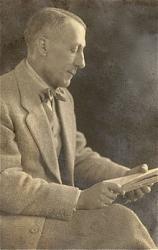
Martin Shaw

1875 - 1958 Person Name: Martin Shaw, 1875-1958 Topics: Funeral; Marriage; Brotherhood and Sisterhood; Community; Courage; Death; Family Life; Grace; Growth; New Year; Praise; Seasons; Time; Unity Composer of "LITTLE CORNARD" in Worship (3rd ed.) Martin F. Shaw was educated at the Royal College of Music in London and was organist and choirmaster at St. Mary's, Primrose Hill (1908-1920), St. Martin's in the Fields (1920-1924), and the Eccleston Guild House (1924-1935). From 1935 to 1945 he served as music director for the diocese of Chelmsford. He established the Purcell Operatic Society and was a founder of the Plainsong and Medieval Society and what later became the Royal Society of Church Music. Author of The Principles of English Church Music Composition (1921), Shaw was a notable reformer of English church music. He worked with Percy Dearmer (his rector at St. Mary's in Primrose Hill); Ralph Vaughan Williams, and his brother Geoffrey Shaw in publishing hymnals such as Songs of Praise (1925, 1931) and the Oxford Book of Carols (1928). A leader in the revival of English opera and folk music scholarship, Shaw composed some one hundred songs as well as anthems and service music; some of his best hymn tunes were published in his Additional Tunes in Use at St. Mary's (1915). Bert Polman

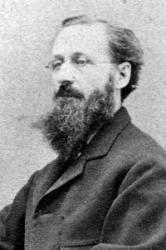
John E. Gould

1821 - 1875 Topics: Death and Eternal Life; Funeral / Memorial Service; Joy; Suffering Composer of "RESURRECTION" in Voices Together John Edgar Gould USA 1821-1875. Born in Bangor, ME, he became a musician. He managed music stores in New York City and Philadelphia, PA., the latter with composer partner, William Fischer. He married Josephine Louisa Barrows, and they had seven children: Blanche, Marie, Ida, John, Josephine, Josephine, and Augusta. He compiled eight religious songbooks from 1846 thru 1869. He died while traveling in Algiers, Africa, and was buried in Philadelphia, PA. John Perry

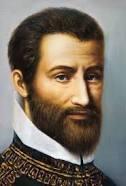
Giovanni Pierluigi da Palestrina

1525 - 1594 Person Name: Giovanni da Palestrina, 1525-1594 Topics: Easter Vigil ; Easter Season Resurrection; All Souls November 2nd; Funeral Sacraments; Eternal Life; Paschal Mystery; Praise; Redemption; Struggle; Victory over Sin and Death; Worship and Adoration Composer of "VICTORY" in Lead Me, Guide Me (2nd ed.) Giovanni Pierluigi (da Palestrina) Italy 1525-1594. Born at Palestrina, Italy, near Rome, then part of the Papal States to Neopolitan parents. As a youth he became a chorister at the Santa Maria Maggiore basilica in the Rome Diocese. This allowed him to learn literature and music. In 1540 he moved to Rome, where he studied in the school ofr the Hugenot, Claude Goudimel. He also studied with Robin Mallapert and Firmin Lebel. Orlando Di Lasso was also a musical advisor to him. From 1544-1551 he was organist at the Cathedral of St Agapito, the principle church of his native city. In 1547 he married Lucrezia Gori, and they had four children: Rodolfo, Angelo, Iginio, and a daughter. In 1551 Pope Julius III (previously Bishop of Palestrina) appointed him ‘maestro di cappella’, or musical director of the Cappella Giulia (choir). Pierluigi dedicated his first published compositions to Pope Julius III (1554), known as ‘the book of Masses’. It was the first book of masses by a native composer, since most sacred works in those days were from low countries (France or Spain). In 1555 Pope Paul IV ordered that all papal choristers should be clerical. As Pierluigi married early in life and had four children, he was unable to continue in the chapel as a layman. During the next decade he held positions similar to his Julian Chapel appointment at other chapels and churches in Rome, including St John Lateran (1555-1560), and Santa Maria Maggiore (1561-1566). In 1571 he returned to the Julian Chapel and remained at St Peter’s for the rest of his life. The 1570s was a decade of difficulty for him, as he lost his brother, two sons, and his wife in three separate outbreaks of plague (1572-1575-1580). In 1578 he was given the title of ‘Master of Music’ at the Vatican Basilica. He thought of becoming a priest at this time, but instead married a wealthy widow, Virginia Formoli, in 1581, widow of a wealthy merchant, which gave him financial independence (he was not well-paid as choirmaster). He spent considerable time administering to her fortune, but also was able to compose prolifically until his death. He also helped to found an association of professional musicians called the Vertuosa Compagnia dei Musici. He died in Rome of pleurisy. He left hundreds of compositions, including 1045 masses, 68 offertories, 140 madrigals, 300+ motets, 72 hymns, 35 magnificats, 11 litanies and several sets of lamentations. There are two comprehensive editions of his works: a 33-volume edition published by Breitkopf and Hartel, in Leigzig, Germany, between 1862-1894, edited by Franz Xaver Habert, and a 34-volume edition published in the mid 20th century by Fratelli Scalera, in Rome, Italy, edited by R Casimiri and others. As a Renaissance musician and composer of sacred music he was the best known 16th century representative of the Roman School of musical composition. He had a long-lasting influence on the development of church and secular music in Europe, especially on the development of counterpoint, his work considered the culmination of Renaissance polyphony. Very famous in his day, he was considered by some the legendary ‘savior of church music’. A 2009 film was produced by German television about him, titled: ‘Palestrina – Prince of Music’. John Perry

William Edie Marks

1872 - 1954 Topics: The Christian Life Death and Life Eternal; Funeral Composer of "THE LAST MILE OF THE WAY" in African Methodist Episcopal Church Hymnal Born: July 1872, Delaware (probably Wilmington) Died: November 20, 1954, Wilmington, Delaware. Buried: Lombardy Cemetery, Wilmington, Delaware. Marks was ap­par­ent­ly liv­ing in Wilm­ing­ton, Del­a­ware, in 1913. His works in­clude: Cream of Song, with Le­an­der Pick­ett & O. B. Cul­pep­per & (Lou­is­ville, Ken­tucky: Pick­ett Pub­lish­ing Com­pa­ny, 1906) Tears and Tri­umphs No. 4, with Le­an­der Pick­ett & Ben­ja­min Butts (Lou­is­ville, Ken­tucky: Pen­te­cost­al Pub­lish­ing Company, 1910) Noted Hymns, 1927 (ed­it­or) Lyrics-- Christmas Joy Tasting the Joys Trying to Be More like Je­sus We Shall Hear Him Say, "Well Done" Music-- Best Thing I Ev­er Did, The End Is Not Yet, The I Am Go­ing to Con­tin­ue In the Morn­ing We Shall See It Is Mine Jesus Sa­tis­fies Jesus Took the Bur­den Off Keep Tell­ing It Last Mile of the Way, The Let Je­sus Re­move It To­day Lift Thy Face to the Light! Rapture In­deed! Tell It Wher­ev­er You Go When We Use Our Tal­ents You Ought to Know Him http://www.hymntime.com/tch/bio/m/a/r/k/marks_we.htm

John Stainer

1840 - 1901 Person Name: J. Stainer, 1850-1901 Topics: The Christian Life Death, Judgement, Future Life; The Church Militant and Triumphant; Times and Seasons Funerals and Memorial Services Composer of "REST" in The Methodist Hymn-Book with Tunes

Pages


Export as CSV
It looks like you are using an ad-blocker. Ad revenue helps keep us running. Please consider white-listing Hymnary.org or getting Hymnary Pro to eliminate ads entirely and help support Hymnary.org.