You help make Hymnary.org possible. More than 10 million people from 200+ countries found hymns, liturgical resources and encouragement on Hymnary.org in 2025, including you. Every visit affirms the global impact of this ministry.

If Hymnary has been meaningful to you this year, would you take a moment today to help sustain it? A gift of any size—paired with a note of encouragement if you wish—directly supports the server costs, research work and curation that keep this resource freely available to the world.

Give securely online today, or mail a check to:
Hymnary.org
Calvin University
3201 Burton Street SE
Grand Rapids, MI 49546

Thank you for your partnership, and may the hope of Advent fill your heart.

Person Results

Topics:easter+vigil+++
In:people

Planning worship? Check out our sister site, ZeteoSearch.org, for 20+ additional resources related to your search.
Showing 121 - 130 of 360Results Per Page: 102050

Carlton R. Young

b. 1926 Topics: Christian Year Easter Vigil; Christian Year Easter Vigil Composer of "[Be exalted, Lord, in your strength]" in The United Methodist Hymnal

M. R. Newbolt

1874 - 1956 Person Name: Michael R. Newbolt, 1874-1956 Topics: Easter Vigil Author of "Lift High the Cross" in Lead Me, Guide Me (2nd ed.) Michael R. Newbolt (b. Dymock, Gloucestershire, England, 1874; d. Bierton, Buckinghamshire, England, 1956) was educated at St. John's College, Oxford, and ordained as priest in the Church of England in 1900. He ministered at several churches during the early part of his career and then became principal of the Missionary College in Dorchester (1910-1916). From 1916 to 1927 he served St. Michael and All Angels Church in Brighton and from 1927 to 1946 was canon of Chester Cathedral. Newbolt wrote several theological works, including a commentary on the Book of Revelation. Bert Polman

Joseph Gelineau

1920 - 2008 Person Name: Joseph Gelineau, SJ Topics: Easter Vigil ; Easter Vigil ; Easter Vigil Composer (Gelineau tone) of "[Happy the people the Lord has chosen]" in RitualSong Joseph Gelineau (1920-2008) Gelineau's translation and musical settings of the psalms have achieved nearly universal usage in the Christian church of the Western world. These psalms faithfully recapture the Hebrew poetic structure and images. To accommodate this structure his psalm tones were designed to express the asymmetrical three-line/four-line design of the psalm texts. He collaborated with R. Tournay and R. Schwab and reworked the Jerusalem Bible Psalter. Their joint effort produced the Psautier de la Bible de Jerusalem and recording Psaumes, which won the Gran Prix de L' Academie Charles Cros in 1953. The musical settings followed four years later. Shortly after, the Gregorian Institute of America published Twenty-four Psalms and Canticles, which was the premier issue of his psalms in the United States. Certainly, his text and his settings have provided a feasible and beautiful solution to the singing of the psalms that the 1963 reforms envisioned. Parishes, their cantors, and choirs were well-equipped to sing the psalms when they embarked on the Gelineau psalmody. Gelineau was active in liturgical development from the very time of his ordination in 1951. He taught at the Institut Catholique de Paris and was active in several movements leading toward Vatican II. His influence in the United States as well in Europe (he was one of the founding organizers of Universa Laus, the international church music association) is as far reaching as it is broad. Proof of that is the number of times "My shepherd is the Lord" has been reprinted and reprinted in numerous funeral worship leaflets, collections, and hymnals. His prolific career includes hundreds of compositions ranging from litanies to responsories. His setting of Psalm 106/107, "The Love of the Lord," for assembly, organ, and orchestra premiéred at the 1989 National Association of Pastoral Musicians convention in Long Beach, California. --www.giamusic.com

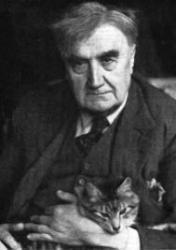
Ralph Vaughan Williams

1872 - 1958 Person Name: Ralph Vaughan Williams, 1872-1958 Topics: Easter Vigil Composer of "SALVE FESTA DIES" in Worship (3rd ed.) Through his composing, conducting, collecting, editing, and teaching, Ralph Vaughan Williams (b. Down Ampney, Gloucestershire, England, October 12, 1872; d. Westminster, London, England, August 26, 1958) became the chief figure in the realm of English music and church music in the first half of the twentieth century. His education included instruction at the Royal College of Music in London and Trinity College, Cambridge, as well as additional studies in Berlin and Paris. During World War I he served in the army medical corps in France. Vaughan Williams taught music at the Royal College of Music (1920-1940), conducted the Bach Choir in London (1920-1927), and directed the Leith Hill Music Festival in Dorking (1905-1953). A major influence in his life was the English folk song. A knowledgeable collector of folk songs, he was also a member of the Folksong Society and a supporter of the English Folk Dance Society. Vaughan Williams wrote various articles and books, including National Music (1935), and composed numerous arrange­ments of folk songs; many of his compositions show the impact of folk rhythms and melodic modes. His original compositions cover nearly all musical genres, from orchestral symphonies and concertos to choral works, from songs to operas, and from chamber music to music for films. Vaughan Williams's church music includes anthems; choral-orchestral works, such as Magnificat (1932), Dona Nobis Pacem (1936), and Hodie (1953); and hymn tune settings for organ. But most important to the history of hymnody, he was music editor of the most influential British hymnal at the beginning of the twentieth century, The English Hymnal (1906), and coeditor (with Martin Shaw) of Songs of Praise (1925, 1931) and the Oxford Book of Carols (1928). Bert Polman

Carolyn Winfrey Gillette

b. 1961 Topics: Christian Year and Observances Easter/Easter Vigil Author of "O Christ, When You Ascended" in Worship and Song Carolyn Winfrey Gillette has been a pastor in rural, small town, suburban, and city churches; she has also served as a hospice chaplain, a hospital chaplain, and a school bus aide helping children with special needs. She and her husband Bruce are pastors of the First Presbyterian Union Church in Owego, NY. Carolyn is a gifted hymn writer who has written over 400 hymns. These hymns have been sung by congregations throughout the United States and around the world — from the Washington National Cathedral to St. Giles' Cathedral in Edinburgh, Scotland to St. George's Cathedral in Cape Town, South Africa to small town churches and small household congregations; they have also been sung at national church and international ecumenical meetings. She has written four books: "I Sing to My Savior: New Hymns from the Stories in Luke's Gospel", "God's World is Changing: New Hymns for Advent and Christmas", "Gifts of Love: New Hymns for Today's Worship" (Geneva Press) and "Songs of Grace: New Hymns for God and Neighbo"r (Upper Room Books). Her hymns have been published in over 20 books. Two of her hymns have been published by the Choristers Guild as anthems. Carolyn was commissioned to write the lead article for the special issue on "Singing Our Lives" for Baylor University's "Christian Reflectio"n journal. Her hymns have also been in "Call to Worship" journal, "The Chorister" (cover story), "Reformed Worship," "The Presbyterian Outlook" and posted on thousands of web sites. All of her hymns can be found on her website with indices to scriptural references, topics, tunes, and the three-year cycle of the Revised Common Lectionary: http://www.carolynshymns.com The World Council of Churches, National Council of Churches, Church World Service and Churches Uniting in Christ have asked her to write hymns. Habitat for Humanity International used a hymn by Carolyn for their 30th anniversary celebration. Family Promise (Interfaith Hospitality Network) did a music video of her hymn for their ministry with homeless families. The Humane Society of the United States did a music video contest of her hymn for their Blessing of the Animals service. The Presbyterian Church (USA) 216th General Assembly presented her with the "Ecumenical and Interreligious Service Recognition." Sojourners did a short video about her hymn writing. A Canadian scholar wrote her biography for the "Cambridge Dictionary for Hymnology." Feature stories about Carolyn's hymns addressing concerns facing the Church, nation and world, were done by The New Yorker, The Christian Century, America, National Public Radio, national PBS-TV, and newspapers (Philadelphia Inquirer, Washington Post, New Jersey Courier Post, Delaware News Journal, and others). Carolyn is a graduate of Lebanon Valley College and Princeton Theological Seminary. She finds joy in parish ministry, hymn writing, and most of all in her family as a wife, mother (and foster mother), grandmother, sister, and human parent to a rescue dog, "Annie." Carolyn sees her hymn writing as a partnership and is very grateful for prayers for her hymn writing, suggestions for hymns, gifts for hymn use and commissions, and invitations to speak at conferences, workshops, and church gatherings (in person and online). She hopes her hymns nurture people in their discipleship and support churches in their worship and service in the world. Sing to the Lord a new song! Copied from "About the Author" in "I Sing to My Savior: New Hymns from the Stories in Luke's Gospel." Email from Bruce Gillette

Jaroslav J. Vajda

1919 - 2008 Topics: Christian Year Easter Vigil Author of "God of the Sparrow" in Glory to God Jaroslav J. Vajda (b. Lorain, Ohio, 1919; d. 2008) Born of Czechoslovakian parents, Vajda was educated at Concordia College in Fort Wayne, Indiana, and Concordia Theological Seminary in St. Louis, Missouri. Ordained as a Lutheran pastor in 1944, he served congregations in Pennsylvania and Indiana until 1963. He was editor of the periodicals The Lutheran Beacon (1959-1963) and This Day (1963-1971) and book editor and developer for Concordia Publishing House in St. Louis from 1971 until his retirement in 1986. Working mainly with hymn texts, Vajda served on several Lutheran commissions of worship. A writer of original poetry since his teens, he was the author of They Followed the King (1965) and Follow the King (1977). His translations from Slovak include Bloody Sonnets (1950), Slovak Christmas (1960), An Anthology of Slovak Literature (1977), and contributions to the Lutheran Worship Supplement (1969) and the Lutheran Book of Worship (1978). A collection of his hymn texts, carols, and hymn translations was issued as Now the Joyful Celebration (1987); its sequel is So Much to Sing About (1991). Vajda's hymns are included in many modern hymnals, and he was honored as a Fellow of the Hymn Society in the United States and Canada in 1988. Bert Polman

Jacques Berthier

1923 - 1994 Person Name: Jacques Berthier, 1923-1994 Topics: Easter Vigil ; Easter Vigil Composer of "DE NOCHE IREMOS" in Common Praise (1998) Jacques Berthier (b. Auxerre, Burgundy, June 27, 1923; d. June 27, 1994) A son of musical parents, Berthier studied music at the Ecole Cesar Franck in Paris. From 1961 until his death he served as organist at St. Ignace Church, Paris. Although his published works include numerous compositions for organ, voice, and instruments, Berthier is best known as the composer of service music for the Taizé community near Cluny, Burgundy. Influenced by the French liturgist and church musician Joseph Gelineau, Berthier began writing songs for equal voices in 1955 for the services of the then nascent community of twenty brothers at Taizé. As the Taizé community grew, Berthier continued to compose most of the mini-hymns, canons, and various associated instrumental arrangements, which are now universally known as the Taizé repertoire. In the past two decades this repertoire has become widely used in North American church music in both Roman Catholic and Protestant traditions. Bert Polman

Caroline M. Noel

1817 - 1877 Author of "At the Name of Jesus" Caroline Marie Noel (b. Teston, Kent, England, 1817; d. St. Marylebone, London, England, 1877) The daughter of an Anglican clergyman and hymn writer, she began to write poetry in her late teens but then abandoned it until she was in her forties. During those years she suffered frequent bouts of illness and eventually became an invalid. To encourage both herself and others who were ill or incapacitated, Noel began to write devotional verse again. Her poems were collected in The Name of Jesus and Other Verses for the Sick and Lonely (1861, enlarged in 1870). Bert Polman ================ Noel, Caroline Maria, daughter of the Hon. Gerard T. Noel (p. 809, ii.), and niece of the Hon. Baptist W. Noel, was born in London, April 10, 1817, and died at 39 Great Cumberland Place, Hyde Park, Dec. 7, 1877. Her first hymn, "Draw nigh unto my soul" (Indwelling), was written when she was 17. During the next three years she wrote about a dozen pieces: from 20 years of age to 40 she wrote nothing; and during the next 20 years the rest of her pieces were written. The first edition of her compositions was published as The Name of Jesus and Other Verses for the Sick and Lonely, in 1861. This was enlarged from time to time, and its title subsequently changed by the publishers to The Name of Jesus and Other Poems. The 1878 ed. contains 78 pieces. Miss Noel, in common with Miss Charlotte Elliott, was a great sufferer, and many of these verses were the outcome of her days of pain. They are specially adapted "for the Sick and Lonely" and were written rather for private meditation than for public use, although several are suited to the latter purpose. Her best known hymn is the Processional for Ascension Day, "At the Name of Jesus." It is in the enlarged edition of The Name of Jesus, &c, 1870, p. 59, and is dated 1870 by her family. --John Julian, Dictionary of Hymnology, Appendix, Part II (1907)

Andrew Reed

1787 - 1862 Author of "Spirit Divine, Attend Our Prayers" Reed, Andrew, D.D., son of Andrew Reed, was born in London on Nov. 27, 1787, and educated for the Congregational Ministry at Hackney College, London. He was first the pastor of the New Road Chapel, St. George's-in-the-East, and then of the Wycliffe Chapel, which was built through his exertions in 1830. His degree was conferred by Yule College, America. He died Feb. 25, 1862. As the founder of "The London Orphan Asylum," "The Asylum for Fatherless Children," “The Asylum for Idiots” "The Infant Orphan Asylum," and "The Hospital for Incurables," Dr. Reed is more fully known, and will be longer remembered than by his literary publications. His Hymn Book was the growth of years. The preparation began in 1817, when he published a Supplement to Watts, in which were a few originals. This was enlarged in 1825; and entirely superseded by his collection The Hymn Book, prepared from Dr. Watts's Psalms & Hymns and Other Authors, with some Originals, in 1842 (Preface). His hymns, mostly of a plain and practical character, numbering 21, were contributed to these various editions, and were republished with those of his wife in the Wycliffe Supplement, 1872. The best known are "Ah Jesus, let me hear Thy voice” and ”Spirit Divine, attend our prayer." All Dr. and Mrs. Reed's hymns are anonymous in The Hymn Book, 1842, but are given with their names in the Wyclife Supplement, 1872. His hymns now in common use include, in addition to those annotated under their respective first lines :— 1. Come, let us strike our harps afresh. Praise. 2. Come, my Redeemer, come. Desiring Christ's Presence. 3. Gentle Saviour, look on me. Christ's protection Desired. 4. Gracious Lord, as Thou hast taught us. Public Worship. 5. Hark, hark, the notes of joy. Missions. 6. Holy Ghost, with light divine (1817). Prayer to the Holy Spirit. Sometimes given as "Holy Ghost, Thou light divine;" and again as "Holy Spirit, Light divine." 7. Listen, sinner, mercy hails you. Invitation. Generally given as "Hear, O Sinner, mercy hails you." 8. Rich are the joys of solitude. Retirement. Some-times given as "How deep and tranquil is the joy." 9. There [comes] is an hour when I must part. Death anticipated. 10. Ye saints your music bring. Praise of the Cross. --John Julian, Dictionary of Hymnology (1907)

Mary Louise Bringle

b. 1953 Person Name: Mary Louise Bringle, b. 1953 Topics: Year A, B, C, Easter, Easter vigil Translator of "Dios es nuestro amparo (God Will Be Our Refuge)" in Psalms for All Seasons

Pages


Export as CSV
It looks like you are using an ad-blocker. Ad revenue helps keep us running. Please consider white-listing Hymnary.org or getting Hymnary Pro to eliminate ads entirely and help support Hymnary.org.