

 My Starred Hymns
 My FlexScores
 My Hymnals
 My Purchased Files
Planning worship?
Check out our sister site, ZeteoSearch.org,
for 20+ additional resources related to your search.
- |
User Links
Person Results
Bob Hurd
b. 1950 Person Name: Bob Hurd, b. 1950 Topics: Acrostic Psalms; Affliction; Biblical Names and Places Israel; Church Year Advent; Elements of Worship Baptism; Elements of Worship Confession (Individual); Elements of Worship Lord's Supper; Elements of Worship Praise and Adoration; Elements of Worship Prayer for Illumination; Forgiveness; God Daily Experience of; God Trust in; God as Guide; God as Judge; God's Compassion; God's Faithfulness; God's Forgiveness; God's Friendship; God's Promises; God's Protection; God's Way; Grace; Guilt; Hope; Humility; Jesus Christ Friend of Sinners; Jesus Christ Parables of; Joy; Lament Individual; Life Stages Youth; Loneliness; Mercy; Occasional Services Ordination and/or Installation; Prayer; Renewal; Rest; Salvation; Shame; The Fall; Trust; Truth; Worship; Year A, Ordinary Time after Pentecost, September 24-October 1; Year B, Lent, 1st Sunday; Year C, Advent, 1st Sunday; Year C, Ordinary Time after Pentecost, July 10-16 Author of "To You, O God, I Lift Up My Soul" in Psalms for All Seasons
Bob Hurd
Arthur Sullivan
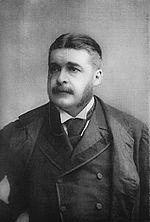
1842 - 1900 Person Name: Arthur S. Sullivan Topics: God Known in Jesus Christ Resurrection and Exaltation; Christian Year: Easter; Jesus Christ; Jesus Christ: Resurrection; Joy Composer of "ST. KEVIN" in Chalice Hymnal Arthur Seymour Sullivan (b Lambeth, London. England. 1842; d. Westminster, London, 1900) was born of an Italian mother and an Irish father who was an army bandmaster and a professor of music. Sullivan entered the Chapel Royal as a chorister in 1854. He was elected as the first Mendelssohn scholar in 1856, when he began his studies at the Royal Academy of Music in London. He also studied at the Leipzig Conservatory (1858-1861) and in 1866 was appointed professor of composition at the Royal Academy of Music. Early in his career Sullivan composed oratorios and music for some Shakespeare plays. However, he is best known for writing the music for lyrics by William S. Gilbert, which produced popular operettas such as H.M.S. Pinafore (1878), The Pirates of Penzance (1879), The Mikado (1884), and Yeomen of the Guard (1888). These operettas satirized the court and everyday life in Victorian times. Although he composed some anthems, in the area of church music Sullivan is best remembered for his hymn tunes, written between 1867 and 1874 and published in The Hymnary (1872) and Church Hymns (1874), both of which he edited. He contributed hymns to A Hymnal Chiefly from The Book of Praise (1867) and to the Presbyterian collection Psalms and Hymns for Divine Worship (1867). A complete collection of his hymns and arrangements was published posthumously as Hymn Tunes by Arthur Sullivan (1902). Sullivan steadfastly refused to grant permission to those who wished to make hymn tunes from the popular melodies in his operettas.
Bert Polman
Arthur Sullivan
Samuel Sebastian Wesley
1810 - 1876 Person Name: Samuel S. Wesley Topics: God In nature; Joy; Praise; The Praise of God In himself; Trinity XII Morning Prayer Closing; Trinity XIV The Holy Communion General Composer of "ALLELUIA" in The Hymnal of the Protestant Episcopal Church in the United States of America 1940 Samuel Sebastian Wesley (b. London, England, 1810; d. Gloucester, England, 1876) was an English organist and composer. The grandson of Charles Wesley, he was born in London, and sang in the choir of the Chapel Royal as a boy. He learned composition and organ from his father, Samuel, completed a doctorate in music at Oxford, and composed for piano, organ, and choir. He was organist at Hereford Cathedral (1832-1835), Exeter Cathedral (1835-1842), Leeds Parish Church (1842-1849), Winchester Cathedral (1849-1865), and Gloucester Cathedral (1865-1876). Wesley strove to improve the standards of church music and the status of church musicians; his observations and plans for reform were published as A Few Words on Cathedral Music and the Music System of the Church (1849). He was the musical editor of Charles Kemble's A Selection of Psalms and Hymns (1864) and of the Wellburn Appendix of Original Hymns and Tunes (1875) but is best known as the compiler of The European Psalmist (1872), in which some 130 of the 733 hymn tunes were written by him.
Bert Polman
Samuel Sebastian Wesley
Joseph Haydn
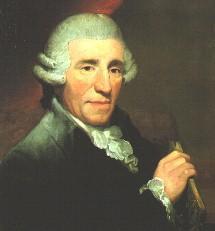
1732 - 1809 Person Name: Franz Joseph Haydn (1732-1809) Topics: God in grace and mercy; God Protection of; Joy; Pilgrimage; Proper 17 Year C; The Second Sunday before Advent Year B; Water Composer of "AUSTRIA" in Ancient and Modern Franz Joseph Haydn (b. Rohrau, Austria, 1732; d. Vienna, Austria, 1809) Haydn's life was relatively uneventful, but his artistic legacy was truly astounding. He began his musical career as a choirboy in St. Stephen's Cathedral, Vienna, spent some years in that city making a precarious living as a music teacher and composer, and then served as music director for the Esterhazy family from 1761 to 1790. Haydn became a most productive and widely respected composer of symphonies, chamber music, and piano sonatas. In his retirement years he took two extended tours to England, which resulted in his "London" symphonies and (because of G. F. Handel's influence) in oratorios. Haydn's church music includes six great Masses and a few original hymn tunes. Hymnal editors have also arranged hymn tunes from various themes in Haydn's music.
Bert Polman
Joseph Haydn
Ray Palmer
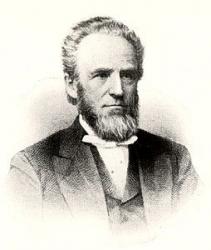
1808 - 1887 Topics: The Church at Worship Holy Communion; liturgical Communion Songs; Adoration and Praise; Comfort/Consolation; Consecration; Faith; Feast; God Presence; Jesus Christ Friend; Jesus Christ Light; Jesus Christ Love For; Jesus Christ Person; Jesus Christ Presence; Joy; Life; Light; Nurture; Peace (Inner, Calmness, Serenity; Petition; Seeking God; Thirst For God; Truth; Lent 3 Year A; Easter 2 Year A; Pentecost Year A; Proper 23 Year A; Palm/Passion Sunday Year B; Proper 5 Year B; Proper 13 Year B; Proper 14 Year B; Proper 15 Year B; Lent 3 Year C; Proper 10 Year C; Proper 11 Year C; Proper 13 Year C; Proper 17 Year C; Tuesday in Holy Week Year ABC Translator of "O Jesus, Joy of Loving Hearts" in Voices United Ray Palmer (b. Little Compton, RI, 1808; d. Newark, NJ, 1887) is often considered to be one of America's best nineteenth-century hymn writers. After completing grammar school he worked in a Boston dry goods store, but a religious awakening prodded him to study for the ministry. He attended Yale College (supporting himself by teaching) and was ordained in 1835. A pastor in Congregational churches in Bath, Maine (1835-1850), and Albany, New York (1850-1865), he also served as secretary of the American Congregational Union (1865-1878). Palmer was a popular preacher and author, writing original poetry as well as translating hymns. He published several volumes of poetry and hymns, including Sabbath Hymn Book (1858), Hymns and Sacred Pieces (1865), and Hymns of My Holy Hours (1868). His complete poetical works were published in 1876.
Bert Polman
===================
Palmer, Ray, D.D., son of the Hon. Thomas Palmer, a Judge in Rhode Island, was born at Little Compton, Rhode Island, Nov. 12, 1808. His early life was spent at Boston, where he was for some time clerk in a dry-goods store. At Boston he joined the Park Street Congregational Church, then under the pastoral care of Dr. S. E. Dwight. After spending three years at Phillips Academy, Andover, he entered Yale College, New Haven, where he graduated in 1830. In 1835 he became pastor of the Central Congregational Church, Bath, Maine. During his pastorate there he visited Europe in 1847. In 1850 he was appointed to the First Congregational Church, at Albany, New York, and in 1865 Corresponding Secretary to the American Congregational Union, New York. He resigned in 1878, and retired to Newark, New Jersey. He died at Newark, Mar. 29, 1887. Dr. Palmer's published works in prose and verse include:--
(1) Memoirs and Select Remains of Charles Pond, 1829; (2) The Spirit's Life, a Poem, 1837; (3) How to Live, or Memoirs of Mrs. C. L. Watson, 1839; (4) Doctrinal Text Book, 1839; (5) Spiritual Improvement, 1839, republished as Closet Hours in 185; (6) What is Truth? or Hints on the Formation of Religious Opinions, 1860; (7) Remember Me, or The Holy Communion, 1865; (8) Hymns and Sacred Pieces, with Miscellaneous Poems, 1865; (9) Hymns of my Holy Hours, and Other Pieces, 1868; (10) Home, or the Unlost Paradise, 1873; and (11) Voices of Hope and Gladness, 1881.
Most of Dr. Palmer's hymns have passed into congregational use, and have won great acceptance. The best of them by their combination of thought, poetry, and devotion, are superior to almost all others of American origin. The first which he wrote has become the most widely known of all. It is:—
1. My faith looks up to Thee. Faith in Christ. This hymn was written by the author when fresh from College, and during an engagement in teaching in New York. This was in 1830. The author says concerning its composition, "I gave form to what I felt, by writing, with little effort, the stanzas. I recollect I wrote them with very tender emotion, and ended the last line with tears." A short time afterwards the hymn was given to Dr. Lowell Mason for use, if thought good, in a work then being compiled by him and Dr. T. Hastings. In 1831 that work was published as Spiritual Songs for Social Worship: adapted to the use of Families, &c. Words and Music arranged by Thomas Hastings, of New York, and Lowell Mason of Boston. It is No. 141 in 4 stanzas of 8 lines, entitled "Self Consecration," and accompanied with the tune by Dr. L. Mason, there given as "My faith looks up to Thee, "but subsequently known as Olivet. (Orig. text of hymn in Thring's Collection, 1882.) It has passed into most modern collections in all English-speaking countries, and has been rendered into numerous languages. That in Latin, by H. M. Macgill (p. 708, ii.), begins "Fides Te mea spectat."
2. Fount of everlasting love. Praise for renewed Spiritual Life. This also appeared in the Spiritual Songs, &c, 1831, No. 191, in 4 stanzas of 4 lines, and headed "Praise for a Revival."
The hymns which are given below are all in Dr. Palmer's Poetical Works, N. Y., 1876, and the dates appended in brackets are those given by him in that work.
3. Thou who roll'st the year around. (1832.) Close of the Year. In several American collections.
4. Away from earth my spirit turns. (1833.) Holy Communion. Appeared in Lowell Mason's Union Hymns, in 4 stanzas of 4 lines. In the Church Praise Book, N. Y.. 1882, it begins with st. ii., "Thou, Saviour, art the Living Bread."
5. Before Thy throne with tearful eyes. (1834.) Liberty of Faith.
6. Stealing from the world away. (1834.) Evening. Written at New Haven in 1834, and is very popular in America.
7. Thine [Thy] holy day's returning. (1834.) Sunday Morning.
8. Wake thee, 0 Zion. (1862.) Zion Exultant.
9. We stand in deep repentance. (1834.) Lent.
This last, No. 9, in common with Nos. 10, 11, 12, is marked "original," in the Presbyterian Parish Hymns, 1843. Probably they were given to the editors of that book in manuscript, and had not previously appeared.
10. And is there, Lord, a rest? (1843.) Rest in Heaven. Written at Bath, Maine, in 1843.
11. 0 sweetly breathe the lyres above. Consecration to Christ. This was accidentally omitted from Dr. Palmer's Poetical Works, 18?6. S. W. Duffield says:—
"It was written in the winter of 1842-43, at a time of revival. At the previous Communion several had been received under circumstances that made Doddridge's hymn, ‘0 happy day that fixed my choice 'a most appropriate selection. Not caring to repeat it, and needing something similar, Dr. Palmer composed the present hymn." English Hymns, N. Y., 1886, p. 432.
12. When downward to the darksome tomb. (1842.) Death Contemplated. Written at Bath, Maine, 1842.
From 1843 there comes a long break, and Dr. Palmer seems to have done no more hymn-writing until called upon by Professors Park and Phelps, of Andover, for contributions to their Sabbath Hymn-Book, 1858. His hymns written for that important collection rank amongst the best that America has produced. This is specially true of the first four (Nos. 13-16) from the Latin.
13. Jesus, Thou joy of loving hearts. (l858.) Translation of a cento from "Jesu dulcis memoria" (p. 588, ii.).
14. 0 Bread to Pilgrims given. (1858.) Translation of “O esca viatorum" (q.v.).
15. 0 Christ our King, Creator Lord. (1858.) Translation of “Rex Christe, factor omnium "
16. Come Holy Ghost, in love. (1858.) Translation of “Veni Sancte Spiritus" (q.v.)
17. Jesus, these eyes have never seen. (1858.) Christ loved, though unseen. This hymn is accounted by many as next in merit and beauty to "My faith looks up to Thee."
18. Lord, my weak thought in vain would climb. (1858.) God Unsearchable. This hymn deals with the mysteries of Predestination in a reverent and devout manner.
19. Thy Father's house! thine own bright home. (1858.) Heaven.
The next group, Nos. 20-27, appeared in Dr. Robinson's Songs for the Sanctuary, 1865.
20. Lord, Thou wilt bring the joyful day. (1864.) Contemplation of Heaven. Written in New York City.
21. Eternal Father, Thou hast said. (i860.) Missions.
22. Jesus, Lamb of God, for me. (1863.) Jesus, the Way of Salvation. Written in Albany, New York.
23. Take me, 0 my Father, take me. (1864.) Lent.
24. Wouldst thou eternal life obtain. (1864.) Good Friday.
25. Come Jesus, Redeemer, abide Thou with me. (1864.) Holy Communion.
26. Lord, Thou on earth didst love Thine own. (1864.) Fellowship with Christ.
27. Thou, Saviour, from Thy throne on high. (1864.) Prayer.
The next four (Nos. 28-31) present another group. They appeared in D. E. Jones's Songs for the New Life, 1869, and the Reformed Dutch Hymns of the Church, N. Y., 1869. The dates of composition are from Dr. Palmer's Poems, 1876.
28. Lord, Thou hast taught our hearts to glow. (1865.) Ordination, or Meeting of Ministers.
29. When inward turns my searching gaze. (1868.) Evening.
30. 0 Jesus, sweet the tears I shed. (1867.) Good Friday.
31. Jesus, this [my] heart within me burns. (1868.) Love.
The hymns which follow are from various sources.
32. 0 Christ, the Lord of heaven, to Thee. (1867.) Universal Praise to Christ. Appeared in the author's Hymns of my Holy Hours, 1867. It is a hymn of great merit, and is widely used.
33. Behold the shade of night is now receding. (1869.) A translation of "Ecce jam noctis." (p. 320, i., and Various).
34. Hid evening shadows let us all be waking. (1869.) A translation of "Nocte surgentes" (p. 809, i.).
35. I give my heart to Thee. (Aug. 20, 1868.) A translation of "Cor meum Tibi dedo," p. 262, ii.
36. Holy Ghost, that promised came. (1873.) Whitsuntide. From the author's Poems, 1876.
37. 0 Holy Comforter, I hear. The Comforter. Appeared in the Boston Congregationalist, September 7th, 1867.
38. Lord, when my soul her secrets doth reveal. (1865.) Holy Communion.
Most of the foregoing hymns are in common in Great Britain, and all are found in one or more American hymnbooks of importance. [Rev. F. M. Bird, M.A.]
-- John Julian, Dictionary of Hymnology (1907)
===================
Palmer, Ray, D.D., p. 877, i. The following original hymns by Dr. Palmer are also in common use:—
1. O Rock of Ages, since on Thee. Faith. From his Poetical Works, 1876, p. 27, where it is dated 1869. Bp. Bickersteth says "This hymn"... is "worthy of Luther." (Note Hymnal Companion, ed. 1876.)
2. Thy holy will, my God, be mine. Resignation. From his Hymns of my Holy Hours, &c, 1868, p. 47. Also in his P. Works, 1876, dated 1867.
3. We praise Thee, Saviour, for Thy grace. Holy Communion. From his Hymns and Sacred Pieces, &c, 1865. Also in P. Works, 1876, dated 1864.
--John Julian, Dictionary of Hymnology, Appendix, Part II (1907)
==========
Ray Palmer was born at Little Compton, Rhode Island, in 1808. He studied at Phillip's Academy, Andover, Mass., and graduated at Yale College in 1830. In 1835, he was ordained pastor of a Congregational Society in Bath, Maine, from which he removed, in 1850, to the pastorate of a Congregational Society in Albany, N.Y. He has published many hymns, some of his own authorship, and some translations. He has published some sermons and reviews.
--Annotations of the Hymnal, Charles Hutchins, M.A. 1872.
Ray Palmer
Edward Osler
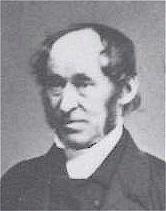
1798 - 1863 Topics: Joy in God Author of "At the Fountain" in The Pilgrim Hymnal Osler, Edward, was born at Falmouth in January, 1798, and was educated for the medical profession, first by Dr. Carvosso, at Falmouth, and then at Guy's Hospital, London. From 1819 to 1836 he was house surgeon at the Swansea Infirmary. He then removed to London, and devoted himself to literary pursuits. For some time he was associated with the Society for Promoting Christian Knowledge, both in London and at Bath. In 1841 he became the Editor of the Royal Cornwall Gazette, and took up his residence at Truro. He retained that appointment till his death, at Truro, March 7, 1863. For the Linnaean Society he wrote Burrowing and Boring Marine Animals. He also published Church and Bible; The Voyage: a Poem written at Sea, and in the West Indies, and Illustrated by papers on Natural History, 1830; The Life of Lord Exmouth, 1837, &c. His hymnological work is mainly connected with the Mitre Hymn Book. During 1835-36 he was associated with Prebendary W. J. Hall, the editor, in producing that collection, which was published in 1836 as Psalms and Hymns adapted to The Services of the Church of England. He resided in Mr. Hall's house during the time. From the "hall manuscript" we gather that he contributed 15 versions of the Psalms (5 being rewritten from others), and 50 hymns (a few rewritten). Most of these hymns and Psalm versions, together with others not in the Mitre Hymn Book, were afterwards given in the monthly numbers of his Church and King, from Nov. 1836 to Aug. 1837. The best known of these hymns are, “O God, unseen, yet ever near," and “Worship, honour, glory, blessing." Several of his hymns in common use are:—
1. Father, Whose love and truth fulfil. Holy Baptism.
2. Glory to God! with joyful adoration. Praise to the Father.
3. Great God, o'er earth and heaven supreme. Men the Stewards of God's Bounties.
4. Great God of hosts, our ears have heard. Ps. xliv. Based on the N. Version.
5. Great God, Whose awful mystery. Holy Trinity.
6. I hold the sacred book of God. Martyrs.
7. Jehovah hath spoken, the nations shall hear. Second Advent.
8. Lord, may the inward grace abound. Holy Baptism.
9. May we Thy precepts, Lord, fulfil. Love.
10. Mighty Saviour, gracious King. Advent.
11. 0 God, the help of all Thy Saints. Ps. x.
12. O Thou, the Lord and Life of those. Christ the Life of Men.
13. O Saviour, Who didst come. Easter.
14. Saviour, Whose love could stoop to death. Easter.
15. See, Lord, before Thy mercy seat. For Schools.
16. Set in a high and favoured place. Advent.
17. Wake frem the dead, new life begin. Lent.
18. With trembling awe we come. Lent.
Several of these hymns are not in Osier's Church and King. We have ascribed them and others to him on the authority of the "hall MSS." It must be noted also that the text in the Church and King often differs from that in the Mitre.
--John Julian, Dictionary of Hymnology (1907)
Though not mentioned by Julian, perhaps his most enduring contribution to hymnody is the third stanza of "Praise the Lord! Ye Heavens, Adore Him", whose first two stanzas are of anonymous authorship.
--Leland Bryant Ross (2019)
Edward Osler
Michael Bruce
1746 - 1767 Person Name: Michael Bruce, 1746-67 Topics: Ascension; Assurance; Confession of Faith; Consolation; Faithfulness of God; Funerals; God's Love to Us; Heaven; Jesus Christ Humanity; Jesus Christ Priesthood and Intercession; Jesus Christ Resurrection; Joy; Obedience; Providence; Resurrection; Temptation; Trust in God Paraphraser of "Where high the heavenly temple stands" in Together in Song Bruce, Michael, son of a Scottish weaver, was born at Kinnesswood, Portmoak, Kinrossshire, Scotland, March 27,1746, and educated at the village school, Edinburgh University (where he first became acquainted with John Logan), and the Theological Hall of the Associate Synod, held at Kinross, under the Rev. John Swanston, intending ultimately to enter the ministry, a hope which was frustrated by his untimely death. To assist in procuring University fees and maintenance he for some time conducted a school, during the recess, at Gairney Bridge, and subsequently at Forrest Mill, near Tillicoultry. Whilst yet a student he died at Kinnesswood, July 5th, 1767.
[Also, see Logan, John]
The names of Michael Bruce and John Logan are brought together because of the painful controversy which has long prevailed concerning the authorship of certain Hymns and Paraphrases of Holy Scripture which are in extensive use in the Christian Church both at home and abroad. During the latter years of Bruce's short life he wrote various Poems, and also Hymns for a singing class at Kinnesswood, which were well known to his family and neighbours, and were eventually copied out by Bruce himself in a quarto MS. book, with the hope that some day he might see them in print. Immediately upon his death, in 1767, Logan called upon his father and requested the loan of this book that he might publish the contents for the benefit of the family. This was granted. Not till three years afterwards did a certain work, containing seventeen poems, and entitled Poems on Several Occasions , by Michael Bruce, 1770, appear, with a Preface in which it was stated that some of the Poems were by others than Bruce.
-- John Julian, Dictionary of Hymnology (1907)
Michael Bruce
J. Jefferson Cleveland
1937 - 1986 Person Name: J. Jefferson Cleveland Topics: The Holy Spirit Gifts of the Spirit; God Present in the Holy Spirit Gifts of the Spirit; Comfort; Descants; Joy; Rest; Holy Spirit Arranger of "BLESSED QUIETNESS" in Chalice Hymnal Judge Jefferson Cleveland (1937-1986) was one of the most important scholars and editors of African-American congregational song of the 20th century. Along with Verogla Nix, he edited what is arguably the most groundbreaking collection of African-American song in the last half of the 20th century, Songs of Zion (1981/1982).
Lutheran hymnologist Marilyn Stulken provides a biographical sketch of Cleveland’s life and accomplishments. Born in Georgia, Cleveland graduated from Clark College (Atlanta), Illinois Wesleyan University and received his doctorate in education from Boston University.
He served on the faculty of three historically black Christian colleges: Claflin College (South Carolina), Langston University (Oklahoma), and Jarvis Christian College (Texas), before teaching at the University of Massachusetts and Wesley Theological Seminary in Washington, D.C.
Cleveland’s musical arrangements, historical research and scholarship on the performance practice of African-American song have proven invaluable for the advancement of black gospel song, not only among African Americans, but also in Anglo hymnals to the present day. For example, Cleveland’s essay, “A Historical Account of the Hymn in the Black Worship Experience,” in Songs of Zion is a helpful introduction for laypersons and scholars alike.
In addition to serving as a hymnody consultant for the United Methodist General Board of Discipleship, he toured the United States and Africa in 1981 and Europe in 1984 as a teacher, lecturer and performer.
--www.umportal.org/
J. Jefferson Cleveland
Caroline A. Mason
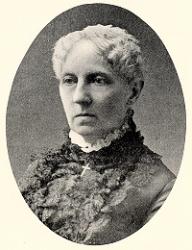
1823 - 1890 Person Name: Caroline A. Mason, (1823-1890) Topics: Joy in God Author of "Safe with God" in The Pilgrim Hymnal Mason, Caroline Atherton, née Briggs, daughter of Dr. Calvin Briggs, of Marblehead, b. there July 27, 1823, married Charles Mason, a lawyer at Fitchburg, in 1853, and d. there June 13, 1890. She published a volume of poems as Utterance: or Private Voices to the Public Heart, 1852. Her Lost Ring and other Poems was issued in 1891. Of her hymns the following are in common use:—
1. I cannot walk in darkness long. [Evening.] This begins with st. v. of her poem on eventide, "At cool of day with God I walk." In her Lost Ring, 1891, p. 165.
2. 0 God. I thank Thee for each sight. [The Joy of Living.] From her Lost Ring, Dec, 1891, p. 164, where it is entitled "A Matin Hymn," and begins "I lift the sash and gaze abroad."
3. The changing years, eternal God. [Adoration.] Written for the Bicentennial of the First Cong. Church, Marblehead, Aug. 13, 1884 (Lost Ring, 1891, p. 174). It begins "The changing centuries, O God."
Of these Nos. 1 and 2 are in Putnam's Singers & Songs, 1875, pp. 464-5. [Rev. James Mearns, M.A.]
--John Julian, Dictionary of Hymnology, New Supplement (1907)
Caroline A. Mason
Rufus H. McDaniel
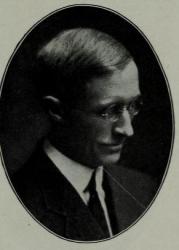
1850 - 1940 Person Name: Rufus H. McDaniel, 1860-1950 Topics: The Gospel in the Christian Life Healing and Comfort; Contentment; New Life in Jesus Christ; Joy; Peace with God Author of "Since Jesus Came into My Heart" in One Lord, One Faith, One Baptism Rufus H. McDaniel was ordained in the Christian church in 1873. He found much joy in church music. He began writing hymns in the 1880's. He wrote, "I feel in my soul that God has something for me to do in brightening the experience of struggling souls. My chief desire is to be a blessing, if possible, to my fellow-men through these hymns and thereby glorify God in the name of his dear son 'whose I am and whom I serve.'"
Dianne Shapiro, from "The Singers and Their Songs: sketches of living gospel hymn writers" by Charles Hutchinson Gabriel (Chicago: The Rodeheaver Company, 1916)
Rufus H. McDaniel
Pages




