

 My Starred Hymns
 My FlexScores
 My Hymnals
 My Purchased Files
Planning worship?
Check out our sister site, ZeteoSearch.org,
for 20+ additional resources related to your search.
- |
User Links
Person Results
Anonymous
Person Name: Anon. Topics: Sea and Sailors Author of "Remember Me, O Mighty One!" in Sacred Songs and Solos In some hymnals, the editors noted that a hymn's author is unknown to them, and so this artificial "person" entry is used to reflect that fact. Obviously, the hymns attributed to "Author Unknown" "Unknown" or "Anonymous" could have been written by many people over a span of many centuries.
Anonymous
Michael Baughen
b. 1930 Topics: Sea Author of "Sing to God new songs of worship" in Praise! psalms hymns and songs for Christian worship
Michael Baughen
John Warrington Hatton
1710 - 1793 Person Name: John Hatton Topics: Travelers by Sea and Land Composer of "DUKE STREET" in The Hymnal John Warrington Hatton (b. Warrington, England, c. 1710; d, St. Helen's, Lancaster, England, 1793) was christened in Warrington, Lancashire, England. He supposedly lived on Duke Street in Lancashire, from where his famous tune name comes. Very little is known about Hatton, but he was most likely a Presbyterian, and the story goes that he was killed in a stagecoach accident.
Bert Polman
John Warrington Hatton
William Knapp
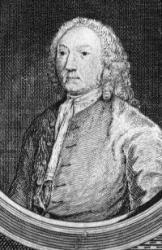
1698 - 1768 Person Name: W. Knapp, 1698-1768 Topics: For Use at Sea Composer of "WAREHAM" in Church Hymns Born: 1698, Wareham, Dorsetshire, England.
Died: September 26, 1768, Poole, Dorsetshire, England.
Buried: Poole, Dorsetshire, England.
William Knapp
John Baptiste Calkin
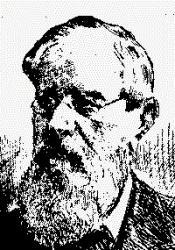
1827 - 1905 Person Name: J. Baptiste Calkin Topics: The Sea Composer of "WALTHAM" in The Psalter John Baptiste Calkin United Kingdom 1827-1905. Born in London, he was reared in a musical atmosphere. Studying music under his father, and with three brothers, he became a composer, organist, and music teacher. At 19, he was appointed organist, precenter, and choirmaster at St. Columbia's College, Dublin, Ireland, 1846 to 1853. From 1853 to 1863 we was organist and choirmaster at Woburn Chapel, London. From 1863 to 1868, he was organist of Camden Road Chapel. From 1870 to 1884 he was organist at St. Thomas's Church, Camden Town. In 1883 he became professor at Guildhall School of Music and concentrated on teaching and composing. He was also a professor of music and on the council of Trinity College, London, and a member of the Philharmonic Society (1862). In 1893 he was a fellow of the College of Organists. John and wife, Victoire, had four sons, each following a musical carer. He wrote much music for organ and scored string arrangements, sonatas, duos, etc. He died at Hornsey Rise Gardens.
John Perry
John Baptiste Calkin
Melchior Vulpius
1570 - 1615 Person Name: Melchior Vulpius, 1560-1616 Topics: Travelers on Land or Sea Composer of "WEIMAR (HEIDELBERG)" in Hymnal and Liturgies of the Moravian Church Born into a poor family named Fuchs, Melchior Vulpius (b. Wasungen, Henneberg, Germany, c. 1570; d. Weimar, Germany, 1615) had only limited educational opportunities and did not attend the university. He taught Latin in the school in Schleusingen, where he Latinized his surname, and from 1596 until his death served as a Lutheran cantor and teacher in Weimar. A distinguished composer, Vulpius wrote a St. Matthew Passion (1613), nearly two hundred motets in German and Latin, and over four hundred hymn tunes, many of which became popular in Lutheran churches, and some of which introduced the lively Italian balletto rhythms into the German hymn tunes. His music was published in Cantiones Sacrae (1602, 1604), Kirchengesangund Geistliche Lieder (1604, enlarged as Ein schon geistlich Gesanglmch, 1609), and posthumously in Cantionale Sacrum (1646).
Bert Polman
Melchior Vulpius
W. H. Jude
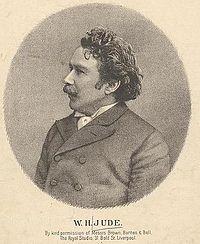
1851 - 1922 Person Name: William Herbert Jude, 1857-1922 Topics: Sea / Ocean Composer of "GALILEE" in The Book of Praise William Herbert Jude United Kingdom 1851-1922. Born at Westleton, Suffolk, England, his family moved to Norfolk. A precocious child, by age eight he was composing music for school plays. Educated at the Liverpool Organ School and East Liverpool College of Music, he became college principal for awhile. He married Catherine Helena Haigh. They had no children. He became a composer, editor, and organist. He was organist for the Blue Coat Hospital & School and Stretford Town Hall near Manchester, while teaching and lecturing. After 20 years there he was appointed organist at the Exeter Hall in London, a primary venue and Christian Centre owned by the YMCA on the Strand in London. As a recitalist, he was asked to “open” over 1000 new organs across the UK, Ireland, and Australia. He was considered the most brilliant organist of his day. He wrote at least two operettas: “Innocents abroad” (1882) and “The mighty deep” (1917). His compositions were frequently religious. He admired British evangelist, Rodney “Gipsy” Smith and published a collection of Smith’s favorite solos in 1903. He also supported the temperance movement. He toured Australia and New Zealand 1890-1894. In 1904 he served as editor for several musical periodicals, including “Monthly Hymnal”, “Minister of music”, and “The Higher life”. He also compiled several hymnbooks, including “Mission hymns” (1911”), and “Festival hymns” (1916). He wrote a number of works on music. He died in London.
John Perry
W. H. Jude
Michael Perry
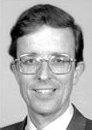
1942 - 1996 Person Name: Michael Perry 1942-96 Topics: Sea Author of "Who can bind the raging sea" in Praise! psalms hymns and songs for Christian worship Initially studying mathematics and physics at Dulwich College, Michael A. Perry (b. Beckenham, Kent, England, 1942; d. England, 1996) was headed for a career in the sciences. However, after one year of study in physics at the University of London, he transferred to Oak Hill College to study theology. He also studied at Ridley Hall, Cambridge, and received a M.Phil. from the University of Southhampton in 1973. Ordained a priest in the Church of England in 1966, Perry served the parish of St. Helen's in Liverpool as a youth worker and evangelist. From 1972 to 1981 he was the vicar of Bitterne in Southhampton and from 1981 to 1989, rector of Eversley in Hampshire and chaplain at the Police Staff College. He then became vicar of Tonbridge in Kent, where he remained until his death from a brain tumor in 1996. Perry published widely in the areas of Bible study and worship. He edited Jubilate publications such as Hymns far Today's Church (1982), Carols for Today (1986), Come Rejoice! (1989), and Psalms for Today (1990). Composer of the musical drama Coming Home (1987), he also wrote more than two hundred hymns and Bible versifications.
Bert Polman
Michael Perry
Fanny Crosby
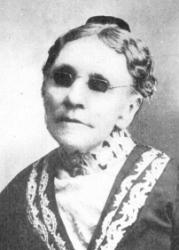
1820 - 1915 Person Name: Mrs. Fanny Jane (Crosby) Van Alstyne, 1823- Topics: Life Like the Sea Author of "Rocked on a stormy sea" in The Sunday School Hymnal Pseudonymns: A.V., Mrs. A. E. Andrews, Mrs. E. A. Andrews, Mrs. E. L. Andrews, James L. Black, Henrietta E. Blair, Charles Bruce, Robert Bruce, Leah Carlton, Eleanor Craddock, Lyman G. Cuyler, D.H.W., Ella Dare, Ellen Dare, Mrs. Ellen Douglass, Lizzie Edwards. Miss Grace Elliot, Grace J. Frances, Victoria Frances, Jennie Garnett, Frank Gould, H. D. K., Frances Hope, Annie L. James, Martha J. Lankton [Langton], Grace Lindsey, Maud Marion, Sallie Martin, Wilson Meade, Alice Monteith, Martha C. Oliver, Mrs. N. D. Plume, Kate Smiley, Sallie Smith, J. L. Sterling, John Sterling, Julia Sterling, Anna C. Storey, Victoria Stuart, Ida Scott Taylor, Mary R. Tilden, Mrs. J. B. Thresher, Hope Tryaway, Grace Tureman, Carrie M. Wilson, W.H.D.
Frances Jane Crosby, the daughter of John and Mercy Crosby, was born in Southeast, Putnam County, N. Y., March 24, 1820. She became blind at the age of six weeks from maltreatment of her eyes during a spell of sickness. When she was eight years old she moved with her parents to Ridgefield, Conn., the family remaining there four years. At the age of fifteen she entered the New York Institution for the Blind, where she received a good education. She became a teacher in the institution in 1847, and continued her work until March 1, 1858. She taught English grammar, rhetoric and American history.
This was the great developing period in her life. During the vacations of 1852 and 1853, spent at North Reading, Mass., she wrote the words to many songs for Dr. Geo. F. Root, then the teacher of music at the blind institution. Among them were, "Hazel Dell,", "The Honeysuckle Glen," "Rosalie, the Prairie Flower," "Music in the Air," "Proud World, Good-bye, I'm Going Home," "All Together", "Never Forget the Dear Ones," and others. Subsequently she wrote the words for the cantatas of The Flower Queen and The Pilgrim Fathers, all of which were very popular in their day, though it was not generally known at the time that she was the author.
While teaching at the institution she met Presidents Van Buren and Tyler, Hon. Henry Clay, Governor Wm. H. Seward, General Winfield Scott, and other distinguished characters of American history. Concerning Mr. Clay, she gives the following: "When Mr. Clay came to the institution during his last visit to New York, I was selected to welcome him with a poem. Six months before he had lost a son at the battle of Monterey, and I had sent him some verses. In my address I carefully avoided any allusion to them, in order not to wound him. When I had finished he drew my arm in his, and, addressing the audience, said through his tears: 'This is not the first poem for which I am indebted to this lady. Six months ago she sent me some lines on the death of my dear son.' Both of us were overcome for a few moments. Soon, by a splendid effort, Mr. Clay recovered himself, but I could not control my tears." In connection with her meeting these notable men, we might add that Miss Fanny Crosby had the honor of being the first woman whose voice was heard publicly in the Senate Chamber at Washington. She read a poem there on one occasion. In addition to the thousands of hymns that she has written (about eight thousand poems in all), many of which have not been set to music, she has published four volumes of verses. The first was issued in 1844 and was entitled The Blind Girl, and Other Poems, a second volume, Monterey, and Other Poems, followed in 1849, and the third, A Wreath of Columbia's Flowers, in 1858. The fourth, Bells at Evening and Other Verses, with a biographical sketch by Rev. Robert Lowry, and a fine half-tone portrait, in 1897, the sales of which have reached a fourth edition. The book is published by The Biglow & Main Co., New York.
Though these show the poetical bent of her mind, they have little to do with her world-wide fame. It is as a writer of Sunday-school songs and gospel hymns that she is known wherever the English language is spoken, and, in fact, wherever any other language is heard.
Fanny was married March 5, 1858, to Alex. Van Alstyne, who was also a scholar in the same institution in which she was educated.
She began to write Sunday-school hymns for Wm. B. Bradbury in 1864. Her first hymn,
"We are going, we are going
To a home beyond the skies",
was written at the Ponton Hotel on Franklin Street, New York City, on February 5th of that year. This hymn was sung at Mr. Bradbury's funeral in January, 1868. Since 1864 she supported herself by writing hymns. She resided in New York City nearly all her life, where, she says, she is "a member of the Old John Street M. E. Church in good standing." She spent regular hours on certain days at the office of The Biglow & Main Co., the firm for which she did most of her writing, and for whom she has composed over four thousand hymns. Her hymns have been in great demand and have been used by many of our most popular composers, among whom may be mentioned Wm. B. Bradbury, Geo. F. Root, W. H. Doane, Rev. Robert Lowry, Ira D. Sankey, J. R. Sweney, W. J. Kirkpatrick, H. P. Main, H. P. Danks, Philip Phillips, B. G. Unseld, and others. She could compose at any time and did not need to wait for any special inspiration, and her best hymns have come on the spur of the moment. She always composed with an open book in her hand, generally a copy of Golden Hymns, held closely over her eyes, bottom side up. She learned to play on the guitar and piano while at the institution, and has a clear soprano voice. She also received a technical training in music, and for this reason she could, and did, compose airs for some of her hymns. One of these is,
"Jesus, dear, I come to Thee,
Thou hast said I may,"
both words and music of which are wonderfully sweet. "Safe in the arms of Jesus", probably one of her best known hymns, was her own favorite. Fanny loved her work, and was happy in it. She was always ready either to sympathize or join in a mirthful conversation, as the case may be. The secret of this contentment dates from her first composition at the age of eight years. "It has been the motto of my life," she says. It is:
"O what a happy soul am I!
Although I cannot see,
I am resolved that in this world
Contented I will be;"
This has continued to be her philosophy. She says that had it not been for her affliction she might not have so good an education, nor so great an influence, and certainly not so fine a memory. She knows a great many portions of the Bible by heart, and had committed to memory the first four books of the Old Testament, and also the four Gospels before she was ten years of age.
Her scope of subjects is wide, embracing everything from a contemplation of heaven, as in "The Bright Forever" and "The Blessed Homeland", to an appeal to the work of this world, as in "To the Work" and "Rescue the Perishing." The most of Fanny's published hymns have appeared under the name of Fanny J. Crosby or Mrs. Yan Alstyne, but quite a large number have appeared under the nom de plumes of Grace J. Frances, Mrs. C. M. Wilson, Lizzie Edwards, Ella Dale, Henrietta E. Blair, Rose Atherton, Maud Marion, Leah Carlton, nearly two hundred different names.
-Biographies of Gospel Song and Hymn Writers (excerpts)
=======================
Van Alstyne, Frances Jane, née Crosby, a member of the Methodist Episcopal Church, was born at South East, Putnam County, New York, March 24, 1823. When six weeks old she lost her sight. About 1835 she entered the New York City Institution for the Blind. On completing her training she became a teacher therein from 1847 to 1858. In 1858 she was married to Alexander Van Alstyne, a musician, who was also blind. Her first poem was published in 1831; and her first volumes of verse as A Blind Girl, and Other Poems, 1844; Monteresy, and Other Poems, 1849; and A Wreath of Columbia's Flowers, 1858. Her first hymn was "We are going, we are going" (Death and Burial), which was written for Mr. Bradbury and published in the Golden Censer, 1864. From 1853 to 1858 she wrote 20 songs, which were set to music by G. F. Root. Her songs and hymns number some 2,000 or more, and have been published mainly in several of the popular American Sunday school collections, and often under a nom de plume. About 60 have come into common use in Great Britain. The majority of these are taken from the following American collections:—
i. From The Shining Star, 1864.
1. Softly on the breath of evening. Evening.
ii. From Fresh Laurels, 1867.
2. Beautiful Mansions, home of the blest. Heaven.
3. Jesus the Water of Life has given. The Water of Life.
4. Light and Comfort of my soul. In Affliction.
5. There's a cry from Macedonia. Missions.
6. We are marching on with shield and banner bright. Sunday School Anniversary.
iii. From Musical Leaves, 1868.
7. 0 what are you going to do, brother? Youth for God.
iv. From Sabbath Carols, 1868.
8. Dark is the night, and cold the wind is blowing. Affliction anticipated.
9. Lord, at Thy mercy seat, Humbly I fall. Lent.
v. From Silver Spray, 1868.
10. If I come to Jesus, He will make me glad. Peace in Jesus.
11. 'Twill not be long—our journey here. Heaven anticipated.
vi. From Notes of Joy, 1869.
12. Little beams of rosy light. The Divine Father.
13. Press on! press on! a glorious throng. Pressing towards the Prize.
vii. From Bright Jewels, 1869.
14. Christ the Lord is risen today, He is risen indeed. Easter.
15. Holy, holy, holy is the Lord! Sing 0 ye people, &c. Holiness of God.
16. Jesus, keep me near the Cross. Near the Cross of Christ.
17. Saviour, bless a little child. A Child's Prayer. Written Feb. 6, 1869.
viii. From Songs of Devotion, 1870.
18. Pass me not, 0 gentle Saviour. Lent. Written in 1868.
19. Rescue the perishing, care for the dying. Home Missions.
ix. From Pure Gold, 1871.
20. Great is Jehovah. King of kings. Greatness of God.
21. I would be Thy little lamb. The Good Shepherd.
22. Lead me to Jesus, lead me to Jesus. Desiring Jesus.
23. To the work, to the work, we are servants of God. Home Missions.
24. Why labour for treasures that rust and decay? The Fadeless Crown.
x. From the Royal Diadem, 1873.
25. I am Jesus' little friend. For Infant Schools.
26. Jesus I love Thee. Loving Jesus.
27. Mourner, wheresoe'er thou art. To the Sorrowing and Penitent. Written Oct. 3, 1871.
28. Never be faint or weary. Joy in Jesus.
29. Only a step to Jesus. Invitation.
xi. From Winnowed Hymns, 1873-4.
30. Loving Saviour, hear my cry. Lent.
xii. From Echoes of Zion, 1874.
31. Say, where is thy refuge, my brother? Home Missions.
xiii. From Songs of Grace and Glory, 1874.
32. Thou my everlasting Portion. Christ the Portion of His People.
xiv. From Brightest and Best, 1875.
33. All the way my Saviour leads me. Jesus the Guide.
34. I am Thine, O Lord: I have heard Thy voice. Holiness desired.
35. O come to the Saviour, believe in His name. Invitation. Written, Sep. 7, 1874.
36. O how sweet when we mingle. Communion of Saints. Written in 1866.
37. O my Saviour, hear me. Prayer to Jesus for blessing and love.
38. Only Jesus feels and knows. Jesus the Divine Friend.
39. Revive Thy work, O Lord. Home Missions.
40. Saviour, more than life to me. Jesus All and in All.
41. To God be the glory, great things He hath done. Praise for Redemption.
xv. From Calvary Songs, 1875.
42. Come, O come with thy broken heart. Invitation.
xvi. From Gospel Music, 1876.
43. Here from the world we turn. Divine Worship.
44. When Jesus comes to reward His servants. Watching,
xvii. From Welcome Tidings, 1877.
45. O hear my cry, be gracious now to me. For Pardon and Peace.
xviii. From The Fountain of Song, 1877.
46. Lord, my trust I repose on Thee. Trusting in Jesus.
xix. From Good as Gold, 1880.
47. In Thy cleft, O Rock of Ages. Safety in Jesus.
48. Sound the alarm ! let the watchman cry. Home Missions.
49. Tenderly He leads us. Christ the Leader.
50. 'Tis the blessed hour of prayer. The Hour of Prayer.
In addition to these hymns, all of which are in common use in Great Britain (mainly through I. D. Sankey's Sacred Songs and Solos, the Methodist Sunday School Hymn Book, the Silver Street Sunday Scholars Companion, and other collections for Sunday schools), there are also "A blessing for you, will you take it?" (Pardon through Jesus); "My song shall be of Jesus" (Praise of Jesus); “Now, just a word for Jesus"(Home Missions); "Onward, upward, Christian soldier" (Pressing Heavenward); 44 Sinner, how thy heart is troubled" (Invitation); "'Tis a goodly, pleasant land" (Heaven anticipated); and "When the dewy light was fading" (Death anticipated). All of these are in I. D. Sankey's Sacred Songs & Solos. Mrs. Van Alstyne's most popular composition is "Safe in the arms of Jesus" (Safety in Jesus). This was written in 1868, at the request of Mr. W. H. Doane, to his well-known melody with which it is inseparably associated, and published in Bright Jewels, 1869. Mrs. Van Alstyne's hymns have sometimes been published anonymously; but the greater part are signed by a bewildering number of initials.
The combined sales of the volumes of songs and hymns named above have amounted in English-speaking countries to millions of copies. Notwithstanding the immense circulation thus given to Mrs. Van Alstyne's hymns, they are, with few exceptions, very weak and poor, their simplicity and earnestness being their redeeming features. Their popularity is largely due to the melodies to which they are wedded.
Since the above was in type we have found that the following are also in common use in Great Britain:—
51. Suppose the little cowslip. Value of Little Things.
52. Sweet hour of prayer. The Hour of Prayer. These are in Bradbury's Golden Chain, 1861.
53. Never lose the golden rule. Love to our Neighbours. In Bradbury's Golden Censer, 1864.
54. I will not be afraid at night. Trust in God. In Bradbury's Fresh Laurels, 1867.
55. Praise Him, praise Him, Jesus our, &c. Praise of Jesus. In Biglow & Main's Bright Jewels, 1869.
56. More like Jesus would I be. More like Jesus. In Perkins & Taylor's Songs of Salvation, 1870.
57. Behold me standing at the door. Christ at the Door. In Biglow & Main's Christian Songs, 1872.
58. If I come to Jesus. Jesus the Children's Guide.
59. Jesus, Lord, I come to Thee. Trust in Jesus.
60. Let me learn of Jesus. Jesus the Children's Friend.
61. Singing for Jesus, O singing for Jesus. Singing for Jesus.
62. There is a Name divinely sweet Holy Name of Jesus.
Of these hymns Nos. 58-62 we have not been able to trace.
--Excerpts from John Julian, Dictionary of Hymnology (1907
================
Van Alstyne, Frances J., p. 1203, ii. From the American collections of recent date we find that Mrs. Van Alstyne is still actively engaged in hymn-writing. In the Funk and Wagnalls Company Gloria Deo, 1903, there are about 30 of her hymns, most of which are new. They are all signed, and some are dated, but we have not space to quote the first lines and subjects, as this hymnal is not an official collection of any denomination. Another name, "Mrs. S. K. Bourne" is credited in the same hymnal with about 40 new hymns. If this signature is not another pen-name of Mrs. Van Alstyne's (and these pen-names and initials of hers are very numerous), we can only say that she has a very successful understudy in "Mrs. S. K. Bourne."
--John Julian, Dictionary of Hymnology, New Supplement (1907)
Fanny Crosby
Joseph P. Holbrook
1822 - 1888 Topics: The Sea Composer of "CLINTON" in The Psalter Joseph P. Holbrook was a tune writer in the parlor music style, and used the popular melodies of Mason and Hastings, Bradbury and Root, Greatorex and Kingsley in his collections. He furnished settings for the choir hymns in Songs for the Sanctuary in his Quartet and chorus Choir (New York, 1871, and sought more recogniation than had been given him in a hymnal of his own, Worship in Song (New York, 1880); a book that found no welcome.
from The English hymn: its development and use in worship
By Louis FitzGerald Benson
Joseph P. Holbrook
Pages




