You help make Hymnary.org possible. More than 10 million people from 200+ countries found hymns, liturgical resources and encouragement on Hymnary.org in 2025, including you. Every visit affirms the global impact of this ministry.

If Hymnary has been meaningful to you this year, would you take a moment today to help sustain it? A gift of any size—paired with a note of encouragement if you wish—directly supports the server costs, research work and curation that keep this resource freely available to the world.

Give securely online today, or mail a check to:
Hymnary.org
Calvin University
3201 Burton Street SE
Grand Rapids, MI 49546

Thank you for your partnership, and may the hope of Advent fill your heart.

Person Results

Topics:the+holy+scriptures
In:people

Planning worship? Check out our sister site, ZeteoSearch.org, for 20+ additional resources related to your search.
Showing 121 - 130 of 313Results Per Page: 102050

Jackson Mason

1833 - 1888 Topics: Holy Scriptures Translator of "Come sing, ye choirs exultant" in The Hymnal of the Protestant Episcopal Church in the United States of America 1940 Mason, Jackson, M.A., son of William Mason, Vicar of Normanton, was born at Normanton Vicarage, in 1833; and educated at Trinity College, Cambridge; B.A. 1856. Ordained in 1858, he was Curate of Cantley, Yorkshire, 1858-59; Vicar of Pickhill, 1859-83; and Vicar of Settle from 1883 to his death, 1889. His Rhythm of Bernard de Morlaix, in English, was published in 1880. This work also contains translations of a few Latin hymns. To the 1889 Supplemental Hymns to Hymns Ancient & Modern, he contributed four translations from the Latin, one from the Greek, and the following original hymns:— (1) "Forty days Thy seer of old." (Easter.) (2) "O Voice of the Beloved." (Easter.) --John Julian, Dictionary of Hymnology, Appendix, Part II (1907)

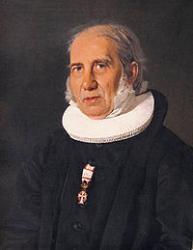
N. F. S. Grundtvig

1783 - 1872 Person Name: Nikolai F. S. Grundtvig, 1783 - 1872 Topics: The Holy Scriptures Author of "God's word is our great heritage" in Service Book and Hymnal of the Lutheran Church in America Nicolai Frederik Severin Grundtvig was the son of a pastor, and was born at Udby, in Seeland, in 1783. He studied in the University of Copenhagen from 1800-1805; and, like some other eminent men, did not greatly distinguish himself; his mind was too active and his imagination too versatile to bear the restraint of the academic course. After leaving the university he took to teaching; first in Langeland, then (1808) in Copenhagen. Here he devoted his attention to poetry, literature, and Northern antiquities. In 1810 he became assistant to his father in a parish in Jutland. The sermon he preached at his ordination, on the subject "Why has the Lord's word disappeared from His house," attracted much attention, which is rarely the case with "probationers'" sermons. On his father's death, in 1813, he returned to Copenhagen, and for eight years devoted himself mainly to literature. The poetry, both secular and religious, that he produced, drew from a friend the remark that "Kingo's harp had been strung afresh." In 1821 King Frederik vi. appointed him pastor of Prasloe, a parish in Seeland, from which he was the next year removed to Copenhagen, and made chaplain of St. Saviour's church in Christianshavn. From the time of his ordination he had been deeply impressed with Evangelical church sentiments, in opposition to the fashionable Rationalism and Erastianism of the day; and adhered to the anti-rationalist teaching of Hauge, whose death at this time (1824) seemed to be a call to Grundtvig to lift up his voice. An opportunity soon presented itself; Professor Clausen brought out a book entitled Katholicismens og Protestantismens Forfatning, Ldre, og Ritus ("The condition, teaching, and ritual of Catholicism and Protestantism"). This book was replete with the Erastian Rationalism which was so especially distasteful to Grundtvig, who forthwith, in his Kirkens Gjenmsele ("The Church's Reply," 1825), strongly opposed its teaching, and laid down truer principles of Christian belief, and sounder views of the nature of the Church. This caused a sensation: Grandtvig (who had not spared his opponent) was fined 100 rixdollars, and the songs and hymns which he had written for the coming celebration of the tenth centenary of Northern Christianity were forbidden to be used. On this he resigned his post at St. Saviour's, or rather was forced to quit it by a sentence of suspension which was pronounced in 1826, and under which he was kept for 13 years. He took the opportunity of visiting England in 1829, 30, and 31, and consulting its libraries, mainly with a view to a further insight into Northern antiquities, and to help his studies in the early English tongue. His edition of Cynewulfs beautiful poem of the Phenix from the Codex Exoniensis, the Anglo-Saxon (so-called) text, with a preface in Danish, and a fri Fordanskning (free rendering in Danish), published in 1840*, is a result of this journey and enforced leisure. Tired of his long silence, his numerous friends and admirers proposed to erect a church for him, and form themselves into an independent congregation, but this was not permitted. He was allowed, however, to hold an afternoon service in the German church at Christianshavn. There ho preached for eight years, and compiled and wrote his hymn-book, Sang-Vdrk til den Danske Kirkce ("Song-work for the Danish Church"). He still worked on towards his object of raising the Christian body to which ho belonged from the condition of a mere slate establishment to the dignity of a gospel-teaching national church. In 1839 (the year of the death of King Frederik vr., and the accession of his cousin Chrisliem vni.) the suspension was removed, and he was appointed chaplain of the hospital Vartou, a position which he held till his death. In 1863 the king (Frederik vn.) conferred on him the honorary title of bishop. The good old man died suddenly, in his 89th year, on Sept. 2, 1872, having officiated the day before. As Kingo is the poet of Easter, and Brorson of Christmas, so Grundtvig is spoken of as the poet of Whitsuntide. --John Julian, Dictionary of Hymnology,, p. 1001 (1907)

Alan Price

b. 1948 Person Name: Captain Alan Price Topics: The Holy Spirit The Holy Spirit in the Church - Illumination of God's Word; Scripture Author of "Is it spooky, is it weird" in Church Hymnary (4th ed.) Alan John Price

Christopher Norton

b. 1953 Topics: The Godhead God the Father; The Godhead Jesus - God the Son; The Godhead The Holy Spirit; The Godhead The Trinity; The Church of Jesus Christ The Scriptures Arranger of "EBENEZER" in Complete Mission Praise

Michael Perry

1942 - 1996 Topics: The Book of the Church : Holy Scripture Author of "How Shall They Hear the Word of God" in The United Methodist Hymnal Initially studying mathematics and physics at Dulwich College, Michael A. Perry (b. Beckenham, Kent, England, 1942; d. England, 1996) was headed for a career in the sciences. However, after one year of study in physics at the University of London, he transferred to Oak Hill College to study theology. He also studied at Ridley Hall, Cambridge, and received a M.Phil. from the University of Southhampton in 1973. Ordained a priest in the Church of England in 1966, Perry served the parish of St. Helen's in Liverpool as a youth worker and evangelist. From 1972 to 1981 he was the vicar of Bitterne in Southhampton and from 1981 to 1989, rector of Eversley in Hampshire and chaplain at the Police Staff College. He then became vicar of Tonbridge in Kent, where he remained until his death from a brain tumor in 1996. Perry published widely in the areas of Bible study and worship. He edited Jubilate publications such as Hymns far Today's Church (1982), Carols for Today (1986), Come Rejoice! (1989), and Psalms for Today (1990). Composer of the musical drama Coming Home (1987), he also wrote more than two hundred hymns and Bible versifications. Bert Polman

Antoinette Bourignon

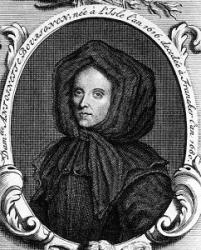
1616 - 1680 Person Name: Madame Bourignon Topics: Christian Ordinances and Institutions - The Holy Scriptures Author of "Come, O thou Prophet of the Lord" in Methodist Hymn-Book Bourignon, Antoinette, was born at Lisle in 1616. From a very early period she was under the influence of religion, which took, in course of time, a mystical turn. Undertaking the work of a religious reformer, she visited France, Holland, England, and Scotland; and published several works dealing with The Testimony of Truth; The Renovation of the Gospel Spirit, &c. Her enthusiasm, peculiarity of views, and disregard of all sects raised on the one hand zealous persecutors, and on the other warm adherents. At her death at Franeker, in Friesland, Oct. 30, 1680, she left a large number of followers, especially in Scotland and France. Her works were published in 19 vols. at Amsterdam, 1686. She is known to hymnology through her hymn, "Venez Jesus, mon salutaire" (q.v.). -- John Julian, Dictionary of Hymnology (1907)

Giovanni Pierluigi da Palestrina

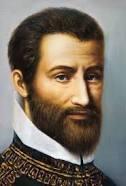
1525 - 1594 Person Name: Palestrina, c. 1524-1594 Topics: God: His Attributes, Works and Word The Holy Scriptures; Hymns for the Young The Holy Scriptures Composer of "PALESTRINA" in The Book of Praise Giovanni Pierluigi (da Palestrina) Italy 1525-1594. Born at Palestrina, Italy, near Rome, then part of the Papal States to Neopolitan parents. As a youth he became a chorister at the Santa Maria Maggiore basilica in the Rome Diocese. This allowed him to learn literature and music. In 1540 he moved to Rome, where he studied in the school ofr the Hugenot, Claude Goudimel. He also studied with Robin Mallapert and Firmin Lebel. Orlando Di Lasso was also a musical advisor to him. From 1544-1551 he was organist at the Cathedral of St Agapito, the principle church of his native city. In 1547 he married Lucrezia Gori, and they had four children: Rodolfo, Angelo, Iginio, and a daughter. In 1551 Pope Julius III (previously Bishop of Palestrina) appointed him ‘maestro di cappella’, or musical director of the Cappella Giulia (choir). Pierluigi dedicated his first published compositions to Pope Julius III (1554), known as ‘the book of Masses’. It was the first book of masses by a native composer, since most sacred works in those days were from low countries (France or Spain). In 1555 Pope Paul IV ordered that all papal choristers should be clerical. As Pierluigi married early in life and had four children, he was unable to continue in the chapel as a layman. During the next decade he held positions similar to his Julian Chapel appointment at other chapels and churches in Rome, including St John Lateran (1555-1560), and Santa Maria Maggiore (1561-1566). In 1571 he returned to the Julian Chapel and remained at St Peter’s for the rest of his life. The 1570s was a decade of difficulty for him, as he lost his brother, two sons, and his wife in three separate outbreaks of plague (1572-1575-1580). In 1578 he was given the title of ‘Master of Music’ at the Vatican Basilica. He thought of becoming a priest at this time, but instead married a wealthy widow, Virginia Formoli, in 1581, widow of a wealthy merchant, which gave him financial independence (he was not well-paid as choirmaster). He spent considerable time administering to her fortune, but also was able to compose prolifically until his death. He also helped to found an association of professional musicians called the Vertuosa Compagnia dei Musici. He died in Rome of pleurisy. He left hundreds of compositions, including 1045 masses, 68 offertories, 140 madrigals, 300+ motets, 72 hymns, 35 magnificats, 11 litanies and several sets of lamentations. There are two comprehensive editions of his works: a 33-volume edition published by Breitkopf and Hartel, in Leigzig, Germany, between 1862-1894, edited by Franz Xaver Habert, and a 34-volume edition published in the mid 20th century by Fratelli Scalera, in Rome, Italy, edited by R Casimiri and others. As a Renaissance musician and composer of sacred music he was the best known 16th century representative of the Roman School of musical composition. He had a long-lasting influence on the development of church and secular music in Europe, especially on the development of counterpoint, his work considered the culmination of Renaissance polyphony. Very famous in his day, he was considered by some the legendary ‘savior of church music’. A 2009 film was produced by German television about him, titled: ‘Palestrina – Prince of Music’. John Perry

Johann Rudolf Ahle

1625 - 1673 Person Name: Johann Rudolph Able, 1625-1673 Topics: God: His Being, Word and Works The Holy Scriptures Composer (Melody, adapted) of "LIEBSTER JESU" in The Book of Praise Johann Rudolph Ahle, b. Mühlhausen, 1625; Ahle studied theology at Erfurt University. Little is known about his musical education, but be became well known as an organist while he was in Erfurt. He returned to Mühlhausen and became an organist at St. Blasius Church, he composed organ music but is know for his sacred choral music. He was the father of Johann Georg, who was also a composer and succeeded his father as organist at St. Blasius Church. Johann Rudolf became mayor of Mühlhausen late in his life and died there in 1673. Dianne Shapiro (from Bach Cantatas Website www.bach-cantatas.com/Lib/Ahle-Johann-Rudolf.htm)

Samuel Sebastian Wesley

1810 - 1876 Person Name: Samuel S. Wesley Topics: The Holy Ghost Inspiration of the Holy Scriptures Composer of "AURELIA" in The Westminster Hymnal for congregational and social use and for the Sunday School Samuel Sebastian Wesley (b. London, England, 1810; d. Gloucester, England, 1876) was an English organist and composer. The grandson of Charles Wesley, he was born in London, and sang in the choir of the Chapel Royal as a boy. He learned composition and organ from his father, Samuel, completed a doctorate in music at Oxford, and composed for piano, organ, and choir. He was organist at Hereford Cathedral (1832-1835), Exeter Cathedral (1835-1842), Leeds Parish Church (1842­-1849), Winchester Cathedral (1849-1865), and Gloucester Cathedral (1865-1876). Wesley strove to improve the standards of church music and the status of church musicians; his observations and plans for reform were published as A Few Words on Cathedral Music and the Music System of the Church (1849). He was the musical editor of Charles Kemble's A Selection of Psalms and Hymns (1864) and of the Wellburn Appendix of Original Hymns and Tunes (1875) but is best known as the compiler of The European Psalmist (1872), in which some 130 of the 733 hymn tunes were written by him. Bert Polman

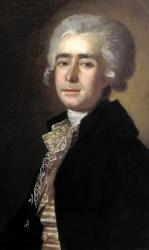
Dmitriĭ Stepanovich Bortnianskiĭ

1751 - 1825 Person Name: Dmitri Bortniansky, 1752-1825 Topics: The Holy Scriptures Composer of "ST. PETERSBURG" in Hymnal and Liturgies of the Moravian Church Dimitri Stepanovitch Bortniansky (1751-1825) Ukraine 1751-1825 Born in Glukhov, Ukraine, he joined the imperial choir at age 8 and studied with Galuppi, who later took the lad with him to Italy, where he studied for 10 years, becoming a composer, harpsichordist, and conductor. While in Italy he composed several operas and other instrumental music, composing more operas and music later in Russia. In 1779 he returned to Russia, where he was appointed Director to the Imperial Chapel Choir, the first as a native citizen. In 1796 he was appointed music director. With such a great instrument at his disposal, he produced many compositions, 100+ religious works, sacred concertos, cantatas, and hymns. He influenced Rachmaninoff and Tchaikovshy, the latter editing Bortniansky's sacred work, amassing 10 volumnes. He died in St. Petersburg. He was so popular in Russia that a bronze statue was erected in his honor in the Novgorod Kremlin. He composed in different musical styles, including choral works in French, Italian, Latin, German, and Church Slavonic. John Perry

Pages


Export as CSV
It looks like you are using an ad-blocker. Ad revenue helps keep us running. Please consider white-listing Hymnary.org or getting Hymnary Pro to eliminate ads entirely and help support Hymnary.org.