You help make Hymnary.org possible. More than 10 million people from 200+ countries found hymns, liturgical resources and encouragement on Hymnary.org in 2025, including you. Every visit affirms the global impact of this ministry.

If Hymnary has been meaningful to you this year, would you take a moment today to help sustain it? A gift of any size—paired with a note of encouragement if you wish—directly supports the server costs, research work and curation that keep this resource freely available to the world.

Give securely online today, or mail a check to:
Hymnary.org
Calvin University
3201 Burton Street SE
Grand Rapids, MI 49546

Thank you for your partnership, and may the hope of Advent fill your heart.

Person Results

Topics:advent+and+nativity
In:person

Planning worship? Check out our sister site, ZeteoSearch.org, for 20+ additional resources related to your search.
Showing 121 - 130 of 170Results Per Page: 102050

John Randall

1717 - 1799 Person Name: John Randall, 1715-1799 Topics: God The Lord Jesus Christ - His Advent and Nativity Composer of "LEWES" in The Hymnary of the United Church of Canada

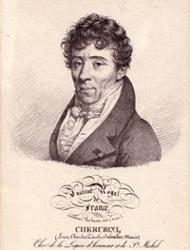
Maria Luigi Cherubini

1760 - 1842 Person Name: Maria L. Cherubini (1760-1842) Topics: The Lord Jesus Christ Advent and Nativity Composer of "DALLAS" in The Pilgrim Hymnal Luigi Cherubini (Italian: [luˈiːdʒi keruˈbiːni]; 8 or 14 September 1760 – 15 March 1842) was an Italian composer who spent most of his working life in France. His most significant compositions are operas and sacred music. Beethoven regarded Cherubini as the greatest of his contemporaries. Cherubini was born Maria Luigi Carlo Zenobio Salvatore Cherubini in Florence. There is uncertainty about his exact date of birth. Although 14 September is sometimes stated, evidence from baptismal records and Cherubini himself suggests the 8th is correct. Perhaps the strongest evidence is his first name, Maria, which is traditional for a child born on 8 September, feast-day of the Nativity of the Virgin. His instruction in music began at the age of six with his father, Bartolomeo, maestro al cembalo ("Master of the harpsichord", in other words, ensemble leader from the harpsichord). Considered a child prodigy, Cherubini studied counterpoint and dramatic style at an early age. By the time he was thirteen, he had composed several religious works. In 1780, he was awarded a scholarship by the Grand Duke of Tuscany to study music in Bologna and Milan. Cherubini's early opera serie used libretti by Apostolo Zeno, Metastasio (Pietro Trapassi), and others that adhered closely to standard dramatic conventions. His music was strongly influenced by Niccolò Jommelli, Tommaso Traetta, and Antonio Sacchini, who were the leading composers of the day. The first of his two comic works, Lo sposo di tre e marito di nessuna, premiered at a Venetian theater in November 1783. Feeling constrained by Italian traditions and eager to experiment, Cherubini traveled to London in 1785 where he produced two opere serie and an opera buffa for the King's Theater. In the same year, he made an excursion to Paris with his friend Giovanni Battista Viotti, who presented him to Marie Antoinette and Parisian society. Cherubini received an important commission to write Démophon to a French libretto by Jean-François Marmontel that would be his first tragédie en musique. Except for a brief return trip to London and to Turin for an opera seria commissioned by the King of the House of Savoy, Cherubini spent the rest of his life in France where he was initiated into Grand Orient de France "Saint-Jean de Palestine" Masonic Lodge in 1784. Title page of the first edition of Cherubini's Médée, full score, 1797. Cherubini adopted the French version of his name, Marie-Louis-Charles-Zénobi-Salvador Cherubini; this appears in all extant documents that show his full name after 1790, though his Italian name is favored nowadays. Performances of Démophon were favorably received at the Grand Opéra in 1788. With Viotti's help, the Théâtre de Monsieur in the Tuileries appointed Cherubini as its director in 1789. Three years later, after a move to the rue Feydeau and the fall of the monarchy, the company became known as the Théâtre Feydeau. This position gave Cherubini the opportunity to read countless libretti and choose one that best suited his temperament. Cherubini's music began to show more originality and daring. His first major success was Lodoïska (1791), which was admired for its realistic heroism. This was followed by Eliza (1794), set in the Swiss Alps, and Médée (1797), Cherubini's best-known work. Les deux journées (1800), in which Cherubini simplified his style, was a popular success. These and other operas were premièred at the Théâtre Feydeau or the Opéra-Comique. Feeling financially secure, he married Anne Cécile Tourette in 1794 and began a family of three children. The fallout from the French Revolution affected Cherubini until the end of his life. Politics forced him to hide his connections with the former aristocracy and seek governmental appointments. Although Napoléon found him too complex, Cherubini wrote at least one patriotic work per year for more than a decade. He was appointed Napoléon's director of music in Vienna for part of 1805 and 1806, whereupon he conducted several of his works in that city. After Les deux journées, Parisian audiences began to favor younger composers such as Boieldieu. Cherubini's opera-ballet Anacréon was an outright failure and most stage works after it did not achieve success. Faniska, produced in 1806, was an exception, receiving an enthusiastic response, in particular, by Haydn and Beethoven. Les Abencérages (1813), an heroic drama set in Spain during the last days of the Moorish kingdom of Granada, was Cherubini's attempt to compete with Spontini's La vestale; it received critical praise but few performances. Disappointed with his lack of acclaim in the theater, Cherubini turned increasingly to church music, writing seven masses, two requiems, and many shorter pieces. During this period (under the restored monarchy) he was appointed Surintendant de la Musique du Roi, a position he would hold until the fall of the Bourbon Dynasty. In 1815 London's Royal Philharmonic Society commissioned him to write a symphony, an overture, and a composition for chorus and orchestra, the performances of which he went especially to London to conduct, increasing his fame. Cherubini's Requiem in C minor (1816), commemorating the anniversary of the execution of King Louis XVI of France, was a huge success. The work was greatly admired by Beethoven, Schumann and Brahms. In 1836, Cherubini wrote a Requiem in D minor to be performed at his own funeral. It is for male choir only, as the religious authorities had criticised his use of female voices in the earlier work. In 1822, Cherubini became director of the Conservatoire and completed his textbook, Cours de contrepoint et de fugue, in 1835. His role at the Conservatoire would bring him into conflict with the young Hector Berlioz, who went on to portray the old composer in his memoirs as a crotchety pedant. Some critics, such as Basil Deane, maintain that Berlioz's depiction has distorted Cherubini's image with posterity. There are many allusions to Cherubini's personal irritability among his contemporaries; Adolphe Adam wrote, "some maintain his temper was very even, because he was always angry." Nevertheless, Cherubini had many friends, including Szymanowska, Rossini, Chopin and, above all, the artist Ingres. The two had mutual interests: Cherubini was a keen amateur painter and Ingres enjoyed practising the violin. In 1841, Ingres produced the most celebrated portrait of the old composer. Although chamber music does not make up a large portion of his output, what he did write was important. Wilhelm Altmann, writing in his Handbuch für Streichquartettspieler (Handbook for String Quartet Players) about Cherubini's six string quartets, states that they are first rate and regarded Nos. 1 and 3 as masterworks. His String Quintet for two violins, viola and two cellos is also considered a first rate work. During his life, Cherubini received France's highest and most prestigious honors. These included the Chevalier de la Légion d'honneur (1814) and Membre de l'Académie des Beaux-Arts (1815). In 1841, he was made Commandeur de la Légion d'honneur, the first musician to receive that title. Cherubini died in Paris at age 81 and is buried at Père Lachaise Cemetery, just four metres from his friend Chopin. His tomb was designed by the architect Achille Leclère and includes a figure by the sculptor Augustin-Alexandre Dumont representing "Music" crowning a bust of the composer with a wreath. --en.wikipedia.org/wiki/

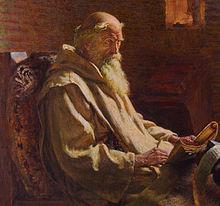
The Venerable Bede

673 - 735 Person Name: St. Bede the Venerable, 673-735 Topics: The Liturgical Year Advent (Sundays and Weekdays); The Liturgical Year The Nativity of St. John the Baptist (June 24) Author of "The Great Forerunner of the Morn" in Journeysongs (3rd ed.) Bede (b. circa 672-673; d. May 26, 735), also known as Saint Bede or the Venerable Bede, was an English monk at Northumbrian monastery at Monkwearmouth (now Jarrow). Sent to the monastery at the young age of seven, he became deacon very early on, and then a priest at the age of thirty. An author and scholar, he is particularly known for his Ecclesiastical History of the English People, which gained him the title “Father of English History.” He also wrote many scientific and theological works, as well as poetry and music. Bede is the only native of Great Britain to have ever been made a Doctor of the Church. He died on Ascension Day, May 26, 735, and was buried in Durham Cathedral. Laura de Jong ========================== Bede, Beda, or Baeda, the Venerable. This eminent and early scholar, grammarian, philosopher, poet, biographer, historian, and divine, was born in 673, near the place where, shortly afterwards, Benedict Biscop founded the sister monasteries of Wearmouth and Jarrow, on an estate conferred upon him by Ecgfrith, or Ecgfrid, king of Northumbria, possibly, as the Rev. S. Baring-Gould, Lives of the Saints (May), p. 399, suggests, "in the parish of Monkton, which appears to have been one of the earliest endowments of the monastery." His education was carried on at one or other of the monasteries under the care of Benedict Biscop until his death, and then of Ceolfrith, Benedict's successor, to such effect that at the early age of nineteen he was deemed worthy, for his learning and piety's sake, to be ordained deacon by St. John of Beverley, who was then bishop of Hexham, in 691 or 692. From the same prelate he received priest's orders ten years afterwards, in or about 702. The whole of his after-life he spent in study, dividing his time between the two monasteries, which were the only home he was ever to know, and in one of which (that of Jarrow) he died on May 26th, 735, and where his remains reposed until the 11th century, when they were removed to Durham, and re-interred in the same coffin as those of St. Cuthbett, where they were discovered in 1104. He was a voluminous author upon almost every subject, and as an historian his contribution to English history in the shape of his Historia Ecclesiastica is invaluable. But it is with him as a hymnist that we have to do here. I. In the list of his works, which Bede gives at the end of his Ecclesiastical History, he enumerates a Liber Hymnorum, containing hymns in “several sorts of metre or rhyme." The extant editions of this work are:— (1) Edited by Cassander, and published at Cologne, 1556; (2) in Wernsdorf's Poetae Latin Min., vol. ii. pp.239-244. II. Bede's contributions to the stores of hymnology were not large, consisting principally of 11 or at most 12 hymns; his authorship of some of these even is questioned by many good authorities. While we cannot look for the refined and mellifluous beauty of later Latin hymnists in the works of one who, like the Venerable Bede, lived in the infancy of ecclesiastical poetry; and while we must acknowledge the loss that such poetry sustains by the absence of rhyme from so many of the hymns, and the presence in some of what Dr. Neale calls such "frigid conceits" as the epanalepsis (as grammarians term it) where the first line of each stanza, as in "Hymnum canentes Martyrum," is repeated as the last; still the hymns with which we are dealing are not without their peculiar attractions. They are full of Scripture, and Bede was very fond of introducing the actual words of Scripture as part of his own composition, and often with great effect. That Bede was not free from the superstition of his time is certain, not only from his prose writings, but from such poems as his elegiac "Hymn on Virginity," written in praise and honour of Queen Etheldrida, the wife of King Ecgfrith, and inserted in his Ecclesiastical History, bk. iv., cap. xx. [Rev. Digby S. Wrangham, M.A.] -- Excerpts from John Julian, Dictionary of Hymnology (1907)

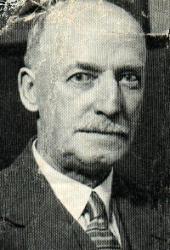
Francis Duckworth

1862 - 1941 Topics: God | The Lord Jesus Christ - His Advent and Nativity Composer of "RIMINGTON" in The Hymnary of the United Church of Canada Born: De­cem­ber 25, 1862, Rim­ing­ton, York­shire, Eng­land. Died: Au­gust 16, 1941, at his home Swan­side in Colne, Eng­land. Buried: St. Ma­ry the Vir­gin Ang­li­can Church, Gis­burn, Lan­ca­shire. His grave­stone bears the mu­sic of Rim­ing­ton, and a plaque to his mem­o­ry was placed above the door­way to the for­mer Meth­od­ist Cha­pel in Stop­per Lane, Lan­ca­shire. When Duck­worth was five years old, his fam­i­ly moved to the vil­lage of Stop­per Lane, near Rim­ing­ton. He had to leave school at age 12 to help in the fam­i­ly bus­i­ness. At age 20, he moved to Burn­ley, Lan­ca­shire, to work for a to­bac­co­nist cou­sin. Six years lat­er, he re­turned to live at Colne, and in 1899 took a gro­cery bus­i­ness in Mar­ket Street, Colne. Duckworth had an ear­ly in­ter­est in mu­sic, but re­ceived on­ly three months of for­mal les­sons. Short­ly af­ter ar­riv­ing in Colne, he be­came de­pu­ty or­gan­ist (lat­er or­gan­ist) at the Al­bert Road Meth­od­ist Church, serv­ing un­til 1929. He com­posed nu­mer­ous hymn tunes, 18 of them ap­pear­ing in the Rim­ing­ton Hym­nal. His tune Rim­ing­ton was sung by a mas­sive con­gre­ga­tion of Bri­tish troops on the Mount of Ol­ives af­ter the sur­ren­der of Je­ru­sa­lem dur­ing World War I. --www.hymntime.com/tch

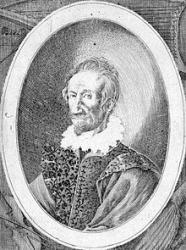
Claude Goudimel

1514 - 1572 Person Name: Claude Goudimel, ca. 1514-1472 Topics: The Liturgical Year Advent (Sundays and Weekdays); The Liturgical Year The Nativity of St. John the Baptist (June 24) Composer of "GENEVA 42" in Journeysongs (3rd ed.) The music of Claude Goudimel (b. Besançon, France, c. 1505; d. Lyons, France, 1572) was first published in Paris, and by 1551 he was composing harmonizations for some Genevan psalm tunes-initially for use by both Roman Catholics and Protestants. He became a Calvinist in 1557 while living in the Huguenot community in Metz. When the complete Genevan Psalter with its unison melodies was published in 1562, Goudimel began to compose various polyphonic settings of all the Genevan tunes. He actually composed three complete harmonizations of the Genevan Psalter, usually with the tune in the tenor part: simple hymn-style settings (1564), slightly more complicated harmonizations (1565), and quite elaborate, motet-like settings (1565-1566). The various Goudimel settings became popular throughout Calvinist Europe, both for domestic singing and later for use as organ harmonizations in church. Goudimel was one of the victims of the St. Bartholomew's Day massacre of Huguenots, which oc­curred throughout France. Bert Polman

Sir Ernest MacMillan

1893 - 1973 Person Name: Ernest MacMillan, 1893- Topics: God The Lord Jesus Christ - His Advent and Nativity Arranger of "IN DULCI JUBILO" in The Hymnary of the United Church of Canada Ernest MacMillan (Conductor) Born: August 18, 1893 - Mimico, Canada Died: May 6, 1973 - Toronto, Canada The eminent Canadian conductor and composer, Sir Ernest (Alexander Campbell) MacMillan, began his organ studies with Arthur Blakeley in Toronto at age 8, making his public debut at 10. He continued his organ studies with A. Hollins in Edinburgh from 1905 to 1908, where he was also admitted to the classes of F. Niecks and W.B. Ross at the University. Ernest MacMillan was made an associate (1907) and a fellow (1911) of London’s Royal College of Organists, and in 1911 received the extramural Bachelor of Music degree from the University of Oxford. He studied modern history at the University of Toronto from 1911 to 1914, before receiving piano instruction from Therese Chaigneau in Paris in 1914. In 1914 he attended the Bayreuth Festival, only to be interned as an enemy alien at the outbreak of World War I. While being held at the Ruhleben camp near Berlin, he gained experience as a conductor. He was awarded the B.A. degree in absentia by the University of Toronto in 1915. His ode, England, submitted through the Prisoners of War Education Committee to the University of Oxford, won him his Doctor of Music degree in 1918. After his release, Ernest MacMillan returned to Toronto as organist and choirmaster of Timothy Eaton Memorial Church from 1919 to 1925. In 1920 he joined the staff of the Canadian Academy of Music, and remained with it when it became the Toronto Conservatory of Music, serving from 1926 to 1942 as its principal. He was also dean of music faculty at the University of Toronto from 1927 to 1952. Ernest MacMillan was conductor of the Toronto Symphony Orchestra from 1931 to 1956, and of the Mendelssohn Choir there from 1942 to 1957. He also appeared as guest conductor in North and South America, Europe, and Australia. He served as president of the Canadian Music Council from 1947 to 1966, and of the Canadian Music Centre from 1959 to 1970. In 1935 he was the first Canadian musician to be knighted, an honour conferred upon him by King George V. He also received honorary doctorates from Canadian and USA institutions. He conducted many works new to his homeland, both traditional and contemporary. --www.bach-cantatas.com/

Geo. D. Elderkin

1845 - 1928 Person Name: George D. Elderkin Topics: Jesus Christ Advent and Nativity Adapter of "Jesus, the Light of the World (We'll Walk in the Light)" in African Methodist Episcopal Church Hymnal Almost nothing is known about George D. Elderkin (b. 1845; d. 1928). There was a George D. Elderkin Publishing Company in Chicago which published four collections of gospel hymns entitled The Finest of the Wheat. Book Three (1904) includes 259 songs, including music by both George D. and George W. Elderkin, “for prayer and evangelistic meetings, church and missionary services, Sunday schools and young people’s societies,” and was edited by Geo. D. Elderkin, C. C. McCabe, Wm. J. Kirkpatrick, H. L. Gilmour, G. W. Elderikn, and F. A. Hardon.” It was hardbound, and sold for 30 cents per copy, postpaid. Emily Brink

Johann Olearius

1611 - 1684 Person Name: Johann G. Olearius, 1611-1684 Topics: The Liturgical Year Advent (Sundays and Weekdays); The Liturgical Year The Nativity of St. John the Baptist (June 24) Author of "Comfort, Comfort, O My People" in Journeysongs (3rd ed.) Johannes Olearius (b. Halle, Germany, 1611; d. Weissenfels, Germany, 1684) Born into a family of Lutheran theologians, Olearius received his education at the University of Wittenberg and later taught theology there. He was ordained a Lutheran pastor and appointed court preacher to Duke August of Sachsen-Weissenfels in Halle and later to Duke Johann Adolph in Weissenfels. Olearius wrote a commentary on the entire Bible, published various devotional books, and produced a translation of the Imitatio Christi by Thomas a Kempis. In the history of church music Olearius is mainly remembered for his hymn collection, which was widely used in Lutheran churches. Bert Polman ======================= Olearius, Johannes, son of Johann Olearius, pastor of St. Mary's Church and superintendent at Halle, was born at Halle, Sept. 17, (N.S.) 1611. He entered the University of Wittenberg in 1629 (M.A. 1632, D.D. 1643], where he became lecturer, and, in 1635, adjunct of the philosophical faculty. In 1637 he became Superintendent at Querfurt; and, in 1643, was appointed by Duke August of Sachsen-Weissenfels as his chief court preacher, and private chaplain at Halle, where he became in 1657 Kirchenrath, and in 1664 General Superintendent. When, on the death of Duke August in 1680, the administration of Magdeburg fell to the Elector of Brandenburg, Duke Johann Adolf gave Olearius similar appointments at Weissenfels, which he held till his death on April 24, 1684 (Koch, iii. 346; Allgemeine Deutsche Biographie xxiv. 279, &c). Olearius was the author of a Commentary on the whole Bible, and of various devotional works. He was also the compiler of one of the largest and most important German hymn-books of the 17th century, viz. the Geistliche Singe-Kunst, of which the first edition appeared at Leipzig in 1671, with 1207 (1218) hymns, and the second at Leipzig in 1672, with 1340. The first edition contained 302 hymns by Olearius himself, and marked "D. J. O." They may best be described as useful, being for times and seasons hitherto unprovided for, and filling up many gaps in the various sections of the German hymn-books. They are mostly short, many of only two verses, simple and easy of comprehension, often happy in expression and catching, and embodying in a concise form the leading ideas of the season or subject. Many were speedily adopted into German hymn-books, and a considerable number are still in use. Of Olearius's hymns the following have passed into English:— i. Gelobet sei der Herr. Trinity Sunday. One of his best hymns. Founded on the Gospel for Trinity Sunday. Included in 1(571 as above, No. 709, in 5 stanzas of 8 lines, and entitled "Encouragement from the Gospel to thankful meditation on this great mystery." In the Berlin Geistliche Lieder ed. 1863, No. 17. Translated as:— 1. Blest be my Lord and God. A good translation, omitting st. v. by A. T. Russell, as No. 134, in his Psalms & Hymns 1851. 2. 0 praise the Lord! His name extol. A version of st. i.-iii., as No. 115 in the Ohio Lutheran Hymnal, 1880. ii. Herr Jesu Christ, dein theures Blut. Passiontide. His finest hymn. Founded on I St. John i. 7. In 1671 as above, No. 576, in 4 stanzas of 4 lines and entitled "Meditation on the Precious Blood of Jesus Christ." St. ii. is based on the hymn “In Christi Wunden schlaf ich ein" (p. 319, ii.). In the Berlin Geistliche Lieder, edition 1863, No. 233. Translated as:— 1. Lord Jesu Christ! Thy precious blood Brings to my soul. A good and full translation by A. T. Russell, as No. 161 in his Psalms & Hymns, 1851. 2. Lord Jesus Christ! Thy precious blood Is to my soul. In full by C. H. L. Schnette, as No. 77 in the Ohio Lutheran Hymnal, 1880. Another translation is "Lord Jesus Christ, Thy blessed blood." By Miss Manington, 1863, p. 43. iii. Herr, öffhe mir die Herzensthür. Holy Scripture. After Sermon. In 1671 as above, No. 975, in 2 stanzas and a doxology. In the Berlin Geistliche Lieder, ed. 1863, No. 422. The translation in common use is:— Lord, open Thou my heart to hear, And by Thy Word to me draw near. In full by Dr. M. Loy in the Ohio Lutheran Hymnal, 1880. iv. Nun kommt das neue Kirchenjahr. Advent. In 1671 as above, No. 384, in 3 stanzas and a doxology. In the Berlin Geistliche Lieder, ed. 1863, No. 145. The translation is:— The new Church year again is come. By E. Cronenwett, as No. 15 in the Ohio Lutheran Hymnal, l880. v. Tröstet, tröstet meine Lieben. St. John Baptist's Day. In 1671 as above, No. 733, in 4 stanzas of 8 lines, and entitled "Meditation on the Lesson of the Festival. Isaiah xl." In the Berlin Geistliche Lieder, ed. 1863, No. 124. Translated as:— Comfort, comfort ye my people. A full and good translation by Miss Winkworth, as No. 83 in her Chorale Book for England, 1863. Repeated in full in the Parish Hymn Book, 1865, and the Ohio Lutheran Hymnal, 1880, and, omitting st. ii. in the Pennsylvania Lutheran Church Book, 1868. Other hymns by Olearius have been translated into English, viz.:— vi. Gott Lob, mein Jesus macht mich rein. Presentation in the Temple. In 1671 as above, No. 507, as a hymn on the Purification in 6 stanzas, and entitled "Encouragement from the Gospel," viz. St. Luke ii. 22-32. In the Berlin Geistliche Lieder, ed. 1863, No. 1270. The form tr. is "Durch Jesum kann ich auch mit Freud," which is No. 428 in Knapp's Evangelischer Liederschatz, 1837, and is st. iv.-vi. altered. Translated as "I too, through Jesus, may in peace." By Dr. H. Mills, 1845 (1856, p. 277). vii. Sollt ich meinem Gott nicht trauen. Trust in God. In 1671 as above, No. 878, in 6 stanzas, and entitled “Encouragement from the Gospel," viz. St. Matt. vi. 24 ff, the Gospel for the 15th Sunday after Trinity. In the Berlin Geistliche Lieder, ed. 1863, No. 857. Tr. as, "Shall I not trust my God." By Miss Warner, 1858, p. 206. viii. Wenn dich Unglüick hat betreten. Cross and Consolation. In 1671 as above, No. 827, in 6 st., and entitled "Encouragement from the Gospel," viz. St. Matt. xv. 21-28, the Gospel for Reminiscere Sunday (2nd Sunday in Lent). In Porst's Gesang-Buch, ed. 1855, No. 997. The translations are (1) "When afflictions sore oppress you." By Miss Cox, 1841, p. 129. (2) "When affliction rends the heart." By Lady E. Fortescue, 1843, p. 55. [Rev. James Mearns, M.A.] --John Julian, Dictionary of Hymnology (1907)

Samuel Wesley

1766 - 1837 Person Name: Samuel Wesley, 1766-1837 Topics: God: His Attributes, Works and Word The Lord Jesus Christ - His Advent and Nativity Composer of "[My soul doth magnify the Lord]" in The Book of Praise Samuel Wesley; b. Feb. 24, 1766, Bristol; d. Oct. 11, 1837, London; composer and organist. Son of Charles Wesley, grandson of Samuel Wesley, 1662-1735

William Boyce

1711 - 1779 Person Name: William Boyce, 1710-1779 Topics: God: His Attributes, Works and Word The Lord Jesus Christ - His Advent and Nativity Composer of "CHANT (Boyce)" in The Book of Praise William Boyce (baptised 1711 – d. 7 February 1779) was an English composer and organist. See also in: Wikipedia

Pages


Export as CSV
It looks like you are using an ad-blocker. Ad revenue helps keep us running. Please consider white-listing Hymnary.org or getting Hymnary Pro to eliminate ads entirely and help support Hymnary.org.