You help make Hymnary.org possible. More than 10 million people from 200+ countries found hymns, liturgical resources and encouragement on Hymnary.org in 2025, including you. Every visit affirms the global impact of this ministry.

If Hymnary has been meaningful to you this year, would you take a moment today to help sustain it? A gift of any size—paired with a note of encouragement if you wish—directly supports the server costs, research work and curation that keep this resource freely available to the world.

Give securely online today, or mail a check to:
Hymnary.org
Calvin University
3201 Burton Street SE
Grand Rapids, MI 49546

Thank you for your partnership, and may the hope of Advent fill your heart.

Person Results

Topics:doubts
In:person

Planning worship? Check out our sister site, ZeteoSearch.org, for 20+ additional resources related to your search.
Showing 121 - 130 of 370Results Per Page: 102050

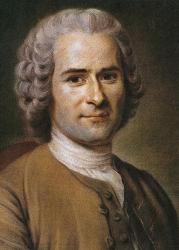
Jean-Jacques Rousseau

1712 - 1778 Person Name: Jean Jacques Rousseau, 1712-1778 Topics: Doubt Composer of "GREENVILLE" in Psalter Hymnal (Red) Jean Jacques Rousseau; b. 1712, Geneva; d. 1778, Paris. Born in the city-state of Geneva in the Swiss Confederacy, his mother died whenhe was 9 days old. Rousseau's father was a watchmaker, but got into trouble with local officials and left the town, leaving his son with an uncle who had Rousseau and his own son board with a Calvinist minister for 2 years. He was later apprenticed to a notary and then to an engraver, who beat him. He ran away from Geneva at 16. In nearby Savoy, he sheltered with a Roman Catholic priest. He was sent to Italy to convert to Catholicism. He supported himself as a servant, secretary, and tutor. His life was filled with personal and political upheaval, and his writings infuriated many, to the point he had to leave several habitations. He had many friends and enemies due to his philosophies on life, religion, and God. He was concerned with decay of society (having experienced the French Revolution) and became a philosopher, writer, botanist, and composer, he influenced the Enlightenment period through his political philosophy, both in France and across Europe, including aspects of the French Revolution and overall development of modern political and educational thought. A member of the Jacobin Club, he was the most popular of philosophers. He believed that self-preservation was the highest virtue and that we should study to understand how society operates and where pitfalls lie. His personal family life was very chaotic as a result of his outspoken opinions and writings. He returned to his Calvinistic beliefs in later life, but digressed from them on several issues important to that church. John Perry

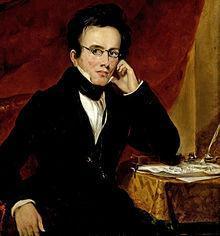
John Goss

1800 - 1880 Person Name: Goss Topics: Doubt and Fear Adapter of "THESSALONICA" in Christian Hymns John Goss (b. Fareham, Hampshire, England, 1800; d. London, England, 1880). As a boy Goss was a chorister at the Chapel Royal and later sang in the opera chorus of the Covent Garden Theater. He was a professor of music at the Royal Academy of Music (1827-1874) and organist of St. Paul Cathedral, London (1838-1872); in both positions he exerted significant influence on the reform of British cathedral music. Goss published Parochial Psalmody (1826) and Chants, Ancient and Modern (1841); he edited William Mercer's Church Psalter and Hymn Book (1854). With James Turle he published a two-volume collection of anthems and Anglican service music (1854). Bert Polman

Ira David Sankey

1840 - 1908 Person Name: Ira D. Sankey Topics: Doubt; Doubt Composer of "HIDING IN THEE" in Psalter Hymnal (Gray) Sankey, Ira David, was born in Edinburgh, Pennsylvania, in 1840, of Methodist parents. About 1856 he removed with his parents to New Castle, Pennsylvania, where he became a member of the Methodist Episcopal Church. Four years afterwards he became the Superintendent of a large Sunday School in which he commenced his career of singing sacred songs and solos. Mr. Moody met with him and heard him sing at the International Convention of the Young Men's Christian Association, at Indianapolis, and through Mr. Moody's persuasion he joined him in his work at Chicago. After some two or three years' work in Chicago, they sailed for England on June 7, 1872, and held their first meeting at York a short time afterwards, only eight persons being present. Their subsequent work in Great Britain and America is well known. Mr. Sankey's special duty was the singing of sacred songs and solos at religious gatherings, a practice which was in use in America for some time before he adopted it. His volume of Sacred Songs and Solos is a compilation from various sources, mainly American and mostly in use before. Although known as Sankey and Moody’s Songs, only one song, "Home at last, thy labour done" is by Mr. Sankey, and not one is by Mr. Moody. Mr. Sankey supplied several of the melodies. The English edition of the Sacred Songs & Solos has had an enormous sale; and the work as a whole is very popular for Home Mission services. The Songs have been translated into several languages. --John Julian, Dictionary of Hymnology (1907) Pseudonymns: Harry S. Low­er Rian A. Dykes ==================== Sankey, I. D., p. 994, i. During the past fifteen years Mr. Sankey's Sacred Songs and Solos have had a very large sale, which has justified him in increasing the number of songs and hymns, including " New Hymns and Solos," to 1200. In 1906 he published My Life and Sacred Songs (London : Morgan & Scott). In addition to the "Story of his Own Life," the work contains an account of the most popular of his solos, with interesting reminiscences of the spiritual awakening of many who were influenced through his singing of them in public. In this respect it corresponds in some measure with G. J. Stevenson's Methodist Hymn Book, &c, 1883 (p. 1094, i.). It is an addition to the Sacred Songs and Solos, which will be held in esteem by many. In addition to his hymn, noted on p. 994, ii., Mr. Sankey gives details of the following:— 1. Out of the shadow-land into the sunshine. [Heaven Anticipated.] Mr. Sankey's account of this hymn is:— "I wrote this hymn specially for the memorial service held for Mr. Moody in Carnegie Hall, where 1 also sang it as a solo. It is the last sacred song of which I wrote both the words and music. The idea was suggested by Mr. Moody's last words, 'Earth recedes; heaven opens before me . . . God is calling me, and I must go.' On account of its peculiar association with my fellow-labourer in the Gospel for so many years, the words are here given in full." The hymn follows on p. 185, in 3 stanzas of 4 lines and a chorus. 2. Rejoice! Rejoice! our King is coming, [Advent.] Mr. Sankey writes concerning this hymn:— "During one of my trips to Great Britain on the SS. City of Rome a storm raged on the sea. The wind was howling through the rigging, and waves like mountains of foam were breaking over the bow of the vessel. A great fear had fallen upon the passengers. When the storm was at its worst, we all thought we might soon go to the bottom of the sea. The conviction came to me that the Lord would be with us iu the trying hour, and sitting down in the reading room, I composed this hymn. Before reaching England the tune had formed itself in my mind, and on arriving in London I wrote it out, and had it published in Sacred Songs and Solos, where it is No. 524 in the edition. of 1888. From Mr. Sankey's autobiographical sketch we gather that he was born at Edinburgh, in Western Pennsylvania, Aug. 28, 1840, joined Mr. Moody in 1871, and visited England for the first time in 1873. The original of the Sacred Songs, &c, of 23 pieces only, was offered as a gift to the London publishers of P. Phillips's Hallowed Song, and declined by them. It was subsequently accepted by Mr. K. O. Morgan, of Morgan & Scott, and is now a volume of 1200 hymns. From a return kindly sent us by Messrs. Morgan & Scott, we find that the various issues of the Sacred Songs and Solos were:— In 1873, 24 pp.; 1874, 72 pp. ; 1876, 153 hymns; 1877, 271 hymns; 1881, 441 hymns; 1888, 750 hymns; 1903, 1200 hymns. In addition, The Christian Choir, which is generally associated with the Sacred Songs and Solos, was issued in 1884 with 75 hymns, and in 1896 with 281. The New Hymns & Solos, by the same firm, were published in 1888. --John Julian, Dictionary of Hymnology, New Supplement (1907)

Jane Parker Huber

1926 - 2008 Person Name: Jane Parker Huber, 1926- Topics: Assurance in Doubt Author of "Christ Jesus Knew a Wilderness" in The Covenant Hymnal

Michael Perry

1942 - 1996 Topics: Doubt Author of "Commit Your Way to God the Lord" in Psalms for All Seasons Initially studying mathematics and physics at Dulwich College, Michael A. Perry (b. Beckenham, Kent, England, 1942; d. England, 1996) was headed for a career in the sciences. However, after one year of study in physics at the University of London, he transferred to Oak Hill College to study theology. He also studied at Ridley Hall, Cambridge, and received a M.Phil. from the University of Southhampton in 1973. Ordained a priest in the Church of England in 1966, Perry served the parish of St. Helen's in Liverpool as a youth worker and evangelist. From 1972 to 1981 he was the vicar of Bitterne in Southhampton and from 1981 to 1989, rector of Eversley in Hampshire and chaplain at the Police Staff College. He then became vicar of Tonbridge in Kent, where he remained until his death from a brain tumor in 1996. Perry published widely in the areas of Bible study and worship. He edited Jubilate publications such as Hymns far Today's Church (1982), Carols for Today (1986), Come Rejoice! (1989), and Psalms for Today (1990). Composer of the musical drama Coming Home (1987), he also wrote more than two hundred hymns and Bible versifications. Bert Polman

Fred Kaan

1929 - 2009 Person Name: Frederik Herman Kaan, 1929- Topics: Doubt Author of "Lord of the living, in your name assembled" in Together in Song Fred Kaan Hymn writer. His hymns include both original work and translations. He sought to address issues of peace and justice. He was born in Haarlem in the Netherlands in July 1929. He was baptised in St Bavo Cathedral but his family did not attend church regularly. He lived through the Nazi occupation, saw three of his grandparents die of starvation, and witnessed his parents deep involvement in the resistance movement. They took in a number of refugees. He became a pacifist and began attending church in his teens. Having become interested in British Congregationalism (later to become the United Reformed Church) through a friendship, he was attended Western College in Bristol. He was ordained in 1955 at the Windsor Road Congregational Church in Barry, Glamorgan. In 1963 he was called to be minister of the Pilgrim Church in Plymouth. It was in this congregation that he began to write hymns. The first edition of Pilgrim Praise was published in 1968, going into second and third editions in 1972 and 1975. He continued writing many more hymns throughout his life. Dianne Shapiro, from obituary written by Keith Forecast in Independent (http://www.independent.co.uk/news/obituaries/fred-kaan-minister-and-celebrated-hymn-writer-1809481.html)

Walter Greatorex

1877 - 1949 Person Name: Walter Greatorex (1877-1949) Topics: Doubt Composer of "WOODLANDS" in Ancient and Modern Walter Greatorex (b. Mansfield, Nottinghamshire, England, 1877; d. Bournemouth, Hampshire, England, 1949) was director of music at Gresham's School, Holt, Norfolk, where from 1911-1936. Before that he served as assistant music master at Uppingham School in Rutland (1900-1910). Greatorex's musical education began as a chorister at King's College, Cambridge, England, and he received his university music training at St. John's College, Cambridge. Bert Polman

George J. Elvey

1816 - 1893 Person Name: George J. Elvey, 1816-1893 Topics: Assurance in Doubt Composer of "ST. CRISPIN" in The Covenant Hymnal George Job Elvey (b. Canterbury, England, 1816; d. Windlesham, Surrey, England, 1893) As a young boy, Elvey was a chorister in Canterbury Cathedral. Living and studying with his brother Stephen, he was educated at Oxford and at the Royal Academy of Music. At age nineteen Elvey became organist and master of the boys' choir at St. George Chapel, Windsor, where he remained until his retirement in 1882. He was frequently called upon to provide music for royal ceremonies such as Princess Louise's wedding in 1871 (after which he was knighted). Elvey also composed hymn tunes, anthems, oratorios, and service music. Bert Polman

Louis Bourgeois

1510 - 1561 Topics: Doubt; Doubt Composer of "GENEVA 42 (FREU DICH SEHR)" in Voices Together Louis Bourgeois (b. Paris, France, c. 1510; d. Paris, 1561). In both his early and later years Bourgeois wrote French songs to entertain the rich, but in the history of church music he is known especially for his contribution to the Genevan Psalter. Apparently moving to Geneva in 1541, the same year John Calvin returned to Geneva from Strasbourg, Bourgeois served as cantor and master of the choristers at both St. Pierre and St. Gervais, which is to say he was music director there under the pastoral leadership of Calvin. Bourgeois used the choristers to teach the new psalm tunes to the congregation. The extent of Bourgeois's involvement in the Genevan Psalter is a matter of scholar­ly debate. Calvin had published several partial psalters, including one in Strasbourg in 1539 and another in Geneva in 1542, with melodies by unknown composers. In 1551 another French psalter appeared in Geneva, Eighty-three Psalms of David, with texts by Marot and de Beze, and with most of the melodies by Bourgeois, who supplied thirty­ four original tunes and thirty-six revisions of older tunes. This edition was republished repeatedly, and later Bourgeois's tunes were incorporated into the complete Genevan Psalter (1562). However, his revision of some older tunes was not uniformly appreciat­ed by those who were familiar with the original versions; he was actually imprisoned overnight for some of his musical arrangements but freed after Calvin's intervention. In addition to his contribution to the 1551 Psalter, Bourgeois produced a four-part harmonization of fifty psalms, published in Lyons (1547, enlarged 1554), and wrote a textbook on singing and sight-reading, La Droit Chemin de Musique (1550). He left Geneva in 1552 and lived in Lyons and Paris for the remainder of his life. Bert Polman

Richard K. Carlson

b. 1956 Person Name: Richard K. Carlson, 1956- Topics: Assurance in Doubt Arranger of "JESUS LOVES ME" in The Covenant Hymnal

Pages


Export as CSV
It looks like you are using an ad-blocker. Ad revenue helps keep us running. Please consider white-listing Hymnary.org or getting Hymnary Pro to eliminate ads entirely and help support Hymnary.org.