You help make Hymnary.org possible. More than 10 million people from 200+ countries found hymns, liturgical resources and encouragement on Hymnary.org in 2025, including you. Every visit affirms the global impact of this ministry.

If Hymnary has been meaningful to you this year, would you take a moment today to help sustain it? A gift of any size—paired with a note of encouragement if you wish—directly supports the server costs, research work and curation that keep this resource freely available to the world.

Give securely online today, or mail a check to:
Hymnary.org
Calvin University
3201 Burton Street SE
Grand Rapids, MI 49546

Thank you for your partnership, and may the hope of Advent fill your heart.

Person Results

Topics:proper+7
In:person

Planning worship? Check out our sister site, ZeteoSearch.org, for 20+ additional resources related to your search.
Showing 121 - 130 of 315Results Per Page: 102050

Cyril Alington

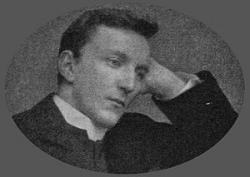
1872 - 1955 Person Name: Cyril A. Alington, 1872-1955 Topics: Proper 7 Year A Author of "Good Christians All, Rejoice and Sing" in Voices United Educated at Trinity College, Oxford, England, Cyril A. Alington (b. Ipswich, England, 1872; d. St. Leonards, Hertfordshire, England, 1955) was ordained a priest in the Church of England in 1901. He had a teaching career that included being headmaster at Shrewsbury School and Eton College. He was dean of Durham from 1933-1951 as well as chaplain to the king of England. His writings include literary works and Christianity in England, Good News (1945). Many of his hymns appeared in various twentieth-century editions of the famous British hymnal, Hymns Ancient and Modern. Bert Polman

Edward Mote

1797 - 1874 Topics: Comfort and Assurance; Faith and Aspiration; Hope; Year A Epiphany 7; Year A Epiphany 9; Year A Proper 4; Year C Epiphany 8 Author of "My Hope Is Built on Nothing Less" in The New Century Hymnal Mote, Edward, was born in Upper Thames Street, London, Jan. 21, 1797. Through the preaching of the Rev. J. Hyatt, of Tottenham Court Road Chapel, he underwent a great spiritual change; and ultimately he became a Baptist minister. For the last 26 years of his life he was pastor at Horsham, Sussex, where he died Nov. 13, 1874. Mr. Mote published several small pamphlets; and also:- Hymns of Praise. A New Selection of Gospel Hymns, combining all the Excellencies of our spiritual Poets, with many Originals. By E. Mote. London. J. Nichols, 1836. The Originals number nearly 100. Concerning the authorship of one of these original hymns much uncertainty has existed. The hymn is:— 1. Nor earth, nor hell my soul can move. [Jesus All in All.] In 6 stanzas of 4 lines, with a refrain. Mr. Mote's explanation, communicated to the Gospel Herald, is:— "One morning it came into my mind as I went to labour, to write an hymn on the ‘Gracious Experience of a Christian.' As I went up Holborn I had the chorus, ‘On Christ the solid Rock I stand, All other ground is sinking sand.’ In the day I had four first verses complete, and wrote them off. On the Sabbath following I met brother King as I came out of Lisle Street Meeting . . . who informed me that his wife was very ill, and asked me to call and see her. I had an early tea, and called afterwards. He said that it was his usual custom to sing a hymn, read a portion, and engage in prayer, before he went to meeting. He looked for his hymnbook but could find it nowhere. I said, ‘I have some verses in my pocket; if he liked, we would sing them.' We did; and his wife enjoyed them so much, that after service he asked me, as a favour, to leave a copy of them for his wife. 1 went home, and by the fireside composed the last two verses, wrote the whole off, and took them to sister King. . . As these verses so met the dying woman's case, my attention to them was the more arrested, and I had a thousand printed for distribution. I sent one to the Spiritual Magazine, without my initials, which appeared some time after this. Brother Rees, of Crown Street, Soho, brought out an edition of hymns [1836], and this hymn was in it. David Denham introduced it [1837] with Rees's name, and others after... . Your inserting this brief outline may in future shield me from the charge of stealth, and be a vindication of truthfulness in my connection with the Church of God." The form in which the hymn is usually found is:— 2. My hope is built on nothing less (st. ii.), sometimes in 4 stanzas, and at others in 5 st., and usually without the refrain. The original in the author's Hymns of Praise, 1836, is No. 465, and entitled, "The immutable Basis of a Sinner's hope." Bishop Bickersteth calls it a "grand hymn of faith." It dates circa 1834, and is in extensive use. [Rev. W. R. Stevenson, M.A.] --John Julian, Dictionary of Hymnology (1907)

William Owen

1813 - 1893 Topics: Ascension; Holy Communion; Jesus Christ Ascension; Jesus Christ Lamb of God; Year A Ascension; Year A Easter 7; Year B Ascension; Year B Easter 7; Year B Proper 14; Year B Proper 27; Year C Ascension; Year C Easter 7 Composer of "BRYN CALFARIA" in The New Century Hymnal Owen, William (‘William Owen of Prysgol,’ 1813-1893), musician; b. 12? Dec. 1813 [in Lônpopty], Bangor, the son of William and Ellen Owen. The father was a quarryman at Cae Braich-y-cafn quarry, Bethesda, and the son began to work in the same quarry when he was ten years old. He learnt music at classes held by Robert Williams (Cae Aseth), at Carneddi, and from William Roberts, Tyn-y-maes, the composer of the hymn-tune ‘Andalusia.’ He wrote his first hymn-tune when he was 18 — it was published in Y Drysorfa for June 1841. After the family had [removed] to [Caesguborwen], Bangor, [sometimes called Cilmelyn] — they had spent some years [at Tŷhen] near the quarry — William Owen formed a temperance choir which sang ‘Cwymp Babilon,’ the work of the conductor, at the Caernarvon temperance festival, 1849. In 1852, with the help of some friends at Bethesda, he published Y Perl Cerddorol yn cynnwys tonau ac anthemau, cysegredig a moesol; of this 3,000 copies were sold, A solfa edition appeared in 1886 of which 4,000 copies were sold. He composed several temperance pieces, some of which were sung in the Eryri temperance festivals held at Caernarvon castle. His anthem, ‘Ffynnon Ddisglair,’ and the hymn-tunes ALMA and DEEMSTER became popular, but it was the hymn-tune called BRYN CALFARIA which made the composer famous; this continues to have a considerable vogue in Wales and in England. He married the daughter of the house called Prysgol and went there to live; he also became precentor at Caeathro C.M. chapel. He died 20 July 1893, and was buried in Caeathro chapel burial ground. --wbo.llgc.org.uk/en/

Caroline M. Noel

1817 - 1877 Person Name: Caroline Maria Noel, 1817-1877 Topics: Year A Christ the King; Year A Easter 7; Year A Proper 21; Year B Lent 2; Year B Palm Sunday: Liturgy of the Passion; Year B Second Sunday Before Lent; Year C Christ the King; Year C Fourth Sunday Before Advent; Year C Palm Sunday: Liturgy of the Passion; Year C Proper 11; Years A, B, and C Ascension Day; Years A, B, and C Christmas 2; Years A, B, and C Christmas Day; Ascensiontide; Ascensiontide; Evangelism; Evangelism; Joy, Praise and Thanksgiving; Joy, Praise and Thanksgiving; Redemption and Salvation; Redemption and Salvation Author of "At the name of Jesus" in Complete Anglican Hymns Old and New Caroline Marie Noel (b. Teston, Kent, England, 1817; d. St. Marylebone, London, England, 1877) The daughter of an Anglican clergyman and hymn writer, she began to write poetry in her late teens but then abandoned it until she was in her forties. During those years she suffered frequent bouts of illness and eventually became an invalid. To encourage both herself and others who were ill or incapacitated, Noel began to write devotional verse again. Her poems were collected in The Name of Jesus and Other Verses for the Sick and Lonely (1861, enlarged in 1870). Bert Polman ================ Noel, Caroline Maria, daughter of the Hon. Gerard T. Noel (p. 809, ii.), and niece of the Hon. Baptist W. Noel, was born in London, April 10, 1817, and died at 39 Great Cumberland Place, Hyde Park, Dec. 7, 1877. Her first hymn, "Draw nigh unto my soul" (Indwelling), was written when she was 17. During the next three years she wrote about a dozen pieces: from 20 years of age to 40 she wrote nothing; and during the next 20 years the rest of her pieces were written. The first edition of her compositions was published as The Name of Jesus and Other Verses for the Sick and Lonely, in 1861. This was enlarged from time to time, and its title subsequently changed by the publishers to The Name of Jesus and Other Poems. The 1878 ed. contains 78 pieces. Miss Noel, in common with Miss Charlotte Elliott, was a great sufferer, and many of these verses were the outcome of her days of pain. They are specially adapted "for the Sick and Lonely" and were written rather for private meditation than for public use, although several are suited to the latter purpose. Her best known hymn is the Processional for Ascension Day, "At the Name of Jesus." It is in the enlarged edition of The Name of Jesus, &c, 1870, p. 59, and is dated 1870 by her family. --John Julian, Dictionary of Hymnology, Appendix, Part II (1907)

Benjamin Webb

1819 - 1885 Topics: Jesus Christ Life and Teaching; Adoration and Praise; Jesus Christ Baptism; Jesus Christ Cross; Jesus Christ Incarnation; Jesus Christ Life and Ministry; Jesus Christ Life of; Jesus Christ Love of; Jesus Christ Saviour; Jesus Christ Son of God/Man (David); Jesus Christ Teacher/Teachings; Love; Obedience; Sacrifice; Service Music Doxologies; Trinity; Christmas 1 Year A; Baptism of Jesus Year A; Epiphany 2 Year A; Epiphany 7 Year A; Lent 1 Year A; Proper 17 Year A; Proper 21 Year A; Proper 21 Year A; Reign of Christ Year A; Advent 2 Year B; Baptism of Jesus Year B; Lent 1 Year B; Lent 5 Year B; Palm/Passion Sunday Year B; Easter 5 Year B; Proper 12 Year B; Proper 26 Year B; Proper 27 Year B; Proper 28 Year B; Reign of Christ Year B; Epiphany 6 Year C; Epiphany Last/Transfig. Year C; Lent 1 Year C; Lent 2 Year C; Lent 4 Year C; Holy Thursday Year C; Easter 4 Year C; Easter 7 Year C; Tuesday in Holy Week Year ABC; Holy thursday Year ABC Translator of "O Love, How Deep" in Voices United Benjamin Webb (b. London, England, 1819; d. Marylebone, London, 1885) originally translated the text in eight stanzas, although six only appear in Lift Up Your Hearts. It was published in The Hymnal Noted (1852), produced by his friend John Mason Neale. Webb received his education at Trinity College, Cambridge, England, and became a priest in the Church of England in 1843. Among the parishes he served was St. Andrews, Wells Street, London, where he worked from 1862 to 1881. Webb's years there coincided with the service of the talented choir director and organist Joseph Barnby, and the church became known for its excellent music program. Webb edited The Ecclesiologist, a periodi­cal of the Cambridge Ecclesiological Society (1842-1868). A composer of anthems, Webb also wrote hymns and hymn translations and served as one of the editors of The Hymnary (1872). Bert Polman ================== Webb, Benjamin, M.A., was born in London in 1820, and was educated in St. Paul's School; whence he passed to Trinity College, Cambridge, in 1838, B.A. 1842, M.A. 1845. Ordained by the Bishop [Monk] of Gloucester and Bristol he was Assistant Curate of Kemeston in Gloucestershire, 1843-44; of Christ Church, St. Pancras, 1847-49; and of Brasted, Kent, 1849-51; at which date he was presented to the P. C. of Sheen in Staffordshire, which he held until 1862, when he became Vicar of St. Andrews, Wells Street, London. In 1881 the Bishop [Jackson] of London collated him to the Prebend of Portpool in St. Paul's Cathedral. Mr. Webb was one of the Founders of the Cambridge Camden, afterwards the Ecclesiological Society; and the Editor of the Ecclesiologist from 1842 to 1868, as well as the General Editor of the Society's publications. His first appearance in print was as joint editor of Bishop Montague's Articles of Inquiry in 184; in 1843 he was joined with Mr. J. M. Neale in An Essay on Symbolism, and A Translation of Durandus; in 1847 he put forth his valuable work on Continental Ecclesiology; in 1848 he was joint editor with Dr. Mill of Frank’s Sermons, for the Anglo-Catholic Library, and with the Rev. J. Fuller-Russell of Hierurgia Anglicana. After the decease of his father-in-law (Dr. Mill), he edited Dr. Mill's Catechetical Lectures, 1856; a second edition of Dr. Mill's Christian Advocates Publications on the Mythical Interpretation of the Gospels, 1861; and of Dr. Mill's Sermons on our Lord's Temptation, 1873. He was also one of the editors of the Burntisland reprint of the Sarum Missal. One of his most valuable works is Instructions and Prayers for Candidates for Confirmation, of which the third edition was published in 1882. Mr. Webb was one of the original editors of the Hymnal Noted, and of the sub-Committee of the Ecclesiological Society, appointed to arrange the words and the music of that book; and was also the translator of some of the hymns. In conjunction with the Rev. Canon W. Cooke he was editor of the Hymnary, 1872, for which office his habitual reconstruction and composition of the words of the anthems used at St. Andrew's, Wells Street, as well as his connection with the Hymnal Noted, eminently qualified him. His original hymns contributed to the Hymnary, 1871 and 1872, were:-- 1. Assessor to thy King. St. Bartholomew. In the Hymnary, 1872. 2. Behold He comes, thy King most holy. Advent. Originally written to be sung in St. Andrew's Church, Wells Street, as an anthem to the music of Schumann's Advent-lied, and afterwards published in the Hymnary, 1872. 3. Praise God, the Holy Trinity. Hymn of Faith. Originally written for use in St. Andrew's, Wells Street, and subsequently in the Hymnary, 1872. 4. Praise the Rock of our salvation. Dedication of a Church. Published in the Hymnary, 1872. Mr. Webb's authorised text is in the Westminster Abbey Hymn Book, 1883. 5. Ye angel hosts above. Universal Praise to God. In the Hymnary, 1872. He died in London, Nov. 27, 1885. [Rev. William Cooke, M.A.] -- John Julian, Dictionary of Hymnology (1907)

Mary S. Edgar

1889 - 1973 Topics: God Creation and Providence; Beauty; Creation; Ecology; Empowerment; God Creator; Ministry; Music and Singing; Nature; Purity; Regeneration; Renewal; Sun; Thankfulness; Easter 7 Year A; Proper 6 Year B; Proper 22 Year B; Proper 18 Year C Author of "God, Who Touches Earth With Beauty" in Voices United

Betty Pulkingham

1928 - 2019 Topics: Church in the World Discipleship: Love in Action; Body of Christ; Brotherhood/Sisterhood; Community; Compassion; Humility; Love for Others; Men; Pilgrimage and Conflict; Service; Unity; Women; Epiphany 7 Year A; Proper 16 Year A; Proper 17 Year A; Proper 26 Year B; Palm/Passion Sunday Year C; Proper 8 Year C; Proper 9 Year C; Proper 9 Year C Arranger of "SERVANT SONG" in Voices United Betty Carr Pulkingham was born in 1928 in Burlington, North Carolina. She received a B.S. in Music in 1949 from the University of North Carolina, Greensboro and she did graduate studies at the Eastman School of Music. She was Instructor of Music Theory at the University of Texas. In 1951, she married a seminarian Graham Pulkingham. They ministered together in various places in the U.S., England and Scotland; they were founding members of the Community of Celebration, an Anglican religious order. She travelled widely with "The Fisherfolk," an outreach music ministry connected with the Community of Celebration. Betty Pulkingham was a well known composer and arranger. She co-edited and published a number of songbooks and books on worship; and served on the Episcopal Church's Standing Commission on Church Music from 1988-1994. She and her husband returned to Burlington and then she later moved to Austin, Texas to live with family. She died in Austin, May 9, 2019 at the age of 90. Dianne Shapiro, from Obituary (https://www.richandthompson.com/tributes/Betty-Pulkingham) (accessed 6-21-2019)

Georgia Elma Harkness

1891 - 1974 Topics: Citizenship, Christian; Memorial Day; National Righteousness; Righteousness; Social Betterment Author of "Hope of the World"

David Evans

b. 1957 Person Name: David Evans (b. 1957) Topics: Proper 7 Year C Author of "Be still, for the presence of the Lord" in Ancient and Modern David J. Evans, born Nov. 29, 1957, Hampshire-based piano teacher

Flossette Du Pasquier

Person Name: Flosette du Pasquier Topics: Proper 7 Year C Translator (into French) of "Guide Me, O Thou Great Jehovah (Guide-moi, Berger fidèle)" in Voices United

Pages


Export as CSV
It looks like you are using an ad-blocker. Ad revenue helps keep us running. Please consider white-listing Hymnary.org or getting Hymnary Pro to eliminate ads entirely and help support Hymnary.org.