You help make Hymnary.org possible. More than 10 million people from 200+ countries found hymns, liturgical resources and encouragement on Hymnary.org in 2025, including you. Every visit affirms the global impact of this ministry.

If Hymnary has been meaningful to you this year, would you take a moment today to help sustain it? A gift of any size—paired with a note of encouragement if you wish—directly supports the server costs, research work and curation that keep this resource freely available to the world.

Give securely online today, or mail a check to:
Hymnary.org
Calvin University
3201 Burton Street SE
Grand Rapids, MI 49546

Thank you for your partnership, and may the hope of Advent fill your heart.

Browse People

Topics:scripture
In:people

Planning worship? Check out our sister site, ZeteoSearch.org, for 20+ additional resources related to your search.
Showing 121 - 130 of 953Results Per Page: 102050

Barrie Cabena

b. 1933 Person Name: H. Barrie Cabena, b. 1933 Topics: Scriptures Composer of "ATKINSON" in Lutheran Book of Worship

Juan Bautista Cabrera Ivars

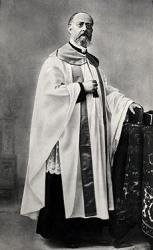
1837 - 1916 Person Name: Juan Bautista Cabrera Topics: Holy Scripture Author of "Padre, tu palabra es" in Mil Voces para Celebrar Juan Bautista Cabrera Ivars was born in Benisa, Spain, April 23, 1837. He attended seminary in Valencia, studying Hebrew and Greek, and was ordained as a priest. He fled to Gibraltar in 1863 due to religious persecution where he abandoned Catholicism. He worked as a teacher and as a translator. One of the works he translated was E.H. Brown's work on the thirty-nine articles of the Anglican Church, which was his introduction to Protestantism. He was a leader of a Spanish Reformed Church in Gibraltar. He continued as a leader in this church when he returned to Spain after the government of Isabel II fell, but continued to face legal difficulties. He then organized the Spanish Reformed Episcopal Church and was consecrated as bishop in 1894. He recognized the influence of music and literature on evangelism which led him to write and translate hymns. Dianne Shapiro, from Real Academia de la Historia (https://dbe.rah.es/biografias/39825/juan-bautista-cabrera-ivars) and Himnos Cristanos (https://www.himnos-cristianos.com/biografia-juan-bautista-cabrera/) (accessed 7/30/2021)

George Bradford Caird

1917 - 1984 Person Name: George Bradford Caird (1917-1984) Topics: Scripture Author of "Not far beyond the sea, nor high" in Ancient and Modern George Bradford Caird (17 July 1917 – 21 April 1984), D.Phil., D.D., FBA, was a British churchman, theologian, humanitarian, and biblical scholar. At the time of his death he was Dean Ireland's Professor of the Exegesis of Holy Scripture at the University of Oxford. Born in London, England to parents from Dundee, Scotland, George Caird's early years were spent in Birmingham, England, where his father was a construction engineer, and where he attended King Edward's School. His university education began at Peterhouse, Cambridge, where he received the B.A. in 1939, First-Class Honours in both parts of the Classical Tripos, with distinction in Greek and Latin verse. A lifelong Congregationalist, he then left Cambridge to study theology at Mansfield College, Oxford, and acquired the Oxford M.A., First-Class Honours, in 1943. In 1944 he was granted the Oxford D.Phil. for his thesis "The New Testament Conception of Doxa (Glory)". After serving three years as a pastor in Highgate, London, in 1946 Caird and his young bride, Viola Mary Newport, known to all as "Mollie," pulled up stakes and left for Canada. Virtually fluent in ancient Hebrew, there he was quickly made Professor of Old Testament at St. Stephen's College, Edmonton, Alberta, and later (simultaneously) Professor of New Testament at McGill University and Principal of the United Theological College of Montreal. In 1959 Caird returned to Oxford and the Congregationalist stronghold of Mansfield College, where he was first Senior Tutor (under John Marsh) and later Principal (1970–1977). Because he was non-Church of England, and because Mansfield was still a Permanent Private Hall and had not yet achieved status as a constituent College of the University (see Colleges of the University of Oxford) during this period (1969–1977), Caird was barred from holding an official university lectureship. However, as a compensation he was granted the honorary position of Reader (academic rank) in Biblical Studies, a status somewhere between Senior Lecturer and Professor. And whenever he lectured on the New Testament at Mansfield, students from all over the university came and filled the large lecture hall to capacity. According to Henry Chadwick, "He lectured as he preached, almost always without a note . . . with nothing before him but a Greek New Testament, usually upside down, for he knew the text by heart". In 1975-1976 Caird took on almost full-time administration, serving as Moderator of the United Reformed Church, and during his tenure he visited South Africa. His work in the fields of Old and New Testament (he remains one of the few modern biblical interpreters to have held chairs in both) led to four honorary doctorates (including the Oxford D.D.), election to the British Academy (and the granting of its Burkitt Medal for Biblical Studies), and appointment to be the Dean Ireland's Professor and Professorial Fellow at The Queen's College, Oxford. In 1980 he won the Collins Religious Book Award for his work The Language and Imagery of the Bible. His final years involved biblical translation as a member of the translation panel of The Revised English Bible, as previously he had been a translator of The New English Bible's Apocrypha. He also co-edited (with Henry Chadwick ) Oxford's The Journal of Theological Studies from 1977-1984. In his lifetime he wrote nearly sixty articles, over a hundred book reviews, and six books. Following his resignation as Principal of Mansfield and his taking up of the Dean Ireland's chair, the Cairds left Oxford and moved into the sixteenth century thatched-roof "Brook Cottage" at Letcombe Regis, next to Wantage, Oxfordshire, seventeen miles southwest of Oxford. There they converted the cottage's back storeroom into "the Dusty" - a study for Caird to write in during his imminent retirement; it was there that he was working on his seventh major work, New Testament Theology, when he was felled by a heart attack on Easter Eve, 1984. His funeral was held in Mansfield College Chapel on 28 April, with Principal Donald Sykes delivering the eulogy; a memorial celebration was later conducted (13 October) in Great St. Mary's Church, Oxford, with his close friend Henry Chadwick delivering the address. A Festschrift was at the time in the works, which was subsequently converted into a memorial volume, The Glory of Christ in the New Testament: Studies in Christology in Memory of George Bradford Caird, edited by two of his students, Lincoln Hurst (L. D. Hurst) and Tom Wright (N. T. Wright), and published by Oxford University Press in late 1987. Shortly after his death, some quick decisions needed to be made, particularly that involving his half-completed New Testament Theology; accordingly, Hurst was appointed Caird's Literary Executor. In addition, his children (see below) set up a foundation, The G. B. Caird Memorial Trust, the proceeds from which might enable (successfully, as it turned out) a new senior position to be set up in his name at Mansfield College: the G. B. Caird Fellow in New Testament Theology. It is currently occupied by Dr. John Muddiman. Caird's academic legacy is also seen in that during the course of his career he taught numerous people who went on to garner serious scholarly attention. These include Marcus Borg, Colin Gunton, Lincoln Hurst, David P. Moessner, John Muddiman, Allison Trites, Francis Watson, and N. T. Wright. According to British Old Testament scholar James Barr, Caird was sometimes "practically adored" by students. While to some Caird could appear austere, even intimidating, "he was in fact full of fun and humour". In his leisure time he enjoyed (most famously) bird-watching, croquet, snooker, music, theatre, reading mysteries, ping pong, chess, and all forms of puzzles — especially the crossword and jigsaw variety. Music in particular occupied his time: it "was important to him, and he wrote several hymns, some of which were included within standard hymnals such as Congregational Praise and Hymns Ancient and Modern". He and Mollie had four children: James, Margaret (Meg) Laing, John, and George (Geordie). To Caird the home was never just a house: it was a bastion of the family - a center of games, poetry, music, and other cultural activity, where he was, according to Henry Chadwick, "sublimely happy . . . it was a microcosm of vigorous debate and breathtaking wit, sparkling with his wife and his three sons and his daughter, whose gifts were a source of deep joy for him. From Mollie he caught his love for bird-watching, and from his children he loved to learn about architecture [James], drama [John], music [Geordie], and medieval philology [Meg]". Also, "no picture of George would be right which omitted his intense affection for his grandchildren." --en.wikipedia.org/wiki/ (excerpts)

John Baptiste Calkin

1827 - 1905 Person Name: J. Baptiste Calkin Topics: Holy Scriptures; Inspiration of Scriptures; Scriptures, The Holy Composer of "NOX PRÆCESSIT" in The Hymnal John Baptiste Calkin United Kingdom 1827-1905. Born in London, he was reared in a musical atmosphere. Studying music under his father, and with three brothers, he became a composer, organist, and music teacher. At 19, he was appointed organist, precenter, and choirmaster at St. Columbia's College, Dublin, Ireland, 1846 to 1853. From 1853 to 1863 we was organist and choirmaster at Woburn Chapel, London. From 1863 to 1868, he was organist of Camden Road Chapel. From 1870 to 1884 he was organist at St. Thomas's Church, Camden Town. In 1883 he became professor at Guildhall School of Music and concentrated on teaching and composing. He was also a professor of music and on the council of Trinity College, London, and a member of the Philharmonic Society (1862). In 1893 he was a fellow of the College of Organists. John and wife, Victoire, had four sons, each following a musical carer. He wrote much music for organ and scored string arrangements, sonatas, duos, etc. He died at Hornsey Rise Gardens. John Perry

John Camidge

1735 - 1803 Person Name: John Camidge, 1735-1803 Topics: Scripture Composer of "[O Lord, open thou our eyes]" in Hymnbook for Christian Worship John Camidge 1 (bap. 1734-1803) was a composer and organist of York Minster from 1756. He gave Matthew Camidge, the sixth son, his early musical training. Camidge family wiki (https://en.m.wikipedia.org/wiki/Camidge_family) Creative Commons License

Lucie Eddie Campbell

1885 - 1963 Person Name: Lucie E. Campbell Topics: The Holy Scriptures; Holy Scripture Author of "The Lord Is My Shepherd" in African Methodist Episcopal Church Hymnal Lucie Eddie Campbell, April 30, 1885–January 3, 1963, one of nine children born to parents who were slaves in Mississippi. She moved to Memphis with her mother after her father died when she was two years old. Became first Music Director of newly formed Education arm for the new National Baptist Convention formed in 1916 in Memphis. In 1919 at a NBC convention in Atlantic City, Campbell introduced a young, blind singer, Connie Rosemond, who electrified the delegates with his rendition of Campbell’s first gospel hymn, “Something Within.” Campbell met Rosemond on the famous Beale St in Memphis. She heard a man betting $10 that he could make the blind youngster “get down in the alley” an expression for singing the blues. The young man refused to sing, saying I’m trying to be a Christian in this dark world, and I believe I have found a way out of this darkness into light. I can’t explain it, but there’s something within me. His words inspired Lucy Campbell to write her first song, Something Within, which was the first gospel hymn written by a black woman. At this same convention in 1919, Campbell introduced singer Marion Anderson to the world as she accompanied her. Anderson would go to become a world-renowned classical contralto singer. Lucie Campbell was also good friends with Thomas A Dorsey, who wrote Peace in the Valley and Precious Lord, Take My Hand, was the first African American inducted into the Gospel Music H.O.F. Jim Westmoreland from "Lucie E. Campbell: Baptist Composer and Educator," by Luvenia A. George and Ada Gilkey in The Black Perspective in Music, Vol. 15, No. 1 (Spring, 1987), pp. 24-49.

Robert Campbell

1814 - 1868 Topics: Holy Scriptures Translator of "Come, pure hearts, in sweetest measures" in The Hymnal of the Protestant Episcopal Church in the United States of America 1940 Robert Campbell was an advocate residing in Edinburgh. He is not much known as an author, but some of his hymns have been adopted in several hymnals. He was Roman Catholic. His death occurred in 1868. --Annotations of the Hymnal, Charles Hutchins, M.A. 1872. ==================== Campbell, Robert. Advocate, of Sherrington, Scotland, was born at Trochmig, Ayrshire, Dec. 19, 1814. When quite a boy he attended the University of Glasgow. Though showing from his earliest years a strong predilection for Theological studies, eventually he fixed upon the Scottish law as a profession. To this end he entered the Law Classes of the University of Edinburgh, and in due course entered upon the duties of an advocate. Originally a Presbyterian, at an early age he joined the Episcopal Church of Scotland. He became a zealous and devoted Churchman, directing his special attention to the education of the children of the poor. His classical attainments were good, and his general reading extensive. In 1848 he began a series of translations of Latin hymns. These he submitted to Dr. Neale, Dr. Mills of Ely, and other competent judges. In 1850, a selection therefrom, together with a few of his original hymns, and a limited number from other writers, was published as Hymns and Anthems for Use in the Holy Services of the Church within the United Diocese of St. Andrews, Dunkeld, and Dunblane. Edinburgh, R. Lendrum & Co. This collection, known as the St. Andrews Hymnal, received the special sanction of Bishop Torry, and was used throughout the Diocese for some years. Two years after its publication he joined the Roman Catholic Church. During the next sixteen years he devoted much time to the young and poor. He died at Edinburgh, Dec. 29, 1868. From his collection of 1850, four translations were given in Hymns Ancient & Modern, 1861, "At the Lamb's high feast we sing;" “Come, pure hearts, in sweetest measures;" "Ye Choirs of New Jerusalem;" " Ye servants of a martyr'd God" (altered). Attention was thereby directed to his translations. They are smooth, musical, and well sustained. A large number, not included in his 1850 collection, were left by him in manuscript. From these Mr. O.Shipley has printed several in his Annus Sanctus, 1884. (C. MSS.) --John Julian, Dictionary of Hymnology (1907)

Thomas Campion

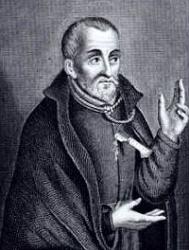
1567 - 1620 Person Name: Thomas Campion (1567-1620) Topics: Scriptural Songs Author of "Sing a song of joy, praise our God with mirth" in The Summit Choirbook Campion, Thomas, born c. 1567, d. 1619, and buried at St. Dunstan's in the West, London, March 1, 1619. He was a physician, poet, and musician, but his reputation rests mainly on his poetical works. These include various Masques performed before James I. and other noble personages. Of these some rare copies are in the British Museum. His Observations in the Art of English Pœsie, &c, was published in 1602, and his New Way of Making four parts in Counter-point, &c, 1620. Of his poems, five are given by Palgrave in his Treasury of Sacred Song, 1889. His connection with hymnody is very slight, and nothing by him is now in common use. --John Julian, Dictionary of Hymnology, New Supplement (1907)

Ken Canedo

Topics: Service Music Prayer For Illumination / Scripture Response Author of "Holy Spirit, Come into Our Lives" in More Voices

Michael Card

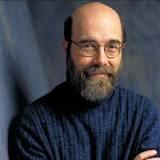
b. 1957 Topics: Choruses Scripture and Praise Author of "El Shaddai" in The Hymnal for Worship and Celebration Michael Card (born April 11, 1957) is an American Christian singer-songwriter, musician, author, and radio host from Franklin, Tennessee. He is best known for his contributions in contemporary Christian music, which couple folk-style melodies and instrumentation with lyrics that stem from intensive study of the Bible. Since his debut in 1981, he has sold more than 4 million albums and has written 19 No. 1 singles. He has also authored several books, including Gold Medallion Book Award winner A Sacred Sorrow. Card was born in Madison, Tennessee as the son of a doctor and grandson of a Baptist minister. He received Bachelor's and Master's degrees in Biblical Studies from Western Kentucky University, and was awarded the university's "Distinguished Alumni Award" in 1997. His studies in physics and astronomy allowed him to support himself while a student by working for six years at a planetarium. As of 2005, he is working on a Doctorate of Philosophy (Ph.D.) in Classical Literature Card never intended to be a professional musician. He got his start when his professor and mentor, William L. Lane, asked Card to write some music to accompany weekly sermons at their church. His friend, musician Randy Scruggs, then asked him to record a demo tape so Scruggs could get a job as a producer. The record label agreed to hire Scruggs as long as his first project was to produce an album featuring Card. Since then Card has released nineteen original albums and at least six compilation albums. Another album, Starkindler, is composed of Card's interpretations of traditional Celtic hymns. The compilations often include one or two new songs along with previously released material. With the exception of Starkindler, Card writes the vast majority of the music he records (although sometimes with collaborators). Many of Card's albums are structured around a unifying theme. For example, the songs from The Beginning are all based on the Pentateuch. The individual songs have subjects such as Genesis, Leviticus, Abraham, Isaac and Moses. Card is particularly adept at relating difficult or obscure concepts from the Old Testament to more understandable themes from the New Testament. For example, the song "Jubilee" talks about the period of rest and the release from debts and slavery commanded in the Jubilee year as described in Leviticus 25, but also reveals how the idea culminated in the rest and freedom from condemnation offered through Jesus. Card's most famous song is "El Shaddai", which was recorded by Amy Grant as well as by Card himself. Grant's recording was named No. 326 on the RIAA's list of 365 Songs of the Century in 2001. Other popular Card songs include "Immanuel", "Joy in the Journey", and "Heal Our Land". "Heal Our Land" was commissioned as the 1993 National Day of Prayer's theme song. Despite his success in music, Card has always maintained that his music career is secondary to his calling as a Bible teacher. He has at times distanced himself from the CCM industry by criticizing the promotion of personalities over musical contentand the shifting emphasis away from God in order to sell more albums. One current music project is his writing and mentoring of musicians under the ByFor.org Project. Michael Card is the author or co-author of nineteen books. He originally started writing as a way to share the knowledge he accumulated while researching his songs. His studies were so in-depth that he couldn't condense everything he had learned into one short song. The books that resulted from album research bear the same titles as the albums. He then branched out to other subjects not specifically based on his music, such as the Gospel of John, homeschooling, and Christian discipleship and mentoring. As of 2005, he has joined with NavPress to pursue his interest in writing Christian fiction. Radio Host In addition to touring and writing, Card also hosted a weekly radio program. In the Studio with Michael Card was carried by stations in 48 states, Canada, and the Caribbean. It was also available via internet streaming audio and as a podcast. The show was an amalgam of talk, musical performances and Bible study. The show ceased production in March, 2009. --en.wikipedia.org/wiki (excerpts)

Pages


Export as CSV
It looks like you are using an ad-blocker. Ad revenue helps keep us running. Please consider white-listing Hymnary.org or getting Hymnary Pro to eliminate ads entirely and help support Hymnary.org.