

 My Starred Hymns
 My FlexScores
 My Hymnals
 My Purchased Files
Planning worship?
Check out our sister site, ZeteoSearch.org,
for 20+ additional resources related to your search.
- |
User Links
Person Results
A. H. Mann
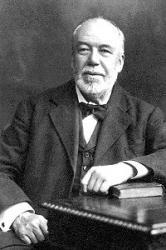
1850 - 1929 Person Name: Arthur H. Mann Topics: Holy Scriptures; Inspiration of Scriptures; Scriptures, The Holy Composer of "BERNO" in The Hymnal Arthur Henry ‘Daddy’ Mann MusB MusD United Kingdom 1850-1929. Born at Norwich, Norfolk, England, he graduated from New College, Oxford. He married Sarah Ransford, and they had five children: Sarah, Francis, Arthur, John, and Mary. Arthur died in infancy. Mann was a chorister and assistant organist at Norwich Cathedral, then, after short stints playing the organ at St Peter’s, Wolverhampton (1870-71); St. Michael’s Tettenhall Parish Church (1871-75); and Beverley Minster (1875-76); he became organist at King’s College Chapel, Cambridge (1876-1929), Cambridge University organist (1897-1929), and music master and organist at the Leys School, Cambridge (1894-1922). In addition to composing an oratorio and some hymn tunes, he was music editor of the Church of England Hymnal (1894). In 1918 he directed the music and first service of “Nine lessons & carols” at King’s College Chapel. He was an arranger, author, composer, and editor. His wife, Sarah, died in 1918. He died at Cambridge, England.
John Perry
A. H. Mann
Christopher Norton
b. 1953 Topics: The Church of Jesus Christ The Scriptures Arranger of "EBENEZER" in Complete Mission Praise
Christopher Norton
Henry Carey
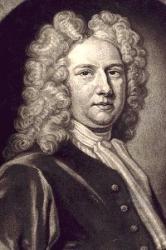
1687 - 1743 Person Name: Henry Carey, c.1687-1743 Topics: Scripture Composer of "SURREY" in Together in Song Henry Carey, b. 1685 (?); d. London, 1743
Evangelical Lutheran Hymnal, 1908
Henry Carey
W. H. Jude
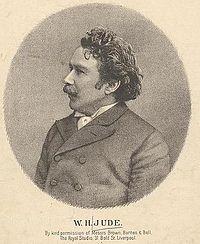
1851 - 1922 Topics: The Holy Scriptures Composer of "[Ever would I fain be reading]" in Carmina for the Sunday School and Social Worship William Herbert Jude United Kingdom 1851-1922. Born at Westleton, Suffolk, England, his family moved to Norfolk. A precocious child, by age eight he was composing music for school plays. Educated at the Liverpool Organ School and East Liverpool College of Music, he became college principal for awhile. He married Catherine Helena Haigh. They had no children. He became a composer, editor, and organist. He was organist for the Blue Coat Hospital & School and Stretford Town Hall near Manchester, while teaching and lecturing. After 20 years there he was appointed organist at the Exeter Hall in London, a primary venue and Christian Centre owned by the YMCA on the Strand in London. As a recitalist, he was asked to “open” over 1000 new organs across the UK, Ireland, and Australia. He was considered the most brilliant organist of his day. He wrote at least two operettas: “Innocents abroad” (1882) and “The mighty deep” (1917). His compositions were frequently religious. He admired British evangelist, Rodney “Gipsy” Smith and published a collection of Smith’s favorite solos in 1903. He also supported the temperance movement. He toured Australia and New Zealand 1890-1894. In 1904 he served as editor for several musical periodicals, including “Monthly Hymnal”, “Minister of music”, and “The Higher life”. He also compiled several hymnbooks, including “Mission hymns” (1911”), and “Festival hymns” (1916). He wrote a number of works on music. He died in London.
John Perry
W. H. Jude
Ernst W. Olson
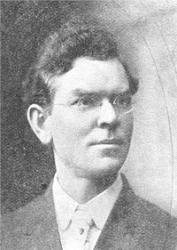
1870 - 1958 Topics: liturgical Scripture Songs Translator of "Children of the Heavenly Father" Ernst W. Olson (b. Skane, Sweden, 1870; d. Chicago, IL, 1958) prepared the English translation for the 1925 Hymnal of the Lutheran Augustana Synod. As editor, writer, poet, and translator, Olson made a valuable contribution to Swedish-American culture and to church music. His family immigrated to Nebraska when he was five years old, but he spent much of his life in the Chicago area. Educated at Augustana College, Rock Island, Illinois, he was editor of several Swedish-American newspapers and spent most of his professional career as an editor for the Augustana Book Concern (1911-1949). Olson wrote History of the Swedes in Illinois (1908). He also contributed four original hymns and twenty-eight translations to The Hymnal (1925) of the Evangelical Lutheran Augustana Synod and served on the committee that produced the Lutheran Service Book and Hymnal (1958).
Bert Polman
Ernst W. Olson
William Bengo Collyer
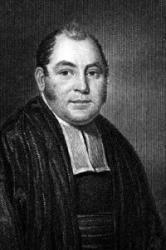
1782 - 1854 Person Name: William B. Collyer (1782-1854) Topics: The Holy Scriptures The Gospel-The Call Alterer of "Return, O Wanderer" in The Church Hymnal William Bengo Collyer was born at Blackheath Hill, in 1782, and studied at Homerton College. Before completing his twentieth year he became pastor of a Congregational society at Peckham, continuing in that position through his life. He died in 1854. He received the degree of D.D. from the University of Edinburgh in 1808. For many years he was one of the most popular Dissenting ministers in London. He published many hymns and some works on theology.
--Annotations of the Hymnal, Charles Hutchins, M.A. 1872.
===================
Collyer, William Bengo, D.D., born at Blackheath, April 14, 1782, educated at Homerton College, where, when 16 years old, he was enrolled as a student for the ministry. At 20 he began his ministry at Peckham on Dec. 17, 1801 ordained pastor of a small church consisting of ten communicants. From 1814 to 1826 he was also pastor of a Church meeting in Salters' Hall. On June 17, 1817, a new chapel was opened for him at Peckham. There, from the time of his settlement in 1801, he laboured with great success and honour until Dec. 11, 1853, on which clay he preached for the last time. He died Jan. 8, 1854.
Dr. Collyer was eminent in his day as an eloquent Evangelical preacher, when formalism in worship, and Arianism in doctrine, prevailed. He was a man of amiable disposition, polished manners, and Christian courtesy; popular with rich and poor alike. He was the author of a series of lectures on Divine Revelation, in seven volumes: Scripture Facts, Prophecies, Miracles, Parables, Doctrines, Duties, Comparisons. Dr. Collyer compiled a hymn-book with the title, Hymns partly collected and partly original, designed as a supplement to Dr. Watts's Psalms and Hymns, 1812. It was intended at first for the use of his own congregation only, and was to include many hymns composed by himself, to be sung after sermons which he had preached to them, but he was led to alter the plan. It comprises 979 hymns, 6 choruses, and 4 doxologics, arranged in groups according to their authors, and not subjects. Of this number 57 were written by Dr. Collyer, and are for the most part short descriptive or didactic poems, religious or moral essays in verse, and not hymns addressed to the Creator and Redeemer. Some of them are devoid of Christian truth, and are poems of nature or of sentiment. Some of them were written during the hard and sorrowful times of the wars of Bonaparte, and relate to famine and national calamity. Several were prepared for the public meetings of missionary and benevolent societies, which had their origin in his time. He also published Services suited to the Solemnization of Matrimony, Baptism, &c, 1837, which contained 89 of his hymns, &c.; Hymns for Israel, a Tribute of Love for God's Ancient People, 1848 (41 hymns). In Dr. Leifchild's Original Hymns, 1843, there are also 39 of his compositions. Many of his pieces appeared in the Evangelical Magazine, and were also appended to his numerous published Sermons. A few of his hymns are still in common use, including. "Another fleeting day is gone"; "Assembled at Thy great command"; "O Jesu, in this solemn hour"; "O Thou, the helpless orphan's hope"; "Return, O wanderer, return," and the fine cento, "Great God, what do I see and hear."
[Rev. F. J. Faulding, D.D.]
--John Julian, Dictionary of Hymnology (1907)
======================
Collyer, William Bengo, p. 243, ii. The following hymns by Dr. Collyer are also in common use:—
1. Another fleeting day is gone. Evening. (1812.)
2. 0 Jesus, in this solemn hour. Reception of Church Officers. (1842.)
3. O Thou, the helpless orphan's hope. On Behalf of Orphans. In the Evangelical Magazine, 1808, p. 48.
4. See the clouds upon the mountain. Sunday Morning. (1842.)
5. Soft be the gently breathing notes. Praise to the Redeemer. (1812.)
6. Softly the shade of evening falls. Evening. (1812.) From this, “Soon shall a darker night descend" is taken.
7. Thou Prince of glory slain for me. Good Friday. (1812.)
The date 1812 is that of his Collection, and 1842 of Leifchild's Original Hymns.
--John Julian, Dictionary of Hymnology, Appendix, Part II (1907)
William Bengo Collyer
Dmitriĭ Stepanovich Bortnianskiĭ
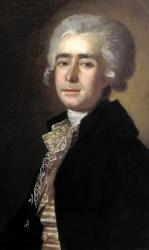
1751 - 1825 Person Name: Dmitri Bortniansky, 1752-1825 Topics: The Holy Scriptures Composer of "ST. PETERSBURG" in Hymnal and Liturgies of the Moravian Church Dimitri Stepanovitch Bortniansky (1751-1825) Ukraine 1751-1825
Born in Glukhov, Ukraine, he joined the imperial choir at age 8 and studied with Galuppi, who later took the lad with him to Italy, where he studied for 10 years, becoming a composer, harpsichordist, and conductor. While in Italy he composed several operas and other instrumental music, composing more operas and music later in Russia. In 1779 he returned to Russia, where he was appointed Director to the Imperial Chapel Choir, the first as a native citizen. In 1796 he was appointed music director. With such a great instrument at his disposal, he produced many compositions, 100+ religious works, sacred concertos, cantatas, and hymns. He influenced Rachmaninoff and Tchaikovshy, the latter editing Bortniansky's sacred work, amassing 10 volumnes. He died in St. Petersburg. He was so popular in Russia that a bronze statue was erected in his honor in the Novgorod Kremlin. He composed in different musical styles, including choral works in French, Italian, Latin, German, and Church Slavonic.
John Perry
Dmitriĭ Stepanovich Bortnianskiĭ
Richard Runciman Terry
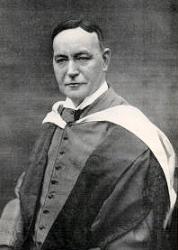
1865 - 1938 Person Name: Richard Runciman Terry (1865-1938) Topics: Scripture Composer of "BILLING" in Ancient and Modern Terry, Richard R., was born at Morpeth, Jan. 3, 1868, and was Tate Choral Scholar at King's College, Cambridge. In 1896 he became organist and music-master at Downside R. C. College and Abbey, Bath; and in 1901 organist and director of the choir at Westminster Cathedral (R. C.) London. He contributed to A. E. Tozer's Catholic Hymns, 1898, thirteen tunes and the words of two hymns:—
1. Christ, the Lord, is my true Shepherd. Ps. xxiii.
2. Peaceful eve, so still and holy. Christmas Carol. It is marked as D. C. B., i.e. for Downside Coll., Bath.
The tune by Mr. Tozor was published in 1881 to a carol beginning with the same first line, but otherwise entirely different.
--John Julian, Dictionary of Hymnology, New Supplement (1907)
Richard Runciman Terry
Martin Shaw
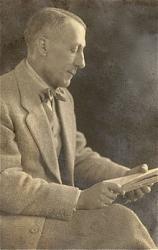
1875 - 1958 Person Name: Martin Shaw, 1875-1958 Topics: Canticles and Scripture Paraphrases Harmonizer of "CREDITON" in The Book of Praise Martin F. Shaw was educated at the Royal College of Music in London and was organist and choirmaster at St. Mary's, Primrose Hill (1908-1920), St. Martin's in the Fields (1920-1924), and the Eccleston Guild House (1924-1935). From 1935 to 1945 he served as music director for the diocese of Chelmsford. He established the Purcell Operatic Society and was a founder of the Plainsong and Medieval Society and what later became the Royal Society of Church Music.
Author of The Principles of English Church Music Composition (1921), Shaw was a notable reformer of English church music. He worked with Percy Dearmer (his rector at St. Mary's in Primrose Hill); Ralph Vaughan Williams, and his brother Geoffrey Shaw in publishing hymnals such as Songs of Praise (1925, 1931) and the Oxford Book of Carols (1928). A leader in the revival of English opera and folk music scholarship, Shaw composed some one hundred songs as well as anthems and service music; some of his best hymn tunes were published in his Additional Tunes in Use at St. Mary's (1915).
Bert Polman
Martin Shaw
Michael Saward
1932 - 2015 Topics: The Church of Jesus Christ The Scriptures Author of "These are the facts" in Complete Mission Praise Michael John Saward (b. Blackheath, Kent, England, 1932) was residentiary Canon of St. Paul's Cathedral, London, and a church commissioner and member of the general synod of the Church of England. Educated at Eltham College, Bristol University, and Tyndale Hall, he was ordained in the Church of England in 1956. Saward served in several congregations and was radio and television officer for the Church Information Office (1967-1972). His publications include Leisure (1963), Couldn’t Care Less (1966), Don't Miss the Party (1974), and All Change (1983). Associated with the Jubilate Group for a number of years, he has written some sixty hymns and served as text editor for Hymns for Today's Church (1982).
Bert Polman
Michael Saward
Pages




