You help make Hymnary.org possible. More than 10 million people from 200+ countries found hymns, liturgical resources and encouragement on Hymnary.org in 2025, including you. Every visit affirms the global impact of this ministry.

If Hymnary has been meaningful to you this year, would you take a moment today to help sustain it? A gift of any size—paired with a note of encouragement if you wish—directly supports the server costs, research work and curation that keep this resource freely available to the world.

Give securely online today, or mail a check to:
Hymnary.org
Calvin University
3201 Burton Street SE
Grand Rapids, MI 49546

Thank you for your partnership, and may the hope of Advent fill your heart.

Person Results

Topics:consecration+of+churches
In:people

Planning worship? Check out our sister site, ZeteoSearch.org, for 20+ additional resources related to your search.
Showing 131 - 140 of 306Results Per Page: 102050

Edmond Budry

1854 - 1932 Person Name: E. Budry Topics: Church and Christian Unity; Kirche und Wiederverinigung; L’Eglise et l’unité; Evangelism and Missions; Evangelisation und Mission; Evangélisation et Missions; Day Of Prayer; Gebetstag; Jour de prière; Dedication; Heiligung und christlicher Dienst; Consecration Translator (French) of "Herz und Herz vereint zusammen" in Cantate Domino

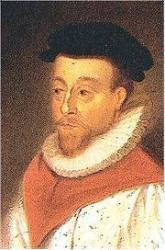
Orlando Gibbons

1583 - 1625 Person Name: Orlando Gibbons, 1583-1625 Topics: The Church of God The Sacraments - Baptism; The Church of God The Sacraments - The Lord's Supper; The Life in Christ Consecration and Discipleship; Times and Seasons Morning Composer of "SONG 34 (ANGELS' SONG)" in The Hymnary of the United Church of Canada Orlando Gibbons (baptised 25 December 1583 – 5 June 1625) was an English composer, virginalist and organist of the late Tudor and early Jacobean periods. He was a leading composer in the England of his day. Gibbons was born in Cambridge and christened at Oxford the same year – thus appearing in Oxford church records. Between 1596 and 1598 he sang in the Choir of King's College, Cambridge, where his brother Edward Gibbons (1568–1650), eldest of the four sons of William Gibbons, was master of the choristers. The second brother Ellis Gibbons (1573–1603) was also a promising composer, but died young. Orlando entered the university in 1598 and achieved the degree of Bachelor of Music in 1606. James I appointed him a Gentleman of the Chapel Royal, where he served as an organist from at least 1615 until his death. In 1623 he became senior organist at the Chapel Royal, with Thomas Tomkins as junior organist. He also held positions as keyboard player in the privy chamber of the court of Prince Charles (later King Charles I), and organist at Westminster Abbey. He died at age 41 in Canterbury of apoplexy, and a monument to him was built in Canterbury Cathedral. A suspicion immediately arose that Gibbons had died of the plague, which was rife in England that year. Two physicians who had been present at his death were ordered to make a report, and performed an autopsy, the account of which survives in The National Archives: We whose names are here underwritten: having been called to give our counsels to Mr. Orlando Gibbons; in the time of his late and sudden sickness, which we found in the beginning lethargical, or a profound sleep; out of which, we could never recover him, neither by inward nor outward medicines, & then instantly he fell in most strong, & sharp convulsions; which did wring his mouth up to his ears, & his eyes were distorted, as though they would have been thrust out of his head & then suddenly he lost both speech, sight and hearing, & so grew apoplectical & lost the whole motion of every part of his body, & so died. Then here upon (his death being so sudden) rumours were cast out that he did die of the plague, whereupon we . . . caused his body to be searched by certain women that were sworn to deliver the truth, who did affirm that they never saw a fairer corpse. Yet notwithstanding we to give full satisfaction to all did cause the skull to be opened in our presence & we carefully viewed the body, which we found also to be very clean without any show or spot of any contagious matter. In the brain we found the whole & sole cause of his sickness namely a great admirable blackness & syderation in the outside of the brain. Within the brain (being opened) there did issue out abundance of water intermixed with blood & this we affirm to be the only cause of his sudden death. His death was a shock to peers and the suddenness of his passing drew comment more for the haste of his burial – and of its location at Canterbury rather than the body being returned to London. His wife, Elizabeth, died a little over a year later, aged in her mid-30s, leaving Orlando's eldest brother, Edward, to care for the children left orphans by this event. Of these children only the eldest son, Christopher Gibbons, went on to become a musician. One of the most versatile English composers of his time, Gibbons wrote a quantity of keyboard works, around thirty fantasias for viols, a number of madrigals (the best-known being "The Silver Swan"), and many popular verse anthems. His choral music is distinguished by his complete mastery of counterpoint, combined with his wonderful gift for melody. Perhaps his most well known verse anthem is This is the record of John, which sets an Advent text for solo countertenor or tenor, alternating with full chorus. The soloist is required to demonstrate considerable technical facility at points, and the work at once expresses the rhetorical force of the text, whilst never being demonstrative or bombastic. He also produced two major settings of Evensong, the Short Service and the Second Service. The former includes a beautifully expressive Nunc dimittis, while the latter is an extended composition, combining verse and full sections. Gibbons's full anthems include the expressive O Lord, in thy wrath, and the Ascension Day anthem O clap your hands together for eight voices. He contributed six pieces to the first printed collection of keyboard music in England, Parthenia (to which he was by far the youngest of the three contributors), published in about 1611. Gibbons's surviving keyboard output comprises some 45 pieces. The polyphonic fantasia and dance forms are the best represented genres. Gibbons's writing exhibits full mastery of three- and four-part counterpoint. Most of the fantasias are complex, multisectional pieces, treating multiple subjects imitatively. Gibbons's approach to melody in both fantasias and dances features a capability for almost limitless development of simple musical ideas, on display in works such as Pavane in D minor and Lord Salisbury's Pavan and Galliard. In the 20th century, the Canadian pianist Glenn Gould championed Gibbons's music, and named him as his favorite composer. Gould wrote of Gibbons's hymns and anthems: "ever since my teen-age years this music ... has moved me more deeply than any other sound experience I can think of." In one interview, Gould compared Gibbons to Beethoven and Webern: ...despite the requisite quota of scales and shakes in such half-hearted virtuoso vehicles as the Salisbury Galliard, one is never quite able to counter the impression of music of supreme beauty that lacks its ideal means of reproduction. Like Beethoven in his last quartets, or Webern at almost any time, Gibbons is an artist of such intractable commitment that, in the keyboard field, at least, his works work better in one's memory, or on paper, than they ever can through the intercession of a sounding-board. To this day, Gibbons's obit service is commemorated every year in King's College Chapel, Cambridge. --wikipedia.org

John Goss

1800 - 1880 Person Name: John Goss, 1800-1880 Topics: The Church of God The Sacraments - Baptism; The Church of God The Sacraments - The Lord's Supper; The Life in Christ Consecration and Discipleship; The Life in Christ Fellowship and Service; The Gospel Call Adapter of "ARMAGEDDON" in The Hymnary of the United Church of Canada John Goss (b. Fareham, Hampshire, England, 1800; d. London, England, 1880). As a boy Goss was a chorister at the Chapel Royal and later sang in the opera chorus of the Covent Garden Theater. He was a professor of music at the Royal Academy of Music (1827-1874) and organist of St. Paul Cathedral, London (1838-1872); in both positions he exerted significant influence on the reform of British cathedral music. Goss published Parochial Psalmody (1826) and Chants, Ancient and Modern (1841); he edited William Mercer's Church Psalter and Hymn Book (1854). With James Turle he published a two-volume collection of anthems and Anglican service music (1854). Bert Polman

C. G. Gläser

1784 - 1829 Person Name: Carl Gotthilf Gläser , 1784 - 1829 Topics: The Church of God Baptism; The Church of God The Lord's Supper; The Life in Christ Consecration and Discipleship Composer (Adapted from) of "DENFIELD" in The Hymnary Carl Gotthelf Gläser Germany 1781-1829. Born at Weissenfels, Burgenlandkreis, Sachsen-Anhalt, Germany, he received musical training from his father, after which he attended St. Thomas school in Leipzig. He became an author and composer. At Barmen he taught voice, piano, and violin. He also wrote and conducted chorale music. He died at Barmen. John Perry

George Ratcliffe Woodward

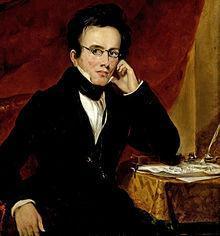
1848 - 1934 Person Name: G. R. Woodward Topics: The Church at Worship Opening and Morning Hymns; liturgical Opening Hymns; Consecration; God Glory; God Light; Holy Spirit Illumination; Jesus Christ Images of; Jesus Christ Light; Light; Morning; Opening Hymns; Service Music Gathering, Call to Worship, Greeting; Trinity; Christmas Day 2 Year A; Christmas Day 2 Year A; Epiphany 3 Year A; Epiphany 5 Year A; Epiphany 6 Year A; Easter 1 Year A; Christmas Day 2 Year B; Christmas 2 Year B; Proper 22 Year B; Epiphany Year C; Epiphany Last/Transfig. Year C; Easter 6 Year C Harmonizer of "PUER NOBIS NASCITUR" in Voices United Educated at Caius College in Cambridge, England, George R. Woodward (b. Birkenhead, Cheshire, England, 1848; d. Highgate, London, England, 1934) was ordained in the Church of England in 1874. He served in six parishes in London, Norfolk, and Suffolk. He was a gifted linguist and translator of a large number of hymns from Greek, Latin, and German. But Woodward's theory of translation was a rigid one–he held that the translation ought to reproduce the meter and rhyme scheme of the original as well as its contents. This practice did not always produce singable hymns; his translations are therefore used more often today as valuable resources than as congregational hymns. With Charles Wood he published three series of The Cowley Carol Book (1901, 1902, 1919), two editions of Songs of Syon (1904, 1910), An Italian Carol Book (1920), and the Cambridge Carol Book

A. L. Peace

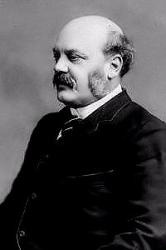
1844 - 1912 Person Name: Albert Lister Peace Topics: The Church in the World Commitment: Trust; Assurance; Commitment; Consecration; Conversion; Eternal Life; God Love; Grief; Holy Spirit Gifts; Jesus Christ Cross; Jesus Christ Images of; Jesus Christ Light; Jesus Christ Love of; Joy; Light; Love; Repentance; Rest; Suffering; Surrender; Trust; Trust; Lent 3 Year A; Easter 4 Year A; Proper 6 Year A; Proper 7 Year A; Proper 12 Year A; Proper 13 Year A; Proper 17 Year A; Epiphany 4 Year C; Epiphany 4 Year C; Lent 3 Year C; Easter 5 Year C; Trinity Sunday Year C; Proper 13 Year C; Proper 26 Year C Composer of "ST. MARGARET" in Voices United Albert Lister Peace DMus United Kingdom 1844-1912. Born at Huddersfield, Yorkshire, England, son of a warehouseman and woolstapler, he was extremely gifted as a musician, largely self-taught, playing the organ at Holmfirth Parish Church near Huddersfield at age nine. He married Margaret Martin Steel Gilchrist, and they had three children: Lister, Archibald, and Margaret. In 1865 he was appointed organist of Trinity Congregational Church in Glasgow, Scotland. He obtained his doctorate degree from the University of Oxford in 1875. He became organist at Glasgow Cathedral in 1879. In 1897 he succeeded William Best as organist at St George’s Hall, Liverpool. In later years he was in much demand to play the organ in recitals. He did so at Canterbury Cathedral (1886), Victoria Hall, Hanley, Stoke-on-Trent (1888), and Newcastle Cathedral (1891). He composed orchestrations, sonatas, cantatas, and concert and church service anthems. He was an arranger, author, and editor. He died at Blundelsands, Liverpool, England. John Perry

Melchior Vulpius

1570 - 1615 Person Name: Melchoir Vulpius Topics: Anniversaries; Assurance; Church Year Lent; Church Year Transfiguration; Conflict; Courage; Darkness; Elements of Worship Call to Worship; Elements of Worship Confession (Individual); Elements of Worship Gathering; Elements of Worship Prayer for Illumination; Enemies; Freedom from Fear; God Dependence on; God as Refuge; God as Shelter; God's Armor; God's Love; God's Presence; God's Protection; God's Strength; Hope; Joy; Judgment; Lament Individual; Mercy; Occasional Services Dedication / Consecration / Anniversary; Occasional Services Funerals; Occasional Services Ordination and/or Installation; Peace; People of God / Church Suffering; Prayer; Temptation And Trial; Truth; Year A, Ordinary Time after Epiphany, 3rd Sunday; Year C, Lent, 2nd Sunday Composer of "CHRISTUS, DER IST MEIN LEBEN" in Psalms for All Seasons Born into a poor family named Fuchs, Melchior Vulpius (b. Wasungen, Henneberg, Germany, c. 1570; d. Weimar, Germany, 1615) had only limited educational oppor­tunities and did not attend the university. He taught Latin in the school in Schleusingen, where he Latinized his surname, and from 1596 until his death served as a Lutheran cantor and teacher in Weimar. A distinguished composer, Vulpius wrote a St. Matthew Passion (1613), nearly two hundred motets in German and Latin, and over four hundred hymn tunes, many of which became popular in Lutheran churches, and some of which introduced the lively Italian balletto rhythms into the German hymn tunes. His music was published in Cantiones Sacrae (1602, 1604), Kirchengesangund Geistliche Lieder (1604, enlarged as Ein schon geistlich Gesanglmch, 1609), and posthumous­ly in Cantionale Sacrum (1646). Bert Polman

Christopher Walker

b. 1947 Person Name: Christopher Walker Topics: Antiphonal Psalms; Biblical Names and Places Aaron; Biblical Names and Places Israel; Church Year Easter; Church Year Passion/Palm Sunday; Elements of Worship Call to Worship; Elements of Worship Lord's Supper; Elements of Worship Praise and Adoration; Freedom; God's Triumph; God's Goodness; God's House; God's House; God's Name; God's People (flock, sheep); Mercy; Occasional Services Dedication / Consecration / Anniversary; Prayer; Processions; Salvation; Temple; Unity and Fellowship; Worship; Year A, B, C, Easter, Resurrection of the Lord; Year A, B, C, Lent, Liturgy of the Palms; Year C, Easter, 2nd Sunday Composer of "[Alleluia, alleluia]" in Psalms for All Seasons

Felix Mendelssohn-Bartholdy

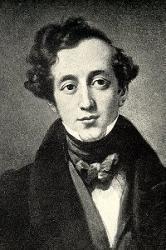
1809 - 1847 Topics: Church Year Christmas; Christmas Day; The Day of the Annunciation; Christ Incarnation; Names and Office of Christ Desire of Nations; Names and Office of Christ Immanuel; Names and Office of Christ Light; Names and Office of Christ Prince of Peace; Names and Office of Christ Physician; Names and Office of Christ Sun; Consecration; Incarnation of Christ; Mystical union; Regeneration Composer of "MENDELSSOHN" in The Hymnal and Order of Service Felix Mendelssohn-Bartholdy (b. Hamburg, Germany, 1809; d. Leipzig, Germany, 1847) was the son of banker Abraham Mendelssohn and the grandson of philosopher Moses Mendelssohn. His Jewish family became Christian and took the Bartholdy name (name of the estate of Mendelssohn's uncle) when baptized into the Lutheran church. The children all received an excellent musical education. Mendelssohn had his first public performance at the age of nine and by the age of sixteen had written several symphonies. Profoundly influenced by J. S. Bach's music, he conducted a performance of the St. Matthew Passion in 1829 (at age 20!) – the first performance since Bach's death, thus reintroducing Bach to the world. Mendelssohn organized the Domchor in Berlin and founded the Leipzig Conservatory of Music in 1843. Traveling widely, he not only became familiar with various styles of music but also became well known himself in countries other than Germany, especially in England. He left a rich treasury of music: organ and piano works, overtures and incidental music, oratorios (including St. Paul or Elijah and choral works, and symphonies. He harmonized a number of hymn tunes himself, but hymnbook editors also arranged some of his other tunes into hymn tunes. Bert Polman

J. A. P. Schulz

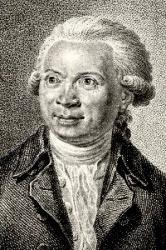
1747 - 1800 Person Name: fr. Schulz Topics: Activity; Charity; Christians Duties; Church Work of; Communion of Saints At Lord's Table; Consecration Of Possessions Arranger of "SOLNEY" in Laudes Domini Johann Abraham Peter Schulz Germany 1747-1800. Born at Luneburg, Germany, son of a baker, he attended St Michaelis school in Luneburg and studied organ, then the Johanneum from 1759-1764. In 1765 he was a student of composer, Johann Kimberger, and then taught in Berlin himself. In 1768 Kimberger recommended Schulz for the position of music teacher and accompanist to the Polish Princess Sapieha Woiwodin von Smolensk. Schulz moved to Berlin and traveled with her for three years performing throughout Europe, where he came in contact with many new musical ideas. He married Catharina Maria Gercken, and they had a daughter, Celle. He served as the conductor of the French Theatre in Berlin from 1776-1780. From 1786-1787 he was the Kapellmeister of Prince Henry in Rheinsberg. He began writing operas in 1785 and became musical director of the Berlin French theatre. Schulz went on to serve as Court Kapellmeister in Copenhagen from 1787-1795 before returning to Berlin. In Copenhagen the music library burned down, and he had a breakdown in health from trying to save it. His health suffered further from the effects of a shipwreck he experienced in 1796. Schulz wrote seven operas, stage music, oratorios, and cantatas, as well as piano pieces, folk songs, and church music. He also wrote articles on music theory for Johann Georg Sulzer’s ‘Allgemeine Theorie der schonen Kunste’ in four volumes. He died at Schwedt an der Oder, Germany. John Perry

Pages


Export as CSV
It looks like you are using an ad-blocker. Ad revenue helps keep us running. Please consider white-listing Hymnary.org or getting Hymnary Pro to eliminate ads entirely and help support Hymnary.org.