You help make Hymnary.org possible. More than 10 million people from 200+ countries found hymns, liturgical resources and encouragement on Hymnary.org in 2025, including you. Every visit affirms the global impact of this ministry.

If Hymnary has been meaningful to you this year, would you take a moment today to help sustain it? A gift of any size—paired with a note of encouragement if you wish—directly supports the server costs, research work and curation that keep this resource freely available to the world.

Give securely online today, or mail a check to:
Hymnary.org
Calvin University
3201 Burton Street SE
Grand Rapids, MI 49546

Thank you for your partnership, and may the hope of Advent fill your heart.

Person Results

Topics:easter+vigil+++
In:people

Planning worship? Check out our sister site, ZeteoSearch.org, for 20+ additional resources related to your search.
Showing 131 - 140 of 360Results Per Page: 102050

Keith Getty

b. 1974 Topics: Church Year Easter Vigil Author of "Across the Lands" in Lift Up Your Hearts Keith Getty (b. December 16, 1974) is a world-renowned modern hymn writer. Keith developed a passion for writing good songs for the church in his twenties, and began writing for his small Baptist church. He writes and performs with his wife, Kristyn and they regularly tour the United States and the United Kingdom. (Also known as Julian Keith Getty) Laura de Jong

Albert F. Bayly

1901 - 1984 Person Name: Albert F. Bayly, 1901-1984 Topics: Years A, B, and C Easter Vigil Author of "O Lord of every shining constellation" in Complete Anglican Hymns Old and New Albert F. Bayly was born on Sep­tem­ber 6, 1901, Bex­hill on Sea, Sus­sex, Eng­land. He received his ed­u­cat­ion at Lon­don Un­i­ver­si­ty (BA) and Mans­field Coll­ege, Ox­ford. Bayly was a Congregationalist (later United Reformed Church) minister from the late 1920s until his death in 1984. His life and ministry spanned the Depression of the 1930s, the Second World War, and the years of reconstruction which followed. Af­ter re­tir­ing in 1971, he moved to Spring­field, Chelms­ford, and was ac­tive in the local Unit­ed Re­formed Church. He wrote sev­er­al pageants on mis­sion themes, and li­bret­tos for can­ta­tas by W. L. Lloyd Web­ber. He died on Ju­ly 26, 1984 in Chiches­ter, Sus­sex, Eng­land. NN, Hymnary editor. Sources: www.hymntime.com/tch and Church Times, an Anglican newspaper, Tuesday 20 October 2015

William B. Bradbury

1816 - 1868 Person Name: William B. Bradbury, 1816-1868 Topics: Year A, B, C, Easter, Easter vigil Composer of "ANDRE" in Psalms for All Seasons William Batchelder Bradbury USA 1816-1868. Born at York, ME, he was raised on his father's farm, with rainy days spent in a shoe-shop, the custom in those days. He loved music and spent spare hours practicing any music he could find. In 1830 the family moved to Boston, where he first saw and heard an organ and piano, and other instruments. He became an organist at 15. He attended Dr. Lowell Mason's singing classes, and later sang in the Bowdoin Street church choir. Dr. Mason became a good friend. He made $100/yr playing the organ, and was still in Dr. Mason's choir. Dr. Mason gave him a chance to teach singing in Machias, ME, which he accepted. He returned to Boston the following year to marry Adra Esther Fessenden in 1838, then relocated to Saint John, New Brunswick. Where his efforts were not much appreciated, so he returned to Boston. He was offered charge of music and organ at the First Baptist Church of Brooklyn. That led to similar work at the Baptist Tabernacle, New York City, where he also started a singing class. That started singing schools in various parts of the city, and eventually resulted in music festivals, held at the Broadway Tabernacle, a prominent city event. He conducted a 1000 children choir there, which resulted in music being taught as regular study in public schools of the city. He began writing music and publishing it. In 1847 he went with his wife to Europe to study with some of the music masters in London and also Germany. He attended Mendelssohn funeral while there. He went to Switzerland before returning to the states, and upon returning, commenced teaching, conducting conventions, composing, and editing music books. In 1851, with his brother, Edward, he began manufacturring Bradbury pianos, which became popular. Also, he had a small office in one of his warehouses in New York and often went there to spend time in private devotions. As a professor, he edited 59 books of sacred and secular music, much of which he wrote. He attended the Presbyterian church in Bloomfield, NJ, for many years later in life. He contracted tuberculosis the last two years of his life. John Perry

Natalie Sleeth

1930 - 1992 Topics: Christian Year Easter Vigil Author of "In the Bulb There Is a Flower (Hymn of Promise)" in Glory to God

Michael Joncas

b. 1951 Person Name: Michael Joncas, b. 1951 Topics: Easter Vigil Reading 6; Easter Vigil Reading 6; Easter Vigil Reading 6 Composer of "[The law of the LORD is perfect]" in Journeysongs (2nd ed.)

Venantius Honorius Clementianus Fortunatus

540 - 600 Person Name: Venantius Fortunatus, c. 530-609 Topics: Easter Vigil Author of "Hail Thee, Festival Day" in Worship (3rd ed.) Venantius Honorius Clematianus Fortunatus (b. Cenada, near Treviso, Italy, c. 530; d. Poitiers, France, 609) was educated at Ravenna and Milan and was converted to the Christian faith at an early age. Legend has it that while a student at Ravenna he contracted a disease of the eye and became nearly blind. But he was miraculously healed after anointing his eyes with oil from a lamp burning before the altar of St. Martin of Tours. In gratitude Fortunatus made a pilgrimage to that saint's shrine in Tours and spent the rest of his life in Gaul (France), at first traveling and composing love songs. He developed a platonic affection for Queen Rhadegonda, joined her Abbey of St. Croix in Poitiers, and became its bishop in 599. His Hymns far all the Festivals of the Christian Year is lost, but some of his best hymns on his favorite topic, the cross of Jesus, are still respected today, in part because of their erotic mysticism. Bert Polman ================== Fortunatus, Venantius Honorius Clementianus, was born at Ceneda, near Treviso, about 530. At an early age he was converted to Christianity at Aquileia. Whilst a student at Ravenna he became almost blind, and recovered his sight, as he believed miraculously, by anointing his eyes with some oil taken from a lamp that burned before the altar of St. Martin of Tours, in a church in that town. His recovery induced him to make a pilgrimage to the shrine of St. Martin, at Tours, in 565, and that pilgrimage resulted in his spending the rest of his life in Gaul. At Poitiers he formed a romantic, though purely platonic, attachment for Queen Rhadegunda, the daughter of Bertharius, king of the Thuringians, and the wife, though separated from him, of Lothair I., or Clotaire, king of Neustria. The reader is referred for further particulars of this part of the life of Fortunatus to Smith and Wace's Dictionary of Christian Biography, vol. ii. p. 552. It is sufficient to say here that under the influence of Rhadegunda, who at that time lived at Poitiers, where she had founded the convent of St. Croix, Fortunatus was ordained, and ultimately, after the death of Rhadegunda in 597, became bishop of Poitiers shortly before his own death in 609. The writings, chiefly poetical, of Fortunatus, which are still extant, are very numerous and various in kind; including the liveliest Vers de Societé and the grandest hymns; while much that he is known to have written, including a volume of Hymns for all the Festivals of the Christian Year, is lost. Of what remains may be mentioned, The Life of St. Martin of Tours, his Patron Saint, in four books, containing 2245 hexameter lines. A complete list of his works will be found in the article mentioned above. His contributions to hymnology must have been very considerable, as the name of his lost volume implies, but what remains to us of that character, as being certainly his work, does not comprise at most more than nine or ten compositions, and of some of these even his authorship is more than doubtful. His best known hymn is the famous "Vexilla Regis prodeunt," so familiar to us in our Church Hymnals in some English form or other, especially, perhaps, in Dr. Neale's translation, "The Royal Banners forward go." The next most important composition claimed for him is "Pange, lingua, gloriosi praelium certaminis," but there would seem to be little doubt according to Sirmond (Notis ad Epist. Sidon. Apollin. Lib. iii., Ep. 4), that it was more probably written by Claudianus Mamertus. Besides these, which are on the Passion, there are four hymns by Fortunatus for Christmas, one of which is given by Daniel, "Agnoscat omne saeculum," one for Lent, and one for Easter. Of "Lustra sex qui jam peregit," of which an imitation in English by Bishop. Mant, "See the destined day arise," is well-known, the authorship is by some attributed to Fortunatus, and by some to St. Ambrose. The general character of the poetry of Venantius Fortunatus is by no means high, being distinguished neither for its classical, nor, with very rare exceptions, for its moral correctness. He represents the "last expiring effort of the Latin muse in Gaul," to retain something of the "old classical culture amid the advancing tide of barbarism." Whether we look at his style, or even his grammar and quantities, we find but too much that is open to criticism, whilst he often offends against good taste in the sentiments he enunciates. Occasionally, as we see in the "Vexilla Regis," he rises to a rugged grandeur in which he has few rivals, and some of his poems are by no means devoid of simplicity and pathos. But these are the exceptions and not the rule in his writings, and we know not how far he may have owed even these to the womanly instincts and gentler, purer influence of Rhadegunda. Thierry, in his Récits des Temps Mérovingiens, Récit 5, gives a lively sketch of Fortunatus, as in Archbishop Trench's words (Sacred Latin Poetry, 1874,p. 132), "A clever, frivolous, self-indulgent and vain character," an exaggerated character, probably, because one can hardly identify the author of "Vexilla Regis," in such a mere man of the world, or look at the writer of "Crux benedicta nitet, Dominus qua carne pependit" q.v., as being wholly devoid of the highest aspirations after things divine. A quarto edition of his Works was published in Rome in 1786. [Rev. Digby S. Wrangham, M.A.] - John Julian, Dictionary of Hymnology (1907) ==================== Fortunatus, V. H. C., p. 384, i. The best edition of his poems is F. Leo's edition of his Opera Poetica, Berlin, 1881 (Monumenta Germaniae, vol. iv.). --John Julian, Dictionary of Hymnology, Appendix, Part II (1907)

Johann Crüger

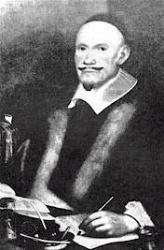
1598 - 1662 Person Name: Johan Crüger, 1598-1662 Topics: Year A, B, C, Easter, Easter vigil Harmonizer of "FREU DICH SEHR (GENEVAN 42)" in Psalms for All Seasons Johann Crüger (b. Grossbriesen, near Guben, Prussia, Germany, 1598; d. Berlin, Germany, 1662) Crüger attended the Jesuit College at Olmutz and the Poets' School in Regensburg, and later studied theology at the University of Wittenberg. He moved to Berlin in 1615, where he published music for the rest of his life. In 1622 he became the Lutheran cantor at the St. Nicholas Church and a teacher for the Gray Cloister. He wrote music instruction manuals, the best known of which is Synopsis musica (1630), and tirelessly promoted congregational singing. With his tunes he often included elaborate accom­paniment for various instruments. Crüger's hymn collection, Neues vollkomliches Gesangbuch (1640), was one of the first hymnals to include figured bass accompaniment (musical shorthand) with the chorale melody rather than full harmonization written out. It included eighteen of Crüger's tunes. His next publication, Praxis Pietatis Melica (1644), is considered one of the most important collections of German hymnody in the seventeenth century. It was reprinted forty-four times in the following hundred years. Another of his publications, Geistliche Kirchen Melodien (1649), is a collection arranged for four voices, two descanting instruments, and keyboard and bass accompaniment. Crüger also published a complete psalter, Psalmodia sacra (1657), which included the Lobwasser translation set to all the Genevan tunes. Bert Polman =============================== Crüger, Johann, was born April 9, 1598, at Gross-Breese, near Guben, Brandenburg. After passing through the schools at Guben, Sorau and Breslau, the Jesuit College at Olmütz, and the Poets' school at Regensburg, he made a tour in Austria, and, in 1615, settled at Berlin. There, save for a short residence at the University of Wittenberg, in 1620, he employed himself as a private tutor till 1622. In 1622 he was appointed Cantor of St. Nicholas's Church at Berlin, and also one of the masters of the Greyfriars Gymnasium. He died at Berlin Feb. 23, 1662. Crüger wrote no hymns, although in some American hymnals he appears as "Johann Krüger, 1610,” as the author of the supposed original of C. Wesley's "Hearts of stone relent, relent" (q.v.). He was one of the most distinguished musicians of his time. Of his hymn tunes, which are generally noble and simple in style, some 20 are still in use, the best known probably being that to "Nun danket alle Gott" (q.v.), which is set to No. 379 in Hymns Ancient & Modern, ed. 1875. His claim to notice in this work is as editor and contributor to several of the most important German hymnological works of the 16th century, and these are most conveniently treated of under his name. (The principal authorities on his works are Dr. J. F. Bachmann's Zur Geschichte der Berliner Gesangbücher 1857; his Vortrag on P. Gerhard, 1863; and his edition of Gerhardt's Geistliche Lieder, 1866. Besides these there are the notices in Bode, and in R. Eitner's Monatshefte für Musik-Geschichte, 1873 and 1880). These works are:— 1. Newes vollkömmliches Gesangbuch, Augspur-gischer Confession, &c, Berlin, 1640 [Library of St. Nicholas's Church, Berlin], with 248 hymns, very few being published for the first time. 2. Praxis pietatis melica. Das ist: Ubung der Gottseligkeit in Christlichen und trostreichen Gesängen. The history of this, the most important work of the century, is still obscure. The 1st edition has been variously dated 1640 and 1644, while Crüger, in the preface to No. 3, says that the 3rd edition appeared in 1648. A considerable correspondence with German collectors and librarians has failed to bring to light any of the editions which Koch, iv. 102, 103, quotes as 1644, 1647, 1649, 1650, 1651, 1652, 1653. The imperfect edition noted below as probably that of 1648 is the earliest Berlin edition we have been able to find. The imperfect edition, probably ix. of 1659, formerly in the hands of Dr. Schneider of Schleswig [see Mützell, 1858, No. 264] was inaccessible. The earliest perfect Berlin edition we have found is 1653. The edition printed at Frankfurt in 1656 by Caspar Röteln was probably a reprint of a Berlin edition, c. 1656. The editions printed at Frankfurt-am-Main by B. C. Wust (of which the 1666 is in the preface described as the 3rd) are in considerable measure independent works. In the forty-five Berlin and over a dozen Frankfurt editions of this work many of the hymns of P. Gerhardt, J. Franck, P. J. Spener, and others, appear for the first time, and therein also appear many of the best melodies of the period. 3. Geistliche Kirchen-Melodien, &c, Leipzig, 1649 [Library of St. Katherine's Church, Brandenburg]. This contains the first stanzas only of 161 hymns, with music in four vocal and two instrumental parts. It is the earliest source of the first stanzas of various hymns by Gerhardt, Franck, &c. 4. D. M. Luther's und anderer vornehmen geisU reichen und gelehrten Manner Geistliche Lieder und Psalmen, &c, Berlin, 1653 [Hamburg Town Library], with 375 hymns. This was edited by C. Runge, the publisher, and to it Crüger contributed some 37 melodies. It was prepared at the request of Luise Henriette (q.v.), as a book for the joint use of the Lutherans and the Re¬formed, and is the earliest source of the hymns ascribed to her, and of the complete versions of many hymns by Gerhardt and Franck. 5. Psalmodia Sacra, &c, Berlin, 1658 [Royal Library, Berlin]. The first section of this work is in an ed. of A. Lobwasser's German Psalter; the second, with a similar title to No. 4, and the date 1657, is practically a recast of No. 4,146 of those in 1653 being omitted, and the rest of the 319 hymns principally taken from the Praxis of 1656 and the hymn-books of the Bohemian Brethren. New eds. appeared in 1676, 1700, 1704, 1711, and 1736. [Rev. James Mearns, M.A.] -- Excerpt from John Julian, Dictionary of Hymnology (1907) ======================= Crüger, Johann, p. 271, ii. Dr. J. Zahn, now of Neuendettelsau, in Bavaria, has recently acquired a copy of the 5th ed., Berlin, 1653, of the Praxis. --John Julian, Dictionary of Hymnology, Appendix, Part II (1907)

Thomas H. Troeger

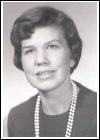
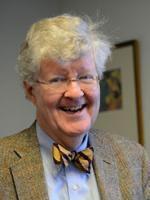
1945 - 2022 Topics: Christian Year Easter Vigil Author of "These Things Did Thomas Count as Real" in Glory to God Thomas Troeger (1945-2022), professor of Christian communication at Yale Divinity school, was a well known preacher, poet, and musician. He was a fellow of Silliman College, held a B.A. from Yale University; B.D. Colgate Rochester Divinity School; S.T. D. Dickinson College, and was awarded an honorary D.D. from Virginia Theological Seminary. He was ordained in the Presbyterian Church in 1970 and the Episcopal Church in 1999, and remained dually aligned with both traditions. Troerger led conferences and lectures in worship and preaching throughout North America, as well as in Denmark, Holland, Australia, Japan, and Africa. He served as national chaplain to the American Guild of Organists, and for at least three years he hosted the Season of Worship broadcast for Cokesbury. He was president of the Academy of Homiletics as well as Societas Homiletica. He had, as of 2009, written 22 books in the areas of preaching, poetry, hymnody, and worship. Many of his hymn texts are found in New Hymns for the Lectionary (Oxford, 1992), and God, You Made All Things for Singing (Oxford, 2009). Laura de Jong

Timothy Dudley-Smith

1926 - 2024 Person Name: Timothy Dudley-Smith, b. 1926 Topics: Year A, B, C, Easter, Easter vigil Author of "Psalm 98 (A Responsorial Setting)" in Psalms for All Seasons Timothy Dudley-Smith (b. 1926) Educated at Pembroke College and Ridley Hall, Cambridge, Dudley-Smith has served the Church of England since his ordination in 1950. He has occupied a number of church posi­tions, including parish priest in the diocese of Southwark (1953-1962), archdeacon of Norwich (1973-1981), and bishop of Thetford, Norfolk, from 1981 until his retirement in 1992. He also edited a Christian magazine, Crusade, which was founded after Billy Graham's 1955 London crusade. Dudley-Smith began writing comic verse while a student at Cambridge; he did not begin to write hymns until the 1960s. Many of his several hundred hymn texts have been collected in Lift Every Heart: Collected Hymns 1961-1983 (1984), Songs of Deliverance: Thirty-six New Hymns (1988), and A Voice of Singing (1993). The writer of Christian Literature and the Church (1963), Someone Who Beckons (1978), and Praying with the English Hymn Writers (1989), Dudley-Smith has also served on various editorial committees, including the committee that published Psalm Praise (1973). Bert Polman

William Farley Smith

1941 - 1997 Topics: Christian Year Easter Vigil; Christian Year Easter Vigil Adapter and Arranger of "O MARY" in The United Methodist Hymnal

Pages


Export as CSV
It looks like you are using an ad-blocker. Ad revenue helps keep us running. Please consider white-listing Hymnary.org or getting Hymnary Pro to eliminate ads entirely and help support Hymnary.org.