You help make Hymnary.org possible. More than 10 million people from 200+ countries found hymns, liturgical resources and encouragement on Hymnary.org in 2025, including you. Every visit affirms the global impact of this ministry.

If Hymnary has been meaningful to you this year, would you take a moment today to help sustain it? A gift of any size—paired with a note of encouragement if you wish—directly supports the server costs, research work and curation that keep this resource freely available to the world.

Give securely online today, or mail a check to:
Hymnary.org
Calvin University
3201 Burton Street SE
Grand Rapids, MI 49546

Thank you for your partnership, and may the hope of Advent fill your heart.

Person Results

Topics:help
In:people

Planning worship? Check out our sister site, ZeteoSearch.org, for 20+ additional resources related to your search.
Showing 131 - 140 of 303Results Per Page: 102050

Jeremiah Clarke

1669 - 1707 Person Name: Jeremiah Clarke (c. 1673-1707) Topics: God--in Jesus Christ His Love, Help, Healing Composer of "TUNBRIDGE" in New Church Praise

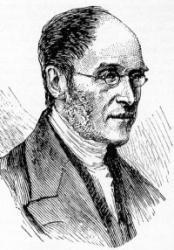
Henry Francis Lyte

1793 - 1847 Person Name: H. F. Lyte Topics: The Christian Life Help, Comfort, Guidance Author of "Abide with me: fast falls the eventide" in Churches of Christ Hymn Book Lyte, Henry Francis, M.A., son of Captain Thomas Lyte, was born at Ednam, near Kelso, June 1, 1793, and educated at Portora (the Royal School of Enniskillen), and at Trinity College, Dublin, of which he was a Scholar, and where he graduated in 1814. During his University course he distinguished himself by gaining the English prize poem on three occasions. At one time he had intended studying Medicine; but this he abandoned for Theology, and took Holy Orders in 1815, his first curacy being in the neighbourhood of Wexford. In 1817, he removed to Marazion, in Cornwall. There, in 1818, he underwent a great spiritual change, which shaped and influenced the whole of his after life, the immediate cause being the illness and death of a brother clergyman. Lyte says of him:— "He died happy under the belief that though he had deeply erred, there was One whose death and sufferings would atone for his delinquencies, and be accepted for all that he had incurred;" and concerning himself he adds:— "I was greatly affected by the whole matter, and brought to look at life and its issue with a different eye than before; and I began to study my Bible, and preach in another manner than I had previously done." From Marazion he removed, in 1819, to Lymington, where he composed his Tales on the Lord's Prayer in verse (pub. in 1826); and in 1823 he was appointed Perpetual Curate of Lower Brixham, Devon. That appointment he held until his death, on Nov. 20, 1847. His Poems of Henry Vaughan, with a Memoir, were published in 1846. His own Poetical works were:— (1) Poems chiefly Religious 1833; 2nd ed. enlarged, 1845. (2) The Spirit of the Psalms, 1834, written in the first instance for use in his own Church at Lower Brixham, and enlarged in 1836; (3) Miscellaneous Poems (posthumously) in 1868. This last is a reprint of the 1845 ed. of his Poems, with "Abide with me" added. (4) Remains, 1850. Lyte's Poems have been somewhat freely drawn upon by hymnal compilers; but by far the larger portion of his hymns found in modern collections are from his Spirit of the Psalms. In America his hymns are very popular. In many instances, however, through mistaking Miss Auber's (q. v.) Spirit of the Psalms, 1829, for his, he is credited with more than is his due. The Andover Sabbath Hymn Book, 1858, is specially at fault in this respect. The best known and most widely used of his compositions are "Abide with me, fast falls the eventide;” “Far from my heavenly home;" "God of mercy, God of grace;" "Pleasant are Thy courts above;" "Praise, my soul, the King of heaven;" and "There is a safe and secret place." These and several others are annotated under their respective first lines: the rest in common use are:— i. From his Poems chiefly Religious, 1833 and 1845. 1. Above me hangs the silent sky. For Use at Sea. 2. Again, 0 Lord, I ope mine eyes. Morning. 3. Hail to another Year. New Year. 4. How good, how faithful, Lord, art Thou. Divine care of Men. 5. In tears and trials we must sow (1845). Sorrow followed by Joy. 6. My [our] rest is in heaven, my [our] rest is not here. Heaven our Home. 7. 0 Lord, how infinite Thy love. The Love of God in Christ. 8. Omniscient God, Thine eye divine. The Holy Ghost Omniscient. 9. The leaves around me falling. Autumn. 10. The Lord hath builded for Himself. The Universe the Temple of God. 11. Vain were all our toil and labour. Success is of God. 12. When at Thy footstool, Lord, I bend. Lent. 13. When earthly joys glide swift away. Ps. cii. 14. Wilt Thou return to me, O Lord. Lent. 15. With joy we hail the sacred day. Sunday. ii. From his Spirit of the Psalms, 1834. 16. Be merciful to us, O God. Ps. lvii. 17. Blest is the man who knows the Lord. Ps. cxii. 18. Blest is the man whose spirit shares. Ps. xli. 19. From depths of woe to God I cry. Ps. cxxxx. 20. Gently, gently lay Thy rod. Ps. vi. 21. Glorious Shepherd of the sheep. Ps. xxiii. 22. Glory and praise to Jehovah on high. Ps. xxix. 23. God in His Church is known. Ps. lxxvi. 24. God is our Refuge, tried and proved. Ps. xlvi. 25. Great Source of my being. Ps. lxxiii. 26. Hear, O Lord, our supplication. Ps. lxiv. 27. How blest the man who fears the Lord. Ps.cxxviii. 28. Humble, Lord, my haughty spirit. Ps. cxxxi. 29. In this wide, weary world of care. Ps. cxxxii. 30. In vain the powers of darkness try. Ps.lii. 31. Jehovah speaks, let man be awed. Ps. xlix. 32. Judge me, O Lord, and try my heart. Ps. xxvi. 33. Judge me, O Lord, to Thee I fly. Ps. xliii. 34. Lord, I have sinned, but O forgive. Ps. xli. 35. Lord, my God, in Thee I trust. Ps. vii. 36. Lord of the realms above, Our Prophet, &c. Ps.xlv. 37. Lone amidst the dead and dying. Ps. lxii. 38. Lord God of my salvation. Ps. lxxxviii. 39. Lord, I look to Thee for all. Ps. xxxi. 40. Lord, I would stand with thoughtful eye. Ps. lxix. 41. Lord, my God, in Thee I trust. Ps. vii. 42. My God, my King, Thy praise I sing. Ps. cviii. 43. My God, what monuments I see. Ps. xxxvi. 44. My spirit on [to] Thy care. Ps. xxxi. 45. My trust is in the Lord. Ps. xi. 46. Not unto us, Almighty Lord [God]. Ps. cxv. 47. O God of glory, God of grace. Ps. xc. 48. O God of love, how blest are they. Ps. xxxvii. 49. O God of love, my God Thou art. Ps. lxiii. 50. O God of truth and grace. Ps. xviii. 51. O had I, my Saviour, the wings of a dove. Ps. lv. 52. O how blest the congregation. Ps. lxxxix. 53. O how safe and [how] happy he. Ps. xci. 54. O plead my cause, my Saviour plead. Ps. xxxv. 55. O praise the Lord, 'tis sweet to raise. Ps. cxlvii. 56. O praise the Lord; ye nations, pour. Ps. cxvii. 57. O praise ye the Lord With heart, &c. Ps. cxlix. 58. O that the Lord's salvation. Ps. xiv. 59. O Thou Whom thoughtless men condemn. Ps. xxxvi. 60. Of every earthly stay bereft. Ps. lxxiv. 61. Our hearts shall praise Thee, God of love. Ps. cxxxviii. 62. Pilgrims here on earth and strangers. Ps. xvi. 63. Praise for Thee, Lord, in Zion waits. Ps. lxv. 64. Praise to God on high be given. Ps. cxxxiv. 65. Praise ye the Lord, His servants, raise. Ps. cxiii. 66. Redeem'd from guilt, redeem'd from fears. Ps. cxvi. 67. Save me by Thy glorious name. Ps. liv. 68. Shout, ye people, clap your hands. Ps. xlvii. 69. Sing to the Lord our might. Ps. lxxxi. 70. Strangers and pilgrims here below. Ps. cix. 71. Sweet is the solemn voice that calls. Ps. cxxii. 72. The Church of God below. Ps. lxxxvii. 73. The Lord is King, let earth be glad. Ps. xcvii. 74. The Lord is on His throne. Ps. xciii. 75. The Lord is our Refuge, the Lord is our Guide. Ps. xlvii. 76. The mercies of my God and King. Ps. lxxxix. 77. The Lord Who died on earth for men. Ps. xxi. 78. Tis a pleasant thing to fee. Ps. cxxxiii. 79. Thy promise, Lord, is perfect peace. Ps. iii. 80. Unto Thee I lift mine [my] eyes. Ps. cxxiii. 81. Whom shall [should] we love like Thee? Ps. xviii. Lyte's versions of the Psalms are criticised where their sadness, tenderness and beauty are set forth. His hymns in the Poems are characterized by the same features, and rarely swell out into joy and gladness. --John Julian, Dictionary of Hymnology (1907) ================== Lyte, Henry Francis, p. 706, i. Additional versions of Psalms are in common use:-- 1. Lord, a thousand foes surround us. Psalms lix. 2. Praise, Lord, for Thee in Zion waits. Psalms lxv. 3. The Christian like his Lord of old. Psalms cxl. 4. The Lord of all my Shepherd is. Psalms xxiii. 5. The Lord of heaven to earth is come. Psalms xcviii. 6. Thy mercy, Lord, the sinner's hope. Psalms xxxvi. 7. To Thee, O Lord, in deep distress. Psalms cxlii. Sometimes given as "To God I turned in wild distress." 8. Uphold me, Lord, too prone to stray. Psalms i. 9. When Jesus to our [my] rescue came. Psalms cxxvi. These versions appeared in the 1st edition of Lyte's Spirit of the Psalms, 1834. It must be noted that the texts of the 1834, the 1836, and the 3rd ed., 1858, vary considerably, but Lyte was not responsible for the alterations and omissions in the last, which was edited by another hand for use at St. Mark's, Torquay. Lyte's version of Psalms xxix., "Glory and praise to Jehovah on high" (p. 706, ii., 22), first appeared in his Poems, 1st ed., 1833, p. 25. Read also No. 39 as "Lord, I look for all to Thee." --John Julian, Dictionary of Hymnology, Appendix, Part II (1907)

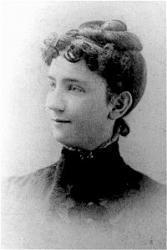
Jessie Brown Pounds

1861 - 1921 Person Name: J. Brown Topics: The Christian Life Help, Comfort, Guidance Author of "Anywhere with Jesus I can safely go!" in Churches of Christ Hymn Book Jessie Brown Pounds was born in Hiram, Ohio, a suburb of Cleveland on 31 August 1861. She was not in good health when she was a child so she was taught at home. She began to write verses for the Cleveland newspapers and religious weeklies when she was fifteen. After an editor of a collection of her verses noted that some of them would be well suited for church or Sunday School hymns, J. H. Fillmore wrote to her asking her to write some hymns for a book he was publishing. She then regularly wrote hymns for Fillmore Brothers. She worked as an editor with Standard Publishing Company in Cincinnati from 1885 to 1896, when she married Rev. John E. Pounds, who at that time was a pastor of the Central Christian Church in Indianapolis. A memorable phrase would come to her, she would write it down in her notebook. Maybe a couple months later she would write out the entire hymn. She is the author of nine books, about fifty librettos for cantatas and operettas and of nearly four hundred hymns. Her hymn "Beautiful Isle of Somewhere" was sung at President McKinley's funeral. Dianne Shapiro, from "The Singers and Their Songs: sketches of living gospel hymn writers" by Charles Hutchinson Gabriel (Chicago: The Rodeheaver Company, 1916)

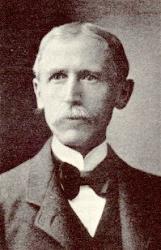
Will L. Thompson

1847 - 1909 Person Name: W. L. T. Topics: Helpfulness Author of "Oh, to Be More Like Jesus" in Service Songs for Young People's Societies, Sunday Schools and Church Prayer Meetings Will Lamartine Thompson (1847-1909) Born: November 7, 1847, East Li­ver­pool, Ohio. Died: Sep­tem­ber 20, 1909, New York, New York. Buried: Ri­ver­view Cem­e­te­ry, East Li­ver­pool, Ohio. Rebuffed in an ear­ly at­tempt to sell his songs to a com­mer­cial pub­lish­er, Thomp­son start­ed his own pub­lish­ing com­pa­ny. He lat­er ex­pand­ed, open­ing a store to sell pi­an­os, or­gans and sheet mu­sic. Both a lyr­i­cist and com­pos­er, he en­sured he would al­ways re­mem­ber words or mel­o­dies that came to him at odd times: "No mat­ter where I am, at home or ho­tel, at the store or tra­vel­ing, if an idea or theme comes to me that I deem wor­thy of a song, I jot it down in verse. In this way I ne­ver lose it." Thompson took ill dur­ing a tour of Eur­ope, and his fam­i­ly cut short their tra­vels to re­turn home. He died a few weeks lat­er. Music-- 1.Jesus Is All the World to Me 2.Lead Me Gently Home, Father 3.Softly and Tenderly Jesus Is Calling 4.There’s a Great Day Coming --hymntime.com/tch ================================== Various biographical sketches and newspaper articles about Thompson are available in the DNAH Archives.

Jim Strathdee

b. 1941 Person Name: Jim Strathdee, 1941- Topics: Help Author of "Come, let us sing to the Lord our song" in The Book of Praise

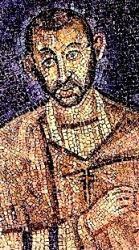
St. Ambrose

340 - 397 Person Name: Ambrose of Milan, 339-397 Topics: God Guardian / Help Author of "You are medicine for me" in The Book of Praise Ambrose (b. Treves, Germany, 340; d. Milan, Italy, 397), one of the great Latin church fathers, is remembered best for his preaching, his struggle against the Arian heresy, and his introduction of metrical and antiphonal singing into the Western church. Ambrose was trained in legal studies and distinguished himself in a civic career, becoming a consul in Northern Italy. When the bishop of Milan, an Arian, died in 374, the people demanded that Ambrose, who was not ordained or even baptized, become the bishop. He was promptly baptized and ordained, and he remained bishop of Milan until his death. Ambrose successfully resisted the Arian heresy and the attempts of the Roman emperors to dominate the church. His most famous convert and disciple was Augustine. Of the many hymns sometimes attributed to Ambrose, only a handful are thought to be authentic. Bert Polman ===================== Ambrosius (St. Ambrose), second son and third child of Ambrosius, Prefect of the Gauls, was born at Lyons, Aries, or Treves--probably the last--in 340 A.D. On the death of his father in 353 his mother removed to Rome with her three children. Ambrose went through the usual course of education, attaining considerable proficiency in Greek; and then entered the profession which his elder brother Satyrus had chosen, that of the law. In this he so distinguished himself that, after practising in the court of Probus, the Praetorian Prefect of Italy, he was, in 374, appointed Consular of Liguria and Aemilia. This office necessitated his residence in Milan. Not many months after, Auxentius, bishop of Milan, who had joined the Arian party, died; and much was felt to depend upon the person appointed as his successor. The church in which the election was held was so filled with excited people that the Consular found it necessary to take steps fur preserving the peace, and himself exhorted them to peace and order: when a voice suddenly exclaimed, "Ambrose is Bishop," and the cry was taken up on all sides. He was compelled to accept the post, though still only a catechumen; was forthwith baptized, and in a week more consecrated Bishop, Dec. 7, 374. The death of the Emperor Valentinian I., in 375, brought him into collision with Justina, Valentinian's second wife, an adherent of the Arian party: Ambrose was supported by Gratian, the elder son of Valentinian, and by Theodosius, whom Gratian in 379 associated with himself in the empire. Gratian was assassinated in 383 by a partisau of Maximus, and Ambrose was sent to treat with the usurper, a piece of diplomacy in which he was fairly successful. He found himself, however, left to carry on the contest with the Arians and the Empress almost alone. He and the faithful gallantly defended the churches which the heretics attempted to seize. Justina was foiled: and the advance of Maximus on Milan led to her flight, and eventually to her death in 388. It was in this year, or more probably the year before (387), that Ambrose received into the Church by baptism his great scholar Augustine, once a Manichaean heretic. Theodosius was now virtually head of the Roman empire, his colleague Valentinian II., Justina's son, being a youth of only 17. In the early part of 390 the news of a riot at Thessalonica, brought to him at Milan, caused him to give a hasty order for a general massacre at that city, and his command was but too faithfully obeyed. On his presenting himself a few days after at the door of the principal church in Milan, he was met by Ambrose, who refused him entrance till he should have done penance for his crime. It was not till Christmas, eight months after, that the Emperor declared his penitence, and was received into communion again by the Bishop. Valentinian was murdered by Arbogastes, a Frank general, in 392; and the murderer and his puppet emperor Eugenius were defeated by Theodosius in 394. But the fatigues of the campaign told on the Emperor, and he died the following year. Ambrose preached his funeral sermon, as he had done that of Valentinian. The loss of these two friends and supporters was a severe blow to Ambrose; two unquiet years passed, and then, worn with labours and anxieties, he himself rested from his labours on Easter Eve, 397. It was the 4th of April, and on that day the great Bishop of Milan is remembered by the Western Church, but Rome commemorates his consecration only, Dec. 7th. Great he was indeed, as a scholar, an organiser, a statesman; still greater as a theologian, the earnest and brilliant defender of the Catholic faith against the Arians of the West, just as Athanasius (whose name, one cannot but remark, is the same as his in meaning) was its champion against those of the East. We are now mainly concerned with him as musician and poet, "the father of Church song" as he is called by Grimm. He introduced from the East the practice of antiphonal chanting, and began the task, which St. Gregory completed, of systematizing the music of the Church. As a writer of sacred poetry he is remarkable for depth and severity. He does not warm with his subject, like Adam of St. Victor, or St. Bernard. "We feel," says Abp. Trench, "as though there were a certain coldness in his hymns, an aloofness of the author from his subject. "A large number of hymns has been attributed to his pen; Daniel gives no fewer than 92 called Ambrosian. Of these the great majority (including one on himself) cannot possibly be his; there is more or less doubt about the rest. The authorities on the subject are the Benedictine ed. of his works, the Psalterium, or Hymnary, of Cardinal Thomasius, and the Thesaurus Hymnologicus of Daniel. The Benedictine editors give 12 hymns as assignable to him, as follows:—1. Aeterna Christi munera. 2. Aeterne rerum Conditor. 3. Consors Paterni luminii. 4. Deus Creator omnium. 5. Fit porta Christi pervia, 6. Illuminans Altissimus. 7. Jam surgit hora tertia. 8. 0 Lux Beata Trinitas. 9. Orabo mente Dominum. 10. Somno refectis artubus. 11. Splendor Paternae gloriae. 12. Veni Redemptor gentium. Histories of these hymns, together with details of translations into English, are given in this work, and may be found under their respective first lines. The Bollandists and Daniel are inclined to attribute to St. Ambrose a hymn, Grates tibi Jesu novas, on the finding of the relics of SS. Gervasius and Protasius. These, we know, were discovered by him in 386, and it is by no means unlikely that the bishop should have commemorated in verse an event which he announces by letter to his sister Marcellina with so much satisfaction, not to say exultation.A beautiful tradition makes the Te Deum laudamus to have been composed under inspiration, and recited alternately, by SS. Ambrose and Augustine immediately after the baptism of the latter in 387. But the story rests upon a passage which there is every reason to consider spurious, in the Chronicon of Dacius, Bishop of Milan in 550. There is no hint of such an occurrence in the Confessions of St. Augustine, nor in Paulinue's life of St. Ambrose, nor in any authentic writing of St. Ambrose himself. The hymn is essentially a compilation, and there is much reason to believe, with Merati, that it originated in the 5th century, in the monastery of St. Honoratus at Lerins. [Te Deum.] -- John Julian, Dictionary of Hymnology (1907) Also known as: Ambrotio, Ambrosio de Milán Ambrosius Mediolanensis Ambrosius Saint, Bp. of Milan Ambrosius von Mailand Aurelio Ambrogio, Saint, Bishop of Milan Aurelius Ambrosius, Saint, Bishop of Milan Milan, d. 397

Johann Rist

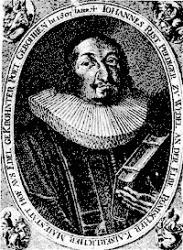
1607 - 1667 Topics: Death Prayer for help in Author of "Help Us, O Lord, Behold, We Enter" in The Hymnal and Order of Service Rist, Johann, son of Kaspar Rist, pastor at Ottensen, near Hamburg, was born at Ottensen, March 8, 1607, and from his birth was dedicated to the ministry. After passing through the Johanneum at Hamburg and the Gymnasium Illustre at Bremen, he matriculated, in his 21st year, at the University of Rinteln, and there, under Josua Stegmann (q. v.), he received an impulse to hymn-writing. On leaving Rinteln he acted as tutor to the sons of a Hamburg merchant, accompanying them to the University of Rostock, where he himself studied Hebrew, Mathematics and also Medicine. During his residence at Rostock the terrors, of the Thirty Years War almost emptied the University, and Rist himself also lay there for weeks ill of the pestilence. After his recovery he seems to have spent some time at Hamburg, and then, about Michaelmas, 1633, became tutor in the house of the lawyer (Landschreiber) Heinrich Sager, at Heide, in Holstein. There he betrothed himself to Elizabeth, sister of the Judge Franz Stapfel, whose influence seems to have had a good deal to do with Rist's appointment as pastor at Wedel. In the spring of 1635 he married and settled at Wedel (on the Elbe, a few miles below Hamburg), where, spite of various offers of preferment, he remained till his death, on Aug. 31, 1667. (Johann Rist und seine Zeit, by Dr. T. Hansen, Halle, 1872; K. Goedeke's Grundriss, vol. iii., 1887, p. 79; Koch, iii., 212; Bode, p. 135, &c. The statements of the various authorities regarding the period 1624-1635 vary greatly and irreconcilably.) During the Thirty Years War Rist had much to endure from famine, plundering, and pestilence. Otherwise he led a patriarchal and happy life at Wedel, close to the congenial society of Hamburg, and as years went on more and more esteemed and honoured by his contemporaries. The Emperor Ferdinand III. crowned him as a poet in 1644, and in 1653 raised him to the nobility, while nearer home Duke Christian of Mecklenburg appointed him Kirchenrath and Consistorialrath. Among other literary honours he was received in 1645 as a member of the Pegnitz Order, and in 1647 as a member of the Fruitbearing Society, the great German literary union of the 17th century; while in 1660 he himself became the founder and head of the Elbe Swan Order, which however did not survive his death. Rist was an earnest pastor and a true patriot. He of course took the side, and that with all his might, of the Protestants, but he longed as few did for the union of the scattered elements of the body politic in Germany. He was a voluminous and many-sided writer (see the full bibliographies in Hansen and Goedeke as above). His secular works are of great interest to the student of the history of the times, and his occasional poems on marriages, &c, to the genealogist and local historian. Perhaps the most interesting to the general reader are the Friede wünschende Teutschland, 1647, and the Friedejauchzende Teutschland, 1653, two plays in which there are vivid pictures of the times, especially of the condition of the lower classes during the Thirty Years War. These plays, with selections from his other secular poems and from his hymns, are included in his Dichtungen, Leipzig, 1885, edited by Goedeke and E. Goetze. Hansen gives analyses of the secular works, with a few extracts from them; and in his second part gives a full selection from the hymns, often however greatly abridged. As a hymn-writer Rist takes high rank. He wrote some 680 hymns, intended to cover the whole ground of Theology, and to be used by all ranks and classes, and on all the occasions of life. Naturally enough they are not of equal merit, and many are poor and bombastic. Rist meant them rather for private use than for public worship, and during his lifetime they were never used in the church at Wedel. But they were eagerly caught up, set to melodies by the best musicians of the day, and speedily passed into congregational use all over Germany, while even the Roman Catholics read them with delight. Over 200 may be said to have been in common use in Germany, and a large number still hold their place. Unfortunately many are very long. But speaking of Rist's better productions, we may say that their noble and classical style, their objective Christian faith, their scriptualness, their power to console, to encourage, and to strengthen in trust upon God's Fatherly love, and their fervent love to the Saviour (especially seen in the best of his hymns for Advent, and for the Holy Communion), sufficiently justify the esteem in which they were, and are, held in Germany. The best known of Rist's hymns appeared in the following collections:— (1) Himlischs Lieder. This contains 50 hymns. The Erste Zehen is dated Lüneburg, 1641, the 2-6 Zehen are dated 1642 [Royal Library, Berlin]. In the later editions Rist made various alterations, and also expanded the titles of the hymns, these changes being almost all for the worse. (2) Neüer himlischer Lieder sonderbahres Buch, Lüneburg, 1651 [Wernigerode Library]. 50 hymns. (3) Sabbahtische Seelenlust, Lüneburg, 1651 [British Museum and Göttingen]. With 58 hymns on the Gospels for Sundays, &c. (4) Frommer und gottseliger Christen alltägliche Haussmusik, Lüneburg, 1654 [Brit. Mus. and Göttingen], with 70 hymns. (5) Neüe musikalische Fest-Andachten, Lüneburg, 1655 [Wernigerode]. With 52 hymns on the Sunday Gospels. (6) Neüe musikalische Katechismus Andachten, Lüneburg, 1656 [British Museum and Wernigerode]. With 50 hymns. Seven of Rist's hymns are separately noted under their German first lines. The others which have passed into English are:-- i. Du Lebensbrod, Herr Jesu Christ. Holy Communion. In his Haussmusik, 1654, No. 7, p. 32, in 8 stanzas of 8 lines, entitled "A devotional hymn, which may be sung when the people are about to take their place at the Holy Communion of the Lord." Founded on Ps. xxiii. Included as No. 473 in the Berlin Geistliche Lieder, ed. 1863. Translated as:— Lord Jesu Christ, the living bread. A good translaton of stanzas i., ii., iii., v., by A. T. Russell, as No. 159 in his Psalms & Hymns, 1851. ii. Ehr und Dank sei dir gesungen. On the Angels. In his Fest-Andachten, 1655, No. 46, p. 304, in 9 stanzas of 10 lines, entitled "Another hymn of Praise and Thanksgiving on the same Gospel [S. Matt, xviii.] for St. Michael's Day. In which the great God who created the Angels, and appointed them for our service, is from the heart adored and praised." Included in Burg's Gesang-Buch, Breslau, 1746, No. 219, and in Bunsen's Versuch, 1833, No. 233. The translations in common use are:— 1. Praise and thanks to Thee be sung. By Miss Winkworth, omitting st. iii.—vi., in her Lyra Germanica, 1st Ser., 1855, p. 205, repeated in her Chorale Book for England, 1863, No. 85. 2. Glory, praise, to Thee be sung. A translation of st. i. as No. 1224, in the Moravian Hymn Book, 1886. iii. Ermuntre dich, mein schwacher Geist. Christmas. Founded on Isaiah ix. 2-7. First published in the Erstes Zehen of his Himlische Lieder, 1641, No. 1, p. 1, in 12 stanzas of 8 lines, entitled "A hymn of praise on the joyful Birth and Incarnation of our Lord and Saviour Jesus Christ." Included in Crüger's Praxis, 1656, No. 87, and recently, omitting st. viii., as No. 32 in the Unverfälschter Liedersegen 1851. The translations in common use are:— 1. Be cheerful, thou my spirit faint. A translation of st. i. by J. Gambold, as No. 138 in pt. i. of the Moravian Hymn Book, 1754; repeated as st. i. of No. 437, altered to "Arise my spirit, leap with joy," and with his trs. of st. ii., iv., ix. added. In the edition of 1789, No. 46 (1886, No. 41), it begins, "Arise, my spirit, bless the day.” 2. O Jesu! welcome, gracious Name! This is a translation of st. ii., vi., xii., by A. T. Russell, as No. 55 in his Psalms & Hymns., 1851. Another translation is "My languid spirit, upward spring." By N. L. Frothingham, 1870, p. 179. iv. Gott sei gelobet, der allein. Joy in God. In his Neüer Himlischer Lieder 1651, p. 126, No. 9, in 13 stanzas of 7 lines, entitled “A joyful hymn of Thanksgiving to God, that He permits us to enjoy our daily bread in health, peace and prosperity, with a humble prayer that He would graciously preserve us in the same." Included in Olearius's Singe-Kunst, 1671, No. 322, and recently in Knapp's Evangelischer Lieder-Schatz 1850, No. 1696 (1865, No. 1766). The tr. in common use is:— Now God be praised, and God alone . By Miss Winkworth, omitting st. iii., vi., viii., ix., in her Christian Singers, 1869, p. 192. Repeated, abridged, in Statham's Collection, Edinburgh, 1869, No. 63 (1870, No. 110). v. Jesu, der du meine Seele. Lent. In the Erstes Zehen of his Himlische Lieder, 1641, p. 35, No. 7, in 12 stanzas of 8 lines, entitled "A heartfelt hymn of penitence to his most beloved Lord Jesus, for the forgiveness of his many and manifold sins." Founded on prayer viii. in Class in. of J. Arndt's Paradiesgärtlein, 1612. In the Unverfälschter Liedersegen, 1851, No. 382. The translations in common use are:—- 1. Thou hast cancell'd my transgression. A translation of st. vi., viii., as No. 1022, in the Supplement of 1808 to the Moravian Hymn Book, 1801 (1886, No. 107). 2. Jesu! Who in sorrow dying. A free translation of st. i., iii. lines 1-4, v. 11. 5-8, xii., by A. T. Russell, as No. 78 in his Psalms & Hymns, 1851. vi. 0 Jesu, meine Wonne. Holy Communion. This beautiful hymn appears in Rist's Hauss-musik, 1654, No. 9, p. 42, in 14 stanzas of 4 lines, entitled "The heartfelt Thanksgiving of a pious Christian when he has partaken of the Holy Communion." In the Unverfälschter Liedersegen, 1851, No. 285. The translation in common use is:— 0 Sun of my salvation. A good tr. of st. i., iii., v., vi., by A. T. Russell, as No, 160 in his Psalms & Hymns, 1851. Another translation is:— “0 Christ, my joy, my soul's delight." By Dr. G. Walker, 1860, p. 65. vii. Werde licht, du Stadt der Heiden. Epiphany. In his Fest-Andachten , 1655, p. 82, No. 13, in 15 stanzas of 6 lines, entitled "Another festival hymn of the day of the Manifestation of Christ, in which the glorious, godlike, and eternal Light, which has graciously arisen on us poor heathen in thick darkness, is devotedly contemplated." In the Unverfälschter Liedersegen, 1851, No. 82. Translated as:— 1. All ye Gentile lands awake. A good tr. of st. i.-iv., vi., vii., xiv. xv., by Miss Winkworth, in her Lyra Germanica, 1st Ser., 1855, p. 30. Repeated, abridged, in Schaffs Christ in Song, 1869 aud 1870, and in Flett's Collection, Paisley, 1871. 2. Rise, O Salem, rise and shine. A good translation of stanzas i., iii., vii., xiv., xv., based on her Lyra Germanica version but altered in metre, by Miss Winkworth, in her Chorale Book for England, 1863, No. 38. Repeated in J. L. Porter's Collection, 1876, and the Pennsylvania Lutheran Ch. Book, 1868. viii. Wie wohl hast du gelabet. Holy Communion. In his Neüer Himlischer Lieder, 1651, p. 78, in 9 stanzas of 12 lines, entitled "A hymn of heartfelt Praise and Thanksgiving after the reception of the Holy Communion." In the Unverfälschter Liedersegen, 1851, No. 291. The translation in common use is:— O Living Bread from Heaven. A good tr., omitting st. iv., by Miss Winkworth, in her Lyra Germanica 2nd Ser., 1858, p. 103; repeated in her Chorale Book for England, 1863, No. 94, omitting the trsanslations of iii., v., vi. Her translations of st. i.-iii., ix. were included, slightly altered, in the Pennsylvania Lutheran Ch. Book, 1868. The following have also been tr. into English:— ix. Heut ist das rechte Jubelfest. Whitsuntide. In his Fest-Andachten, 1655, p. 216, No. 33, in 12 stanzas, founded on the Gospel for Whitsunday (St. John xiv.). In Olearius's Singe-Kunst, 1671, No. 704, and Porst's Gesang-Buch, ed. 1855, No. 173. The text translation is that in Bunsen's Allgemeine Gesang-Buch, 1846, No. 114, where it begins with st. v., "Heut hat der grosse Himmeleherr." Translated as "This day sent forth His heralds bold." By Miss Cox, in the Churchman's Shilling Magazine, June 1867. x. Ich will den Herren loben. Praise and Thanksgiving. Founded on Ps. xxxiv. In his Neüer Himlischer Lieder, 1651, p. 132 (No. 10 in pt. ii.), in 12 st. of 8 1. This form is in Burg's Gesang-Buch, Breslau, 174G, No. 1201. In his Haussmusik, 1654, p. 348, No. 64, Rist rewrote it to 6 stanzas of 12 lines, and of this form st. iv.-vi., beginning "Man lobt dich in der Stille, ed. 1863, No. 1018. The translation from this last text is "To Thee all praise ascendeth." In the British Herald, May 1866, p. 265, repeated in Reid's Praise Book, 1872. [Rev. James Mearns, M.A.] --John Julian, Dictionary of Hymnology (1907)

Daniel L. Schutte

b. 1947 Person Name: Dan Schutte Topics: Help; Help Author of "Send Us Your Spirit" in Worship and Song

Fanny Crosby

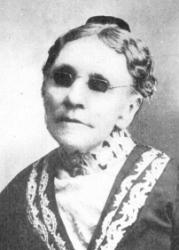
1820 - 1915 Person Name: Fanny J. Crosby Topics: Kindness, Helpfulness Author of "It Was Spoken for the Master" in Songs of Grace and Glory Pseudonymns: A.V., Mrs. A. E. Andrews, Mrs. E. A. Andrews, Mrs. E. L. Andrews, James L. Black, Henrietta E. Blair, Charles Bruce, Robert Bruce, Leah Carlton, Eleanor Craddock, Lyman G. Cuyler, D.H.W., Ella Dare, Ellen Dare, Mrs. Ellen Douglass, Lizzie Edwards. Miss Grace Elliot, Grace J. Frances, Victoria Frances, Jennie Garnett, Frank Gould, H. D. K., Frances Hope, Annie L. James, Martha J. Lankton [Langton], Grace Lindsey, Maud Marion, Sallie Martin, Wilson Meade, Alice Monteith, Martha C. Oliver, Mrs. N. D. Plume, Kate Smiley, Sallie Smith, J. L. Sterling, John Sterling, Julia Sterling, Anna C. Storey, Victoria Stuart, Ida Scott Taylor, Mary R. Tilden, Mrs. J. B. Thresher, Hope Tryaway, Grace Tureman, Carrie M. Wilson, W.H.D. Frances Jane Crosby, the daughter of John and Mercy Crosby, was born in Southeast, Putnam County, N. Y., March 24, 1820. She became blind at the age of six weeks from maltreatment of her eyes during a spell of sickness. When she was eight years old she moved with her parents to Ridgefield, Conn., the family remaining there four years. At the age of fifteen she entered the New York Institution for the Blind, where she received a good education. She became a teacher in the institution in 1847, and continued her work until March 1, 1858. She taught English grammar, rhetoric and American history. This was the great developing period in her life. During the vacations of 1852 and 1853, spent at North Reading, Mass., she wrote the words to many songs for Dr. Geo. F. Root, then the teacher of music at the blind institution. Among them were, "Hazel Dell,", "The Honeysuckle Glen," "Rosalie, the Prairie Flower," "Music in the Air," "Proud World, Good-bye, I'm Going Home," "All Together", "Never Forget the Dear Ones," and others. Subsequently she wrote the words for the cantatas of The Flower Queen and The Pilgrim Fathers, all of which were very popular in their day, though it was not generally known at the time that she was the author. While teaching at the institution she met Presidents Van Buren and Tyler, Hon. Henry Clay, Governor Wm. H. Seward, General Winfield Scott, and other distinguished characters of American history. Concerning Mr. Clay, she gives the following: "When Mr. Clay came to the institution during his last visit to New York, I was selected to welcome him with a poem. Six months before he had lost a son at the battle of Monterey, and I had sent him some verses. In my address I carefully avoided any allusion to them, in order not to wound him. When I had finished he drew my arm in his, and, addressing the audience, said through his tears: 'This is not the first poem for which I am indebted to this lady. Six months ago she sent me some lines on the death of my dear son.' Both of us were overcome for a few moments. Soon, by a splendid effort, Mr. Clay recovered himself, but I could not control my tears." In connection with her meeting these notable men, we might add that Miss Fanny Crosby had the honor of being the first woman whose voice was heard publicly in the Senate Chamber at Washington. She read a poem there on one occasion. In addition to the thousands of hymns that she has written (about eight thousand poems in all), many of which have not been set to music, she has published four volumes of verses. The first was issued in 1844 and was entitled The Blind Girl, and Other Poems, a second volume, Monterey, and Other Poems, followed in 1849, and the third, A Wreath of Columbia's Flowers, in 1858. The fourth, Bells at Evening and Other Verses, with a biographical sketch by Rev. Robert Lowry, and a fine half-tone portrait, in 1897, the sales of which have reached a fourth edition. The book is published by The Biglow & Main Co., New York. Though these show the poetical bent of her mind, they have little to do with her world-wide fame. It is as a writer of Sunday-school songs and gospel hymns that she is known wherever the English language is spoken, and, in fact, wherever any other language is heard. Fanny was married March 5, 1858, to Alex. Van Alstyne, who was also a scholar in the same institution in which she was educated. She began to write Sunday-school hymns for Wm. B. Bradbury in 1864. Her first hymn, "We are going, we are going To a home beyond the skies", was written at the Ponton Hotel on Franklin Street, New York City, on February 5th of that year. This hymn was sung at Mr. Bradbury's funeral in January, 1868. Since 1864 she supported herself by writing hymns. She resided in New York City nearly all her life, where, she says, she is "a member of the Old John Street M. E. Church in good standing." She spent regular hours on certain days at the office of The Biglow & Main Co., the firm for which she did most of her writing, and for whom she has composed over four thousand hymns. Her hymns have been in great demand and have been used by many of our most popular composers, among whom may be mentioned Wm. B. Bradbury, Geo. F. Root, W. H. Doane, Rev. Robert Lowry, Ira D. Sankey, J. R. Sweney, W. J. Kirkpatrick, H. P. Main, H. P. Danks, Philip Phillips, B. G. Unseld, and others. She could compose at any time and did not need to wait for any special inspiration, and her best hymns have come on the spur of the moment. She always composed with an open book in her hand, generally a copy of Golden Hymns, held closely over her eyes, bottom side up. She learned to play on the guitar and piano while at the institution, and has a clear soprano voice. She also received a technical training in music, and for this reason she could, and did, compose airs for some of her hymns. One of these is, "Jesus, dear, I come to Thee, Thou hast said I may," both words and music of which are wonderfully sweet. "Safe in the arms of Jesus", probably one of her best known hymns, was her own favorite. Fanny loved her work, and was happy in it. She was always ready either to sympathize or join in a mirthful conversation, as the case may be. The secret of this contentment dates from her first composition at the age of eight years. "It has been the motto of my life," she says. It is: "O what a happy soul am I! Although I cannot see, I am resolved that in this world Contented I will be;" This has continued to be her philosophy. She says that had it not been for her affliction she might not have so good an education, nor so great an influence, and certainly not so fine a memory. She knows a great many portions of the Bible by heart, and had committed to memory the first four books of the Old Testament, and also the four Gospels before she was ten years of age. Her scope of subjects is wide, embracing everything from a contemplation of heaven, as in "The Bright Forever" and "The Blessed Homeland", to an appeal to the work of this world, as in "To the Work" and "Rescue the Perishing." The most of Fanny's published hymns have appeared under the name of Fanny J. Crosby or Mrs. Yan Alstyne, but quite a large number have appeared under the nom de plumes of Grace J. Frances, Mrs. C. M. Wilson, Lizzie Edwards, Ella Dale, Henrietta E. Blair, Rose Atherton, Maud Marion, Leah Carlton, nearly two hundred different names. -Biographies of Gospel Song and Hymn Writers (excerpts) ======================= Van Alstyne, Frances Jane, née Crosby, a member of the Methodist Episcopal Church, was born at South East, Putnam County, New York, March 24, 1823. When six weeks old she lost her sight. About 1835 she entered the New York City Institution for the Blind. On completing her training she became a teacher therein from 1847 to 1858. In 1858 she was married to Alexander Van Alstyne, a musician, who was also blind. Her first poem was published in 1831; and her first volumes of verse as A Blind Girl, and Other Poems, 1844; Monteresy, and Other Poems, 1849; and A Wreath of Columbia's Flowers, 1858. Her first hymn was "We are going, we are going" (Death and Burial), which was written for Mr. Bradbury and published in the Golden Censer, 1864. From 1853 to 1858 she wrote 20 songs, which were set to music by G. F. Root. Her songs and hymns number some 2,000 or more, and have been published mainly in several of the popular American Sunday school collections, and often under a nom de plume. About 60 have come into common use in Great Britain. The majority of these are taken from the following American collections:— i. From The Shining Star, 1864. 1. Softly on the breath of evening. Evening. ii. From Fresh Laurels, 1867. 2. Beautiful Mansions, home of the blest. Heaven. 3. Jesus the Water of Life has given. The Water of Life. 4. Light and Comfort of my soul. In Affliction. 5. There's a cry from Macedonia. Missions. 6. We are marching on with shield and banner bright. Sunday School Anniversary. iii. From Musical Leaves, 1868. 7. 0 what are you going to do, brother? Youth for God. iv. From Sabbath Carols, 1868. 8. Dark is the night, and cold the wind is blowing. Affliction anticipated. 9. Lord, at Thy mercy seat, Humbly I fall. Lent. v. From Silver Spray, 1868. 10. If I come to Jesus, He will make me glad. Peace in Jesus. 11. 'Twill not be long—our journey here. Heaven anticipated. vi. From Notes of Joy, 1869. 12. Little beams of rosy light. The Divine Father. 13. Press on! press on! a glorious throng. Pressing towards the Prize. vii. From Bright Jewels, 1869. 14. Christ the Lord is risen today, He is risen indeed. Easter. 15. Holy, holy, holy is the Lord! Sing 0 ye people, &c. Holiness of God. 16. Jesus, keep me near the Cross. Near the Cross of Christ. 17. Saviour, bless a little child. A Child's Prayer. Written Feb. 6, 1869. viii. From Songs of Devotion, 1870. 18. Pass me not, 0 gentle Saviour. Lent. Written in 1868. 19. Rescue the perishing, care for the dying. Home Missions. ix. From Pure Gold, 1871. 20. Great is Jehovah. King of kings. Greatness of God. 21. I would be Thy little lamb. The Good Shepherd. 22. Lead me to Jesus, lead me to Jesus. Desiring Jesus. 23. To the work, to the work, we are servants of God. Home Missions. 24. Why labour for treasures that rust and decay? The Fadeless Crown. x. From the Royal Diadem, 1873. 25. I am Jesus' little friend. For Infant Schools. 26. Jesus I love Thee. Loving Jesus. 27. Mourner, wheresoe'er thou art. To the Sorrowing and Penitent. Written Oct. 3, 1871. 28. Never be faint or weary. Joy in Jesus. 29. Only a step to Jesus. Invitation. xi. From Winnowed Hymns, 1873-4. 30. Loving Saviour, hear my cry. Lent. xii. From Echoes of Zion, 1874. 31. Say, where is thy refuge, my brother? Home Missions. xiii. From Songs of Grace and Glory, 1874. 32. Thou my everlasting Portion. Christ the Portion of His People. xiv. From Brightest and Best, 1875. 33. All the way my Saviour leads me. Jesus the Guide. 34. I am Thine, O Lord: I have heard Thy voice. Holiness desired. 35. O come to the Saviour, believe in His name. Invitation. Written, Sep. 7, 1874. 36. O how sweet when we mingle. Communion of Saints. Written in 1866. 37. O my Saviour, hear me. Prayer to Jesus for blessing and love. 38. Only Jesus feels and knows. Jesus the Divine Friend. 39. Revive Thy work, O Lord. Home Missions. 40. Saviour, more than life to me. Jesus All and in All. 41. To God be the glory, great things He hath done. Praise for Redemption. xv. From Calvary Songs, 1875. 42. Come, O come with thy broken heart. Invitation. xvi. From Gospel Music, 1876. 43. Here from the world we turn. Divine Worship. 44. When Jesus comes to reward His servants. Watching, xvii. From Welcome Tidings, 1877. 45. O hear my cry, be gracious now to me. For Pardon and Peace. xviii. From The Fountain of Song, 1877. 46. Lord, my trust I repose on Thee. Trusting in Jesus. xix. From Good as Gold, 1880. 47. In Thy cleft, O Rock of Ages. Safety in Jesus. 48. Sound the alarm ! let the watchman cry. Home Missions. 49. Tenderly He leads us. Christ the Leader. 50. 'Tis the blessed hour of prayer. The Hour of Prayer. In addition to these hymns, all of which are in common use in Great Britain (mainly through I. D. Sankey's Sacred Songs and Solos, the Methodist Sunday School Hymn Book, the Silver Street Sunday Scholars Companion, and other collections for Sunday schools), there are also "A blessing for you, will you take it?" (Pardon through Jesus); "My song shall be of Jesus" (Praise of Jesus); “Now, just a word for Jesus"(Home Missions); "Onward, upward, Christian soldier" (Pressing Heavenward); 44 Sinner, how thy heart is troubled" (Invitation); "'Tis a goodly, pleasant land" (Heaven anticipated); and "When the dewy light was fading" (Death anticipated). All of these are in I. D. Sankey's Sacred Songs & Solos. Mrs. Van Alstyne's most popular composition is "Safe in the arms of Jesus" (Safety in Jesus). This was written in 1868, at the request of Mr. W. H. Doane, to his well-known melody with which it is inseparably associated, and published in Bright Jewels, 1869. Mrs. Van Alstyne's hymns have sometimes been published anonymously; but the greater part are signed by a bewildering number of initials. The combined sales of the volumes of songs and hymns named above have amounted in English-speaking countries to millions of copies. Notwithstanding the immense circulation thus given to Mrs. Van Alstyne's hymns, they are, with few exceptions, very weak and poor, their simplicity and earnestness being their redeeming features. Their popularity is largely due to the melodies to which they are wedded. Since the above was in type we have found that the following are also in common use in Great Britain:— 51. Suppose the little cowslip. Value of Little Things. 52. Sweet hour of prayer. The Hour of Prayer. These are in Bradbury's Golden Chain, 1861. 53. Never lose the golden rule. Love to our Neighbours. In Bradbury's Golden Censer, 1864. 54. I will not be afraid at night. Trust in God. In Bradbury's Fresh Laurels, 1867. 55. Praise Him, praise Him, Jesus our, &c. Praise of Jesus. In Biglow & Main's Bright Jewels, 1869. 56. More like Jesus would I be. More like Jesus. In Perkins & Taylor's Songs of Salvation, 1870. 57. Behold me standing at the door. Christ at the Door. In Biglow & Main's Christian Songs, 1872. 58. If I come to Jesus. Jesus the Children's Guide. 59. Jesus, Lord, I come to Thee. Trust in Jesus. 60. Let me learn of Jesus. Jesus the Children's Friend. 61. Singing for Jesus, O singing for Jesus. Singing for Jesus. 62. There is a Name divinely sweet Holy Name of Jesus. Of these hymns Nos. 58-62 we have not been able to trace. --Excerpts from John Julian, Dictionary of Hymnology (1907 ================ Van Alstyne, Frances J., p. 1203, ii. From the American collections of recent date we find that Mrs. Van Alstyne is still actively engaged in hymn-writing. In the Funk and Wagnalls Company Gloria Deo, 1903, there are about 30 of her hymns, most of which are new. They are all signed, and some are dated, but we have not space to quote the first lines and subjects, as this hymnal is not an official collection of any denomination. Another name, "Mrs. S. K. Bourne" is credited in the same hymnal with about 40 new hymns. If this signature is not another pen-name of Mrs. Van Alstyne's (and these pen-names and initials of hers are very numerous), we can only say that she has a very successful understudy in "Mrs. S. K. Bourne." --John Julian, Dictionary of Hymnology, New Supplement (1907)

Grant Colfax Tullar

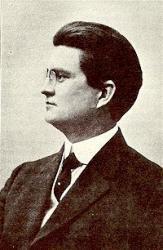
1869 - 1950 Topics: Helping Others Author of "As You Go" in Sunday School Hymns No. 1 Grant Colfax Tullar was born August 5, 1869, in Bolton, Connecticut. He was named after the American President Ulysses S. Grant and Vice President Schuyler Colfax. After the American Civil War, his father was disabled and unable to work, having been wounded in the Battle of Antietam. Tullar's mother died when he was just two years old so Grant had no settled home life until he became an adult. Yet from a life of sorrow and hardship he went on to bring joy to millions of Americans with his songs and poetry. As a child, he received virtually no education or religious training. He worked in a woolen mill and as a shoe clerk. The last Methodist camp meeting in Bolton was in 1847. Tullar became a Methodist at age 19 at a camp meeting near Waterbury in 1888. He then attended the Hackettstown Academy in New Jersey. He became an ordained Methodist minister and pastored for a short time in Dover, Delaware. For 10 years he was the song leader for evangelist Major George A. Hilton. Even so, in 1893 he also helped found the well-known Tullar-Meredith Publishing Company in New York, which produced church and Sunday school music. Tullar composed many popular hymns and hymnals. His works include: Sunday School Hymns No. 1 (Chicago, Illinois: Tullar Meredith Co., 1903) and The Bible School Hymnal (New York: Tullar Meredith Co., 1907). One of Grant Tullar's most quoted poems is "The Weaver": My Life is but a weaving Between my Lord and me; I cannot choose the colors He worketh steadily. Oft times He weaveth sorrow And I, in foolish pride, Forget He sees the upper, And I the under side. Not til the loom is silent And the shuttles cease to fly, Shall God unroll the canvas And explain the reason why. The dark threads are as needful In the Weaver's skillful hand, As the threads of gold and silver In the pattern He has planned. He knows, He loves, He cares, Nothing this truth can dim. He gives His very best to those Who chose to walk with Him. Grant Tullar --http://www.boltoncthistory.org/granttullar.html, from Bolton Community News, August 2006.

Pages


Export as CSV
It looks like you are using an ad-blocker. Ad revenue helps keep us running. Please consider white-listing Hymnary.org or getting Hymnary Pro to eliminate ads entirely and help support Hymnary.org.