You help make Hymnary.org possible. More than 10 million people from 200+ countries found hymns, liturgical resources and encouragement on Hymnary.org in 2025, including you. Every visit affirms the global impact of this ministry.

If Hymnary has been meaningful to you this year, would you take a moment today to help sustain it? A gift of any size—paired with a note of encouragement if you wish—directly supports the server costs, research work and curation that keep this resource freely available to the world.

Give securely online today, or mail a check to:
Hymnary.org
Calvin University
3201 Burton Street SE
Grand Rapids, MI 49546

Thank you for your partnership, and may the hope of Advent fill your heart.

Person Results

Topics:scriptures
In:people

Planning worship? Check out our sister site, ZeteoSearch.org, for 20+ additional resources related to your search.
Showing 131 - 140 of 953Results Per Page: 102050

Erik Routley

1917 - 1982 Person Name: Erik Routley, 1917-1982 Topics: Canticles and Scripture Paraphrases Harmonizer of "SLANE" in The Book of Praise

J. W. Elliott

1833 - 1915 Person Name: James William Elliott, 1833 - 1915 Topics: God: His Being, Word and Works The Holy Scriptures Composer of "CHURCH TRIUMPHANT" in The Book of Praise J.W. Elliott was a popular composer of the Victorian period, and is best known for his nursery rhyme music and for his work on hymnals in the 1870s. He was born James William Elliott, in Warwick, England, on February 13, 1833. As a child, he sang as a chorister in the Leamington Parish Church. In those days, choristers were given lessons in all facets of church music, including organ lessons, counterpoint studies, and more in exchange for providing an extraordinary level of service to their parish church (services throughout the week, all holidays, extra services, etc.). The result is that most choristers who completed their studies received an excellent music education, and James was no exception. After starting his career as an organist and choirmaster for a countryside church, his talent became obvious. He moved to London, where he assisted Sir Arthur Sullivan (of Gilbert and Sullivan fame) in editing Church Hymns. In addition, James worked for a music publisher. His compositions include two operettas, numerous anthems, service music, works for instruments including the very popular harmonium, and most particularly for Nursery Rhymes and Nursery Songs, his children’s music score that sets many of the Nursery Rhymes to delightful music. Several of his hymn tunes are still in use today in many hymnals, most notably his hymn tune “Day of Rest.” He was heavily involved in the preparation of the musical edition of Church Hymns in 1874, the Choral Service Book of 1892, and transcriptions of hymn tunes using harmonies different than the traditional ones found in hymnals. He died in St. Marylebone, London, on February 5, 1915. --www.nursery-songs.com/

Frederick C. Maker

1844 - 1927 Person Name: Frederick Charles Maker, 1844- Topics: God: His Attributes, Works and Word The Holy Scriptures; Hymns for the Young The Holy Scriptures Composer of "WORD OF LIFE (GOTTLIEB)" in The Book of Praise Frederick C. Maker (b. Bristol, England, August 6, 1844; d. January 1, 1927) received his early musical training as a chorister at Bristol Cathedral, England. He pursued a career as organist and choirmaster—most of it spent in Methodist and Congregational churches in Bristol. His longest tenure was at Redland Park Congregational Church, where he was organist from 1882-1910. Maker also conducted the Bristol Free Church Choir Association and was a long-time visiting professor of music at Clifton College. He wrote hymn tunes, anthems, and a cantata, Moses in the Bulrushes. Bert Polman

Benjamin Beddome

1717 - 1795 Topics: Holy Scriptures; Inspiration of Scriptures; The Holy Scriptures Author (st. 1-2) of "God, in the gospel of His son" in The Hymnal Benjamin Beddome was born at Henley-in Arden, Warwickshire, January 23, 1717. His father was a Baptist minister. He studied at various places, and began preaching in 1740. He was pastor of a Baptist society at Bourton-on-the-Water, Gloucestershire, until his death in 1795. In 1770, he received the degree of M.A. from the Baptist College in Providence, Rhode Island. He published several discourses and hymns. "His hymns, to the number of 830, were published in 1818, with a recommendation from Robert Hall." Montgomery speaks of him as a "writer worthy of honour both for the quantity and the quality of his hymns." --Annotations of the Hymnal, Charles Hutchins, M.A. 1872. ========================= Beddome, Benjamin , M.A. This prolific hymnwriter was born at Henley-in-Arden, Warwickshire, Jan. 23, 1717, where his father, the Rev. John Beddome, was atthat time Baptist Minister. He was apprenticed to a surgeon in Bristol, but removing to London, he joined, in 1739, the Baptist church in Prescott St. At the call of this church he devoted himself to the work of the Christian ministry, and in 1740 began to preach at Bourton-on-the-Water, in Gloucestershire. Declining invitations to remove to London or elsewhere, he continued pastor at Bourton until his death, on Sep. 3, 1795, at the age of 78. Mr. Beddome was for many years one of the most respected Baptist ministers in the West of England. He was a man of some literary culture. In 1770 he received the degree of M.A. from Providence College, Rhode Island. He was the author of an Exposition of the Baptist Catechism, 1752, in great repute at the time, and reprinted by Dr. C. Evans in 1772. It was his practice to prepare a hymn every week to be sung after his Sunday morning sermon. Though not originally intended for publication, he allowed thirteen of these to appear in the Bristol Baptist Collection of Ash & Evans (1769), and thirty-six in Dr. Rippon's Baptist Selection (1787), whence a number of them found their way into the General Baptist Hymn Book of 1793 and other collections. In 1817, a posthumous collection of his hymns was published, containing 830 pieces, with an introduction by the Rev. Robert Hall, and entitled "Hymns adapted to Public Worship or Family Devotion, now first published from the Manuscripts of the late Rev. B. Beddome, M.A." Preface dated "Leicester, Nov. 10, 1817." Some of the early copies bear the same date on the title page. Copies bearing both the 1817 and 1818 dates are in the British Museum. The date usually given is 1818. Some hymns are also appended to his Sermons, seven volumes of which were published l805—1819; and over twenty are given in the Baptist Register of various dates. Beddome's hymns were commended by Montgomery as embodying one central idea, "always important, often striking, and sometimes ingeniously brought out." Robert Hall's opinion is just, when in his "Recommendatory Preface" to the Hymns, &c, he says, p. vii.:— "The man of taste will be gratified with the beauty and original turns of thought which many of them ex¬hibit, while the experimental Christian will often perceive the most secret movements of his soul strikingly delineated, and sentiments pourtrayed which will find their echo in every heart." With the exception of a few composed for Baptisms and other special occasions, their present use in Great Britain is limited, but in America somewhat extensive. One of the best is the Ordination Hymn, "Father of Mercies, bow Thine ear." Another favourite is “ My times of sorrow and of joy," composed, by a singular coincidence, to be sung on Sunday, Jan. 14, 1778, the day on which his son died, most unexpectedly, in Edinburgh. "Let party names no more," is very popular both in Great Brit, and America. "Faith, His a precious gift," "Witness, ye men and angels, now," and the hymn for Holy Baptism, "Buried beneath the yielding wave," are also found in many collections. Beddome's popularity is, however, now mainly in America. [Rev. W. R. Stevenson, M.A.] Beddome is thus seen to be in common use to the extent of about 100 hymns. In this respect he exceeds every other Baptist hymnwriter; Miss Steele ranking second. The authorities for Beddome's hymns are: (1) A Collection of Hymns adapted to Public Worship, Bristol, W. Pine, 1769, the Collection of Ash & Evans; (2) Dr. Rippon's Selections 1787, and later editions; (3) Sermons printed from the Manuscripts of the late Rev. Benjamin Beddome, M.A.,... with brief Memoir of the Author, Dunstable & Lond., 1805-1819; (4) Dr. Rippon's Baptist Register, 1795, &c.; (5) The Beddome Manuscripts, in the Baptist College, Bristol; (6) and Hymns adapted to Public Worship, or Family Devotion now first published, from Manuscripts of the late Rev. B. Beddome, A.M. With a Recommendatory Preface by the Rev. R. Hall, A.M. Lond., 1817. In his Preface, Mr. Hall gives this account of the Beddome Manuscript:— "The present Editor was entrusted several years ago with the MSS, both in prose and verse, with permission from the late Messrs. S. & B. Beddome, sons of the Author, to publish such parts of them as he might deem proper. He is also indebted to a descendant of the Rev. W. Christian, formerly pastor of the Baptist Church at Sheepshead, Leicestershire, for some of the Author's valuable hymns, which had been carefully preserved in the family. From both these sources, as well as others of less consequence, the present interesting volume has been derived." -- Excerpts from John Julian, Dictionary of Hymnology (1907) ======================= Beddome, Benjamin, pp. 121-124. Other hymns in common use:— 1. Great God, before Thy mercy-seat. (1817). Lent. 2. Great God, oppressed with grief and fear. (1787.) Reading H. Scripture. 3. How glorious is Thy word, 0 God. Holy Scripture. From "When Israel, &c," p. 124, i. 4. In God I ever will rejoice. Morning. From his Hymns, &c, 1817. 5. Jesus, my Lord, divinely fair. (1817.) Jesus the King of Saints. Begins with stanza ii. of “Listen, ye mortals, while I sing." 6. Rejoice, for Christ the Saviour reigns. Missions. Altered form of "Shout, for the blessed, &c," p. 123, ii. 7. Satan, the world, and sin. (1817.) In Temptation. 8. Thou, Lord of all above. (1817.) Lent. 9. Unto Thine altar, Lord. (1787.) Lent. 10. Ye saints of every rank, with joy. (1800.) Public Worship. The dates given above are, 1787 and 1800, Rippon's Selection; and 1817 Beddome's Hymns. --John Julian, Dictionary of Hymnology, Appendix, Part II

Miriam Therese Winter

b. 1938 Topics: liturgical Scripture Songs Author of "Song of Mary (My Soul Gives Glory to My God)" in Voices United

Paul Baloche

b. 1962 Topics: Scripture Author of "Open the Eyes of My Heart" in Glory to God Paul Baloche (b. June 4, 1962, Maple Shade Township, New Jersey) is one of the best-known modern worship artists and leaders of this day and age. He has written hundreds of songs, many of which have been covered by artists such as Michael W. Smith, Randy Travis, and SonicFlood. He has produced and co-produced albums, such as “God of Wonders” with Marc Byrd and Steve Hindalong. He’s won numerous Dove Awards, including the Inspirational Recorded Song of the Year Award in 2009 for “A New Hallelujah,” which he co-authored with Michael W. Smith and his wife, Debbie Smith. His music has appeared on a number of albums, including the platinum selling WoW worship series. On top of that, he’s written and produced twelve solo albums, and for almost three decades has been the worship pastor at Community Christian Fellowship in Lindale, Texas, where he lives with his singer-songwriter wife, Rita, and their three children. Laura de Jong

Miles Coverdale

1488 - 1569 Person Name: Miles Coverdale, 1487-1568 Topics: Holy Scripture Author of "I call on thee, Lord Jesus Christ" in The Hymnal 1982 Coverdale, Miles, D.D., a celebrated English Divine and Reformer, born in Yorkshire, 1487, and educated at Cambridge. He was for some time a Canon of the Order of St. Augustine. On embracing the reformed faith, he went abroad, 1528, and associated with Tyndale and various continental Reformers. His translation of the Bible was published in 1535, and the second version of the New Testament, 1538. Returning to England, in 1551 he was promoted to the see of Exeter. On the accession of Mary he went to Denmark, and then to Geneva. At the latter place he assisted his fellow refugees in producing the celebrated Geneva Bible. In 1560, on the accession of Elizabeth, he returned to England, but instead of resuming his see, he accepted the Rectory of St. Magnus, London Bridge. He died in Feb. 1569, and was buried in St. Bartholomew's church, by the Exchange, Feb. 19, 1569. For his Goostly Psalmes, one of the earliest metrical efforts in the English language, but mainly from the German. --John Julian, Dictionary of Hymnology (1907)

Thomas Tallis

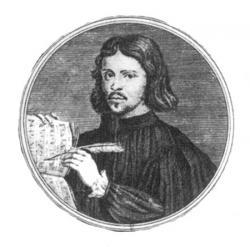
1505 - 1585 Person Name: Thomas Tallis, c. 1515-1585 Topics: The Church of God The Holy Scriptures Composer of "TALLIS'S ORDINAL" in The Hymnary of the United Church of Canada Thomas Tallis (b. Leicestershire [?], England, c. 1505; d. Greenwich, Kent, England 1585) was one of the few Tudor musicians who served during the reigns of Henry VIII: Edward VI, Mary, and Elizabeth I and managed to remain in the good favor of both Catholic and Protestant monarchs. He was court organist and composer from 1543 until his death, composing music for Roman Catholic masses and Anglican liturgies (depending on the monarch). With William Byrd, Tallis also enjoyed a long-term monopoly on music printing. Prior to his court connections Tallis had served at Waltham Abbey and Canterbury Cathedral. He composed mostly church music, including Latin motets, English anthems, settings of the liturgy, magnificats, and two sets of lamentations. His most extensive contrapuntal work was the choral composition, "Spem in alium," a work in forty parts for eight five-voice choirs. He also provided nine modal psalm tunes for Matthew Parker's Psalter (c. 1561). Bert Polman

Michael Weisse

1480 - 1534 Person Name: M. Weisse (1480-1534) Topics: God, Spirit Word of Truth, the Scriptures Composer of "RAVENSHAW" in Hymns for Today's Church (2nd ed.) Michael Weiss was born at Neisse, in Silesia. He was a pastor among the Bohemian Brethren, and a contemporary with Luther. His hymns have received commendation. He died in 1540. --Annotations of the Hymnal, Charles Hutchins, M.A. 1872. ============ Weisse, Michael (Weiss, Wiss, Wegs, Weys, Weyss), was born circa 1480, in Neisse, Silesia, took priest's orders, and was for some time a monk at Breslau. When the early writings of Luther came into his hands, Weisse, with two other monks, abandoned the convent, and sought refuge in the Bohemian Brethren's House at Leutomischl in Bohemia. He became German preacher (and apparently founder of the German communities) to the Bohemian Brethren at Landskron in Bohemia, and Fulnck in Moravia, and died at Landskron in 1534 (Koch, ii. 115-120; Wackernagel's D. Kirchenlied, i. p. 727; Fontes rerum Austricarum, Scriptores, vol. ii. pt. ii. p. 227, Vienna, 18G3, &c). Weisse was admitted as a priest among the Brethren at the Synod of Brandeis, in 1531, and in 1532 was appointed a member of their Select Council, but he had previously performed important missions for the Brethren. He was, e.g., sent by Bishop Lucas, in 1522, along with J. Roh or Horn, to explain the views of the Bohemian Brethren to Luther; and again, in 1524, when they were appointed more especially to report on the practices and holiness of life of the followers of the German Reformers. He was also entrusted with the editing of the first German hymn-book of the Bohemian Brethren, which appeared as Ein New Gesengbuchlen at Jungen Bunzel (Jung Bunzlau) in Bohemia in 1531. This contained 155 hymns, all apparently either translations or else originals by himself. The proportion of translations is not very clear. In the preface to the 1531, Weisse addressing the German Communities at Fulnek and Landskron says, "I have also, according to my power, put forth all my ability, your old hymn-book as well as the Bohemian hymn-book (Cantional) being before me, and have brought the same sense, in accordance with Holy Scripture, into German rhyme." Luther called Weisse "a good poet, with somewhat erroneous views on the Sacrament" (i.e. Holy Communion); and, after the Sacramental hymns had been revised by Roh (1544), included 12 of his hymns in V. Babst's Gesang-Buch, 1545. Many of his hymns possess considerable merit. The style is flowing and musical, the religious tone is earnest and manly, but yet tender and truly devout, and the best of them are distinguished by a certain charming simplicity of thought and expression. At least 119 passed into the German Lutheran hymnbooks of the 16th and 17th centuries, and many are still in use. The following hymns by Weisse have also passed into English:— i. Christus ist erstanden. Von des Todes Banden. Easter. First published 1531 as above, and thence in Wackernagel, iii. p. 273, in 7 stanzas of 4 lines. It is suggested by the older hymn, "Christ ist erstanden". In the Unverfälschter Liedersegen, 1851, No. 129. The translation in common use is:— Christ the Lord is risen again! This is a full and very good translation by Miss Winkworth, in her Lyra Germanica, 2nd Ser., 1858, p. 37, and her Chorale Book for England, 1863, No. 58. It has been included in many recent English and American hymnals. Other translations are:— (1) "Christ (and 'tis no wonder"). This is No. 260 in pt. i. of the Moravian Hymn Book, 1754. (2) "Christ our Lord is risen," by Dr. H. Mills, 1856, p. 322. ii. Es geht daher des Tages Schein. Morning. 1531 as above, and thence in Wackernagel, iii. p. 318, in 7 stanzas of 4 lines. In the Unverfälschter Liedersegen, 1851, No. 455. The translations in common use are:— 1. The Light of Day again we see. In full, by H. J. Buckoll in his Hymns from German, 1842, p. 14. His translations of stanzas iii., iv., vi., vii., beginning “Great God, eternal Lord of Heaven," were included in the Rugby School Hymn Book, 1843. 2. Once more the daylight shines abroad. This is a full and very good translation by Miss Winkworth, in her Lyra Germanica, 2nd Ser., 1858, p. 69, and her Chorale Book for England, 1863, No. 18. Repeated in Thring's Collection, 1880-82. iii. Gelobt sei Gott im höchsten Thron. Easter. 1531 as above, and thence in Wackernagel, iii. p. 265, in 20 stanzas of 3 lines, with Alleluia. The translations in common use are: — 1. Praise God upon His heavenly throne. This is a free translation of stanzas 1, 4, 10, 19, 20, by A. T. Russell, as No. 112, in his Psalms & Hymns, 1851. 2. Glory to God upon His throne. By Mrs. H. R. Spaeth, in the Southern Lutheran Service and Hymns for Sunday Schools , Philadelphia, 1883. iv. Gott sah zu seiner Zeit. Christmas. 1531 as above, and thence in Wackernagel, iii. p. 244, in 10 stanzas of 9 lines. The translation in common use is:— When the due Time had taken place. By C. Kinchen, omitting stanza v., as No. 169 in the Moravian Hymn Book, 1742 (1849, No. 20). In the ed. of 1886, No. 954 consists of stanza x., beginning “Ah come, Lord Jesus, hear our prayer." v. Lob sei dem allmächtigen Gott. Advent. 1531 as above, and thence in Wackernagel, iii. p. 230, in 14 stanzas of 4 lines. Included in V. Babst's Gesang-Buch, 1545, and recently as No. 12 in the Unverfälschter Liedersegen , 1851. In the larger edition of the Moravian Hymn Book, 1886, it is marked as a translation from a Bohemian hymn, beginning "Cirkev Kristova Boha chval." The translations are:— 1. Praise be to that Almighty God. By J. Gambold, omitting stanza xi.-xiii., as No, 246, in pt. i. of the Moravian Hymn Book, 1754. In the 1789 and later eds. (1886, No. 31), it begins “To God we render thanks and praise." 2. O come, th' Almighty's praise declare. By A. T. Russell, of stanzas i.-iii., v., as No. 26 in his Psalms & Hymns, 1851. vi. O Herre Jesu Christ, der du erschienen bistanza. For Children. On Christ's Example in His early years on earth . 1531 as above, and in Wackernagel, iii. p. 326, in 7 stanzas of 7 lines. The first three stanzas are translated as “Christ Jesus, Lord most dear," in the Moravian Hymn Book, 1754, pt. i., No. 278. The form in common use is that in Knapp's Evangelischer Lieder-Schatz , 1837, No. 2951, which begins "Nun hilf uns, o Herr Jesu Christ," and is in 3 stanzas of 4 lines, entirely recast. This is translated as:— Lord Jesus Christ, we come to Thee . In full from Knapp, by Miss Winkworth, in her Chorale Book for England , 1863, No. 179. Hymns not in English common use:— vii. Den Vater dort oben. Grace after Meat. 1531, and thence in Wackernagel, iii., p. 321, in 5 stanzas of 7 lines. In the Berlin Geistliche Lieder, ed. 1863, No. 1136. Translated as, "Father, Lord of mercy," by J. V. Jacobi, 1122, p. 117. In his edition, 1732, p. 183, slightly altered, and thence in the Moravian Hymn Book, 1754, pt. i., No. 290. viii. Die Sonne wird mit ihrem Schein. Evening. 1531, and thence in Wackernagel, iii., p. 323, in 6 stanzas of 4 lines. In the Unverfälschter Liedersegen, 1851, No. 517. Translated as, "Soon from our wishful eyes awhile," by H. J. Buckoll, 1842. ix. Komm, heiliger Geist, wahrer Gott. Whitsuntide . 1531, and in Wackernagel , iii., p. 282, in 9 stanzas of 5 lines From the Bohemian as noted at p. 157, and partly suggested by the "Veni Sancte Spiritus reple " (q.v.). The translations are: (1) “Come, Holy Ghost, Lord God indeed." This is No. 285 in pt. i. of the Moravian Hymn Book, 1754. (2) "Thou great Teacher, Who instructest." This is a translation of stanza vii., as No. 234 in the Moravian Hymn Book, 1801 (1849, No. 267). x. Lob und Ehr mit stettem Dankopfer. The Creation: Septuagesima . 1531, and in Wackernagel, iii., p. 287, in 5 stanzas of 16 lines. Translated as, “Praise, glory, thanks, be ever paid," by Miss Winkworth, 1869, p. 137. xi. 0 Jesu Christ, der Heiden Licht. Epiphany. 1531, and in Wackernagel , iii. p. 248, in 2 stanzas of 14 lines. Translated as, "0 Jesus Christ, the Gentiles' Light." This is No. 253 in pt. i. of the Moravian Hymn Book, 1754. In the Brüder Gesang-Buch, 1778, No. 1467, stanza ii. was rewritten. This form begins, "Erscheine alien Auserwahlten," and is in 4 stanzas of 4 lines. Translated as, "Lord, to Thy chosen ones appear," by Miss Winkworth, 1869, p. 139. xii. Singet lieben Leut. Redemption by Christ. 1531, and in Wackernagel, iii. p. 243, in 16 stanzas of 4 lines. Translated as, "Sing, be glad, ye happy sheep." This is a translation of stanza xiv., by C. G. Clemens, as No. 299 in the Moravian Hymn Book, 1789. In the 1801 and later editions (1849, No. 403) it begins, "O rejoice, Christ's happy sheep." [Rev. James Mearns, M.A.] -- Excerpts from John Julian, Dictionary of Hymnology (1907)

Marty Haugen

b. 1950 Person Name: Marty Haugen, 1950- Topics: Scripture Author of "On the Journey to Emmaus" in Community of Christ Sings Marty Haugen (b. 1950), is a prolific liturgical composer with many songs included in hymnals across the liturgical spectrum of North American hymnals and beyond, with many songs translated into different languages. He was raised in the American Lutheran Church, received a BA in psychology from Luther College, yet found his first position as a church musician in a Roman Catholic parish at a time when the Roman Catholic Church was undergoing profound liturgical and musical changes after Vatican II. Finding a vocation in that parish to provide accessible songs for worship, he continued to compose and to study, receiving an MA in pastoral studies at the University of St. Thomas in St. Paul Minnesota. A number of liturgical settings were prepared for the Evangelical Lutheran Church in America and more than 400 of his compositions are available from several publishers, especially GIA Publications, who also produced some 30 recordings of his songs. He is composer-in-residence at Mayflower Community Congregational Church in Minneapolis and continues to compose and travel to speak and teach at worship events around the world. Emily Brink

Pages


Export as CSV
It looks like you are using an ad-blocker. Ad revenue helps keep us running. Please consider white-listing Hymnary.org or getting Hymnary Pro to eliminate ads entirely and help support Hymnary.org.