

 My Starred Hymns
 My FlexScores
 My Hymnals
 My Purchased Files
Planning worship?
Check out our sister site, ZeteoSearch.org,
for 20+ additional resources related to your search.
- |
User Links
Person Results
Giovanni Pierluigi da Palestrina
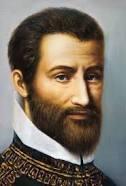
1525 - 1594 Person Name: Giovanni Pierluigi da Palestrina, 1525-1594 Topics: Rites of the Church Rite of Anointing (Care of the Sick) Composer (refrain) of "[Athirst is my soul for God]" in Journeysongs (3rd ed.) Giovanni Pierluigi (da Palestrina) Italy 1525-1594. Born at Palestrina, Italy, near Rome, then part of the Papal States to Neopolitan parents. As a youth he became a chorister at the Santa Maria Maggiore basilica in the Rome Diocese. This allowed him to learn literature and music. In 1540 he moved to Rome, where he studied in the school ofr the Hugenot, Claude Goudimel. He also studied with Robin Mallapert and Firmin Lebel. Orlando Di Lasso was also a musical advisor to him. From 1544-1551 he was organist at the Cathedral of St Agapito, the principle church of his native city. In 1547 he married Lucrezia Gori, and they had four children: Rodolfo, Angelo, Iginio, and a daughter. In 1551 Pope Julius III (previously Bishop of Palestrina) appointed him ‘maestro di cappella’, or musical director of the Cappella Giulia (choir). Pierluigi dedicated his first published compositions to Pope Julius III (1554), known as ‘the book of Masses’. It was the first book of masses by a native composer, since most sacred works in those days were from low countries (France or Spain). In 1555 Pope Paul IV ordered that all papal choristers should be clerical. As Pierluigi married early in life and had four children, he was unable to continue in the chapel as a layman. During the next decade he held positions similar to his Julian Chapel appointment at other chapels and churches in Rome, including St John Lateran (1555-1560), and Santa Maria Maggiore (1561-1566). In 1571 he returned to the Julian Chapel and remained at St Peter’s for the rest of his life. The 1570s was a decade of difficulty for him, as he lost his brother, two sons, and his wife in three separate outbreaks of plague (1572-1575-1580). In 1578 he was given the title of ‘Master of Music’ at the Vatican Basilica. He thought of becoming a priest at this time, but instead married a wealthy widow, Virginia Formoli, in 1581, widow of a wealthy merchant, which gave him financial independence (he was not well-paid as choirmaster). He spent considerable time administering to her fortune, but also was able to compose prolifically until his death. He also helped to found an association of professional musicians called the Vertuosa Compagnia dei Musici. He died in Rome of pleurisy. He left hundreds of compositions, including 1045 masses, 68 offertories, 140 madrigals, 300+ motets, 72 hymns, 35 magnificats, 11 litanies and several sets of lamentations. There are two comprehensive editions of his works: a 33-volume edition published by Breitkopf and Hartel, in Leigzig, Germany, between 1862-1894, edited by Franz Xaver Habert, and a 34-volume edition published in the mid 20th century by Fratelli Scalera, in Rome, Italy, edited by R Casimiri and others. As a Renaissance musician and composer of sacred music he was the best known 16th century representative of the Roman School of musical composition. He had a long-lasting influence on the development of church and secular music in Europe, especially on the development of counterpoint, his work considered the culmination of Renaissance polyphony. Very famous in his day, he was considered by some the legendary ‘savior of church music’. A 2009 film was produced by German television about him, titled: ‘Palestrina – Prince of Music’.
John Perry
Giovanni Pierluigi da Palestrina
Paul Halley
b. 1952 Topics: Anoint Composer of "[Let your priests be clothed with righteousness]" in Christian Worship
Paul Halley
Owen Alstott
Person Name: OA Topics: Sacraments/Rites Anointing of the Sick Composer of "[My soul is thirsting for you, O Lord, my God]" in Catholic Book of Worship III
Owen Alstott
Jean Janzen
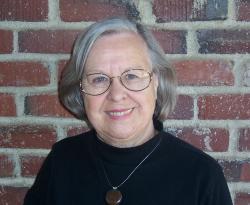
b. 1933 Topics: Anoint Author of "How Lovely Is Your Dwelling" in Christian Worship Jean Janzen was born on December 5, 1933, the seventh of Henry Peter Wiebe and Anna Schultz Wiebe's eventual eight children (Three Mennonite Poets 5). For the first five years of her life, Janzen lived in Dalmeny, Saskatchewan (A Cappella 25). In 1938, she moved to Mountain Lake, Minnesota when her schoolteacher father began his second ministry as a pastor (“Coming into Voice”). A year later, the family moved to Kansas (“Coming into Voice”).
Janzen says she cannot remember when she wrote her first poem, but the first evidence of her work is a handwritten book of five poems that she made in third or fourth grade, which was saved by her mother through the family’s many moves (E-mail Interview). She had very little exposure to poetry and literature as a child, except for hymns and Bible stories. She values these elements of her childhood and “treasure[s] the artful rhythms of the King James [Bible]” (E-mail Interview).
Janzen attended Meade Bible Academy, Tabor College, and Grace College (A Cappella 25). It was in college that she had her first real exposure to literature. She was “thrilled, and became a literature major.” She remembers being “enamored” with Emily Dickinson and writing papers about her whenever given the chance. However, she never considered writing poetry as a possible career (E-mail Interview).
Janzen--then Jean Wiebe--married Louis Janzen, a medical student, and the couple moved to Chicago where she worked as a medical secretary while taking courses at Northwestern University (Hostetler, A Cappella 25). Janzen cites this period of her life as the beginning of her love for visual art, calling the Chicago Art Institute the “open gate” for her and her husband where they “became hooked” (Mennonite Life Interview). In 1961, they moved to Fresno, Cal., where Louis worked as a pediatrician in a private practice. Here they raised their two daughters and two sons.
When her youngest child was in school, Janzen “joined a writer’s group at the encouragement of [her] husband and nephew after they read some poems [she] had written as a gift to [her] husband” (E-mail Interview). As her children became older, Janzen went back to college, earning a BA in English from Fresno Pacific College and an MA in Creative Writing and English from California State University at Fresno in 1982. There she studied with poets Peter Everwine, Philip Levine, and C.G. Hanzlicek. Janzen says that after one semester of writing poetry in college, she took the work “seriously” and “imagined the possibility of growing into a poet,” but it took her several years “to be willing to say that out loud” (E-mail Interview).
Rudy Wiebe, a Mennonite novelist, served as a mentor who influenced Janzen's writing career. She received a grant from the National Endowment for the Arts in 1995 (“Coming into Voice”). Janzen grew up in the Evangelical Mennonite Brethren Church and many of her relatives, including her father, were pastors (“Coming into Voice”). This strong connection with the church has had a significant influence on her poetry.
Music has also played an important role in Janzen’s life. Her mother loved music and music was an important part of worship in her church. She learned to play the piano when she was young, later studying music in college and teaching piano for many years (“Coming into Voice”). Janzen finds harmony between the religious and artistic elements of her life, integrating them in a way that enriches both. She also uses her gifts in the church, serving as a minister of worship at the College Community Mennonite Brethren Church in Clovis, Cal., as well as writing hymn texts, which have been set to music and are included in several hymn books.
Other prominent themes in her work include art, history, family, the earth, and her Russian Mennonite ancestors (“Coming into Voice”). Janzen says that “the sensual and spiritual are inevitably intertwined” (Mennonite Life Interview) and it is this element of her work that has attracted the most attention from critics and readers. She emphasizes “the presence of spirit in the flesh,” using rich description of physical objects to reveal deeper emotions and truths. Janzen has taught poetry writing at Fresno Pacific University and Eastern Mennonite University in Virginia.
--www.goshen.edu/mennonitepoetry/
Jean Janzen
Bob Dufford
b. 1943 Person Name: Bob Dufford, SJ, b. 1943 Topics: Rites of the Church Rite of Anointing (Care of the Sick) Author of "Be Not Afraid" in Journeysongs (3rd ed.)
Bob Dufford
Alfred V. Fedak
b. 1953 Topics: Anointing Arranger of "TO MY PRECIOUS LORD" in Voices Together Alfred Fedak (b. 1953), is a well-known organist, composer, and Minister of Music at Westminster Presbyterian Church on Capitol Hill in Albany, New York. He graduated from Hope College in 1975 with degrees in organ performance and music history. He obtained a Master’s degree in organ performance from Montclair State University, and has also studied at Westminster Choir College, Eastman School of Music, the Institute for European Studies in Vienna, and at the first Cambridge Choral Studies Seminar at Clare College, Cambridge.
As a composer, he has over 200 choral and organ works in print, and has three published anthologies of his work (Selah Publishing). In 1995, he was named a Visiting Fellow in Church Music at Episcopal Seminary of the Soutwest in Austin, Texas. He is also a Fellow of the American Guild of Organists, and was awarded the AGO’s prestigious S. Lewis Elmer Award. Fedak is a Life Member of the Hymn Society, and writes for The American Organist, The Hymn, Reformed Worship, and Music and Worship. He was a member of the Presbyterian Committee on Congregational Song that prepared Glory to God, the 2013 hymnal of the Presbyterian Church (U.S.A.)
Laura de Jong
Alfred V. Fedak
David N. Johnson
1922 - 1987 Topics: Anoint Arranger of "PROSPECT" in Christian Worship David Johnson (b. San Antonio, TX, 1922; d. Phoenix, AZ, 1987), former music department chairman at St. Olaf College, composed EARTH AND ALL STARS and published it in his Twelve Folksongs and Spirituals (1968). Johnson studied at Trinity, University, San Antonio, Texas, and received his master's and doctoral degrees in music from Syracuse University, New York. In addition to St. Olaf, he taught at Syracuse University; Alfred University, Alfred, New York; and Arizona State University. Johnson was organist at Syracuse University and organist and choir director at Trinity Episcopal Cathedral in Phoenix. His publications include Instruction Book for Beginning Organists and Organ Teacher's Guide; his compositions number over three hundred and include hymn tunes, varied harmonizations, and hymn preludes.
Bert Polman
David N. Johnson
Marie J. Post
1919 - 1990 Topics: Anoint Author of "O LORD My Rock, in Desperation" in Christian Worship Marie (Tuinstra) Post (b. Jenison, MI, 1919; d. Grand Rapids, MI, 1990) While attending Dutch church services as a child, Post was first introduced to the Genevan psalms, which influenced her later writings. She attended Calvin College, Grand Rapids, Michigan, where she studied with Henry Zylstra. From 1940 to 1942 she taught at the Muskegon Christian Junior High School. For over thirty years Post wrote poetry for the Grand Rapids Press and various church periodicals. She gave many readings of her poetry in churches and schools and has been published in a number of journals and poetry anthologies. Two important collections of her poems are I Never Visited an Artist Before (1977) and the posthumous Sandals, Sails, and Saints (1993). A member of the 1987 Psalter Hymnal Revision Committee, Post was a significant contributor to its array of original texts and paraphrases.
Bert Polman
Marie J. Post
Russell Woolen
b. 1923 Person Name: Russell Woolen, 1923-1994 Topics: Rites of the Church Rite of Anointing (Care of the Sick) Composer of "FOUNDATION" in Journeysongs (3rd ed.)
Russell Woolen
Irene Brustle
Person Name: IB Topics: Sacraments/Rites Anointing of the Sick Composer of "[Taste and see that the Lord is good]" in Catholic Book of Worship III
Irene Brustle
Pages




