You help make Hymnary.org possible. More than 10 million people from 200+ countries found hymns, liturgical resources and encouragement on Hymnary.org in 2025, including you. Every visit affirms the global impact of this ministry.

If Hymnary has been meaningful to you this year, would you take a moment today to help sustain it? A gift of any size—paired with a note of encouragement if you wish—directly supports the server costs, research work and curation that keep this resource freely available to the world.

Give securely online today, or mail a check to:
Hymnary.org
Calvin University
3201 Burton Street SE
Grand Rapids, MI 49546

Thank you for your partnership, and may the hope of Advent fill your heart.

Person Results

Topics:closing+of+service
In:person

Planning worship? Check out our sister site, ZeteoSearch.org, for 20+ additional resources related to your search.
Showing 131 - 140 of 419Results Per Page: 102050

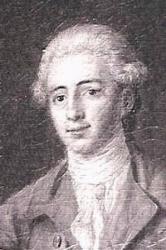
Edward Perronet

1721 - 1792 Person Name: Edward Perronet, 1726 - 92 Topics: The Church Worship - The Close of Service Author of "All hail the power of Jesus' Name!" in Service Book and Hymnal of the Lutheran Church in America Edward Perronet was the son of the Rev. Vincent Perronet, Vicar of Shoreham, Kent. For some time he was an intimate associate of the Wesleys, at Canterbury and Norwich. He afterwards became pastor of a dissenting congregation. He died in 1792. In 1784, he published a small volume, entitled "Occasional Verses, Moral and Social;" a book now extremely rare. At his death he is said to have left a large sum of money to Shrubsole, who was organist at Spafield's Chapel, London, and who had composed the tune "Miles Lane" for "All hail the power of Jesus' Name!" --Annotations of the Hymnal, Charles Hutchins, M.A. 1872. ------ Perronet, Edward. The Perronets of England, grandfather, father, and son, were French emigres. David Perronet came to England about 1680. He was son of the refugee Pasteur Perronet, who had chosen Switzerland as his adopted country, where he ministered to a Protestant congregation at Chateau D'Oex. His son, Vincent Perronet, M.A., was a graduate of Queen's College, Oxford, though his name is not found in either Anthony Woods's Athenae Oxonienses nor his Fasti, nor in Bliss's apparatus of additional notes. He became, in 1728, Vicar of Shoreham, Kent. He is imperishably associated with the Evangelical Revival under the Wesleys and Whitefield. He cordially cooperated with the movement, and many are the notices of him scattered up and down the biographies and Journals of John Wesley and of Selina, Countess of Huntingdon. He lived to the venerable age of ninety-one; and pathetic and beautiful is the account of John Wesley's later visits to the white-haired saint (b. 1693, d. May 9, 1785).* His son Edward was born in 1726. He was first educated at home under a tutor, but whether he proceeded to the University (Oxford) is uncertain. Born, baptized, and brought up in the Church of England, he had originally no other thought than to be one of her clergy. But, though strongly evangelical, he had a keen and searching eye for defects. A characteristic note to The Mitre, in referring to a book called The Dissenting Gentleman's answer to the Rev. Mr. White, thus runs:—"I was born, and am like to die, in the tottering communion of the Church of England; but I despise her nonsense; and thank God that I have once read a book that no fool can answer, and that no honest man will". The publication of The Mitre is really the first prominent event in his life. A copy is preserved in the British Museum, with title in the author's holograph, and manuscript notes; and on the fly-leaf this:— "Capt. Boisragon, from his oblig'd and most respectful humble servt. The Author. London, March 29th, 1757." The title is as follows:— The Mitre; a Sacred Poem (1 Samuel ii. 30). London: printed in the year 1757. This strangely overlooked satire is priceless as a reflex of contemporary ecclesiastical opinion and sentiment. It is pungent, salted with wit, gleams with humour, hits off vividly the well-known celebrities in Church and State, and is well wrought in picked and packed words. But it is a curious production to have come from a "true son" of the Church of England. It roused John Wesley's hottest anger. He demanded its instant suppression; and it was suppressed (Atmore's Methodist Memorial, p. 300, and Tyerman, ii. 240-44, 264, 265); and yet it was at this period the author threw himself into the Wesleys' great work. But evidences abound in the letters and journals of John Wesley that he was intermittently rebellious and vehement to even his revered leader's authority. Earlier, Edward Perronet dared all obloquy as a Methodist. In 1749 Wesley enters in his diary: "From Rochdale went to Bolton, and soon found that the Rochdale lions were lambs in comparison with those of Bolton. Edward Perronet was thrown down and rolled in mud and mire. Stones were hurled and windows broken" (Tyerman's Life and Times of the Rev. John Wesley, M.A., 3 vols., 1870 ; vol. ii. 57). In 1750 John Wesley writes: ”Charles and you [Edward Perronet] behave as I want you to do; but you cannot, or will not, preach where I desire. Others can and will preach where I desire, but they do not behave as I want them to do. I have a fine time between the one and the other. I think Charles and you have in the general a right sense of what it is to serve as sons in the gospel; and if all our helpers had had the same, the work of God would have prospered better both in England and Ireland. I have not one preacher with me, and not six in England, whose wills are broken to serve me" (ibid. ii. 85, and Whitehead's Life of Wesley, ii. 259). In 1755 arrangements to meet the emergency created by its own success had to be made for Methodism. As one result, both Edward and Charles Perronet broke loose from John Wesley's law that none of his preachers or "helpers" were to dispense the Sacraments, but were still with their flocks to attend the parish churches. Edward Perronet asserted his right to administer the Sacraments as a divinely-called preacher ibid. ii. 200). At that time he was resident at Canterbury, "in a part of the archbishop's old palace" (ibid. ii. 230. In season and out of season he "evangelized." Onward, he became one of the Countess of Huntingdon's "ministers" in a chapel in Watling Street, Canterbury. Throughout he was passionate, impulsive, strong-willed; but always lived near his divine Master. The student-reader of Lives of the Wesleys will be "taken captive" by those passages that ever and anon introduce him. He bursts in full of fire and enthusiasm, yet ebullient and volatile. In the close of his life he is found as an Independent or Congregational pastor of a small church in Canterbury. He must have been in easy worldly circumstances, as his will shows. He died Jan. 2, 1792, and was buried in the cloisters of the great cathedral, Jan. 8. His Hymns were published anonymously in successive small volumes. First of all came Select Passages of the Old and New Testament versified; London: Printed by H. Cock, mdcclvi. … A second similar volume is entitled A Small Collection of Hymns, &c, Canterbury: printed in the year dcclxxxii. His most important volume was the following:— Occasional Verses, moral and sacred. Published for the instruction and amusement of the Candidly Serious and Religious. London, printed for the Editor: And Sold by J. Buckland in Paternoster Row; and T. Scollick, in the City Road, Moorfields, mdcclxxxv. pp. 216 (12°). [The British Museum copy has the two earlier volumes bound up with this.] The third hymn in this scarce book is headed, “On the Resurrection," and is, ”All hail the power of Jesus' name". But there are others of almost equal power and of more thorough workmanship. In my judgment, "The Lord is King" (Psalm xcvi. 16) is a great and noble hymn. It commences:— “Hail, holy, holy, holy Loud! Let Pow'rs immortal sing; Adore the co-eternal Word, And shout, the Lord is King." Very fine also is "The Master's Yoke—the Scholar's Lesson," Matthew xi. 29, which thus opens:— O Grant me, Lord, that sweet content That sweetens every state; Which no internal fears can rent, Nor outward foes abate." A sacred poem is named "The Wayfaring Man: a Parody"; and another, "The Goldfish: a Parody." The latter has one splendid line on the Cross, "I long to share the glorious shame." "The Tempest" is striking, and ought to be introduced into our hymnals; and also "The Conflict or Conquest over the Conqueror, Genesis xxxii. 24". Still finer is "Thoughts on Hebrews xii.," opening:— "Awake my soul—arise! And run the heavenly race; Look up to Him who holds the prize, And offers thee His grace." "A Prayer for Mercy on Psalm cxix. 94," is very striking. On Isaiah lxv. 19, is strong and unmistakable. "The Sinner's Resolution," and "Thoughts on Matthew viii. 2," and on Mark x. 51, more than worthy of being reclaimed for use. Perronet is a poet as well as a pre-eminently successful hymnwriter. He always sings as well as prays. It may be added that the brief paraphrase after Ovid given below, seems to echo the well-known lines in Gray's immortal elegy:— "How many a gem unseen of human eyes, Entomb'd in earth, a sparkling embryo lies; How many a rose, neglected as the gem, Scatters its sweets and rots upon its stem: So many a mind, that might a meteor shone, Had or its genius or its friend been known; Whose want of aid from some maternal hand, Still haunts the shade, or quits its native land." [Rev. A. B. Grosart, D.D., LL.D.] * Agnew's Protestant Exiles from France in the Reign of Louis XIV. confounds Vincent the father with Edward his son. -- John Julian, Dictionary of Hymnology (1907)

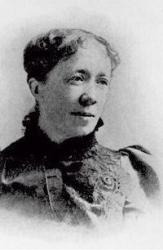
Mary A. Lathbury

1841 - 1913 Topics: Close of Service Author of ""Day is dying"" in Laudes Domini Lathbury, Mary Ann, was born in Manchester, Ontario County, New York, Aug. 10, 1841. Miss Lathbury writes somewhat extensively for the American religious periodical press, and is well and favourably known (see the Century Magazine, Jan., 1885, p. 342). Of her hymns which have come into common use we have:— 1. Break Thou the bread of life. Communion with God. A "Study Song" for the Chautauqua Literary and Scientific Circle, written in the summer of 1880. It is in Horder's (Eng.) Congregational Hymns, 1884. 2. Day is dying in the west. Evening. "Written at the request of the Rev. John H. Vincent, D.D., in the summer of 1880. It was a "Vesper Song," and has been frequently used in the responsive services of the Chautauqua Literary and Scientific Circle." It is in the Laudes Domini, N. Y., 1884. For these details we are indebted to S. W. Duffield's English Hymns, &c, N. Y., 1886. --John Julian, Dictionary of Hymnology (1907) ================== Lathbury, Mary A., p. 640, i. Another hymn by this writer is, "Lift up, lift up thy voice with singing." [Praise to Christ), in Sankey's Sacred Songs & Solos, 1878. --John Julian, Dictionary of Hymnology, Appendix, Part II (1907)

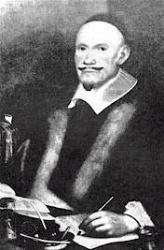
Martin Rinkart

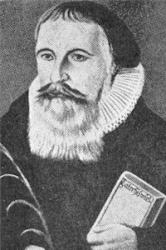
1586 - 1649 Person Name: Rev. Martin Rinkart Topics: Close of Service Author of "Now thank we all our God" in Alleluia Rinkart, Martin, son of Georg Rinkart or Rinckart, cooper at Eilenburg on the Mulde, Saxony, was born at Eilenburg, April 23, 1586.* After passing through the Latin school at Eilenburg, he became, in Nov., 1601, a foundation scholar and chorister of the St. Thomas's School at Leipzig. This scholarship also allowed him to proceed to the University of Leipzig, where he matriculated for the summer session of 1602, as a student of Theology; and after the completion of his course he remained for some time in Leipzig (he did not take his M.A. till 1616). In March 1610 he offered himself as a candidate for the post of diaconus at Eilenburg, and was presented by the Town Council, but the Superintendent refused to sanction this arrangement, nominally on the ground that Rinkart was a better musician than theologian, but really because he was unwilling to have a colleague who was a native of Eilenburg, and who appeared to have a will of his own. Rinkart, not wishing to contest the matter, applied for a vacant mastership in the gymnasium at Eisleben, and entered on his duties there in the beginning of June, 1610, as sixth master, and also cantor of the St. Nicholas Church. After holding this appointment for a few months, he became diaconus of St. Anne's Church, in the Neustadt of Eisleben, and began his work there May 28, 1611; and then became pastor at Erdeborn and Lyttichendorf (Lütjendorf), near Eisleben, entering on his duties there on Dec. 5, 1613. Finally he was invited by the Town Council of Eilenburg to become archidiaconus there, and in Nov. 1617 came into residence at Eilenburg. He died at Eilenburg, Dec. 8, 1649. A memorial tablet to his memory, affixed to the house where he lived, was unveiled at Eilenburg on Easter Monday, April 26, 1886. (Martin Rinkart’s Geistliche Lieder, ed., with a biographical introduction, and an extensive bibliography, by Heinrich Rembe and Johannes Linke, D.D., Gotha, F. A. Perthes, 1886; K. Goedeke's Grundris, vol. iii., 1887, pp. 169, 211, &c.) The greater part of Rinkart's professional life was passed amid the horrors of the Thirty Years War. Eilenburg being a walled town became a refuge for fugitives from all around, and being so overcrowded, not unnaturally suffered from pestilence and famine. During the great pestilence of 1637 the Superintendent went away for change of air, and could not be persuaded to return; and on Aug. 7 Rinkart had to officiate at the funerals of two of the town clergy and two who had had to leave their livings in the country. Rinkart thus for some time was the only clergyman in the place, and often read the service over some 40 to 50 persons a day, and in all over about 4,480. At last the refugees had to be buried in trenches without service, and during the whole epidemic some 8,000 persons died, including Rinkart's first wife, who died May 8, 1637. The next year he had an epidemic of marriages to encounter, and himself fell a victim on June 24. Immediately thereafter came a most severe famine, during which Rinkart's resources were strained to the uttermost to help his people. Twice also he saved Eilenburg from the Swedes, once in the beginning of 1637, and again in 1639 (see p. 319, i.). Unfortunately the services he rendered to the place seemed to have made those in authority the more ungrateful, and in his latter years he was much harassed by them in financial and other matters, and by the time that the long-looked-for peace came (Oct. 24, 1648) he was a worn-out and prematurely aged man. Rinkart was a voluminous writer and a good musician, but a considerable number of his books seem to have perished, and others survive only in single copies. He early began to write poetry, and was crowned as a poet apparently in 1614. Among other things he wrote a cycle of seven so-called "Comedies," or rather dramas, on the Reformation Period, suggested by the centenary of the Reformation in 1617. Three of these were printed respectively in 1613, 1618, and 1625, and two of them were acted in public. Rinkart's hymns appeared principally in the following works:— (1) Jesu Hertz-Büchlein. This was completed in 1630, and first published at Leipzig in 1636. No copy is now known. The second edition, published at Leipzig, 1663, is in the Royal Library at Hannover. (2) Der Meissnische Thränen Saat, Leipzig, 1637. In the Royal Library at Berlin. (3) xlv. Epithalami Salomoneo—Sulamitici cantica canticorum . . . Leibliche Geistliche und Uimmlische Braut Messe, Leipzig, 1642. In Wolfenbüttel Library. (4) Catechismus-wolthaten, und Catechismus-Lieder, Leipzig, 1645. In the Berlin Library. Dr. Linke, 1886, as above, gives a list of the first lines of all the hymns in the works of Rinkart which have come under his notice, and prints a selection from them, including 66 in all. The best of them are characterised by a true patriotism, a childlike devotion to God, and a firm confidence in God's mercy, and His promised help and grace. A few passed into the German hymn-books. Those which have been translated into English are:— 1. Alleluja, Lob, Preis und Ehr. This hymn… seems to be based on two hymns, beginning with the same first line, and both found in Rinkart's Braut Messe, 1642. Dr. Linke does not print the full text. (See Blätter für Hymnologie, 1886, p. 91.) ii. Nun danket alle Gott. Thanksgiving. The oldest text now accessible is in J. Crüger's Praxis, 1648, No. 183, in 3 stanzas of 8 lines; also in the Crüger-Runge Gesang-Buch, 1653, No. 187. It is also in Rinkart's Jesu Hertz-Büchlein, 1663, where the text slightly varies, and is entitled "Grace" ("Tisch-Gebetlein," i.e. a short prayer at table). There does not seem any good reason for supposing that it did not appear in the first ed., 1636, of the Hertz-Büchlein, and in any case it has no connection with the Peace of Westphalia. (A good specimen of the way in which stories of hymns are manufactured is in the Sunday at Home, Aug., 1888, p. 539, where a full and particular account is given of its legendary origin in Nov. 1648.) It is founded on Ecclesiasticus 1. 22-24; and st. i., ii. are indeed little more than a paraphrase of these verses, st. iii. being a version of the Gloria Patri. The fact that the regimental chaplains, when holding the special service of thanksgiving for the conclusion of the peace, were commanded to preach from this passage, may have suggested the theory that Rinkart's hymn was written for the same occasion. It gradually came into general use, successfully survived the period of Rationalism, and is now to be found in every German hymnbook, e.g. in the Berlin Geistliche Lieder, ed. 1863, No. 1022. It may be called the German Te Deum, and as such is used at all national festivals or special occasions of thanksgiving. It was recently used at the festal celebration of the completion of Cologne Cathedral, on Aug. 14, 1880, at the laying of the foundation stone of the new Reichstags building in Berlin, by the Emperor William, June 9, 1884, &c. The fine melody (set to the hymn in Hymns Ancient & Modern and most recent English collections) appears in the Praxis, 1648 (Crüger's Kirchenmelodien, 1649, No. 94), and in the Crüger-Runge Gesang-Buch, 1653, is marked with Crüger's initials. It has been described as adapted from a melody by Lucas Marenzo (choirmaster at Rome, who died 1598), or as adapted from a motet by Rinkart; but to prove either statement, very little evidence is forthcoming. The translations of the hymn into English are:— 1. Let all men praise the Lord. This is a tr. of st. i., iii., by Alfred Novello, as part of his version of the word-book to Mendelssohn's Lobgesang, or Hymn of Praise, 1843, p. 89. This form has passed into a number of hymnals, including the New Congregational Hymn Book, 1859; Dale's English Hymn Book 1874, and others. In the Baptist Hymnal, 1879, a tr. of st. ii. is added, of which 11. 1—4 are from Miss Winkworth's translation. 2. Now praise the Lord on high. In full as No. 53 in the Dalston Hospital Hymn Book, 1848. This appears to be the version which Kübler, in his Historical Notes to the Lyra Germanica, 1865, p. 247, says was made by Baron C. K. J. von Bunsen, for the opening of the German Hospital at Dalston, on Oct. 15, 1845. 3. Now let us all to God. In full, by A. T. Russell, as No. 201, in his Psalms & Hymns, 1851. 4. 0 let us praise the Lord, From hearts by true love guided. This is No. 240 in the Winchester Church Hymn Book, 1857, and seems to be intended as a paraphrase of the German. 5. Now thank we all our God. A full and very good translation by Miss Winkworth, in her Lyra Germanica, 2nd Serv. 1858, p. 145, repeated in her Chorale Book for England, 1863, No. 11, and her Christian Singers, 1869, p. 181. It has been included in many recent English and American hymnals, e. g. Hymns Ancient & Modern, 1861; People's Hymnal, 1867; Congregational Hymnal, 1887, &c, and in America in the Episcopal Hymnal, 1871; Presbyterian Hymnal, 1874, and many others, generally in full and unaltered. 6. Now all give thanks to God. In full as No. 264 in the Anglican Hymn Book, 1868 (1871, No. 307), marked as a versification by R. C. Singleton. Repeated in J. L. Porter's Collection, 1876. 7. Now all men thank ye God. In full by T. E. Brown, as No. 37 in the Clifton College Hymn Book, 1872. Other translations are:— (l) "Now let us praise the Lord." In full by J. C. Jacobi, 1722, p. 85 (1732, p. 144), repeated, altered, in the Moravian Hymn Book, 1754 to 1886. (2) "Now all, to God give thanks." By Dr. H. Mills, in the Evangelical Review, Gettysburg, 1851, p. 293, and his Horae Germanica, 1856, p. 14. (3) "Lift heart, and hands, and voice." By Miss Cox, 1864, p. 239. (4) “Now all give thanks to God." By J. D. Burns, 1869, p. 252. (5) “All hearts and tongues and hands." By N. L. Frothingham, 1870, p. 212. iii. So fahr ich hin mit Freuden. For the Dying. In his Meissnische Thränen-Saat, 1637, No. 24, p. 19, in 5 st.anzas of 8 lines, entitled "Even the same, and her soul-rejoicing Farewell Hymn. On May 8." St. i. is, "So fahr ich hin mit Frewden Aus diesem Jammerthal, Aus Angst, Gefahr und Leiden In Himmels-Frewden Saal, Da wir und alle Frommen Durch Gottes Wundermacht Zusaminen wiederkominen: In des zu guter Nacht." The title refers to the preceding hymn, which is in 19 stanzas, the initials of the stanzas forming the acrostic Christina Rinckardi. Dr. Linke abridges it and misprints the title, which is:— "Die Teutsche Jobs-Schwester (Christina M. Rinckart's Hertzgetrewe Ehe- und Creutz-genossin) und ihr Tagliches und behägliches Trost Lied. Aus ihrem längst erwählten und am 10. [not 30] Tage des Trosthühlen Meyen dieses 1637. Jahres zum letzten Ehrengedächtniss abgehandelten Leich-Text: des 77. Psalms." From this it is clear that both hymns are in memory of his wife, that she died on May 8, 1637, and that her funeral sermon was preached by her husband on May 10, 1637. The form translation into English is the greatly altered, or rather practically new text. [Rev. James Mearns, M.A.] * His own statement was that he “was born Anno 1586, Jubilate Sunday, on St. George's day, which was the 23rd of April, between 6 and 7 a.m." In 1586 however Jubilate S. (3rd Sunday after Easter) fell on April 24, while St. George's day is April 23. The entry in the Registers at Eilenburg says that he was baptised "Monday after Jubilate, the 25th of April," which is quite correct. --John Julian, Dictionary of Hymnology (1907)

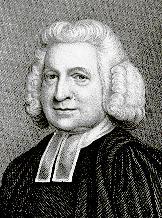
Charles Wesley

1707 - 1788 Person Name: Charles Wesley, 1707-88 Topics: The Church Worship - The Close of Service Author of "O for a thousand tongues to sing" in Service Book and Hymnal of the Lutheran Church in America Charles Wesley, M.A. was the great hymn-writer of the Wesley family, perhaps, taking quantity and quality into consideration, the great hymn-writer of all ages. Charles Wesley was the youngest son and 18th child of Samuel and Susanna Wesley, and was born at Epworth Rectory, Dec. 18, 1707. In 1716 he went to Westminster School, being provided with a home and board by his elder brother Samuel, then usher at the school, until 1721, when he was elected King's Scholar, and as such received his board and education free. In 1726 Charles Wesley was elected to a Westminster studentship at Christ Church, Oxford, where he took his degree in 1729, and became a college tutor. In the early part of the same year his religious impressions were much deepened, and he became one of the first band of "Oxford Methodists." In 1735 he went with his brother John to Georgia, as secretary to General Oglethorpe, having before he set out received Deacon's and Priest's Orders on two successive Sundays. His stay in Georgia was very short; he returned to England in 1736, and in 1737 came under the influence of Count Zinzendorf and the Moravians, especially of that remarkable man who had so large a share in moulding John Wesley's career, Peter Bonier, and also of a Mr. Bray, a brazier in Little Britain. On Whitsunday, 1737, [sic. 1738] he "found rest to his soul," and in 1738 he became curate to his friend, Mr. Stonehouse, Vicar of Islington, but the opposition of the churchwardens was so great that the Vicar consented that he "should preach in his church no more." Henceforth his work was identified with that of his brother John, and he became an indefatigable itinerant and field preacher. On April 8, 1749, he married Miss Sarah Gwynne. His marriage, unlike that of his brother John, was a most happy one; his wife was accustomed to accompany him on his evangelistic journeys, which were as frequent as ever until the year 1756," when he ceased to itinerate, and mainly devoted himself to the care of the Societies in London and Bristol. Bristol was his headquarters until 1771, when he removed with his family to London, and, besides attending to the Societies, devoted himself much, as he had done in his youth, to the spiritual care of prisoners in Newgate. He had long been troubled about the relations of Methodism to the Church of England, and strongly disapproved of his brother John's "ordinations." Wesley-like, he expressed his disapproval in the most outspoken fashion, but, as in the case of Samuel at an earlier period, the differences between the brothers never led to a breach of friendship. He died in London, March 29, 1788, and was buried in Marylebone churchyard. His brother John was deeply grieved because he would not consent to be interred in the burial-ground of the City Road Chapel, where he had prepared a grave for himself, but Charles said, "I have lived, and I die, in the Communion of the Church of England, and I will be buried in the yard of my parish church." Eight clergymen of the Church of England bore his pall. He had a large family, four of whom survived him; three sons, who all became distinguished in the musical world, and one daughter, who inherited some of her father's poetical genius. The widow and orphans were treated with the greatest kindness and generosity by John Wesley. As a hymn-writer Charles Wesley was unique. He is said to have written no less than 6500 hymns, and though, of course, in so vast a number some are of unequal merit, it is perfectly marvellous how many there are which rise to the highest degree of excellence. His feelings on every occasion of importance, whether private or public, found their best expression in a hymn. His own conversion, his own marriage, the earthquake panic, the rumours of an invasion from France, the defeat of Prince Charles Edward at Culloden, the Gordon riots, every Festival of the Christian Church, every doctrine of the Christian Faith, striking scenes in Scripture history, striking scenes which came within his own view, the deaths of friends as they passed away, one by one, before him, all furnished occasions for the exercise of his divine gift. Nor must we forget his hymns for little children, a branch of sacred poetry in which the mantle of Dr. Watts seems to have fallen upon him. It would be simply impossible within our space to enumerate even those of the hymns which have become really classical. The saying that a really good hymn is as rare an appearance as that of a comet is falsified by the work of Charles Wesley; for hymns, which are really good in every respect, flowed from his pen in quick succession, and death alone stopped the course of the perennial stream. It has been the common practice, however for a hundred years or more to ascribe all translations from the German to John Wesley, as he only of the two brothers knew that language; and to assign to Charles Wesley all the original hymns except such as are traceable to John Wesley through his Journals and other works. The list of 482 original hymns by John and Charles Wesley listed in this Dictionary of Hymnology have formed an important part of Methodist hymnody and show the enormous influence of the Wesleys on the English hymnody of the nineteenth century. -- Excerpts from John Julian, Dictionary of Hymnology (1907) ================== Charles Wesley, the son of Samuel Wesley, was born at Epworth, Dec. 18, 1707. He was educated at Westminster School and afterwards at Christ Church, Oxford, where he graduated M.A. In 1735, he took Orders and immediately proceeded with his brother John to Georgia, both being employed as missionaries of the S.P.G. He returned to England in 1736. For many years he engaged with his brother in preaching the Gospel. He died March 29, 1788. To Charles Wesley has been justly assigned the appellation of the "Bard of Methodism." His prominence in hymn writing may be judged from the fact that in the "Wesleyan Hymn Book," 623 of the 770 hymns were written by him; and he published more than thirty poetical works, written either by himself alone, or in conjunction with his brother. The number of his separate hymns is at least five thousand. --Annotations of the Hymnal, Charles Hutchins, M.A., 1872.

Johann Crüger

1598 - 1662 Person Name: Johann Cruger, 1598 - 1662 Topics: The Church Worship - The Close of Service Composer of "NUN DANKET ALL UND BRINGET EHR" in Service Book and Hymnal of the Lutheran Church in America Johann Crüger (b. Grossbriesen, near Guben, Prussia, Germany, 1598; d. Berlin, Germany, 1662) Crüger attended the Jesuit College at Olmutz and the Poets' School in Regensburg, and later studied theology at the University of Wittenberg. He moved to Berlin in 1615, where he published music for the rest of his life. In 1622 he became the Lutheran cantor at the St. Nicholas Church and a teacher for the Gray Cloister. He wrote music instruction manuals, the best known of which is Synopsis musica (1630), and tirelessly promoted congregational singing. With his tunes he often included elaborate accom­paniment for various instruments. Crüger's hymn collection, Neues vollkomliches Gesangbuch (1640), was one of the first hymnals to include figured bass accompaniment (musical shorthand) with the chorale melody rather than full harmonization written out. It included eighteen of Crüger's tunes. His next publication, Praxis Pietatis Melica (1644), is considered one of the most important collections of German hymnody in the seventeenth century. It was reprinted forty-four times in the following hundred years. Another of his publications, Geistliche Kirchen Melodien (1649), is a collection arranged for four voices, two descanting instruments, and keyboard and bass accompaniment. Crüger also published a complete psalter, Psalmodia sacra (1657), which included the Lobwasser translation set to all the Genevan tunes. Bert Polman =============================== Crüger, Johann, was born April 9, 1598, at Gross-Breese, near Guben, Brandenburg. After passing through the schools at Guben, Sorau and Breslau, the Jesuit College at Olmütz, and the Poets' school at Regensburg, he made a tour in Austria, and, in 1615, settled at Berlin. There, save for a short residence at the University of Wittenberg, in 1620, he employed himself as a private tutor till 1622. In 1622 he was appointed Cantor of St. Nicholas's Church at Berlin, and also one of the masters of the Greyfriars Gymnasium. He died at Berlin Feb. 23, 1662. Crüger wrote no hymns, although in some American hymnals he appears as "Johann Krüger, 1610,” as the author of the supposed original of C. Wesley's "Hearts of stone relent, relent" (q.v.). He was one of the most distinguished musicians of his time. Of his hymn tunes, which are generally noble and simple in style, some 20 are still in use, the best known probably being that to "Nun danket alle Gott" (q.v.), which is set to No. 379 in Hymns Ancient & Modern, ed. 1875. His claim to notice in this work is as editor and contributor to several of the most important German hymnological works of the 16th century, and these are most conveniently treated of under his name. (The principal authorities on his works are Dr. J. F. Bachmann's Zur Geschichte der Berliner Gesangbücher 1857; his Vortrag on P. Gerhard, 1863; and his edition of Gerhardt's Geistliche Lieder, 1866. Besides these there are the notices in Bode, and in R. Eitner's Monatshefte für Musik-Geschichte, 1873 and 1880). These works are:— 1. Newes vollkömmliches Gesangbuch, Augspur-gischer Confession, &c, Berlin, 1640 [Library of St. Nicholas's Church, Berlin], with 248 hymns, very few being published for the first time. 2. Praxis pietatis melica. Das ist: Ubung der Gottseligkeit in Christlichen und trostreichen Gesängen. The history of this, the most important work of the century, is still obscure. The 1st edition has been variously dated 1640 and 1644, while Crüger, in the preface to No. 3, says that the 3rd edition appeared in 1648. A considerable correspondence with German collectors and librarians has failed to bring to light any of the editions which Koch, iv. 102, 103, quotes as 1644, 1647, 1649, 1650, 1651, 1652, 1653. The imperfect edition noted below as probably that of 1648 is the earliest Berlin edition we have been able to find. The imperfect edition, probably ix. of 1659, formerly in the hands of Dr. Schneider of Schleswig [see Mützell, 1858, No. 264] was inaccessible. The earliest perfect Berlin edition we have found is 1653. The edition printed at Frankfurt in 1656 by Caspar Röteln was probably a reprint of a Berlin edition, c. 1656. The editions printed at Frankfurt-am-Main by B. C. Wust (of which the 1666 is in the preface described as the 3rd) are in considerable measure independent works. In the forty-five Berlin and over a dozen Frankfurt editions of this work many of the hymns of P. Gerhardt, J. Franck, P. J. Spener, and others, appear for the first time, and therein also appear many of the best melodies of the period. 3. Geistliche Kirchen-Melodien, &c, Leipzig, 1649 [Library of St. Katherine's Church, Brandenburg]. This contains the first stanzas only of 161 hymns, with music in four vocal and two instrumental parts. It is the earliest source of the first stanzas of various hymns by Gerhardt, Franck, &c. 4. D. M. Luther's und anderer vornehmen geisU reichen und gelehrten Manner Geistliche Lieder und Psalmen, &c, Berlin, 1653 [Hamburg Town Library], with 375 hymns. This was edited by C. Runge, the publisher, and to it Crüger contributed some 37 melodies. It was prepared at the request of Luise Henriette (q.v.), as a book for the joint use of the Lutherans and the Re¬formed, and is the earliest source of the hymns ascribed to her, and of the complete versions of many hymns by Gerhardt and Franck. 5. Psalmodia Sacra, &c, Berlin, 1658 [Royal Library, Berlin]. The first section of this work is in an ed. of A. Lobwasser's German Psalter; the second, with a similar title to No. 4, and the date 1657, is practically a recast of No. 4,146 of those in 1653 being omitted, and the rest of the 319 hymns principally taken from the Praxis of 1656 and the hymn-books of the Bohemian Brethren. New eds. appeared in 1676, 1700, 1704, 1711, and 1736. [Rev. James Mearns, M.A.] -- Excerpt from John Julian, Dictionary of Hymnology (1907) ======================= Crüger, Johann, p. 271, ii. Dr. J. Zahn, now of Neuendettelsau, in Bavaria, has recently acquired a copy of the 5th ed., Berlin, 1653, of the Praxis. --John Julian, Dictionary of Hymnology, Appendix, Part II (1907)

Henry Thomas Smart

1813 - 1879 Person Name: Henry Smart Topics: Close of Service; Worship in General Close of Service; Close of Service Composer of "[Lord dismiss us with Thy blessing]" in The Lutheran Hymnary Henry Smart (b. Marylebone, London, England, 1813; d. Hampstead, London, 1879), a capable composer of church music who wrote some very fine hymn tunes (REGENT SQUARE, 354, is the best-known). Smart gave up a career in the legal profession for one in music. Although largely self taught, he became proficient in organ playing and composition, and he was a music teacher and critic. Organist in a number of London churches, including St. Luke's, Old Street (1844-1864), and St. Pancras (1864-1869), Smart was famous for his extemporiza­tions and for his accompaniment of congregational singing. He became completely blind at the age of fifty-two, but his remarkable memory enabled him to continue playing the organ. Fascinated by organs as a youth, Smart designed organs for impor­tant places such as St. Andrew Hall in Glasgow and the Town Hall in Leeds. He composed an opera, oratorios, part-songs, some instrumental music, and many hymn tunes, as well as a large number of works for organ and choir. He edited the Choralebook (1858), the English Presbyterian Psalms and Hymns for Divine Worship (1867), and the Scottish Presbyterian Hymnal (1875). Some of his hymn tunes were first published in Hymns Ancient and Modern (1861). Bert Polman

John Ellerton

1826 - 1893 Person Name: J. Ellerton Topics: Close of Service; Worship in General Close of Service; Close of Service Author of "Savior, again to Thy dear name we raise" in The Lutheran Hymnary John Ellerton (b. London, England, 1826; d. Torquay, Devonshire, England, 1893) Educated at King William's College on the Isle of Man and at Trinity College, Cambridge, England, he was ordained in the Church of England in 1851. He served six parishes, spending the longest time in Crewe Green (1860-1872), a church of steelworkers and farmers. Ellerton wrote and translated about eighty hymns, many of which are still sung today. He helped to compile Church Hymns and wrote its handbook, Notes and Illustrations to Church Hymns (1882). Some of his other hymn texts were published in The London Mission Hymn Book (1884). Bert Polman ========================= Ellerton, John, M.A., son of George Ellerton, was born in London, Dec. 16, 1826, and educated at Trinity College, Cambridge (B.A. 1849; M.A. 1854). Taking Holy Orders he was successively Curate of Easebourne, Sussex, 1850; Brighton, and Lecturer of St. Peter's, Brighton, 1852; Vicar of Crewe Green, and Chaplain to Lord Crewe, 1860; Rector of Hinstock, 1872; of Barnes, 1876; and of White Roding, 1886. Mr. Ellerton's prose writings include The Holiest Manhood, 1882; Our Infirmities, 1883, &c. It is, however, as a hymnologist, editor, hymnwriter, and translator, that he is most widely known. As editor he published: Hymns for Schools and Bible Classes, Brighton, 1859. He was also co-editor with Bishop How and others of the Society for Promoting Christian Knowledge Church Hymns, 1871. His Notes and Illustrations of Church Hymns, their authors and translators, were published in the folio edition of 1881. The notes on the hymns which are special to the collection, and many of which were contributed thereto, are full, accurate, and of special value. Those on the older hymns are too general for accuracy. They are written in a popular form, which necessarily precludes extended research, fulness, and exactness of detail. The result is acceptable to the general public, but disappointing to the hymnological expert. Mr. Ellerton's original hymns number about fifty, and his translations from the Latin ten or more. Nearly every one of these are in common use and include:— 1. Before the day draws near its ending. Afternoon. Written April 22, 1880, for a Festival of Choirs at Nantwich, and first published in the Nantwich Festival Book, 1880. In 1883 it passed into the Westminster Abbey Hymn Book. 2. Behold us, Lord, a little space. General for Weekdays. Written in 1870 for a mid-day service in a City Church, and published in Church Hymns in 1871. It has passed into several collections. 3. Come forth, 0 Christian brothers. Processional for Choral Festival. Written for a Festival of Parochial Choirs held at Chester, May, 1870, and 1st printed in the Service-book of the same. In 1871 it passed into Church Hymns. 4. Father, Name of love and fear. Confirmation. Written in 1871 for a Confirmation in the North of England, and published in Church Hymns, 1871, and other collections. 5. God, Creator and Preserver. In Time of Scarcity. Written for and first published in The Hymnary, 1870; and again in the revised edition, 1872, and other hymnbooks. 6. Hail to the Lord Who comes. Presentation of Christ in the Temple. Written Oct. 6, 1880, for Mrs. Brock's Children's Hymn Book, and published therein, 1881. 7. In the Name which earth and heaven. Foundation of a Church. Written for and first published in Church Hymns, 1871, and repeated in several collections. The hymn sung at the re-opening of the Nave of Chester Cathedral, January 25, 1872, was compiled by Mr. Ellerton from this hymn, and his "Lift the strain of high thanksgiving.” 8 King Messiah, long expected. The Circumcision. Written Jan. 14, 1871, and first published in Church Hymns, 1871. It has passed into other collections. 9. King of Saints, to Whom the number. St. Bartholomew. Written for and first published in Church Hymns., 1871. It is very popular, and has been repeated in many hymnals. 10. Mary at the Master's feet. Catechizing. Written for and first published in Church Hymns, 1871. 11. O Father, all-creating. Holy Matrimony. Written Jan. 29, 1876, at the request of the Duke of Westminster, for the marriage of his daughter to the Marquess of Ormonde. It was published in Thring's Collection, 1880 and 1882. 12 O! how fair the morning broke. Septuagesima. Written March 13, 1880, for Mrs. Brock's Children's Hymn Book, and included therein, 1881. 13. O Lord of life and death, welcome. In Time of Pestilence. Written for and first published in Church Hymns, 1871. 14. O shining city of our God. Concerning the Hereafter. First published in the Rev. R. Brown-Borthwick's Sixteen Hymns with Tunes, &c, 1870; and again in Church Hymns, 1871. 15. O Son of God, our Captain of Salvation. St. Barnabas. Written April 5, 1871, and first published in Church Hymns, 1871; and again in Hymns Ancient & Modern, 1875, Thring's Collection, 1882, and others. 16. O Thou in Whom Thy saints repose. Consecration of a Burial Ground. Written for the consecration of an addition to the Parish Churchyard of Tarporley, Cheshire, 1870, and published in Church Hymns, 1871. 17. O Thou Whose bounty fills the earth. Flower Services. Written for a Flower Service at St. Luke's Church, Chelsea, June 6, 1880, and published in Mrs. Brock's Children's Hymn Book, 1881. 18. Praise to our God, Whose bounteous hand. National Thanksgiving. Written in 1870 for Church Hymns, but first published in the Rev. R. Brown-Borthwick's Select Hymns, &c., 1871, and then in Church Hymns later the same year. 19. The day Thou gavest, Lord, is ended. The darkness, &c. Evening. Written in 1870 for A Liturgy for Missionary Meetings (Frome, Hodges), and revised for Church Hymns, 1871. The revised form has passed into other collections. 20. The Lord be with us when we bend. Close of Afternoon Service. Written [in 1870] at the request of a friend for use at the close of Service on Sunday afternoons when (as in summer) strictly Evening hymns would be unsuitable. It was published in Church Hymns, 1871, Thring's Collection, 1882, and others. 21. This day the Lord's disciples met. Whitsuntide. "Originally written in 1855 for a class of children, as a hymn of 8 verses of 5 lines each, beginning, 'The Fiftieth day was come at last.’ It was abridged, revised, and compressed into C.M. for Mrs. Brock's Children's Hymn Book, 1880," and published therein, 1881. 22. Thou in Whose Name the two or three. Wednesday. Appeared in the Parish Magazine, May, 1871, as a hymn for Wednesday. After revision it was included in Church Hymns, 1871, and repeated in other collections. 23. Thou Who sentest Thine Apostles. SS. Simon and Jude. Written in June, 1874, for the revised edition of Hymns Ancient & Modern, and published in the same in 1875. 24. We sing the glorious conquest. Conversion of St. Paul. Written Feb. 28, 1871, for and published later the same year in Church Hymns. It was repeated in Hymns Ancient & Modern, 1875. 25. When the day of toil is done. Eternal Best. Written in Jan., 1870, and first published in the Rev. R. Brown-Borthwick's Sixteen Hymns with Tunes, &c. 1870, Church Hymns, 1871, and subsequently in several Scottish hymn-books. The tune "Preston," in Church Hymns was written for this hymn. To these hymns must be added those which are annotated under their respective first lines, and the translations from the Latin. The grandest of his original compositions is, "Throned upon the awful tree," and the most beautiful and tender, "Saviour, again to Thy dear Name we raise"; and of his translations, "Sing Alleluia forth in duteous praise," and "Welcome, happy morning, age to age shall say," are the most successful and popular. The subjects of Mr. Ellerton's hymns, and the circumstances under which they were written, had much to do with the concentration of thought and terseness of expression by which they are characterized. The words which he uses are usually short and simple; the thought is clear and well stated; the rhythm is good and stately. Ordinary facts in sacred history and in daily life are lifted above the commonplace rhymes with which they are usually associated, thereby rendering the hymns bearable to the cultured, and instructive to the devout. His antitheses are frequent and terse, almost too much so for devotional verse, and are in danger of interrupting the tranquil flow of devotion. His sympathy with nature, especially in her sadder moods, is great; he loves the fading light and the peace of eve, and lingers in the shadows. Unlike many writers who set forth their illustrations in detail, and then tie to them the moral which they are to teach, he weaves his moral into his metaphor, and pleases the imagination and refreshes the spirit together. Now and again he falls into the weakness of ringing changes on words; but taken as a whole his verse is elevated in tone, devotional in spirit, and elegant in diction. -- John Julian, Dictionary of Hymnology (1907) ===================== Ellerton, John, p. 326, i. Other hymns are:— 1. O Father, bless the children. Holy Baptism. Written in 1886, and published in his Hymns, &c, 1888, in 4 stanzas of 8 lines. Also in the 1889 Suppl. Hymns to Hymns Ancient & Modern. 2. O Thou Who givest food to all. Temperance. Written Aug. 30, 1882, and printed in the Church of England Temperance Chronicle, Sept. 1882. Also in his Hymns, &c, 1888. 3. Praise our God for all the wonders. St. Nicholas's Day. Dated in his Hymns, 1888, "December 1882." It was written for the Dedication Festival of St. Nicholas's Church, Brighton, and first printed as a leaflet in 1882. 4. Praise our God, Whose open hand. Bad Harvest. Written as a hymn for the bad harvest of 1881, and printed in the Guardian in August of that year. Also in his Hymns, &c, 1888. 5. Praise to the Heavenly Wisdom. St. Matthias's Day. Dated in his Hymns, &c, 1888, "January, 1888." Also in the 1889 Suppl. Hymns to Hymns Ancient & Modern. 6. Shine Thou upon us, Lord. For a Teachers' Meeting. Contributed to the 1889 Suppl. Hymns to Hymns Ancient & Modern. 7. Thou Who wearied by the well. Temperance. Written for the Opening of a Workmen's Coffee Tavern, and dated in his Hymns, &c, 1888, "September 23, 1882." It was printed in the Church of England Temperance Chronicle the same year. 8. Throned upon the awful Tree. Good Friday. Written in 1875, and published in the 1875 ed. of Hymns Ancient & Modern. It has passed into many collections, and is one of the finest of Mr. Ellerton's productions. Mr. Ellerton's original and translated hymns to the number of 76 were collected, and published by Skeffington & Son in 1888, as Hymns, Original and Translated. By John Ellerton, Rector of White Roding. --John Julian, Dictionary of Hymnology, Appendix, Part II (1907) =================== Ellerton, J., pp. 326, ii.; 1561, ii. He was appointed Hon. Canon of St. Albans in 1892. and died June 15, 1893. His Life and Works, by H. Housman, was published in 1896. --John Julian, Dictionary of Hymnology, New Supplement (1907)

Harriet Auber

1773 - 1862 Person Name: Miss Harriet Auber (1773-1862) Topics: Opening and Closing of Service Author of "Sweet is the work, O Lord" in Carmina Sanctorum, a selection of hymns and songs of praise with tunes Auber, Harriet, daughter of Mr. James Auber, b. in London, Oct. 4, 1773. During the greater part of her quiet and secluded life she resided at Broxbourne and Hoddesdon, Herts, and died at the latter place on the 20th Jan., 1862. Miss Auber wrote devotional and other poetry, but only a portion of the former was published in her Spirit of the Psalms, in 1829. This collection is mainly her work, and from it some useful versions of the Psalms have been taken and included in modern hymn-books, about 20 appearing in Spurgeon's Our Own Hymn Book, 1866. Miss Auber's name is widely known, but it is principally through her exquisite lyric, "Our blest Redeemer, ere He breathed," and the Epiphany hymn, "Bright was the guiding star that led." (For criticism of her work, see English Psalters, §. 17.) In addition to these and other hymns by Miss Auber, which are annotated under their respective first lines, the following are also in C. V., but principally in America:— 1.  Arise, ye people, and adore.   Easter. 2.  As Thy chosen people, Lord.   Ps. lxciii. 3.  Can guilty man indeed believe?   Ps. xciv. 4.  Delightful is the task to sing.   Ps. cxlvii. 5.  Father of Spirits, Nature's God.   Ps. cxxxi. 6.  Hail, gracious Source of every good.   Ps. Ixv. 7.  Hasten, Lord, the glorious time.   Ps. lxxii. 8.  Jehovah reigns, O earth, rejoice.   Ps. xccii. 9.  Join, all ye servants of the Lord.   H. Scriptures. 10.  Jesus, Lord, to Thee we sing.   Ps. cx. 11.  O all ye lands, rejoice in God.   Ps. lxvi. 12.  O God our Strength, to Thee the song.   Ps. lIxxxi. 13.  O praise our great and gracious Lord.   Ps. lxxviii. 14.  On thy church, O power divine.   Ps. lxvii. 15.  Sweet is the work, O Lord.   Sunday. 16.  That Thou, O Lord, art ever nigh.   Ps. lxxv. 17.  The Lord, Who hath redeemed our souls.   Ps. xxxi. 18.  When all bespeaks a Father's love.   Ps. set. 19.  When dangers press and fears invade.   Ps. lxii. 20.  Who, O Lord, when life is o'er.   Ps. xv. 21.  Whom have we   Lord,  in  heaven, but Thee.   Ps. lxxiii. 22.  Wide, ye heavenly gates, unfold.   Ascension. 23.  With hearts in love abounding.   Ps. xlv. 24.  With joy we hail the sacred day.   Sunday. 25.  Vainly through the night the ranger.   Ps. cxvii. All these psalm-versions and hymns are from her Spirit of the Psalms,   London, 1829. - John Julian, Dictionary of Hymnology (1907) ========================= Auber, Harriet, p. 90, ii. The following versions of psalms from her Spirit of the Psalms, 1829, are also in common use:- 1. Great God, wert Thou extreme to mark. Ps. cxxx. "Thy servants in the temple watched," begins with stanza ii. of this. 2. How blest are they who daily prove. Ps. xli. 3. How blest the children of the Lord. Altered from Ps. cxii. 4. Jehovah, great and awful name. Part of Ps. Ixxviii. 5. 0 Thou Whom heaven's bright host revere. Ps. Ixxxiv. 6. Praise the Lord, our mighty King. Ps. cxxxv. 7. Spirit of peace, Who as a [celestial] Dove. Ps. cxxxiii. 8. Thou by Whose strength the mountains stand. Ps. Ixv. 9. To heaven our longing eyes we raise. Ps. cxxi. 10. Vainly through night's weary hours. Ps. cxxvii. Sometimes "Vainly through the night the ranger." 11. While all the golden harps above. Easter. --John Julian, Dictionary of Hymnology, Appendix, Part II (1907) See also in:Hymn Writers of the Church

A. H. Mann

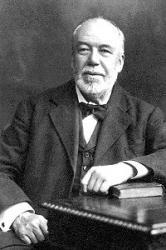
1850 - 1929 Person Name: Arthur Henry Mann, 1850 - 1929 Topics: The Church Worship - The Close of Service Composer of "ANGEL'S STORY" in Service Book and Hymnal of the Lutheran Church in America Arthur Henry ‘Daddy’ Mann MusB MusD United Kingdom 1850-1929. Born at Norwich, Norfolk, England, he graduated from New College, Oxford. He married Sarah Ransford, and they had five children: Sarah, Francis, Arthur, John, and Mary. Arthur died in infancy. Mann was a chorister and assistant organist at Norwich Cathedral, then, after short stints playing the organ at St Peter’s, Wolverhampton (1870-71); St. Michael’s Tettenhall Parish Church (1871-75); and Beverley Minster (1875-76); he became organist at King’s College Chapel, Cambridge (1876-1929), Cambridge University organist (1897-1929), and music master and organist at the Leys School, Cambridge (1894-1922). In addition to composing an oratorio and some hymn tunes, he was music editor of the Church of England Hymnal (1894). In 1918 he directed the music and first service of “Nine lessons & carols” at King’s College Chapel. He was an arranger, author, composer, and editor. His wife, Sarah, died in 1918. He died at Cambridge, England. John Perry

Jeremiah Clarke

1669 - 1707 Person Name: Jeremiah Clarke, c. 1669 - 1707 Topics: The Church Worship - The Close of Service Composer of "NOTTINGHAM (ST. MAGNUS)" in Service Book and Hymnal of the Lutheran Church in America

Pages


Export as CSV
It looks like you are using an ad-blocker. Ad revenue helps keep us running. Please consider white-listing Hymnary.org or getting Hymnary Pro to eliminate ads entirely and help support Hymnary.org.