

 My Starred Hymns
 My FlexScores
 My Hymnals
 My Purchased Files
Planning worship?
Check out our sister site, ZeteoSearch.org,
for 20+ additional resources related to your search.
- |
User Links
Person Results
Jeremiah Eames Rankin
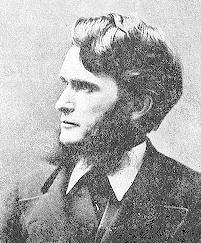
1828 - 1904 Person Name: Jeremiah Eames Rankin, 1828-1904 Topics: National and Social Service Travellers and Absent Friends Author of "God be with you till we meet again" in The Methodist Hymn-Book with Tunes Pseudonym: R. E. Jeremy.
Rankin, Jeremiah Eames, D.D., was born at Thornton, New Haven, Jan. 2, 1828, and educated at Middleburg College, Vermont, and at Andover. For two years he resided at Potsdam, U.S. Subsequently he held pastoral charges as a Congregational Minister at New York, St. Albans, Charlestown, Washington ( District of Columbia), &c. In 1878 he edited the Gospel Temperance Hymnal, and later the Gospel Bells. His hymns appeared in these collections, and in D. E. Jones's Songs of the New Life, 1869. His best known hymn is "Labouring and heavy laden" (Seeking Christ). This was "written [in 1855] for a sister who was an inquirer," was first printed in the Boston Recorder, and then included in Nason's Congregational Hymn Book, 1857. Another of his hymns is "Rest, rest, rest, brother rest." He died in 1904. [Rev. F. M. Bird, M.A.]
--John Julian, Dictionary of Hymnology (1907)
========================
Rankin, J. 33., p. 951, ii. Dr. Rankin, b. in N. H. (not New Haven), and received his D.D. 1869, LL.D. 1889 from his Alma Mater. He was President for several years of Howard University, Washington, D.C. His publications included several volumes of Sermons, German-English Lyrics, Sacred and Secular, 1897; 2nd ed. 1898, &c. In addition to his hymns noted on p. 951, ii., he has written and published mainly in sheet form many others, the most important and best-known being:—
1. God be with you till we meet again. [Benediction.] Dr. Rankin's account of this hymn, supplied to us, in common with Mr. Brownlie, for his Hymns and H. Writers of The Church Hymnary, 1899, is: "It was written as a Christian good-bye, and first sung in the First Congregational Church, of which I was minister for fifteen years. We had Gospel meetings on Sunday nights, and our music was intentionally of the popular kind. I wrote the first stanza, and sent it to two gentlemen for music. The music which seemed to me to best suit the words was written by T. G. Tomer, teacher of public schools in New Jersey, at one time on the staff of General 0. 0. Howard. After receiving the music (which was revised by Dr. J. W. Bischoff, the organist of my church), I wrote the other stanzas." The hymn became at once popular, and has been translated into several languages. In America it is in numerous collections; and in Great Britain, in The Church Hymnary, 1898, Horder's Worship Song, 1905, The Methodist Hymn Book, 1904, and others. It was left undated by Dr. Rankin, but I.D. Sankey gives it as 1882.
2. Beautiful the little hands. [Little ones for Jesus.] Given without date in Gloria Deo, New York, 1900.
Dr. Rankin's translations include versions of German, French, Latin, and Welsh hymns. His contributions to the periodical press have been numerous.
--John Julian, Dictionary of Hymnology, New Supplement (1907)
Jeremiah Eames Rankin
R. B. Y. Scott
1899 - 1987 Topics: National and World Peace; The Kingdom of God on Earth The Nation, Peace Author of "O day of God, draw nigh" in The Hymnal Scott, Robert Balgarnie Young. (Toronto, Ontario, July 18, 1899--November 1, 1987). United Church. University of Toronto, B.A., 1922; M.A., 1924; Ph.D., 1928. Pastorate at Long Branch, Ont., 1926-1928; professor of Old Testament at Union College (Vancouver), 1928-1931; United Theological College (Montreal), 1931-1955; Princeton University, 1955-1968; also dean of divinity at McGill University (Montreal), 1945-1955. Published many translations of, and commentaries on, Old Testament material, as well as on the Dead Sea Scrolls. Most of his hymns date from his years in Montreal.
--Hugh D. McKellar, DNAH Archives
R. B. Y. Scott
Mary S. Edgar
1889 - 1973 Person Name: Mary S. Edgar, 1889-1973 Topics: National Songs Author of "O God of All the Many Lands" in Catholic Book of Worship III
Mary S. Edgar
Howard Hughes
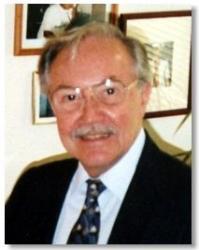
b. 1930 Person Name: Howard Hughes, S. M. Topics: Occasional Services Civic / National Occasions Author of "Psalm 82 (A Responsorial Setting)" in Psalms for All Seasons In his letter of invitation to Brother Howard Hughes, the President of NPM, J. Michael McMahon, declared, “Board Members agreed unanimously that you have created compositions for the liturgy that are beautiful, delightful, and spirited, and that have fostered strong participation by the worshiping assembly as they pray the texts you have set to music.”
The Marianist composer’s first published work was “Mass for Peace” which appeared in Peoples Mass Book, 1964 edition, released by World Library Publications. As liturgical celebration developed in the English vernacular following the Second Vatican Council, Brother Howard produced a wide range of liturgical compositions published by WLP, GIA, ICEL, OCP, LTP, CFCW, FDLC, USCC, RP, NPM, Presbyterian Church USA, and The United Methodist Hymnal Companion. And at the age of 81 he is still composing and accepting commissions for special events.
A Marianist religious for 64 years, this distinguished liturgical musician and composer began as a high teacher of French and director of high school choral groups. In addition Brother Howard also sang in symphonic choruses in New York and in Baltimore. He commented that “conducting high school choral concerts and singing with adult symphonic choruses have been a great help in learning to write music.”
The National Association of Pastoral Musicians will honor Brother Howard Hughes, S.M., as Pastoral Musician of the Year when it gathers for its national convention in Washington, DC, July 29 – August 2, 2012.
Currently the awardee serves as organist and music director for the Marianist Center in Cupertino, CA.
--http://www.dsj.org/being-catholic/worship
Howard Hughes
T. H. Stockton
1808 - 1868 Topics: The Christian Nation Patriotism; National Hymn Author of "And the flag of our fathers, in God's name unfurled" in The Voice of Praise Stockton, Thomas Hewlings, D.D. (Mount Holly, New Jersey, June 4, 1808--October 9, 1868, Philadelphia). The son of William S., founder and editor of The Wesleyan Repository, 1821, and Elizabeth S. (Hewlings) Stockton. Largely educated in private schools, after studying medicine for a time and spending some five years following literary pursuits, he was admitted to the Maryland Annual Conference of the Methodist Protestant Church. A voluminous writer, he became one of the most eloquent preachers of the nineteenth century in America. When but twenty-five years of age he was elected chaplain of the House of Representatives, Congress of the United States, serving in that capacity the sessions of 1835-1836, 1859-1860, 1861-1862, and in 1862 was chosen chaplain of the United States Senate. It was he who offered the memorable prayer at the dedication of the Gettysburg National Monument.
Although much in the public eye as an eminent preacher, lecturer, and leader in all forms of social progress, he insisted his name be used with neither prefix nor suffix. He did not acknowledge the degree of Doctor of Divinity conferred on him by Gettysburg College and refused to accept the presidency of Miami College, Oxford, Ohio, when unanimously elected to that position by its board of trustees. Because of his opposition to denominationalism he twice resigned his assigned pastorates and organized, in Philadelphia and Cincinnati, "Societies of Brotherly Love," designed to follow the pattern set by John Wesley for his early converts.
Dr. Stockton compiled the Methodist Protestant Hymn-Book of 1837, the first Methodist hymnal to accredit the hymns to their respective authors. In addition to numerous sermons and speeches, his published works include:
Floating Flowers from a Hidden Brook, 1844
Ecclesiastical Opposition to the Bible, 1853
Stand Up, A Christian Ballad, 1858
Poems, 1862
"Stand up for Jesus," from A Christian Ballad which included autobiographical notes and some other poems, was suggested by the same incident which gave rise to the George Duffield, Jr., hymn with the same opening line. Although set to music several times it gave way to the latter.
--Robert G. McCutchan, DNAH Archives
T. H. Stockton
Henry Scott Holland
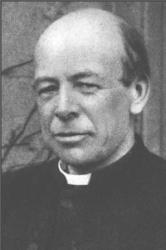
1847 - 1918 Person Name: Henry Scott Holland, 1847 - 1918 Topics: Church Life and Work City, Nation, World Author of "Judge eternal, throned in splendor" in Service Book and Hymnal of the Lutheran Church in America Holland, Henry Scott, D.D., son of G. H. Holland of Gayton Lodge, Wimbledon Common, was born Jan. 27, 1847, at Ledbury, Hereford, and educated at Eton and at Balliol Coll., Oxford (B.A. 1870, M.A. 1873, D.D. Aberdeen 1903). He became Senior Student of Christ Church, Oxford, in 1870, was ordained D. 1872, P. 1874, and has been Canon of St. Paul's, London, since 1884. His hymn, "Judge eternal, throned in splendour" (Prayer for the Nation), appeared in the Commonwealth for July 1902, and is in The English Hymnal, 1906, No. 423. [Rev. James Mearns, M.A.]
--John Julian, Dictionary of Hymnology, New Supplement (1907)
Henry Scott Holland
Frederick Lucian Hosmer
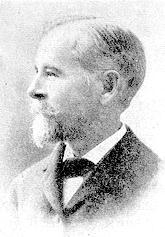
1840 - 1929 Person Name: Frederick Lucian Hosmer, 1840-1929 Topics: The Nations; National and World Peace; The Kingdom of God on Earth The Nation, Peace Author of "O beautiful, our country!" in The Hymnal Hosmer, Frederick Lucian, B.A., was born at Framingham, Mass., in 1840, and educated at Harvard, where he graduated B.A. in 1869. Entering the Unitarian Ministry in 1872 he has held charges in Quincy, Ill., 1872-77; Cleveland, Ohio, 1878-92; St. Louis, 1894-99; and since 1899, at Berkeley, Cal. His Way of Life, 1877, was a compilation of Prayers and Responsive Services for Sunday Schools. Of Unity Hymns and Carols, 1880, he was joint editor with W. C. Gannett and J. V. Blake. His hymns were published jointly by him and W. C. Gannett (q.v.), as The Thought of God in Hymns and Poems (Boston: Little, Brown & Co.), 1st Series, 1885; 2nd Series, 1894. Of his 56 hymns in this work the following have come into common use, for the most part during the past ten years:—
1. Father, to Thee we look in all our sorrow. [Trust in God.] Written in 1881 upon the death of a member of the author's congregation, and published in The Thought of God, 1st Series, 1885.
2. From age to age how grandly rise. [Unity.] Written for the annual festival of the Free Religious Assoc, Boston, June 2, 1899, and first published in Souvenir Festival Hymns, 1899. Subsequently altered by the author to "From age to age the prophet's vision."
3. From age to age they gather, all the brave of heart and strong. [Victory of Truth.] "Written in 1891 for the Dedication of Unity Church, Decorah, Iowa, and published in The Thought of God, 2nd Series, 1894.
4. From many ways and wide apart. [College or School Reunion.] Dated in The Thought of God, 2nd Series, 1894, as having been written in 1890.
5. Go not, my soul, in search of Him. [God Within.] Written in 1879, printed in the Boston Christian Register, May 31, 1879, and included in The Thought of God, 1st Series, 1885, with the title, "The Indwelling God."
6. I cannot think of them as dead. [Eternal Life.] Written in 1882, and first published in The Thought of God, 1st Series, 1885, and entitled "My Dead." in the English collections it is usually given as "We cannot think of them as dead."
7. I little see, I little know. [Trust.] "A Psalm of Trust," written in 1883, first appeared in the Boston Christian Register, and again in The Thought of God, 1st Series, 1885.
8. Immortal by their deed and word. [The Spirit of Jesus.] Written in 1880, and first published in Unity Hymns and Carols, Chicago, Ill., 1880, and then in The Thought of God, 1st Series, 1885.
9. Many things in life there are. [Mystery in all Things.] Written in 1885, and first published in The Thought of God, 1st Series, 1885, with the title "Passing Understanding," and the quotation "The Peace of God which passeth all understanding."
10. Not always on the mount may we. [On the Mount.] This lesson from the Transfiguration was written in 1882, and published in the Chicago Unity, April 1, 1884. After revision by the author, it was included in the 1st Series of The Thought of God, 1885.
11. Not when, with self dissatisfied. [Lent.] Written in 1891, and given in The Thought of God, 2nd series, 1894, p. 33. It is in The Public School Hymn Book, 1903, and others.
12. O beautiful, my country. [National Hymn.] As “Our Country," written in 1884, and published in the Chicago Unity Festivals, 1884; and again in The Thought of God, 1885.
13. O Light, from age to age the same. [Dedication Anniversary.] Written in 1890 for the fiftieth anniversary of the Second Congregational Church (Unitarian), Quincy, 111. Included in The Thought of God, 2nd Series, 1894, and entitled "From Generation to Generation."
14. O Lord of Life, where'er they be. [Life in God.] "Written in 1888 for Easter service in Author's own church," and first published in the Chicago Unit, and again in The Thought of God, 2nd Series, 1894. The "Alleluia!" refrain, which is added in some collections to each verse, is appended, in the original, to the last verse only.
15. O Name, all other names above. [Trust in God.] Under the title "Found. 'They that know Thy name will put their trust in Thee!’ this hymn, written in 1878, was given in The Thought of God, 1st Series, 1885.
16. O Prophet souls of all the years. [Unity.] “Written in 1893 for, and sung at, the Unitarian gathering in connection with The World's Parliament of Religions (World's Fair), Chicago, Sep., 1893," and included in The Thought of God, 2nd Series, 1894, and entitled "One Law, One Life, one Love."
17. O Thou, in all Thy might so far. [God All in All.] This hymn, given in The Thought of God, 1st Series, 1885, with the title "The Mystery of God," was written in 1876, and first published in the New York Inquirer.
18. O thou in lonely vigil led. This encouragement for lonely workers was written for the "Emerson Commemoration, W. U. C, 1888," and included in The Thought of God, 2nd Series, 1894.
19. O Thou, Who art of all that is. [Divine Guidance.] Under the title "Through unknown paths," this hymn was included in The Thought of God, 1st Series, 1885. It was written in 1877.
20. O Thou, Whose Spirit witness bears. [Dedication of a Place of Worship.] Written for the Dedication of First Unitarian Church, Omaha, Feb. 6, 1891, and published in The Thought of God, 2nd Series, 1894, with the title "The Inward Witness," and the subscription "For T. K., Omaha, 1801."
21. On eyes that watch through sorrow's night. [Easter] A Carol for Easter Morn, written in 1890 for the author's congregation, and published in The Thought of God, 2nd Series, 1894.
22. One thought I have, my ample creed. [The Thought of God.] This is the initial hymn to the collection The Thought of God, 1st Series, 1885, and supplies the title to the work. It was written in 1880, and first published in the Chicago Unity Hymns and Carols, 1880, and then in The Thought of God, 1885.
23. The rose is queen among the flowers. [Flower Service.] "Written in 1875, first published in The Sunnyside, a song book for Sunday Schools, and again in The Thought of God, 1st Series, 1885, under the title "Flower Sunday."
24. Thy kingdom come, — on bended knee. [Missions.] "Written in 1891 for the Commencement of the Meadville Theological School (Meadville, Pa.), June 12, 1891, and published in The Thought of God, 2nd Series, 1894," under the title "The Day of God," and the subscription, "M. T. S., June 12, 1891."
25. We pray no more, made lowly wise, For miracle and sign. [Greater Faith Desired.] Written in 1879, and first published in The Christian Register (Boston), Mar. 22 of that year, under the title 'The Larger Faith.'" Included under the same title in The Thought of God, 1st Series, 1885. Sometimes given as "Made lowly wise, we pray no more."
26. When courage fails, and faith burns low. [Victory of Truth.] Under the title "Loyalty," this hymn was given in The Thought of God, 1st Series, 1885. It was written in 1881.
27. Where men on mounts of vision Have passed the veil within. [Dedication of a Place of Worship.] "Written in 1891 for the Dedication of First Unitarian Church, Oakland, California." Included in The Thought of God, 2nd Series, 1894, entitled "Holy Places," and subscribed " For C. W. W., Oakland, Cal., 1891."
These annotations are from manuscript notes supplied to us by the author. Of these hymns all are in common use in America, and more than one half in Great Britain, mainly by Unitarians and Congregationalists. Amongst Unitarian hymn-writers of the last twenty years Mr. Hosmer is the most powerful and original known to us.
--John Julian, Dictionary of Hymnology, New Supplement (1907)
Frederick Lucian Hosmer
Thomas John Williams
1869 - 1944 Person Name: Thomas J. Williams, 1869-1944 Topics: Nation Composer of "EBENEZER" in Hymns for a Pilgrim People Although his primary vocation was in the insurance business, Thomas John Williams (b. Ynysmeudwy, Glamorganshire, Wales, 1869; d. Llanelly, Carmarthenshire, Wales, 1944) studied with David Evans at Cardiff and later was organist and choirmaster at Zion Chapel (1903-1913) and Calfaria Chapel (1913-1931), both in Llanelly. He composed a number of hymn tunes and a few anthems.
Bert Polman
Thomas John Williams
F. Venua
1788 - 1872 Person Name: Frederick M. A. Venua, 1788-1872 Topics: National Occasions Composer of "PARK STREET" in Hymnal and Liturgies of the Moravian Church Frederic Marc Antoine Venua; English composer
Evangelical Lutheran Hymnal, 1908
Born to an Italian family in France, Venua attended the Paris Conservatory, and studied composition in London.
He directed and composed for the ballet orchestra at the King’s Theater, and belonged the British Royal Society of Musicians.
He retired to Exeter in 1858.
© The Cyber Hymnal™ (http://www.hymntime.com/tch/bio/v/e/n/u/venua_fma.htm">Frederick Marc Antoine Venua)
F. Venua
George Smart
1776 - 1867 Person Name: G. T. Smart, 1776-1807 Topics: National and Social Service Citizenship and Service Composer of "WILTSHIRE" in The Methodist Hymn-Book with Tunes
George Smart
Pages




