

 My Starred Hymns
 My FlexScores
 My Hymnals
 My Purchased Files
Planning worship?
Check out our sister site, ZeteoSearch.org,
for 20+ additional resources related to your search.
- |
User Links
Person Results
Robert Archibald Smith
1780 - 1829 Person Name: Robert Smith Topics: Ash Wednesday Gospel; Lent 2 Old Testament; Trinity 10 Collect; Trinity 12 Collect; Lent; Penitence; Prayer Arranger of "MARTYRDOM (AVON)" in Magnify the Lord Although largely self-taught, Robert A. Smith (b. Reading, Berkshire, England, 1780; d. Edinburgh, Scotland, 1829) was an excellent musician. By the age of ten he played the violin, cello, and flute, and was a church chorister. From 1802 to 1817 he taught music in Paisley and was precentor at the Abbey; from 1823 until his death he was precentor and choirmaster in St. George's Church, Edinburgh. He enlarged the repertoire of tunes for psalm singing in Scotland, raised the precentor skills to a fine art, and greatly improved the singing of the church choirs he directed. Smith published his church music in Sacred Harmony (1820, 1825) and compiled a six-volume collection of Scottish songs, The Scottish Minstrel (1820-1824).
Bert Polman
Robert Archibald Smith
Henry F. Chorley
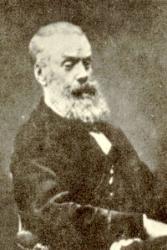
1808 - 1872 Person Name: Henry Fothergill Chorley Topics: Epiphany 2 Collect; Epiphany 3 Old Testament; Lent 4 Old Testament; Trinity 1 Old Testament; Trinity 5 Collect; Trinity 11 Old Testament; Trinity 23 Old Testament; Independence Day Epistle; Freedom; God Kingdom of; God Law of; God Obedience to; God Power of; God Wrath of; Peace International; Peace Spiritual; Penitence Author (st. 1, 2) of "God the Omnipotent! King who ordainest" in Magnify the Lord Chorley, Henry Fothergill, was born at Blackleyhurst, Lancashire, Dec. 15, 1808, and educated at the Royal Institution, Liverpool. In 1834 he was engaged as a member of the staff of the London Athenaeum. This connection he retained for 35 years. He died Feb. 15, 1872. He published some novels and a large number of songs.
--John Julian, Dictionary of Hymnology, Appendix, Part II (1907)
============
Born: December 15, 1808, Blackley Hurst, near Billinge, Lancashire, England.
Pseudonym: Paul Dell.
Died: February 16, 1872, London, England.
Buried: Brompton Cemetery, London, England.
Son of an iron worker and lock maker, Chorley moved with his family to Liverpool after his father’s death in 1816. He was educated by private tutors in Liverpool and at the school of the Royal Institution. His youth was shaped partly by time spent in the household of the wealthy and intellectual Mrs. Benson Rathbone of Green Bank, and he became a close friend of her son Benson, who died in an accident in 1834.
Chorley began writing for the London Athenæum in 1830, and was the paper’s music critic and literary reviewer until 1868. He also became music critic for the London Times and wrote, for these and other journals, reviews and musical gossip columns, discussing composers and performers in Britain and on the European continent. He was quite conservative, and was a persistent opponent of innovation, but was a lively chronicler of London life. In the Athenæum and elsewhere, Chorley often criticized the music of Schumann and Wagner for what he called "decadence." In 1850 and 1851, Chorley edited the Ladies’ Companion, which covered fashion and domestic women’s issues.
Chorley was also a journalist, novelist, playwright, and poet, and opera librettist. One of his best known pieces was his obituary of Turgenev, mistakenly written while the Russian was still very much alive. Turgenev was not offended by the error nearly as much as he was by the critical opinions of his work Chorley gave in the obituary.
Chorley was considered eccentric and abrasive, but was respected for his integrity and kindness. He enthusiastically gave and attended dinner parties, and cultivated friendships with Elizabeth Barrett, Felix Mendelssohn, Charles Dickens, Arthur Sullivan and Charles Santley. After the death of his brother, John Rutter Chorley (1806–1867), Henry inherited enough money to retire from the Athenæum, though he continued to contribute articles for that paper and for The Orchestra.
In spite of Chorley’s efforts to promote the music of Charles Gounod in England, the composer disliked Chorley intensely. When Gounod lived in England in the early 1870’s, he wrote a satirical piano piece intended to be a parody of Chorley’s personality. It greatly amused Gounod’s English patron, Georgina Weldon, who described Chorley as having a "thin, sour, high-pitched sopranish voice" and moving like a "stuffed red-haired monkey." Gounod intended to publish the piece with a dedication to Chorley, but died before this was possible. Weldon then invented a new program for the piece, which was re-titled Funeral March of a Marionette. It became popular as a concert piece, and in the 1950s, its opening phrases became well known as the theme music for the television program Alfred Hitchcock Presents.
Chorley’s works include:
Music and Manners in France and Germany, 1841
Pomfret, 1845
Roccabella, 1859
The Prodigy, 1866
--www.hymntime.com/tch/
Henry F. Chorley
Michael Saward
1932 - 2015 Person Name: Michael Saward (born 1932) Topics: God's Church Unity and Growth; Trinity Sunday The Trinity; Pentecost 2 The Church's Unity and Fellowship Author of "All-creating heavenly Giver" in Hymns for Today's Church (2nd ed.) Michael John Saward (b. Blackheath, Kent, England, 1932) was residentiary Canon of St. Paul's Cathedral, London, and a church commissioner and member of the general synod of the Church of England. Educated at Eltham College, Bristol University, and Tyndale Hall, he was ordained in the Church of England in 1956. Saward served in several congregations and was radio and television officer for the Church Information Office (1967-1972). His publications include Leisure (1963), Couldn’t Care Less (1966), Don't Miss the Party (1974), and All Change (1983). Associated with the Jubilate Group for a number of years, he has written some sixty hymns and served as text editor for Hymns for Today's Church (1982).
Bert Polman
Michael Saward
Saint Hildegard
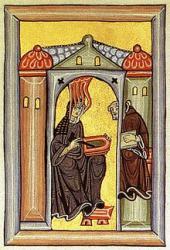
1098 - 1179 Person Name: Hidegard, Abbess of Bingen, 12th century Topics: Empowerment; God Name; Healing; Holy Spirit; Holy Spirit Images; Holy Spirit Movement; Jesus Christ Incarnation; Trinity; Wisdom; Christmas Day 2 Year A; Proper 8 Year C Author of "O Holy Spirit, Root of Life" in Voices United Hildegard, St., Virgin and Abbess, was born at Bockelheim, or Bockenheim, Frankfurt, 1098. Her father, Hildebert, was one of the Knights of Meginhard, Count of Spanheim. When eight years old she was committed to tho care of a sister of the Count, Jutta, the Abbess of St. Disibod, a position in which she was succeeded by Hildegard in 1136. Under the rule of Hildegard the convent became so crowded that a new one was built at Rupertsberg, near Bingen, into which, in 1147, Hildegard removed with eighteen Sisters. Hildegard gained great notoriety in very early life on account of visions to which, it is said, she was subject from her 6th to her 15th year. In later life she filled a considerable place in the history of her times, not only as a writer who had the courage of her opinions, and spared neither high nor low in her vigorous denunciations of their shortcomings, political as well as moral, but as a prophetess and preacher. At the instigation of St. Bernard she took a most prominent part in stirring up the unfortunate crusade which he preached, and engaged in many controversies with the hierarchy of her Church. Though she never ceased to be the abbess of the convent she had founded, much of her time was spent in travelling about the Continent, preaching and prophesying. She died in 1179, and was buried at Eupertsberg, but her remains were removed, on the destruction of that convent by the Swedes, to Eilingen, in 1622.
Though St. Hildegard was a voluminous writer her contributions to the hymnody of her day were neither numerous nor important. Mone gives three sequences which are attributed to her, viz., one on the Holy Spirit, “0 ignis Spiritus paracliti"; another on the Blessed Virgin Mary, "0 Virga ac diadema purpurae Regis"; and a third on St. Disibod, "0 praesul verae civitatis." [Rev. Digby S. Wrangham, M.A.]
-- John Julian, Dictionary of Hymnology
Saint Hildegard
Gracia Grindal
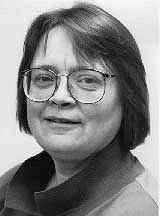
b. 1943 Topics: Biblical Names and Places Israel; Church Year Advent; Church Year Ash Wednesday; Church Year Good Friday; Church Year Lent; Comfort and Encouragement; Conflict; Cry to God; Daily Prayer Midday Prayer; Darkness; Elements of Worship Assurance of Pardon; Elements of Worship Confession (Corporate); Elements of Worship Confession (Individual); Elements of Worship Lord's Supper; Failure; Forgiveness; God Dependence on; God Desire for; God as Refuge; God's Word; God's Forgiveness; God's Name; God's People (flock, sheep); God's Promises; God's Strength; Grace; Guilt; Hope; Hopelessness; Judgment; Love; Mercy; Occasional Services Funerals; Patience; People of God / Church Suffering; Prayer; Salvation; Social Justice; Temptation And Trial; The Fall; Victory; War and Revolution; Year A, Lent, 5th Sunday; Year B, Ordinary Time after Pentecost, August 7-13; Year B, Ordinary Time after Pentecost, June 5-11 (if after Trinity Sunday); Year B. Ordinary Time after Pentecost, June 26-July 2 Translator of "Out of the Depths I Cry to You" in Psalms for All Seasons Gracia Grindal (b. Powers Lake, ND, 1943). Grindal was educated at Augsburg College, Minneapolis, Minnesota; the University of Arkansas; and Luther-Northwestern Seminary, St. Paul, Minnesota, where she has served since 1984 as a professor of pastoral theology and communications. From 1968 to 1984 she was a professor of English and poet-in-residence at Luther College, Decorah, Iowa. Included in her publications are Sketches Against the Dark (1981), Scandinavian Folksongs (1983), Lessons in Hymnwriting (1986, 1991), We Are One in Christ: Hymns, Paraphrases, and Translations (1996), Good News of Great Joy: Advent Devotions for the Home (1994 with Karen E. Hong), Lina Sandell, the Story of Her Hymns (2001 with John Jansen), and A Revelry of Harvest: New and Selected Poems (2002). She was instrumental in producing the Lutheran Book of Worship (1978) and The United Methodist Hymnal (1989).
Bert Polman
Gracia Grindal
Michael Bruce
1746 - 1767 Topics: Christmas 2 Old Testament; Epiphany 2 Old Testament; Sunday after Ascension Old Testament; Trinity 3 Old Testament; Sunday Next Before Advent Old Testament; Ascensiontide; God Kingdom of; Peace International; Kingdom of God Author of "Behold! the mountain of the Lord" in Magnify the Lord Bruce, Michael, son of a Scottish weaver, was born at Kinnesswood, Portmoak, Kinrossshire, Scotland, March 27,1746, and educated at the village school, Edinburgh University (where he first became acquainted with John Logan), and the Theological Hall of the Associate Synod, held at Kinross, under the Rev. John Swanston, intending ultimately to enter the ministry, a hope which was frustrated by his untimely death. To assist in procuring University fees and maintenance he for some time conducted a school, during the recess, at Gairney Bridge, and subsequently at Forrest Mill, near Tillicoultry. Whilst yet a student he died at Kinnesswood, July 5th, 1767.
[Also, see Logan, John]
The names of Michael Bruce and John Logan are brought together because of the painful controversy which has long prevailed concerning the authorship of certain Hymns and Paraphrases of Holy Scripture which are in extensive use in the Christian Church both at home and abroad. During the latter years of Bruce's short life he wrote various Poems, and also Hymns for a singing class at Kinnesswood, which were well known to his family and neighbours, and were eventually copied out by Bruce himself in a quarto MS. book, with the hope that some day he might see them in print. Immediately upon his death, in 1767, Logan called upon his father and requested the loan of this book that he might publish the contents for the benefit of the family. This was granted. Not till three years afterwards did a certain work, containing seventeen poems, and entitled Poems on Several Occasions , by Michael Bruce, 1770, appear, with a Preface in which it was stated that some of the Poems were by others than Bruce.
-- John Julian, Dictionary of Hymnology (1907)
Michael Bruce
I-to Loh
b. 1936 Topics: Adoration and Praise; Christian Experience; Creation; God Creator; God Faithfulness; God Nature; God Power/Might; God Providence; God Works; Grace; Gratitude; Brevity of Life; Christmas Day 2 Year A; Trinity Sunday Year A; Epiphany Last/Transfig. Year C; Trinity Sunday Year C; Monday in Holy Week Year ABC Harmonizer of "TOA-SIA" in Voices United
I-to Loh
Michael Haydn
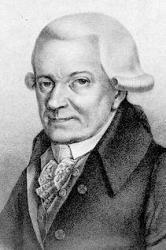
1737 - 1806 Person Name: J. Michael Haydn (1737-1806) Topics: Epiphany 4 Collect; Sexagesima Collect; Lent 2 Collect; Trinity 1 Collect; Trinity 5 Old Testament; Trinity 15 Collect; Trinity 20 Collect; The Rogation Days Epistle; God Creator; God Faithfulness of; God Glory of; God In nature; God Power of; Providence; Sacramental Worldview Composer (attributed to) of "LYONS" in Magnify the Lord Johann Michael Haydn Austria 1737-1806. Born at Rohrau, Austria, the son of a wheelwright and town mayor (a very religious man who also played the harp and was a great influence on his sons' religious thinking), and the younger brother of Franz Joseph Haydn, he became a choirboy in his youth at the Cathedral of St. Stephen in Vienna, as did his brother, Joseph, an exceptional singer. For that reason boys both were taken into the church choir. Michael was a brighter student than Joseph, but was expelled from music school when his voice broke at age 17. The brothers remained close all their lives, and Joseph regarded Michael's religious works superior to his own. Michael played harpsichord, violin, and organ, earning a precarious living as a freelance musician in his early years. In 1757 he became kapellmeister to Archbishop, Sigismund of Grosswardein, in Hungary, and in 1762 concertmaster to Archbishop, Hieronymous of Salzburg, where he remained the rest of his life (over 40 years), also assuming the duties of organist at the Church of St. Peter in Salzburg, presided over by the Benedictines. He also taught violin at the court. He married the court singer, Maria Magdalena Lipp in 1768, daughter of the cathedral choir-master, who was a very pious women, and had such an affect on her husband, trending his inertia and slothfulness into wonderful activity. They had one daughter, Aloysia Josepha, in 1770, but she died within a year. He succeeded Wolfgang Amadeus Mozart, an intimate friend, as cathedral organist in 1781. He also taught music to Carl Maria von Weber. His musical reputation was not recognized fully until after World War II. He was a prolific composer of music, considered better than his well-known brother at composing religious works. He produced some 43 symphonies,12 concertos, 21 serenades, 6 quintets, 19 quartets, 10 trio sonatas, 4 due sonatas, 2 solo sonatas, 19 keyboard compositions, 3 ballets, 15 collections of minuets (English and German dances), 15 marches and miscellaneous secular music. He is best known for his religious works (well over 400 pieces), which include 47 antiphons, 5 cantatas, 65 canticles, 130 graduals, 16 hymns, 47 masses, 7 motets, 65 offertories, 7 oratorios, 19 Psalms settings, 2 requiems, and 42 other compositions. He also composed 253 secular vocals of various types. He did not like seeing his works in print, and kept most in manuscript form. He never compiled or cataloged his works, but others did it later, after his death. Lothar Perger catalogued his orchestral works in 1807 and Nikolaus Lang did a biographical sketch in 1808. In 1815 Anton Maria Klafsky cataloged his sacred music. More complete cataloging has been done in the 1980s and 1990s by Charles H Sherman and T Donley Thomas. Several of Michael Haydn's works influenced Mozart. Haydn died at Salzburg, Austria.
John Perry
Michael Haydn
Robert Grant
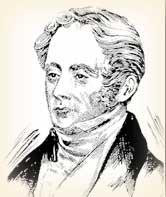
1779 - 1838 Topics: Epiphany 4 Collect; Sexagesima Collect; Lent 2 Collect; Trinity 1 Collect; Trinity 5 Old Testament; Trinity 15 Collect; Trinity 20 Collect; The Rogation Days Epistle; God Creator; God Faithfulness of; God Glory of; God In nature; God Power of; Providence; Sacramental Worldview Author of "O worship the King, all glorious above!" in Magnify the Lord Robert Grant (b. Bengal, India, 1779; d. Dalpoorie, India, 1838) was influenced in writing this text by William Kethe’s paraphrase of Psalm 104 in the Anglo-Genevan Psalter (1561). Grant’s text was first published in Edward Bickersteth’s Christian Psalmody (1833) with several unauthorized alterations. In 1835 his original six-stanza text was published in Henry Elliott’s Psalm and Hymns (The original stanza 3 was omitted in Lift Up Your Hearts).
Of Scottish ancestry, Grant was born in India, where his father was a director of the East India Company. He attended Magdalen College, Cambridge, and was called to the bar in 1807. He had a distinguished public career a Governor of Bombay and as a member of the British Parliament, where he sponsored a bill to remove civil restrictions on Jews. Grant was knighted in 1834. His hymn texts were published in the Christian Observer (1806-1815), in Elliot’s Psalms and Hymns (1835), and posthumously by his brother as Sacred Poems (1839).
Bert Polman
========================
Grant, Sir Robert, second son of Mr. Charles Grant, sometime Member of Parliament for Inverness, and a Director of the East India Company, was born in 1785, and educated at Cambridge, where he graduated in 1806. Called to the English Bar in 1807, he became Member of Parliament for Inverness in 1826; a Privy Councillor in 1831; and Governor of Bombay, 1834. He died at Dapoorie, in Western India, July 9, 1838. As a hymnwriter of great merit he is well and favourably known. His hymns, "O worship the King"; "Saviour, when in dust to Thee"; and "When gathering clouds around I view," are widely used in all English-speaking countries. Some of those which are less known are marked by the same graceful versification and deep and tender feeling. The best of his hymns were contributed to the Christian Observer, 1806-1815, under the signature of "E—y, D. R."; and to Elliott's Psalms & Hymns, Brighton, 1835. In the Psalms & Hymns those which were taken from the Christian Observer were rewritten by the author. The year following his death his brother, Lord Glenelg, gathered 12 of his hymns and poems together, and published them as:— Sacred Poems. By the late Eight Hon. Sir Robert Grant. London, Saunders & Otley, Conduit Street, 1839. It was reprinted in 1844 and in 1868.
This volume is accompanied by a short "Notice," dated "London, Juno 18, 1839."
=====================
Grant, Sir R., p. 450, i. Other hymns are:—
1. From Olivet's sequester'd scats. Palm Sunday.
2. How deep the joy, Almighty Lord. Ps. lxxxiv.
3. Wherefore do the nations wage. Ps. ii.
These are all from his posthumous sacred Poems, 1839.
--John Julian, Dictionary of Hymnology, Appendix, Part II (1907)
Robert Grant
Jean Janzen
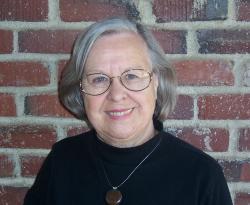
b. 1933 Topics: Empowerment; God Name; Healing; Holy Spirit; Holy Spirit Images; Holy Spirit Movement; Jesus Christ Incarnation; Trinity; Wisdom; Christmas Day 2 Year A; Proper 8 Year C Adapter of "O Holy Spirit, Root of Life" in Voices United Jean Janzen was born on December 5, 1933, the seventh of Henry Peter Wiebe and Anna Schultz Wiebe's eventual eight children (Three Mennonite Poets 5). For the first five years of her life, Janzen lived in Dalmeny, Saskatchewan (A Cappella 25). In 1938, she moved to Mountain Lake, Minnesota when her schoolteacher father began his second ministry as a pastor (“Coming into Voice”). A year later, the family moved to Kansas (“Coming into Voice”).
Janzen says she cannot remember when she wrote her first poem, but the first evidence of her work is a handwritten book of five poems that she made in third or fourth grade, which was saved by her mother through the family’s many moves (E-mail Interview). She had very little exposure to poetry and literature as a child, except for hymns and Bible stories. She values these elements of her childhood and “treasure[s] the artful rhythms of the King James [Bible]” (E-mail Interview).
Janzen attended Meade Bible Academy, Tabor College, and Grace College (A Cappella 25). It was in college that she had her first real exposure to literature. She was “thrilled, and became a literature major.” She remembers being “enamored” with Emily Dickinson and writing papers about her whenever given the chance. However, she never considered writing poetry as a possible career (E-mail Interview).
Janzen--then Jean Wiebe--married Louis Janzen, a medical student, and the couple moved to Chicago where she worked as a medical secretary while taking courses at Northwestern University (Hostetler, A Cappella 25). Janzen cites this period of her life as the beginning of her love for visual art, calling the Chicago Art Institute the “open gate” for her and her husband where they “became hooked” (Mennonite Life Interview). In 1961, they moved to Fresno, Cal., where Louis worked as a pediatrician in a private practice. Here they raised their two daughters and two sons.
When her youngest child was in school, Janzen “joined a writer’s group at the encouragement of [her] husband and nephew after they read some poems [she] had written as a gift to [her] husband” (E-mail Interview). As her children became older, Janzen went back to college, earning a BA in English from Fresno Pacific College and an MA in Creative Writing and English from California State University at Fresno in 1982. There she studied with poets Peter Everwine, Philip Levine, and C.G. Hanzlicek. Janzen says that after one semester of writing poetry in college, she took the work “seriously” and “imagined the possibility of growing into a poet,” but it took her several years “to be willing to say that out loud” (E-mail Interview).
Rudy Wiebe, a Mennonite novelist, served as a mentor who influenced Janzen's writing career. She received a grant from the National Endowment for the Arts in 1995 (“Coming into Voice”). Janzen grew up in the Evangelical Mennonite Brethren Church and many of her relatives, including her father, were pastors (“Coming into Voice”). This strong connection with the church has had a significant influence on her poetry.
Music has also played an important role in Janzen’s life. Her mother loved music and music was an important part of worship in her church. She learned to play the piano when she was young, later studying music in college and teaching piano for many years (“Coming into Voice”). Janzen finds harmony between the religious and artistic elements of her life, integrating them in a way that enriches both. She also uses her gifts in the church, serving as a minister of worship at the College Community Mennonite Brethren Church in Clovis, Cal., as well as writing hymn texts, which have been set to music and are included in several hymn books.
Other prominent themes in her work include art, history, family, the earth, and her Russian Mennonite ancestors (“Coming into Voice”). Janzen says that “the sensual and spiritual are inevitably intertwined” (Mennonite Life Interview) and it is this element of her work that has attracted the most attention from critics and readers. She emphasizes “the presence of spirit in the flesh,” using rich description of physical objects to reveal deeper emotions and truths. Janzen has taught poetry writing at Fresno Pacific University and Eastern Mennonite University in Virginia.
--www.goshen.edu/mennonitepoetry/
Jean Janzen
Pages




