You help make Hymnary.org possible. More than 10 million people from 200+ countries found hymns, liturgical resources and encouragement on Hymnary.org in 2025, including you. Every visit affirms the global impact of this ministry.

If Hymnary has been meaningful to you this year, would you take a moment today to help sustain it? A gift of any size—paired with a note of encouragement if you wish—directly supports the server costs, research work and curation that keep this resource freely available to the world.

Give securely online today, or mail a check to:
Hymnary.org
Calvin University
3201 Burton Street SE
Grand Rapids, MI 49546

Thank you for your partnership, and may the hope of Advent fill your heart.

Person Results

Topics:help
In:people

Planning worship? Check out our sister site, ZeteoSearch.org, for 20+ additional resources related to your search.
Showing 141 - 150 of 303Results Per Page: 102050

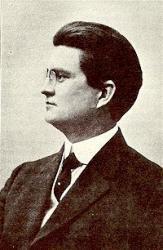
Grant Colfax Tullar

1869 - 1950 Topics: Helping Others Author of "As You Go" in Sunday School Hymns No. 1 Grant Colfax Tullar was born August 5, 1869, in Bolton, Connecticut. He was named after the American President Ulysses S. Grant and Vice President Schuyler Colfax. After the American Civil War, his father was disabled and unable to work, having been wounded in the Battle of Antietam. Tullar's mother died when he was just two years old so Grant had no settled home life until he became an adult. Yet from a life of sorrow and hardship he went on to bring joy to millions of Americans with his songs and poetry. As a child, he received virtually no education or religious training. He worked in a woolen mill and as a shoe clerk. The last Methodist camp meeting in Bolton was in 1847. Tullar became a Methodist at age 19 at a camp meeting near Waterbury in 1888. He then attended the Hackettstown Academy in New Jersey. He became an ordained Methodist minister and pastored for a short time in Dover, Delaware. For 10 years he was the song leader for evangelist Major George A. Hilton. Even so, in 1893 he also helped found the well-known Tullar-Meredith Publishing Company in New York, which produced church and Sunday school music. Tullar composed many popular hymns and hymnals. His works include: Sunday School Hymns No. 1 (Chicago, Illinois: Tullar Meredith Co., 1903) and The Bible School Hymnal (New York: Tullar Meredith Co., 1907). One of Grant Tullar's most quoted poems is "The Weaver": My Life is but a weaving Between my Lord and me; I cannot choose the colors He worketh steadily. Oft times He weaveth sorrow And I, in foolish pride, Forget He sees the upper, And I the under side. Not til the loom is silent And the shuttles cease to fly, Shall God unroll the canvas And explain the reason why. The dark threads are as needful In the Weaver's skillful hand, As the threads of gold and silver In the pattern He has planned. He knows, He loves, He cares, Nothing this truth can dim. He gives His very best to those Who chose to walk with Him. Grant Tullar --http://www.boltoncthistory.org/granttullar.html, from Bolton Community News, August 2006.

William J. Kirkpatrick

1838 - 1921 Person Name: Wm. J. Kirkpatrick Topics: Kindness, Helpfulness Composer of "[It was spoken for a Master]" in Songs of Grace and Glory William J. Kirkpatrick (b. Duncannon, PA, 1838; d. Philadelphia, PA, 1921) received his musical training from his father and several other private teachers. A carpenter by trade, he engaged in the furniture business from 1862 to 1878. He left that profession to dedicate his life to music, serving as music director at Grace Methodist Church in Philadelphia. Kirkpatrick compiled some one hundred gospel song collections; his first, Devotional Melodies (1859), was published when he was only twenty-one years old. Many of these collections were first published by the John Hood Company and later by Kirkpatrick's own Praise Publishing Company, both in Philadelphia. Bert Polman

Samuel W. Beazley

1873 - 1944 Topics: Helpfulness Composer of "[Sometimes there comes a longing] " in Service Songs for Young People's Societies, Sunday Schools and Church Prayer Meetings Samuel W. Beazley was born in Sparta, Virginia in 1873. He was a music scholar and taught music at Shenandoah College for five years. He composed over 4,000 gospel songs during his lifetime. Samuel W. Beazley maintained a successful publishing business in Chicago, Illinois. He died in Chicago on September 16, 1944. He was inducted into the Gospel Music Hall of Fame in 1992. NN, Hymnary editor. Source: Gospel Music Hall of Fame

Anne Steele

1717 - 1778 Person Name: Mrs. Steele Topics: The constant help of Providence Author of "Thy kingdom, Lord, forever stands" in A Collection of Psalms and Hymns for Christian Worship (6th ed.) Anne Steele was the daughter of Particular Baptist preacher and timber merchant William Steele. She spent her entire life in Broughton, Hampshire, near the southern coast of England, and devoted much of her time to writing. Some accounts of her life portray her as a lonely, melancholy invalid, but a revival of research in the last decade indicates that she had been more active and social than what was previously thought. She was theologically conversant with Dissenting ministers and "found herself at the centre of a literary circle that included family members from various generations, as well as local literati." She chose a life of singleness to focus on her craft. Before Christmas in 1742, she declined a marriage proposal from contemporary minister-hymnist Benjamin Beddome. All the same, some of Steele's sufferings were very real. She lost her mother at age 3, a potential suitor at age 20, her step mom at 43, and her sister-in-law at 45. She spent many years caring for her father until his death in 1769. For most of her life, she exhibited symptoms of malaria, including persistent pain, fever, headaches, and stomach aches. Caleb Evans, in his preface to Steele's posthumous Miscellaneous Pieces in Verse and Prose (1780), noted that she had been bed ridden for "some years" before her death: When the interesting hour came, she welcomed its arrival, and though her feeble body was excruciated with pain, her mind was perfectly serene. . . . She took the most affectionate leave of her weeping friends around her, and at length, the happy moment of her dismission arising, she closed her eyes, and with these animating words on her dying lips, "I know that my Redeemer liveth," gently fell asleep in Jesus. Historically, her most popular hymn has been "When I survey life's varied scene" (and its shortened form, "Father, whate'er of earthly bliss"), a hymn that turns earthly loss or denial into a spirit of thankfulness, published in over 800 North American hymnals since 1792. Not all of her work deals with personal agony. Her hymns span a wide doctrinal and ecclesiastical range, some crafted and used for her father's congregation. Her metrical psalms are among the finest of the genre. Steele's hymns and psalms were published in two volumes in 1760, Poems on Subjects Chiefly Devotional, under the pseudonym Theodosia, with an additional volume of material published after her death, in Miscellaneous Pieces in Verse and Prose, 1780. Another small collection, Verses for Children, was issued in 1788, with two other editions given in 1803 and 1806. Sixty-two of her hymns, including new material and some revisions by Steele, were published in a hymnal for Baptists in 1769, A Collection of Hymns Adapted to Public Worship, edited by Caleb Evans and John Ash. Forty seven were included in John Rippon's A Selection of Hymns from the Best Authors in 1787; the only author with larger representation was Philip Doddridge, with 101. These collections represent the earliest attempts to anthologize Baptist hymns and were vital for bringing Steele's hymns into wider public worship, where they have been a mainstay for over two hundred years. Chris Fenner adapted from The Towers (Southern Baptist Theological Seminary, August 2015) Recommended Bibliography: Cynthia Y. Aalders, To Express the Ineffable: The Hymns and Spirituality of Anne Steele (Milton Keynes, U.K.: Paternoster, 2008). Cynthia Y. Aalders, "In melting grief and ardent love: Anne Steele's contribution to eighteenth-century hymnody," The Hymn (summer 2009), 16-25. J.R. Broome, A Bruised Reed: The Life and Times of Anne Steele (Harpenden, U.K.: Gospel Standard Trust Publications, 2007). Joseph Carmichael, The Hymns of Anne Steele in John Rippon's Selection of Hymns: A Theological Analysis in the Context of the English Particular Baptist Revival (2012), dissertation, http://digital.library.sbts.edu/handle/10392/4112 Priscilla Wong, Anne Steele and Her Spiritual Vision (Grand Rapids: Reformation Heritage Books, 2012). Timothy Whelan & Julia B. Griffin, eds., Nonconformist Women Writers, 1720–1840, vols. 1 & 2 (London: Pickering & Chatto, 2011). ======================== Steele, Anne, born in 1716, was the daughter of Mr. Wm. Steele, a timber merchant, and pastor, without salary, of the Baptist Church at Broughton, in Hampshire. At an early age she showed a taste for literature, and would often entertain her friends by her poetical compositions. But it was not until 1760 that she could be prevailed upon to publish. In that year two volumes appeared under the title of Poems on Subjects chiefly Devotional, by Theodosia. After her death, which occurred in November, 1778, a new edition was published with an additional volume and a Preface by the Rev. Dr. Caleb Evans, of Bristol (Bristol, 1780). In the three volumes are 144 hymns, 34 Psalms in verse, and about 30 short poems. They have been reprinted in one vol. by D. Sedgwick, 1863…. Among Baptist hymnwriters Miss Steele stands at the head, if we regard either the number of her hymns which have found a place in the hymnals of the last 120 years, or the frequency with which they have been sung. Although few of them can be placed in the first rank of lyrical compositions, they are almost uniformly simple in language, natural and pleasing in imagery, and full of genuine Christian feeling. Miss Steele may not inappropriately be compared with Miss F. R. Havergal, our "Theodosia" of the 19th century. In both there is the same evangelic fervour, in both the same intense personal devotion to the Lord Jesus. But whilst Miss Steele seems to think of Him more frequently as her "bleeding, dying Lord "—dwelling on His sufferings in their physical aspect—Miss Havergal oftener refers to His living help and sympathy, recognizes with gladness His present claims as "Master" and "King," and anticipates almost with ecstasy His second coming. Looking at the whole of Miss Steele's hymns, we find in them a wider range of thought than in Miss Havergal's compositions. She treats of a greater variety of subjects. On the other hand, Miss Havergal, living in this age of missions and general philanthropy, has much more to say concerning Christian work and personal service for Christ and for humanity. Miss Steele suffered from delicacy of health and from a great sorrow, which befell her in the death of her betrothed under peculiarly painful circumstances. In other respects her life was uneventful, and occupied chiefly in the discharge of such domestic and social duties as usually fall to the lot of the eldest daughter of a village pastor. She was buried in Broughton churchyard. [Rev W. R. Stevenson, M.A.] A large number of Miss Steele's hymns are in common use, the larger proportion being in American hymnbooks. In addition to "Almighty Maker of my frame," “Far from these narrow scenes of night," "Father of mercies in Thy word," and others annotated under their respective first lines, there are also:— i. From her Poems on Subjects Chiefly Devotional, 1760, vols. i., ii. 1. Come, let our souls adore the Lord. Pleading for Mercy. One of two hymns "On the Fast, Feb. 11, 1757," the first being "While justice waves her vengeful hand." 2. Come, tune ye saints, your noblest strains. Christ Dying and Rising. 3. Deep are the wounds which sin has made. Christ, the Physician. 4. Enslaved by sin, and bound in chains. Redemption. 5. Eternal power, almighty God. Divine Condescension. 6. Eternal Source of joys divine. Divine Assurance desired. 7. Great God, to Thee my evening song. Evening. 8. Great Source of boundless power and grace. Desiring to Trust in God. 9. Hear, gracious [God] Lord, my humble moan [prayer] . The presence of God desired. 10. Hear, O my God, with pity hear. Ps. cxliii. 11. How long shall earth's alluring toys ? On Longing after unseen pleasures. 12. How lovely, how divinely sweet. Ps. lxxziv. 13. How oft, alas, this wretched heart. Pardoning Love. 14. In vain my roving thoughts would find. Lasting Happiness. 15. Jesus, the spring of joys divine. Christ the Way. 16. Lord, how mysterious are Thy ways. Providence. 17. Lord, Thou hast been Thy Children's God. Ps. xc. 18. Lord, we adore Thy boundless grace. Divine Bounty. 19. Lord, when my [our] raptured thought surveys. Creation and Providence. 20. Lord, when my thoughts delighted rove. Passiontide. 21. My God, 'tis to Thy mercy seat. Divine Mercy. 22. My God, to Thee I call. Lent. 23. O for a sweet, inspiring ray. The Ascended Saviour. 24. O Thou Whose tender mercy hears. Lent. 25. Permit me, Lord, to seek Thy face. Strength and Safety in God alone. 26. Should famine o'er the mourning field. During Scarcity. 27. So fades the lovely, blooming flower. Death of a Child. 28. Stretched on the Cross the Saviour dies. Good Friday. 29. The Lord, my Shepherd and my Guide. Ps.xxiii. 30. The Lord, the God of glory reigns. Ps. xciii. 31. The Saviour calls; let every ear. The Invitation. 32. There is a glorious world on high. True Honour. 33. Thou lovely [only] Source of true delight. Desiring to know Jesus. 34. Thou only Sovereign of my heart. Life in Christ alone. 35. To Jesus, our exalted Lord. Holy Communion. 36. To our Redeemer's glorious Name. Praise to the Redeemer. 37. To your Creator, God. A Rural Hymn. 38. When I survey life's varied scene. Resignation. 39. When sins and fears prevailing rise. Christ the Life of the Soul. 40. Where is my God? does He retire. Rreathing after God. 41. While my Redeemer's near. The Good Shepherd. 42. Why sinks my weak desponding mind? Hope in God. 43. Ye earthly vanities, depart. Love for Christ desired. 44. Ye glittering toys of earih adieu. The Pearl of great Price. 45. Ye humble souls, approach your God. Divine Goodness. ii. From the Bristol Baptist Collection of Ash & Evans, 1769. 46. Come ye that love the Saviour's Name. Jesus, the King of Saints. 47. How helpless guilty nature lies. Need of Receiving Grace. 48. Praise ye the Lord let praise employ. Praise. iii. Centos and Altered Texts, 49. How blest are those, how truly wise. True honour. From "There is a glorious world on high." 50. How far beyond our mortal view. Christ the Supreme Beauty. From "Should nature's charms to please the eye," 1760, st. iii. 51. In vain I trace creation o'er. True happiness. From "When fancy spreads her boldest wings," 1760, st. ii. 52. Jesus, and didst thou leave the sky? Praise to Jesus. From “Jesus, in Thy transporting name," 1760, st. iv. 53. Look up, my soul, with cheerful eye. Breathing after God. From No. 40, st. v. 54. Lord, in the temple of Thy grace. Christ His people's Joy. From "The wondering nations have beheld," 1760, st. iii. 55. My God, O could I make the claim. Part of No. 9 above. 56. My soul, to God, its source, aspires. God, the Soul's only Portion. From "In vain the world's alluring smile," st. iii. 57. O could our thoughts and wishes fly. Part of No. 11 above, st. iv. 58. O for the eye of faith divine. Death anticipated. From "When death appears before my sight," 1760, st. iii., vii., viii. altered, with opening stanzas from another source. 59. O Jesus, our exalted Head. Holy Communion. From "To Jesus, our exalted Lord." See No. 35. 60. O world of bliss, could mortal eyes. Heaven. From "Far from these narrow scenes of night." 61. See, Lord, Thy willing subjects bow. Praise to Christ. From "O dearer to my thankful heart," 1780, st. 5. 62. Stern winter throws his icy chains. Winter. From "Now faintly smile day's hasty hours," 1760, st. ii. 63. Sure, the blest Comforter is nigh. Whitsuntide. From "Dear Lord, and shall Thy Spirit rest," 1760, st. iii. 64. The God of my salvation lives. In Affliction. From, "Should famine, &c," No. 26, st. iv. 65. The Gospel, O what endless charms. The Gospel of Redeeming Love. From "Come, Heavenly Love, inspire my song." 66. The mind was formed lo mount sublime. The Fettered Mind. From "Ah! why should this immortal mind?" 1760, st. ii. 67. The once loved form now cold and dead. Death of a Child. From "Life is a span, a fleeting hour," 1760, st. iii. 68. Thy gracious presence, O my God. Consolation in Affliction. From "In vain, while dark affliction spreads," 1780, st. iv. 69. Thy kingdom, Lord, for ever stands. Ps. cxlv. From "My God, my King, to Thee I'll raise," 1760, st. xii. 70. Triumphant, Christ ascends on high. Ascension. From "Come, Heavenly Love, inspire my song," 1760, st. xxxii. 71. When blest with that transporting view. Christ the Redeemer. From "Almighty Father, gracious Lord," 1760, st. xi. 72. When death before my sight. Death Anticipated. From "When death appears before my sight," 1760. 73. When gloomy thoughts and boding fears. Com¬forts of Religion. From "O blest religion, heavenly fair," 1760, st. ii. 74. When weary souls with sin distrest. Invitation to Rest. From "Come, weary souls, with sin distressed," 1760. 75. Whene'er the angry passions rise. Example of Christ. From “And is the gospel peace and love?" 1760, st. ii. All the foregoing hymns are in D. Sedgwick's reprint of Miss Steele's Hymns, 1863. --Excerpts from John Julian, Dictionary of Hymnology (1907) ==================== Steele, Anne, p. 1089, i., Additional hymns in common use: 1. Amazing love that stoop'd so low. Thankfulness. From "O dearer to my thankful heart," 1780, iii. 2. Bright scenes of bliss, unclouded skies. Saved by Hope. Poems, 1760, i. p. 228. 3. Jesus demands this heart of mine. Pardon De¬sired. Poems, 1760, i. p. 120. 4. Jesus, Thou Source divine. Christ the Way. Poems, 1760, i. p. 53, altered. 5. Lord, how mysterious are Thy ways. Mysteries of Providence. Poems, 1760, i. p. 131. 6. Lord^in Thy great, Thy glorious Name. Ps. xxxi. Poems, 1760, ii. p. 158. --John Julian, Dictionary of Hymnology, Appendix, Part II (1907)

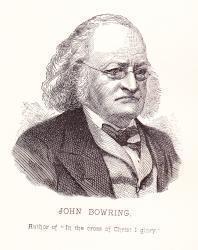
John Bowring

1792 - 1872 Person Name: Bowring Topics: Help Thou my Unbelief Author of "If listening, as I listen still" in Hymns for Christian Devotion James Bowring was born at Exeter, in 1792. He possessed at an early age a remarkable power of attaining languages, and acquired some reputation by his metrical translations of foreign poems. He became editor of "The Westminster Review" in 1825, and was elected to Parliament in 1835. In 1849, he was appointed Consul at Canton, and in 1854, was made Governor of Hong Kong, and received the honour of knighthood. He is the author of some important works on politics and travel, and is the recipient of several testimonials from foreign governments and societies. His poems and hymns have also added to his reputation. His "Matins and Vespers" have passed through many editions. In religion he is a Unitarian. --Annotations of the Hymnal, Charles Hutchins, M.A., 1872 ======================================= Bowring, Sir John, LL.D., a distinguished man of letters, was born at Exeter, Oct. 17, 1792. His studies extended to philology, poetry, politics, and other branches of learning, whilst as editor of the Westminster Review for some years (he received the appointment in 1825) he did considerable work as a reviewer. He held several official appointments under the Government as Commissioner to France on commercial matters (1831-5); British Consul at Hong Kong (1849); and Governor of Hong Kong (1854). He was twice Member of Parliament, and was knighted in 1854. He died Nov. 23rd, 1872. His published works are very numerous, and display an astonishing acquaintance with various languages. Those specially bearing on poetry include:— (1) Russian Anthology, with Biographical and Critical notices of the Poets of Russia, 1821; (2) Specimens of the Russian Poets, 1823; (3) Ancient Poetry and Romance of Spain, 1824; (4) Batavian Anthology, or Specimens of Dutch Poets, 1824; (5) Servian Popular Poetry, 1821; (6) Specimens of Polish Poets, 1827; (1) Poetry of the Magyars, 1830; (8) History of the Poetical Literature of Bohemia, 1832, &c. In addition to these works, which are mainly translations, Sir John Bowring wrote original verse. This was published interspersed with a few translations, as follows:— (1) Matins and Vespers with Hymns and Occasional Devotional Pieces, Lond., 1823; 2nd edition, enlarged, 1824; 3rd edition, again enlarged, 1841; and the 4th, still further enlarged, in 1851. (2) Hymns: as a Sequel to the Matins, 1825. In addition he contributed to a few Unitarian hymnals, especially that of the Rev. J. R. Beard of Manchester, 1837. In that Collection many of the hymns added to the 3rd edition of Matins, &c, 1841, were first published A selection from these, together with a biographical sketch, was published by Lady Bowring in 1873, as a Memorial Volume of Sacred Poetry. This work contains hymns from the Matins and Vespers, together with others from Periodicals, and from his manuscripts. Of his hymns a very large percentage have come into common use. A few have been adopted by almost all denominations, as, "God is love, His mercy brightens;" "How sweetly flow'd the gospel sound;" "In the Cross of Christ I glory;" "Watchman, tell us of the night;"; and others, but the greater portion are confined to the Unitarian collections of Great Britain and America, of which denomination he was a member. In addition to the more important, which are annotated under their first lines, there are also the following in common use:—- 1. Clay to clay, and dust to dust. Burial. From his Hymns, 1825, into the Hymn & Tune Book, Boston, U.S., 1868, &c. 2. Come the rich, and come the poor. Divine Worship. Contributed to Beard's Collection, 1837, No. 290, and repeated in Bowring's Matins, &c., 3rd edition, 1841. It is in a few American collections. 3. Drop the limpid waters now. Holy Baptism. From Matins and Vespers, 3rd edition, 1841, into Kennedy, 1863. 4. Earth's transitory things decay. The Memory of the Just. From his Hymns, 1825, into Beard, 1837; the American Plymouth Collection, 1855; and the Songs for the Sanctuary, N.Y., 1865, &c. 5. Father, glorify Thy name. The Father glorified. Also from Hymns, 1825, into Beard, 1837; the Hymns of the Spirit, Boston, U.S., 1864, &c. 6. Father and Friend, Thy light, Thy love. Omnipresence. From Matins and Vespers, 2nd edition, 1824, into several collections, and sometimes in an abbreviated form. 7. Father of Spirits, humbly bent before Thee. Also in Hymns, 1825, and Dr. Martineau's Hymns of Praise & Prayer, 1873. In Longfellow and Johnson's Hymns of the Spirit, Boston, U.S., 1864, it is given as, "Father of Spirits, gathered now before Thee." 8. From all evil, all temptation. Preservation implored. Contributed to Beard's Collection, 1837. 9. From the recesses of a lowly spirit. Prayer of trust. From Matins and Vespers, 1st edition, 1823, into several American collections. 10. Gather up, 0 earth, thy dead. Published in his Matins & Vespers, 3rd ed., 1841, in 3 stanzas of 8 lines and repeated, slightly altered, in Kennedy, 1863, No. 753. 11. Gently the shades of night descends Evening. A cento from his poem on "Sunday Evening," in the Matins, &c, 1st edition, 1823, p. 6. It is given in the Boston Hymns of the Spirit, 1864; the Boston Hymn & Tune Book, 1868, and other collections. 12. How dark, how desolate. Hope. 1st published in his Matins, &c, 1823, p. 246. In Dr. Martineau's Hymns of Praise & Prayer, 1873, it is No. 515. 13. How shall we praise Thee, Lord of Light! Evening. A cento from the same poem as No. 7 above. It is given in the Hymns of the Spirit, 1864, and other American collections. 14. Lead us with Thy gentle sway. Divine Guidance desired. Hymns, 1825, into Hymns of the Spirit, 1864, and others. 15. Lord, in heaven, Thy dwelling-place. Praise. Contributed to Beard's Collection, 1837, No. 70, repeated in the author's Matins, &c, 3rd edition 1841, p. 235, and given in a few American collections. In the Hymns of the Spirit, 1864, it is altered to "Lord of every time and place." 16. 0 let my [thy] trembling soul be still. Resignation. From the 1st edition of the Matins, &c, 1823, p. 251, in 3 stanzas of 6 lines, into Beard's Collection, 1837; the Hymns of the Spirit, 1864, and others. It is sometimes given as, "0 let thy," &c. 17. 0, sweet it is to feel and know. Monday Morning. A poem in 16 stanzas of 4 lines, given in his Matins, &c, 1823, p. 60. In 1837 stanzas i.-iii. were given in Beard's Collection as No. 448, and entitled "God near in sorrow." In the 3rd edition of the Matins, &c, 1841, this cento was repeated (p. 245), with the same title, notwithstanding the full poem was in the same book. 18. On the dust I'm doomed to sleep. Resurrection. Appeared in his Matins, &c, 1st edition, 1823, p. 252, in 2 stanzas of 8 lines. In the 2nd edition, 1824, p. 232, it was altered to "In the dust," &c. This was repeated in 1841. In some hymnals it reads:— 19. The heavenly spheres to Thee, 0 God. Evening. This "Hymn to the Deity" appeared in the 2nd edition of his Matins, &c, 1824, pp. 235-6, in 4 stanzas of 4 double lines. It is also in the 3rd edition, 1841; the Boston Hymns of the Spirit, 1864 and other American collections. 20. When before Thy throne we kneel. Divine Worship. From his Hymns, 1825, into Beard's Collection, 1837, No. 93; the Boston Hymn & Tune Book, 1868, No. 21, and others. 21. Where is thy sting, 0 death! Death. Also from the Hymns, 1825, into the same collections as No. 20 above. It will be noted that Beard's Collection, 1837, is frequently named above. The full title of that hymnal is— A Collection of Hymns for Public and Private Worship. Compiled by John R. Board, Lond., John Green, 1837. The Rev. John Relly Beard was an Unitarian Minister in Manchester, and the collection is dedicated "To the Manchester Meeting of Ministers." It contained a large number of original hymns. Bowring contributed 82, of which 33 were published therein for the first time. Some of his hymns are of great merit, and most of them are characterised by great earnestness and deep devotion. -- John Julian, Dictionary of Hymnology (1907) ================== Bowring, Sir John, p. 166, i. In the article on Bowring the hymns numbered therein as 4 and 20 are stated to have appeared in his Hymns, 1825, but in error. The earliest date to which we can positively trace them is Beard's Collection, 1837. From the Hymns, 1825, we find, however, that the following are in modern hymnals:— 1. Our God is nigh. Divine Presence. 2. 'Tis not the gift; but 'tis the spirit. Outward and Inward Virtue. 3. When the storms of sorrow gather. God our Guide. From the various editions of his Matins and Vespers additional hymns arc also in modern use:— 4. If all our hopes and all our fears. Heaven Anticipated. (1823.) 5. In Thy courts let peace be found. Public Worship. (1841.) 6. The offerings to Thy throne which rise. Heart Worship. (1824.) 7. Who shall roll away the stone? Easter. In Beard's Collection, 1837, and Matins & Vespers, 1841. --John Julian, Dictionary of Hymnology, Appendix, Part II (1907)

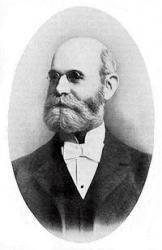
Thomas H. Gill

1819 - 1906 Topics: Invocation for Help Author of "Not only for some task sublime" in The Praise Hymnary Gill, Thomas Hornblower, was born at Bristol Road, Birmingham, Feb. 10th, 1819. His parents belonged to English Presbyterian families which, like many others, had become Unitarian in their doctrine. He was educated at King Edward's Grammar School under Dr. Jeune, afterwards Bishop of Peterborough. He left the school in 1838, and would have proceeded to the University of Oxford, but was prevented by his hereditary Unitarianism (long since given up), which forbade subscription to the Articles of the Church of England then necessary for entrance to the University. This constrained him to lead the life of an isolated student, in which he gave himself chiefly to historical and theological subjects. Hence his life has been singularly devoid of outward incident; and its interest gathers about his hymns, and the seasons of overmastering thought and feeling which gave them birth. The only events that can be chronicled are the publications of his books (see below). It is in the singular combination of influences which has formed his character and determined his thinking that the real interest of his life consists. Here is to be found the true key to the understanding of his hymns. To his Puritan ancestry may be traced their deep religiousness; to his Unitarian training their ethical earnestness; and to his poetical temperament their freeness from conventionality. Delight in the divine songs of Watts was his earliest intellectual enjoyment; and in after years the contrast between their native force and fulness and their dwindled presentation in Unitarian hymnbooks began that estrangement from his hereditary faith which gradually became complete. These various influences mingled in his own hymns and have conspired to render him what Dr. Freeman Clarke calls him, "a more intellectual Charles Wesley." He belongs to the small company of really original hymnists. His hymns are marked by a remarkable absence of, and even opposition to, all antiquarian and sacerdotal ideas of Christianity, a keen discernment of the spirit rather than the mere letter of the Gospel; and profound thought on Scripture themes, so that some of his hymns are too subtle for use in the ordinary worship of the Church. Their style is characterized by a certain quaintness of expression reminding one of George Wither or John Mason, but modified by the influence of Watts's warmth of feeling. They have great sweetness of melody, purity of diction, and happy adaptation of metre and of style to the subject of each hymn. They are almost exclusively used by Nonconformists. Dale's English Hymnbook contains 39; the Baptist Hymnal, 19; Horder's Congregational Hymns, 11; Martineau's Hymns of Praise & Prayer, 11; and the Congregational Church Hymnal, 14. The following are Mr. Gill's published works:— (1) The Fortunes of Faith, 1841; (2) The Anniversaries (Poems in commemoration of great Men and great Events), 1858; (3) The Papal Drama (an historical essay), 1866; (4) The Golden Chain of Praise Hymns by Thomas H. Gill, 1869; (5) Luther's Birthday (Hymns), 1883; (6) The Triumph of Christ (Memorials of Franklin Howard), 1883. Mr. Gill's hymns number nearly 200. Of these, over 80 are in common use in Great Britain and America. The most widely used of these:— "Everlasting, changing never"; "O mean may seem this house of clay"; "O wherefore, Lord, doth Thy dear praise"; “Our God, our God, Thou shinest here"; "The glory of the spring, how sweet"; and "Thou biddest, Lord, Thy sons be bold"; are annotated under their respective first lines, the rest are noted below. [Rev. W. Garrett Horder] The 75 hymns which follow are all annotated from the author's manuscript notes, kindly supplied for use in this work:— 1. Ah tremblers, fainting and forlorn. Eternal Youth. Written in 1868, and first published in his Golden Chain, &c, 1869, p. 149, in 9 stanzas of 4 lines. In 1873 Martineau gave stanzas iv.-ix. in his Hymns, &c, No. 256, as, "Young souls, so strong the race to run." These were repeated in the Baptist Hymnal, 1879, as No. 862. 2. Alas the outer emptiness. Consecration of the Heart. Contributed to G. Dawson's Psalms & Hymns, 1846, No. 121, in 7 stanzas of 4 lines. It was introduced to the American Unitarian collections through Hedge & Huntington's Hymns for the Church of Christ, 1853, No. 619. 3. Alas these pilgrims faint and worn. Whitsuntide. Written in 1853, and first published in his Anniversaries, 1858, p. 73, in 11 stanzas of 4 lines, then in G. Dawson's Psalms & Hymns, 1862, the Golden Chain, &c, 1869, p. 107, &c. 4. Alone with Thee, with Thee alone. Worship in Solitude. Written in 1856, and first published in his Golden Chain , &c, 1869, p. 26, in 8 stanzas of 4 lines. 5. And didst thou, Lord, our sorrows take? Passiontide. Written in 1849, and published in his Golden Chain, &c, 1869, p. 45, in 6 stanzas of 4 lines. It is in several English collections. 6. Behold the everlasting Son. Ascension. Written in 1862, and first printed in the Hagley Magazine, and then in G. Dawson's Psalms & Hymns, 1862, and the Golden Chain, 1869, p. 47, in 8 stanzas of 4 lines. 7. Break, newborn year, on glad eyes break. New Year. Written in 1855, and first published in his Golden Chain, &c, 1869, p. 144, in 6 stanzas of 4 lines. It is one of the most popular of the author's hymns, and is found in many collections. 8. Bright Presence! may my soul have part. Witness of the Spirit. Written in 1849, and first published in his Golden Chain, &c, 1869, p. 100, in 8 stanzas of 8 lines. It is repeated in The Songs of the Spirit, N. Y., 1871. 9. Bright Thy presence when it breaketh. Public Worship. Written in 1856, and first publised in his Golden Chain, &c, 1869, p. 27, in 6 stanzas of 6 lines. In the Baptist Hymnal, 1879, and in Dale's English Hymnbook it is in an abridged form. 10. Day divine! when sudden streaming. Whit-Sunday. Written on Whit-Sunday, 1850, and first published in G. Dawson's Psalms & Hymns, 1859, and again in the Golden Chain, &c, 1869, p. 97, in 3 stanzas of 8 lines. In some American collections, as the Dutch Reformed Hymns of the Church, 1869, it is given as "Day divine, when in the temple." 11. Dear Lord and Master mine. Resignation. Written in 1868, and first published in his Golden Chain, &c, 1869, p. 162, in 7 stanzas of 4 lines. It is in somewhat extensive use both in Great Britain and America. 12. Dear Lord, Thou art not sorry. Passiontide. Written in 1866, and first published in his Golden Chain, &c, 1869, p. 58, in 5 stanzas of 8 lines. 13. Dear Lord, Thy light Thou dost not hide . Christian Labours . No. 125 in the Golden Chain, &c, 1869, p. 178, in 8 stanzas of 4 lines on the text, "Let your light so shine before men," &c, and was written in 1855. 14. Do we only give Thee heed . Jesus the Gladdener of Life. Written in 1849, and first published in G. Dawson's Psalms & Hymns, 1853; and again in the Golden Chain, &c, No. 145, in 6 stanzas of 6 lines. In use in Great Britain and America. 15. Embrace your full Salvation. Heaven. Written in 1870, and first printed in The Congregationalist, 1873, in 9 stanzas of 8 lines. On including it in his English Hymnbook, 1874, Dr. Dale transposed some of the stanzas. 16. Farewell, delightful day. Sunday Evening . Written in 1867, and published in his Golden Chain, &c, 1869, No. 19, in 9 stanzas of 4 lines. In the Church Praise Book, N. Y., 1882, st. i., viii., ix., are given with the alteration of the opening line as, "Holy, delightful day." Dr. Hatfield, in his Church Hymnbook, N. Y., 1872, has the same opening, but he omits stanzas iv.-vi. of the original. 17. Father, glorious with all splendour. Holy Trinity. This hymn of great merit was written in 1860, and published in the Golden Chain, &c, in 1869, No. 4, in 7 stanzas of 8 lines. In some American collections, including Hymns & Songs of Praise, N. Y., 1874, No. 17, stanzas iv., vi., vii., are given as "Father, Thine elect who lovest." 18. Father, hast Thou not on me. Eternal Love . A Trinitarian hymn on eternal love, composed in 1867, and published in his Golden Chain, &c, 1869, No. 139, in 7 stanzas of 8 lines. In 1869, stanzas v.-vii. were given in the Supplement to the New Congregational Hymn Book, as "Mighty Quickener, Spirit blest." 19. Full many a smile, full many a song. Joy in God the Father. Written in 1854, and first published in his Golden Chain, &c, 1869, No. 8, in 9 stanzas of 4 lines. In Dale's English Hymn Book, 1874, No. 21, st. ii., which applied personally to the author alone, was omitted. 20. How can I, Lord, abide with Thee? Prayer. “Produced in 1856. Struck with the didactic character of Cowper's and Montgomery's hymns, ‘What various hindrances we meet,’ and ‘Prayer is the soul's sincere desire,’ I greatly wished to set forth the soul's view of prayer, simply, naturally, poetically, and achieved this hymn with much aspiration and satisfaction." Printed in the Golden Chain, &c, 1869, No. 119, in 8 stanzas of 4 lines, and headed "Pray without ceasing." 21. How, Lord, shall vows of ours be sweet? Public Worship. The author's earliest hymn. It was written in 1845, and first published in G. Dawson's Psalms & Hymns, 1846, No. 114, in 6 stanzas of 4 lines, and again in the Golden Chain, &c, 1869, No. 2. It is in several American hymnbooks. 22. Is earth too fair, is youth too bright? Consecration of Youth to God. Written in 1848, and first pub. in his Golden Chain, &c, 1869, No. 102, in 13 stanzas of 4 lines, and entitled "The Hymn of Youth." 23. Is not my spirit filled with Thine. God glorious in His works. "Written in the summer of 1846 among the hills and streams of Derbyshire," and first published in the Golden Chain, &c, 1869, No. 15, in 9 stanzas of 4 lines, and entitled "God glorious in His works." 24. Let bolder hearts the strife require. Prayer against Temptation. No. 218 in Martineau's Hymns of Praise and Prayer, 1873. It was written in 1851, and first published in the Golden Chain, &c, 1869, in 7 stanzas of 4 lines. 25. Lift thy song among the nations. National Hymn. Written in 1853, and first published in G. Dawson's Psalms & Hymns, 1853, in 4 stanzas of 8 lines. When repeated in the Golden Chain, &c, 1869, No. 62, an additional stanza (iii.) was given, and it was entitled "England's Hymn." It is a spirited hymn and worthy of greater circulation than it now has. The 1869 text is given in Dale's English Hymn Book, 1874, No. 1239. 26. Lord, am I precious in Thy sight. Grieve not the Holy Spirit. Composed in 1850, and first published in G. Dawson's Psalms & Hymns, 1853. In 1869 it was included in the Golden Chain , &c, No. 70, in 7 stanzas of 4 lines. It is in common in America. A cento is also in the Supplement to the New Congregational, 1869, No. 1095. It is composed of stanzas iii., v., vi. much altered, and not improved, and begins, "O Holy Spirit, dost thou mourn?" 27. Lord, comes this bidding strange to us ? Invitation to Rejoice. Written in 1849, and first published in his Golden Chain, &c, 1869, No. 144, in 11 stanzas of 4 lines. 28. Lord, dost Thou ne'er Thy servants bless? Free Grace. Written in 1855, on the words of Oliver Cromwell as used by him in a letter to his "beloved cousin Mrs. St. John," dated "Ely, 13th October, 1638. "Truly no poor creature hath more cause to put him self forth in the cause of his God than I. I have had plentiful wages beforehand; and I am sure I shall never earn the least mite." (Carlyle's Oliver Cromwell's Letters and Speeches, &c, Letter ii.) The hymn was first published in the Golden Chain, &c, 1869, in 9 stanzas of 4 lines. 29. Lord, from Thee, what grace and glory. National Hymn. This cento in Vince's Collection, 1870, No. 450, is from the poem, on St. George's Day, written in 1853, and published in the author'sAnniversaries, 1858, p. 47. 30. Lord, from these trembling souls of ours. Praise. Composed in 1859, and first published in his Golden Chain, &c, 1869, No. 3, in 10 stanzas of 4 lines. 31. Lord God, by Whom all change is wrought. God Eternal. Written in 1869, the keynote being the words of St. Augustine, "Immutabilis mutans omnia," and first printed in the Songs of the Spirit, N. Y., 1871. In 1874 it was included in Dale's English Hymn Book; and, in 4 stanzas, in the Baptist Hymnal, 1879. 32. Lord God of old, who wentest. Public Worship. Composed in 1868, and first published in his Golden Chain, &c, 1869, No. 30, in 5 stanzas of 8 lines. 33. Lord, if our dwelling place thou art Communion of Saints. Written in 1856, and first published in his Golden Chain, &c, 1869, No. 150, in 8 stanzas of 4 lines. The hymn, "Death has no bidding to divide," in Dale's English Hymn Book, 1874, begins with stanzas ii., and omits stanzas i., iv. of this hymn. 34. Lord, in this awful fight with sin. Victory through Christ. Written in 1857, and first published in his Golden Chain, &c., 1869, No. 128, in 7 stanzas of 8 lines. 35. Lord, in Thy people Thou dost dwell. Unity of Christ and His people. Written in 1864, and first published in his Golden Chain, &c, 1869, in 12 stanzas of 4 lines. 36. Lord, Thou hast been our dwelling place. National Hymn. "Begun among the Waldenses, 1864," and first published in his Golden Chain, &c, 1869, No. 59, in 8 stanzas of 7 lines, entitled, "The hymn of the Waldenses," and supplemented with the note, "This hymn as a whole belongs to the Waldenses only, among whom it was begun, but all the people of God have an interest in the first two and the last verses." Acting upon this suggestion of the author, these stanzas were given in the Supplement to the New Congregational, 1869, as No. 1025. 37. Lord, Thou wouldst have us like to Thee. Holiness desired. Written in 1846, and first published in G. Dawson's Psalms & Hymns, 1846, No. 120, in 8 stanzas of 4 lines. It is in several American collections. 38. Lord, Thy gracious voice hath spoken. Christ our Caesar. Written in 1849, and first published in G. Dawson's Psalms & Hymns, 1853; and again in the Golden Chain, &c, 1869, in 3 stanzas of 8 lines. 39. Lord, when I all things would possess. Humility. Written in 1850, and first published in his Golden Chain, &c, 1869, No. 111, in 8 stanzas of 4 lines. In Martineau's Hymns, &c, 1873, No. 304, stanzas ii., iv., vii. are omitted. This hymn is also in common use in America. 40. Lord, when we come at Thy dear call. The Holy Ghost, the Sanctifier. No. 72 in his Golden Chain, 1869, in 7 stanzas of 4 lines, was written in 1856, and is given in the Songs of the Spirit, N. Y., 1871. 41. May we not, Father, meetly mourn? Burial. No. 151 in his Golden Chain, &c, 1869, in 9 st. of 4 lines, was written in 1855. 42. Methought my soul had learned to love. Resignation. "Composed in 1852 and first printed in Golden Chain, 1869. It came from the very depths of my own heart, was inspired by a suppressed trouble which turned out one of the greatest blessings of my life." In the Golden Chain, &c, No. 114, it is given in 7 st. of 4 lines, and is headed, "Not my will but Thine be done." 43. My God, I do not flee from Thee. Joy. Written in 1849, and first published in his Golden Chain, &c., 1869, No. 10, in 7 stanzas of 4 lines. The New Congregational, 1369, No. 1119, begins with stanza ii., "Father, Redeemer, Quickener mine," and also omits stanza iv. 44. My God, my Majesty divine. Child of God. Written in 1845, and first published in G. Dawson's Psalms & Hymns, 1846, No. 116, in 8 stanzas of 4 lines, and again, after revision, in the Golden Chain, &c, 1869, No. 135. The original text is in common use in America. 45. Not, Lord, Thine ancient works alone. Public Worship. Written in 1874, and first printed in The Congregational, in 6 stanzas of 6 lines, and entitled, "The Living God." In Dale's English Hymn Book, 1874, st. iii. is omitted. 46. Not yet I love my Lord. Lent. Written in 1868, and first published in his Golden Chain, &c, 1869, No. 86, in 9 stanzas of 4 lines. It is in several collections, including Martineau's Hymns, &c, 1873, No. 199. 47. Not yet, ye people of His grace. Here and Hereafter. A hymn on the "The Vision Beatific," No. 165, in his Golden Chain, &c, 1869, in 11 stanzas of 4 lines. It was written in 1866, and is in American common use. 48. 0 height that doth all height excel. Written in 1853, and "was born of the words of Augustine in the outset of the Confessions, ‘Secretissime et Praesentissime,' and was the first of several hymns inspired by his wonderful antitheses about God." It was first published in G. Dawson's Psalms & Hymns, 1853, and again in the Golden Chain, &c, 1869, No. 13, in 9 stanzasof 4 lines. It is in English and American common use. 49. 0 Holy Ghost, Who down dost come. Whitsuntide. "Written at Malvern on Whitsunday, 1863; a day of singular spiritual enjoyment, and outward loveliness." It was first published in the Golden Chain, &c, 1869, No. 74, in 1 stanza of 4 lines, and headed, "A Breathing after the Holy Spirit," and is in several collections. In Martineau's Hymns, &c, 1873, No. 251, it begins with st. ii., "Spirit of Truth, Who makest bright," st. i. and vi. being omitted. 50. 0 not alone in saddest plight. Divine Guidance desired. Composed in 1856, and first published in his Golden Chain, &c, 1869, No. 120, in 9 stanzas of 4 lines. 51. 0 not to fill the mouth of fame. A Servant of Christ. "Composed in 1849, and printed first in a small collection of poems entitled, I think, “The Violet." In 1853 it was given in G. Dawson's Psalms & Hymns; and in 1869, in the Golden Chain, &c, No. 121, in 6 stanzas of 4 lines. Its use is mainly confined to America. 52. 0 not upon our waiting eyes. Divine Love. Written in 1849, and first published in his Golden Chain, &c, 1869, No. 29, in 5 stanzas of 4 lines. 53. 0 saints of old, not yours alone. Seeking God. Written in 1848, and first published in G. Dawson's Psalms & Hymns, 1853; and again, after revision, in the Golden Chain, &c, 1869, No. 126, in 10 stanzas of 4 lines. The American hymnbooks have usually the original text, but in Dale's English Hymn Book , 1875, and Holder's Congregational Hymn Book1884, the text is abridged from the Golden Chain. 54. 0 smitten soul that cares and conflicts wring. Heaven desired. Written in 1854, and first published in his Golden Chain, &c, 1869. No. 75, in 8 stanzas of 4 lines. 55. 0 Spirit, sweet and pure. Constant Presence of the Holy Spirit desired. Written in 1868, and given in his Golden Chain, &c, 1869, as No. 127, in 7 stanzas of 8 lines. 56. 0 time, ne'er resteth thy swift wing. Worth of Time. Written in 1855, and first published in his Golden Chain, &c, 1869, No. 98, in 9 stanzas of 4 lines. 57. 0 wherefore hath my spirit leave? Spiritual Changes. "Composed with great ardour and stir of soul in 1847, and first printed in the Golden Chain, 1869," No. 85, in 7 stanzas of 4 lines. 58. O'er fulness of grace, blest Britain rejoice. National Hymn. Composed in 1868, and first published in his Golden Chain, &c, 1869, No. 61, in 11 stanzas of 4 lines, and entitled, "The Thanksgiving Song of Protestant Britain”; to which was added the words of Milton: "Let us all go, every true Protestant Briton, throughout the three kingdoms, and render thanks to God the Father of Light, and to His Son, Jesus Christ our Lord." 59. Saviour, needs the world no longer! Christ All in All. "Written in 1847... it was inspired partly by my contemplation of Shelley's hapless, Christless life." It was first published in G. Dawson's Psalms & Hymns 1853, and again in the Golden Chain, &c, 1869, No. 35, in 7 stanzas of 6 lines, and headed, "Lord, to whom shall we go." Its use is limited, and far less than its merits deserve. 60. Saviour, Who from death didst take. The Resurrection of Christ, a cause of Confidence. Written in 1856, and first published in his Golden Chain, &c, 1869, No. 96, in 5 stanzas of 6 lines. 61. Sweet Spirit, would Thy breath divine. The Holy Ghost, the Purifier, desired. Written in 1856, and given as No. 71 in his Golden Chain, &c, 1869, in 10 stanzas of 4 lines. 62. The happy fields, the heavenly host. Heaven. Written in 1848, first published in G. Dawson's Psalms & Hymns, 1853, and again in the Golden Chain, &c, 1869, No. 157, in 10 stanzas of 4 lines. 63. Thy happy ones a strain begin. Joy in God. Written in 1846, and published in G. Dawson's Psalms & Hymns, 1846, No. 118, in 5 stanzas of 4 lines. In the Golden Chain, &c, 1869, No. 146, the text is slightly changed. The text in common use in Great Britain and America is from the original. 64. Too dearly, Lord, hast Thou redeemed. Lent. Written in 1855, and first published in his Golden Chain, &c, 1869, No. 97, in 9 stanzas of 4 lines. 65. Unto thy rest return. Lent. Written in 1866, and first published in his Golden Chain, &c, 1869, No. 92, in 6 stanzas of 8 lines. 66. We come unto our fathers'God. God our Abode. "The birthday of this hymn, November 22nd, 1868 (St. Cecilia's Day), was almost the most delightful day of my life. Its production employed the whole day and was a prolonged rapture.....It was produced while the Golden Chain was being printed, just in time to be a link therein, and was the latest, as ‘How, Lord, shall vows of ours be sweet?' was the earliest song included therein." In the Golden Chain, &c, 1869, it is No. 129, in 7 stanzas of 7 lines, and is entitled, "The People of God." 67. We triumph in the glorious grace. Citizens of Heaven. Written in 1855, and first published in his Anniversaries, 1858, and again in his Golden Chain, &c, 1869, No. 153, in 12 stanzas of 4 lines. 68. What sweetness on Thine earth doth dwell. Nature revealing God. [Summer.] Written in 1850, and first published in his Golden Chain, &c, 1869, in 8 stanzas of 4 lines. 69. When shall I, Lord, a journey take. Lent. Written in 1856, and first published in his Golden Chain, &c, 1869, No. 80, in 8 stanzas of 4 lines. It is in common use in Great Britain and America. 70. Whence this naming joy that maketh! The Prodigal's Return. "Written in 1853 just before the hymn beginning 'Thrice blessed soul, who still hath made,' with the text 'Son, thou art ever with me' (Golden Chain, No. 134), which is its completement; and first printed in the Golden Chain," 1869, No. 81, in 6 stanzas of 6 lines. 71. Would the Spirit more completely? The Gifts of the Spirit. Written in 1849, and first published in G. Dawson's Psalms & Hymns, 1853; and again in the Golden Chain, &c, 1869, No. 67. in 3 stanzas of 8 lines. 72. Ye children of the Father. Spiritual Worship. Written in 1867, and first published in his Golden Chain. &c, 1869, No. 23, in 6 stanzas of 8 lines. 73. Ye of the Father loved. Praise. Written in 1862, and first published in the Golden Chain, &c, 1869, No. 5, in 8 stanzas of 8 lines. 74. Ye people of the Lord, draw near. Holy Communion. Written in 1855, and first published in his Golden Chain, &c, 1869, No. 127, in 7 stanzas of 4 lines. 75. Ye souls, the Father's very own. Holy Diligence. Composed in 1867, and first published in his Golden Chain, &c, 1869, No. 142, in 9 stanzas of 4 lines. These hymns are usually abridged in the hymnbooks, the length of most of them being against their use in their full form. Although they are gradually growing in popular esteem, the extent of their use is much more limited than their merits deserve. -- John Julian, Dictionary of Hymnology (1907) ==================== Gill, T. H. , pp. 421-3. Additional hymns to those annotated are in common use:—(l) "O dreadful glory that doth make," a cento from No. 48, p. 423, ii.; (2) "O mystery of Love Divine " (The Love of Christ); (3) " Ye souls for whom the Saviour died" (Electing Love). These are all from his Golden Chain of Praise, 1869. --John Julian, Dictionary of Hymnology, Appendix, Part II (1907) ======================== Gill, T. H. , pp. 421, i.; 1565, ii. &c. During the past ten years Mr. Gill's hymns have been widely used, especially in America, the result being that the following have to be added to the long lists already annotated as above:— 1. Ah! wherefore fall my tears so fast? [The World Overcome.] Published in his Golden Chain of Praise, 1869, p. 167. The hymn, "O Thou for Whom the strife was strong," in the American Hymns for Church and Home, 1895, is composed of sts. iii.-vii. of this hymn. 2. Dear Lord, Thou bringest back the morn. [Morning.] From his Golden Chain of Praise, 1869, p. 145. 3. I would not give the world my heart. This, in the Amer.Baptist Sursum Corda, 1898, No. 379, is a cento from "With sin I would not make abode," p. 1288, ii. 4. Not only when ascends the song. This in the Amer. Hymns of the Ages, 1904, No. 80, is a cento from “0 Saints of old, not yours alone," p. 423, i. 53. 5. Walk with the Lord! along the road. Composed of sts. v., vii.-ix., of "Ah ! tremblers, fainting and for¬lorn," p. 421, ii. 1. Included in the American Unitarian Hymns for Church and Home, 1895. 6. We would not dare their bliss to mourn. This in the Amer.Unit. Hymns for Church and Home, 1895 is composed of sts. v.-viii. of "May we not, Father, meetly mourn?" p. 422, ii. 41. 7. Wherefore faint and fearful ever. [ God is for us.] Published in the 2nd edition of his Golden Chain of Praise, 1894, No. xiii., in 7 stanzas of 6 lines, and dated 1880. In Hymns Ancient & Modern, 1904, in 5 stanzas. The cento "He Who suns and worlds upholdeth," is composed of stanzas ii., iii., and vii. of the original hymn. Mr. Gill died in 1906. --John Julian, Dictionary of Hymnology, New Supplement (1907)

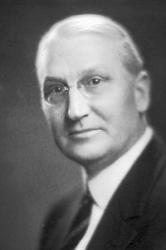
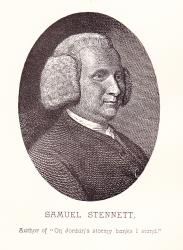
Samuel Stennett

1727 - 1795 Topics: God Help Author of "On Jordan's rugged banks I stand" in The Praise Hymnary Samuel Stennett was born at Exeter, in 1727. His father was pastor of a Baptist congregation in that city; afterwards of the Baptist Chapel, Little Wild Street, London. In this latter pastorate the son succeeded the father in 1758. He died in 1795. Dr. Stennett was the author of several doctrinal works, and a few hymns. --Annotations of the Hymnal, Charles Hutchins, M.A. 1872. ====================== Stennett, Samuel, D.D., grandson of Joseph Stennett, named above, and son of the Rev. Joseph Stennett, D.D., was born most pro;bably in 1727, at Exeter, where his father was at that time a Baptist minister. When quite young he removed to London, his father having become pastor of the Baptist Church in Little Wild Street, Lincoln's Inn Fields. In 1748, Samuel Stennett became assistant to his father in the ministry, and in 1758 succeeded him in the pastoral office at Little Wild Street. From that time until his death, on Aug. 24, 1795, he held a very prominent position among the Dissenting ministers of London. He was much respected by some of the statesmen of the time, and used his influence with them in support of the principles of religious freedom. The celebrated John Howard was a member of his congregation and an attached friend. In 1763, the University of Aberdeen conferred on him the degree of D.D. Dr. S. Stennett's prose publications consist of volumes of sermons, and pamphlets on Baptism and on Nonconformist Disabilities. He wrote one or two short poems, and contributed 38 hymns to the collection of his friend, Dr. Rippon (1787). His poetical genius was not of the highest order, and his best hymns have neither the originality nor the vigour of some of his grandfather's. The following, however, are pleasing in sentiment and expression, and are in common use more especially in Baptist congregations:— 1. And have I, Christ, no love for Thee? Love for Christ desired. 2. And will the offended God again? The Body the Temple of the Holy Ghost. 3. As on the Cross the Saviour hung. The Thief on the Cross. 4. Behold the leprous Jew. The healing of the Leper. 5. Come, every pious heart. Praise to Christ. 6. Father, at Thy call, I come. Lent. 7. Great God, amid the darksome night. God, a Sun. 8. Great God, what hosts of angels stand. Ministry of Angels. 9. Here at Thy Table, Lord, we meet. Holy Communion. 10. How charming is the place. Public Worship. 11. How shall the sons of men appear? Acceptance through Christ alone. 12. How soft the words my [the] Saviour speaks. Early Piety. 13. How various and how new. Divine Providence. 14. Not all the nobles of the earth. Christians as Sons of God. 15. On Jordan's stormy banks I stand. Heaven anticipated. 16. Prostrate, dear Jesus, at thy feet. Lent. Sometimes, "Dear Saviour, prostrate at Thy feet." 17. Should bounteous nature kindly pour. The greatest of these is Love. From this, "Had I the gift of tongues," st. iii., is taken. 18. Thy counsels of redeeming grace. Holy Scripture. From "Let avarice, from shore to shore." 19. Thy life 1 read, my dearest Lord. Death in Infancy. From this "'Tis Jesus speaks, I fold, says He." 20. 'Tis finished! so the Saviour cried. Good Friday. 21. To Christ, the Lord, let every tongue. Praise of Christ. From this,"Majestic sweetness sits enthroned," st. iii., is taken. 22. To God, my Saviour, and my King. Renewing Grace. 23. To God, the universal King. Praise to God. 24. What wisdom, majesty, and grace. The Gospel. Sometimes, “What majesty and grace." 25. Where two or three with sweet accord. Before the Sermon. 26. Why should a living man complain? Affliction. From this, "Lord, see what floods of sorrow rise," st. iii., is taken. 27. With tears of anguish I lament. Lent. 28. Yonder amazing sight I see. Good Friday. All these hymns, with others by Stennett, were given in Rippon's Baptist Selection, 1787, a few having previously appeared in A Collection of Hymns for the use of Christians of all Denominations, London. Printed for the Booksellers, 1782; and No. 16, in the 1778 Supplement to the 3rd edition of the Bristol Baptist Selection of Ash and Evans. The whole of Stennett's poetical pieces and hymns were included in vol. ii. of his Works, together with a Memoir, by W. J. Jones. 4 vols., 1824. [Rev. W. R. Stevenson, M.A.] --John Julian, Dictionary of Hymnology (1907)

Alfred Barratt

1879 - 1968 Topics: Kindness, Helpfulness Author of "Tell It Out Today" in Songs of Grace and Glory Barratt, Alfred. (New Springs, Wigan, Lancashire, England, October 25, 1879--December, 1968). Coming to the United States as a young man, he studied at Gordon College, Massachusetts, and Newton Theological Seminary, Mass. He was ordained in December, 1913, by the Baptists in Connecticut, then by the Wheeling WV Presbytery, Presbyterian Church in the USA, in 1924. He was pastor of Dallas, West Virginia, then of a series of churches in the Presbytery of Clarion, Pennsylvania. In 1937 he was awarded the Doctor of Literature degree by Bob Jones College. On November 26, 1962, he wrote the undersigned: "For 39 long years I have labored hard and steady writing sermons, children's story sermons, and hymns. Up to the present day I have written 4,477 hymns. 80 percent of my sermons are published in books and magazines." --William J. Reynolds, DNAH Archives

Stephen P. Starke

b. 1955 Topics: God as Help Author of "We Live, O Lord, within Your Grace" in Christian Worship Rev. Stephen P. Starke has always had a heart for hymns. At a young age, Starke played hymns out of The Lutheran Hymnal and read through the hymnal to pass the time before Sunday services. Pastor Starke graduated from Concordia University Chicago with a BA. While completing his MDiv from Concordia Theological Seminary, Fort Wayne, Indiana, he attempted his first hymn text and was encouraged to write more. Since that time, he has written more than 175 hymns inspired by music and the Scriptures. He has been commissioned to write hymns for special occasions, including the 125th anniversary of Concordia University Wisconsin, as well as his daughter’s wedding. Because of his extensive work as a hymnwriter, Pastor Starke received an honorary doctor of letters degree from Concordia University, Irvine, California, and an honorary doctor of divinity degree from Concordia University Wisconsin in Mequon. It is through the medium of hymns that Pastor Starke desires to preserve and pass on the truths of the Gospel for generations to come.

Thoro Harris

1874 - 1955 Person Name: T. Harris Topics: The Christian Life Help, Comfort, Guidance Author of "Who can cheer the heart like Jesus" in Churches of Christ Hymn Book Born: March 31, 1874, Washington, DC. Died: March 27, 1955, Eureka Springs, Arkansas. Buried: International Order of Odd Fellows Cemetery, Eureka Springs, Arkansas. After attending college in Battle Creek, Michigan, Harris produced his first hymnal in Boston, Massachusetts, in 1902. He then moved to Chicago, Illinois at the invitation of Peter Bilhorn, and in 1932, to Eureka Springs, Arkansas. He composed and compiled a number of works, and was well known locally as he walked around with a canvas bag full of handbooks for sale. His works include: Light and Life Songs, with William Olmstead & William Kirkpatrick (Chicago, Illinois: S. K. J. Chesbro, 1904) Little Branches, with George J. Meyer & Howard E. Smith (Chicago, Illinois: Meyer & Brother, 1906) Best Temperance Songs (Chicago, Illinois: The Glad Tidings Publishing Company, 1913) (music editor) Hymns of Hope (Chicago, Illinois: Thoro Harris, undated, circa 1922) --www.hymntime.com/tch

Pages


Export as CSV
It looks like you are using an ad-blocker. Ad revenue helps keep us running. Please consider white-listing Hymnary.org or getting Hymnary Pro to eliminate ads entirely and help support Hymnary.org.