

 My Starred Hymns
 My FlexScores
 My Hymnals
 My Purchased Files
Planning worship?
Check out our sister site, ZeteoSearch.org,
for 20+ additional resources related to your search.
- |
User Links
Person Results
William B. Bradbury

1816 - 1868 Person Name: William B. Bradbury, 1816-1868 Topics: The Holy Scriptures; Holy Scripture; Holy Scripture Composer of "ALETTA" in African Methodist Episcopal Church Hymnal William Batchelder Bradbury USA 1816-1868. Born at York, ME, he was raised on his father's farm, with rainy days spent in a shoe-shop, the custom in those days. He loved music and spent spare hours practicing any music he could find. In 1830 the family moved to Boston, where he first saw and heard an organ and piano, and other instruments. He became an organist at 15. He attended Dr. Lowell Mason's singing classes, and later sang in the Bowdoin Street church choir. Dr. Mason became a good friend. He made $100/yr playing the organ, and was still in Dr. Mason's choir. Dr. Mason gave him a chance to teach singing in Machias, ME, which he accepted. He returned to Boston the following year to marry Adra Esther Fessenden in 1838, then relocated to Saint John, New Brunswick. Where his efforts were not much appreciated, so he returned to Boston. He was offered charge of music and organ at the First Baptist Church of Brooklyn. That led to similar work at the Baptist Tabernacle, New York City, where he also started a singing class. That started singing schools in various parts of the city, and eventually resulted in music festivals, held at the Broadway Tabernacle, a prominent city event. He conducted a 1000 children choir there, which resulted in music being taught as regular study in public schools of the city. He began writing music and publishing it. In 1847 he went with his wife to Europe to study with some of the music masters in London and also Germany. He attended Mendelssohn funeral while there. He went to Switzerland before returning to the states, and upon returning, commenced teaching, conducting conventions, composing, and editing music books. In 1851, with his brother, Edward, he began manufacturring Bradbury pianos, which became popular. Also, he had a small office in one of his warehouses in New York and often went there to spend time in private devotions. As a professor, he edited 59 books of sacred and secular music, much of which he wrote. He attended the Presbyterian church in Bloomfield, NJ, for many years later in life. He contracted tuberculosis the last two years of his life.
John Perry
William B. Bradbury
Henry Thomas Smart

1813 - 1879 Person Name: Henry Smart, 1813-1879 Topics: The Godhead Holy Scripture Composer of "LANCASHIRE" in Methodist Hymn and Tune Book Henry Smart (b. Marylebone, London, England, 1813; d. Hampstead, London, 1879), a capable composer of church music who wrote some very fine hymn tunes (REGENT SQUARE, 354, is the best-known).
Smart gave up a career in the legal profession for one in music. Although largely self taught, he became proficient in organ playing and composition, and he was a music teacher and critic. Organist in a number of London churches, including St. Luke's, Old Street (1844-1864), and St. Pancras (1864-1869), Smart was famous for his extemporizations and for his accompaniment of congregational singing. He became completely blind at the age of fifty-two, but his remarkable memory enabled him to continue playing the organ. Fascinated by organs as a youth, Smart designed organs for important places such as St. Andrew Hall in Glasgow and the Town Hall in Leeds. He composed an opera, oratorios, part-songs, some instrumental music, and many hymn tunes, as well as a large number of works for organ and choir. He edited the Choralebook (1858), the English Presbyterian Psalms and Hymns for Divine Worship (1867), and the Scottish Presbyterian Hymnal (1875). Some of his hymn tunes were first published in Hymns Ancient and Modern (1861).
Bert Polman
Henry Thomas Smart
Martin Luther
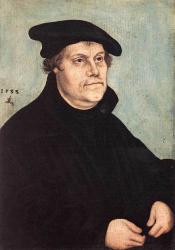
1483 - 1546 Topics: The Holy Scripture Author of "Lord, Keep Us Steadfast in Thy Word" in Christian Youth Hymnal Luther, Martin, born at Eisleben, Nov. 10, 1483; entered the University of Erfurt, 1501 (B.A. 1502, M.A.. 1503); became an Augustinian monk, 1505; ordained priest, 1507; appointed Professor at the University of Wittenberg, 1508, and in 1512 D.D.; published his 95 Theses, 1517; and burnt the Papal Bull which had condemned them, 1520; attended the Diet of Worms, 1521; translated the Bible into German, 1521-34; and died at Eisleben, Feb. 18, 1546. The details of his life and of his work as a reformer are accessible to English readers in a great variety of forms. Luther had a huge influence on German hymnody.
i. Hymn Books.
1. Ellich cristlich lider Lobgesang un Psalm. Wittenberg, 1524. [Hamburg Library.] This contains 8 German hymns, of which 4 are by Luther.
2. Eyn Enchiridion oder Handbuchlein. Erfurt, 1524 [Goslar Library], with 25 German hymns, of which 18 are by Luther.
3. Geystliche Gesangk Buchleyn. Wittenberg, 1524 [Munich Library], with 32 German hymns, of which 24 are by Luther.
4. Geistliche Lieder auffs new gebessert. Wittenberg. J. Klug, 1529. No copy of this book is now known, but there was one in 1788 in the possession of G. E. Waldau, pastor at Nürnberg, and from his description it is evident that the first part of the Rostock Gesang-Buch, 1531, is a reprint of it. The Rostock Gesang-Buch, 1531, was reprinted by C. M. Wiechmann-Kadow at Schwerin in 1858. The 1529 evidently contained 50 German hymns, of which 29 (including the Litany) were by Luther.
5. Geistliche Lieder auffs new gebessert. Erfurt. A. Rauscher, 1531 [Helmstädt, now Wolfenbüttel Library], a reprint of No. 4.
6. Geistliche Lieder. Wittenberg. J. Klug, 1535 [Munich Library. Titlepage lost], with 52 German hymns, of which 29 are by Luther.
7. Geistliche Lieder auffs new gebessert. Leipzig. V. Schumann, 1539 [Wernigerode Library], with 68 German hymns, of which 29 are by Luther.
8. Geistliche Lieder. Wittenberg. J. Klug, 1543 [Hamburg Library], with 61 German hymns, of which 35 are by Luther.
9. Geystliche Lieder. Leipzig. V. Babst, 1545 [Gottingen Library]. This contains Luther's finally revised text, but adds no new hymns by himself. In pt. i. are 61 German hymns, in pt. ii. 40, of which 35 in all are by Luther.
For these books Luther wrote three prefaces, first published respectively in Nos. 3, 4, 9. A fourth is found in his Christliche Geseng, Lateinisch und Deudsch, zum Begrebnis, Wittenberg, J. Klug, 1542. These four prefaces are reprinted in Wackernagel’s Bibliographie, 1855, pp. 543-583, and in the various editions of Luther's Hymns. Among modern editions of Luther's Geistliche Lieder may be mentioned the following:—
Carl von Winterfeld, 1840; Dr. C. E. P. Wackernagel, 1848; Q. C. H. Stip, 1854; Wilhelm Schircks, 1854; Dr. Danneil, 1883; Dr. Karl Gerok, 1883; Dr. A. F. W. Fischer, 1883; A. Frommel, 1883; Karl Goedeke, 1883, &c. In The Hymns of Martin Luther. Set to their original melodies. With an English version. New York, 1883, ed. by Dr. Leonard Woolsey Bacon and Nathan H. Allen, there are the four prefaces, and English versions of all Luther's hymns, principally taken more or less altered, from the versions by A. T. Russell, R. Massie and Miss Winkworth [repub. in London, 1884]. Complete translations of Luther's hymns have been published by Dr. John Anderson, 1846 (2nd ed. 1847), Dr. John Hunt, 1853, Richard Massie, 1854, and Dr. G. Macdonald in the Sunday Magazine, 1867, and his Exotics, 1876. The other versions are given in detail in the notes on the individual hymns.
ii. Classified List of Luther's Hymns. Of Luther's hymns no classification can be quite perfect, e.g. No. 3 (see below) takes hardly anything from the Latin, and No. 18 hardly anything from the Psalm. No. 29 is partly based on earlier hymns (see p. 225, i.). No. 30 is partly based on St. Mark i. 9-11, and xvi., 15, 16 (see p. 226, ii.). No. 35 is partly based on St. Luke ii. 10-16. The following arrangement, however, will answer all practical purposes.
A. Translations from the Latin.
i. From Latin Hymns:
1. Christum wir sollen loben schon. A solis ortus cardine
2. Der du bist drei in Einigkeit. O Lux beata Trinitas.
3. Jesus Christus unser Heiland, Der von. Jesus Christus nostra salus
4. Komm Gott Schopfer, heiliger Geist. Veni Creator Spiritus, Mentes.
5. Nun komm der Beidenheiland. Veni Redemptor gentium
6. Was flirchst du Feind Herodes sehr. A solis ortus cardine
ii. From Latin Antiphons, &c.:
7. Herr Gott dich loben wir. Te Deum laudamus.
8. Verleih uns Frieden gnädiglich. Dapacem, Domine
9. Wir glauben all an einen Gott.
iii. Partly from the Latin, the translated stanzas being adopted from Pre-Reformation Versions:
10. Komm, heiliger Geist, Herre Gott.
11. Mitten wir im Leben sind. Media vita in morte sumus.
B. Hymns revised and enlarged from Pre-Reformation popular hymns.
12. Gelobet seist du Jesus Christ.
13. Gott der Vater wohn uns bei.
14. Gott sei gelobet und gebenedeiet.
15. Nun bitten wir den heiligen Geist.
C. Psalm versions.
16. Ach Gott vom Himmel, sieh darein.
17. Aus tiefer Noth schrei ich zu dir.
18. Ein' feste Burg ist unser Gott.
19. Es spricht der Unweisen Mund wohl.
20. Es wollt uns Gott genädig sein.
21. War Gott nicht mit uns diese Zeit.
22. Wohl dem, der in Gotten Furcht steht.
D. Paraphrases of other portions of Holy Scripture.
23. Diess sind die heilgen zehn Gebot.
24. Jesaia dem Propheten das geschah.
25. Mensch willt du leben seliglich.
26. Mit Fried und Freud ich fahr dahin.
27. Sie ist mir lieb die werthe Magd.
28. Vater unser im Himmelreich.
E. Hymns mainly Original.
29. Christ lag in Todesbanden.
30. Christ unser Herr zum Jordan kam.
31. Ein neues Lied wir heben an.
32. Erhalt uns Herr bei deinem Wort.
33. Jesus Christus unser Heiland, Der den,
34. Nun freut euch lieben Christengemein.
35. Vom Himmel hoch da komm ich her.
36. Vom Himmel kam der Engel Schaar.
In addition to these —
37. Fur alien Freuden auf Erden.
38. Kyrie eleison.
In the Blätter fur Hymnologie, 1883, Dr. Daniel arranges Luther's hymns according to what he thinks their adaptation to modern German common use as follows:—
i. Hymns which ought to be included in every good Evangelical hymn-book: Nos. 7-18, 20, 22, 28, 29, 30, 32, 34, 35, 36, 38.
ii. Hymns the reception of which into a hymn-book might be contested: Nos. 2, 3, 4, 19, 21, 22, 23, 24, 25, 33.
iii. Hymns not suited for a hymn-book: Nos. 1, 5, 6, 27, 31, 37.
[Rev. James Mearns, M.A.]
--John Julian, Dictionary of Hymnology (1907)
Martin Luther
P. P. Bliss
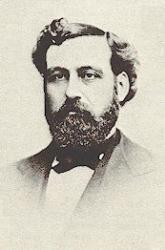
1838 - 1876 Person Name: Philip P. Bliss, 1838-1876 Topics: The Holy Scriptures; Holy Scripture Author of "Sing Them Over Again to Me (Wonderful Words of Life)" in African Methodist Episcopal Church Hymnal Philip P. Bliss (b. Clearfield County, PA, 1838; d. Ashtabula, OH, 1876) left home as a young boy to make a living by working on farms and in lumber camps, all while trying to continue his schooling. He was converted at a revival meeting at age twelve. Bliss became an itinerant music teacher, making house calls on horseback during the winter, and during the summer attending the Normal Academy of Music in Genesco, New York. His first song was published in 1864, and in 1868 Dwight L. Moody advised him to become a singing evangelist. For the last two years of his life Bliss traveled with Major D. W. Whittle and led the music at revival meetings in the Midwest and Southern United States. Bliss and Ira D. Sankey published a popular series of hymn collections entitled Gospel Hymns. The first book of the series, Gospel Songs, was published in 1874. Bliss's tragic death at the age of thirty-eight happened near the end of 1876. Philip P. Bliss and his wife were traveling to Chicago to sing for the evangelistic services led by Daniel W. Whittle at Dwight L. Moody's Tabernacle. But a train wreck and fire en route claimed their lives.
Bert Polman
=================
Bliss, Philip, b. at Clearfield County, Pennsylvania, July 9, 1838. In 1864 he went to Chicago in the employ of Dr. George F. Root, the musician, where he was engaged in conducting musical Institutes, and in composing Sunday School melodies. Originally a Methodist, he became, about 1871, a choirman of the First Congregational Church, Chicago, and the Superintendent of its Sunday Schools. In 1874 he joined D. W. Whittle in evangelical work. To this cause he gave (although a poor man) the royalty of his Gospel Songs, which was worth some thirty thousand dollars. His death was sudden. It occurred in the railway disaster at Ashtabula, Ohio, Dec. 30, 1876. ... Some of his verses have obtained wide popularity in most English-speaking countries. The more widely known, and specially those which are found in collections in use in G. Britain, are in the following American works:—
i. The Prize, 1870.
1. I should like to die. Death anticipated. This is one of his earliest compositions, and is unworthy of the position it holds.
2. Through the valley of the shadow I must go. Death anticipated.
3. Whosoever heareth, shout, shout the sound. Jesus the Way. Written during the winter of 1869-70 after hearing Mr. H. Moorhouse (from England) preach on St. John iii. 16.
ii. The Charm, 1871.
4. Almost persuaded now to believe. Procrastination. This was suggested by the following passage in a sermon by the Rev. Mr. Brundnge, Bliss being present at its delivery:—" He who is almost persuaded is almost saved, but to be almost saved is to be entirely lost."
5. Ho! my comrades! see the signal. Faithfulness.
6. O! Jerusalem, the golden city, bright, &c. Heaven.
7. On what Foundation do [did] you build? Christ the Foundation.
iii. The Song Tree, 1872.
8. Light in the darkness, sailor, day is at hand. Safety. This hymn, “The Life-Boat," has attained to great popularity. The incident upon which it is based, that of the rescue of a ship's crew by a life-boat, is given in detail by Mr. Sankey in his Sacred Songs, &c, No. 99 (large ed.). It is sometimes known by its refrain, "Pull for the shore," &c.
iv. The Joy, 1873.
9. In me ye may have peace. Peace.
10. To die is gain. Death anticipated.
v. Sunshine, 1873.
11. Down life's dark vale we wander. Death anticipated.
12. More holiness give me. For Holiness.
13. Only an armour-bearer. Soldiers of the Cross.
14. Standing by a purpose true. Faithfulness.
15. This loving Saviour stands patiently. Invitation.
vi. Gospel Songs, 1874.
16. A long time I wandered. Peace and Joy.
17. Brightly beams our Father's mercy. Mercy.
18. Come, brethren, as we march along. Praise.
19. Free from the law, O happy condition. Redemption.
20. Have you on the Lord believed? Fullness of Grace. This hymn arose out of the following circumstances :—" A vast fortune was left in the hands of a minister for one of his poor parishioners. Fearing that it might be sqmandered if suddenly bestowed upon him, the wise minister sent him a little at a time, with a note saying, “This is thine; use it wisely; there is more to follow.” Hence also the refrain ‘More to follow,’ by which the hymn is known."
21. How much owest thou? Divine Claims.
22. I know not the hour when my Lord will come. Death anticipated. Suggested by reading the book, The Gates Ajar.
23. See the gentle Shepherd standing. The Good Shepherd.
24. Though the way be sometimes dreary. Divine Leading.
25. Will you meet me at the fountain? Fountain of Living Water. The incident out of which this hymn arose is thus stated in The Christian, No. 365, "At the Industrial Exposition at Chicago it was an everyday appointment to meet at the Central Fountain. Mr. P. P. Bliss, whose mind seemed always set on things above, caught up the words, and wrote this hymn, 'Meet me at the Fountain.'"
vii. Gospel Hymns, No. 1, 1875.
26. One offer of salvation. The Name of Jesus.
27. Wandering afar from the dwellings of men. The Lepers.
viii. The International Lesson Monthly, 1875.
28. Weary gleaner, whence comest thou? Duty.
29. The whole world was lost in the darkness of Sin. Light of the world.
30. Man of sorrows! what a name. Redemption.
31. The Spirit, O sinner, in mercy doth move. Holy Spirit.
ix. Gospel Hymns, No. 2, 1876.
32. At the feet of Jesus. The good choice.
33. Come, sing the Gospel's joyful sound. Salvation.
34. Cut it down, cut it down. Justice and Mercy.
35. Do you see the Hebrew captive? Prayer.
36. Hallelujah, He is risen. Easier. Written in the spring of 1876 and first sung by Bliss on Easter afternoon, 1876, in the Court House Square, Augusta, Georgia, to 5900 people.
37. In Zion's rock abiding. Safety.
38. Repeat the story o'er and o'er. Grace and Peace.
39. Tenderly the Shepherd. The Good Shepherd.
x. Gospel Hymns, No. 3, 1878.
40. Hear ye the glad good news from heaven. Faith and Salvation.
41. I will sing of my Redeemer. Praise.
xi. Gospel Hymns, No. 4, 1881.
42. 'Tis known on earth and heaven too. More about Jesus.
xii. Various.
43. Sing over again to me. Words of Life. This appeared in a paper entitled Words of Life, 1874, The following are undated:—
44. March to the battle-field. Duty and Victory.
45. There is sin in the camp. Hinderances.
46. 'Tis the promise of God. Praise.
47. While the silvery moon-beams, fall, New Birth.
48. God is always near me. Omnipresence.
Two hymns," I am so glad that our Father in heaven," and " Sowing the seed by the daylight [dawnlight] fair," (sometimes given as " Sowing our seed in the morning fair ") are usually attributed to Mr. Bliss. In his Gospel Songs, Cincinnati, 1874, however, he lays claim to the music only. Mr. Sankey attributes this last to "E. A. Oakey." With the exception of No. 48, these hymns are given in Mr. Sankey's Sacred Songs & Solos, Pts. i. and ii. Their popularity is far beyond their literary merits, and is mainly due to the simple melodies to which they are wedded. As a writer of hymns of this class Mr. Bliss is second only to Mrs. Van Alstyne. Many anecdotes concerning hymns of this class are given in American Evangelists; an Account of their work in England and America, by the Rev. Elias Nason, Boston, U.S., Lathrop & Co., 1877.
Mr. Bliss is usually known as "P. P. Bliss." This is found on the title-pages of his collections. On his own authority, however, we are enabled to say that his name originally stood thus : “Philipp Bliss.” Early in life he separated the final p from his Christian name, constituted it a capital P, and thus produced "P. P. Bliss." (For this article we are mainly indebted to Professor F. M. Bird, and Mr. H. P. Main.)
-John Julian, Dictionary of Hymnology (1907)
========================
Bliss, Philip , p. 151, i. "Sowing the seed by the daylight fair" is in the Family Treasury , Edinburgh, 1861, pt. i., p. 84. It is said to be by Miss Emily Sullivan Oakey; born at Albany, N. York, Oct. 8, 1829, died May 11, 1883. Note also that Bliss's hymn, No. 43. on p. 150, ii., should read, "Sing them over again to me."
--John Julian, Dictionary of Hymnology, Appendix, Part II (1907)
=====================
Bliss, P., p. 150, i. Two works have been brought to our notice, since the issue of our first edition of this Dictionary, which concern this author, viz.:—
1. Memoirs of Philip P. Bliss. Edited by D. W. Whittle. Contributions by Rev. E. P. Goodwin, Ira D. Sankey, and Geo. F. Root. Introduction by D. L. Moody. New York, &c.: A. S. Barnes & Co., 1877.
2. My Life and Sacred Songs. By Ira D. Sankey. With an Introduction by Theodore L. Cuyler, D.D). London: Hodder & Stoughton, and Morgan & Scott, 1906.
These works have a special interest for those who use I. D. Sankey's Sacred Songs & Solos, and all of P. Bliss's publications. To Mr. Sankey's My Life, &c, we direct special attention for P. Bliss's hymns:—
“Do you see the Hebrew captive kneeling?" p. 294.
"Down life's dark vale we wander." p. 285.
"Ho! my comrades, see the signal." p. 105.
"'Tis the promise of God full salvation to give." p. 99.
--John Julian, Dictionary of Hymnology, New Supplement (1907)
P. P. Bliss
Charles Wesley
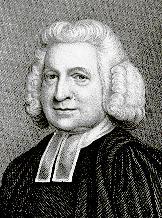
1707 - 1788 Topics: The Book of the Church : Holy Scripture Author of "Come, Holy Ghost, Our Hearts Inspire" in The United Methodist Hymnal Charles Wesley, M.A. was the great hymn-writer of the Wesley family, perhaps, taking quantity and quality into consideration, the great hymn-writer of all ages. Charles Wesley was the youngest son and 18th child of Samuel and Susanna Wesley, and was born at Epworth Rectory, Dec. 18, 1707. In 1716 he went to Westminster School, being provided with a home and board by his elder brother Samuel, then usher at the school, until 1721, when he was elected King's Scholar, and as such received his board and education free. In 1726 Charles Wesley was elected to a Westminster studentship at Christ Church, Oxford, where he took his degree in 1729, and became a college tutor. In the early part of the same year his religious impressions were much deepened, and he became one of the first band of "Oxford Methodists."
In 1735 he went with his brother John to Georgia, as secretary to General Oglethorpe, having before he set out received Deacon's and Priest's Orders on two successive Sundays. His stay in Georgia was very short; he returned to England in 1736, and in 1737 came under the influence of Count Zinzendorf and the Moravians, especially of that remarkable man who had so large a share in moulding John Wesley's career, Peter Bonier, and also of a Mr. Bray, a brazier in Little Britain. On Whitsunday, 1737, [sic. 1738] he "found rest to his soul," and in 1738 he became curate to his friend, Mr. Stonehouse, Vicar of Islington, but the opposition of the churchwardens was so great that the Vicar consented that he "should preach in his church no more." Henceforth his work was identified with that of his brother John, and he became an indefatigable itinerant and field preacher. On April 8, 1749, he married Miss Sarah Gwynne. His marriage, unlike that of his brother John, was a most happy one; his wife was accustomed to accompany him on his evangelistic journeys, which were as frequent as ever until the year 1756," when he ceased to itinerate, and mainly devoted himself to the care of the Societies in London and Bristol. Bristol was his headquarters until 1771, when he removed with his family to London, and, besides attending to the Societies, devoted himself much, as he had done in his youth, to the spiritual care of prisoners in Newgate. He had long been troubled about the relations of Methodism to the Church of England, and strongly disapproved of his brother John's "ordinations." Wesley-like, he expressed his disapproval in the most outspoken fashion, but, as in the case of Samuel at an earlier period, the differences between the brothers never led to a breach of friendship. He died in London, March 29, 1788, and was buried in Marylebone churchyard. His brother John was deeply grieved because he would not consent to be interred in the burial-ground of the City Road Chapel, where he had prepared a grave for himself, but Charles said, "I have lived, and I die, in the Communion of the Church of England, and I will be buried in the yard of my parish church." Eight clergymen of the Church of England bore his pall. He had a large family, four of whom survived him; three sons, who all became distinguished in the musical world, and one daughter, who inherited some of her father's poetical genius. The widow and orphans were treated with the greatest kindness and generosity by John Wesley.
As a hymn-writer Charles Wesley was unique. He is said to have written no less than 6500 hymns, and though, of course, in so vast a number some are of unequal merit, it is perfectly marvellous how many there are which rise to the highest degree of excellence. His feelings on every occasion of importance, whether private or public, found their best expression in a hymn. His own conversion, his own marriage, the earthquake panic, the rumours of an invasion from France, the defeat of Prince Charles Edward at Culloden, the Gordon riots, every Festival of the Christian Church, every doctrine of the Christian Faith, striking scenes in Scripture history, striking scenes which came within his own view, the deaths of friends as they passed away, one by one, before him, all furnished occasions for the exercise of his divine gift. Nor must we forget his hymns for little children, a branch of sacred poetry in which the mantle of Dr. Watts seems to have fallen upon him. It would be simply impossible within our space to enumerate even those of the hymns which have become really classical. The saying that a really good hymn is as rare an appearance as that of a comet is falsified by the work of Charles Wesley; for hymns, which are really good in every respect, flowed from his pen in quick succession, and death alone stopped the course of the perennial stream.
It has been the common practice, however for a hundred years or more to ascribe all translations from the German to John Wesley, as he only of the two brothers knew that language; and to assign to Charles Wesley all the original hymns except such as are traceable to John Wesley through his Journals and other works.
The list of 482 original hymns by John and Charles Wesley listed in this Dictionary of Hymnology have formed an important part of Methodist hymnody and show the enormous influence of the Wesleys on the English hymnody of the nineteenth century.
-- Excerpts from John Julian, Dictionary of Hymnology (1907)
==================
Charles Wesley, the son of Samuel Wesley, was born at Epworth, Dec. 18, 1707. He was educated at Westminster School and afterwards at Christ Church, Oxford, where he graduated M.A. In 1735, he took Orders and immediately proceeded with his brother John to Georgia, both being employed as missionaries of the S.P.G. He returned to England in 1736. For many years he engaged with his brother in preaching the Gospel. He died March 29, 1788. To Charles Wesley has been justly assigned the appellation of the "Bard of Methodism." His prominence in hymn writing may be judged from the fact that in the "Wesleyan Hymn Book," 623 of the 770 hymns were written by him; and he published more than thirty poetical works, written either by himself alone, or in conjunction with his brother. The number of his separate hymns is at least five thousand.
--Annotations of the Hymnal, Charles Hutchins, M.A., 1872.
Charles Wesley
Lowell Mason
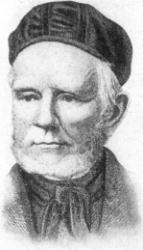
1792 - 1872 Topics: Holy Scriptures; Scriptures, The Holy Composer of "UXBRIDGE" in The Hymnal Dr. Lowell Mason (the degree was conferred by the University of New York) is justly called the father of American church music; and by his labors were founded the germinating principles of national musical intelligence and knowledge, which afforded a soil upon which all higher musical culture has been founded. To him we owe some of our best ideas in religious church music, elementary musical education, music in the schools, the popularization of classical chorus singing, and the art of teaching music upon the Inductive or Pestalozzian plan. More than that, we owe him no small share of the respect which the profession of music enjoys at the present time as contrasted with the contempt in which it was held a century or more ago. In fact, the entire art of music, as now understood and practiced in America, has derived advantage from the work of this great man.
Lowell Mason was born in Medfield, Mass., January 8, 1792. From childhood he had manifested an intense love for music, and had devoted all his spare time and effort to improving himself according to such opportunities as were available to him. At the age of twenty he found himself filling a clerkship in a banking house in Savannah, Ga. Here he lost no opportunity of gratifying his passion for musical advancement, and was fortunate to meet for the first time a thoroughly qualified instructor, in the person of F. L. Abel. Applying his spare hours assiduously to the cultivation of the pursuit to which his passion inclined him, he soon acquired a proficiency that enabled him to enter the field of original composition, and his first work of this kind was embodied in the compilation of a collection of church music, which contained many of his own compositions. The manuscript was offered unavailingly to publishers in Philadelphia and in Boston. Fortunately for our musical advancement it finally secured the attention of the Boston Handel and Haydn Society, and by its committee was submitted to Dr. G. K. Jackson, the severest critic in Boston. Dr. Jackson approved most heartily of the work, and added a few of his own compositions to it. Thus enlarged, it was finally published in 1822 as The Handel and Haydn Society Collection of Church Music. Mason's name was omitted from the publication at his own request, which he thus explains, "I was then a bank officer in Savannah, and did not wish to be known as a musical man, as I had not the least thought of ever making music a profession." President Winchester, of the Handel and Haydn Society, sold the copyright for the young man. Mr. Mason went back to Savannah with probably $500 in his pocket as the preliminary result of his Boston visit.
The book soon sprang into universal popularity, being at once adopted by the singing schools of New England, and through this means entering into the church choirs, to whom it opened up a higher field of harmonic beauty. Its career of success ran through some seventeen editions. On realizing this success, Mason determined to accept an invitation to come to Boston and enter upon a musical career. This was in 1826. He was made an honorary member of the Handel and Haydn Society, but declined to accept this, and entered the ranks as an active member. He had been invited to come to Boston by President Winchester and other musical friends and was guaranteed an income of $2,000 a year. He was also appointed, by the influence of these friends, director of music at the Hanover, Green, and Park Street churches, to alternate six months with each congregation. Finally he made a permanent arrangement with the Bowdoin Street Church, and gave up the guarantee, but again friendly influence stepped in and procured for him the position of teller at the American Bank.
In 1827 Lowell Mason became president and conductor of the Handel and Haydn Society. It was the beginning of a career that was to win for him as has been already stated the title of "The Father of American Church Music." Although this may seem rather a bold claim it is not too much under the circumstances. Mr. Mason might have been in the average ranks of musicianship had he lived in Europe; in America he was well in advance of his surroundings. It was not too high praise (in spite of Mason's very simple style) when Dr. Jackson wrote of his song collection: "It is much the best book I have seen published in this country, and I do not hesitate to give it my most decided approbation," or that the great contrapuntist, Hauptmann, should say the harmonies of the tunes were dignified and churchlike and that the counterpoint was good, plain, singable and melodious.
Charles C. Perkins gives a few of the reasons why Lowell Mason was the very man to lead American music as it then existed. He says, "First and foremost, he was not so very much superior to the members as to be unreasonably impatient at their shortcomings. Second, he was a born teacher, who, by hard work, had fitted himself to give instruction in singing. Third, he was one of themselves, a plain, self-made man, who could understand them and be understood of them."
The personality of Dr. Mason was of great use to the art and appreciation of music in this country. He was of strong mind, dignified manners, sensitive, yet sweet and engaging.
Prof. Horace Mann, one of the great educators of that day, said he would walk fifty miles to see and hear Mr. Mason teach if he could not otherwise have that advantage.
Dr. Mason visited a number of the music schools in Europe, studied their methods, and incorporated the best things in his own work. He founded the Boston Academy of Music. The aim of this institution was to reach the masses and introduce music into the public schools. Dr. Mason resided in Boston from 1826 to 1851, when he removed to New York. Not only Boston benefited directly by this enthusiastic teacher's instruction, but he was constantly traveling to other societies in distant cities and helping their work. He had a notable class at North Reading, Mass., and he went in his later years as far as Rochester, where he trained a chorus of five hundred voices, many of them teachers, and some of them coming long distances to study under him. Before 1810 he had developed his idea of "Teachers' Conventions," and, as in these he had representatives from different states, he made musical missionaries for almost the entire country. He left behind him no less than fifty volumes of musical collections, instruction books, and manuals.
As a composer of solid, enduring church music. Dr. Mason was one of the most successful this country has introduced. He was a deeply pious man, and was a communicant of the Presbyterian Church. Dr. Mason in 1817 married Miss Abigail Gregory, of Leesborough, Mass. The family consisted of four sons, Daniel Gregory, Lowell, William and Henry. The two former founded the publishing house of Mason Bros., dissolved by the death of the former in 1869. Lowell and Henry were the founders of the great organ manufacturer of Mason & Hamlin. Dr. William Mason was one of the most eminent musicians that America has yet produced.
Dr. Lowell Mason died at "Silverspring," a beautiful residence on the side of Orange Mountain, New Jersey, August 11, 1872, bequeathing his great musical library, much of which had been collected abroad, to Yale College.
--Hall, J. H. (c1914). Biography of Gospel Song and Hymn Writers. New York: Fleming H. Revell Company.
Lowell Mason
Francis Bottome
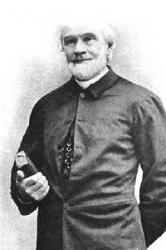
1823 - 1894 Topics: Holy Scriptures Author of "O Spread the Tidings Round" in Great Songs of the Church (Revised) Bottome, F., S.T.D., was born in Derbyshire, England, May 26, 1823. In 1850, having removed to America, he entered the ministry of the Methodist Episcopalian Church; and in 1872 he received the degree of S.T.D. from Dickinson's College, Carlisle, Penn. In addition to assisting in the compilation of B. P. Smith's Gospel Hymns, London, 1872: Centenary Singer, 1869; Hound Lake, 1872, he has written:—
1. Come, Holy Ghost, all sacred fire. Invocation of the Holy Spirit. Appeared in R. P. Smith's Gospel Hymns, 1872. It is in several collections, including the Ohio Hymn Book of the Evangelical Association, 1881, No. 364.
2. Full salvation, full salvation. Joy of full Salvation. Written in 1871, and published in a collection by Dr. Cullis of Boston, 1873. Also in the Ohio Hymn Book, 1881, No. 384.
3. Love of Jesus, all divine. Love of Jesus. Written in 1872, and published in his Hound Lake, 1872. It is in several collections.
4. O bliss of the purified, bliss of the free. Sanctification. Written in 1869, and published in the Revivalist, and numerous hymn-books in America, including the Ohio Hymn Book as above, 1881, No. 477, &c.
His hymns, "Sweet rest in Jesus"; and "Oneness in Jesus," are also found in several collections for evangelistic services.
-- John Julian, Dictionary of Hymnology (1907)
Francis Bottome
W. H. Havergal
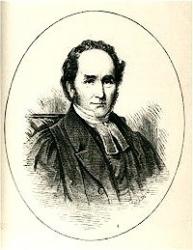
1793 - 1870 Person Name: Rev. W. H. Havergal Topics: The Holy Scriptures Composer of "[O Word of God incarnate]" in The Hymnal, Revised and Enlarged, as adopted by the General Convention of the Protestant Episcopal Church in the United States of America in the year of our Lord 1892 Havergal, William Henry, M.A, son of William Havergal, was born at High Wycombe, Buckinghamshire, 1793, and was educated at St. Edmund's Hall, Oxford (B.A. 1815, M.A. 1819). On taking Holy Orders he became in 1829 Rector of Astley, Worcestershire; in 1842, Rector of St. Nicholas, Worcester; and in 1860, Rector of Shareshill, near Wolverhampton. He was also Hon. Canon in Worcester Cathedral from 1845. He died April 18, 1870. His hymns, about 100 in all, were in many instances written for special services in his own church, and printed as leaflets. Several were included in W. Carus Wilson's Book of General Psalmody, 1840 (2nd ed., 1842); and in Metrical Psalms & Hymns for Singing in Churches, Worcester, Deighton, 1849, commonly known as the Worcester Diocesan Hymn Book, and of which he was the Editor. In Life Echoes, 1883, his hymns are given with those of Miss Havergal. Of those in common use the greater part are in Mercer, and Snepp's Songs of Grace & Glory. Although his hymns are all good, and two or three are excellent, it is not as a hymnwriter but as a musician that Canon Havergal is best known. His musical works and compositions included, in addition to numerous individual hymn tunes and chants, the Gresham Prize Service, 1836; the Gresham Prize Anthem, 1845; Old Church Psalmody, 1849; History of the Old 100th Psalm tune, 1854, &c. He also reprinted Ravenscroft’s Psalter of 1611. His hymns in common use include:—
1. Blessed Jesus, lord and Brother. School Festivals, 1833. Published in Life Echoes, 1883.
2. Brighter than meridian splendour. Christ the glory of His Church. 1830. Published in W. C. Wilson's Book of General Psalms, 1840; the Worcester Psalms & Hymns, 1849, &c.
3. Christians, awake to joy and praise. Christmas Carol, c. 1860. Printed on broadsheet, with music by the author, and sold on behalf of the Lancashire Cotton Distress Fund.
4. Come, Shepherds, come, 'tis just a year. Christmas Carol. 1860. Published in Snepp's Songs of Grace & Glory,
5. For ever and for ever, Lord. Missions, 1866, for the Church Mission Society. Published in Snepp's Songs of Grace & Glory, 1872, and the Life Echoes, 1883.
6. Hallelujah, Lord, our voices. Sunday. 1828. Published in W. C. Wilson's Book of General Psalms, 1840; the Worcester Psalms & Hymns, 1849; Life Echoes, 1883, &c.
7. Heralds of the Lord of glory. Missions. First sung in Astley Church, Sep. 23, 1827. Published in Miss Havergal's Starlight through the Shadows, 1880; Snepp's Songs of Grace & Glory, 1872, &c.
8. Hosanna, raise the pealing hymn. Praise to Christ, 1833, and first sung in Astley Church, June 9, 1833. Published in W. C. Wilson's Book of General Psalmody, 1840; the Worcester Psalms & Hymns, 1849; Life Echoes 1883, &c.
9. How vast the field of souls. Missions. 1858. Printed for Shareshill Church Miss. Anniversary, 1863, and published in Snepp's Songs of Grace & Glory, 1872, and the Life Echoes, 1883.
10. In doubt and dread dismay. Missions. Written in 1837, and published in W. C. Wilson's Book of General Psalmody, 1840; the Worcester Psalms & Hymns, 1849, &c.
11. Jerusalem the golden, The home of saints shall be. Heaven. Published in Life Echoes, 1883.
12. My times are in Thy hand, Their best, &c. 1860. Published in Snepp's Songs of Grace & Glory, 1872, the Records of the author's life and work, and Life Echoes, 1883. The editor of the Records says (p. 159) "this hymn has been much appreciated, and well illustrates the devotional and cheerful spirit of the writer."
13. No dawn of holy light. Sunday. 1825. Printed in 1831 on a leaflet, and published in W. C. Wilson's Book of General Psalmody, 1840; the Worcester Psalms & Hymns, 1849; Life Echoes, 1883, &c.
14. Our faithful God hath sent us. Harvest. Written at Shareshill in 1863, for a Harvest Festival. Published in Snepp's Songs of Grace & Glory 1872, and Life Echoes, 1883.
15. Shout, 0 earth! from silence waking. Praise to Jesus for Redemption. 1841. Published in the Worcester Psalms & Hymns, 1849; Snepp's Songs of Grace & Glory, 1872, &c.
16. So happy all the day. Christmas Carol, c. 1834. Published in Snepp's Songs of Grace & Glory, 1872.
17. Soon the trumpet of salvation. Missions. 1826. Published in Snepp's Songs of Grace & Glory, 1872.
18. To praise our Shepherd's [Saviour's] care. The Good Shepherd. Written after witnessing the death of Elizabeth Edwards, aged 12, of St. Nicholas, Worcester, and printed as a leaflet. Published in W. C. Wilson's Book of General Psalmody, 1840; the Worcester Psalms & Hymns, 1849; Life Echoes, &c, 1883. The author also published a Memoir of the child.
19. Widely 'midst the slumbering nations. Missions. 1828. Published in the Worcester Psalms & Hymns, 1849; Snepp's Songs of Grace & Glory, 1872, &c.
In addition to these hymns, his carols, "How grand, and how bright," "Our festal morn is come," and others are annotated under their respective first lines. Most of these carols and hymns were reprinted in Christmas Carols & Sacred Songs, Chiefly by the Rev. W. H. Havergal, London, Nisbet, 1869.
--John Julian, Dictionary of Hymnology (1907)
=====================
Havergal, W. H., p. 498, i. Other hymns are: —
1. Lord, if judgments now are waking. Second Advent. Published in W. Carus Wilson's Book of General Psalmody, 1840; in Kennedy, 1863, &c.
2. Remember, Lord, Thy word of old displayed. Missions. "Composed for a special prayer-meeting for missionary labourers, held in the author's schoolroom, in the parish of St. Nicholas's, Worcester." (W. F. Stevenson's Hymns for Church and Home, 1873, where the original text is also given.)
It must be noted that No. 17, at p. 498, ii., "Soon the trumpet of salvation," was first published in A Collection of Original Airs adapted to Hymns, &c, 1826.
--John Julian, Dictionary of Hymnology, Appendix, Part II (1907)
W. H. Havergal
John Warrington Hatton
1710 - 1793 Person Name: John Hatton, d. 1793 Topics: Holy Scripture Composer of "DUKE STREET" in African Methodist Episcopal Church Hymnal John Warrington Hatton (b. Warrington, England, c. 1710; d, St. Helen's, Lancaster, England, 1793) was christened in Warrington, Lancashire, England. He supposedly lived on Duke Street in Lancashire, from where his famous tune name comes. Very little is known about Hatton, but he was most likely a Presbyterian, and the story goes that he was killed in a stagecoach accident.
Bert Polman
John Warrington Hatton
Johann Crüger
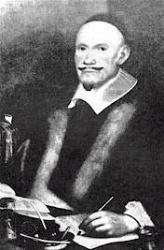
1598 - 1662 Person Name: Johann Crueger Topics: Holy Scripture, the Church's gift; Holy Scriptures Composer of "GRAEFENBERG" in The Hymnal of the Protestant Episcopal Church in the United States of America 1940 Johann Crüger (b. Grossbriesen, near Guben, Prussia, Germany, 1598; d. Berlin, Germany, 1662) Crüger attended the Jesuit College at Olmutz and the Poets' School in Regensburg, and later studied theology at the University of Wittenberg. He moved to Berlin in 1615, where he published music for the rest of his life. In 1622 he became the Lutheran cantor at the St. Nicholas Church and a teacher for the Gray Cloister. He wrote music instruction manuals, the best known of which is Synopsis musica (1630), and tirelessly promoted congregational singing. With his tunes he often included elaborate accompaniment for various instruments. Crüger's hymn collection, Neues vollkomliches Gesangbuch (1640), was one of the first hymnals to include figured bass accompaniment (musical shorthand) with the chorale melody rather than full harmonization written out. It included eighteen of Crüger's tunes. His next publication, Praxis Pietatis Melica (1644), is considered one of the most important collections of German hymnody in the seventeenth century. It was reprinted forty-four times in the following hundred years. Another of his publications, Geistliche Kirchen Melodien (1649), is a collection arranged for four voices, two descanting instruments, and keyboard and bass accompaniment. Crüger also published a complete psalter, Psalmodia sacra (1657), which included the Lobwasser translation set to all the Genevan tunes.
Bert Polman
===============================
Crüger, Johann, was born April 9, 1598, at Gross-Breese, near Guben, Brandenburg. After passing through the schools at Guben, Sorau and Breslau, the Jesuit College at Olmütz, and the Poets' school at Regensburg, he made a tour in Austria, and, in 1615, settled at Berlin. There, save for a short residence at the University of Wittenberg, in 1620, he employed himself as a private tutor till 1622. In 1622 he was appointed Cantor of St. Nicholas's Church at Berlin, and also one of the masters of the Greyfriars Gymnasium. He died at Berlin Feb. 23, 1662. Crüger wrote no hymns, although in some American hymnals he appears as "Johann Krüger, 1610,” as the author of the supposed original of C. Wesley's "Hearts of stone relent, relent" (q.v.). He was one of the most distinguished musicians of his time. Of his hymn tunes, which are generally noble and simple in style, some 20 are still in use, the best known probably being that to "Nun danket alle Gott" (q.v.), which is set to No. 379 in Hymns Ancient & Modern, ed. 1875. His claim to notice in this work is as editor and contributor to several of the most important German hymnological works of the 16th century, and these are most conveniently treated of under his name. (The principal authorities on his works are Dr. J. F. Bachmann's Zur Geschichte der Berliner Gesangbücher 1857; his Vortrag on P. Gerhard, 1863; and his edition of Gerhardt's Geistliche Lieder, 1866. Besides these there are the notices in Bode, and in R. Eitner's Monatshefte für Musik-Geschichte, 1873 and 1880). These works are:—
1. Newes vollkömmliches Gesangbuch, Augspur-gischer Confession, &c, Berlin, 1640 [Library of St. Nicholas's Church, Berlin], with 248 hymns, very few being published for the first time.
2. Praxis pietatis melica. Das ist: Ubung der Gottseligkeit in Christlichen und trostreichen Gesängen. The history of this, the most important work of the century, is still obscure. The 1st edition has been variously dated 1640 and 1644, while Crüger, in the preface to No. 3, says that the 3rd edition appeared in 1648. A considerable correspondence with German collectors and librarians has failed to bring to light any of the editions which Koch, iv. 102, 103, quotes as 1644, 1647, 1649, 1650, 1651, 1652, 1653. The imperfect edition noted below as probably that of 1648 is the earliest Berlin edition we have been able to find. The imperfect edition, probably ix. of 1659, formerly in the hands of Dr. Schneider of Schleswig [see Mützell, 1858, No. 264] was inaccessible. The earliest perfect Berlin edition we have found is 1653.
The edition printed at Frankfurt in 1656 by Caspar Röteln was probably a reprint of a Berlin edition, c. 1656. The editions printed at Frankfurt-am-Main by B. C. Wust (of which the 1666 is in the preface described as the 3rd) are in considerable measure independent works.
In the forty-five Berlin and over a dozen Frankfurt editions of this work many of the hymns of P. Gerhardt, J. Franck, P. J. Spener, and others, appear for the first time, and therein also appear many of the best melodies of the period.
3. Geistliche Kirchen-Melodien, &c, Leipzig, 1649 [Library of St. Katherine's Church, Brandenburg]. This contains the first stanzas only of 161 hymns, with music in four vocal and two instrumental parts. It is the earliest source of the first stanzas of various hymns by Gerhardt, Franck, &c.
4. D. M. Luther's und anderer vornehmen geisU reichen und gelehrten Manner Geistliche Lieder und Psalmen, &c, Berlin, 1653 [Hamburg Town Library], with 375 hymns. This was edited by C. Runge, the publisher, and to it Crüger contributed some 37 melodies. It was prepared at the request of Luise Henriette (q.v.), as a book for the joint use of the Lutherans and the Re¬formed, and is the earliest source of the hymns ascribed to her, and of the complete versions of many hymns by Gerhardt and Franck.
5. Psalmodia Sacra, &c, Berlin, 1658 [Royal Library, Berlin]. The first section of this work is in an ed. of A. Lobwasser's German Psalter; the second, with a similar title to No. 4, and the date 1657, is practically a recast of No. 4,146 of those in 1653 being omitted, and the rest of the 319 hymns principally taken from the Praxis of 1656 and the hymn-books of the Bohemian Brethren. New eds. appeared in 1676, 1700, 1704, 1711, and 1736.
[Rev. James Mearns, M.A.]
-- Excerpt from John Julian, Dictionary of Hymnology (1907)
=======================
Crüger, Johann, p. 271, ii. Dr. J. Zahn, now of Neuendettelsau, in Bavaria, has recently acquired a copy of the 5th ed., Berlin, 1653, of the Praxis.
--John Julian, Dictionary of Hymnology, Appendix, Part II (1907)
Johann Crüger
Pages




