

 My Starred Hymns
 My FlexScores
 My Hymnals
 My Purchased Files
Planning worship?
Check out our sister site, ZeteoSearch.org,
for 20+ additional resources related to your search.
- |
User Links
Person Results
Leonard Blake
1907 - 1989 Person Name: Leonard Blake, 1907-1989 Topics: Year C Proper 12 Composer of "WINCHCOMBE" in Complete Anglican Hymns Old and New
Leonard Blake
William B. Bradbury

1816 - 1868 Person Name: William Batchelder Bradbury Topics: Proper 12 Year B Composer of "WOODWORTH" in Voices United William Batchelder Bradbury USA 1816-1868. Born at York, ME, he was raised on his father's farm, with rainy days spent in a shoe-shop, the custom in those days. He loved music and spent spare hours practicing any music he could find. In 1830 the family moved to Boston, where he first saw and heard an organ and piano, and other instruments. He became an organist at 15. He attended Dr. Lowell Mason's singing classes, and later sang in the Bowdoin Street church choir. Dr. Mason became a good friend. He made $100/yr playing the organ, and was still in Dr. Mason's choir. Dr. Mason gave him a chance to teach singing in Machias, ME, which he accepted. He returned to Boston the following year to marry Adra Esther Fessenden in 1838, then relocated to Saint John, New Brunswick. Where his efforts were not much appreciated, so he returned to Boston. He was offered charge of music and organ at the First Baptist Church of Brooklyn. That led to similar work at the Baptist Tabernacle, New York City, where he also started a singing class. That started singing schools in various parts of the city, and eventually resulted in music festivals, held at the Broadway Tabernacle, a prominent city event. He conducted a 1000 children choir there, which resulted in music being taught as regular study in public schools of the city. He began writing music and publishing it. In 1847 he went with his wife to Europe to study with some of the music masters in London and also Germany. He attended Mendelssohn funeral while there. He went to Switzerland before returning to the states, and upon returning, commenced teaching, conducting conventions, composing, and editing music books. In 1851, with his brother, Edward, he began manufacturring Bradbury pianos, which became popular. Also, he had a small office in one of his warehouses in New York and often went there to spend time in private devotions. As a professor, he edited 59 books of sacred and secular music, much of which he wrote. He attended the Presbyterian church in Bloomfield, NJ, for many years later in life. He contracted tuberculosis the last two years of his life.
John Perry
William B. Bradbury
Michael Haydn
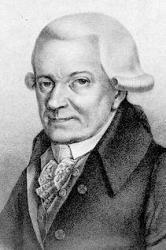
1737 - 1806 Person Name: Johann Michael Haydn Topics: Proper 12 Year C Composer of "SALZBURG (HAYDN)" in Voices United Johann Michael Haydn Austria 1737-1806. Born at Rohrau, Austria, the son of a wheelwright and town mayor (a very religious man who also played the harp and was a great influence on his sons' religious thinking), and the younger brother of Franz Joseph Haydn, he became a choirboy in his youth at the Cathedral of St. Stephen in Vienna, as did his brother, Joseph, an exceptional singer. For that reason boys both were taken into the church choir. Michael was a brighter student than Joseph, but was expelled from music school when his voice broke at age 17. The brothers remained close all their lives, and Joseph regarded Michael's religious works superior to his own. Michael played harpsichord, violin, and organ, earning a precarious living as a freelance musician in his early years. In 1757 he became kapellmeister to Archbishop, Sigismund of Grosswardein, in Hungary, and in 1762 concertmaster to Archbishop, Hieronymous of Salzburg, where he remained the rest of his life (over 40 years), also assuming the duties of organist at the Church of St. Peter in Salzburg, presided over by the Benedictines. He also taught violin at the court. He married the court singer, Maria Magdalena Lipp in 1768, daughter of the cathedral choir-master, who was a very pious women, and had such an affect on her husband, trending his inertia and slothfulness into wonderful activity. They had one daughter, Aloysia Josepha, in 1770, but she died within a year. He succeeded Wolfgang Amadeus Mozart, an intimate friend, as cathedral organist in 1781. He also taught music to Carl Maria von Weber. His musical reputation was not recognized fully until after World War II. He was a prolific composer of music, considered better than his well-known brother at composing religious works. He produced some 43 symphonies,12 concertos, 21 serenades, 6 quintets, 19 quartets, 10 trio sonatas, 4 due sonatas, 2 solo sonatas, 19 keyboard compositions, 3 ballets, 15 collections of minuets (English and German dances), 15 marches and miscellaneous secular music. He is best known for his religious works (well over 400 pieces), which include 47 antiphons, 5 cantatas, 65 canticles, 130 graduals, 16 hymns, 47 masses, 7 motets, 65 offertories, 7 oratorios, 19 Psalms settings, 2 requiems, and 42 other compositions. He also composed 253 secular vocals of various types. He did not like seeing his works in print, and kept most in manuscript form. He never compiled or cataloged his works, but others did it later, after his death. Lothar Perger catalogued his orchestral works in 1807 and Nikolaus Lang did a biographical sketch in 1808. In 1815 Anton Maria Klafsky cataloged his sacred music. More complete cataloging has been done in the 1980s and 1990s by Charles H Sherman and T Donley Thomas. Several of Michael Haydn's works influenced Mozart. Haydn died at Salzburg, Austria.
John Perry
Michael Haydn
William Horsley
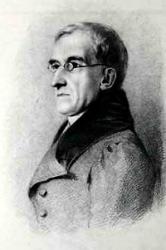
1774 - 1858 Topics: Proper 12 Year C Composer of "HORSLEY" in Voices United Born: November 15, 1774, Mayfair, London, England.
Died: June 12, 1858, Kensington, London, England.
Buried: Kensal Green Cemetery, London, England.
Horsley studied music privately, then became organist of Ely Chapel, Holborn, London, in 1794. He assisted Dr. J. W. Callcott (who encouraged him in persevering at Glee-writing, at which he became successful) as organist of the Asylum for Female Orphans, and married Callcott’s daughter. He succeeded Callcott in 1802, holding that post 52 years. A difference of opinion with the Asylum Committee led to him being dismissed. In 1838 he also became organist of Charterhouse "at a salary of £70 and a room set apart and a fire provided when necessary for his use on those days upon which his duty requires his attendance at the Hospital." He founded the London Philharmonic Society, and in later years was a close friend of Felix Mendelssohn.
J. C. Horsley, the eminent painter, relates in his Reminiscences the following experience when he went with his father to one of the services:
"When I was four years old my father was organist to the Asylum for Female Orphans, which was a stately building on the Westminster Bridge Road; and one Sunday he took me in with him to the morning service and landed me in the organ-loft. Everything was new and surprising to me, especially the crowd of buxom girls, at least a hundred in number, all dressed alike, ranged right and left of the organ, and who, when the organ had played a bar or two of the opening hymn, sang out with open mouths and such energy that I was positively scared, and in continently accompanied the performance with a prolonged howl; upon which my father, continuing to play the accompaniment with one hand, supplied me promptly with paper out of his capacious pocket, where he always kept a store of backs of letters (envelopes were not invented then), and a silver pencil-case of heroic proportions, thus quieting me." Lightwood, pp. 171-72
--www.hymntime.com/tch/
William Horsley
Louis F. Benson
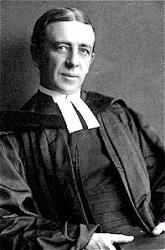
1855 - 1930 Topics: Year B Proper 12 Author of "O Sing a Song of Bethlehem" in The New Century Hymnal Benson, Louis FitzGerald, D.D., was born at Philadelphia, Penn., July 22, 1855, and educated at the University of Penn. He was admitted to the Bar in 1877, and practised until 1884. After a course of theological studies he was ordained by the Presbytery of Philadelphia North, in 1888. His pastorate of the Church of the Redeemer, Germantown, Phila., extended from his ordination in 1888 to 1894, when he resigned and devoted himself to literary and Church work at Philadelphia. He edited the series of Hymnals authorised for use by the General Assembly of the Presbyterian Church in the U.S.A., as follows:—
(1) The Hymnal, Phila., 1895; (2) The Chapel Hymnal, 1898; and (3) The School Hymnal, 1899.
Dr. Benson's hymnological writings are somewhat extensive. They include:—
(1) Hymns and Verses (original and translations), 1897; (2) The Best Church Hymns, 1898; (3) The Best Hymns, 1898; (4) Studies of Familiar Hymns, 1903, &c.
Of his original hymns the following have come into American common use:—
I. In The Hymnal, 1895:—
1. O Christ, Who didst our tasks fulfil. For Schools and Colleges. Written in 1894.
2. O risen Christ, Who from Thy throne. For Installation of a Pastor. Written in 1894.
II. In The School Hymnal, 1899:—
3. A glory lit the wintry sky. Loneliness of Jesus. Written in 1897.
4. Happy town of Salem. Heaven.
5. Now the wintry days are o'er. Easter.
6. O sing a song of Bethlehem. Early Life of Jesus.
7. Open the door to the Saviour. Invitation.
8. Out of the skies, like angel eyes. Lullaby.
9. Who will teach me how to pray? Prayer. In Carey Bonner's Sunday School Hymnary, 1905:—
10. The sun is on the land and sea. Morning.
11. Our wilful hearts have gone astray. Penitence.
12. When I awake from slumber. Morning.
Of the above, Nos. 1-4, 10-12 are from Hymns and Verses, 1897. In the above collection by C. Bonner, Nos. 1, 4, and 6 are also found. Of Dr. Benson's translations from the Latin one only is in common use. See "Plaudite coeli, Rideat aether."
As a hymn writer Dr. Benson is not widely known, mainly through the recent publication of his verse. His hymns deserve attention, and will, no doubt, gain the public ear in due time; whilst his hymnological researches and publications are thorough and praiseworthy.
--John Julian, Dictionary of Hymnology, New Supplement (1907)
Louis F. Benson
Claude Goudimel
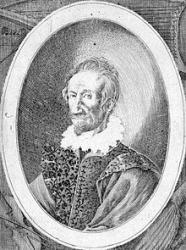
1514 - 1572 Topics: Proper 12 Year A Harmonizer of "GENEVAN 42" in Voices United The music of Claude Goudimel (b. Besançon, France, c. 1505; d. Lyons, France, 1572) was first published in Paris, and by 1551 he was composing harmonizations for some Genevan psalm tunes-initially for use by both Roman Catholics and Protestants. He became a Calvinist in 1557 while living in the Huguenot community in Metz. When the complete Genevan Psalter with its unison melodies was published in 1562, Goudimel began to compose various polyphonic settings of all the Genevan tunes. He actually composed three complete harmonizations of the Genevan Psalter, usually with the tune in the tenor part: simple hymn-style settings (1564), slightly more complicated harmonizations (1565), and quite elaborate, motet-like settings (1565-1566). The various Goudimel settings became popular throughout Calvinist Europe, both for domestic singing and later for use as organ harmonizations in church. Goudimel was one of the victims of the St. Bartholomew's Day massacre of Huguenots, which occurred throughout France.
Bert Polman
Claude Goudimel
Georgia Elma Harkness
1891 - 1974 Topics: Proper 12 Year A Author of "Hope of the World" in Voices United
Georgia Elma Harkness
L. G. Hayne
1836 - 1883 Person Name: Leighton George Hayne, 1836-1883 Topics: Year C Proper 12 Composer of "ST CECILIA" in Complete Anglican Hymns Old and New Born: February 28, 1836, St. David’s Hall, Exeter, England.
Died: March 3, 1883, Bradfield, Essex, England.
Son of Richard Hayne, Rector of Mistley, Leighton graduated from Eton and Queen’s College, Oxford (BMus 1856, DMus 1860); at school, he was Eton College’s organist and conducted the Oxford University chorus. He also served as chaplain of Queen’s College; Vicar of Helston, Cornwall (1866-67); Succentor of Eton (1867-71); and Rector of Mistley, Essex (1871-83), and was well known as an organ builder.
Music:
BUCKLAND
CHALVEY
ST. CECILIA
ST. LAWRENCE
--www.hymntime.com/tch/
L. G. Hayne
John Antes
1740 - 1811 Topics: Proper 12 Year C Composer (attributed to) of "MONKLAND" in Voices United John Antes (b. Frederick, PA, 1740; d. Bristol, England, 1811) was a missionary, watchmaker, business manager, and composer. Born near the Moravian community of Bethlehem, Pennsylvania, he was trained at the Moravian boys' school and later received religious education and further training as a watchmaker in Herrnhut, Germany. From 1770 to 1781 he served as a missionary in Egypt and from 1783 until his death was the business manager of the Moravian community in Fulneck, England. Although music was his avocation, Antes was a fine composer and musician. Among his compositions are a number of anthems, several string trios, and over fifty hymn tunes.
Bert Polman
John Antes
George Keith
1638 - 1716 Person Name: "K" Topics: Proper 12 Year A Author of "How Firm a Foundation" in Voices United George Keith, according to D. Sedgwick, was the author of "How firm a foundation, ye saints of the Lord." Little is known about Keith, save that he was a publisher, a son-in-law of Dr. Gill, and the composer of several hymns.
--Annotations of the Hymnal, Charles Hutchins, M.A. 1872.
George Keith
Pages




