

 My Starred Hymns
 My FlexScores
 My Hymnals
 My Purchased Files
Planning worship?
Check out our sister site, ZeteoSearch.org,
for 20+ additional resources related to your search.
- |
User Links
Person Results
John Greenleaf Whittier
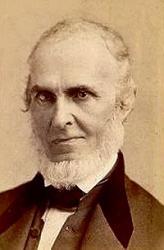
1807 - 1892 Person Name: John Greenleaf Whittier, 1807-92 Topics: Forgiveness; God's Love to Us; Healing; Inner Peace; Jesus Christ Humanity; Meditation; Personal Petition; Personal Response to Jesus; Purity; Repentance; Saints Days and Holy Days Apostles; Trust in God Alterer of "Dear Father, Lord of humankind" in Together in Song Whittier, John Greenleaf, the American Quaker poet, was born at Haverhill, Massachusetts, Dec. 17, 1807. He began life as a farm-boy and shoemaker, and subsequently became a successful journalist, editor and poet. In 1828 he became editor of the American Manufacturer (Boston), in 1830 of the New England Review, and an 1836 (on becoming Secretary to the American Anti-Slavery Society) of the Pennsylvania Freeman. He was also for some time, beginning with 1847, the corresponding editor of the National Era. In 1840 he removed to Amesbury, Massachusetts, where most of his later works have been written. At the present time [1890] he lives alternately at Amesbury and Boston. His first poetical piece was printed in the Newburyport Free Press in 1824. Since then his publications have been numerous, including:—
Voices of Freedom, 1833; Songs of Labour, and other Poems, 1850; Ballads and other Poems, London, 1844; The Panorama, and other Poems, 1856; In War Time, 1863; Occasional Poems, 1865; Poetical Works, 1869; Complete Poetical Works, 1876; The Bay of the Seven Islands, and other Poems, 1883, &c.
From his numerous poems the following hymns have been compiled, and have come into common use, more especially amongst the American Unitarians:—
1. All as God wills, Who wisely heeds. Trust. This begins with stanza xi. of Whittier's poem, "My Psalm." in his workThe Panorama, and other Poems, 1856 (Complete Poetical Works, Boston, 1876, p. 179), and is given in Lyra Sacra Americana , 1868; Border's Congregational Hymns, 1884, &c.
2. All things are Thine: no gift have we. Opening of a Place of Worship. Written for the Opening of Plymouth Church, Minnesota, 1872 ( Complete Poetical Works , p. 281). In Horder's Congregational Hymns, 1884.
3. Another hand is beckoning us. Bereavement. From his poem " Gone," written in 1845 (Complete Poetical Works, p. 106). In Horder's Congregational Hymns, 1884.
4. Dear Lord and Father of mankind. Calmness in God desired. From his poem “The Brewing of Soma," beginning with stanza xii. (Complete Poetical Works p. 266). In Horder's Congregational Hymns, 1884.
5. God giveth quietness at last. Death and Burial. This begins with stanza xvii. of his poem, “The Singer," written in 1871 (Author's MS.), and included in the Complete Poetical Works, 1876, p. 265. In Martineau's Hymns, 1875.
6. Hast thou, 'midst life's empty noises. The Purpose of Life. Written in 1842. It is in Longfellow and Johnson's Unitarian Book of Hymns, Boston, 1846, and several other later American collections. Also in Lyra Sacra Americana, 1864.
7. I ask not now for gold to gild. Resignation. From his poem "The Wish of To-Day." Written in 1848 (Author's MS.). In Hedge and Huntingdon's Unitarian Hymns for the Church of Christ, Boston, 1853; the Laudes Domini, 1884, and other collections.
8. Immortal love, for ever full. The Love of Jesus. This poem, entitled “Our Master," appeared in Whittier's work, The Panorama, and other Poems, 1856, in 35 stanzas of 4 lines; in Schaff’s Christ in Song, 1869-70, p. 117; and in the Complete Poetical Works, 1876, p. 231, and others. From this poem the following centos have come into common use:—
(1) Immortal love for ever full. In the 1890 edition of the Hymnal Companion and others.
(2) 0 Lord and Master of us all. Begins with stanza xvi.
(3) 0 Love! O Life! our faith and sight. Begins with stanza xxiv. In several American hymnals, including the Unitarian Hymn [and Tune Book ], Boston, 1868, and others.
(4) Our Friend, our Brother, and our Lord. Begins with stanza xxxiv. In Horder's Congregational Hymns, 1884, &c.
(5) We faintly hear, we dimly see. Begins with stanza xxvi. In Barrett's Congregational Church Hymnal, 1887.
(6) We may not climb the heavenly steeps. Begins with stanza v. In Laudes Domini, 1884; the Primitive Methodist Hymnal, 1887, &c.
The use of these centos shows that the hymnic element in the original poem is of a high and enduring order.
9. It may not be our lot to wield. Duty and its Reward. This begins with stanza iv. of his poem "Seedtime and Harvest." Written circa 1850 (Author's MS.). Given in his Complete Poetical Works, p. 114. The hymn is in Laudes Domini, 1884, and other American collections.
10. May freedom speed onward, wherever the blood. Freedom. In the 1848 Supplement to the Boston Book of Hymns, Boston, No. 582, Hymns of the Spirit, 1864, and other collections. In Whittier's Poetical Works, Boston, 1869, p. 68, it is given as, “Right onward, O speed it! Wherever the blood”.
11. Now is the seed-time; God alone. Self-Sacrifice. In the Boston Hymns of the Spirit, 1864, No. 683.
12. 0 backward-looking son of time. New and Old. This begins with stanza xix. of his poem "The Reformer," and is given in this form in the Boston Hymns for the Church of Christ, Boston, 1853, No. 835, and again in later collections. In full in the Complete Poetical Works, p. 78.
13. 0 beauty, old yet ever new. The Law of Love. This in the Boston Hymns of the Spirit, 1864, begins with stanza xxi. of his poem on “The Shadow and the Light,” given in full in the Complete Poetical Works , p. 173.
14. 0 fairest-born of love and light. American National Hymn. This is from his poem "Democracy," which is dated "Election Day, 1843," and is in his Ballads and other Poems, London, 1844, p. 214, and his Complete Poetical Works, p. 82.
15. 0, he whom Jesus loves has truly spoken. True Worship. This in the 1848 Supplement to the Boston Book of Hymns, 1848, No. 578, begins with stanza xi. of his poem on “Worship," given in full in his Complete Poetical Works, p. 96. The poem is dated by the Author, 1848 (Author's MS.).
16. 0 holy Father, just and true. Freedom. "Lines written for the Celebration of the third Anniversary of British Emancipation at the Broadway Tabernacle, N. Y., First of August, 1837." (Complete Poetical Works, p. 47.) It was included in the Unitarian Christian Hymns, Boston, 1844, and has been repeated in later collections.
17. 0 Maker of the Fruits and Flowers. Flower Services. This begins with stanza iv. of his "Lines for the Agricultural and Horticultural Exhibition at Amesbury and Salisbury, Sep. 28, 1858," as given in his Complete Poetical Works , p. 183. It is in the Boston Hymns of the Spirit, 1864, and as "O Painter of the fruits and flowers," in Horder's Congregational Hymns, 1884.
18. O not alone with outward sign. Divine Invitation. This begins with stanza ii. of his poem, "The Call of the Christian," given in his Ballads and other Poems, London, 1844, p. 185, and his Complete Poetical Works, p. 73. The hymn appeared in the Boston Book of Hymns, 1846, and again in later collections.
19. O pure Reformers, not in vain. Freedom. This begins with stanza xii. of his poem "To the Reformers of England," as given in his Complete Poetical Works, p. 77. The hymn was included in the Boston Book of Hymns, 1846, and has been repeated in later collections.
20. O sometimes gleams upon our sight. Old and New. This is taken from his poem "The Chapel of the Hermits," 1852 (in 94 stanzas of 4 lines), and begins with stanza xi. (Comp. Poetical Works, p. 115.) The cento was given in the Boston Hymns of the Spirit, 1864, and repeated in later collections.
21. O Thou, at Whose rebuke the grave. Mercy. This was given in the Boston Book of Hymns, 1848, No. 44l.
22. O [God] Thou, Whose presence went before. National Hymn. This hymn is dated by the author 1834 (Author's MS.), and was written for the Anti-slavery Meeting at Chatham Street Chapel, New York, "on the 4th of the 7th month, 1831." It is No. 750 in the Unitarian Christian Hymns, 1844. It is sometimes given as “0 God, whose presence went before."
23. 0, what though our feet may not tread where Christ trod. Presence of Christ's Spirit. The author dates this 1837 (Author's MS.). It is No. 150 in the Boston Book of Hymns, 1846. In their Hymns of the Spirit, 1864, No. 652, it begins: "0, wherefore the dream of the earthly abode." Both centos are from his poem “Poledom."
24. Shall we grow weary in our watch? Patience, or Resignation. This begins with stanza x. of his poem "The Cypress-Tree of Ceylon." (Complete Poetical Works, p. 84.) This form of the text was given in the Boston Book of Hymns, 1846, No. 278, in 7 stanzas of 4 lines, and again in Horder's Congregational Hymns, 1884, in 3 stanzas.
25. Sport of the changeful multitude. Persecution. This begins with line 6 of stanza x. of his poem "Ezekiel," and was given in the Boston Hymns of the Spirit, 1864, No. 65lines In full in Complete Poetical Works, p. 67.
26. The green earth sends its incense up. Worship of Nature. The author dates this 1845 (Author's MS.). It is from his poem “The Worship of Nature," and was given in this form in the Boston Hymns for the Church of Christ, 1853, No. 193. The cento "The harp at Nature's advent strung," in the Unitarian Hymn [and Tune] Book, Boston, 1868, No. 195, is from the same poem. The cento No. 321 in the Boston Hymns of the Spirit, 1864, is also (altered) from this poem.
27. The path of life we walk today. The Shadowing Rock. This in the Boston Hys. of the Spirit, 1864, begins with stanza i. of his poem on "The Rock in El Gh'or," which the author dates 1859 (Author's MS.). In full in Complete Poetical Works, p. 180.
28. Thine are all the gifts, 0 God. Children's Missions, or Ragged Schools. Written for the Anniversary of the Children's Mission, Boston, 1878. It is given in Horder's Congregational Hymns, 1884.
29. Thou hast fallen in thine armour. Death. From his poem "To the memory of Charles B. Storrs, late President of Western Reserve College," published in his Ballads and other Poems, London, 1844, p. 84. Dated by the author 1835 (Author's MS.). Abridged form in the Hymns of the Spirit, 1864.
30. To-day, beneath Thy chastening eye. Seeking Rest. This begins with stanza iv. of his poem, "The Wish of To-Day," dated by the author 1847 (Author's MS.), and given in full in his Complete Poetical Works, p. 114. The cento is in Martineau's Hymns, 1873, and others.
31. We see not, know not; all our way. Resignation. "Written at the opening of the Civil War, 1861" (Author's MS.), and included in his In War Time, 1863, and his Complete Poetical Works, p. 190. In full in the Prim. Methodist Hymnal, 1887.
32. When on my day of life the night is falling. Old Age. Written in 1882 (Author's MS.), and included in his work The Bay of the Seven Islands, and other Poems, 1883. In Horder's Congregational Hymns, 1884.
33. With silence only as their benediction. Death. 1845. "Written on the death of Sophia Sturge, sister of Joseph Sturge, of Birmingham, England" (Author's MS.). It is in several collections, including Martineau's Hymns, &c, 1873; Horder's Congregational Hymns, 1884, and others.
Notwithstanding this extensive use of portions of Mr. Whittier's poems as hymns for congregational use, he modestly says concerning himself: "I am really not a hymn-writer, for the good reason that I know nothing of music. Only a very few of my pieces were written for singing. A good hymn is the best use to which poetry can be devoted, but I do not claim that I have succeeded in composing one." (Author's MS.) We must add, however, that these pieces are characterized by rich poetic beauty, sweet tenderness, and deep sympathy with human kind.
-- John Julian, Dictionary of Hymnology (1907)
========================
Whittier, J. G, p. 1277, i. In addition to the large number of this author's hymns already annotated from his own manuscript, the following have also come into use, mainly in the form of centos from his poems, during the past ten years:—
i. From Poems, 1850:—
1. O brother man! Fold to thy heart thy brother. [Brotherly Love.] From his poem, “Worship." Written in 1848, and published in Poems, 1850.
ii. From Songs of Labour, and Other Poems, 1850;—
2. Bowed down in lowliness of min. [Resignation.] From the poem “The Wish of To-day."
iii. From The Chapel of the Hermits, and Other Poems, 1853:—
3. O, sometimes glimpses on our sight. [Light in Darkness.] First published in The National Era, 1851, and again as above, 1853. In The Pilgrim Hymnal, N.Y. 1904, it begins " 0 sometimes gleams upon our sight," and in Hymns of the Ages, 1904, "Yet sometimes glimpses on my sight"; see p. 1277, ii. 20.
iv. From The Panorama, and Other Poems, 1856:—
4. Thou, 0 most compassionate. [Divine Compassion.] This cento is from the poem "My Dream," and is dated 1855.
v. From Home Ballads and Poems, 1860:—
5. I mourn no more my vanished years. [Life's Review.] A cento from "My Psalm," dated 1859, opening with st. i.
6. No longer forward nor behind. This begins with st. iii. of "My Psalm."
7. O hearts of love, O souls that turn. [Life from, Christ.] A cento from the poem, "The Overheart."
8. O Love Divine, Whose constant beam. [Divine Love Universal.] From the poem, "The Shadow and the Light." The form in which it is given in The Pilgrim Hymnal, 1904, first appeared in The Independent, Nov. 1860.
9. Once more the liberal year laughs out. [Autumn.] From his "For an Autumn Festival," 1859.
vi. From In War Time, and Other Poems, 1864:—
10. I can only urge the plea. [Cry for Mercy.] A cento from “Andrew Rykman’s Prayer,” dated 1863.
11. What Thou wilt, O Father, give. Also from “Andrew Kykman's Prayer."
vii. From The Tent on the Beach, and Other Poems, 1867:—
12. I bow my forehead to [in] the dust. St. ix., &c.
13. I know not what the future hath. St. xvi., &c.
14. I long for household voices gone. St. xv., &c.
15. I see the wrong that round me lies. St. x., &c.
16. Who fathoms the Eternal Thought. St. iv., &c.
17. Yet, in the maddening maze of things. St. xi., &c.
These centos are taken from the poem, "The Eternal Goodness," which is dated 1865.
viii. From Among the Hills, and Other Poems, 1869:—
18. For ever round the mercy-seat. [God's Love and Man's Unfaithfulness.] From the poem, “The Answer."
ix. From The Pennsylvania Pilgrim, and Other Poems, 1873:—
19. Best for the weary hands is good. [Daily Renewal.] This is from "My Birthday," which appeared in the Atlantic Monthly, 1871, and again as above, 1873.
x. From Hazel Blossoms, 1875:—
20. All things [gifts] are Thine, p. 1277, i. 2. The church for which this was written, in 1873, was Plymouth Church, St. Paul, Minn. The hymn was included in Hazel Blossoms, 1875.
21. We need love's tender lessons taught. [Love.] From Child-Songs," in Hazel Blossoms, opening with st. ix.
xi. From The Bay of the Seven Islands, 1883:—
22. As from the lighted hearths behind me. [Anticipation of the Future.] This begins with st. iii. of the poem, "What the Traveller said at Sunset."
xii. Additional Notes:—
23. Lord, for the things we see. [Public Gatherings.] This hymn is from "Poledom," 1837.
24. Not always as the whirlwind's rush. [Call to the Ministry.] Published in The Poetical Writings, 1857, Vol. i., p. 254, and again in the Oxford edition of his Poetical Works, 1904, p. 455. It is dated 1833.
25. Sound over all waters, [The Coming Kingdom.)
This, in Horder's Worship Song, 1905, is from Whittier's Complete Poetical Works, Boston, 1876, p. 280, where it is dated 1873.
26. Take courage, Temperance workers. [Temperance.] Mr. Pickard, Whittier's literary executor, cannot trace this hymn in any of the author's writings, and we also are at fault.
27. The harp at Nature's advent strung. [Nature's acknowledgement of God.] Dr. Charles L. Noyes, one of the editors of The Pilgrim Hymnal, 1904, writes us concerning this hymn: "It was first published in its present form [as in the American hymn-books] in 1867 in The Tent on the Beach." But a hymn almost identical was written when Whittier was in his teens, and published in the Haverhill Gazette, October 5, 1827. The same poem appeared in The Palladium, 1829. It was revised for The Tent on the Beach, 1867 (p. 1278, i. 26).
28. We see not, know not; all our way, p. 1278, i. 31. This hymn, written in 1861, first appeared in the Atlantic Monthly, 1862, vol. 10, p. 235.
29. Wherever through the ages rise. [Love is universal.] Opens with line 1 of a section in the poem "Miriam," in Miriam, and Other Poems, 1871, p. 13.
30. Who calls Thy glorious service hard? [Duty.] This begins with st. iii. of his poem "Seedtime and Harvest," noted on p. 1277, ii. 9.
31. O Lord and Father of mankind. This is a slightly altered form of "Dear Lord and Father of mankind." p. 1277, i. 4.
The poem, “Our Master," stated on p. 1277, i., No. 8, as having appeared in The Panorama, 1856, in error, was given in The Tent on the Beach, and Other Poems, Boston, 1867, pp. 143-152.
In compiling the foregoing, we have been materially assisted by Mr. Pickard, the poet's literary executor, and the Rev. Dr. Charles L. Noyes, of Somerville, Mass. Whittier died at Hampton Falls, New Hampshire, Sep. 7, 1892.
--John Julian, Dictionary of Hymnology, New Supplement (1907)
=======================
See also in:
Hymn Writers of the Church
John Greenleaf Whittier
James Montgomery
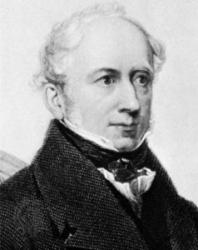
1771 - 1854 Topics: Anniversaries; Biblical Names and Places David; Biblical Names and Places Ephrathah; Biblical Names and Places Jaar; Biblical Names and Places Jacob; Biblical Names and Places Zion; Church Year Advent; Church Year Advent; Covenant; Disciples / Calling; Doubt; Elements of Worship Praise and Adoration; Endurance; Faith; God Light from; God Trust in; God Trust in; God's Justice; God's People (flock, sheep); Jesus Christ Incarnation; Joy; Occasional Services Dedication / Consecration / Anniversary; Occasional Services Ordination and/or Installation; Royal Psalms; The Incarnation; Unity and Fellowship; Year B, Reign of Christ, November 20-26 Author of "Psalm 132 (A Responsorial Setting)" in Psalms for All Seasons James Montgomery (b. Irvine, Ayrshire, Scotland, 1771; d. Sheffield, Yorkshire, England, 1854), the son of Moravian parents who died on a West Indies mission field while he was in boarding school, Montgomery inherited a strong religious bent, a passion for missions, and an independent mind. He was editor of the Sheffield Iris (1796-1827), a newspaper that sometimes espoused radical causes. Montgomery was imprisoned briefly when he printed a song that celebrated the fall of the Bastille and again when he described a riot in Sheffield that reflected unfavorably on a military commander. He also protested against slavery, the lot of boy chimney sweeps, and lotteries. Associated with Christians of various persuasions, Montgomery supported missions and the British Bible Society. He published eleven volumes of poetry, mainly his own, and at least four hundred hymns. Some critics judge his hymn texts to be equal in quality to those of Isaac Watts and Charles Wesley . Many were published in Thomas Cotterill's Selection of Psalms and Hymns (1819 edition) and in Montgomery's own Songs of Zion (1822), Christian Psalmist (1825), and Original Hymns (1853).
Bert Polman
========================
Montgomery, James, son of John Montgomery, a Moravian minister, was born at Irvine, Ayrshire, Nov. 4, 1771. In 1776 he removed with his parents to the Moravian Settlement at Gracehill, near Ballymena, county of Antrim. Two years after he was sent to the Fulneck Seminary, Yorkshire. He left Fulneck in 1787, and entered a retail shop at Mirfield, near Wakefield. Soon tiring of that he entered upon a similar situation at Wath, near Rotherham, only to find it quite as unsuitable to his taste as the former. A journey to London, with the hope of finding a publisher for his youthful poems ended in failure; and in 1792 he was glad to leave Wath for Shefield to join Mr. Gales, an auctioneer, bookseller, and printer of the Sheffield Register newspaper, as his assistant. In 1794 Mr. Gales left England to avoid a political prosecution. Montgomery took the Sheffield Register in hand, changed its name to The Sheffield Iris, and continued to edit it for thirty-one years. During the next two years he was imprisoned twice, first for reprinting therein a song in commemoration of "The Fall of the Bastille," and the second for giving an account of a riot in Sheffield. The editing of his paper, the composition and publication of his poems and hynms, the delivery of lectures on poetry in Sheffield and at the Royal Institution, London, and the earnest advocacy of Foreign Missions and the Bible Society in many parts of the country, gave great variety but very little of stirring incident to his life. In 1833 he received a Royal pension of £200 a year. He died in his sleep, at the Mount, Sheffield, April 30, 1854, and was honoured with a public funeral. A statue was erected to his memory in the Sheffield General Cemetery, and a stained glass window in the Parish Church. A Wesleyan chapel and a public hall are also named in his honour. Montgomery's principal poetical works, including those which he edited, were:—
(1) Prison Amusements, 1797; (2) The Wanderer of Switzerland, 1806; (3) The West Indies, 1807; (4) The World before the Flood, 1813; (5) Greenland and Other Poems, 1819; (6) Songs of Zion, 1822; (7) The Christian Psalmist, 1825; (8) The Christian Poet, 1825; (9) The Pelican Island, 1828; (10) The Poet’s Portfolio, 1835; (11) Original Hymns for Public, Private, and Social Devotion, 1853. He also published minor pieces at various times, and four editions of his Poetical Works, the first in 1828, the second in 1836, the third in 1841, and the fourth in 1854. Most of these works contained original hymns. He also contributed largely to Collyer's Collection, 1812, and other hymnbooks published during the next 40 years, amongst which the most noticeable was Cotterill's Selections of 1819, in which more than 50 of his compositions appeared. In his Christian Psalmist, 1825, there are 100 of his hymns, and in his Original Hymns, 1853, 355 and 5 doxologies. His Songs of Zion, 1822, number 56. Deducting those which are repeated in the Original Hymns, there remain about 400 original compositions.
Of Montgomery's 400 hymns (including his versions of the Psalms) more than 100 are still in common use. With the aid of Montgomery's MSS. we have given a detailed account of a large number. The rest are as follows:—
i. Appeared in Collyer's Collection, 1812.
1. Jesus, our best beloved Friend. Personal Dedication to Christ.
2. When on Sinai's top I see. Sinai, Tabor, and Calvary.
ii. Appeared in Cotterill's Selection, 1819.
3. Come to Calvary's holy mountain. The Open Fountain.
4. God in the high and holy place. God in Nature. The cento in Com. Praise, 1879, and others, "If God hath made this world so fair," is from this hymn.
5. Hear me, O Lord, in my distress. Ps. cxliii.
6. Heaven is a place of rest from sin. Preparation for Heaven.
7. I cried unto the Lord most just. Ps. cxlii.
8. Lord, let my prayer like incense rise. Ps. cxxxix.
9. O bless the Lord, my soul! His grace to thee proclaim. Ps. ciii.
10. Out of the depths of woe. Ps. cxxx. Sometimes "When from the depths of woe."
11. The world in condemnation lay. Redemption.
12. Where are the dead? In heaven or hell? The Living and the Dead.
iii. Appeared in his Songs of Zion, 1822.
13. Give glory to God in the highest. Ps. xxix.
14. Glad was my heart to hear. Ps. cxxii.
15. God be merciful to me. Ps. lxix.
16. God is my strong salvation. Ps. xxvii.
17. Hasten, Lord, to my release. Ps. lxx.
18. Have mercy on me, O my God. Ps. li.
19. Hearken, Lord, to my complaints. Ps. xlii.
20. Heralds of creation cry. Ps. cxlviii.
21. How beautiful the sight. Ps. cxxxiii.
22. How precious are Thy thoughts of peace. Ps. cxxxix.
23. I love the Lord, He lent an ear. Ps. cxvi.
24. In time of tribulation. Ps. lxxvii.
25. Jehovah is great, and great be His praise. Ps. xlviii. Sometimes, "0 great is Jehovah, and great is His Name."
26. Judge me, O Lord, in righteousness. Ps. xliii.
27. Lift up your heads, ye gates, and wide. Ps.xxiv.
28. Lord, let me know mine [my] end. Ps. xxxi.
29. Of old, 0 God, Thine own right hand. Ps. lxxx.
30. O God, Thou art [my] the God alone. Ps. lxiii.
31. 0 Lord, our King, how excellent. Ps. viii. Sometimes, "0 Lord, how excellent is Thy name."
32. O my soul, with all thy powers. Ps. ciii.
33. One thing with all my soul's desire. Ps. xxvii. From this, "Grant me within Thy courts a place."
34. Searcher of hearts, to Thee are known. Ps. cxxxix.
35. Thank and praise Jehovah's name. Ps. cvii.
36. Thee will I praise, O Lord in light. Ps. cxxxviii.
37. The Lord is King; upon His throne. Ps. xciii.
38. The Lord is my Shepherd, no want shall I know. Ps. xxiii.
39. The tempter to my soul hath said. Ps. iii.
40. Thrice happy he who shuns the way. Ps. i.
41. Thy glory, Lord, the heavens declare. Ps. xix.
42. Thy law is perfect, Lord of light. Ps. xix.
43. Who make the Lord of hosts their tower. Ps. cxxv.
44. Yea, I will extol Thee. Ps. xxx.
iv. Appeared in his Christian Psalmist. 1825.
45. Fall down, ye nations, and adore. Universal adoration of God desired.
46. Food, raiment, dwelling, health, and friends. The Family Altar.
47. Go where a foot hath never trod. Moses in the desert. Previously in the Leeds Congregational Collection, 1822.
48. Green pastures and clear streams. The Good Shepherd and His Flock.
49. Less than the least of all. Mercies acknowledged.
50. Not to the mount that burned with fire [flame]. Communion of Saints.
51. On the first Christian Sabbath eve. Easter Sunday Evening.
52. One prayer I have: all prayers in one. Resignation.
53. Our heavenly Father hear. The Lord's Prayer.
54. Return, my soul, unto thy rest. Rest in God.
55. Spirit of power and might, behold. The Spirit's renewing desired.
56. The Christian warrior, see him stand. The Christian Soldier. Sometimes, "Behold the Christian warrior stand."
57. The days and years of time are fled. Day of Judgment.
58. The glorious universe around. Unity.
59. The pure and peaceful mind. A Children's Prayer.
60. This is the day the Lord hath made (q. v.). Sunday.
61. Thy word, Almighty Lord. Close of Service.
62. What secret hand at morning light ? Morning.
63. While through this changing world we roam. Heaven.
64. Within these walls be peace. For Sunday Schools.
v. Appeared in his Original Hymns, 1853.
65. Behold yon bright array. Opening a Place of Worship.
66. Behold the book whose leaves display. Holy Scriptures.
67. Come ye that fear the Lord. Confirmation.
68. Home, kindred, friends, and country, these. Farewell to a Missionary.
69. Let me go, the day is breaking. Jacob wrestling.
70. Not in Jerusalem alone. Consecration of a Church.
71. Praise the high and holy One. God the Creator.
In common with most poets and hymnwriters, Montgomery strongly objected to any correction or rearrangement of his compositions. At the same time he did not hesitate to alter, rearrange, and amend the productions of others. The altered texts which appeared in Cotterill's Selections, 1819, and which in numerous instances are still retained in some of the best hymnbooks, as the "Rock of Ages," in its well-known form of three stanzas, and others of equal importance, were made principally by him for Cotterill's use. We have this confession under his own hand.
As a poet, Montgomery stands well to the front; and as a writer of hymns he ranks in popularity with Wesley, Watts, Doddridge, Newton, and Cowper. His best hymns were written in his earlier years. In his old age he wrote much that was unworthy of his reputation. His finest lyrics are "Angels from the realms of glory," "Go to dark Gethsemane," "Hail to the Lord's Anointed," and "Songs of praise the angels sang." His "Prayer is the soul's sincere desire," is an expanded definition of prayer of great beauty; and his "Forever with the Lord" is full of lyric fire and deep feeling. The secrets of his power as a writer of hymns were manifold. His poetic genius was of a high order, higher than most who stand with him in the front rank of Christian poets. His ear for rhythm was exceedingly accurate and refined. His knowledge of Holy Scripture was most extensive. His religious views were broad and charitable. His devotional spirit was of the holiest type. With the faith of a strong man he united the beauty and simplicity of a child. Richly poetic without exuberance, dogmatic without uncharitableness, tender without sentimentality, elaborate without diffusiveness, richly musical without apparent effort, he has bequeathed to the Church of Christ wealth which could onlv have come from a true genius and a sanctified! heart.
--John Julian, Dictionary of Hymnology (1907)
James Montgomery
Priscilla Jane Owens
1829 - 1907 Topics: The Church in the World Commitment: Trust; Choruses and Refrains; City/City of God; Commitment; Eternal Life; Jesus Christ Saviour; Pilgrimage and Conflict; Trust; Water; Youth; Proper 14 Year A Author of "Will Your Anchor Hold" in Voices United Owens, Priscilla Jane, was born July 21, 1829, of Scotch and Welsh descent, and is now (1906) resident at Baltimore, where she is engaged in public-school work. For 50 years Miss Owen has interested herself in Sunday-school work, and most of her hymns were written for children's services. Her hymn in the Scotch Church Hymnary, 1898, "We have heard a joyful sound" (Missions), was written for a Sunday-school Mission Anniversary, and the words were adapted to the chorus "Vive le Roi" in the opera The Huguenots. [Rev. James Bonar, M.A.]
--John Julian, Dictionary of Hymnology, Appendix II (1907)
=========================
Owens, Priscilla Jane. (July 21, 1829--December 5, 1907). Of Scottish and Welsh ancestry, she spent her entire life in Baltimore. She was a public school teacher there for 49 years. She was a member of the Union Square Methodist Church and took particular interest in its Sunday School.
Her literary efforts, both in prose and poetry, appeared in such religious periodicals as the Methodist Protestant and the Christian Standard.
--William J. Reynolds, DNAH Archives
Priscilla Jane Owens
John Wesley
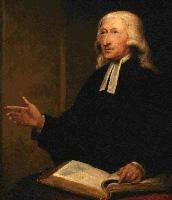
1703 - 1791 Person Name: John Wesley, 1703-1791 Topics: Alleluias; Biblical Names and Places Jacob; Biblical Names and Places Zion; Church Year Advent; Elements of Worship Gathering; Elements of Worship Praise and Adoration; God Light from; God Trust in; God as Refuge; God as Creator; God as King; God's Generosity; God's Justice; Grace; Gratitude; Hymns of Praise; Jesus Christ Healer; Joy; Life Stages Orphans; Life Stages Widows; Lord's Prayer 4th petition (give us today our daily bread); Mercy; Occasional Services Funerals; People of God / Church Citizens of Heaven; People of God / Church Suffering; Poverty; Prayer; Social Justice; The Creation; Year A, Advent, 34d Sunday; Year B, Ordinary Time after Pentecost, October 30-November 5; Year B, Ordinary Time after Pentecost, September 4-10; Year C, Ordinary Time after Pentecost, June 5-11 (if after Trinity Sunday); Year C, Ordinary Time after Pentecost, September 25-October 1 Author of "I'll Praise My Maker While I've Breath" in Psalms for All Seasons John Wesley, the son of Samuel, and brother of Charles Wesley, was born at Epworth, June 17, 1703. He was educated at the Charterhouse, London, and at Christ Church, Oxford. He became a Fellow of Lincoln College, Oxford, and graduated M.A. in 1726. At Oxford, he was one of the small band consisting of George Whitefield, Hames Hervey, Charles Wesley, and a few others, who were even then known for their piety; they were deridingly called "Methodists." After his ordination he went, in 1735, on a mission to Georgia. The mission was not successful, and he returned to England in 1738. From that time, his life was one of great labour, preaching the Gospel, and publishing his commentaries and other theological works. He died in London, in 1791, in his eighty-eighth year. His prose works are very numerous, but he did not write many useful hymns. It is to him, however, and not to his brother Charles, that we are indebted for the translations from the German.
--Annotations of the Hymnal, Charles Hutchins, M.A., 1872
======================
John Wesley, M.A., was born at Epworth Rectory in 1703, and, like the rest of the family, received his early education from his mother. He narrowly escaped perishing in the fire which destroyed the rectory house in 1709, and his deliverance made a life-long impression upon him. In 1714 he was nominated on the foundation of Charterhouse by his father's patron, the Duke of Buckingham, and remained at that school until 1720, when he went up, with a scholarship, from Charterhouse to Christ Church, Oxford. Having taken his degree, he received Holy Orders from the Bishop of Oxford (Dr. Potter) in 1725. In 1726 he was elected Fellow of Lincoln College, and remained at Oxford until 1727, when he returned into Lincolnshire to assist his father as curate at Epworth and Wroot. In 1729 he was summoned back to Oxford by his firm friend, Dr. Morley, Rector of Lincoln, to assist in the College tuition. There he found already established the little band of "Oxford Methodists" who immediately placed themselves under his direction. In 1735 he went, as a Missionary of the Society for the Propagation of the Gospel, to Georgia, where a new colony had been founded under the governorship of General Oglethorpe. On his voyage out he was deeply impressed with the piety and Christian courage of some German fellow travellers, Moravians. During his short ministry in Georgia he met with many discouragements, and returned home saddened and dissatisfied both with himself and his work; but in London he again fell in with the Moravians, especially with Peter Bohler; and one memorable night (May 24, 1738) he went to a meeting in Aldersgate Street, where some one was reading Luther's preface to the Epistle to the Romans. There, "About a quarter before nine, while he was describing the change which God works in the heart through faith in Christ, I felt my heart strangely warmed. I felt I did trust in Christ, Christ alone, for salvation; and an assurance was given me, that He had taken away my sins, even mine, and saved me from the law of sin and death." From that moment his future course was sealed; and for more than half a century he laboured, through evil report and good report, to spread what he believed to be the everlasting Gospel, travelling more miles, preaching more sermons, publishing more books of a practical sort, and making more converts than any man of his day, or perhaps of any day, and dying at last, March 2, 1791, in harness, at the patriarchal age of 88.
The popular conception of the division of labour between the two brothers in the Revival, is that John was the preacher, and Charles the hymnwriter. But this is not strictly accurate. On the one hand Charles was also a great preacher, second only to his brother and George Whitefield in the effects which he produced. On the other hand, John by no means relegated to Charles the exclusive task of supplying the people with their hymns. John Wesley was not the sort of man to depute any part of his work entirely to another: and this part was, in his opinion, one of vital importance. With that wonderful instinct for gauging the popular mind, which was one element in his success, he saw at once that hymns might be utilized, not only for raising the devotion, but also for instructing, and establishing the faith of his disciples. He intended the hymns to be not merely a constituent part of public worship, but also a kind of creed in verse. They were to be "a body of experimental and practical divinity." "In what other publication," he asks in his Preface to the Wesleyan Hymn Book, 1780 (Preface, Oct. 20,1779), "have you so distinct and full an account of Scriptural Christianity; such a declaration of the heights and depths of religion, speculative and practical; so strong cautions against the most plausible errors, particularly those now most prevalent; and so clear directions for making your calling and election sure; for perfecting holiness in the fear of God?" The part which he actually took in writing the hymns, it is not easy to ascertain; but it is certain that more than thirty translations from the German, French and Spanish (chiefly from the German) were exclusively his; and there are some original hymns, admittedly his composition, which are not unworthy to stand by the side of his brother's. His translations from the German especially have had a wide circulation. Although somewhat free as translations they embody the fire and energy of the originals.
It has been the common practice, however for a hundred years or more to ascribe all translations from the German to John Wesley, as he only of the two brothers knew that language; and to assign to Charles Wesley all the original hymns except such as are traceable to John Wesley through his Journals and other works.
The list of 482 original hymns by John and Charles Wesley listed in this Dictionary of Hymnology have formed an important part of Methodist hymnody and show the enormous influence of the Wesleys on the English hymnody of the nineteenth century.
-- Excerpts from John Julian, Dictionary of Hymnology (1907)
===================
See also in:
Hymn Writers of the Church
John Wesley
Anna Letitia Waring
1823 - 1910 Person Name: Anna Laetitia Waring, 1823-1910 Topics: Adversity; Anxiety; Comfort; Funerals; God's Love to Us; Guidance; Jesus Christ Friend and Companion; Pilgrimage; Providence; Saints Days and Holy Days St John the Evangelist; Trust in God Author of "In heavenly love abiding" in Together in Song See also in:
Hymn Writers of the Church
================
Waring, Anna Laetitia, daughter of Elijah Waring, and niece of Samuel Miller Waring, was born at Neath, Glamorganshire, in 1820. In 1850 she published her Hymns and Meditations, by A. L. W., a small book of 19 hymns. The 4th edition was published in 1854. The 10th edition, 1863, is enlarged to 38 hymns. She also published Additional Hymns, 1858, and contributed some pieces to the Sunday Magazine, 1871. Her most widely known hymns are: "Father, I know that all my life," "Go not far from me, O my Strength," and "My heart is resting, O my God." The rest in common use include:—
1. Dear Saviour of a dying world. Resurrection. (1854.)
2. In heavenly love abiding. Safety in God. (1850.)
3. Jesus, Lord of heaven above. Love to Jesus desired. (1854.)
4. Lord, a happy child of Thine. Evening. (1850.)
5. My Saviour, on the [Thy] words of truth. Hope in the Word of God. (1850.) Sometimes stanza iv., "It is not as Thou wilt with me," is given separately.
6. O this is blessing, this is rest. Rest in the Love of Jesus. (1854.)
7. O Thou Lord of heaven above. The Resurrection.
8. Source of my life's refreshing springs. Rest in God. (1850.)
9. Sunlight of the heavenly day. New Year (1854.)
10. Sweet is the solace of Thy love. Safety and Comfort in God. (1850.)
11. Tender mercies on my way. Praise of Divine Mercies. (1850.)
12. Thanksgiving and the voice of melody. New Year (1854).
13. Though some good things of lower worth. Love of God in Christ, (1860.)
These hymns are marked by great simplicity, concentration of thought, and elegance of diction. They are popular, and deserve to be so. [George Arthur Crawford, M.A.]
-- John Julian, Dictionary of Hymnology (1907)
===============
Waring, Anna L., p. 1233, ii. Of her hymns we have found the following in Lovell Squire's Selection of Scriptural Poetry, 3rd ed., 1848:
1. Father, I know that all my life, p. 367, ii.
2. Sweet is the solace of Thy love, p. 1233, ii. 10.
3. Though some good things of, &c., p. 1233, ii. 13.
The statement in J. Telford's The Methodist Hymn Book Illustrated, 1906, p. 271, that Miss Waring contributed to her uncle's (S. M. Waring's) Sacred Melodies, 182G, cannot be correct, as she was then only six years old. [Rev. James Mearns, M.A.]
--John Julian, Dictionary of Hymnology, New Supplement (1907)
Anna Letitia Waring
J. H. Gilmore

1834 - 1918 Person Name: Joseph Henry Gilmore, 1834-1918 Topics: Christ, the Lord Jesus Words of; Death Trusting in God; God Abiding Presence of; Patience of Christians Author of "He leadeth me: O blessed thought" in The Book of Praise Joseph H. Gilmore (b. Boston, MA, 1834; d. Rochester, NY, 1918) Educated at Brown University, Providence, Rhode Island, and Newton Theological Seminary, Newton, Massachusetts, Gilmore was ordained to the Baptist ministry in 1862. He served churches in Fisherville, New Hampshire, and Rochester, New York. In 1868 he was appointed to the English faculty at the University of Rochester, where he served until retirement in 1911. He published various literary works, including Outlines of English and American Literature (1905).
Bert Polman
============
Gilmore, Joseph Henry, M. A., Professor of Logic in Rochester University, New York, was born at Boston, April 29, 1834, and graduated in Arts at Brown University, and in Theology at Newton Theological Institution. In the latter he was Professor of Hebrew in 1861-2. For some time he held a Baptist ministerial charge at Fisherville, New Hampshire, and at Rochester. He was appointed Professor at Rochester in 1868. His hymn, "He leadeth me, O blessed thought" (Ps. xxiii.), is somewhat widely known. It was written at the close of a lecture in the First Baptist Church, Philadelphia, and is dated 1859. It is in the Baptist Hymnal [and Tune] Book, Philadelphia, 1871. [Rev. F. M. Bird, M. A.]
-- John Julian, Dictionary of Hymnology (1907)
J. H. Gilmore
Samuel Medley
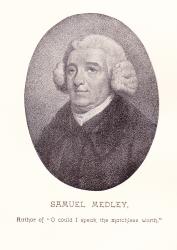
1738 - 1799 Person Name: Samuel Medley, 1738-99 Topics: Ascension; Funerals; Heaven; Jesus Christ Resurrection; Resurrection; Saints Days and Holy Days St Mary Magdalene; Saints Days and Holy Days St Thomas; Trust in God Author of "I know that my Redeemer lives" in Together in Song Medley, Samuel, born June 23, 1738, at Cheshunt, Herts, where his father kept a school. He received a good education; but not liking the business to which he was apprenticed, he entered the Royal Navy. Having been severely wounded in a battle with the French fleet off Port Lagos, in 1759, he was obliged to retire from active service. A sermon by Dr. Watts, read to him about this time, led to his conversion. He joined the Baptist Church in Eagle Street, London, then under the care of Dr. Gifford, and shortly afterwards opened a school, which for several years he conducted with great success. Having begun to preach, he received, in 1767, a call to become pastor of the Baptist church at Watford. Thence, in 1772, he removed to Byrom Street, Liverpool, where he gathered a large congregation, and for 27 years was remarkably popular and useful. After a long and painful illness he died July 17, 1799. Most of Medley's hymns were first printed on leaflets or in magazines (the Gospel Magazine being one). They appeared in book form as:—
(1) Hymns, &c. Bradford, 1785. This contains 42 hymns. (2) Hymns on Select Portions of Scripture by the Rev. Mr. Medley. 2nd ed. Bristol. W. Pine. 1785. This contains 34 hymns, and differs much from the Bradford edition both in the text and in the order of the hymns. (3) An enlargement of the same in 1787. (4) A small collection of new Hymns, London, 1794. This contains 23 hymns. (5) Hymns. The Public Worship and Private Devotion of True Christians Assisted in some thoughts in Verse; principally drawn from Select Passages of the Word of God. By Samuel Medley. London. Printed for J. Johnson. 1800. A few of his hymns are also found in a Collection for the use of All Denominations, published in London in 1782.
Medley's hymns have been very popular in his own denomination, particularly among the more Calvinistic churches. In Denham's Selections there are 48, and in J. Stevens's Selections, 30. Their charm consists less in their poetry than in the warmth and occasional pathos with which they give expression to Christian experience. In most of them also there is a refrain in the last line of each verse which is often effective. Those in common use include:—
1. Come, join ye saints, with heart and voice. (1800). Complete in Christ.
2. Death is no more among our foes. Easter.
3. Eternal Sovereign Lord of all. (1789). Praise for Providential Care.
4. Far, far beyond these lower skies. (1789). Jesus, the Forerunner.
5. Father of mercies, God of love, whose kind, &c. (1789.) New Year.
6. Great God, today Thy grace impart. Sermon.
7. Hear, gracious God! a sinner's cry. (1789). Lent.
8. In heaven the rapturous song began. Christmas.
9. Jesus, engrave it on my heart. (1789). Jesus, Needful to all.
10. Mortals, awake, with angels join. (1782). Christmas.
11. My soul, arise in joyful lays. (1789). Joy in God.
12. Now, in a song of grateful praise. Praise to Jesus. In the Gospel Magazine, June, 1776.
13. O could I speak the matchless worth. (1789.) Praise of Jesus.
14. O for a bright celestial ray. Lent.
15. O God, Thy mercy, vast and free. (1800). Dedication of Self to God.
16. O let us tell the matchless love. Praise to Jesus.
17. O what amazing words of grace. (1789). Foutain of Living Waters.
18. Saints die, and we should gently weep. (1800). Death and Burial. From his "Dearest of Names, Our Lord and King."
19. See a poor sinner, dearest Lord. Lent.
20. Sing the dear Saviour's glorious fame. (1789). Jesus the Breaker of bonds.
In 1800 a Memoir of Medley was published by his son, which is regarded by members of the family now living as authoritative. But in 1833 appeared another Memoir by Medley's daughter Sarah, to which are appended 52 hymns for use on Sacramental occasions. These she gives as her father's. But 8 of them are undoubtedly by Thos. Kelly, published by him in 1815, and reprinted in subsequent editions of his Hymns. The remainder are by Medley. Nearly all of these 52 hymns (both Medley's and Kelly's) have been altered in order to adapt them to Sacramental use. In Sarah Medley's volume, Kelly's hymns all follow one another, and three of them are in a metre which Medley apparently never used. What could have been Sarah Medley's motive in all this it is hard to divine. She is said to have been a clever, though unamiable woman, and was herself the author of a small volume of Poems published in 1807. In the Memoir she does not conceal her hatred of her brother. [Rev. W. R. Stevenson, M.A.]
-- John Julian, Dictionary of Hymnology (1907)
Samuel Medley
Sugao Nishimura
b. 1871 Person Name: Sugawo Nishimura Topics: The Church in the World Commitment: Trust; Biblical Places Bethel; Commitment; Trust; Walking with God/Jesus Christ; Proper 26 Year C Author of "In Lonely Mountain Ways (Ya-ma-ji Ko-e-te)" in Voices United
Sugao Nishimura
Margaret Pleasant Douroux
b. 1941 Person Name: Margaret Pleasant Douroux, b.1941 Topics: Trust in Jesus Christ Author of "Follow Jesus" in Lead Me, Guide Me (2nd ed.) Margaret Pleasant Douroux (b 21 March 1941, Los Angeles, CA), daughter of Earl Amos Pleasant (1918–1974) and Olga Mae Williams (1920–2006), one of six siblings. Earl was a singer who toured with Mahalia Jackson before he became the founder (1945) and longtime pastor of Mount Moriah Baptist Church, Inglewood, CA. Olga was an accompanist; Margaret likewise took an interest in music, playing piano for Sunday School classes until she was able to play for adult choirs. Through her father’s musical connections, she met influential gospel musicians such as Mahalia Jackson, Joe May, Sallie Martin, Thurston Frazier, and James Cleveland. In 1963, she married Donald Douroux, and they had one daughter, Mardy. She earned a degree in music from Cal State L.A. (1963), plus master’s degrees from the University of Southern California (1968, 1973), and a doctorate from the University of Beverly Hills (1979). After the death of her father, she joined her brother Earl in starting Greater New Bethel Baptist Church in Inglewood, California (1976). At the time, she was a school psychologist for Los Angeles City Schools. She had previously worked as an elementary school teacher and a guidance counselor. Magaret retired as music director of Greater New Bethel in 2015. Her career as a songwriter began when she wrote “Give Me a Clean Heart” (1970).
—Chris Fenner, Hymns & Devotions for Daily Worship: African American Edition (2025)
Margaret Pleasant Douroux
John L. Bell
b. 1949 Person Name: John L. Bell, b. 1949 Topics: Alleluias; Biblical Names and Places Israel; Biblical Names and Places Jacob; Biblical Names and Places Jerusalem; Biblical Names and Places Zion; Broken-hearted; Church Year Christmas; Earth; Elements of Worship Gathering; Elements of Worship Praise and Adoration; God Trust in; God as Spirit; God as Creator; God's Sovereignty; God's Sustaining Power; God's Wisdom; God's Word; God's Deeds; God's Faithfulness; God's Greatness; God's Knowing; God's law; God's Love; God's Majesty; God's People (flock, sheep); God's Providence; God's Strength; God's Way; Grace; Guilt; Healing; Hope; Hymns of Praise; Jesus Christ Healer; Jesus Christ Mind of; Joy; Life Stages Generations; Love; Occasional Services Dedication / Consecration / Anniversary; Occasional Services Healing Service; Occasional Services Thanksgving Day / Harvest Festival; Pain; Peace; People of God / Church Family of God; People of God / Church Serving; Rejoicing; Remnant of Isarel; Shame; Sorrow; The Creation; Unity and Fellowship; Witness; Worship; Year A, B, C, Christmas, 2nd Sunday; Year B, Ordinary Time after Epiphany, 5th Sunday Arranger of "[Alleluia, Alleluia]" in Psalms for All Seasons John Bell (b. 1949) was born in the Scottish town of Kilmarnock in Ayrshire, intending to be a music teacher when he felt the call to the ministry. But in frustration with his classes, he did volunteer work in a deprived neighborhood in London for a time and also served for two years as an associate pastor at the English Reformed Church in Amsterdam. After graduating he worked for five years as a youth pastor for the Church of Scotland, serving a large region that included about 500 churches. He then took a similar position with the Iona Community, and with his colleague Graham Maule, began to broaden the youth ministry to focus on renewal of the church’s worship. His approach soon turned to composing songs within the identifiable traditions of hymnody that began to address concerns missing from the current Scottish hymnal:
"I discovered that seldom did our hymns represent the plight of poor people to God. There was nothing that dealt with unemployment, nothing that dealt with living in a multicultural society and feeling disenfranchised. There was nothing about child abuse…,that reflected concern for the developing world, nothing that helped see ourselves as brothers and sisters to those who are suffering from poverty or persecution." [from an interview in Reformed Worship (March 1993)]
That concern not only led to writing many songs, but increasingly to introducing them internationally in many conferences, while also gathering songs from around the world. He was convener for the fourth edition of the Church of Scotland’s Church Hymnary (2005), a very different collection from the previous 1973 edition. His books, The Singing Thing and The Singing Thing Too, as well as the many collections of songs and worship resources produced by John Bell—some together with other members of the Iona Community’s “Wild Goose Resource Group,” —are available in North America from GIA Publications.
Emily Brink
John L. Bell
Pages




